TLDR
- Pick Airbridge for the lowest published price with web-to-app built in: the Core Plan starts at $40 a month and includes the web-to-app banner and web-to-app attribution.
- Pick AppsFlyer if you already use OneLink, since Smart Script and Smart Banners carry web clicks and ad click IDs into app installs.
- Pick Branch if web banners and deep linking matter most and you are fine with a sales quote. If an agency runs your paid UA, our list of mobile app marketing agencies covers what to check before hiring one.
- Pick Adjust if Adjust already runs in your app and you can buy Web Attribution and Smart Banners as add-ons.
- Singular and Kochava put web measurement on paid tiers: Singular Enterprise, and Kochava Foundation from $500 a month.
The best web-to-app attribution tools in 2026 are Branch, AppsFlyer, Adjust, Singular, Airbridge and Kochava. Each one links a visit on your website to the app install or in-app event that follows, so ads and content that land on the web get credit. They differ on method, which plan includes web features, and price.
This guide is for growth, user acquisition and marketing ops teams that run both a website and an app. Every price and feature below comes from a vendor pricing page or help doc read on October 30, 2026, linked next to the claim. Prices are in USD. For a wider list that covers app-only measurement, see our mobile attribution tools guide.
In this guide
What is web-to-app attribution?
Web-to-app attribution credits an app install or in-app event to the web visit that came before it. A user clicks an ad, lands on your mobile site, taps a banner or button and installs the app. The tool carries the campaign data through the app store, so the install is not counted as organic.
Tools use three main methods, and many teams combine them:
- Smart banners. A banner on your mobile site with an app link that carries the visit’s campaign data. Branch, AppsFlyer, Adjust and Airbridge all offer one.
- Link scripts. A script reads UTM tags and ad click IDs on the landing page and rewrites the app links on that page. AppsFlyer Smart Script is the clearest example.
- Web SDKs. A JavaScript SDK records web sessions and events, so the tool can match them to app activity later. All six vendors have one.
Most setups need your app SDK plus a web script or tag. Deferred deep linking then opens the right screen in the app after install, which keeps the user on the page they wanted.
Web-to-app attribution tools compared
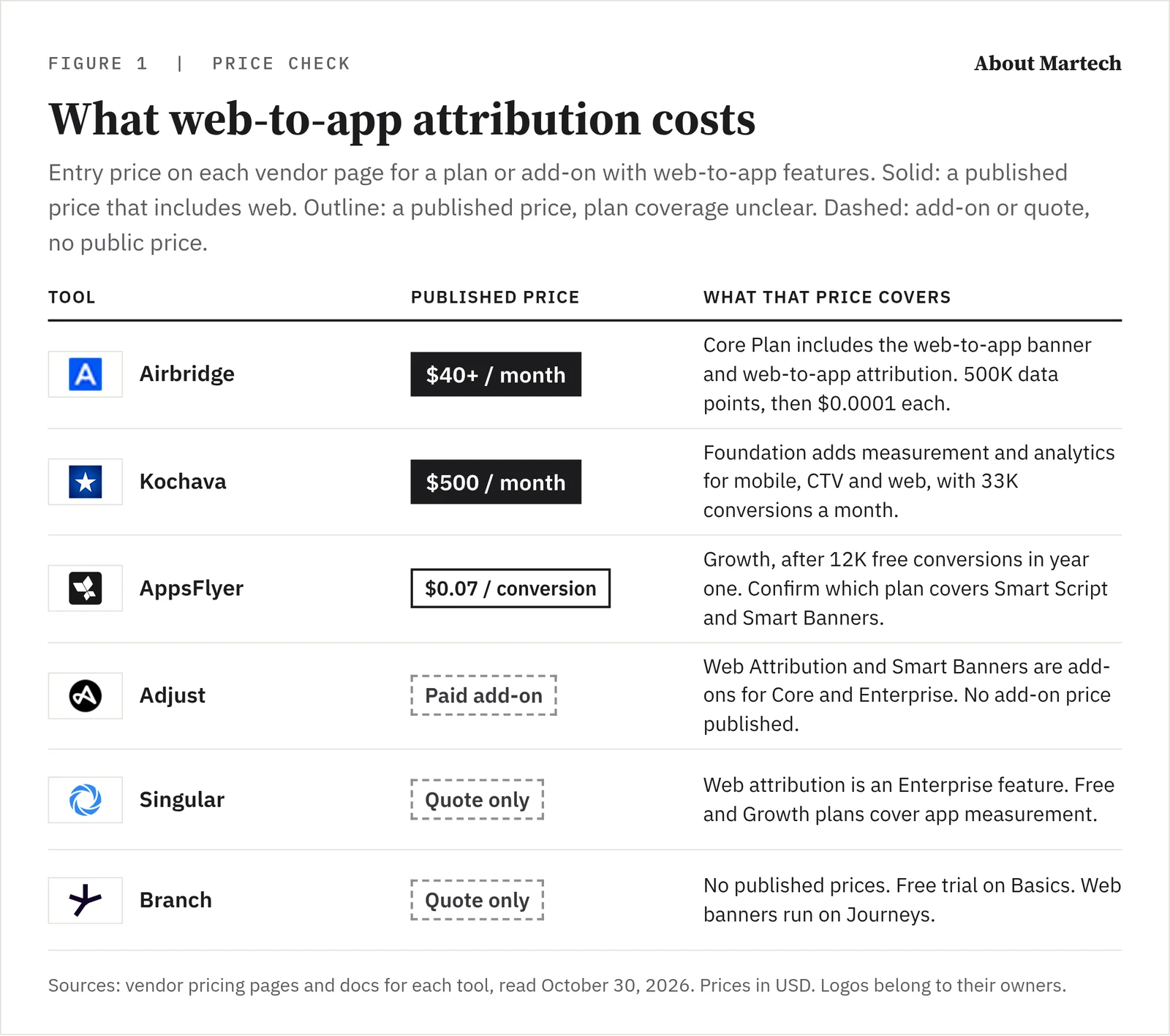
The table lists each tool’s web-to-app method, the plan that carries web features and its entry price. Only Airbridge and Kochava publish a price for a plan that includes web measurement. The others quote, sell web as an add-on, or do not say which plan has it. Swipe sideways on a phone for all columns.
| Tool | Web-to-app method | Where web features sit | Published entry price |
|---|---|---|---|
| Branch | Journeys banners and interstitials, Web SDK | Journeys is part of the Engagement product | No public prices; free trial on Basics |
| AppsFlyer | OneLink Smart Script, Smart Banners | Deep Linking Suite on the pricing page | Growth: 12K free conversions in year one, then $0.07 each |
| Adjust | Smart Banners, Web SDK | Add-ons for Core and Enterprise | Base is free in year one; add-on prices not published |
| Singular | Web SDK with web-to-app link forwarding | Web attribution is an Enterprise feature | Free plan for 15,000 paid conversions; Enterprise by quote |
| Airbridge | Web-to-app banner, Web SDK | Included in the Core Plan | From $40 a month, 30 day free trial |
| Kochava | SmartLinks, Web SDK | Web measurement from Foundation | Foundation from $500 a month |
Which web-to-app attribution tool should you pick?
Pick the tool that already measures your app, because web-to-app works best when the web script and app SDK come from the same vendor. If you are choosing fresh, compare the method you need, banner or link script, and the plan that unlocks it. Each profile below has a homepage screenshot and a best for and not for line.
1. Branch
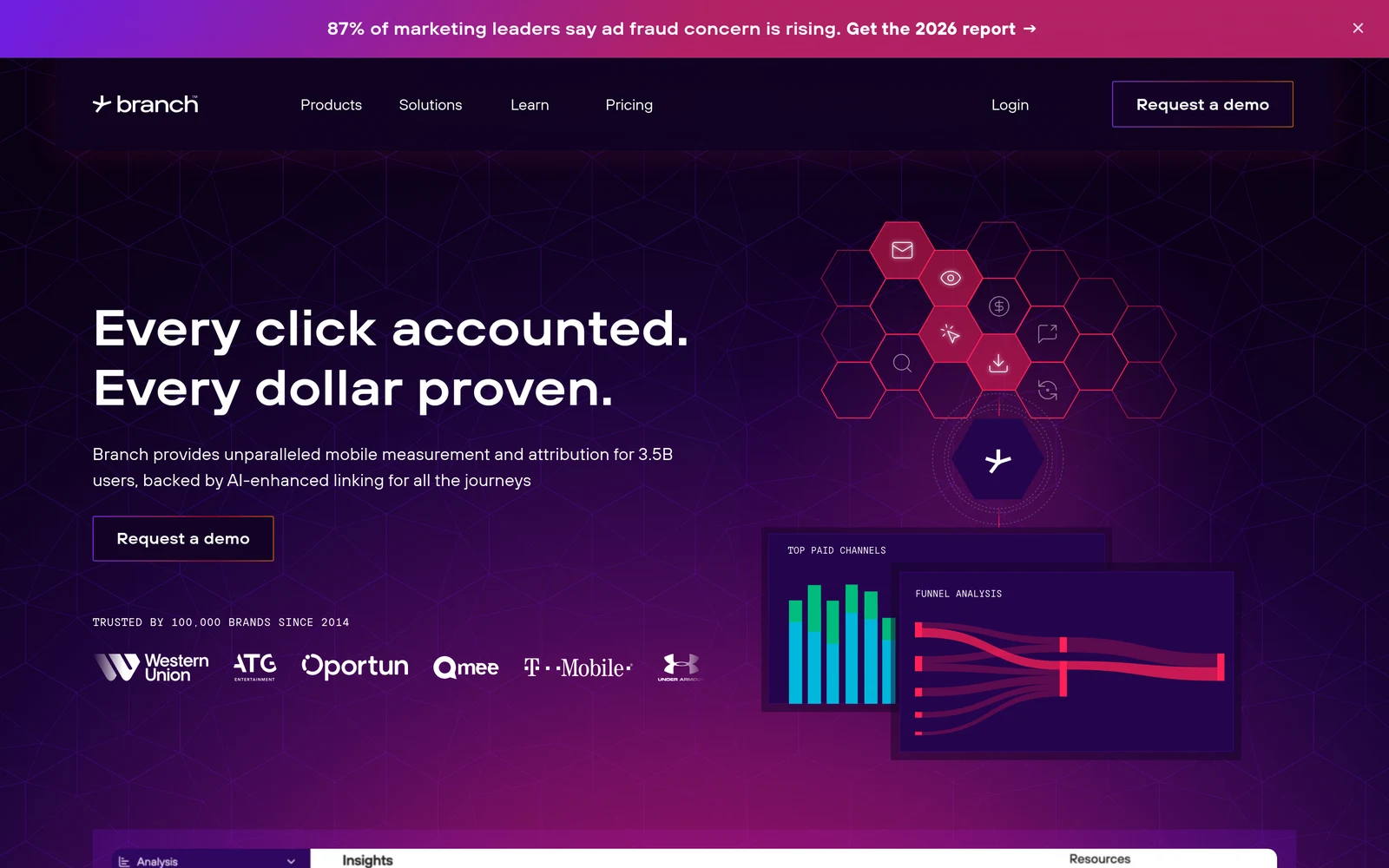
Branch handles web-to-app with Journeys, its smart banners and full page interstitials. Branch’s help center says Journeys needs the Branch mobile SDKs plus the Web SDK, which you can load through a tag manager. It lists the setup as developer required, and Journeys is part of the Engagement product.
With Journeys Assist, a Journeys banner can pass credit back to the Branch ad or email link that brought the user to the site in the same session, which is on by default. The pricing page shows Basics, Essentials and Enterprise tiers with no prices, a free trial on Basics, and web attribution under cross-platform attribution.
Best for: teams that care most about deep links and banner journeys across web and app. Not for: teams that want a published price before a sales call. For a head-to-head, read Adjust vs Branch.
2. AppsFlyer
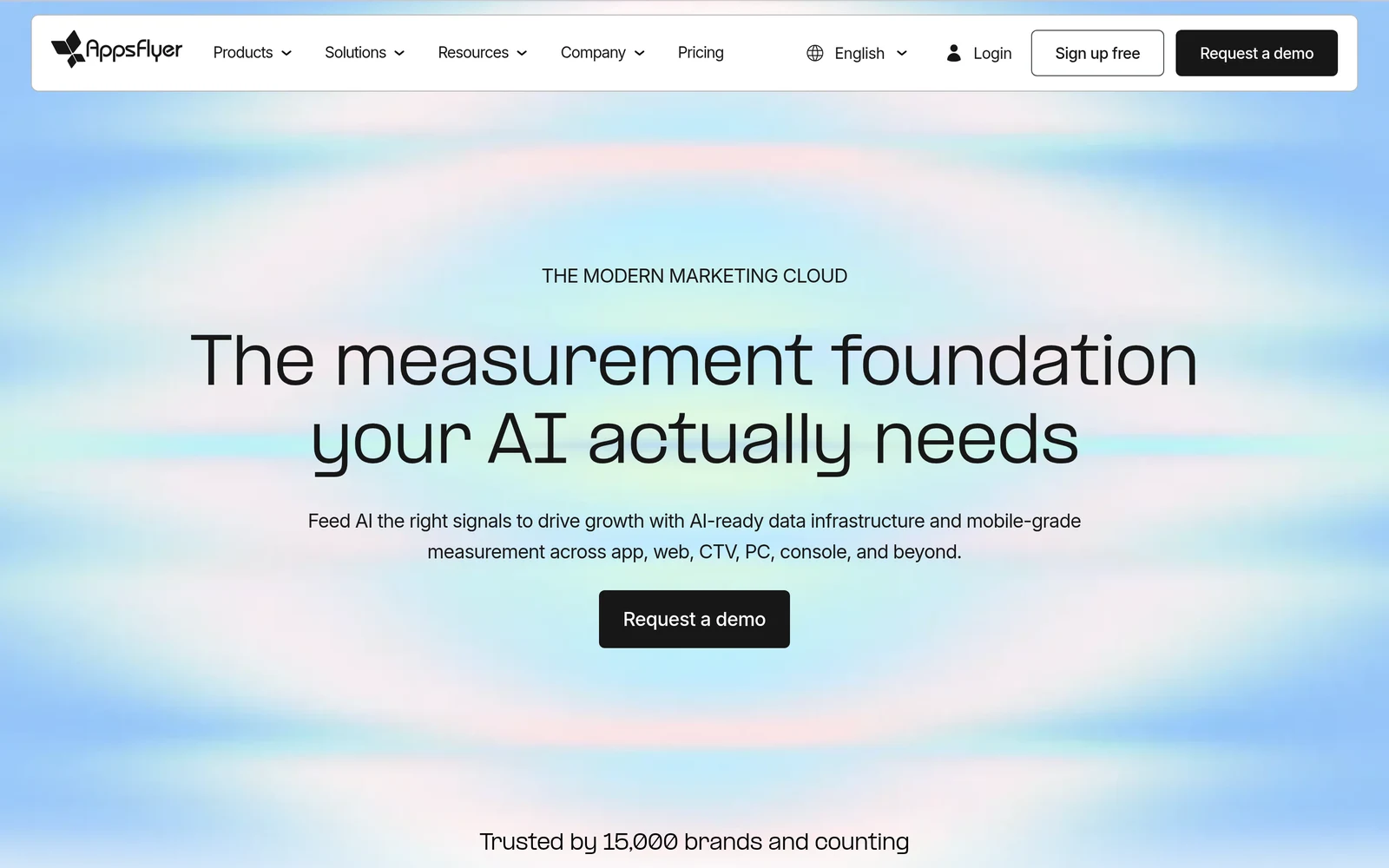
AppsFlyer OneLink Smart Script reads the incoming URL on your landing page and builds an outgoing OneLink URL from it. AppsFlyer says this gives web-to-app attribution for all media sources. Smart Script V2 is the recommended version, and you can add it with Google Tag Manager.
Smart Banners need web SDK v2, since v1 was deprecated on November 8, 2023. They record clicks, views and impressions and forward ad click IDs such as GCLID, FBCLID and ttclid. On the pricing page, Growth includes 12K free conversions in year one, then $0.07 per conversion. Confirm which plan covers Smart Script and Smart Banners.
Best for: teams on AppsFlyer that run paid ads to mobile web landing pages. Not for: teams that only want the free Zero plan, which AppsFlyer says does not suit apps with paid activity. See also Airbridge vs AppsFlyer.
3. Adjust
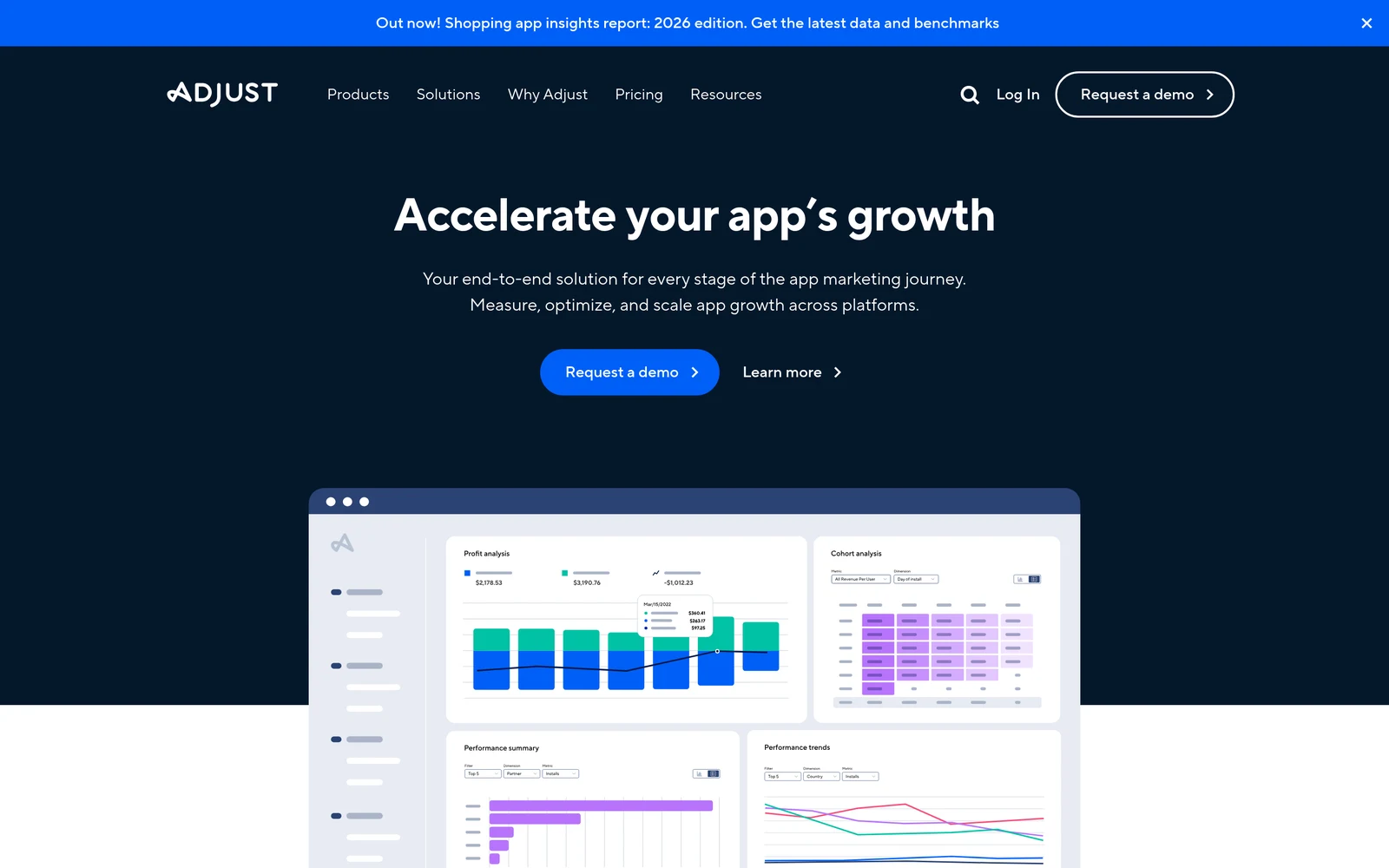
Adjust Smart Banners are set up in Campaign Lab, grouped in spaces, and can use UTM placeholders so web campaign data reaches the app link. You can deploy them through Adobe Launch, Google Tag Manager or Shopify. Developers can also install the Smart Banner SDK from npm, with support for dynamic deep links.
Adjust also has a Web SDK that records attribution and events in web apps. On the pricing page, Web Attribution and Smart Banners are Growth Solutions, sold as add-ons for Core and Enterprise clients. Base is free for the first year with up to 1,500 monthly conversions, but it does not include these add-ons.
Best for: teams already on Adjust Core or Enterprise. Not for: small apps on the free Base plan that need web features now. If you are weighing a switch, see Adjust alternatives.
4. Singular

Singular handles web-to-app forwarding with its Web SDK, which you can run natively in JavaScript or through Google Tag Manager. The SDK reads the campaign data on the landing page and passes it into the app link the user taps. Singular recommends the native script, because ad blockers can stop tag manager tags.
The Web SDK doc says web attribution is an enterprise feature, and cross-device attribution needs a separate subscription. The pricing page lists a Free plan for 15,000 paid conversions and Growth at $0.05 per conversion, so web-to-app means an Enterprise quote.
Best for: larger teams that want web, app and ad spend data in one reporting tool. Not for: teams on the Free or Growth plan that want web attribution.
5. Airbridge
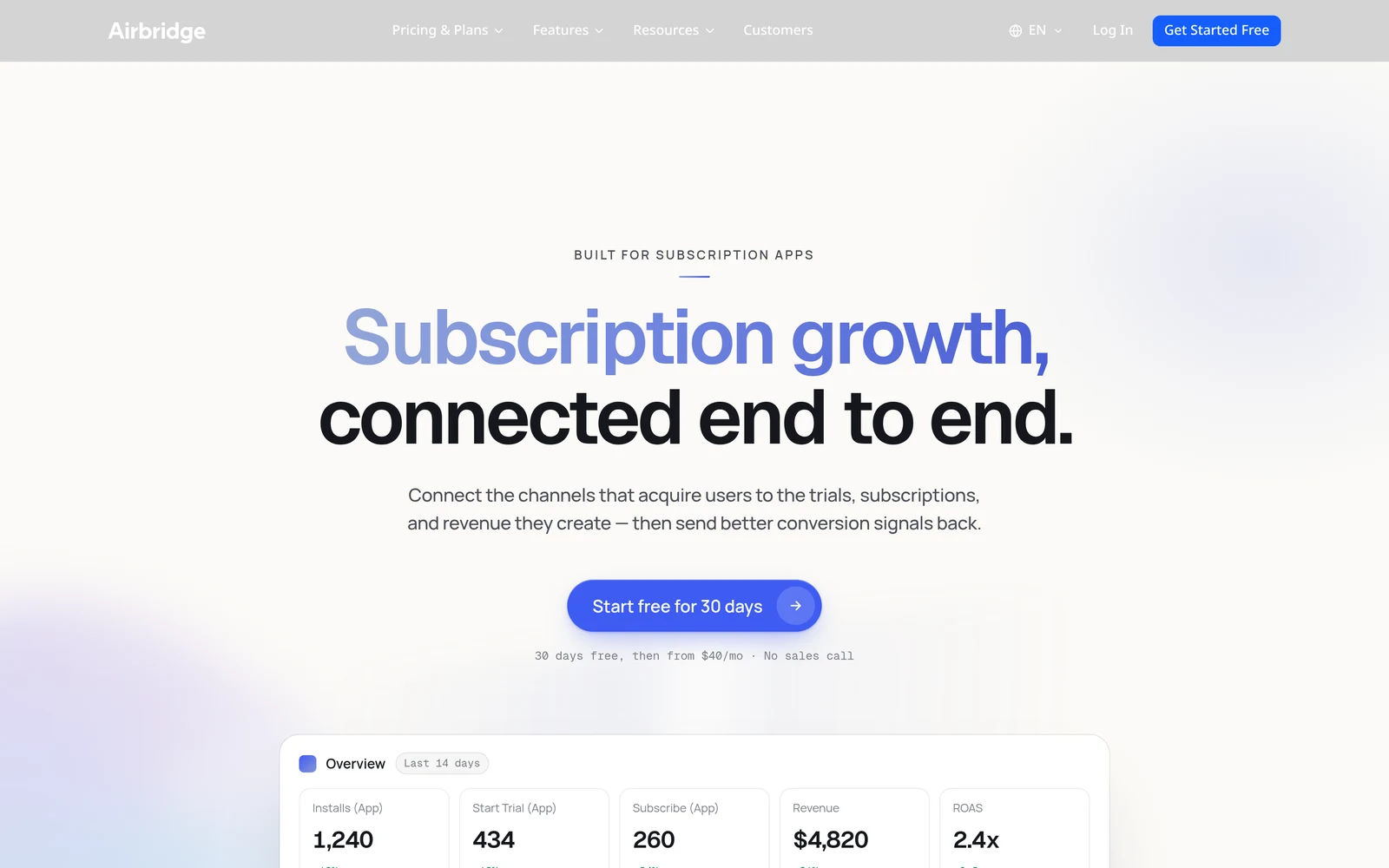
Airbridge includes the web-to-app banner and web-to-app attribution in its Core Plan, from $40 a month with a 30 day free trial and no annual contract. Core includes 500K data points, then $0.0001 per data point. The Web SDK on Core covers web-to-app tracking only.
The web-to-app guide and Web SDK docs show a Protected Attribution Window that defaults to 30 minutes and a cookie window that defaults to 3 days. You can call openDeeplink from your own buttons. Core ad network attribution covers Google, Meta, Apple Ads and TikTok, and Growth adds 330+ networks on custom pricing.
Best for: smaller apps that want web-to-app at a published price. Not for: teams that buy from many ad networks and need them all on the entry plan.
6. Kochava
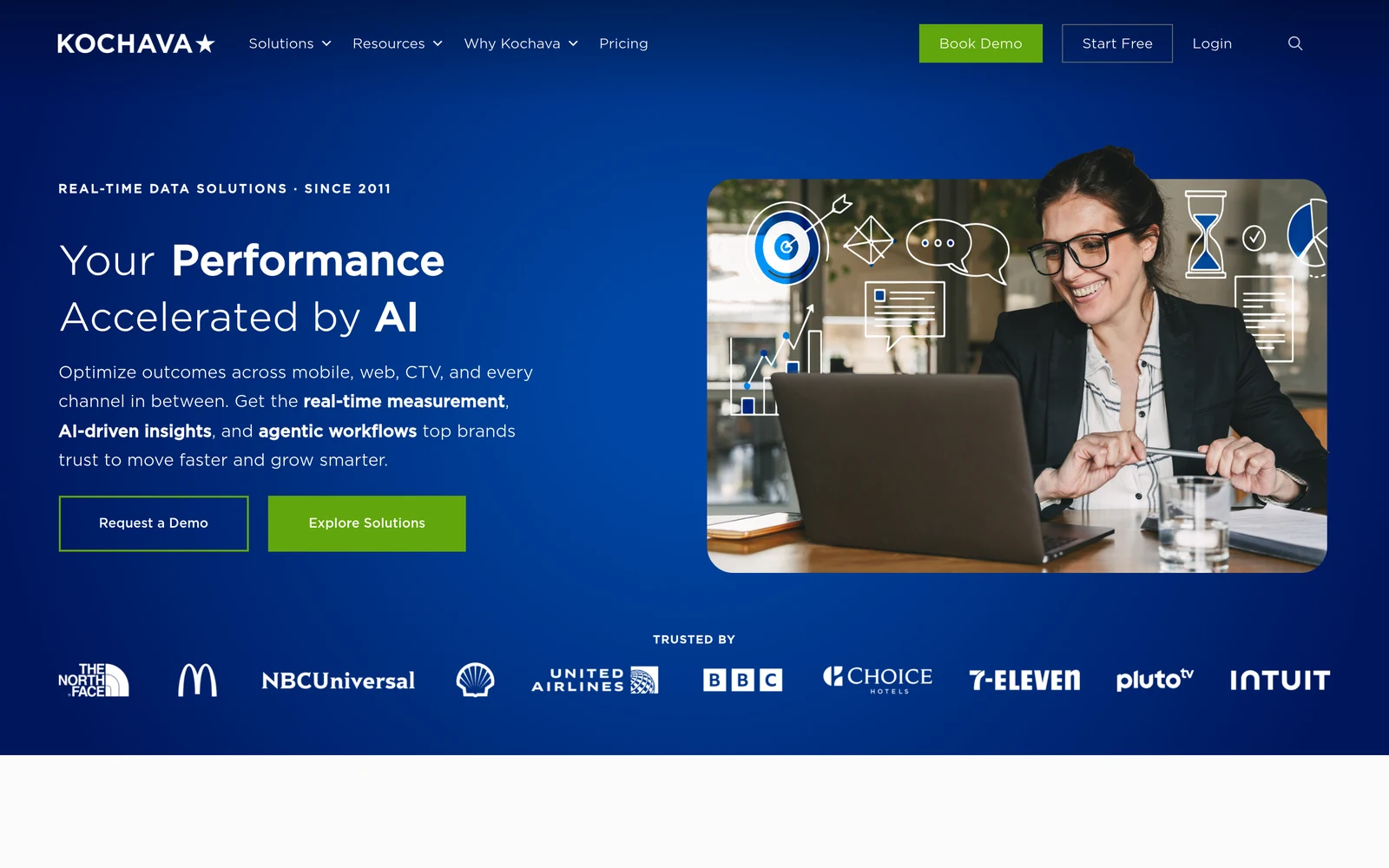
Kochava SmartLinks create deep links and QR codes that route users to the app or store, and they are part of the Free App Analytics plan. For web data, Kochava has a JavaScript Web SDK for measuring activity on your website.
On the pricing page, Free App Analytics costs $0 a month with 10K conversions a month. Foundation starts at $500 a month with 33K conversions a month and adds measurement and analytics for mobile, CTV and web. Enterprise starts at $2,000 a month.
Best for: teams that measure app, web and CTV and want a published monthly price. Not for: teams that need web measurement on the free plan, since web starts at Foundation.
How much does web-to-app attribution cost?
Airbridge has the lowest published entry for web-to-app attribution at $40 a month on Core. Kochava Foundation starts at $500 a month with web measurement. Adjust sells web features as add-ons on Core and Enterprise, Singular puts web attribution on Enterprise, and Branch quotes every tier. AppsFlyer prices Growth at $0.07 per conversion.
Three things move the final bill:
- Your base plan. Web features often sit above the free tier, so the real cost is the paid app plan plus any web add-on.
- Volume. AppsFlyer and Singular count conversions, Airbridge counts data points, and Kochava sets conversion limits per tier.
- Engineering time. Banners and scripts take hours, but web SDKs and cross-device matching need developer work on both web and app.
How do you set up web-to-app attribution?
Start with the app SDK from your attribution vendor, then add its smart banner or link script to the mobile pages that get the most paid and search traffic. Pass UTM tags and ad click IDs through the app link. Test an install from a tagged URL and check it is not reported as organic.
- Map your entry pages. List the landing pages that get ad clicks and the app screen each one should open.
- Pick one method first. A smart banner is the quickest win, while a link script covers every button on the page.
- Keep one tag manager. Most vendors support Google Tag Manager, but Singular warns that ad blockers can stop tags.
- Set deep links. Use deferred deep linking so new users land on the screen they tapped for after install.
- Plan for link changes. If you still rely on old Google links, read our Firebase Dynamic Links alternatives.
Frequently asked questions about web-to-app attribution
Which tool handles web-to-app attribution and linking best?
Branch and AppsFlyer have the deepest web-to-app linking. Branch uses Journeys banners and interstitials with its Web SDK, and AppsFlyer uses OneLink Smart Script and Smart Banners. Airbridge is the lowest priced option with web-to-app built in, from $40 a month on its Core Plan. Pick the vendor that already measures your app.
Does Branch provide mobile deep linking and attribution tools?
Yes. Branch offers deep linking, mobile attribution and web-to-app tools. Its Journeys banners and interstitials send mobile web visitors into the app with direct and deferred deep linking, and Journeys Assist can pass credit back to the Branch link that brought the user. Branch does not publish prices, so expect a quote.
What is a web-to-app attribution platform?
A web-to-app attribution platform connects a visit on your website to the app install or in-app event that follows. It uses smart banners, link scripts or a web SDK to carry campaign data through the app store. Branch, AppsFlyer, Adjust, Singular, Airbridge and Kochava all offer one alongside their app measurement.
Is there a free web-to-app attribution tool?
Airbridge offers a 30 day free trial of its Core Plan, which includes the web-to-app banner and web-to-app attribution. Branch has a free trial on Basics. The free plans from Adjust and Singular do not include web attribution, and AppsFlyer says its free Zero plan does not suit apps with paid activity.
How does Airbridge handle web-to-app measurement?
Airbridge measures web-to-app with its Web SDK and web-to-app banner, both included in the Core Plan from $40 a month. A Protected Attribution Window defaults to 30 minutes and a cookie window to 3 days. Core ad network attribution covers Google, Meta, Apple Ads and TikTok, and Growth adds more networks.
What are the top tools to track attribution and deep linking for app installs?
The top tools for install attribution with deep linking are Branch, AppsFlyer, Adjust, Singular, Airbridge and Kochava. Branch, AppsFlyer, Adjust and Airbridge add smart banners for mobile web. Kochava has SmartLinks with QR codes. For app-only measurement, compare them in our wider mobile attribution tools guide.
Do I need a developer to set up web-to-app attribution?
Usually yes, at least once. The app SDK and deep link setup need a developer, and Branch lists Journeys as developer required. After that, many banners and scripts load through Google Tag Manager, so marketers can launch and edit campaigns. Web SDKs and cross-device matching take more engineering time.
The verdict: which web-to-app attribution tool fits your team?
Stay with your current attribution vendor if it offers web-to-app, since one SDK and one link system keep data clean. AppsFlyer users should start with Smart Script, Branch users with Journeys, and Adjust users should price the add-ons. New buyers on a budget should trial Airbridge Core, and web, app and CTV teams should price Kochava Foundation.
Larger teams that want web, app and spend data together should ask Singular for an Enterprise quote. Whichever tool you pick, test tagged installs before you trust the reports. For the broader app picture, see our mobile attribution tools roundup.