TLDR
- Firebase Dynamic Links shut down on August 25, 2025. If your app still uses them, links are broken now.
- You do not need a full mobile measurement partner to replace deep linking. Dedicated platforms like Branch, AppsFlyer OneLink, and Adjust Links handle it with less overhead than a complete MMP contract.
- Deferred deep linking, the feature that routes users to the right in-app destination after install, is the hardest capability to self-build and the main reason to use a dedicated platform over native App Links or Universal Links.
- Migration effort varies more by SDK complexity than by platform choice. Teams already running an MMP can often activate that vendor’s deep linking at no additional cost.
- The seven platforms below cover every budget tier, from free self-serve to enterprise contracts, with honest trade-offs for each.
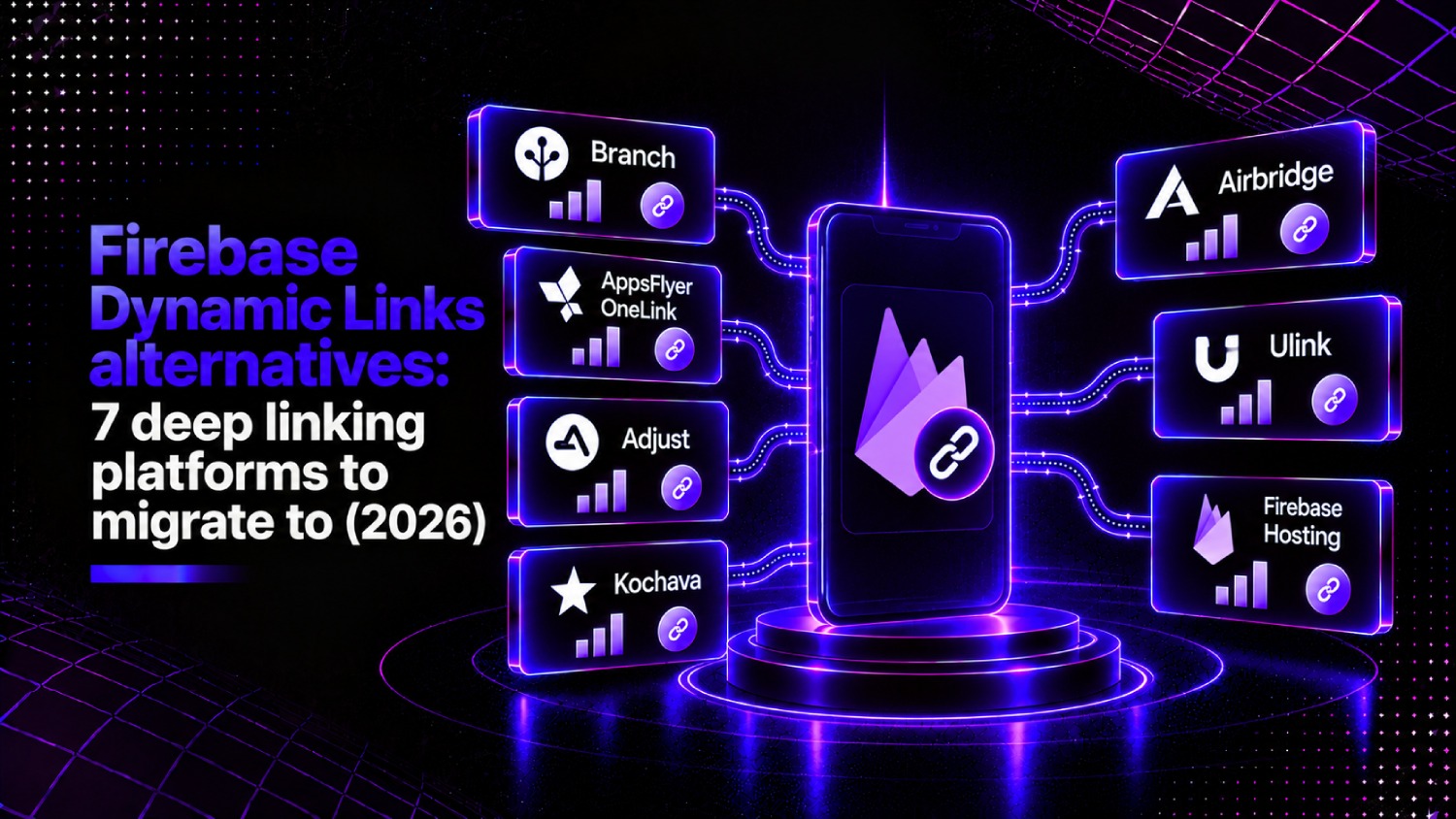
Firebase Dynamic Links is gone as of August 25, 2025. The best replacements are Branch, AppsFlyer OneLink, Adjust Links, Airbridge, Kochava SmartLinks, Ulink, and native App Links combined with Universal Links. Each handles cross-platform deep linking and deferred deep linking. The right choice depends on whether your team already pays for an MMP, how much attribution data you need alongside the links, and what your monthly active link volume looks like.
Why did Firebase Dynamic Links shut down, and what does that mean for your app?
Google deprecated Firebase Dynamic Links and set August 25, 2025 as the end-of-life date. Any link created through the Firebase console or SDK stopped resolving after that date. Google’s official guidance points teams toward native Android App Links and iOS Universal Links, with Firebase Hosting as an optional redirect layer.
The native approach works for basic routing. It breaks on one scenario that matters most to growth teams: the new user who clicks a referral link, gets sent to the App Store or Play Store, installs the app, and opens it with no memory of where the link was supposed to take them. That failure is called a broken deferred deep link. Recovering the post-install destination without a dedicated platform requires building a custom fingerprinting or clipboard solution. Apple’s privacy restrictions, including ATT enforcement and the constraints introduced alongside SKAdNetwork, have made on-device fingerprinting progressively less reliable on iOS, a position the wider mobile measurement industry has documented extensively since iOS 14.
Teams with existing MMP contracts should check their current vendor first. Branch, AppsFlyer, Adjust, Airbridge, and Kochava all include deep linking as part of their MMP packages. Paying twice for the same capability is a common migration mistake.
The AboutMartech Deep Link Fit Test: four questions before you pick a platform
Most comparison articles treat deep linking platforms as interchangeable. They are not. Running these four checks before shortlisting vendors will cut the field in half.
1. Attribution or links only? If you need click-to-install attribution, SKAdNetwork reconciliation, or cost aggregation alongside link routing, you need an MMP. If you need links that survive the install gap, you can use a lighter platform. Conflating the two leads to overpaying for attribution features you will not use, or buying a link tool and realizing six months later that you cannot deduplicate channel spend.
2. What is your SDK surface area? A single-platform app with one SDK integration is a one-day migration. A team running web, iOS, and Android with deep links embedded in email, paid social, and SMS will spend two to four weeks regardless of vendor. Audit your link touchpoints before signing a contract.
3. Do you already have an MMP? AppsFlyer OneLink, Adjust Links, Airbridge, and Kochava SmartLinks are bundled inside their respective MMP platforms. Activating them is a configuration task, not a new purchase. If you are already paying for one of these vendors, the decision is already made.
4. What does link volume cost? Branch and AppsFlyer OneLink charge on active users or attributed installs, not raw link clicks. Ulink charges on link volume. The right pricing model depends on your traffic pattern. A high-click, low-install funnel (like email newsletters) fits volume pricing better. A paid-UA-heavy funnel with lots of installs fits install-based pricing.
7 Firebase Dynamic Links alternatives worth migrating to:
1. Branch
Branch is the most widely deployed dedicated deep linking platform. Its core product covers Universal Links, App Links, deferred deep linking, QR codes, and email deep linking through integrations with Iterable, Braze, Klaviyo, and SendGrid. Branch also offers lightweight attribution, though it positions below AppsFlyer and Adjust on MMP depth.
Branch is a legitimate, well-established company. Founded in 2014, it counts major consumer apps among its customers and has raised substantial venture funding from recognized investors. Teams that encounter uncertainty about Branch’s standing can verify its customer roster and funding history on its public website and Crunchbase.
Branch’s pricing is not public. The vendor operates on a quote-based model tied to monthly active users. A free starter tier exists for apps under a certain MAU threshold, but the threshold and feature limits are confirmed only during onboarding. Teams migrating from Firebase should request a scope call before assuming the free tier covers their volume.
Branch’s main advantage over native alternatives is its link graph. When a user clicks a Branch link on iOS, the platform attempts to match the click to the post-install open using probabilistic and deterministic signals, even within Apple’s privacy constraints. The matching accuracy degrades on privacy-mode Safari traffic, but it remains more reliable than a custom-built clipboard approach. For teams already using Branch for attribution, deep linking is included. For teams that want only links, Branch may be more platform than necessary.
Our Adjust vs Branch comparison covers how the attribution layers of each platform differ for teams that need both link routing and spend measurement.
2. AppsFlyer OneLink
AppsFlyer OneLink is the deep linking product inside the AppsFlyer MMP. OneLink handles cross-platform routing, deferred deep linking, Smart Banners for web-to-app conversion, and QR code generation. Teams already on AppsFlyer’s attribution platform activate it through the dashboard without a separate SDK install.
OneLink’s technical differentiation is its People-Based Attribution layer. When a user clicks a OneLink URL, AppsFlyer matches the click to an install using its device graph, which the company says covers a large share of global mobile devices. The practical effect is higher deferred deep link match rates on iOS compared to platforms without a device graph, though AppsFlyer does not publish platform-level match rate figures.
AppsFlyer pricing is quote-based, structured around attributed installs. Teams not already on AppsFlyer should factor in the full MMP cost, not just the OneLink capability. For teams that want a deep-link-only tool without attribution overhead, OneLink is not a natural fit. For teams shopping for an MMP that includes deep linking, it is one of the two strongest options alongside Adjust.
The Airbridge vs AppsFlyer comparison on this site covers how each handles iOS privacy-safe attribution, which matters if your deferred deep linking depends on post-install match accuracy.
3. Adjust
Adjust includes deep linking through its LinkMe product and its standard SDK. Adjust handles deferred deep linking, App Links, Universal Links, and email deep linking through integrations with most major ESPs. Like AppsFlyer, Adjust is primarily an MMP. Deep linking is a feature layer, not a standalone product.
Adjust’s advantage for Firebase migrants is SDK stability. The Adjust SDK has a long track record across iOS and Android, and its documentation for migrating from Firebase Dynamic Links is detailed and actively maintained. Teams that prioritize a clean migration path over feature breadth will find Adjust straightforward to implement.
Adjust pricing is quote-based. The company does not publish tiers or per-install rates on its public site. Teams evaluating Adjust specifically for deep linking should ask the vendor whether deep linking is available on lower attribution tiers, since smaller apps may not require the full MMP package to access LinkMe functionality.
4. Airbridge
Airbridge is a South Korea-based MMP that has been growing its presence in North American and European markets. Its deep linking product covers deferred deep linking, Universal Links, App Links, and web-to-app banners. Airbridge’s pitch to Firebase migrants is a migration guide that maps Firebase Dynamic Link parameters to Airbridge’s link structure directly.
Airbridge’s pricing is tiered and partly public. The company offers a free plan for apps below certain monthly tracked event volumes, with paid plans scaling from there. This makes it one of the few MMP-grade platforms where a small app can access deferred deep linking without a sales conversation. The trade-off is that Airbridge’s device graph is smaller than AppsFlyer’s or Adjust’s, which can affect match rates on privacy-restricted iOS traffic.
Airbridge is the strongest choice for teams that want MMP-level measurement, care about iOS privacy-safe attribution, and want transparent pricing tiers without a drawn-out procurement process. It is less suited to very large app portfolios where AppsFlyer’s or Adjust’s depth in fraud detection and cost aggregation becomes important.
5. Kochava SmartLinks

Kochava offers SmartLinks as part of its MMP platform. SmartLinks handle deferred deep linking, Universal Links, App Links, and QR codes with parameter passthrough for campaign tracking. Kochava’s differentiator has historically been its data ownership model: Kochava offers raw data access and a warehouse-friendly export structure that AppsFlyer and Adjust do not match by default.
For teams running a warehouse-native analytics stack, Kochava’s data portability makes it easier to join deep link attribution data with CRM and revenue data in Snowflake or BigQuery without paying for a separate export. This matters more for teams doing self-serve attribution analysis than for teams relying on the MMP dashboard.
Kochava pricing is quote-based. The company offers a free tier called the Free App Analytics plan for smaller apps, but feature limits apply. SmartLinks availability on the free tier should be confirmed with the vendor before assuming it is included. Teams evaluating Kochava against AppsFlyer specifically can find a detailed breakdown in the Kochava vs AppsFlyer comparison.
6. Ulink
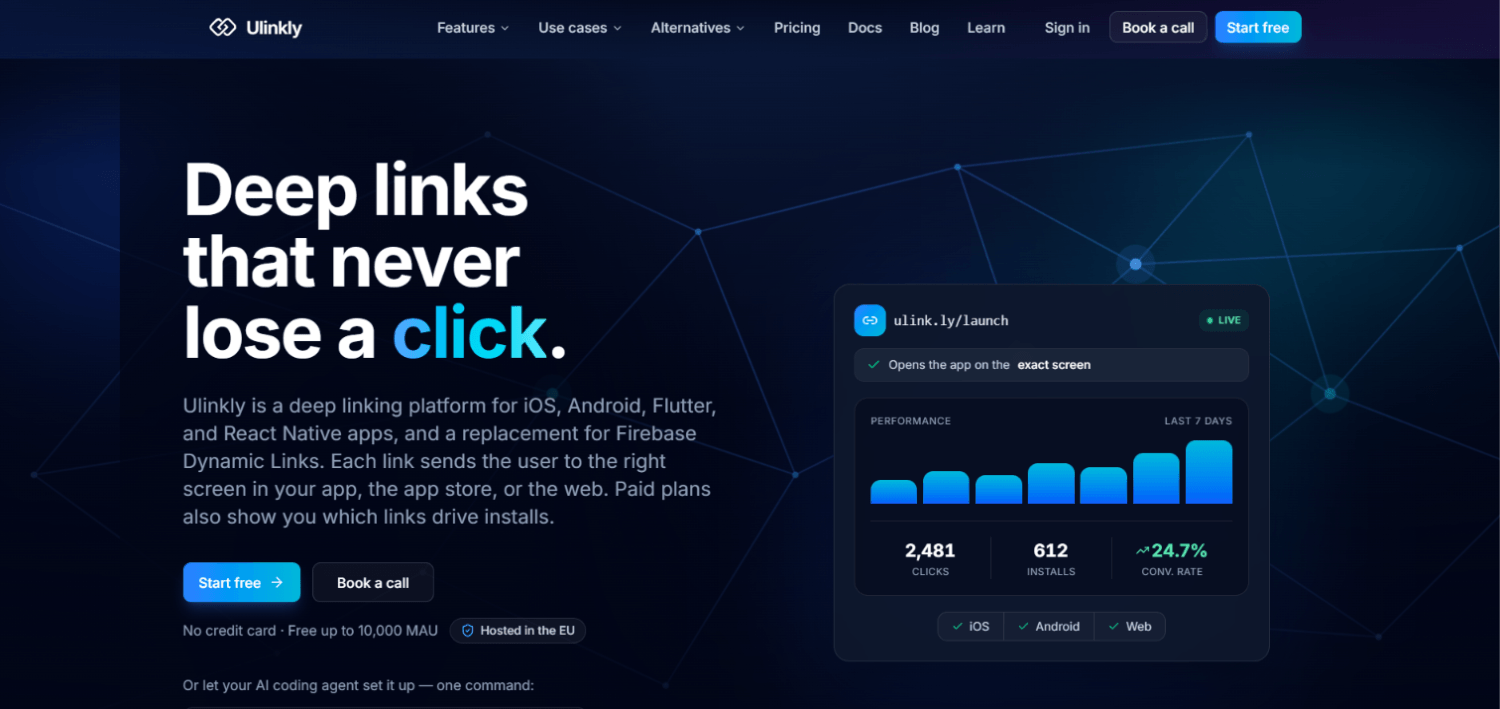
Ulink (ulink.ly) is a lighter-weight deep linking platform positioned specifically for teams that need links without a full MMP. It handles deferred deep linking, Universal Links, App Links, and link analytics. Ulink’s pricing is volume-based on link clicks rather than attributed installs, which changes the economics for high-traffic, low-conversion funnels like organic social or newsletter placements.
Ulink is the clearest drop-in replacement for Firebase Dynamic Links for teams that do not need attribution. It does not require an MMP contract, does not add attribution complexity to your measurement stack, and has a simpler SDK footprint than Branch or AppsFlyer OneLink. The trade-off is that Ulink provides no install attribution, fraud detection, or cost aggregation. If your team is running paid UA and needs to tie ad spend to installs, Ulink alone is insufficient.
For product and lifecycle teams managing email or QR-based deep links to existing users, rather than acquisition links for new installs, Ulink’s scope is appropriate and its pricing is more predictable than install-based models.
7. Native App Links and Universal Links (with Firebase Hosting)
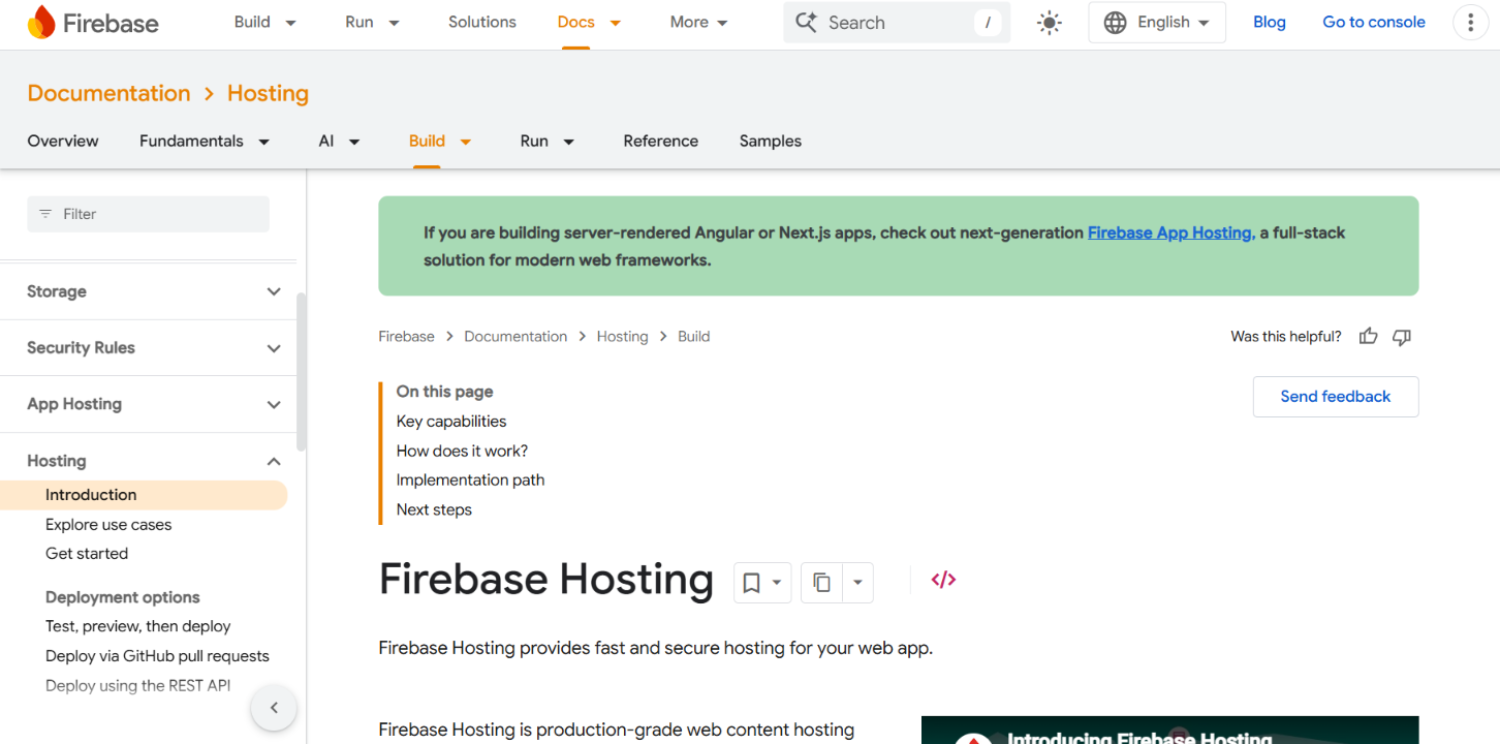
Google’s own migration recommendation is to implement Android App Links and iOS Universal Links directly, optionally using Firebase Hosting to serve the AASA and assetlinks.json files. This approach eliminates vendor dependency and ongoing SaaS costs.
The limitation is deferred deep linking. Native App Links and Universal Links do not have a built-in mechanism for passing link parameters through an app store install. A user who clicks a deep link, gets redirected to install, and then opens the app for the first time will land on the app’s default home screen, not the intended destination. Implementing deferred deep linking natively requires either a clipboard-based parameter passing approach (which Apple has restricted on iOS 16 and later) or a custom server-side fingerprinting solution that degrades on privacy-enabled browsers.
The native path makes sense for apps with simple link routing needs, where deferred deep linking is not a user experience priority, or where engineering bandwidth is available to build and maintain a custom solution. It is the lowest-cost option and the highest-effort option simultaneously.
How do these platforms compare on the features that matter most?
| Platform | Deferred Deep Linking | Attribution Included | Standalone (No MMP Required) | Public Pricing | Best For |
|---|---|---|---|---|---|
| Branch | Yes | Lightweight | Yes | No (quote-based) | Teams wanting deep linking without full MMP |
| AppsFlyer OneLink | Yes | Full MMP | No | No (quote-based) | Teams already on AppsFlyer |
| Adjust Links | Yes | Full MMP | No | No (quote-based) | Teams prioritizing SDK stability and documentation |
| Airbridge | Yes | Full MMP | No | Partial (tiered) | Smaller apps wanting MMP-grade linking with transparent pricing |
| Kochava SmartLinks | Yes | Full MMP | No | No (quote-based) | Teams needing warehouse-ready data exports |
| Ulink | Yes | No | Yes | Yes (volume-based) | Lifecycle/product teams, no UA attribution needed |
| Native App Links + Universal Links | No (requires custom build) | No | Yes | Free | Engineering teams comfortable with custom implementation |
How hard is the migration from Firebase Dynamic Links?
Migration complexity breaks down along two axes: how many link surfaces you have, and which platform you are moving to. Most teams underestimate the first and overestimate the second.
Link surfaces to audit before starting: paid social ad URLs, email campaign links (including archived nurture flows), QR codes printed on physical materials, in-app referral links, push notification deep links, and any web-to-app banners. Firebase Dynamic Links that appear in archived email sequences continue to fire until someone clicks them after the deprecation date. Every one of those links needs to be regenerated on the new platform.
SDK migration is typically a one-to-two day task for a single-platform app. The complexity rises with multiplatform apps, particularly when the iOS SDK needs to handle the AASA file update alongside the Android assetlinks.json change. Both must be served from the correct domain, and a misconfigured file causes Universal Links to fall through to the browser rather than the app. This is the most common post-migration failure mode.
For teams already running AppsFlyer, Adjust, Airbridge, or Kochava, activating deep linking requires no new SDK installation. The configuration lives in the dashboard. Airbridge publishes a dedicated Firebase Dynamic Links migration guide that maps Firebase parameters to Airbridge equivalents parameter by parameter, which meaningfully reduces migration time.
Branch provides a migration checklist in its documentation. AppsFlyer’s OneLink documentation covers parameter mapping from Firebase’s standard format. Neither vendor’s migration is technically complex. The drag is always the link audit, not the SDK swap.
What about Dub, Short.io, and other link management platforms?
Several link shortening and management platforms have positioned themselves as Firebase Dynamic Links alternatives. Dub ranks for this query and explicitly claims to replace Firebase Dynamic Links with cross-platform routing and link analytics. Short.io appears in migration discussions as a redirect layer option.
These platforms handle URL routing and redirect logic well. Where they fall short is deferred deep linking. Neither Dub nor Short.io implements the post-install parameter passing that gets a new user to the right in-app destination after an App Store or Play Store install. If your Firebase Dynamic Links were primarily used for routing existing users deeper into an app (a common pattern in email and push), a link management tool may suffice. If they were used in paid acquisition campaigns, onboarding flows, or referral programs where new installs are expected, you need a platform that implements deferred deep linking explicitly.
The distinction matters because migration effort differs. Swapping Firebase links for Dub links in an email template takes minutes. Discovering six weeks later that new users from those links land on the app home screen instead of the promoted content takes considerably longer to diagnose and fix.
Is Branch, AppsFlyer OneLink, or Adjust the right default for most teams?
For teams without an existing MMP, Branch is the default recommendation. It works as a standalone platform, its SDK is mature across iOS and Android, and it covers the full deep linking surface area including email integrations, QR codes, and web-to-app banners. The quote-based pricing is a friction point for small teams, but Branch’s free tier, confirmed at onboarding, accommodates apps below a certain MAU threshold.
For teams already paying for AppsFlyer, activating OneLink costs nothing additional and adds no new SDK dependency. The same is true for Adjust customers activating LinkMe. There is no rational case for purchasing Branch or any other deep linking tool when you are already contracted with an MMP that includes the feature.
Airbridge is the strongest option for teams shopping for an MMP specifically because of Firebase’s shutdown and who want transparent pricing during vendor evaluation. Its partial public pricing and dedicated migration documentation make procurement faster than a full AppsFlyer or Adjust sales cycle.
If you are evaluating the broader mobile attribution market alongside this decision, the mobile app attribution tools roundup covers eight MMPs with deeper analysis of attribution methodology, fraud detection, and cost aggregation capabilities that sit adjacent to deep linking.
Frequently asked questions
What is replacing Firebase Dynamic Links?
Google’s official replacement guidance points to Android App Links and iOS Universal Links, optionally using Firebase Hosting to serve the required verification files. For teams that need deferred deep linking, which the native approach does not support without custom development, the leading third-party replacements are Branch, AppsFlyer OneLink, Adjust Links, and Airbridge. Each implements deferred deep linking and handles the App Store or Play Store install gap that native links cannot address on their own.
Is Firebase Dynamic Links deprecated?
Yes. Firebase Dynamic Links reached end of life on August 25, 2025. Links that were created through Firebase Dynamic Links stopped resolving after that date. Google announced the deprecation in 2023 and provided migration documentation pointing to native App Links and Universal Links. Any app that has not migrated and still uses Firebase Dynamic Links will have broken links in its campaigns, email flows, and in-app referral programs.
What is deferred deep linking, and why does it matter?
Deferred deep linking is the ability to route a new user to a specific in-app destination after they install the app from the App Store or Play Store. Without it, a user who clicks a link pointing to a specific product page or referral screen lands on the app’s generic home screen after install, losing the context of the original click. Firebase Dynamic Links implemented deferred deep linking. Native App Links and Universal Links do not, which is the primary reason most teams need a third-party platform rather than the native alternative.
How much does Branch.io cost?
Branch does not publish pricing on its public website. The company operates on a quote-based model, with pricing tied to monthly active users and the features required. Branch confirms a free tier for apps below a certain MAU threshold during the onboarding process. Teams should contact Branch directly to confirm current tier limits and paid plan rates before beginning migration planning.
Is Branch a legitimate company?
Yes. Branch was founded in 2014, is headquartered in Palo Alto, and counts major consumer apps across e-commerce, fintech, and media among its customers. It has raised significant venture funding from institutional investors and is one of the most widely deployed deep linking platforms in the mobile industry. Its legitimacy is not in question among mobile measurement practitioners.
Can I use AppsFlyer OneLink without the full AppsFlyer MMP?
No. AppsFlyer OneLink is a product feature within the AppsFlyer mobile measurement platform, not a standalone product. Accessing OneLink requires an AppsFlyer contract, which includes attribution, analytics, and cost aggregation capabilities alongside deep linking. Teams that want deep linking without full MMP overhead should evaluate Branch, Ulink, or Airbridge’s lower-tier plans instead.
What is the fastest migration path from Firebase Dynamic Links?
The fastest migration path for a team already running an MMP is to activate that vendor’s deep linking feature inside the existing platform, which requires no new SDK integration. For teams without an MMP, Branch provides the most mature migration documentation and a single SDK that covers iOS, Android, and web. Airbridge’s Firebase-specific migration guide offers parameter-level mapping that reduces implementation time for teams with complex link structures. In both cases, the time-consuming part is auditing and regenerating existing links across all channels, not the SDK work itself.
Do I need an MMP to replace Firebase Dynamic Links?
No. Deep linking and mobile attribution are related but separate capabilities. Ulink and Branch (at lower tiers) handle deferred deep linking without requiring a full MMP contract. The native App Links and Universal Links approach costs nothing but does not include deferred deep linking. Teams that only need to route users to specific in-app destinations and do not need click-to-install attribution or paid UA measurement can migrate without purchasing an MMP. Teams running paid acquisition campaigns that need attribution alongside link routing should evaluate a full MMP.
What to do before you migrate
The two biggest migration mistakes are starting with the SDK before finishing the link audit, and buying a platform before confirming whether an existing vendor already covers the need. A complete link audit takes longer than most teams expect, particularly when Firebase links appear in archived nurture sequences, printed QR codes, or legacy app store listings. Finding every link surface first prevents the scenario where a team completes migration, then discovers six months later that an old email campaign is still sending traffic to dead Firebase URLs.
The platform choice matters less than most vendor evaluations suggest. Branch, AppsFlyer OneLink, and Adjust all implement deferred deep linking reliably. The differentiators are pricing model, existing vendor relationships, and how much attribution depth you need alongside the links. A team paying for AppsFlyer that buys Branch because its marketing is more visible is simply paying twice. A team that needs only links and buys a full MMP is paying for capabilities it will not use.
For teams evaluating the broader measurement stack that Firebase’s shutdown has exposed, deep linking is one piece of a larger mobile attribution infrastructure. If the shutdown has prompted a full stack review, the marketing attribution tools comparison and the AppsFlyer alternatives roundup cover the adjacent decisions that often get made alongside a deep linking migration.