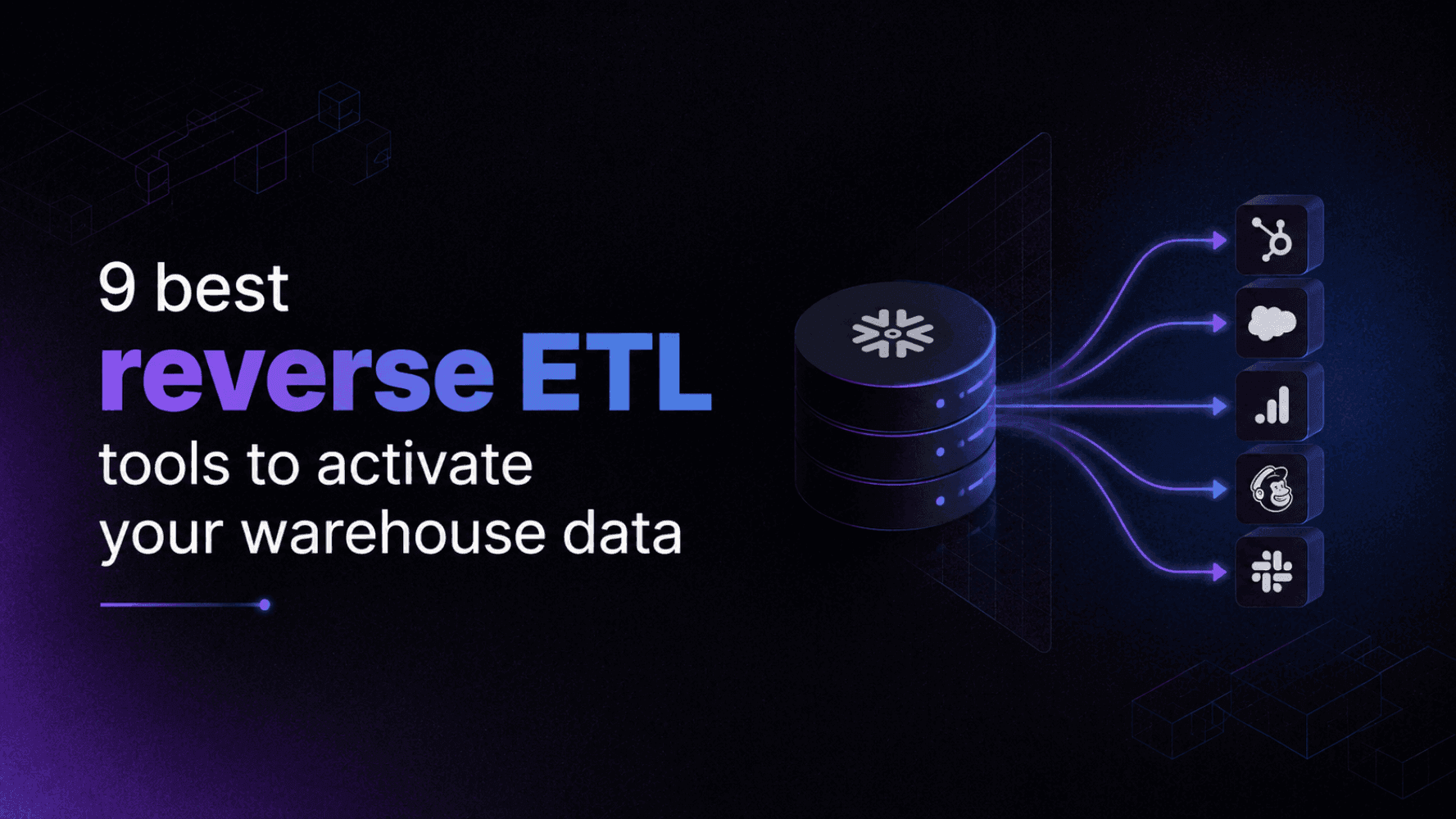
- Reverse ETL is not an engineering project. It is the mechanism that turns your data warehouse into a live marketing and sales engine.
- Hightouch, Census, and RudderStack lead the category, but each suits a different team size and stack profile.
- The core buying question is not which tool has the most connectors. It is whether the tool puts data activation in the hands of marketing ops or keeps it locked in engineering.
- Most teams overbuy on connectors and underbuy on observability. Sync failure at 2am is a real operational cost.
- Pricing models vary sharply: row-based, connector-based, and workspace-based. The wrong model can triple your bill as your audience segments grow.
The best reverse ETL tools are Hightouch, Census, RudderStack, Polytomic, Segment (with reverse ETL via Reverse ETL feature), Airbyte, Omnata, and Praxis Data. Hightouch and Census are the strongest choices for marketing teams that need no-code audience syncing. RudderStack fits engineering-led teams that want open-source flexibility. The right pick depends on who owns the syncs and how your warehouse is priced.
Why marketing teams keep missing the point on reverse ETL
Most marketing leaders encounter reverse ETL in a ticket. An engineer asks whether to buy Hightouch or just write a Python script. The marketer says “whatever is faster” and moves on. Three months later, your CRM audiences are wrong, your ad suppression lists are stale, and nobody can explain why churn signals are sitting in Snowflake but not in Intercom.
Reverse ETL solves a specific plumbing problem: your warehouse is the system of record for customer data, but your SaaS tools (HubSpot, Salesforce, Braze, Meta Ads) do not read from it directly. Reverse ETL pulls modeled data out of the warehouse and pushes it into those tools on a schedule or trigger. The term “reverse” refers to direction: traditional ETL moves data into the warehouse; reverse ETL moves it out.
The category matters more now because CDPs have failed a quiet majority of mid-market teams. A CDP ingests, resolves, and activates in one system. Reverse ETL lets you keep the ingestion and modeling in your warehouse, where your data team already works, and only solve the activation layer. For teams that have invested in dbt models and Snowflake or BigQuery, that division of labor is cleaner and cheaper than rebuilding the model inside a CDP.
The AboutMartech Activation Fit Test: four checks before you buy
Before evaluating individual tools, run your stack through this framework. It will eliminate half the options on any shortlist.
Check 1: Operator ownership. Will marketing ops run these syncs day-to-day, or will every new audience require a data engineering ticket? Tools with visual segment builders (Hightouch’s Visual Audience Builder, Census’s Audience Hub) let marketers own syncs. Tools with YAML or SQL-only interfaces (RudderStack Reverse ETL in its base form) require engineering involvement.
Check 2: Warehouse compatibility. Every major tool supports Snowflake and BigQuery. Support for Databricks, Redshift, and Postgres varies. If your company runs on Databricks, confirm native support before piloting.
Check 3: Sync observability. What happens when a sync breaks at 2am because a dbt model changed column names? Tools differ dramatically on alerting, row-level error logging, and retry logic. This is the most underrated buying criterion in the category.
Check 4: Pricing model alignment. Row-based pricing (per record synced) penalizes teams syncing large audiences frequently. Connector-based pricing penalizes teams with many destinations but small data volumes. Workspace-based or flat pricing rewards operational maturity. Model your actual use case before signing anything.
What do these eight tools actually cost and who are they built for?
| Tool | Best for | Pricing model | Free tier | Warehouse support |
|---|---|---|---|---|
| Hightouch | Marketing ops, PLG, enterprise | Row-based + workspace tiers (public pricing page) | Yes (free tier with limits) | Snowflake, BigQuery, Redshift, Databricks, Postgres, more |
| Census | Growth and lifecycle marketers | Row-based, per-destination pricing | Yes (limited syncs) | Snowflake, BigQuery, Redshift, Databricks, Postgres |
| RudderStack | Engineering-led teams, open-source preference | Event-based, cloud and self-hosted | Yes (open-source self-hosted) | Snowflake, BigQuery, Redshift, ClickHouse, Postgres |
| Polytomic | RevOps and CRM-heavy teams | Connector-based tiers (quote for enterprise) | No | Snowflake, BigQuery, Redshift, MySQL, Postgres |
| Segment (Reverse ETL) | Teams already on Segment CDP | Bundled into Segment plans | No standalone | Snowflake, BigQuery, Redshift |
| Airbyte | Data engineering teams wanting open-source | Connector credit model (cloud); self-hosted free | Yes (self-hosted) | Broad, connector-dependent |
| Omnata | Snowflake-native teams | Snowflake marketplace consumption pricing | No | Snowflake only |
| Praxis Data | Enterprise CRM and Salesforce ops | Quote-based | No | Snowflake, BigQuery, Salesforce-native |
Which reverse ETL tools are best for marketing teams specifically?
1. Hightouch
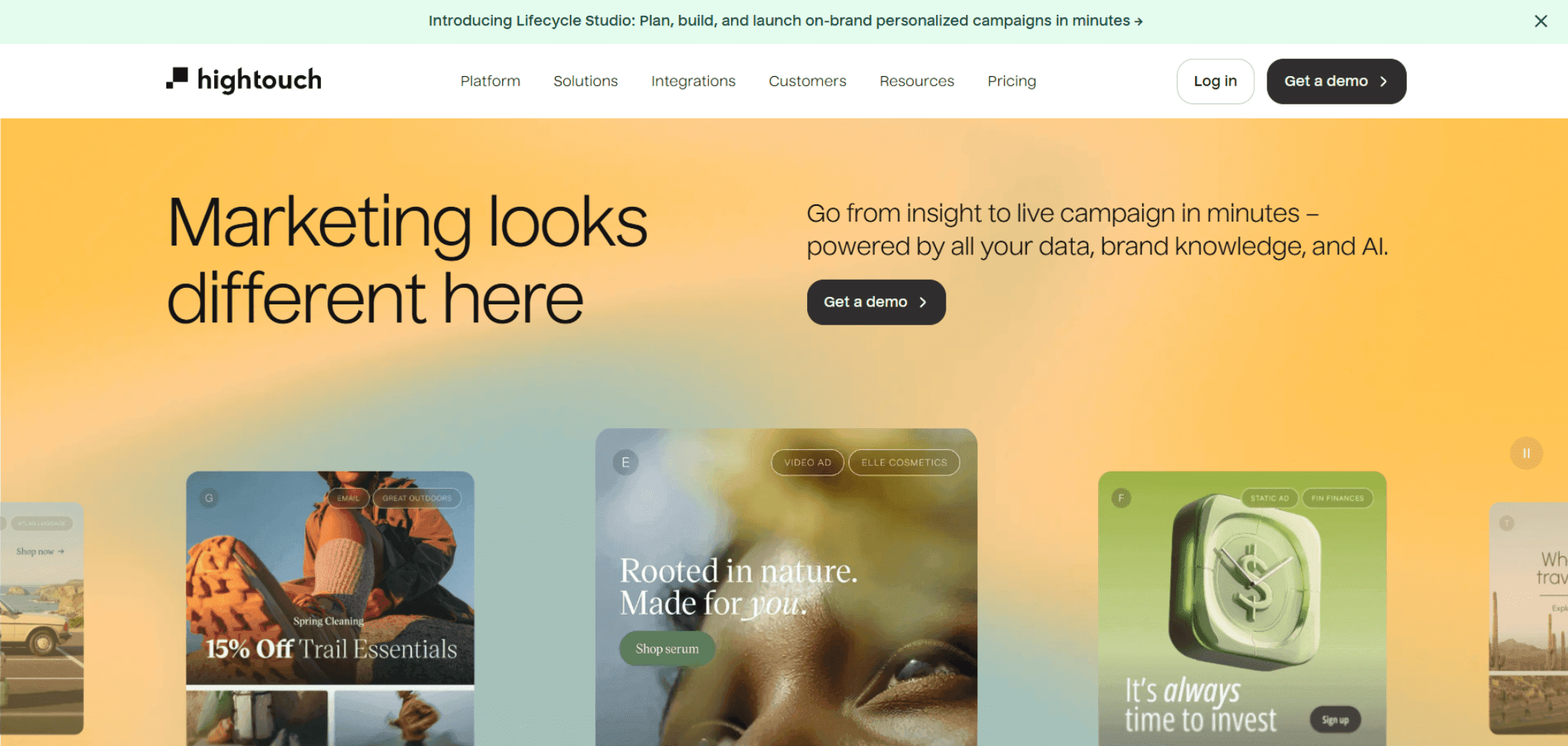
Hightouch is the market reference point for marketing-led data activation. Its Visual Audience Builder lets a non-SQL marketer build behavioral cohorts directly on top of warehouse data, no data engineer required. That is not a marketing claim; it is a meaningful architectural decision that changes who can create segments on Monday morning without filing a ticket.
Hightouch’s connector catalog exceeds 200 destinations as of their public documentation, including Braze, Salesforce, HubSpot, Klaviyo, Meta Ads, Google Ads, and Iterable. Its sync observability is the strongest in the category: row-level error reporting, schema drift alerts, and a sync history log that lets ops teams debug without touching the warehouse directly.
Pricing is tiered with a public free plan for small teams. Paid plans scale based on rows synced and the number of destinations. Enterprise pricing is quote-based. The free tier is genuinely usable for one or two destinations, which makes Hightouch the default recommendation for teams piloting reverse ETL for the first time.
2. Census
Census competes directly with Hightouch and has its own take on marketer-facing tooling through Audience Hub, which surfaces segment builders on top of warehouse data. Where Census differentiates is in its dbt integration: Census can read dbt model metadata to auto-populate field definitions, which reduces the setup friction for teams that have invested in a dbt semantic layer.
Census also ships a concept called Segments that lets you build dynamic audiences with AND/OR logic without writing SQL, then sync those audiences to paid media platforms. The sync speed and connector reliability have been a common point of comparison between Census and Hightouch, and both are competitive at scale. Census’s pricing is destination-based at lower tiers, which rewards teams with a few critical destinations over teams that want to broadcast to a dozen tools at once.
3. RudderStack
RudderStack is a customer data platform with a reverse ETL module layered in. The distinction matters. If you are already using RudderStack for event streaming and identity resolution, adding reverse ETL is a natural extension with no new vendor to manage. If you are buying it purely for reverse ETL, you are buying more infrastructure than you need.
The open-source self-hosted option is genuinely free and production-ready for engineering teams comfortable running their own infrastructure. RudderStack Cloud offers a managed version with usage-based pricing. Reverse ETL syncs are configured via the RudderStack dashboard and support SQL model definitions rather than a no-code builder, so marketing ops teams will need data engineering support for segment creation.
4. Polytomic
Polytomic occupies a specific niche: syncing warehouse data into operational SaaS tools with a focus on CRM enrichment and RevOps workflows. Its sync engine is bidirectional, meaning it can pull data from Salesforce back into the warehouse as well as push warehouse data into Salesforce. For RevOps teams trying to keep account scoring, territory data, and product usage signals in sync between their warehouse and CRM, that bidirectional flow reduces the need for a separate ETL tool.
Polytomic does not have a self-serve free tier for commercial use. Pricing is connector-tier-based with enterprise plans on request. It is not the right tool for teams that need paid media syncing or real-time behavioral triggers, but for CRM-heavy operations teams, it is worth a direct evaluation against Hightouch.
5. Segment Reverse ETL
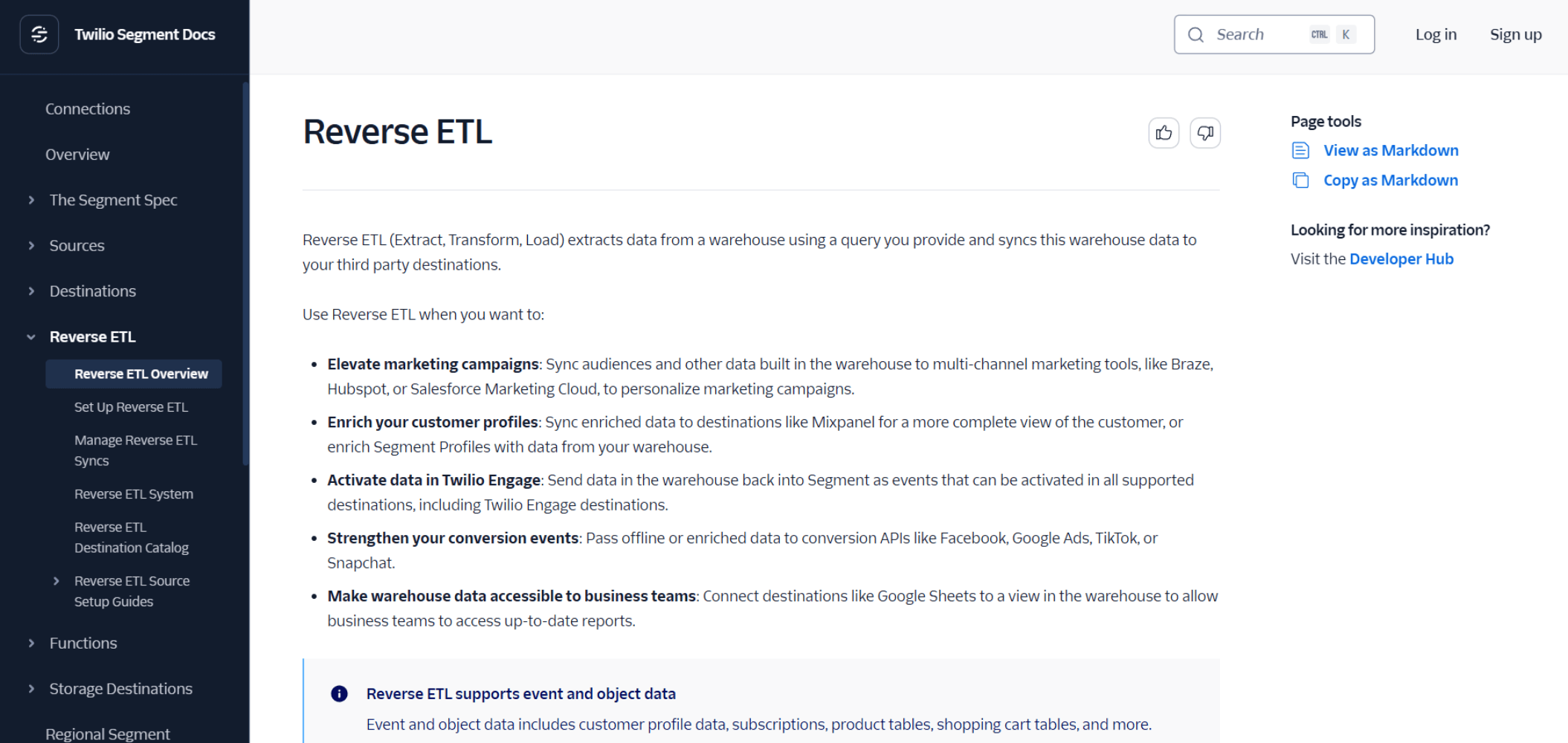
Segment’s Reverse ETL feature is bundled into Segment’s Business tier plans and lets teams point a warehouse source at any Segment destination. If you are already paying for Segment, this is the lowest-friction way to start syncing warehouse data without adding a new vendor. The destination catalog matches Segment’s main catalog, which is broad.
The limitation is that Segment Reverse ETL inherits Segment’s identity resolution model. That model works well inside the Segment platform but creates complications if your warehouse data has been modeled differently. Teams that have built identity graphs outside Segment will find the mapping logic more cumbersome than in Hightouch or Census. It is the right tool if your stack is already Segment-native and you want to close the warehouse gap with minimal additional spend.
6. Airbyte
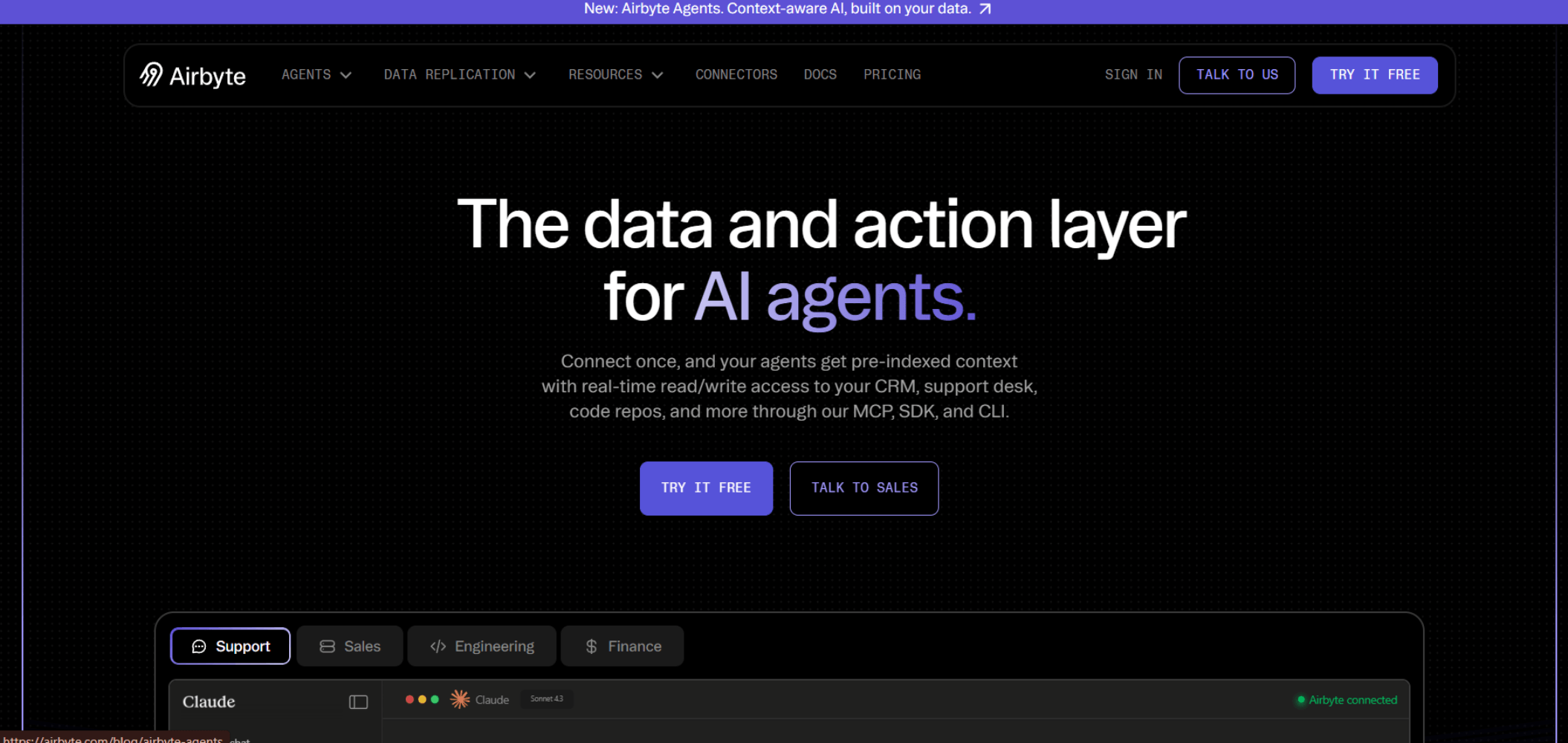
Airbyte is primarily a data ingestion tool (forward ETL) that added reverse ETL functionality as the category grew. Its open-source connector catalog is the largest available, which matters if you have a niche SaaS destination not covered by Hightouch or Census. Airbyte Cloud uses a connector credit pricing model; self-hosted is free.
The tradeoff is that Airbyte’s reverse ETL capabilities are less mature than its ingestion features. There is no marketer-facing audience builder. Syncs are configured technically. For data engineering teams that already run Airbyte for ingestion and want to avoid adding a second vendor for activation, it is a reasonable consolidation choice. For marketing ops teams, it is not the right starting point. Note: Airbyte acquired Grouparoo in 2022 and folded its open-source reverse ETL connectors into the Airbyte catalog, so teams that previously ran Grouparoo have a direct migration path here.
7. Omnata
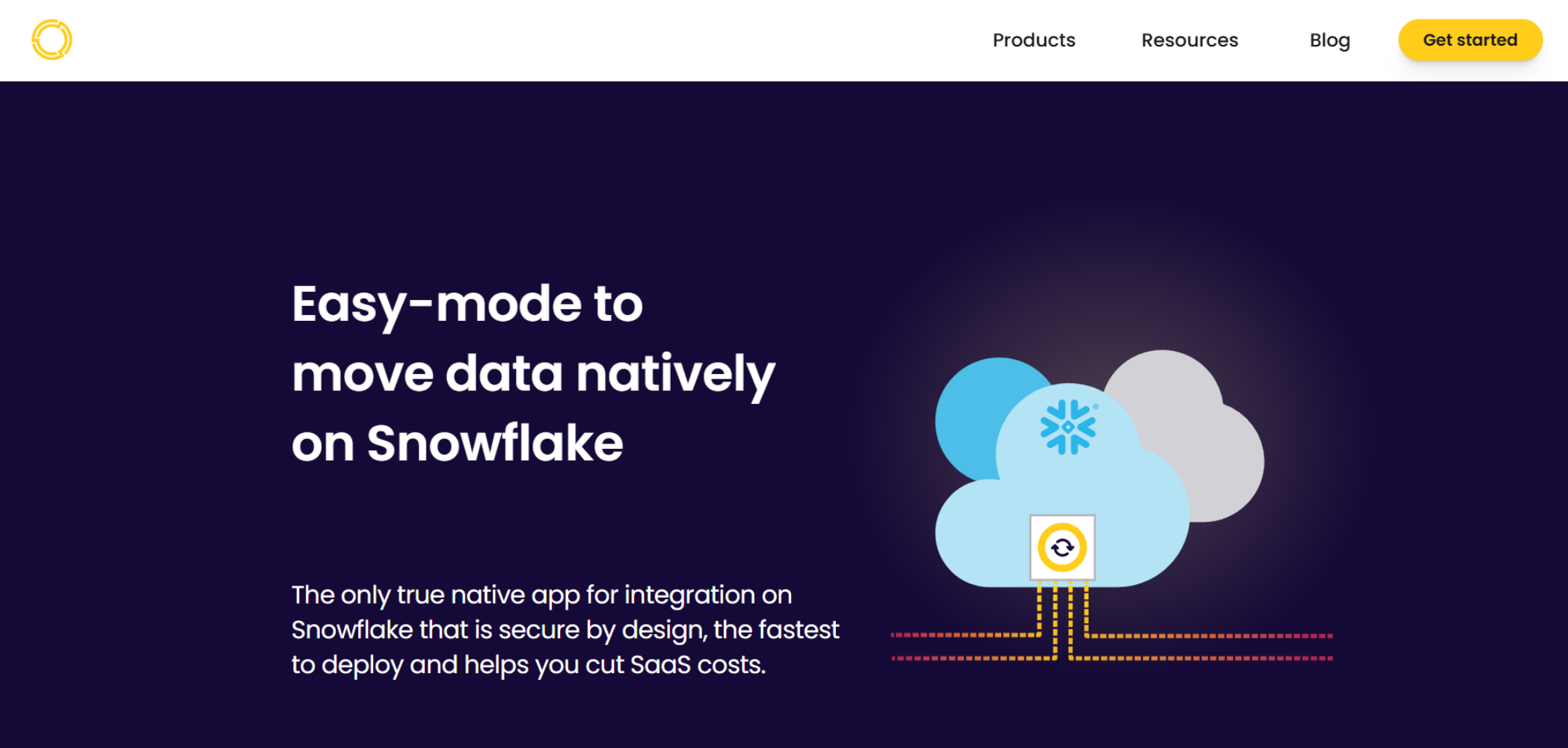
Omnata is a Snowflake Native Application, meaning it runs inside your Snowflake account rather than as an external SaaS service. That architecture has a narrow but meaningful appeal: data never leaves Snowflake, which simplifies data residency compliance for regulated industries. Connectors are purchased through the Snowflake Marketplace and consumption is billed through Snowflake credits.
Omnata’s connector catalog is smaller than Hightouch’s or Census’s. It supports Salesforce, HubSpot, and several advertising platforms. If your organization has strict data governance requirements and has already standardized on Snowflake as the trust boundary, Omnata removes the need to authorize an external vendor to process your customer data.
8. Praxis Data
Praxis Data is a newer entrant focused on Salesforce CRM enrichment from the warehouse. It handles complex Salesforce object models, including custom objects and multi-object relationships, that simpler tools sometimes flatten incorrectly. Pricing is quote-based and enterprise-oriented. It is not a general-purpose reverse ETL tool, but for organizations where Salesforce data quality is the specific pain point, it is worth including in a shortlist evaluation.
How should a marketing ops team evaluate reverse ETL software without wasting a pilot?
A pilot that tests the wrong thing wastes four weeks and produces no signal. Run these three checks in order before starting any trial.
- Define one sync, end-to-end. Pick a single use case: syncing a product-qualified lead score from BigQuery into HubSpot as a contact property. Do not pilot with five use cases simultaneously. One clean sync tells you more about operator experience, latency, and error handling than five half-finished ones.
- Break the sync intentionally. Rename the source column mid-pilot and see how the tool responds. Does it alert you? Does it fail silently? Does it log which records failed and why? How a tool fails is more important than how it succeeds.
- Measure time to second sync, not time to first sync. Getting the first sync running with vendor support is easy. The second sync, built independently by a marketing ops manager three weeks later, is the real test of operator ownership. If it required a data engineering ticket, the tool failed the operator ownership check.
Teams evaluating whether their overall data strategy is mature enough to support reverse ETL should consider how their warehouse modeling is structured before committing to any tool. If your dbt models are still in flux, the sync configurations will break frequently regardless of which tool you choose. Stabilizing your data models before running a reverse ETL pilot is not a delay; it is a prerequisite.
What are the most common reverse ETL use cases for B2B marketing?
The use cases that drive the most actual ROI are more specific than “sync data to your CRM.” Here are the ones that recur most often in B2B marketing and sales operations.
- Product-qualified lead (PQL) scoring to CRM. Your warehouse has product usage events. Your CRM has no idea which leads have hit activation milestones. A sync that writes a PQL score field to Salesforce or HubSpot lets SDRs sort their queue by actual intent, not lead source alone.
- Ad audience suppression. Syncing paying customers or recent churns to Meta Ads and Google Ads as suppression lists prevents wasting spend on people who already converted or left. This is a same-day ROI use case that is easy to measure.
- Lifecycle stage updates. Your warehouse tracks time-to-value, feature adoption depth, and renewal risk. Your marketing automation platform does not. Syncing those fields allows triggered campaigns to fire on actual behavior rather than time-based sequences.
- Account-level scoring to ABM platforms. For teams running account-based programs, writing an account engagement score from the warehouse to Demandbase, 6sense, or HubSpot CRM opens dynamic audience tiering without relying on the ABM platform’s native scoring, which often has limited data access.
- Churn prediction to CS tools. Syncing a churn propensity score from a warehouse model to Gainsight or Totango lets customer success teams prioritize without logging into the warehouse.
Frequently asked questions about reverse ETL tools
What is the difference between reverse ETL and a CDP?
A customer data platform ingests, resolves identity, and activates customer data within a single system. Reverse ETL is only the activation layer: it reads from an existing warehouse and pushes data to downstream tools, but does not ingest or resolve identity itself. Teams that have already built strong warehouse models often find reverse ETL sufficient and cheaper than adding a full CDP. Teams that lack a mature data model or need real-time event processing typically need a CDP.
Does reverse ETL work with Snowflake, BigQuery, and Redshift?
Yes. Hightouch, Census, RudderStack, and Polytomic all support Snowflake, BigQuery, and Redshift as source warehouses. Databricks support varies: Hightouch and Census both support it natively, RudderStack does as well. Omnata is Snowflake-only by design. If your warehouse is a less common engine like ClickHouse or DuckDB, check connector documentation before shortlisting any tool.
How is reverse ETL software priced?
Pricing models fall into three categories. Row-based pricing charges per record synced and can become expensive as audience sizes grow. Connector-based pricing charges per destination regardless of volume, which suits teams syncing large lists to a few tools. Workspace or flat-rate pricing charges a fixed fee per account tier, which is predictable but sometimes more expensive at low volumes. Hightouch and Census both use row-based models at lower tiers. RudderStack Cloud uses event-based pricing. Omnata uses Snowflake credit consumption.
Can non-engineers use reverse ETL tools without writing SQL?
Hightouch and Census both offer no-code audience builders that let marketing ops create segments without SQL. The underlying data still needs to be modeled in the warehouse by a data engineer or analytics engineer, so there is always a technical prerequisite. The relevant question is whether marketers can build new audiences independently after initial setup, and with Hightouch or Census, the answer is generally yes.
What happens when a reverse ETL sync breaks?
Sync failures happen because of schema changes in the source model, API rate limits at the destination, or authentication token expiration. The quality of failure handling differs sharply between tools. Hightouch logs row-level errors and sends alerts on sync failure. Census has similar observability. RudderStack’s reverse ETL module requires more manual monitoring in its open-source form. Before committing to any tool, test its behavior on a forced failure: rename a source column and see what surfaces in the UI.
What happened to Grouparoo?
Grouparoo was acquired by Airbyte in 2022 and no longer ships as a standalone product. Teams that built workflows on Grouparoo should evaluate Airbyte’s reverse ETL module as the closest migration path, or move to Hightouch or Census if operator-friendly tooling is a priority.
What is the minimum data infrastructure needed to use reverse ETL?
You need a cloud data warehouse (Snowflake, BigQuery, Redshift, or Databricks) with at least one table or view that contains customer identifiers and the fields you want to sync. You also need a destination tool with an API that accepts writes. You do not need dbt, though it helps for maintaining sync-ready models. Teams on early-stage stacks with no warehouse yet should prioritize standing up the warehouse before evaluating reverse ETL tools.
How does reverse ETL affect data residency and compliance?
Standard reverse ETL tools (Hightouch, Census, RudderStack Cloud) process data through their own infrastructure, which means customer records leave your warehouse environment. For GDPR or HIPAA-regulated data, that requires reviewing each vendor’s data processing agreements and subprocessor lists. Omnata’s Snowflake Native architecture avoids this by processing entirely within your Snowflake account, which is why it exists in the market despite a smaller connector catalog.
Verdict: which reverse ETL tool should you actually buy?
For most marketing and growth teams at B2B SaaS companies with an existing Snowflake or BigQuery warehouse, Hightouch is the default recommendation. The Visual Audience Builder genuinely transfers segment ownership to marketing ops, the connector catalog is the broadest in the category, and the observability layer is production-grade. Census is the right alternative if your team has invested heavily in dbt and wants semantic layer integration out of the box, or if your pricing math works better with Census’s destination-based model at your specific volume.
RudderStack belongs in the conversation only if you are already running it for event streaming or if your team has strong engineering ownership and prefers open-source infrastructure. Buying RudderStack purely for reverse ETL introduces more operational surface area than the activation capability justifies. Polytomic earns a look for RevOps teams whose primary pain point is Salesforce data quality. Omnata earns a look if data governance and Snowflake-native architecture are hard requirements.
The meta-point that most buying guides skip: the tool is not the constraint. The constraint is whether your warehouse models are stable and ownership of syncs is clearly assigned. A team that buys Hightouch without resolving those two things will run one successful pilot sync and then watch the category slowly lose internal credibility. Reverse ETL is an operational practice before it is a software purchase. Get the practice right, and the software choice becomes much less consequential.