- RCS business messaging is live in the US now, not in some future rollout. Apple added RCS support in iOS 18, completing the carrier network that makes brand-to-consumer RCS viable.
- The right platform depends on whether you need a direct carrier aggregator, a CPaaS add-on, or a standalone campaign tool. These are genuinely different products serving different stack configurations.
- SMS fallback is not optional. Any RCS provider that does not handle automatic SMS fallback when RCS is unavailable is not production-ready for US campaigns.
- Pricing models vary sharply: some platforms charge per RCS session, others per message, others on a platform fee plus volume tiers. Run the math against your actual send volume before signing anything.
- RCS does not automatically outperform SMS. Rich cards, carousels, and verified sender branding improve engagement in specific scenarios, transactional flows, product discovery and re-engagement. The lift is not universal.
The best RCS business messaging platforms available to US brands right now are Sinch, Twilio, Infobip, Bird, Attentive, Podium, Vonage, Bandwidth and Telnyx. Every platform on this list supports verified sender profiles, automatic SMS fallback and rich card delivery on all four major US carriers. Apple’s RCS support in iOS 18 removed the last significant adoption barrier, which makes RCS a viable channel for most US consumer audiences today. Which one fits depends on three things: whether you need a direct carrier connection or can accept aggregated routing, whether your team writes code or works in a campaign builder, and whether the vendor will run brand verification on your behalf.
RCS has been “almost ready” in the US for years. What actually changed?
For most of its history, RCS business messaging in the US was trapped in a carrier-fragmentation problem. Google pushed its own RCS implementation through Android Messages, but without Apple support, any brand sending RCS reached at best half its list. AT&T, Verizon, and T-Mobile each had their own timelines and technical requirements. The channel existed but campaign-level deployment was impractical.
Apple’s release of iOS 18 in September 2024 changed the core constraint. iPhones now support RCS natively via the Messages app, though Apple’s implementation is the GSMA standard rather than Google’s proprietary extensions. The practical result: a US brand sending RCS can now reach Android and iPhone users through a single message thread, with SMS as the fallback for any device or carrier that still does not support the protocol.
The second shift is carrier coverage. All four major US carriers (AT&T, Verizon, T-Mobile, and US Cellular) now support RCS for consumer messaging. Aggregators like Sinch and Twilio have negotiated the carrier-side connections so brands do not have to contract with each carrier separately. That aggregation layer is what makes RCS business messaging actually deployable at scale.
What does RCS actually give a marketer that SMS does not?
RCS, or Rich Communication Services, is the carrier-supported successor to SMS, and RCS Business Messaging is the brand-to-consumer layer built on top of it through verified sender agents.
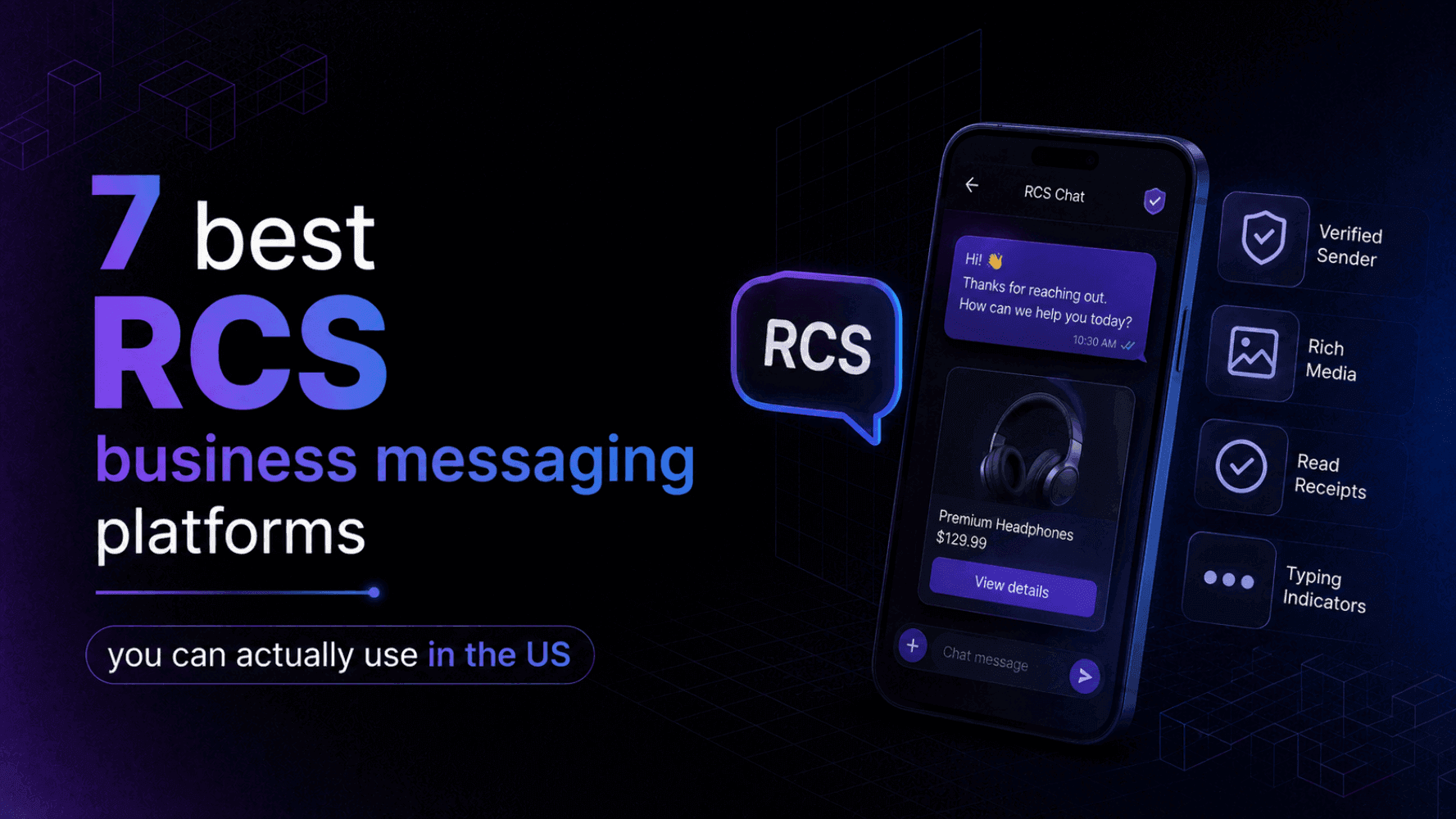
The surface-level answer is rich media: images, carousels, quick-reply buttons, suggested actions. The more useful answer is verified sender identity. With RCS, your brand name, logo, and a verified checkmark appear in the message thread. Recipients know they are talking to the actual company, not a spoofed number. That alone addresses a real deliverability-trust problem that SMS has never solved.
Rich cards let a retailer send a product image with a “Buy Now” button that opens a URL or triggers an in-app action without pushing the user out to a browser first. Carousels let a travel brand show three hotel options in a single message. Read receipts (when the user has not disabled them) give marketers session-level engagement data that SMS cannot provide.
Where RCS does not automatically win: delivery rate in mixed-device markets, cost per send, and message length constraints. SMS still has near-universal reach and a single, predictable pricing model. The RCS vs SMS decision is not about one replacing the other. It is about which message types in which flows justify the richer format and the added complexity of managing fallback logic. Think of RCS as the channel for moments where the visual or interactive layer changes the conversion outcome, not as a wholesale SMS replacement.
How should you evaluate an RCS business messaging provider before committing?
Most RCS platform comparisons focus on feature checklists. That misses the actual buying risk. The more useful evaluation runs four checks that we call the AboutMartech RCS Readiness Test:
- Carrier connection model. Ask whether the platform holds direct interconnects with AT&T, Verizon, T-Mobile and US Cellular, or routes through another aggregator that holds them. Ask for the carrier coverage document, not the marketing claim. Then read the section below on what the difference costs you in practice.
- Fallback logic ownership. Confirm the platform detects RCS capability at the recipient level and downgrades to SMS automatically, per message, without your team writing that logic. Ask what happens when capability changes between send and delivery, because a device that was RCS-capable last week may not be reachable today. Automatic fallback is table stakes for production campaigns.
- Verified sender registration support. RCS business messaging requires brand verification through the carrier network. Who handles the registration process, the vendor or you? How long does it take? What are the re-verification requirements?
- Analytics granularity. Ask to see a live report broken out by RCS and SMS fallback, by carrier. Your RCS-to-fallback ratio is the number that tells you whether the channel is worth its production cost, and you cannot calculate it from blended totals. Per-carrier delivery data is what lets you tell a routing problem apart from an audience problem.
Any vendor that cannot answer checks one through four clearly in a sales call is not production-ready regardless of what their feature page says.
Can you track link clicks inside a verified RCS message?
Yes, but you need to ask about two different things, because RCS produces two kinds of taps. A suggested action or rich card button generates a structured event that the platform reports natively, with the button identifier attached. A plain URL inside message text generates an ordinary web click that you track the same way you track any link, with a UTM parameter or a redirect service.
The gap to watch is per-recipient attribution. Some platforms report suggested-action taps in aggregate at the campaign level and never tie a tap back to an individual subscriber, which means you cannot use RCS engagement to trigger a follow-up or update a customer record. If tap-level personalization matters to your program, ask for a sample webhook payload during evaluation rather than a screenshot of a dashboard.
One recent change affects how your links look. Google now displays the destination URL directly inside “Open a URL” suggestion buttons in RCS for Business, so a long tracked redirect is visible to the recipient before they tap. Keep tracked URLs short and on a subdomain that matches your brand, because a redirect chain through an unfamiliar domain is now something the reader sees.
What does RCS sender verification actually involve in the US?
Verification is the process of registering a brand agent so your company name, logo and a verified check mark appear in the message thread instead of a phone number. You do not do this with the carriers directly. You do it through a platform that holds partner status with Google’s RCS for Business program, and that platform submits your brand on your behalf.
The approval runs on two tracks, which is why timelines vary so much between vendors. Some US carriers have handed agent review to Google, so those launches are approved centrally. Others review and approve their own agent launches on their own schedule. A single brand agent submitted for all four major carriers can therefore go live on some networks before others, and your effective reach climbs in steps rather than all at once.
What you will need to submit:
- Brand assets. Legal business name, logo in the required dimensions, brand color, and a short brand description that appears in the conversation header.
- A verifiable web presence. A domain that demonstrably belongs to your organization. Mismatches between the submitted brand name and the domain registrant are a common rejection reason.
- A declared use case. Whether the agent sends one-time passcodes, transactional notifications, promotional campaigns or a mix. This is not a formality, because it also sets your billing category, per session or per message.
- Sample messages. Representative content for each message type the agent will send, including your opt-out handling.
- A named contact at the brand. Google may contact someone at your company directly to confirm the submission is legitimate, so the person you name should be reachable and briefed.
Plan for weeks, not days, and start before your campaign calendar is locked. Rejections send you back to the start of the queue for the affected carrier, and the most common cause is an asset mismatch that takes ten minutes to fix and a full review cycle to clear. Verification also carries a cost on some platforms in the form of a per-sender carrier onboarding fee, which is easy to miss when you are modeling per-message rates.
Ask any vendor on your shortlist a single question: do you submit and manage the brand agent, or do we? Managed submission is the difference between a marketing team launching RCS and a marketing team waiting on an engineer.
Direct carrier interconnects or aggregated routing: what actually changes?
A platform with direct interconnects holds its own contracted connections to each carrier. A platform without them buys capacity from someone who does. Both deliver messages, and for most programs the recipient cannot tell the difference. The choice shows up in four places.
Latency and throughput ceilings. Each additional hop adds handoff time and a second party’s rate limits. For a scheduled promotional send this is invisible. For a one-time passcode where the user is watching a login screen, it is the whole product.
Who owns the SLA. With a direct connection, one company is accountable for delivery. With aggregated routing, your vendor’s commitment to you is capped by its upstream provider’s commitment to it, and a delivery incident becomes a conversation between two companies that you are not in.
Approval speed. A platform with established carrier relationships moves brand agent submissions through channels it uses every day. A platform passing your submission upstream inherits someone else’s queue.
Price floor. Direct connections mean no intermediary margin, which matters at volume and is irrelevant below it. A team sending fifty thousand messages a month will not recover the cost of a heavier contract process in message savings.
The practical rule: if you are sending transactional or time-critical messages, or your volume runs into the millions per month, pay for the direct connection. If you are sending scheduled campaigns at moderate volume, aggregated routing through a platform with better tooling is usually the better trade. Buy the connection model your worst-case message needs, not your average one.
The 9 best RCS business messaging platforms for US brands
| Platform | Best for | SMS fallback | Pricing model | US carrier coverage | Also carries | International reach | Two-way and bot | Handles your verification |
|---|---|---|---|---|---|---|---|---|
| Sinch | High-volume enterprise, direct carrier routes | Yes, automatic | Volume-based, quote | All 4 major carriers | WhatsApp, SMS, email, voice | Global, per-market registration | Yes | Yes |
| Twilio | Developer-first, existing Twilio stacks | Yes, automatic | Per-message, public pricing | All 4 major carriers | WhatsApp, SMS, email, voice | Global, per-market registration | Yes, via API | Partner-assisted |
| Infobip | Omnichannel enterprise, managed services | Yes, automatic | Volume-based, quote | All 4 major carriers | WhatsApp, SMS, email, push, voice | Global, per-market registration | Yes, with flow builder | Yes, managed option |
| Bird (formerly MessageBird) | Mid-market omnichannel campaigns | Yes, automatic | Platform fee + usage, public tiers | All 4 major carriers | WhatsApp, SMS, email | Global, per-market registration | Yes | Yes |
| Attentive | E-commerce, DTC retail | Yes, automatic | Quote-based | All 4 major carriers | SMS, email | US-focused | Limited | Yes |
| Podium | Local and multi-location businesses | Yes, automatic | Tiered subscription, public pricing | Major carriers | SMS, web chat, reviews | US-focused | Yes | Yes |
| Vonage (operated as Vonage, owned by Ericsson) | Telecom-rooted enterprise, global reach | Yes, automatic | Volume-based, quote | All 4 major carriers | WhatsApp, SMS, voice, video | Global, per-market registration | Yes, via API | Partner-assisted |
| Bandwidth | US-first enterprise, carrier-grade delivery | Yes, automatic | Volume-based, quote | All 4 major carriers | SMS, MMS, voice | US-focused messaging | Yes, via API | Partner-assisted |
| Telnyx | Developer-first teams that want published rates | Yes, automatic | Per-message, public pricing | All 4 major carriers | SMS, MMS, voice, WhatsApp | Global, per-market registration | Yes, via API | Self-service |
1. Sinch
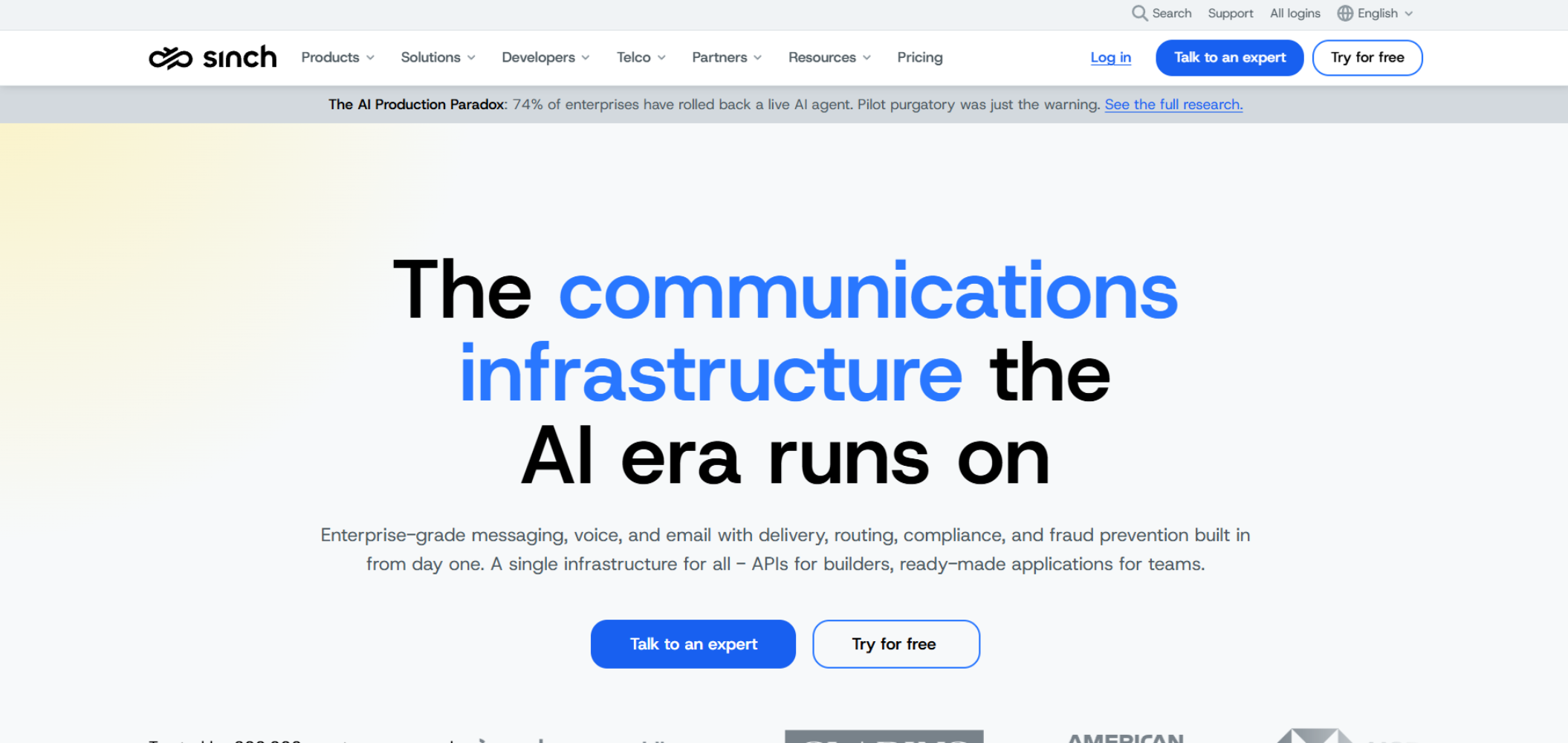
Sinch is the most direct-to-carrier RCS provider operating in the US market. The company has direct carrier interconnects rather than routing through a third-party aggregator, which reduces latency and gives brands a cleaner SLA chain. Sinch handles verified sender registration, rich card templating, and automatic SMS fallback within its platform.
The tradeoff is that Sinch skews toward enterprise contracts. Pricing is entirely quote-based, and their self-service options are limited. If you are a marketing team with a developer resource and volume above a few million messages per month, Sinch is worth benchmarking. Mid-market teams with less volume will likely find the contract process disproportionate.
2. Twilio
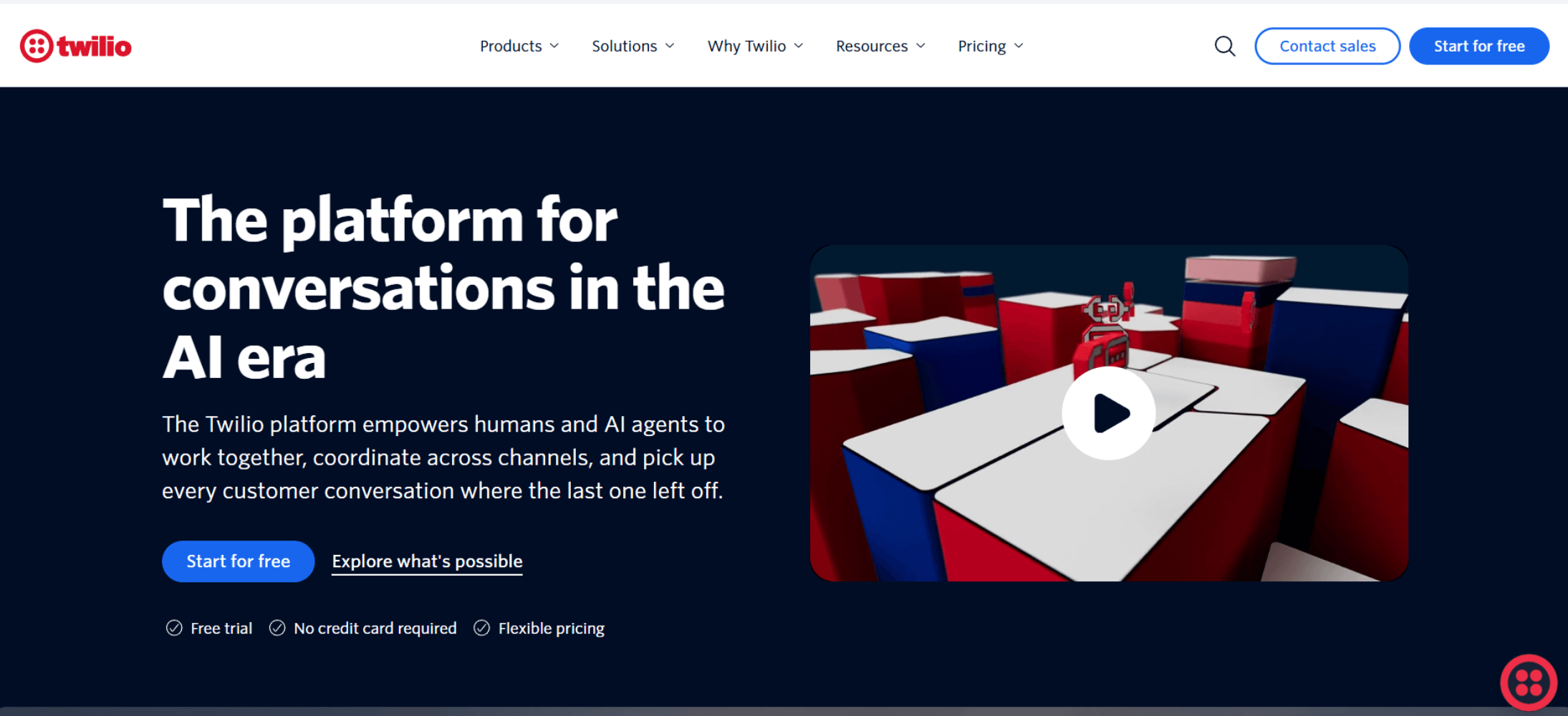
Twilio is the most accessible entry point for teams that already run SMS through Twilio’s APIs. RCS is an extension of the same Messaging API, so adding RCS to an existing Twilio deployment is a configuration change rather than a new integration. Twilio publishes pricing publicly, which is rare in this space, and the developer documentation is thorough.
The limitation is that Twilio’s RCS offering is API-first. There is no campaign-builder UI for non-technical teams. If your marketing ops team manages SMS campaigns through a visual interface, Twilio requires either a developer or a third-party tool sitting on top of the API. For engineering-led teams or companies already deep in the Twilio stack, it is the lowest-friction option available.
3. Infobip
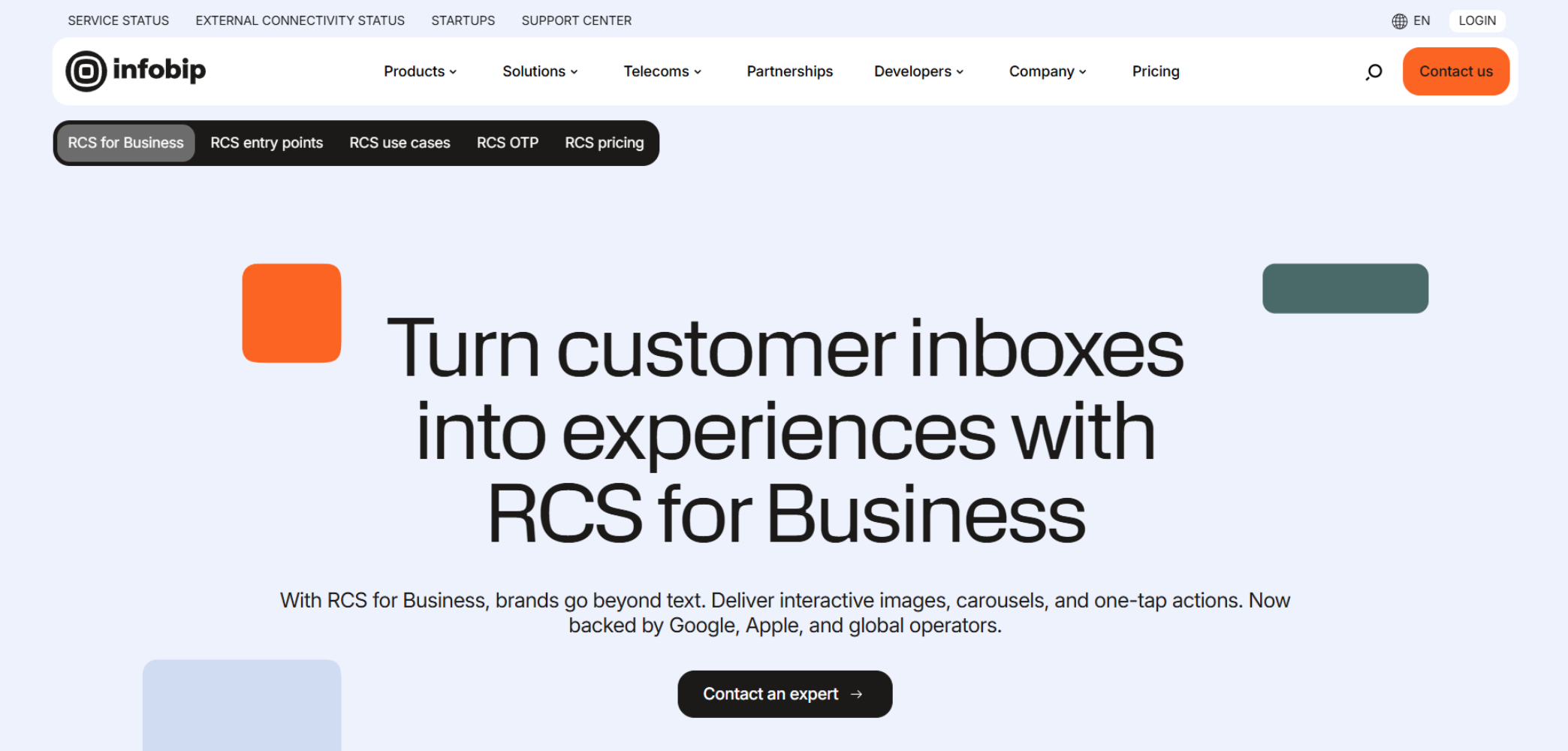
Infobip offers one of the broadest omnichannel messaging platforms in the market, covering RCS alongside WhatsApp, email, push, and voice in a single orchestration layer. Their RCS implementation includes a visual flow builder, A/B testing, and analytics that break out RCS versus SMS fallback performance.
Infobip also provides managed service options, meaning their team can handle sender registration and carrier coordination rather than your team. For enterprise marketers who want RCS without building the operational infrastructure themselves, this is a meaningful differentiator. Pricing is quote-based, and contracts are typically annual. The platform complexity may be overkill for a team that only wants RCS.
4. Bird (formerly MessageBird)
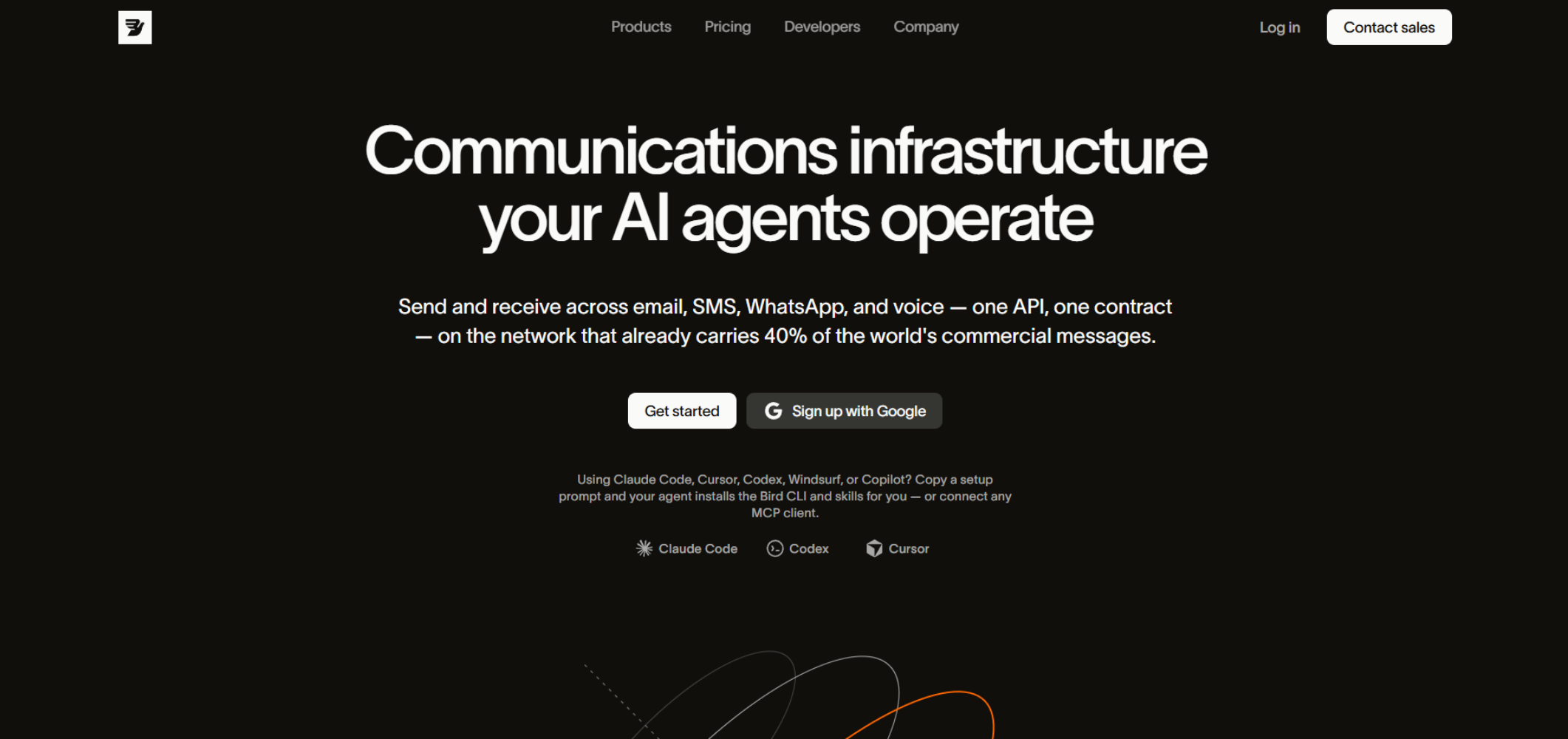
Bird rebranded from MessageBird in 2023 and has since repositioned as a customer communication platform. Their RCS offering sits within a broader messaging suite that includes email, WhatsApp, and SMS. Bird publishes tiered pricing on their website, which makes cost modeling easier than the purely quote-based alternatives.
Bird’s visual campaign builder works for non-technical marketing teams, and their segmentation logic integrates with standard CRM data structures. The platform went through significant internal restructuring during its rebrand period, so prospective buyers should ask specifically about current US carrier certification status and SLA terms before signing. The product is solid, but the company context warrants due diligence.
5. Attentive
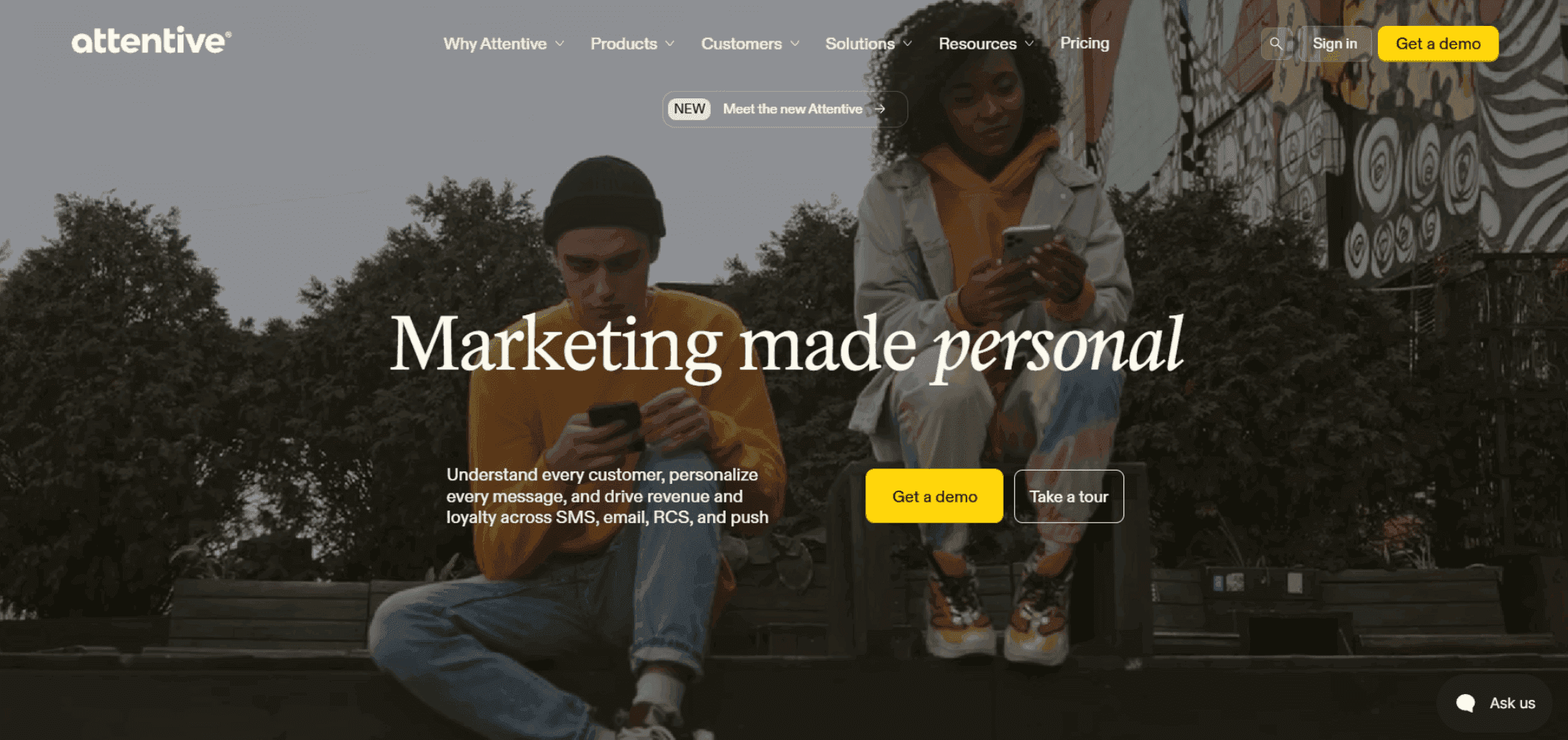
Attentive built its business on SMS for e-commerce and retail, and their RCS offering extends that core use case. If your primary RCS use case is promotional campaigns, abandoned cart flows, or post-purchase sequences for a DTC brand, Attentive’s pre-built templates and flow logic are more campaign-ready than a raw API provider.
Attentive handles compliance workflows, including TCPA opt-in management, within the platform. For retail brands who need to move fast without a dedicated compliance team, that matters. Pricing is quote-based and typically structured around subscriber volume. Teams outside retail or e-commerce will likely find the platform’s vertical orientation limiting.
If Attentive is already on your shortlist, it is worth reading how Attentive compares with Postscript on pricing and flow tooling before you add a second messaging vendor.
6. Podium
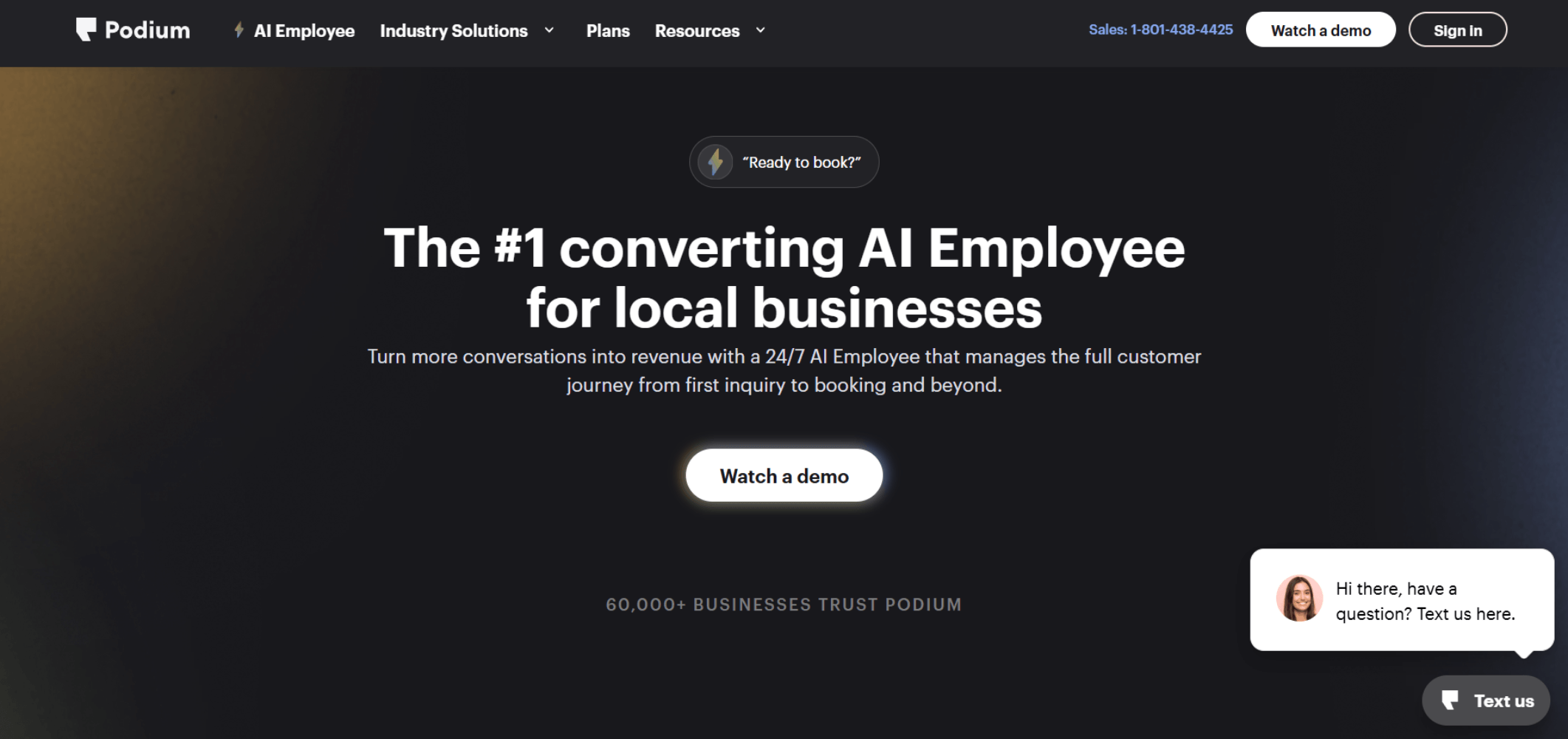
Podium targets local businesses and multi-location brands, particularly in automotive, home services, healthcare, and retail. Their RCS support is part of a broader customer communication tool that includes web chat, reviews, and two-way messaging. Podium publishes subscription pricing on their public pricing page, with plans structured around business size.
The RCS feature set is narrower than enterprise-focused platforms: rich cards and verified sender branding rather than full carousel builders. For a regional business sending appointment reminders or local promotions, that is sufficient. For a company running national programmatic campaigns, Podium is not the right fit. The platform’s strength is the combination of RCS with review management and lead response in a single interface.
7. Vonage (operated by Ericsson)
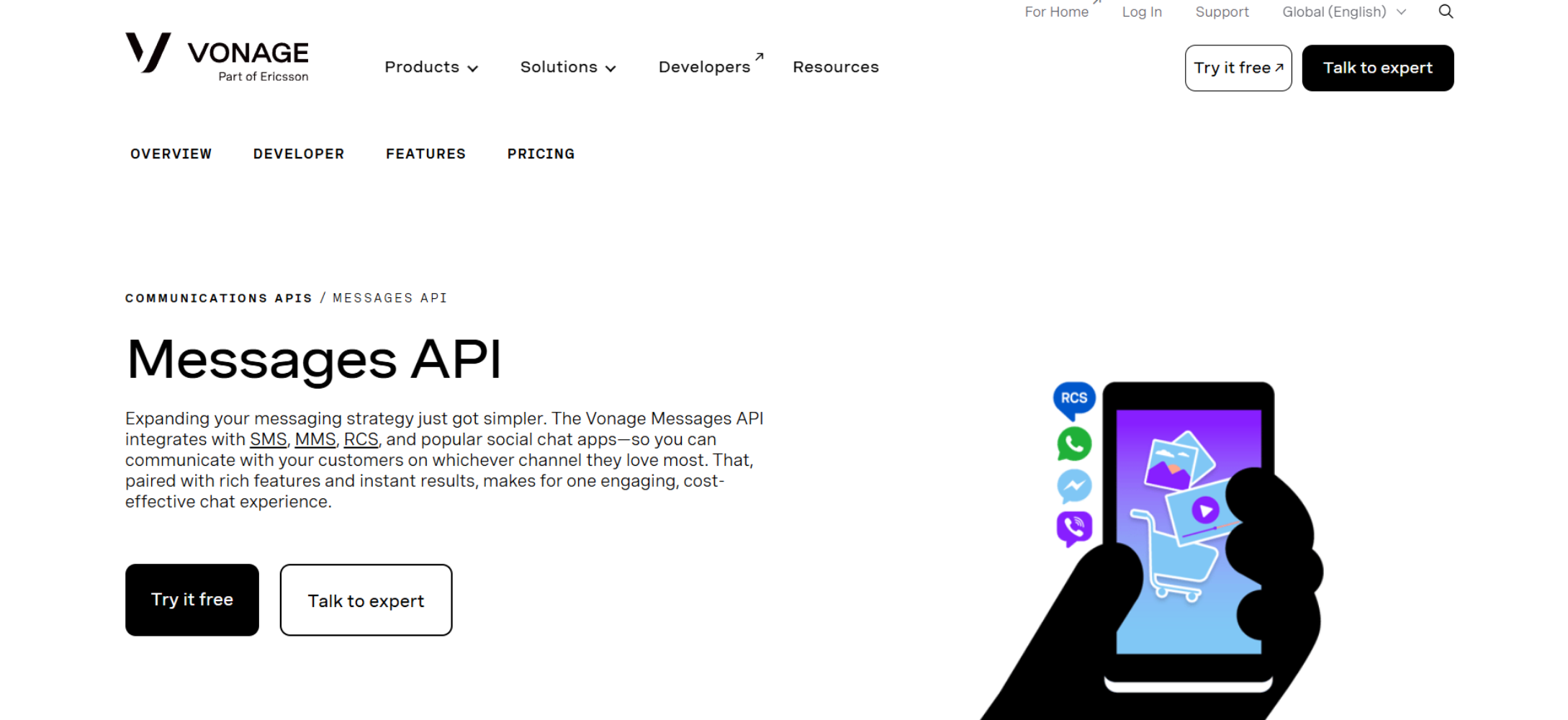
Vonage, acquired by Ericsson in 2022 and still operating under the Vonage brand, offers RCS through its Messages API as part of a broader communications API suite. The platform has deep carrier relationships from Vonage’s telecom history, and the Ericsson acquisition has added global network reach. For enterprises with international messaging programs alongside US RCS campaigns, the ability to run both through a single API is operationally simpler than managing two vendors.
Vonage’s developer experience is solid but not as polished as Twilio’s documentation. Pricing is quote-based for business messaging. Teams that are already using Vonage’s voice or video APIs will find the path to adding RCS short. Teams evaluating Vonage fresh should weigh it against Sinch and Infobip on carrier coverage breadth and implementation support quality.
8. Bandwidth
Bandwidth operates its own network and holds direct connections to AT&T, Verizon and T-Mobile, which is why several other CPaaS providers route their US traffic through it. For a US-only RCS program, that puts Bandwidth one layer closer to the carrier than most alternatives on this list, with the shorter SLA chain that comes with it.
The platform is built for teams that treat messaging as infrastructure. There is API documentation, per-carrier delivery reporting and compliance tooling, but no campaign builder for a marketing team to work in unaided. Pricing is quote-based for enterprise volume. Bandwidth is the right shortlist entry when US delivery quality and carrier-level visibility outrank breadth of channels or polish of interface.
9. Telnyx
Telnyx brought RCS to general availability on its messaging API in 2025, with verified sender profiles, rich cards, carousels and automatic SMS fallback included in the same payload structure teams already use for SMS. Like Bandwidth, Telnyx runs its own network rather than reselling capacity, and it publishes rates rather than routing every enquiry to sales.
The fit is developer-first: a product or growth team that ships its own messaging logic and wants RCS to be a message-type change rather than a new vendor relationship. Teams that need a visual campaign builder or managed brand registration will find less of both here than with Infobip or Attentive. Telnyx is worth benchmarking specifically against Twilio, since the two compete on the same developer-first ground and their published rates are directly comparable.
Which platform fits your industry?
Industry matters less than message type for most RCS buyers, but it changes two things that are hard to work around later: the compliance posture your legal team will require, and whether the vendor has already solved your sector’s specific message patterns.
| Industry | Usual RCS use case | Platforms worth shortlisting | The constraint to check first |
|---|---|---|---|
| Retail and DTC | Abandoned cart, product launch, post-purchase | Attentive, Bird, Infobip | Catalog and carousel tooling, and whether templates are reusable across campaigns |
| Financial services and retail banking | Transaction alerts, fraud confirmation, one-time passcodes | Sinch, Infobip, Bandwidth | Latency on time-critical sends, plus data residency and audit logging your compliance team will ask for |
| Insurance | Claim status updates, renewal reminders, document requests | Infobip, Sinch, Vonage | Two-way capability, since a claim thread generates replies that need to reach a human |
| Healthcare | Appointment reminders, intake forms, prescription notifications | Podium, Infobip | Whether the vendor will sign a business associate agreement, and whether any protected health information can appear in a rich card at all |
| Local and multi-location services | Appointment confirmation, review requests, lead response | Podium | Per-location sender identity, and whether each location needs its own agent |
| Utilities and public sector | Outage notices, billing reminders, service appointments | Sinch, Vonage, Bandwidth | Throughput during an incident, when your entire subscriber base needs one message at once |
If your sector is not listed, sort by message type instead. A time-critical alert points you toward a direct carrier connection. A visual promotional campaign points you toward campaign tooling. Everything else is a stack decision, not an industry one.
How does RCS fit into a broader customer engagement stack?
RCS does not replace email, push, or SMS. It occupies a specific position in a multi-channel engagement architecture. The channel performs best in moments where the visual or interactive layer directly affects the conversion decision: product discovery, onboarding sequences, real-time transactional updates, and re-engagement flows where a rich image or single-tap CTA changes behavior.
One verified RCS sender profile does not automatically cover every market, since agent approval runs per carrier and per country, so a US launch and a European launch are separate submissions even with the same vendor.
If you already run WhatsApp or SMS through the same vendor, keep the verified identity consistent across all three. Your brand name, logo and color should match in every channel, because a recipient who sees one identity in a WhatsApp thread and a different one in an RCS thread has no way to tell which is real. Note that verification does not transfer: WhatsApp business verification and RCS agent verification are separate submissions with separate review cycles, even inside a single platform.
For teams managing customer engagement data across channels, the RCS session data (delivery, read, tap) needs to flow back to wherever the customer record lives. Most of the platforms above offer webhook-based event delivery or native CRM integrations. Teams running a more sophisticated data infrastructure should evaluate how RCS event data moves through their reverse ETL pipeline. Reverse ETL tools that activate warehouse data can make RCS engagement signals available to segmentation and scoring models without manual data exports.
What does an RCS business messaging campaign actually cost?
Only two of the nine platforms publish RCS rates you can model without a sales call. Twilio lists RCS pricing publicly on its US messaging pricing page: rich text messages start at $0.0083 to send or receive, matching its SMS rate, and rich media messages are priced separately at a higher rate, matching its MMS tier. Twilio also notes that RCS senders launching on US carriers are subject to carrier onboarding fees, which are charged per sender and are separate from per-message costs. Verify current figures on Twilio’s pricing page before you build a model, because published rates change without notice.
Everything else falls into one of three models:
| Pricing model | Platforms | What you can plan for |
|---|---|---|
| Published per-message | Twilio, Telnyx | Model your own costs before a sales conversation. Rich media costs more than rich text on both |
| Platform fee plus usage | Bird, Attentive | A subscription floor plus message volume. Bird publishes tier structures. Attentive quotes against subscriber count |
| Quote only | Sinch, Infobip, Vonage, Bandwidth | No number without a sales conversation. Volume discounts are standard, and the first quote is rarely the last |
| Tiered subscription | Podium | Priced by business size rather than message volume, which is predictable for a local business and expensive at national send volumes |
Two cost variables catch buyers out. The first is the rich text versus rich media split: a campaign built around product images costs materially more per send than the same campaign in text, so a rich media strategy priced against a rich text rate will run over. The second is onboarding. Brand agent registration carries a per-sender fee on several platforms and consumes weeks of calendar time, which means a launch date set from your first message send is already late.
Frequently asked questions about RCS business messaging
Is RCS available on iPhone in the US?
Yes. Apple added RCS support in iOS 18, released in September 2024. iPhones running iOS 18 or later can send and receive RCS messages through the native Messages app. Apple’s implementation follows the GSMA standard rather than Google’s proprietary extensions, which means some advanced features available on Android may not render identically on iPhone. For business messaging, the core capabilities, verified sender identity, rich cards, SMS fallback , work across both platforms.
Do all US carriers support RCS business messaging?
All four major US carriers (AT&T, Verizon, T-Mobile, and US Cellular) support RCS for consumer and business messaging. Coverage gaps exist with some regional MVNOs. Any production RCS campaign should include SMS fallback to catch messages to subscribers on non-RCS-capable devices or networks. The aggregator platforms in this list handle carrier routing and fallback automatically, which is why choosing a provider with confirmed carrier relationships matters.
What is the difference between RCS and SMS for marketing campaigns?
SMS is a plain-text protocol with a 160-character limit, no native read receipts, and no sender verification. RCS supports rich media (images, carousels, buttons), verified brand identity with a logo and checkmark, read receipts, and suggested reply actions. The tradeoff is complexity: RCS requires sender registration, device and carrier capability detection, fallback logic, and richer content production. SMS is simpler and has near-universal device reach. RCS makes sense for flows where the interactive or visual layer changes the conversion outcome. SMS remains the right default for high-frequency, high-urgency transactional messages.
How long does RCS sender verification take in the US?
Plan for weeks rather than days. Approval runs on two tracks, with some US carriers handing agent review to Google and others approving their own launches, which is why published timelines vary so widely between vendors. The verification section above covers what you need to submit and where the delays come from.
Can RCS business messaging replace email in a marketing stack?
No. RCS and email serve different moments and different audiences. RCS reaches consumers through their phone’s native messaging app, which has different permission structures and engagement patterns than email. Email supports longer-form content, attachments, and more complex rendering. RCS is better suited to time-sensitive, action-oriented moments where a two-tap interaction is the goal. The more useful question is which flows in your current email program would perform better as an RCS message, not whether to replace email entirely.
What happens if a recipient’s device does not support RCS?
All nine platforms in this list provide automatic SMS fallback. When the platform detects that a recipient’s device or carrier does not support RCS, it sends a standard SMS instead. The fallback message is typically a stripped-down version of the RCS content, with URLs replacing interactive buttons. Marketers should design RCS campaigns with the fallback SMS in mind, because a meaningful percentage of any list will receive the SMS version, particularly in the early phases of carrier rollout with MVNOs.
Which RCS platform is best for a small or mid-size business?
For businesses without a developer resource, Podium or Attentive are the most accessible options. Both handle carrier registration, provide campaign-building interfaces, and include compliance tooling. For mid-market teams with developer support who want more control over message logic, Bird’s published pricing and visual builder strike a reasonable balance. API-first platforms like Twilio and Sinch require technical implementation but give the most flexibility for custom flows and deeper integration with existing marketing infrastructure. If RCS itself is the stretch rather than the platform, the SMS marketing tools built for small business budgets will get you further on the same spend.
How does RCS business messaging connect to a customer success or CRM workflow?
Most RCS platforms deliver event data (sent, delivered, read, clicked) via webhooks or API, which can populate CRM records or customer engagement scores. Teams running customer success programs alongside marketing channels can use RCS engagement data as a signal within their broader account health models. If you are evaluating how RCS data fits into your customer engagement stack, it is worth reviewing how your customer success platform handles inbound event data from non-native channels.
The right way to think about RCS in your current stack
RCS business messaging is not a channel to adopt wholesale. The most effective deployments treat it as a format upgrade for a specific subset of existing SMS flows, starting with one or two high-value sequences where rich media or verified sender identity has a clear reason to improve the outcome. Abandoned cart recovery, appointment confirmations, and product launch announcements are the recurring use cases where RCS consistently outperforms the SMS equivalent, because the visual layer is load-bearing in those moments, not decorative.
The platform choice should follow the team’s stack, not precede it. A developer-heavy team on Twilio should evaluate Twilio RCS before looking elsewhere. A retail brand already on Attentive should ask Attentive for their RCS roadmap before adding a second messaging vendor. The cost of fragmented messaging infrastructure almost always exceeds the cost of accepting a slightly narrower feature set from an existing vendor. For teams managing their customer data across a CDP or data warehouse before it flows into messaging, the right CDP infrastructure for B2B teams matters as much as the RCS platform itself.
RCS’s window as a relatively low-competition channel is real but finite. The brands that build sender verification, fallback logic, and rich card templates now will have a head start on deliverability reputation and audience familiarity before the channel becomes crowded. The infrastructure investment is modest compared to what those same brands spent on email deliverability in earlier years. The risk is not moving too early. It is waiting until the early-mover window closes and having to catch up on a channel where reputation accrues slowly.