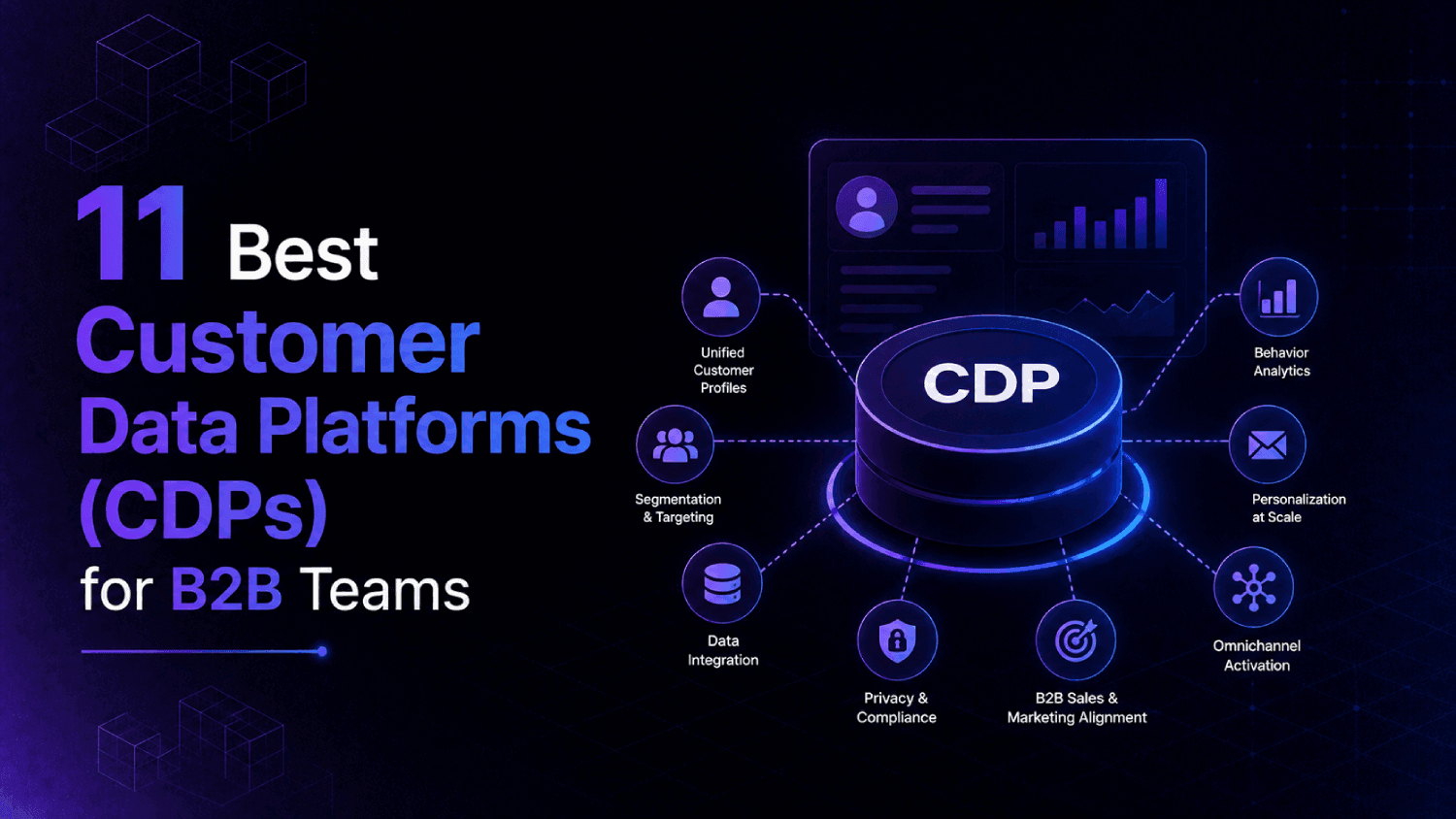
- A CDP is not a CRM replacement. It unifies behavioral, firmographic, and product data from every source into a single customer profile a CRM never touches.
- For B2B teams, the three real differentiators are account-level identity resolution, warehouse-native architecture, and the ability to push segments to sales and ad destinations without engineering tickets.
- Segment leads for mid-market SaaS teams already running on Twilio infrastructure. RudderStack wins on cost and warehouse control. Hightouch is the right call if your data is already in Snowflake or BigQuery and you need activation, not collection.
- Tealium and Salesforce Data Cloud are the enterprise options, but both carry implementation timelines and price tags that require executive commitment upfront.
- Most B2B teams underinvest in the activation side of their CDP and overinvest in the collection side. Where the data goes after unification is what drives pipeline.
The best customer data platform for most B2B teams is Segment, which handles both data collection and identity resolution out of the box at a price point mid-market companies can justify. For teams with data already living in a cloud warehouse, Hightouch delivers faster activation with no re-ingestion overhead. Enterprise teams running Salesforce or Adobe stacks should evaluate Salesforce Data Cloud or Adobe Real-Time CDP before adding a third vendor.
What Is a Customer Data Platform, and How Is It Different from a CRM?
A CRM records what your sales team does. A CDP records what your customers do, across every surface they touch, before a sales rep ever gets involved.
Practically, that means a CDP ingests web events, mobile app events, product usage data, email engagement, ad clicks, and third-party enrichment data, then stitches those signals into a unified profile at the person and account level. Your CRM holds contact records and opportunity data. It does not know that a prospect visited your pricing page four times in three days, downloaded two whitepapers from different email addresses, or that three people from the same company are all showing purchase intent simultaneously.
For B2B teams specifically, that account-level dimension is where CDPs earn their keep. B2B deals involve buying committees, not individual buyers. A platform that can resolve multiple contacts to a single account, score that account based on aggregate behavior, and push that signal to your CRM, ad platform, or sales engagement tool in real time is doing something a CRM structurally cannot.
The AboutMartech Stack-Fit Test: Four Checks Before You Buy a CDP
Most CDP evaluations stall because teams shop on features instead of fit. The following four-part framework cuts through vendor demos faster than any RFP process.
Check 1: Collection architecture. Does the CDP collect data through its own SDK and server-side connectors, or does it read from your existing data warehouse? The answer determines whether you are buying a data pipeline or a data activation layer. These are different tools with different implementation costs.
Check 2: Identity resolution model. Deterministic matching links profiles using known identifiers like email or user ID. Probabilistic matching infers connections from behavioral signals like IP address and device fingerprint. B2B teams almost always need deterministic matching at the person level plus a separate account-level grouping layer. Ask every vendor how they handle anonymous-to-known stitching when the same person uses a work laptop and a personal phone.
Check 3: Activation destinations. Count the native connectors to your existing stack: your CRM, your marketing automation platform, your paid media channels, your sales engagement tool. A CDP that cannot push segments to Salesforce, HubSpot, LinkedIn Ads, and your email platform without custom code is not production-ready for B2B.
Check 4: Warehouse relationship. Does the CDP treat your data warehouse as a destination, a source, or both? Warehouse-native CDPs like Hightouch and RudderStack read directly from Snowflake or BigQuery, which means your data team retains control and you avoid duplicating storage costs. Legacy CDPs that require you to re-ingest data into their proprietary store add latency, cost, and governance complexity.
Which B2B Teams Actually Need a CDP?
Not every B2B team does. If you run a 20-person company with a single product, a handful of sales reps, and all your data living cleanly in HubSpot, a CDP is overhead you do not need yet.
The signal that you need one is data fragmentation creating real revenue leakage. Specific symptoms: your marketing team cannot tell which accounts are showing intent signals across multiple channels simultaneously; your sales team does not know which contacts at a target account have engaged with your product trial; your lifecycle emails treat a power user and a dormant account the same way because your ESP cannot see product usage data.
Consider a B2B SaaS team with 150,000 monthly active product users, a 60-day sales cycle, and an outbound team running 500 accounts. Without a CDP, their demand-gen team fires campaigns based on form fills and email opens. Their sales team works off manually refreshed CRM fields. Three different tools hold intent data that never gets reconciled. A CDP in this scenario does not just improve reporting. It changes which accounts the sales team calls first.
The 11 Best Customer Data Platforms for B2B Teams
| Platform | Best For | Architecture | Pricing Model | B2B Account-Level Support |
|---|---|---|---|---|
| Segment | Mid-market SaaS, full-stack CDP | Collection + activation | Free tier; paid plans from $120/mo (public pricing page) | Yes, via Linked Profiles |
| Hightouch | Warehouse-native activation | Warehouse-native | Free tier; Business plan quote-based | Yes |
| RudderStack | Engineering-led teams, open source | Collection + warehouse sync | Free open-source; Cloud from $750/mo (public pricing page) | Yes, with Profiles |
| Tealium | Enterprise, complex consent requirements | Collection + activation | Quote-based | Yes |
| Salesforce Data Cloud | Salesforce-heavy enterprise stacks | Native Salesforce integration | Quote-based | Yes, natively |
| Adobe Real-Time CDP | Adobe Experience Cloud stacks | Collection + activation | Quote-based | Yes, B2B edition available |
| BlueConic | Mid-market, first-party data focus | Collection + activation | Quote-based | Limited |
| ActionIQ | Enterprise, marketing-led activation | Warehouse-connected | Quote-based | Yes |
| Treasure Data | Enterprise, data-engineering teams | Collection + warehouse | Quote-based | Yes |
| mParticle | Mobile-first, high event volume | Collection + activation | Quote-based | Limited |
| Bloomreach | B2B companies with commerce component | Collection + activation + personalization | Quote-based | Yes, with Engagement module |
1. Segment
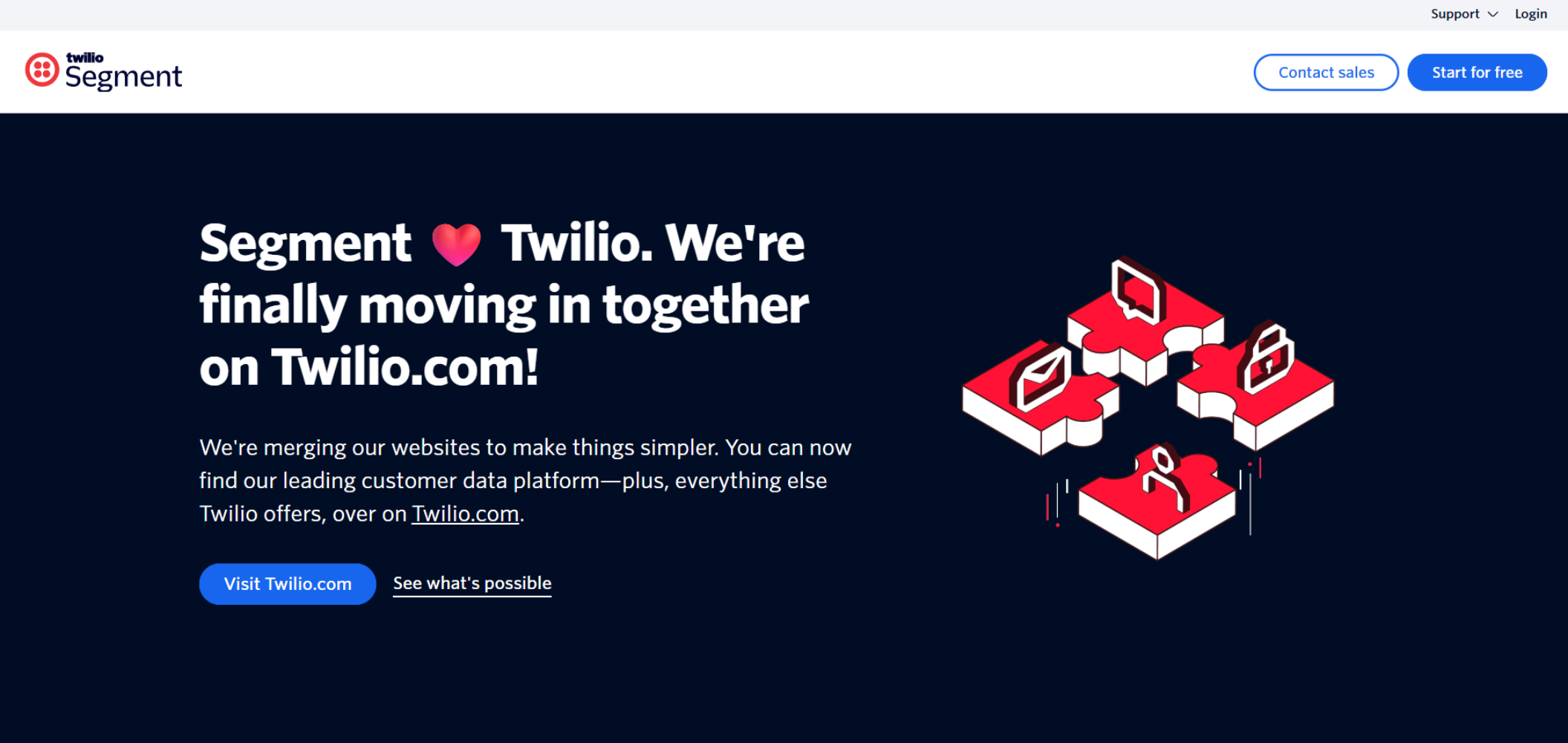
Segment, now part of Twilio, remains the default starting point for B2B SaaS companies evaluating their first CDP. Its core value is the broadest connector library in the market, with over 400 native integrations covering analytics, advertising, CRM, and data warehouses simultaneously.
The Linked Profiles feature handles the B2B account-grouping problem by associating multiple user profiles to a parent account object, which makes it possible to score buying committee activity rather than individual contact activity. This is not a workaround. It is a first-class data model.
Segment’s pricing starts with a free tier limited to 1,000 monthly tracked users. Paid plans begin at $120 per month according to Segment’s public pricing page, though teams at meaningful scale typically end up on the Team or Business tiers, where pricing is volume-based and requires a conversation with sales.
The limitation to know: Segment’s data quality depends entirely on how well your engineering team implements and maintains the tracking plan. A poorly governed Segment instance accumulates event schema debt fast, and cleaning it up is a genuine project.
2. Hightouch
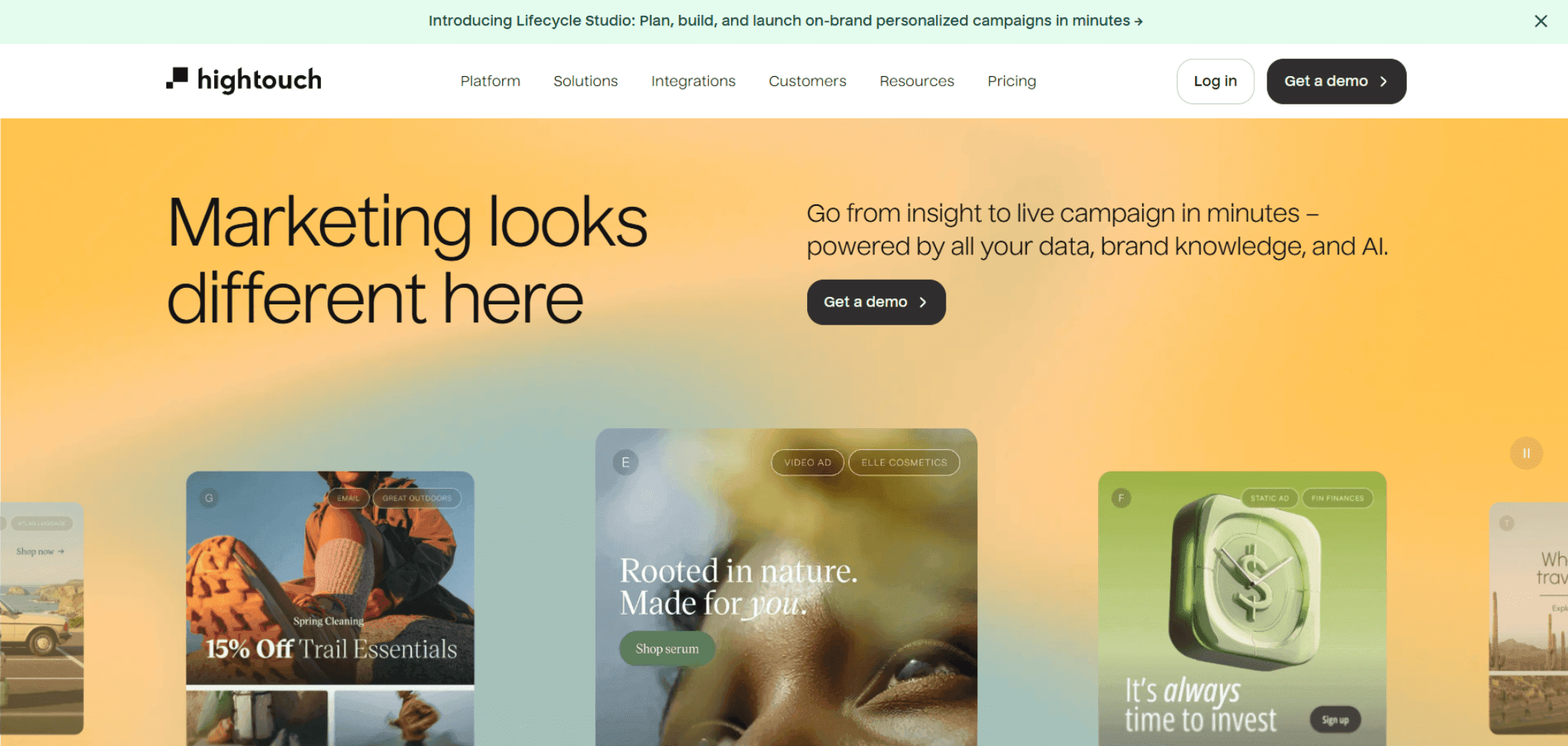
Hightouch invented the category it now leads: reverse ETL, which means reading data from your cloud warehouse and pushing it to downstream tools without writing custom scripts. If your data team already maintains a clean data model in Snowflake, BigQuery, Databricks, or Redshift, Hightouch turns that warehouse into a real-time activation engine.
For B2B teams, the practical implication is significant. Your RevOps team can define a segment in SQL or a visual query builder, map it to a Salesforce field or a LinkedIn Matched Audience, and have it syncing on a schedule or triggered by warehouse events, without filing an engineering ticket. That changes the operational dynamic between marketing and data teams in a way that feature checklists do not capture.
Hightouch also offers an AI Decisioning layer that handles audience suppression, lookalike modeling, and send-time optimization, all powered by the data already in your warehouse rather than a proprietary store. The free tier covers basic syncing. Business and Enterprise tiers are quote-based. Teams exploring warehouse-native activation should also read the AboutMartech guide to reverse ETL tools that activate warehouse data for a full comparison of this category.
3. RudderStack
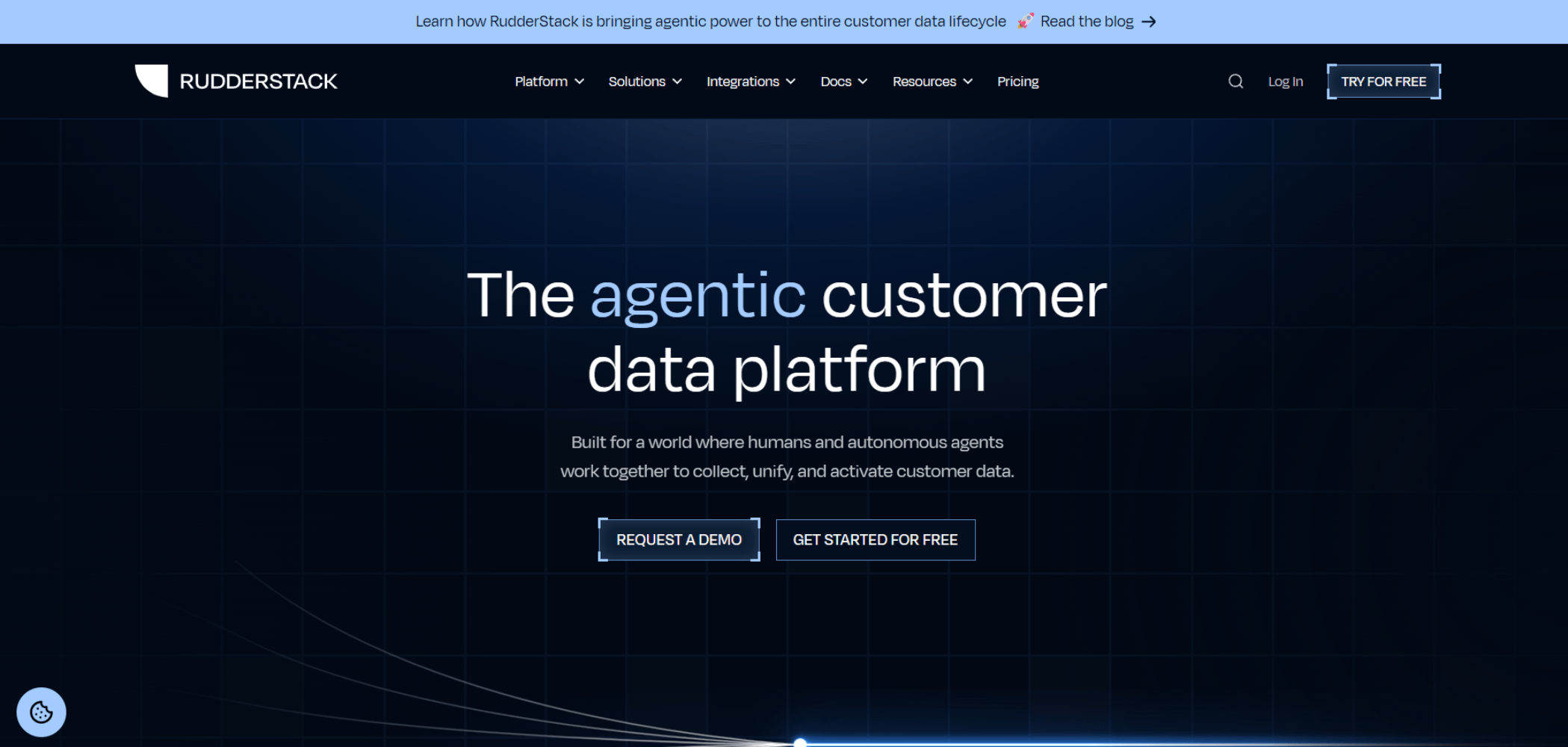
RudderStack is the engineer’s CDP. It was built open source, can be self-hosted, and treats your data warehouse as the system of record rather than an afterthought. That philosophy makes it structurally different from Segment, even though both collect events and route them to destinations.
The key differentiator for B2B teams is cost transparency and data control. Because RudderStack can run on your own infrastructure, you own the data completely. There are no per-event overage fees at scale, and no risk of your behavioral data sitting in a third-party store you cannot fully audit.
RudderStack’s open-source version is free. The Cloud plan starts at $750 per month according to RudderStack’s public pricing page. The Profiles product handles identity resolution and account grouping in a way that competes directly with Segment’s Linked Profiles. For teams with strong data engineering capacity who want to avoid vendor lock-in, RudderStack is a serious alternative to Segment at half the cost or less at comparable event volumes.
4. Tealium
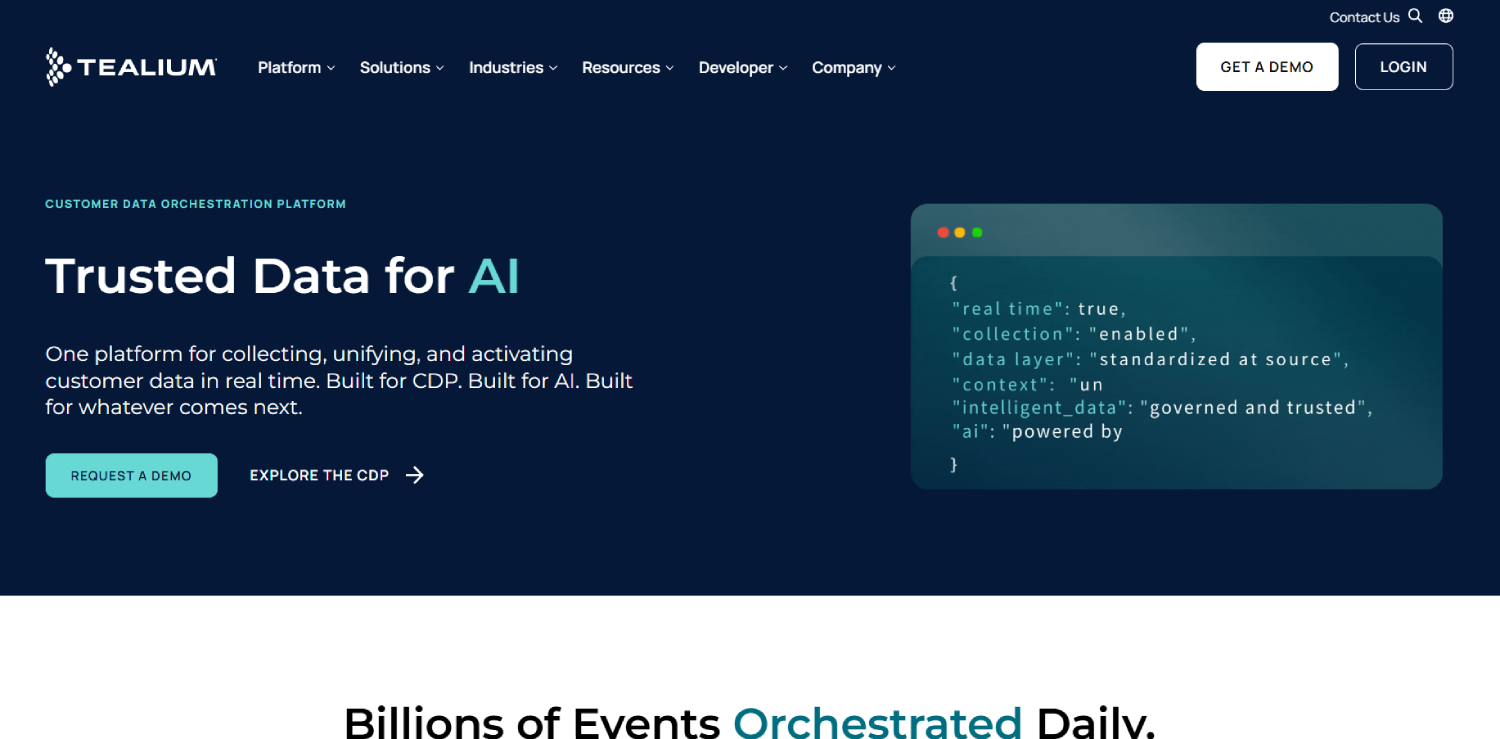
Tealium has been in the enterprise tag management and CDP space longer than most vendors on this list. Its AudienceStream CDP product handles both data collection and real-time audience activation, and its consent management capabilities are mature enough that enterprise legal and privacy teams tend to approve it without friction.
For B2B enterprise teams with complex multi-brand or multi-region data governance requirements, Tealium’s server-side event collection and consent orchestration are genuinely differentiated. Pricing is entirely quote-based, and implementation typically requires a Tealium professional services engagement or a certified partner. That is not a knock. It is an honest description of the product’s target customer.
5. Salesforce Data Cloud
Salesforce Data Cloud (formerly Genie, formerly CDP) is the right answer for enterprise teams where Salesforce is already the system of record for revenue operations. Its native integration with Sales Cloud, Marketing Cloud, and Service Cloud eliminates the identity resolution problem that plagues multi-vendor stacks, because all objects share the same Salesforce environment.
The account-level data model in Data Cloud is strong for B2B use cases. It can unify contact, lead, opportunity, and engagement data into a unified account profile that flows directly into Sales Cloud views. Pricing is quote-based, and Salesforce Data Cloud credits are consumed by data processing volume, which makes cost modeling require careful scoping before signing.
6. Adobe Real-Time CDP
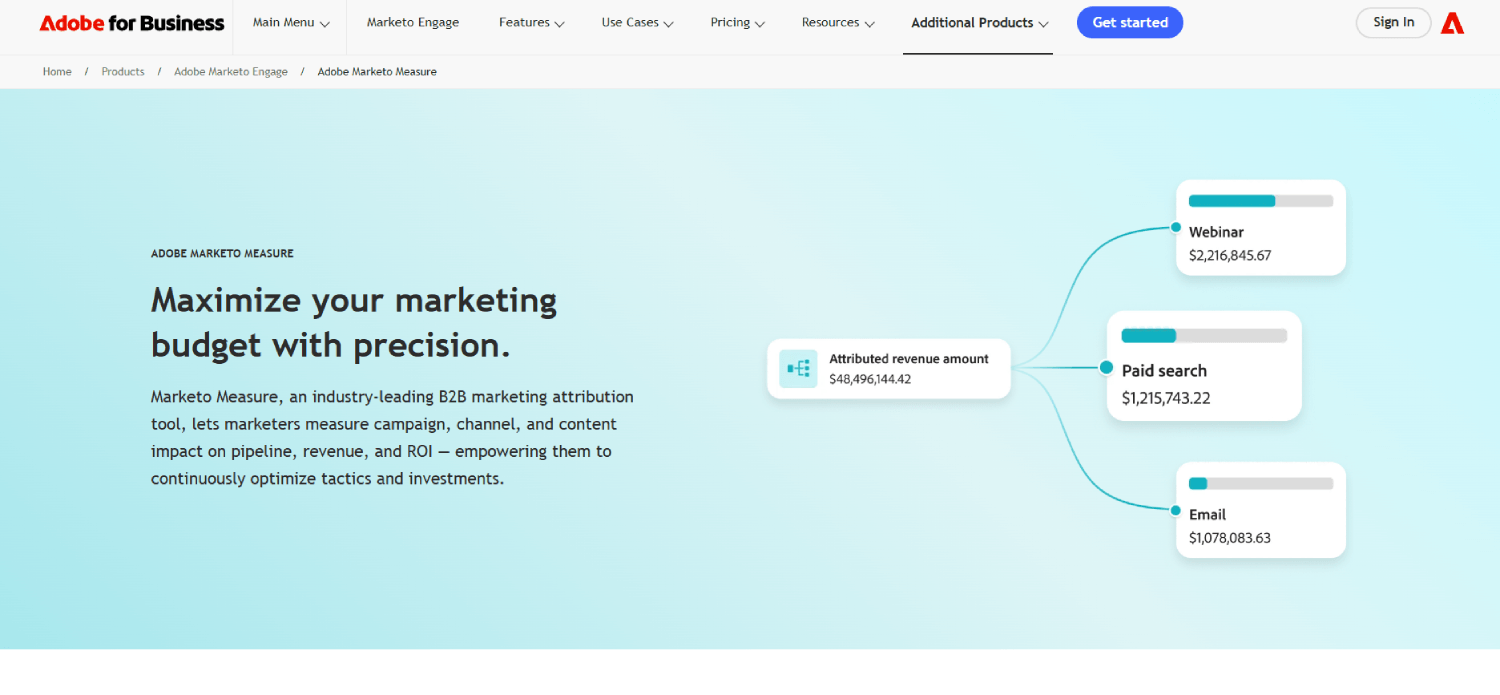
Adobe Real-Time CDP is purpose-built for organizations already running Adobe Experience Platform. It offers a B2B edition that natively supports account and opportunity objects, buying group modeling, and campaign orchestration tied to Adobe Journey Optimizer.
The platform’s identity graph handles both person-level and account-level resolution, and its integration with Adobe Marketo Engage makes it relevant for B2B marketing teams running ABM programs. Like Salesforce Data Cloud, this is a platform bet, not a point solution. Pricing is quote-based and typically represents a significant enterprise commitment.
7. BlueConic
BlueConic occupies a mid-market position focused on first-party data collection and profile unification for marketing use cases. Its profile store and segmentation engine are genuinely good for teams running content personalization and email activation. For pure B2B teams running complex account-based programs, its account-level grouping capabilities are thinner than Segment or Hightouch. Pricing is quote-based.
8. ActionIQ
ActionIQ positions itself as an enterprise CDP that connects directly to your existing data warehouse rather than copying data into a proprietary store. That architecture appeals to data-engineering teams who want marketing to have self-service access to warehouse data without giving up governance.
Its audience builder is designed for non-technical marketers to run complex SQL-equivalent queries without writing code, which reduces the bottleneck between data teams and campaign execution. For enterprise B2B teams with large data volumes and demanding marketing operations teams, ActionIQ is worth a proof-of-concept evaluation. All pricing is quote-based.
9. Treasure Data
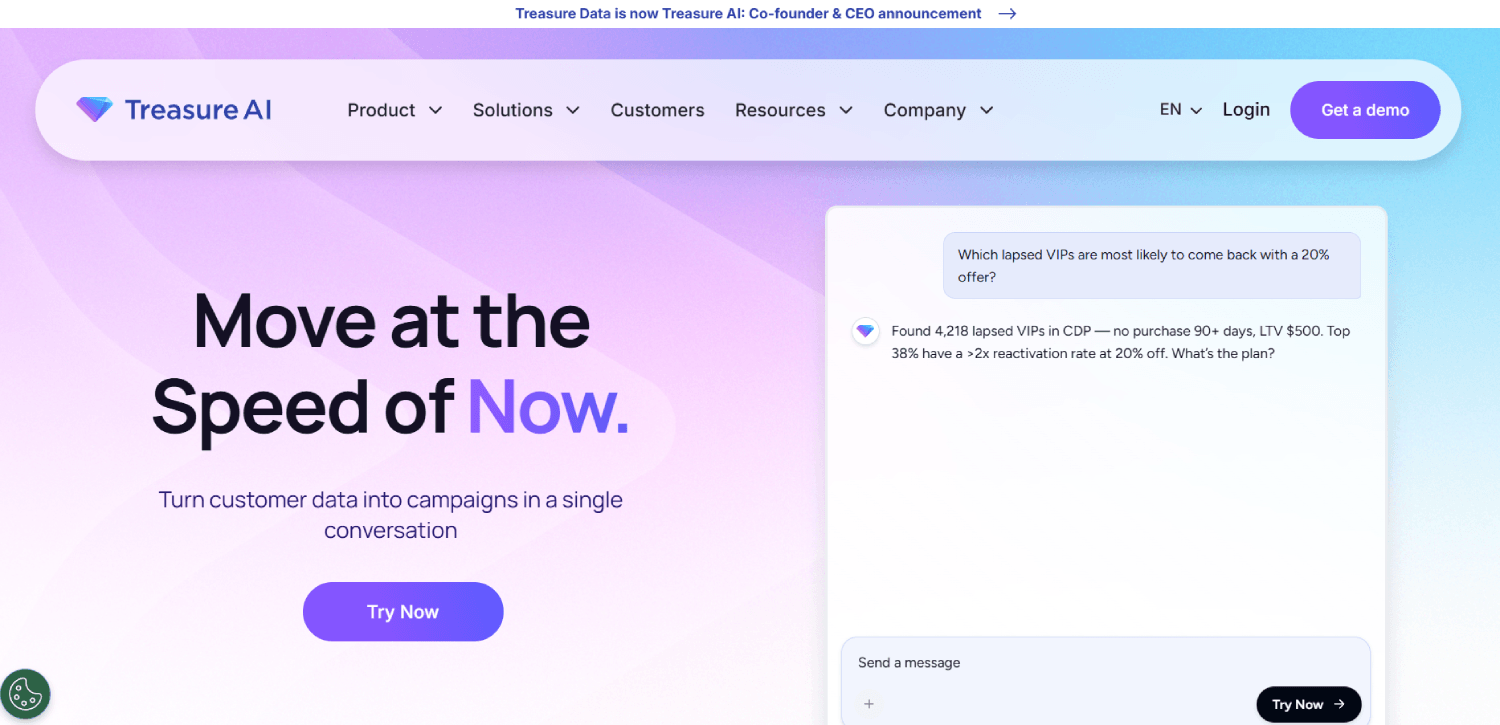
Treasure Data is an enterprise CDP with a heritage in big data infrastructure. Its managed CDP handles data ingestion, identity resolution, machine learning model serving, and audience activation, all within a single managed environment. For enterprise B2B teams in manufacturing, technology, or financial services with large, heterogeneous data sources, Treasure Data’s ability to ingest structured and unstructured data at scale is a genuine advantage. Pricing is quote-based and oriented toward large enterprise deployments.
10. mParticle
mParticle is strongest when mobile data is central to the customer profile. For B2B teams with a significant mobile app surface, it handles high-volume event streaming and routing better than most competitors. For purely web-and-email B2B use cases, its account-level modeling is less mature than Segment or Hightouch. Pricing is quote-based.
11. Bloomreach
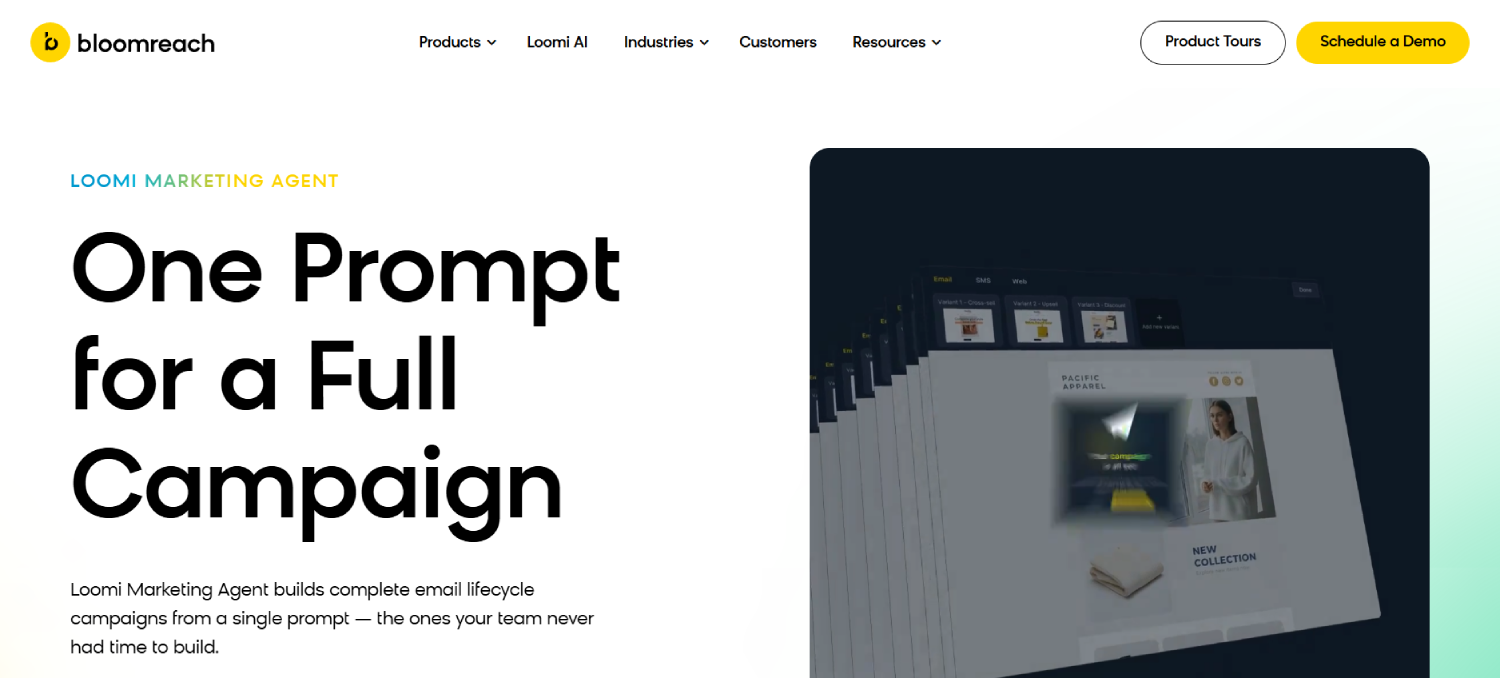
Bloomreach combines a CDP with a marketing automation engine and a personalization layer in a single platform. For B2B companies with a commerce or self-serve product component, that integration is useful because it means a single data layer powers both account-level segmentation and real-time on-site personalization. The Engagement module handles email, SMS, and push campaigns natively. For teams who want CDP plus marketing automation without stitching separate tools together, Bloomreach is worth evaluating. Pricing is quote-based.
Which CDPs Support Warehouse-Native Architecture?
Warehouse-native CDPs read from and write to your existing cloud data warehouse rather than copying data into a proprietary store. The practical implications for B2B teams are significant: lower storage costs, faster access to data your engineering team already models, and no vendor lock-in on the data layer itself.
Hightouch and RudderStack are the clearest warehouse-native options on this list. ActionIQ and Treasure Data offer warehouse-connected architectures that sit between fully native and fully proprietary. Segment, Tealium, Salesforce Data Cloud, and Adobe Real-Time CDP all maintain their own profile stores and sync to warehouses as a destination rather than using the warehouse as the primary source of truth.
Neither architecture is universally correct. Warehouse-native CDPs require a mature data engineering function and a clean warehouse data model. If your warehouse is messy or your data team is small, a full-stack CDP like Segment that handles collection and identity resolution end-to-end will reduce time-to-value even if it adds some storage overhead.
How Does Identity Resolution Work in a B2B CDP?
Identity resolution in a B2B context has two distinct layers that most vendor comparisons collapse into one.
The first layer is person-level resolution: stitching together anonymous and known profiles for the same individual across devices, sessions, and email addresses. This is the same problem B2C CDPs solve. The standard approaches are deterministic matching (same email or user ID on multiple records) and probabilistic matching (inferred connections from behavioral signals).
The second layer is account-level grouping: associating multiple resolved person profiles to a single company or buying group. This is where most B2C CDPs fall short for B2B use cases. A sales rep needs to know that five contacts at Acme Corp are all engaging with your product, not that five separate people happened to visit your site this week.
Segment handles this with Linked Profiles, which lets you define a parent object (account) and associate child objects (contacts) using a company domain or Salesforce account ID. RudderStack’s Profiles product does the same. Salesforce Data Cloud handles it natively because account objects already exist in the CRM data model. For B2B buyers evaluating CDP tools, the account-grouping question should be the first thing you ask in a demo, not the last.
What Does CDP Implementation Actually Cost?
The license fee is the smaller part of total cost of ownership for most enterprise CDPs. Implementation, data governance work, and ongoing engineering maintenance are where the budget actually goes.
A Segment implementation for a mid-market SaaS company with two or three core products typically requires six to twelve weeks of engineering time to instrument events correctly, define a governance schema, and connect core destinations. That is before any marketing team training or segment-building work begins.
Enterprise CDPs like Tealium, Salesforce Data Cloud, or Adobe Real-Time CDP often require professional services engagements that run six figures on their own. Warehouse-native platforms like Hightouch can compress implementation time significantly if your warehouse data model is already clean, because collection and governance work is already done upstream.
Budget for post-launch maintenance. Event schemas drift. New product features generate new event types. Destinations deprecate APIs. A CDP with no one owning it six months after launch is a liability, not an asset. The teams that get the most out of CDP investments typically have a dedicated marketing-operations or data-operations owner with enough SQL fluency to manage the platform without filing engineering tickets for every change.
If you are also evaluating how AI search engines will surface your brand once this data is activated across channels, the AboutMartech guide to AI visibility tools for tracking brand presence in ChatGPT and Perplexity covers the downstream brand implications worth considering.
Frequently Asked Questions
What is the best customer data platform for B2B?
Segment is the best starting point for most B2B mid-market teams because it handles both data collection and identity resolution out of the box, with native account-grouping through Linked Profiles. For teams with data already in a cloud warehouse, Hightouch offers faster activation without re-ingestion overhead. Enterprise teams deeply committed to Salesforce should evaluate Salesforce Data Cloud before adding a third platform to their stack.
Is a CDP the same as a CRM?
No. A CRM stores records of sales team interactions: contacts, deals, tasks, and pipeline stages. A CDP unifies behavioral and firmographic data from every digital source into a unified customer profile, including data the sales team never directly touches. CRMs are operational systems for sales execution. CDPs are data infrastructure for marketing personalization, segmentation, and audience activation. Most B2B teams need both, and the CDP feeds signals into the CRM rather than replacing it.
What is warehouse-native CDP architecture?
A warehouse-native CDP reads data from your existing cloud data warehouse (Snowflake, BigQuery, Databricks, Redshift) as its primary data source, rather than copying data into a proprietary profile store. Hightouch and RudderStack are the clearest examples. This architecture reduces storage costs, preserves data-team governance, and eliminates the re-ingestion lag common in legacy CDPs. It requires a mature, clean warehouse data model to deliver value quickly.
How much does a CDP cost?
Segment’s paid plans start at $120 per month according to their public pricing page, with volume-based scaling to enterprise tiers that require custom pricing. RudderStack Cloud starts at $750 per month according to their public pricing page. Hightouch’s Business and Enterprise tiers are quote-based, as are Tealium, Salesforce Data Cloud, Adobe Real-Time CDP, and most other enterprise options. Implementation and ongoing data-operations costs typically exceed the software license for enterprise deployments.
Do B2B companies need a CDP or a reverse ETL tool?
If you already have clean, governed data in a cloud warehouse, you likely need a reverse ETL tool (like Hightouch or RudderStack) more urgently than a new data collection layer. If your customer data is fragmented across sources and not yet unified into a warehouse model, a full-stack CDP like Segment that handles both collection and identity resolution will deliver faster value. Many mature B2B data stacks use both: a collection CDP feeding the warehouse, and a reverse ETL tool activating from it.
What is account-level identity resolution in a B2B CDP?
Account-level identity resolution associates multiple individual contact profiles to a single parent company or buying group record. For B2B teams, this means understanding that five different people from the same company are all engaging with your product or content, not just tracking them as five separate individuals. Segment handles this through Linked Profiles, RudderStack through its Profiles product, and Salesforce Data Cloud natively through its existing account object model.
Which CDPs are best for ABM programs?
Salesforce Data Cloud integrates most tightly with Salesforce-based ABM workflows. Adobe Real-Time CDP’s B2B edition natively models buying groups and integrates with Adobe Marketo Engage. Segment and Hightouch both support ABM activation through LinkedIn Ads, Demandbase, and 6sense destination connectors. The CDP itself is not the ABM tool. It provides the account-level intent signals that ABM platforms then act on.
Can a CDP replace a marketing automation platform?
No. A CDP unifies and segments data. A marketing automation platform executes campaigns: sending emails, managing workflows, scoring leads, and tracking engagement. Bloomreach is the closest exception, bundling CDP functionality with a marketing execution layer in a single platform. For most B2B teams, the CDP feeds segmentation and intent signals into a separate marketing automation platform like HubSpot, Marketo, or Braze rather than replacing it.
How to Decide: A Short Decision Framework
Buy Segment if you are a mid-market SaaS company without a mature data warehouse, need to go live quickly, and want a single vendor handling both collection and identity resolution. The engineering investment upfront is real, but the out-of-the-box destination library and Linked Profiles for account grouping make it the lowest-friction path to a working B2B CDP.
Buy Hightouch if your data team already maintains a clean Snowflake or BigQuery data model and your bottleneck is activation, not collection. You are paying for the ability to push warehouse-defined segments to CRM fields, ad platforms, and sales tools without writing sync scripts. For teams already deep into the reverse ETL category, the connection to Hightouch’s broader platform is worth exploring alongside the full comparison of reverse ETL tools for warehouse activation.
Buy RudderStack if you have strong data engineering capacity, want open-source flexibility, and want to avoid the per-event pricing that makes Segment expensive at scale. The cost advantage at high event volumes is genuine, and the warehouse-first architecture means your data team retains full control of the data model.
Buy Salesforce Data Cloud or Adobe Real-Time CDP only if you are already deeply committed to those platforms. The integration advantages are real and meaningful, but the implementation complexity and pricing require executive sponsorship and a multi-quarter project plan. Neither platform is appropriate as a standalone CDP purchase for a team that is not already running the parent platform.
The rest of the platforms on this list , Tealium, ActionIQ, Treasure Data, mParticle, BlueConic, Bloomreach , serve specific enterprise, vertical, or use-case niches. Evaluate them when the mainstream options do not fit a specific constraint: heavy mobile event volume (mParticle), complex consent orchestration (Tealium), or a CDP-plus-automation bundle (Bloomreach).
The single insight worth holding onto: most B2B teams underinvest in the activation side of their CDP and overinvest in the collection side. Collecting clean, unified data is necessary, but the pipeline impact comes from what the data does after it is unified. The CDP that wins in your stack is not the one with the most connectors or the most sophisticated identity graph. It is the one your marketing operations team can actually use to push the right account signal to the right sales or activation destination on the day it matters.