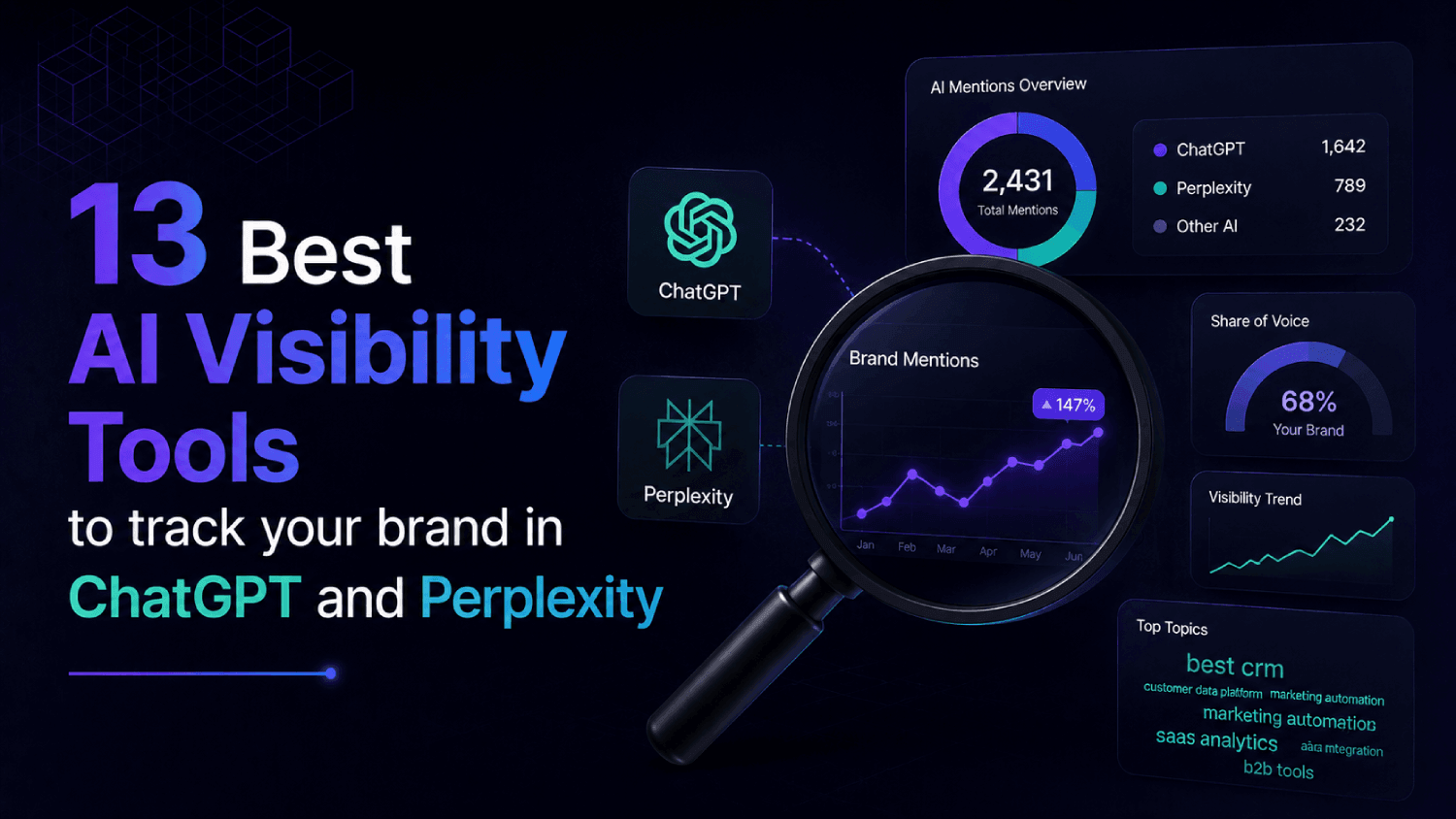
- AI assistants do mention brands in their answers, and that visibility is now measurable with dedicated LLM tracking tools.
- Profound is the strongest all-around pick for enterprise and mid-market teams that need structured AI citation data across ChatGPT, Perplexity, and Google AI Overviews.
- Most traditional SEO tools bolt on AI tracking as a feature; purpose-built tools like Profound, Otterly, and Scrunch AI treat it as the primary product.
- The right tool depends on whether you need raw citation frequency, competitive share-of-voice in LLM answers, or prompt-level content recommendations.
- Geo-level AI tracking (who ranks in AI answers by region or language) is an emerging capability that only a handful of tools support today.
AI visibility tools solve a problem that did not exist three years ago: measuring whether an LLM recommends your brand when a buyer asks for a category recommendation. The answer is not found in a rank tracker or a social listening dashboard. It requires running large batches of prompts against production models, parsing the responses for citation type and competitor co-occurrence, and turning that data into content decisions. Before evaluating any specific platform, it helps to know which signals actually matter and how to stress-test a vendor’s claims. That framing shapes everything that follows.
For most marketing teams, Profound is the most complete purpose-built platform in this category. It monitors brand mentions and citation frequency across ChatGPT, Perplexity, and Google AI Overviews, maps competitive share-of-voice in LLM answers, and surfaces the specific prompts where a brand appears or does not. For teams that need breadth of LLM coverage combined with content optimization guidance, Writesonic’s AI Brand Tracker is the closest alternative. Both are purpose-built for this problem rather than retrofitted from SEO tooling.
The AboutMartech LLM Visibility Signal Test: Four Checks Before You Buy
Before evaluating any specific tool, run this four-part test against their product positioning. We call it the LLM Visibility Signal Test, and it cuts through the noise fast.
- Prompt breadth: Does the tool test your brand against dozens or hundreds of semantically distinct prompts, or just a keyword list you define manually? Narrow prompt sets produce false confidence.
- Citation resolution: Can the tool distinguish between a named citation with a source link, an unlinked brand mention, and a paraphrase? These three have completely different implications for your content strategy.
- Competitive share-of-voice: Does it show which competitors appear in AI answers where you do not, and at what frequency? Without that comparison, you cannot prioritize content gaps.
- Model coverage: Does the tool query the actual production models (GPT-4o, Claude 3, Perplexity, Gemini) rather than open-source proxies, and does it keep pace as model versions update?
Any tool that passes fewer than three of these checks is a monitoring dashboard, not an LLM visibility tracker with real strategic value. That distinction matters when you are making a budget decision.
To see how those four checks play out in practice, consider a B2B SaaS marketing team in the project management software category. They run 200 prompt variations through a purpose-built tracker and find they appear in 34% of responses. Their nearest competitor appears in 61%. Drilling into the citation resolution data, they discover they are cited by name in only 8% of responses where they appear; the rest are unlinked paraphrases. That tells them their content is being ingested but not trusted as a primary source. The fix is not more content: it is structured content with clearer entity signals, consistent authorship metadata, and distribution to the specific sites LLMs use as training anchors. Without citation resolution data, they would have seen “34% citation rate” and celebrated. This scenario applies to any competitive B2B category, but the pattern repeats in e-commerce, financial services, and professional services as well.
Why Tracking AI Visibility Is a Different Problem Than Tracking Search Rankings
Traditional rank tracking tells you where a URL sits on page one of Google. AI visibility tracking answers a structurally different question: when a user asks an LLM about a category you compete in, does your brand appear in the response, and how often?
The mechanics are nothing alike. Google returns a list of URLs. ChatGPT, Perplexity, and Google AI Overviews synthesize a response from sources they may or may not name explicitly. Your brand can be cited with a hyperlink, referenced without one, paraphrased in a way that obscures the source, or omitted entirely in favor of a competitor. A rank tracker cannot capture any of that.
What makes AI citation tracking genuinely hard is prompt variability. The same LLM can mention your brand in response to “best CRM for startups” and exclude you entirely from “top CRM tools under $50 per user per month.” Tracking requires running large batches of semantically related prompts, not a single keyword check. Most teams underestimate that surface area by an order of magnitude.
How Do These AI Visibility Tools Actually Work?
The underlying method is prompt simulation at scale. A tool submits a library of queries to an LLM’s API, captures the full text of each response, and parses it for brand mentions, citations, sentiment, and competitor co-occurrences. Some tools run thousands of prompt variations per day. Others run weekly sweeps and batch the results into a dashboard.
Geo tracking adds a layer of complexity. LLM responses can vary by region, language, or even the phrasing conventions of a local market. A handful of tools now let you simulate prompts as if they originate from a specific country, which matters for brands with regional go-to-market strategies. This is still early-stage functionality, but it is developing quickly.
Some platforms also monitor the underlying sources that LLMs tend to cite: review sites, industry publications, Reddit threads, and knowledge-base pages. The logic is that if your brand appears authoritatively on the sources an LLM trusts, your citation probability improves. That is a reasonable hypothesis, though not yet proven deterministically.
Which Tools Actually Track Brand Mentions in ChatGPT and Perplexity?
Here is the direct comparison. Pricing reflects publicly available information at the time of writing; platforms that do not publish pricing are noted as quote-based.
| Tool | LLMs Covered | Competitive SOV | Citation Resolution | Geo Tracking | Public Pricing |
|---|---|---|---|---|---|
| Profound | ChatGPT, Perplexity, Gemini, Claude | Yes | Named + linked | Yes | Quote-based |
| Writesonic AI Brand Tracker | ChatGPT, Perplexity, Gemini | Yes | Named citation | Partial | Included in Writesonic plans |
| Otterly.ai | ChatGPT, Perplexity, Google AI Overviews | Yes | Named + sentiment | Limited | Starts at $99/month (public pricing page) |
| Scrunch AI | ChatGPT, Perplexity, Claude | Yes | Named + source trace | No | Quote-based |
| Brandwatch | Limited (bolt-on) | No | Mention only | No | Quote-based |
| Mention | Limited (monitoring only) | No | Mention only | No | From $41/month |
| BrightEdge | Google AI Overviews focus | Partial | Named citation | Limited | Quote-based |
| SE Ranking | Google AI Overviews | No | Mention only | Yes | From $65/month |
| Semrush | Google AI Overviews (beta) | No | Mention only | Limited | From $139.95/month |
| Ahrefs | Google AI Overviews (limited) | No | Mention only | No | From $129/month |
| GEO Spy by Alli AI | ChatGPT, Perplexity | No | Mention only | Yes | Included in Alli AI plans |
| Peec AI | ChatGPT, Perplexity, Gemini | Yes | Named + sentiment | Limited | Starts at $79/month (public pricing page) |
| Rankscale | ChatGPT, Perplexity | Yes | Named citation | No | Quote-based |
The 13 Tools, Ranked and Assessed
1. Profound , Best overall LLM visibility tracker
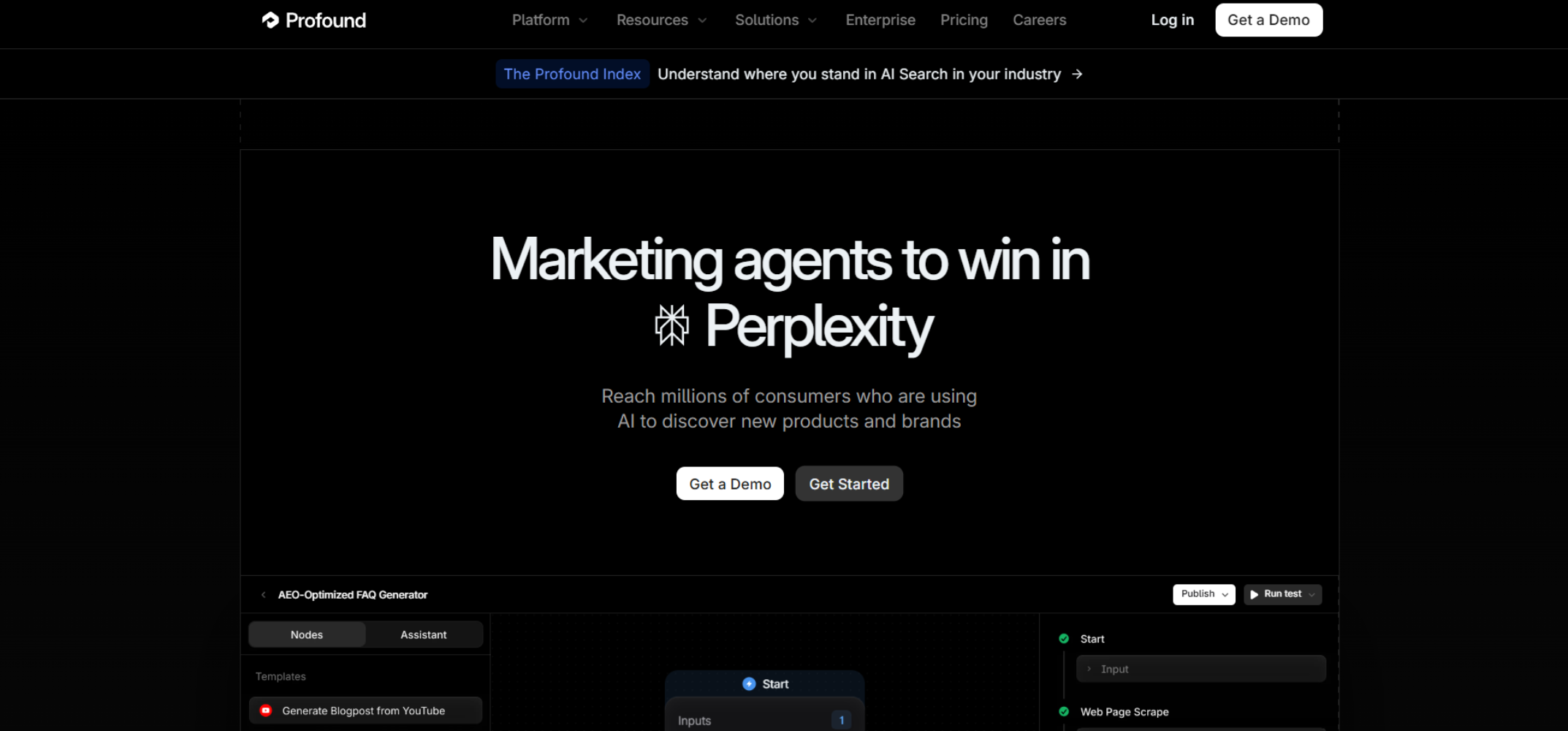
Profound is the most complete purpose-built platform in this category. It runs prompt simulations across ChatGPT, Perplexity, Google AI Overviews, Gemini, and Claude, tracks whether your brand appears as a named citation or an unlinked mention, and benchmarks your citation frequency against named competitors. The geo tracking layer, which simulates prompts from specific markets, is rare at this depth.
Profound is priced on an enterprise and mid-market basis with quote-only packages, so it is not a self-serve option for a solo operator. The audience it is built for is marketing teams with a dedicated MOps or content-strategy function who can act on citation gap reports. Teams at that maturity level will get real signal here. Teams looking for a quick dashboard check will overpay.
2. Writesonic AI Brand Tracker , Best for content teams already in the Writesonic platform
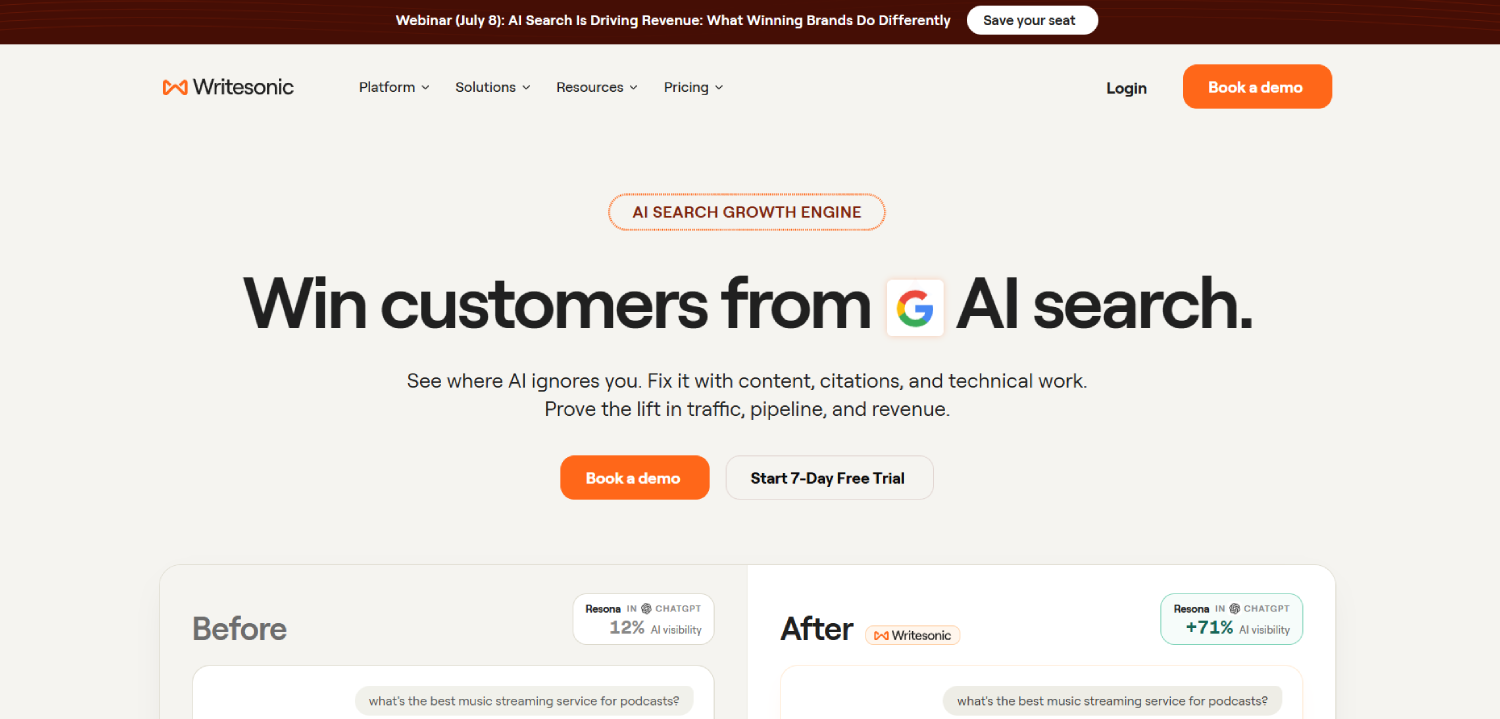
Writesonic added an AI Brand Tracker that monitors mentions across ChatGPT, Perplexity, and Gemini and surfaces content recommendations designed to improve citation probability. If your team already uses Writesonic for content production, the tracker is bundled in at no additional per-seat cost, which makes the economics attractive. Standalone, it competes less clearly against Profound on citation depth.
The content optimization recommendations are the differentiating feature here. When Writesonic identifies a prompt cluster where you are not being cited, it can suggest content formats and topics likely to improve that. Whether those recommendations convert to actual LLM citation improvements is something each team needs to verify against their own data.
3. Otterly.ai , Best for mid-market teams wanting a defined price point
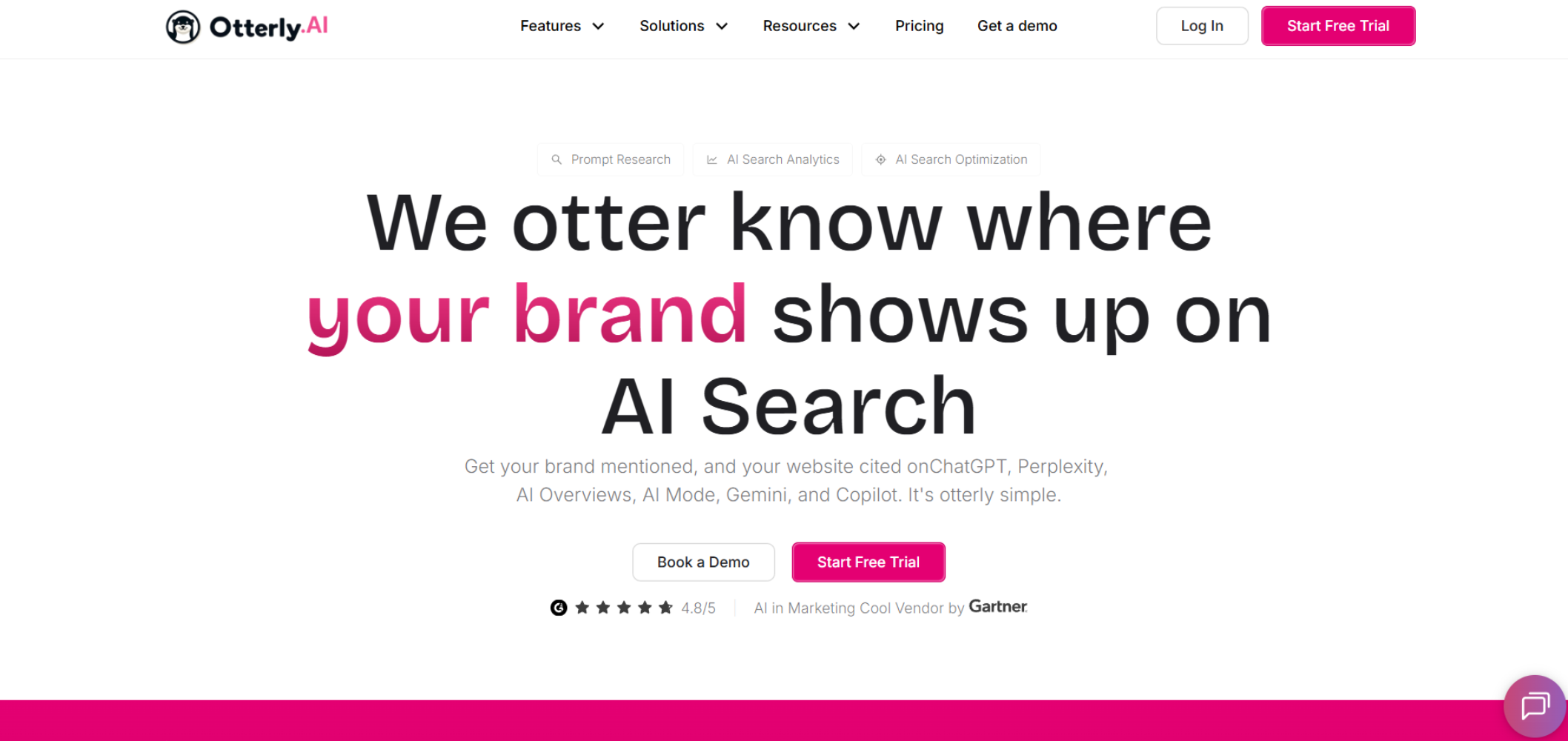
Otterly.ai starts at $99 per month based on its public pricing page, which makes it one of the few purpose-built LLM trackers with a transparent entry price. It covers ChatGPT, Perplexity, and Google AI Overviews, includes sentiment scoring per mention, and tracks competitor share-of-voice. The prompt library is smaller than Profound’s, but the interface is faster to set up for a team without a dedicated analytics resource.
Otterly works well for a VP of Marketing or content lead who wants weekly visibility reports without building a workflow around them. It is not designed for teams doing high-frequency prompt simulation at scale.
4. Scrunch AI , Best for competitive intelligence in LLM answers
Scrunch AI puts the heaviest emphasis on competitive analysis: not just whether your brand appears, but which competitors appear instead of you, on what prompts, and how that shifts over time. It also traces mentions back to source documents, which helps content teams understand which pages are actually being pulled by LLMs. Pricing is quote-based, targeting mid-market and enterprise buyers.
The source-tracing capability is the strongest in this list for teams who want to run a content gap analysis against their own site’s LLM authority. That is a distinct use case from general brand monitoring, and Scrunch is built around it.
5. Brandwatch , For teams that already own it
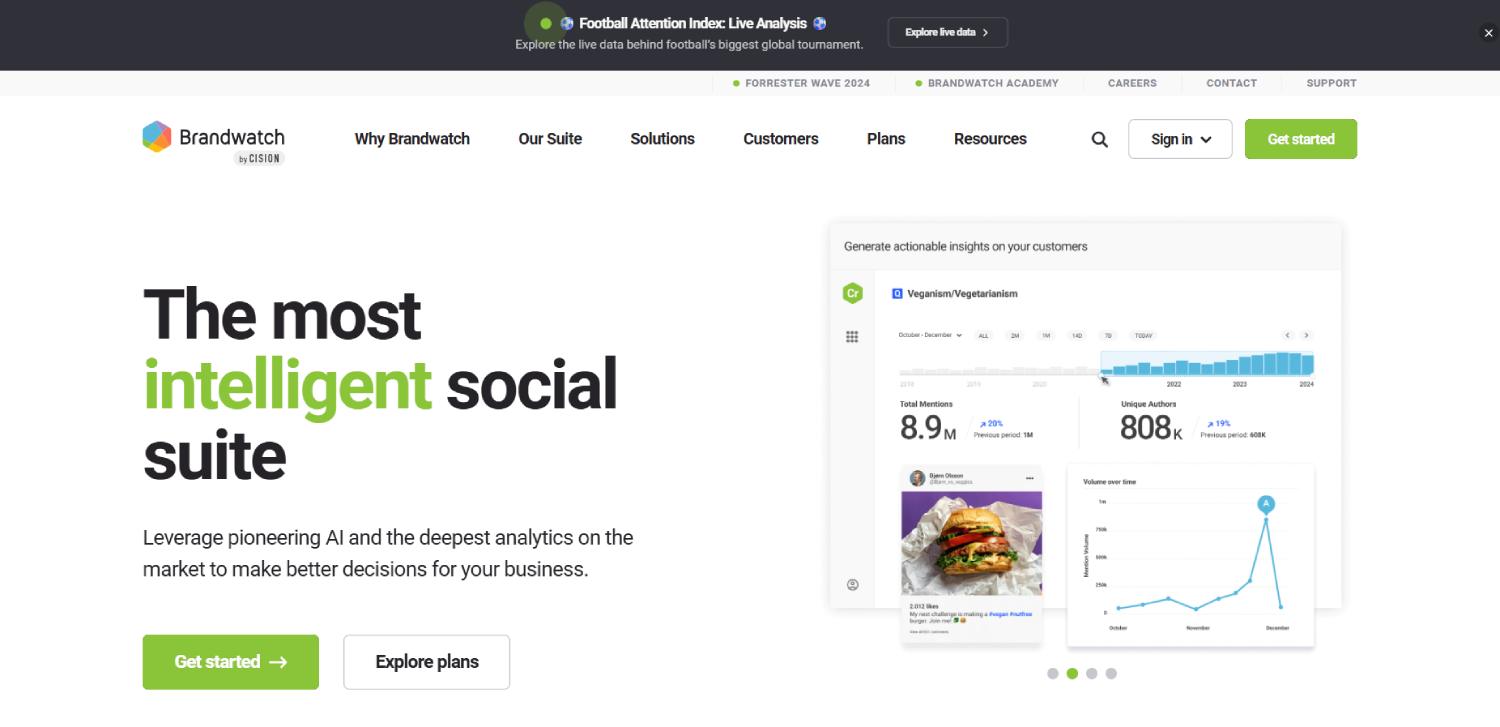
Brandwatch is a mature social listening and brand monitoring platform that has added some AI response monitoring. Its LLM coverage is limited relative to purpose-built tools, and it does not offer competitive share-of-voice in AI answers as a core capability. Buy Brandwatch for its core social and web monitoring product; do not buy it specifically to track ChatGPT citations.
6. Mention , Basic monitoring, limited AI-native capability
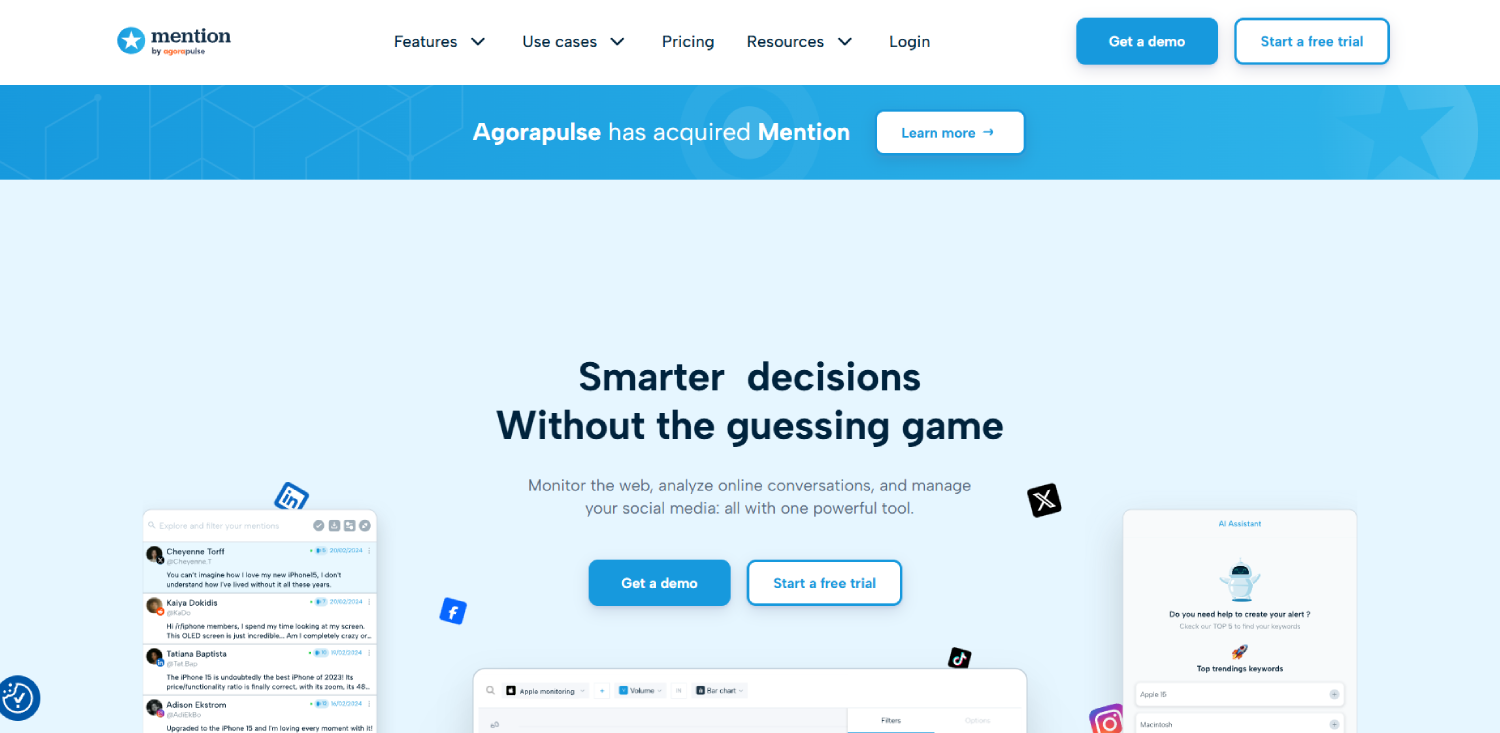
Mention starts at $41 per month and covers web, news, and social mentions alongside some LLM monitoring functionality. The AI tracking capability is narrow: it captures when your brand name appears in a response, but does not resolve citation type, sentiment, or competitive co-occurrence at the level purpose-built tools do. Best for small teams wanting a single dashboard for all monitoring types rather than a specialist AI visibility tool.
7. BrightEdge , For enterprise SEO teams extending into AI Overviews
BrightEdge has significant enterprise SEO market presence and has invested in Google AI Overviews tracking as an extension of its core product. Coverage of ChatGPT and Perplexity is more limited. For an enterprise content or SEO team that already pays for BrightEdge, the AI Overviews tracking adds incremental value without additional spend. It is not a reason to start a new contract with BrightEdge if you are not already a customer.
8. SE Ranking , Best for geo-level AI Overviews tracking at a transparent price
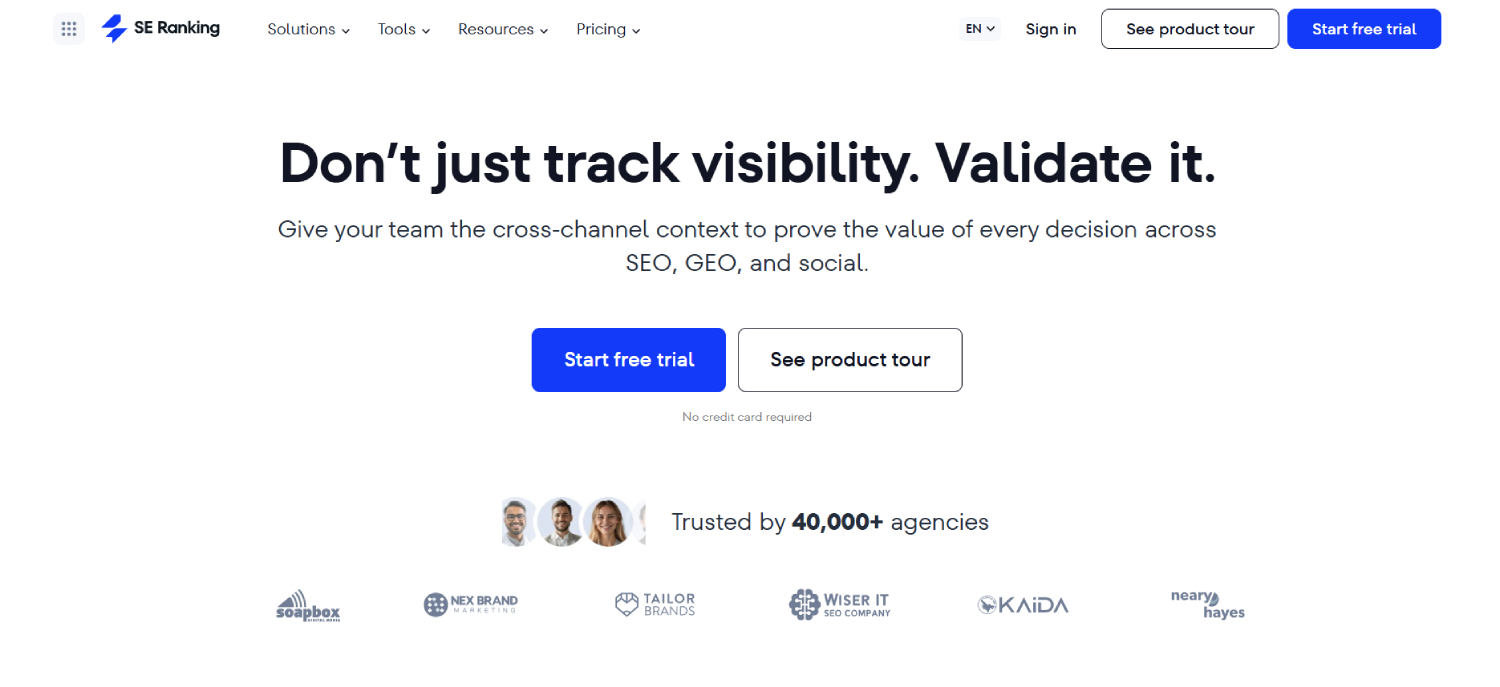
SE Ranking starts at $65 per month and includes geo-specific tracking of Google AI Overviews appearances. For brands with strong regional differentiation, that geo capability at a mid-market price point is notable. Coverage is limited to Google AI Overviews; SE Ranking does not query ChatGPT or Perplexity directly. Pair it with a purpose-built LLM tracker if you need full coverage.
9. Semrush , Useful if you are already paying for the SEO suite
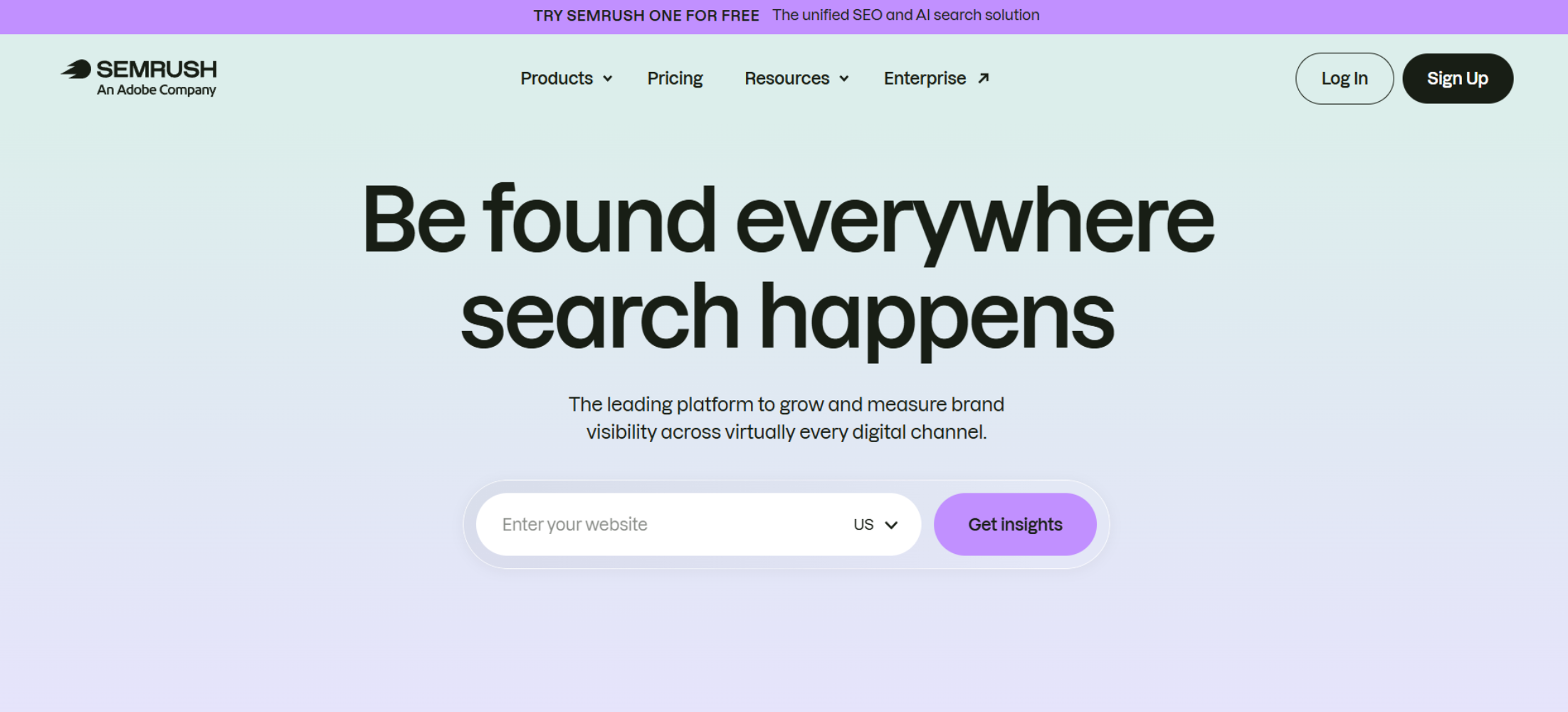
Semrush has added AI Overviews tracking in beta and continues expanding its AI-related feature set. As of its public pricing page, plans start at $139.95 per month for the core suite. The AI monitoring is most useful as a supplementary data layer for teams already on Semrush for keyword research and competitive analysis. As a standalone AI citation tracker, there are better-focused options in this list.
10. Ahrefs , Minimal AI visibility, strong everywhere else
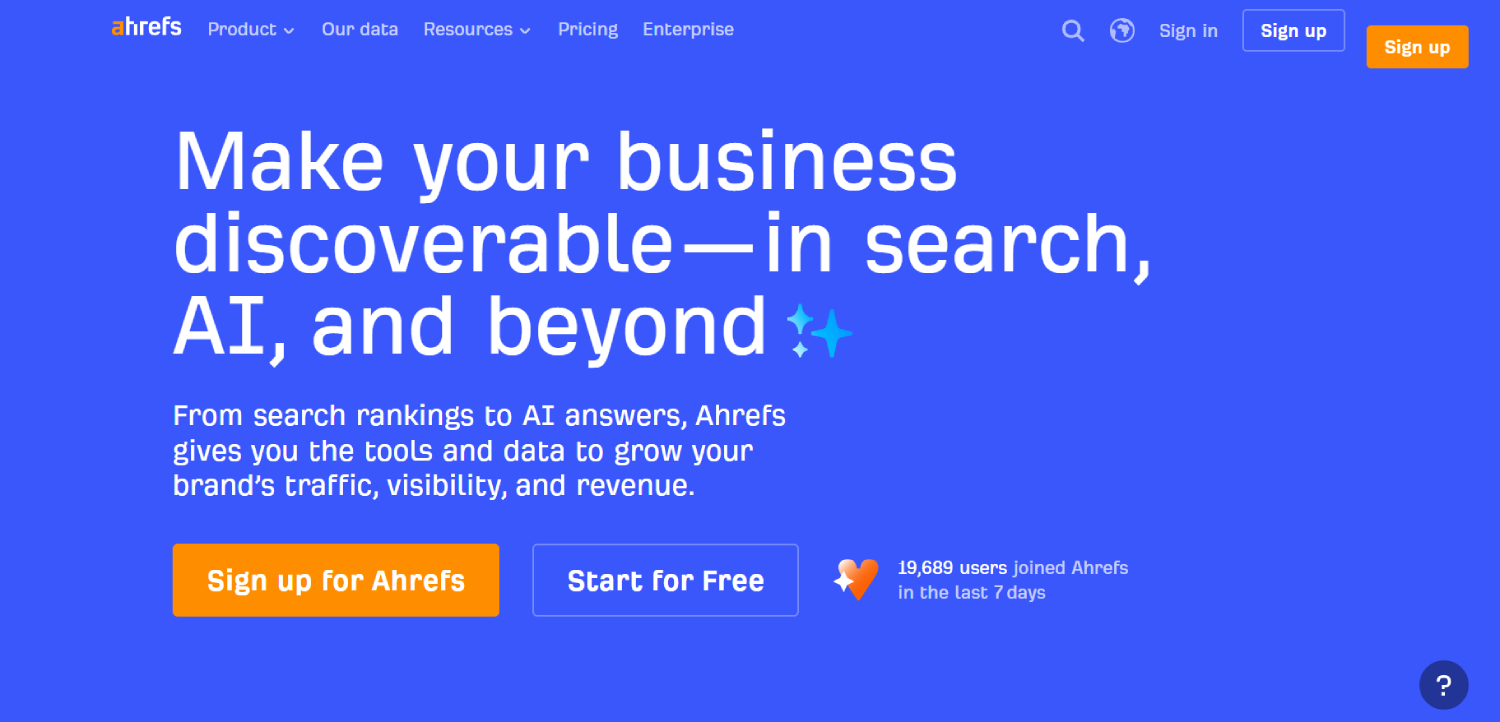
Ahrefs is arguably the most widely trusted SEO toolset for backlink analysis and keyword research. Plans start at $129 per month based on its public pricing page. Its AI Overviews tracking is limited and not a core part of the product roadmap in the way it is for SE Ranking or BrightEdge. If you are running Ahrefs for SEO, continue doing so. Do not rely on it for LLM brand monitoring.
11. GEO Spy by Alli AI , Interesting for geo-segmented LLM queries
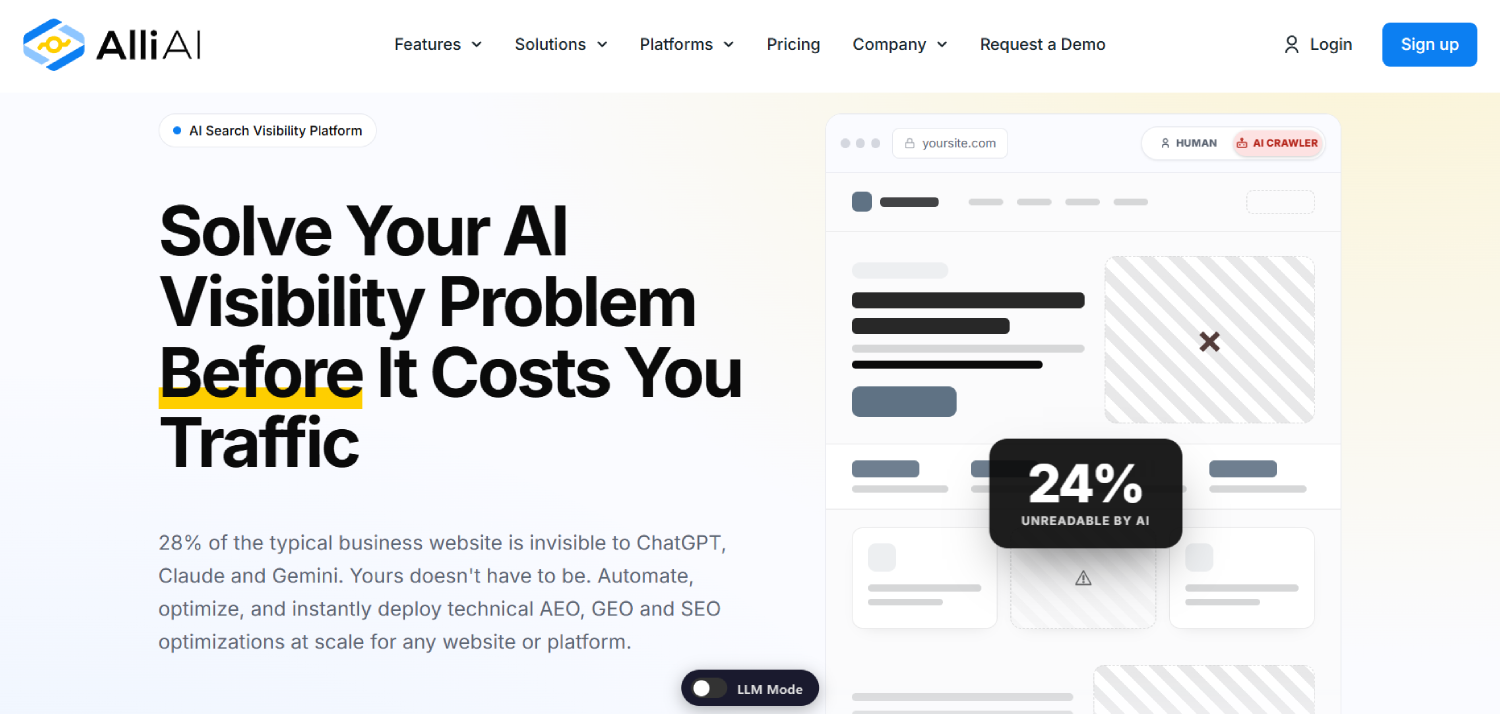
Alli AI’s GEO Spy is a geo-focused LLM monitoring tool included within Alli AI’s broader SEO platform. It simulates prompts in specific locations and languages, then checks whether your brand appears in the response. The geo capability is more developed than most tools at a similar price tier. Brand-level competitive share-of-voice is not a current feature, which limits its usefulness for teams with a competitive intelligence mandate.
12. Peec AI , Strong sentiment and SOV for the price
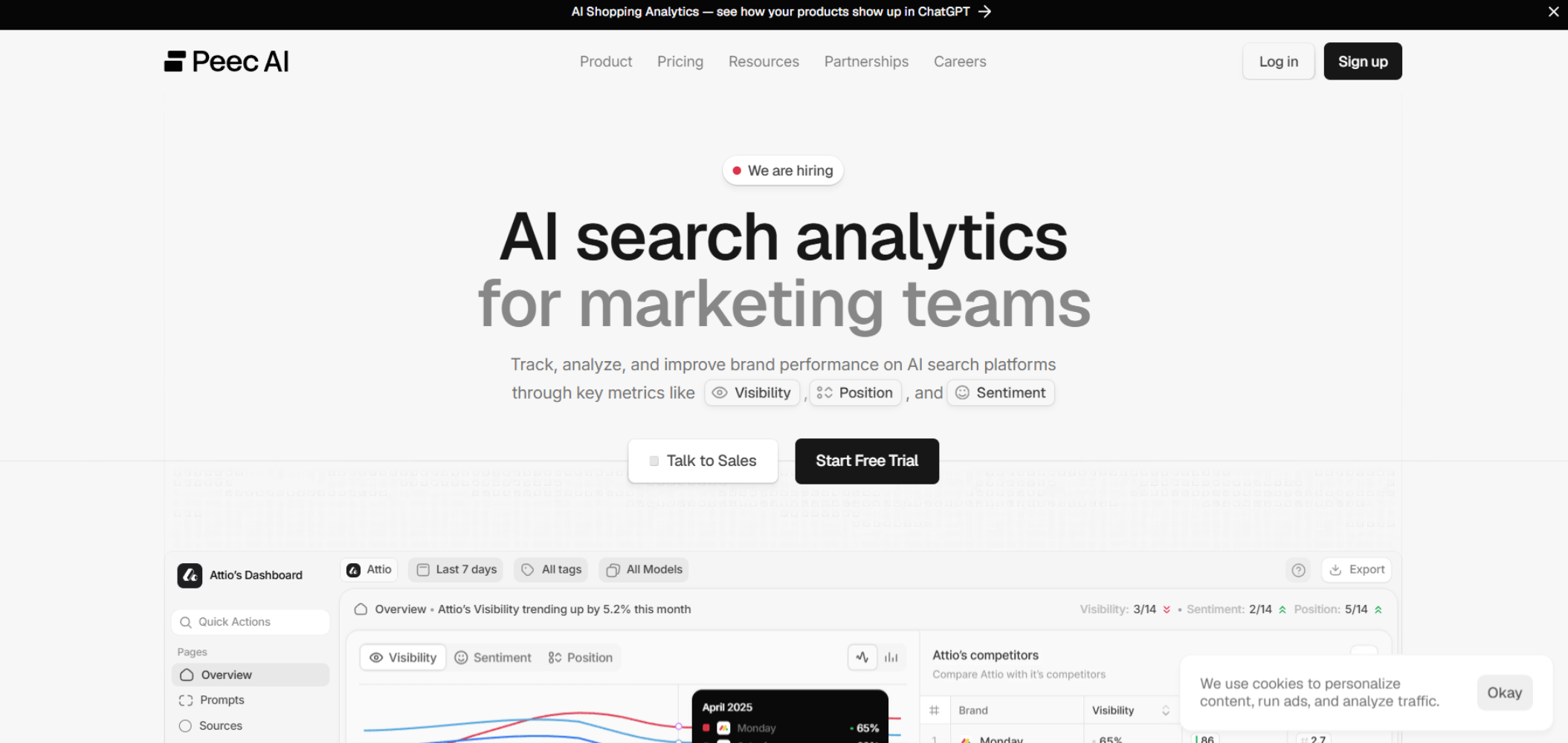
Peec AI starts at $79 per month based on its public pricing page and covers ChatGPT, Perplexity, and Gemini. It includes sentiment scoring per brand mention and competitive share-of-voice tracking, which makes it one of the more capable tools at a transparent mid-market price. Geo tracking is limited. Peec is worth evaluating for a marketing team that wants Otterly-level coverage at a slightly lower entry price.
13. Rankscale , Early-stage but with competitive framing
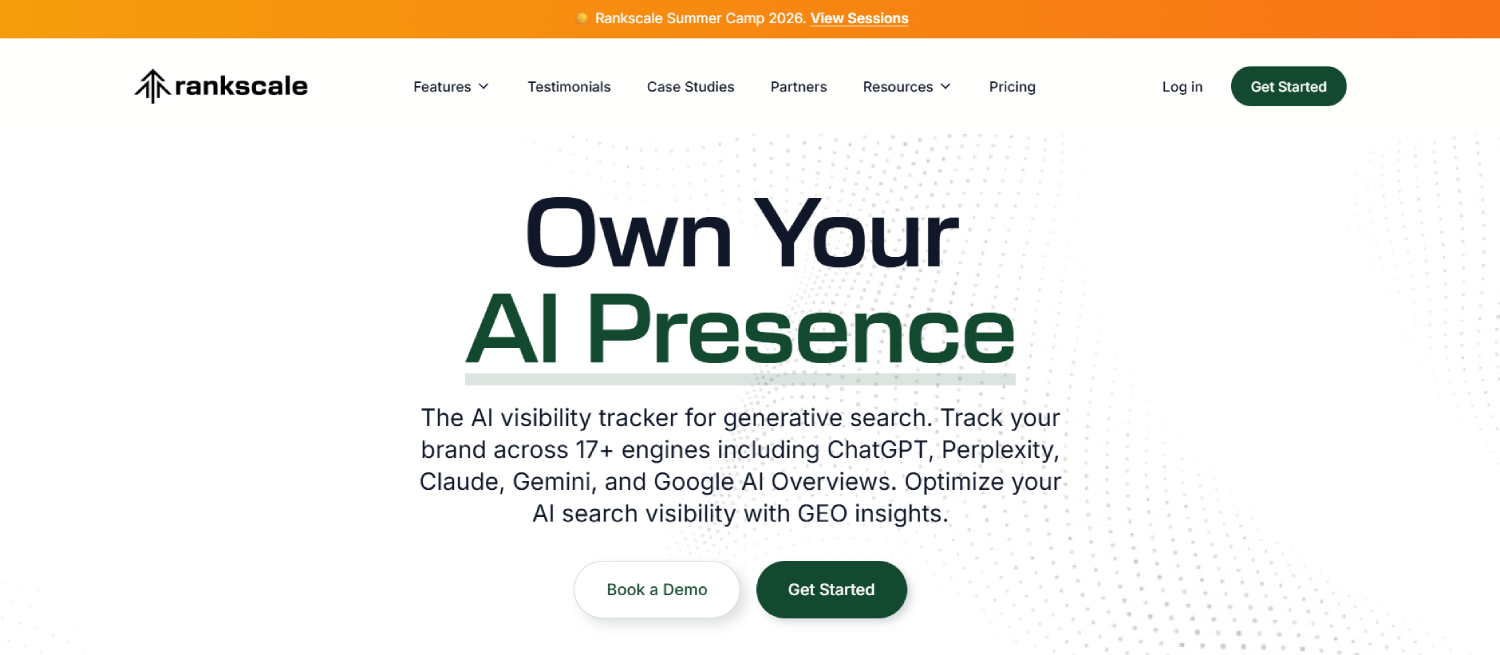
Rankscale covers ChatGPT and Perplexity and includes competitive share-of-voice tracking. Pricing is quote-based. The platform is earlier in its development than Profound or Scrunch AI, and the prompt library breadth is smaller. Teams looking for an established enterprise-grade solution should look higher on this list. Teams willing to work with a newer platform in exchange for a lower negotiated price may find Rankscale worth a demo.
What Should You Actually Measure to Improve AI Citation Rates?
Tracking mentions is the starting point, not the goal. The metric that drives content strategy decisions is citation share-of-voice: across all the prompts in your category that an LLM handles, what percentage of responses mention your brand versus a competitor?
Beyond raw share-of-voice, citation resolution matters enormously. A named citation with a hyperlink signals to the LLM’s retrieval system that your content is an authoritative source. An unlinked paraphrase suggests your content is being summarized without attribution. Those two outcomes require different remediation: the first is a distribution problem, the second is a content structure problem.
Closing either gap is execution work, and not every team wants to run it in-house. A specialist like DerivateX, a B2B SaaS agency that pairs traditional SEO with GEO and ties the work to pipeline rather than citation counts, handles the remediation side: turning a citation gap report into structured content, clearer entity signals, and placement on the sources LLMs actually pull from.
How Does Geo Tracking Work for AI Visibility?
Geo tracking for LLM visibility means simulating a prompt as if it originates from a specific country or language context, then checking whether the brand appears in the response. This matters because LLMs do not always serve identical answers globally. Regional model fine-tuning, localized training data, and the availability of regional sources all influence which brands appear in answers for a given market.
SE Ranking and GEO Spy by Alli AI offer the most transparent geo tracking features at mid-market price points. Profound includes geo simulation at the enterprise tier. For most teams running a single-market strategy, geo tracking is not an immediate priority. For brands expanding into new regions or running localized content programs, it is the most underused capability in this tool category.
How Much Do AI Visibility Tools Cost?
The pricing range is wide. Entry-level tools with limited LLM coverage start around $41 per month (Mention) to $99 per month (Otterly.ai). Mid-market purpose-built trackers like Peec AI sit at $79 per month. Enterprise platforms like Profound and Scrunch AI do not publish pricing and require a discovery call, which typically signals annual contracts in the five-figure range. SEO platforms that include AI tracking as a feature (Semrush, Ahrefs) start at $129 to $140 per month for the full suite.
The right budget question is not “what does the tool cost” but “what is the cost of not knowing.” If a competitor is cited in 60% of AI responses in your category and you have no data on your own citation rate, you are effectively flying blind on a channel that is already influencing buying decisions for your target audience.
Frequently Asked Questions About AI Visibility and LLM Tracking Tools
How do I track if ChatGPT recommends my brand?
The most direct method is using a purpose-built LLM visibility tool like Profound, Otterly.ai, or Peec AI. These platforms submit hundreds of relevant prompts to ChatGPT’s API, capture the full response text, and parse it for brand mentions, citation links, and sentiment. Manual spot-checking by pasting prompts into ChatGPT yourself is useful for occasional audits but does not give you the prompt-level breadth or frequency data needed for strategic decisions. A structured tool is the only way to measure citation share-of-voice at scale.
What is the difference between AI brand monitoring and traditional brand monitoring?
Traditional brand monitoring tracks mentions of your brand name across web pages, social media, news articles, and review sites. AI brand monitoring specifically tracks whether your brand appears in the synthesized responses generated by LLMs like ChatGPT, Perplexity, Claude, or Google Gemini. The distinction matters because an LLM can describe your product category in detail, recommend competitors by name, and never mention your brand, all without any negative press or social mention to flag in traditional monitoring tools. The two tool types solve different problems and are best used together.
Can Perplexity citations be tracked the same way as ChatGPT citations?
Broadly yes, but with one important difference. Perplexity typically surfaces explicit source citations with links in its answers, which makes source attribution more transparent and easier to parse programmatically. ChatGPT responses are more likely to paraphrase sources without linking to them. Tools like Profound, Scrunch AI, and Peec AI cover both, but the citation resolution data looks different between the two platforms. Perplexity citation tracking tends to produce cleaner source-level data; ChatGPT tracking requires more inference about what sources influenced the response.
Do these AI visibility tools track Google AI Overviews as well?
Several do, with varying depth. BrightEdge and SE Ranking are the most established for Google AI Overviews tracking specifically. Otterly.ai and Profound also include AI Overviews coverage. Ahrefs and Semrush have limited AI Overviews features in active development. If Google AI Overviews is your primary concern because you are a brand heavily dependent on organic Google traffic, SE Ranking or BrightEdge may be better starting points than the purpose-built LLM trackers that prioritize ChatGPT and Perplexity.
How many prompts should I be tracking to get reliable AI visibility data?
There is no universal benchmark, but a single category with a modest competitive set typically warrants tracking at least 50 to 100 semantically distinct prompt variations to get statistically meaningful citation frequency data. Prompts should vary by buyer persona language, funnel stage phrasing, feature-specific queries, and comparative question formats. Tracking fewer than 20 prompts produces citation rates that can swing dramatically from week to week based on model updates rather than your actual content performance. Purpose-built tools handle prompt library construction for you; manual tracking at this volume is not practical.
What is geo tracking for LLM visibility and which tools support it?
Geo tracking for LLM visibility means running your brand prompts through an AI system while simulating a user location in a specific country or language market, then checking whether your brand appears in the localized response. LLMs sometimes serve different brand citations depending on regional training data and source availability. SE Ranking and GEO Spy by Alli AI are the most accessible geo tracking tools at public price points. Profound includes geo simulation at the enterprise tier. For most single-market brands this feature is secondary; for brands with regional expansion goals it is one of the most underused capabilities available.
Are these AI citation tracking tools worth it for small marketing teams?
For teams smaller than five people or at companies below roughly 50 employees, the enterprise tools like Profound and Scrunch AI are likely overbuilt and overpriced for current needs. Peec AI at $79 per month or Otterly.ai at $99 per month are better starting points: they provide citation frequency and competitive share-of-voice data without requiring a dedicated analytics function to operate them. The more relevant threshold is whether AI assistants are actually influencing purchase decisions in your category. In B2B software, services, and considered consumer purchases, they already are.
Which AI Visibility Tool Should You Choose?
The decision tree here is fairly short once you apply the LLM Visibility Signal Test from earlier. If you have a content or MOps function that can act on citation gap reports and need full model coverage across ChatGPT, Perplexity, Gemini, and Claude, Profound is the only platform that passes all four checks at scale. If you want a defined monthly price and a setup measured in hours rather than weeks, Otterly.ai at $99 or Peec AI at $79 both clear the bar for citation resolution and competitive share-of-voice without requiring a dedicated analytics resource.
Writesonic’s AI Brand Tracker makes the most sense if your team is already inside the Writesonic platform for content production: the economics change when the tracker is bundled rather than a standalone line item. Scrunch AI is the right call when competitive intelligence in LLM answers is the primary mandate rather than general brand monitoring, specifically because of its source-tracing capability.
The legacy SEO platforms in this list (Semrush, Ahrefs, BrightEdge) are worth checking for AI tracking features if you already pay for them. None of them are a reason to start a new contract. SE Ranking is the exception for brands with a regional go-to-market focus: its geo-level AI Overviews tracking at $65 per month is a distinct capability that the purpose-built LLM trackers do not replicate at that price.
If a potential customer asks an LLM for a recommendation in your category and your brand is systematically absent from the response, that absence is a sales funnel leak that your marketing analytics has no current visibility into. The tools in this list exist to make that leak visible. Most of them are already mature enough to produce data worth acting on. The real risk is waiting until your category’s AI citation share-of-voice is already concentrated among competitors who started tracking months before you did.