TLDR
- Pick HubSpot Marketing Hub if you want the easiest replacement and can live with seat and contact pricing.
- Pick Salesforce Account Engagement if Salesforce is your CRM and you want marketing data on the same platform.
- Pick Oracle Eloqua for large, multi-region programs that need governance and a long feature list.
- Pick Dynamics 365 Customer Insights if Microsoft runs your CRM.
- Act-On, ActiveCampaign, Customer.io and Zoho cover leaner budgets, each with a clear trade-off on CRM sync or scale.
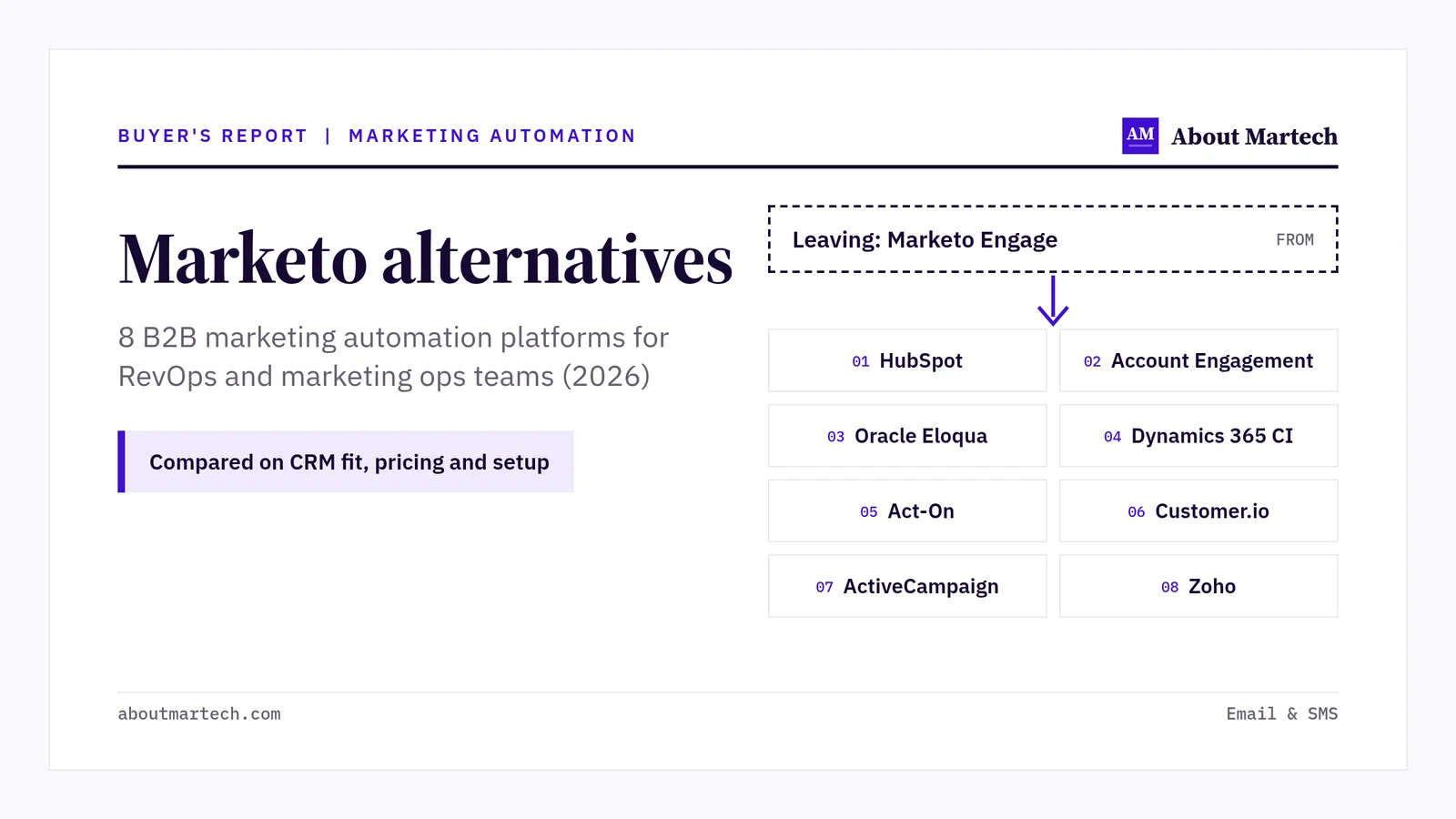
The best Marketo alternatives in 2026 are HubSpot Marketing Hub, Salesforce Marketing Cloud Account Engagement, Oracle Eloqua and Dynamics 365 Customer Insights for enterprise B2B teams. Act-On, ActiveCampaign, Customer.io and Zoho Marketing Automation fit leaner teams. Your CRM decides most of the shortlist: Salesforce shops, Microsoft shops and HubSpot shops land in different places.
This guide is for RevOps, marketing ops and growth leaders who own the marketing automation contract. Every price below comes from a vendor pricing page or help doc read on October 28, 2026, with the source linked next to it. Where a vendor does not publish a price, we say so.
In this guide
Why are teams looking for Marketo alternatives in 2026?
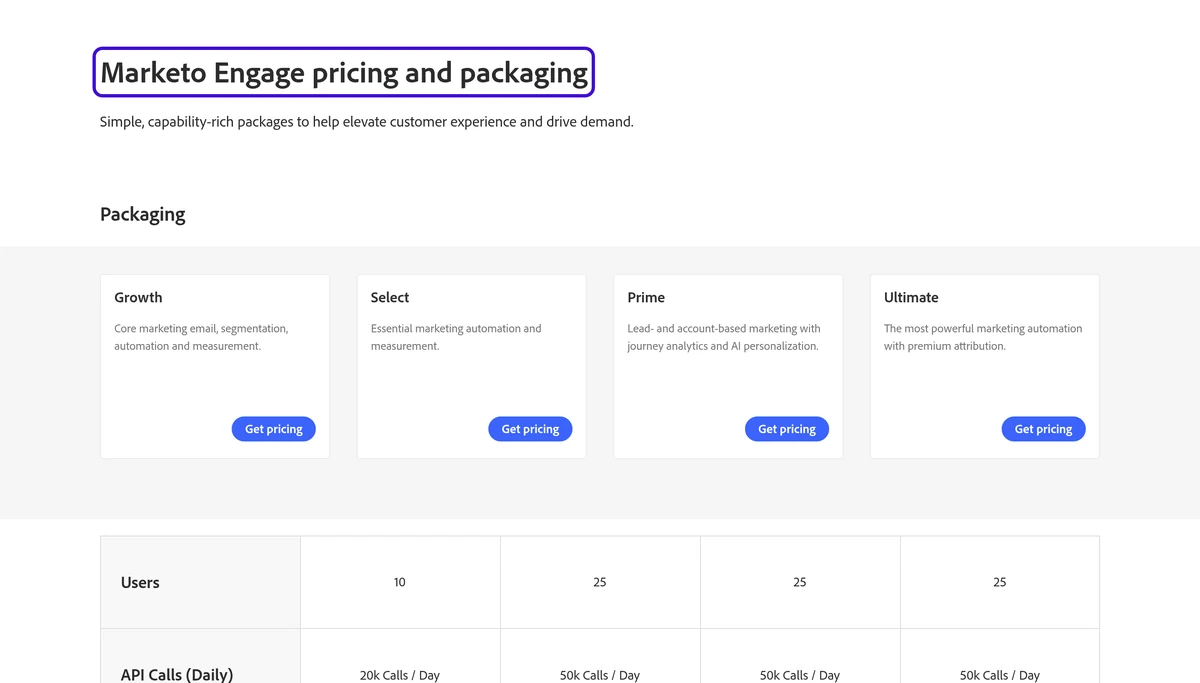
Most teams start looking at renewal time, when the quote arrives and the plan limits come into view. Adobe does not publish prices for any of its four Marketo Engage packages: Growth, Select, Prime and Ultimate. Every one sends you to “Get pricing”, so you cannot benchmark the number before the sales call.
Plan limits push teams to compare too. The Growth package includes 10 users and 20k API calls a day. Select, Prime and Ultimate each include 25 users and 50k calls a day. Teams that sync a lot of CRM data, or run many enrichment and scoring tools against Marketo, feel those caps first.
The market also moved. Gartner published its Magic Quadrant for B2B Marketing Automation Platforms on 22 September 2026, and CRM vendors now bundle AI agents into their marketing tools. Salesforce, for example, pitches an AI SDR agent called Piper on its B2B marketing automation page. A renewal is a natural moment to check whether your CRM vendor now covers what Marketo does for you.
The About Martech CRM-fit test: four checks before you leave Marketo
Run these four checks before you book demos. They cut an eight-tool list down to two or three. The CRM check matters most, because the sync between your marketing platform and your CRM decides lead handoff, scoring, attribution and reporting. A cheaper tool with a weak sync costs more in ops time.
- CRM sync. Which CRM do you run, and is the sync native, an app, or a paid add-on on the plan you can afford?
- Database size. How many contacts, profiles or “people” do you market to? Every vendor below meters this differently.
- Seats and admins. How many people build programs? Seat pricing (HubSpot) and per-org pricing (Salesforce, Microsoft) change the math.
- Program depth. Do you need account-based marketing, multi-touch attribution or complex nurture logic, or mostly email plus scoring? If you mostly need better scores, a dedicated lead scoring tool may be enough.
Marketo alternatives compared: pricing, CRM sync and best fit
The table gives one line per platform: the lowest published price, how it connects to a CRM, and who it suits. Prices are monthly in USD and billed annually unless noted. Quote-only vendors are marked as such. Swipe sideways on a phone to see every column.
| Platform | Published starting price | CRM sync | Best for |
|---|---|---|---|
| HubSpot Marketing Hub | Free tier; Starter from $7 per seat | Built-in HubSpot CRM; Salesforce sync on Professional and Enterprise | Mid-market teams that want one easy system |
| Salesforce Account Engagement | Growth+ $1,250 per org | Native to Salesforce | Salesforce-first B2B teams |
| Oracle Eloqua | Quote only | Salesforce Integration app; native for some Oracle and Microsoft CRMs | Large, regulated, multi-region programs |
| Dynamics 365 Customer Insights | $1,700 per tenant | Native to Dynamics 365 | Microsoft CRM shops |
| Act-On | Professional $900 at 2,500 active contacts | Add-on, or included in Enterprise | Mid-market teams leaving Marketo on cost |
| Customer.io | Essentials from $100 | Salesforce on Premium and Enterprise | Product-led B2B and data-heavy teams |
| ActiveCampaign | Starter $15 for 1,000 contacts | Salesforce and Dynamics on Enterprise | Small teams moving up from email tools |
| Zoho Marketing Automation | Standard US$14 for 1,000 contacts | Zoho CRM, plus a scheduled Salesforce sync | Budget teams, especially on Zoho CRM |
Which Marketo alternative fits your team?
Each pick below has a short profile, a screenshot of the public pricing or product page, and a plain “best for” and “not for” line. The order follows the table. The first four are enterprise platforms that compete with Marketo head to head; the last four trade depth for a lower price or simpler setup.
1. HubSpot Marketing Hub
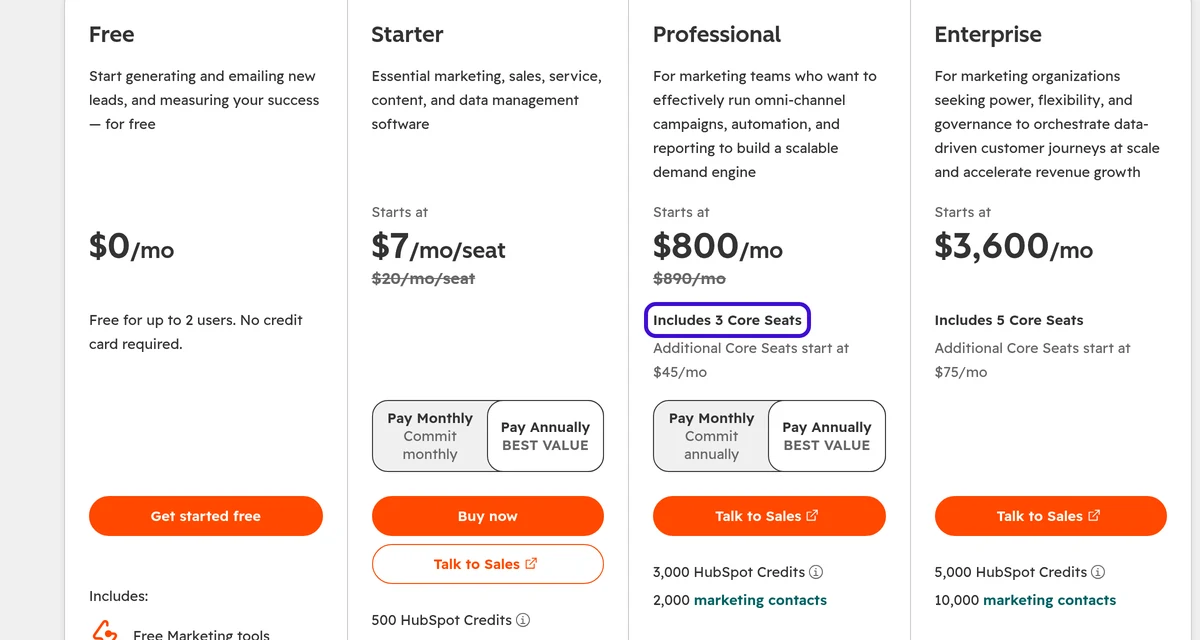
HubSpot Marketing Hub is the most common landing spot for teams leaving Marketo, because the CRM, automation and reporting live in one product. Professional starts at $800 a month billed annually and includes 3 core seats and 2,000 marketing contacts. Extra core seats start at $45 a month.
Enterprise starts at $3,600 a month with 5 core seats and 10,000 marketing contacts, and adds multi-touch revenue attribution. If you keep Salesforce as the CRM, note that the HubSpot Salesforce integration needs Professional or Enterprise. Teams that need setup help can compare HubSpot implementation partners.
Best for: mid-market B2B teams that want fast adoption and one system for marketing and sales. Not for: teams with very large databases, where contact-tier pricing climbs quickly.
2. Salesforce Marketing Cloud Account Engagement
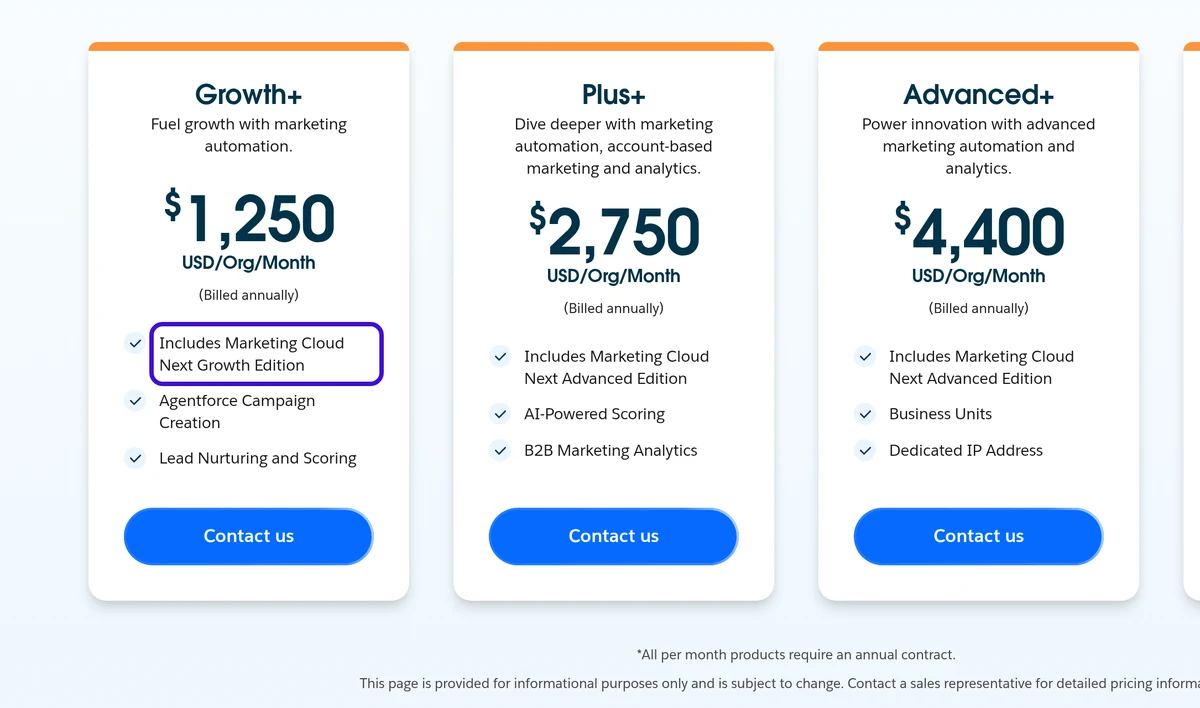
Account Engagement, the product formerly called Pardot, is the default pick when Salesforce is your CRM. Editions are priced per org per month on an annual contract: Growth+ at $1,250, Plus+ at $2,750, Advanced+ at $4,400 and Premium+ at $15,000. Growth+ now includes Marketing Cloud Next Growth Edition.
Salesforce says it was named a Leader in the 2026 Gartner Magic Quadrant for the 9th year in a row and placed highest in Ability to Execute, per its Gartner report page. Leads, scores and campaign data sit on the same platform as opportunities, which keeps handoff and pipeline reporting simple.
Best for: Salesforce-first B2B teams that want marketing and sales data in one place. Not for: teams that might leave Salesforce, since the value is tied to the platform.
3. Oracle Eloqua
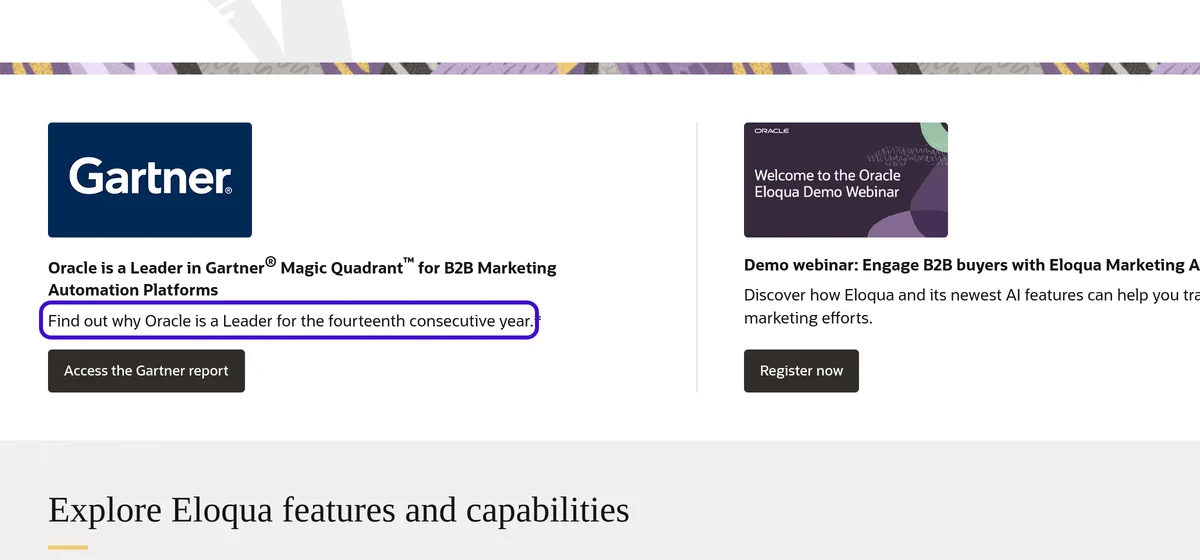
Oracle Eloqua is the closest like-for-like swap for complex Marketo programs. It covers campaign orchestration, lead management, account-based marketing and data management, and Oracle says it has been a Leader in the Gartner Magic Quadrant for the fourteenth consecutive year. Oracle does not publish Eloqua pricing.
Check the CRM link early. Oracle discontinued the native Salesforce integration and moved customers to its Salesforce Integration app. That is fine for most teams, but plan the cutover, field mapping and testing as part of the move.
Best for: large enterprises with many regions, brands or business units and a dedicated ops team. Not for: small teams who want to be self-serve within weeks.
4. Dynamics 365 Customer Insights
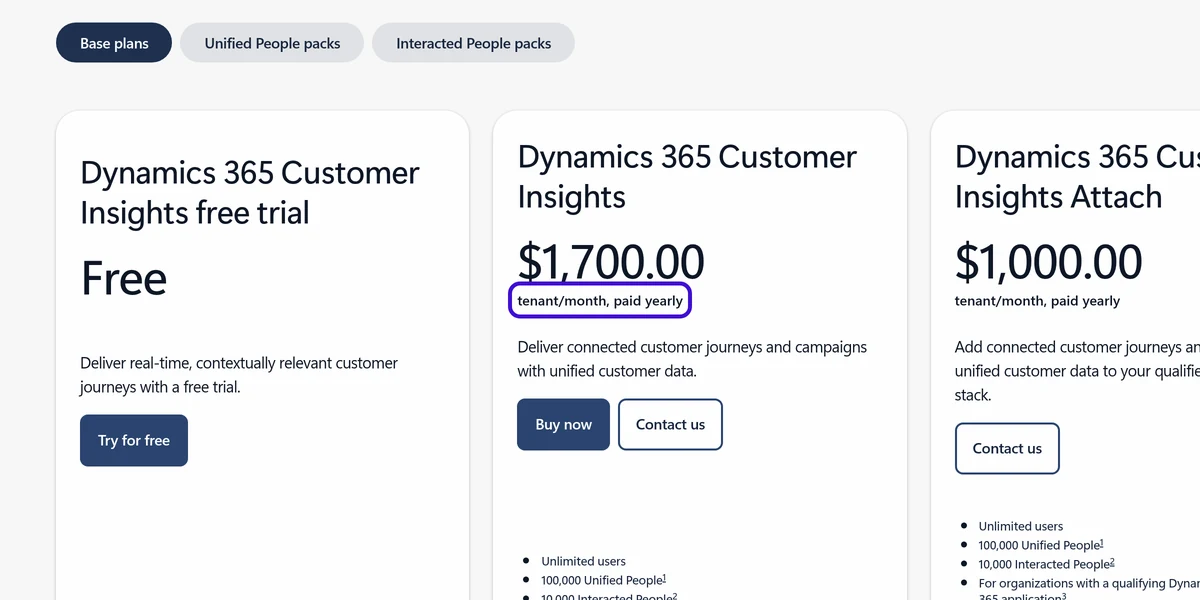
Dynamics 365 Customer Insights combines customer data and journeys for teams on Microsoft. It costs $1,700 per tenant a month, paid yearly, with unlimited users, up to four environments, 100,000 Unified People and 10,000 Interacted People. An Attach plan costs $1,000 per tenant a month for organizations with a qualifying Dynamics 365 app.
Per-tenant pricing with unlimited users is a real change from Marketo, where users are capped by package. The catch is scope: the product is built around the Microsoft stack, so it makes most sense when Dynamics 365 is already your CRM.
Best for: B2B teams that run Dynamics 365 Sales and want marketing on the same data. Not for: Salesforce or HubSpot CRM shops.
5. Act-On
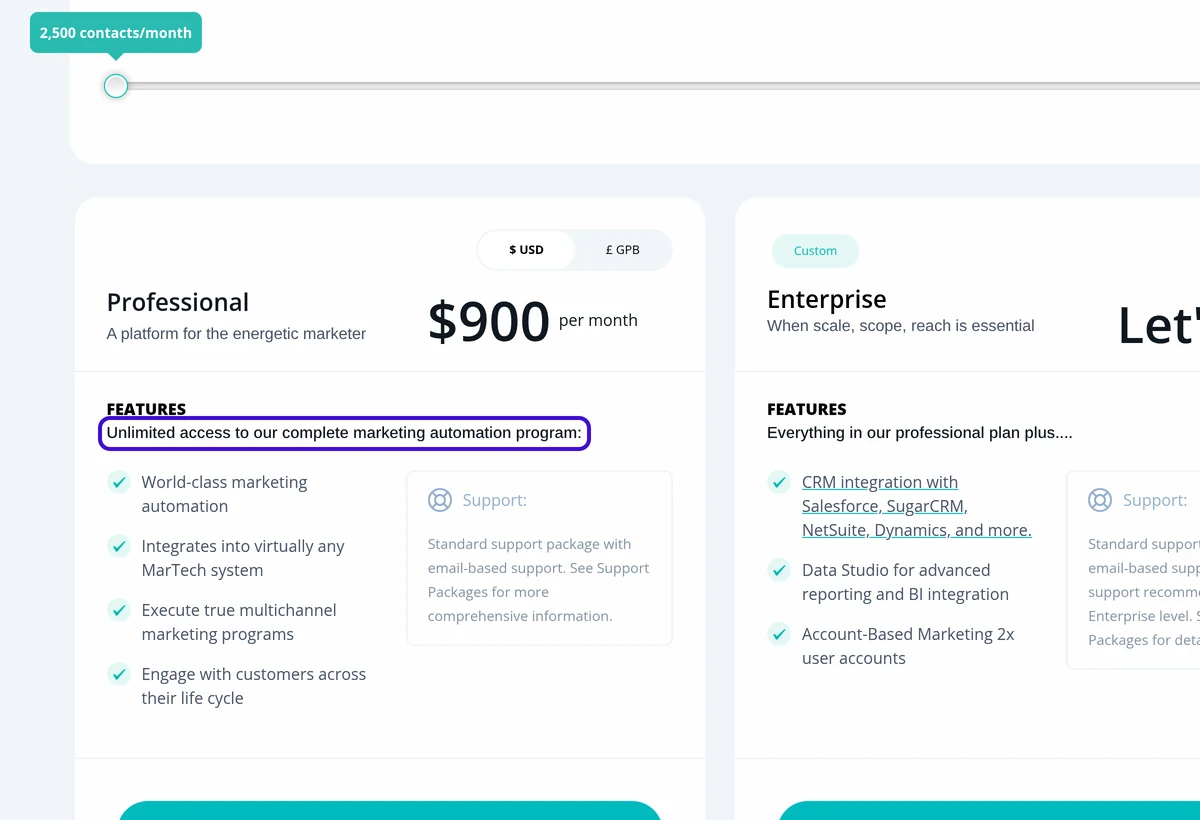
Act-On prices by active contacts and pitches itself as a simpler, lower-cost Marketo swap. Professional shows $900 a month at the 2,500 active contact setting. CRM integration with Salesforce, SugarCRM, NetSuite and Dynamics is part of Enterprise, or an add-on on Professional.
Act-On is still independent. A planned sale to Banzai fell apart in 2025 after Banzai’s funding collapsed, as GeekWire reported. Ask about the product roadmap in the sales process, as you would with any vendor of its size.
Best for: mid-market teams that want Marketo-style nurture and scoring at a lower, more predictable price. Not for: enterprises with heavy account-based programs across many regions.
6. Customer.io
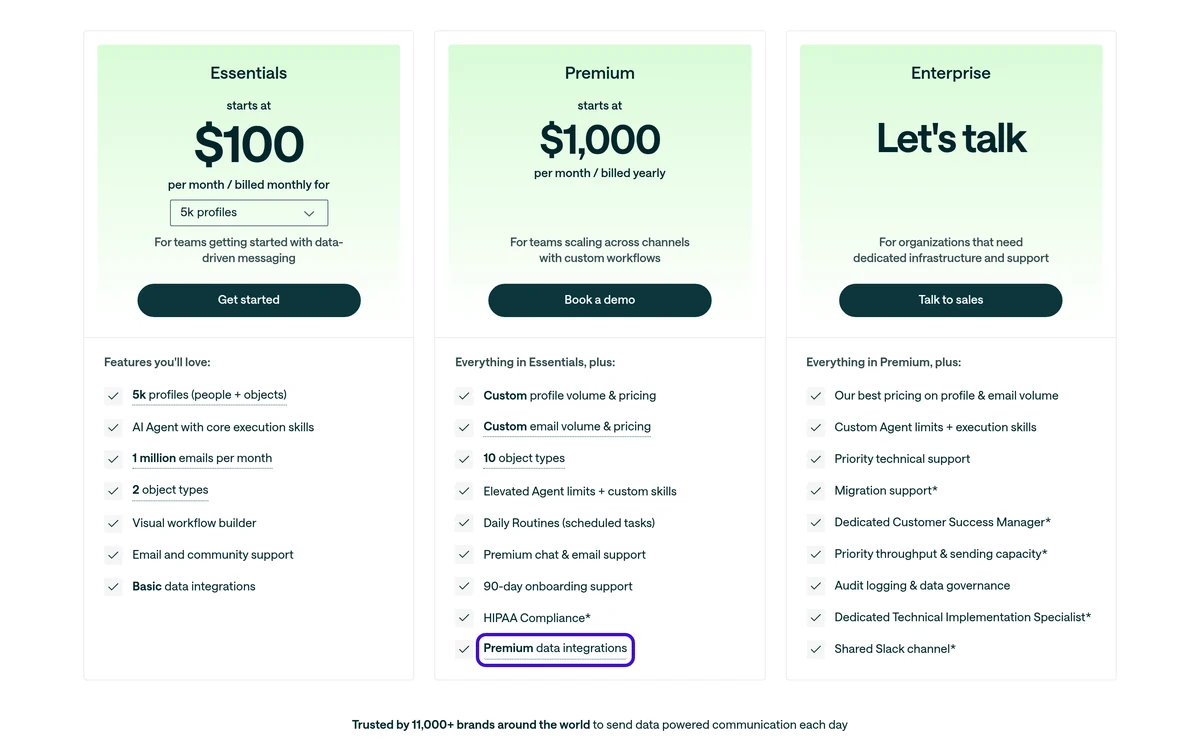
Customer.io suits product-led B2B companies that market on product usage data more than form fills. Essentials starts at $100 a month with 5k profiles and 1 million emails a month. Premium starts at $1,000 a month billed yearly, and every plan has unlimited user seats.
The Customer.io Salesforce integration is a Premium and Enterprise feature. Customer.io also offers reverse ETL on every plan and an MCP server for AI tools, which fits teams with a warehouse-first data stack.
Best for: SaaS teams that trigger messages from product events and own their data in a warehouse. Not for: classic demand gen teams that live in forms, landing pages and webinar programs.
7. ActiveCampaign
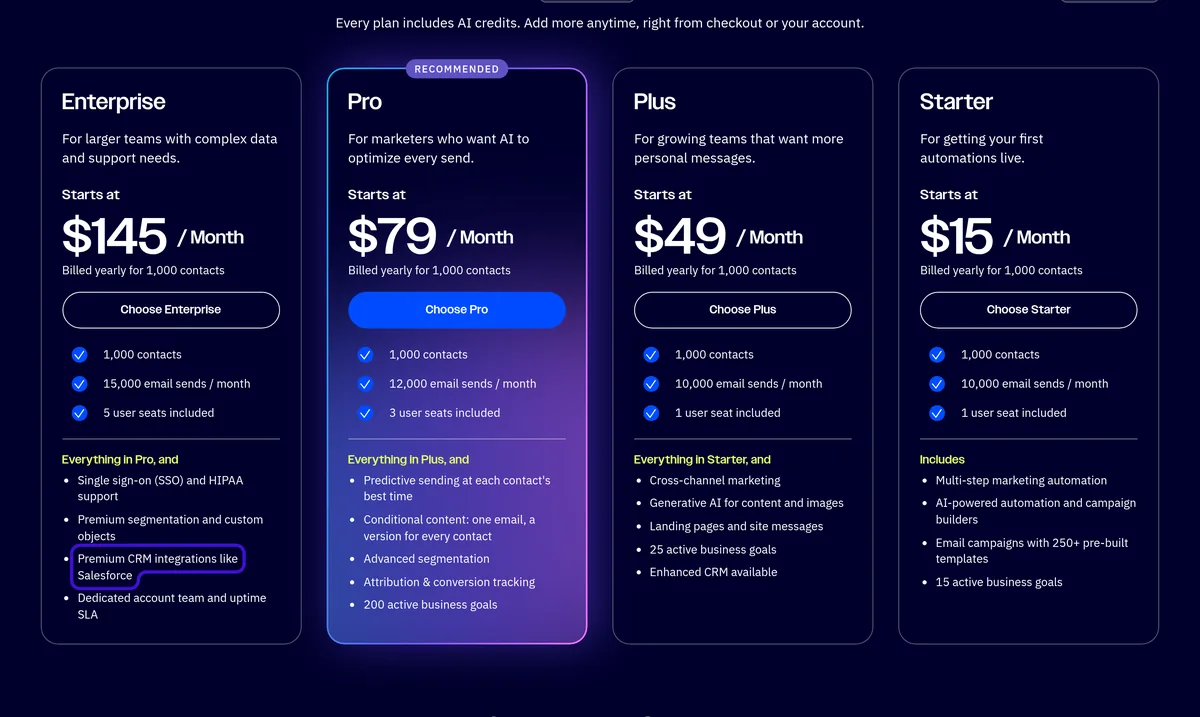
ActiveCampaign is the low-cost option for small teams that still want automation, scoring and a CRM. Billed yearly for 1,000 contacts, Starter costs $15, Plus $49, Pro $79 and Enterprise $145 a month. ActiveCampaign offers a 30-day money-back guarantee.
Premium CRM integrations, including Salesforce, sit on Enterprise only. Price that plan at your real contact count before you compare it with Marketo, since all four plans scale with contacts.
Best for: small B2B teams moving up from a basic email tool. Not for: enterprise teams that need account-based marketing or deep governance.
8. Zoho Marketing Automation
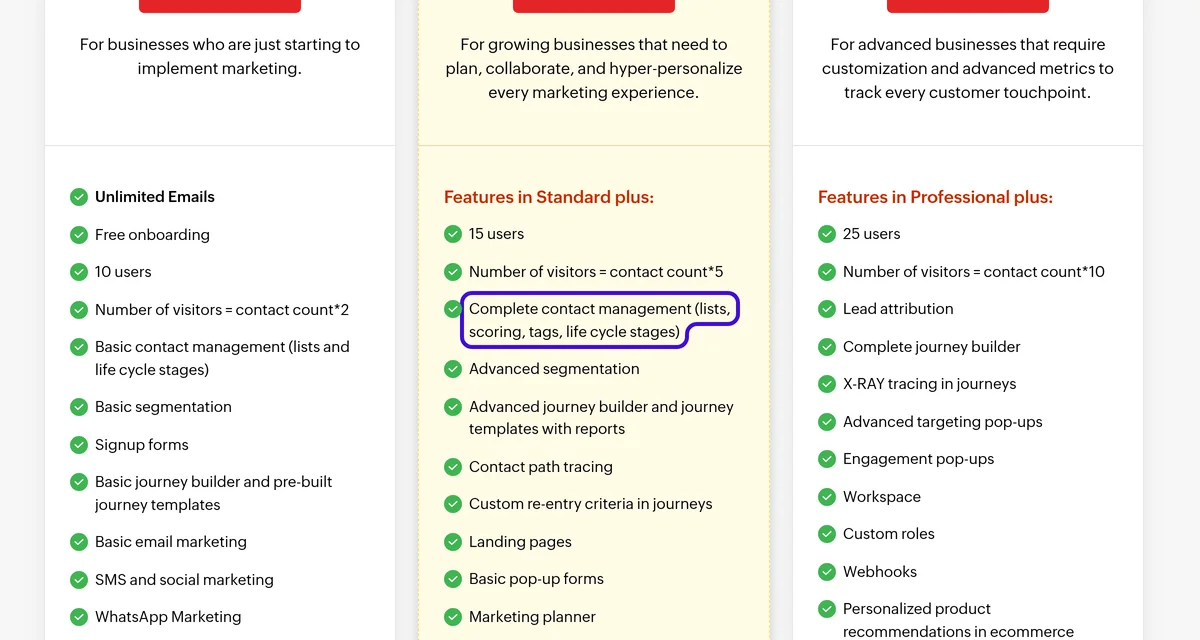
Zoho Marketing Automation is the cheapest serious option on this list. For 1,000 contacts billed annually, Standard costs US$14, Professional US$22 with lead scoring, and Enterprise US$44 with lead attribution. Zoho includes free onboarding.
It fits best with Zoho CRM. Salesforce teams can set up a scheduled Salesforce sync that pulls contacts, leads or custom modules into Zoho, so test how it handles your lead lifecycle before you commit.
Best for: budget-conscious teams, especially those already on Zoho CRM. Not for: enterprise programs that need tight two-way sync with Salesforce.
What does a Marketo replacement really cost?
The real cost is the plan that includes your CRM sync, at your real database size, plus one-time fees. Several entry prices on vendor pages exclude the Salesforce or Dynamics connection. The chart shows the first plan on each vendor page that includes that connection, as published on our read date.
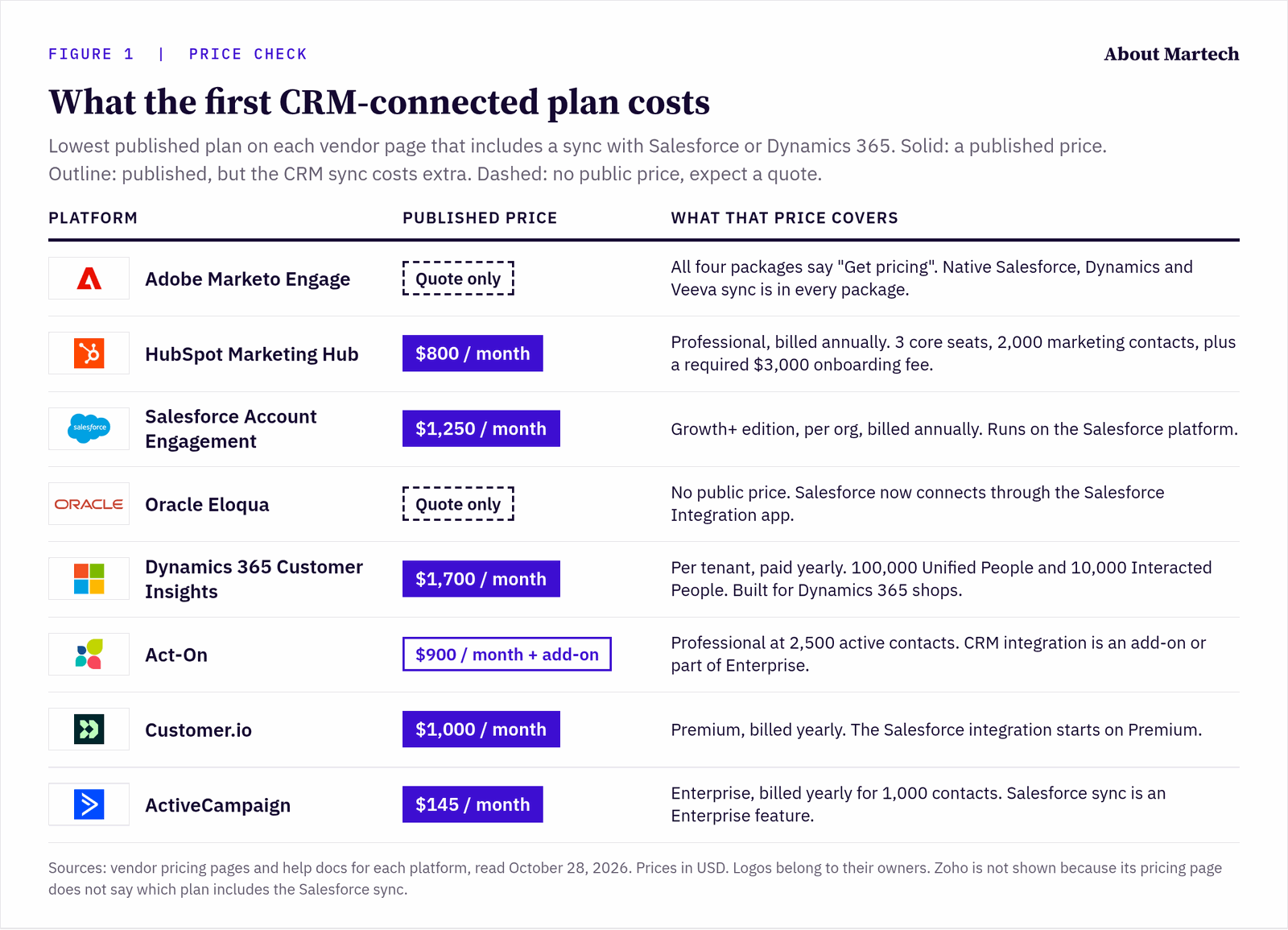
Three line items catch buyers out. Watch for these before you sign:
- Onboarding fees. HubSpot adds a required one-time onboarding fee of $3,000 on Professional and $7,000 on Enterprise, per its pricing page.
- Database growth. Salesforce charges $100 per 10,000 additional contacts a month on Account Engagement, per its pricing page. Contact-based tools reprice as your list grows.
- CRM add-ons. Act-On and ActiveCampaign put the Salesforce connection on a higher plan or an add-on, so the entry price is rarely the price you pay.
How do you migrate off Marketo without breaking reporting?
Treat the move as a data project first and an email project second. Export programs, smart lists, scoring rules and lead lifecycle stages, then rebuild only what still earns pipeline. Run both platforms in parallel for a short window so the CRM keeps receiving clean leads while you test the new sync.
- Audit before you export. List active programs, forms and scoring models, and retire what nobody owns.
- Map fields and lifecycle stages. Agree on lead status, MQL rules and routing with sales before the cutover.
- Protect attribution. Keep campaign and UTM naming the same, so first-touch and multi-touch reports still line up. Our guide to Bizible alternatives covers attribution tools if Marketo Measure leaves with Marketo.
- Re-test routing. New leads should reach the right owner on day one. If you route in Salesforce, check lead-to-account matching rules after the switch.
- Warm up sending. Plan domain authentication and a gradual sending ramp on the new platform, so deliverability holds.
Frequently asked questions about Marketo alternatives
What is the best alternative to Marketo?
HubSpot Marketing Hub is the best all-round Marketo alternative for mid-market B2B teams, because CRM, automation and reporting sit in one product. Salesforce Account Engagement is the better pick when Salesforce is your CRM. Oracle Eloqua fits large, multi-region enterprises that need program depth and governance close to Marketo.
Is HubSpot better than Marketo?
HubSpot is easier to adopt and publishes its prices, which Marketo does not. Marketo still suits teams with large databases, complex nurture logic and a dedicated ops team. If your team values speed and one shared system with sales, HubSpot usually wins. If depth on Salesforce matters most, compare Account Engagement first.
How much does Marketo cost?
Adobe does not publish Marketo Engage prices. All four packages, Growth, Select, Prime and Ultimate, show a Get pricing button that leads to a sales conversation. The packages differ on users and daily API calls, so ask for quotes at two package levels and your expected database size to compare fairly.
Which Marketo alternative works best with Salesforce?
Salesforce Account Engagement works best with Salesforce because it runs on the same platform, so leads, scores and campaigns sit next to opportunities. HubSpot, Customer.io, ActiveCampaign and Act-On also connect to Salesforce, but on higher plans or as add-ons. Oracle Eloqua connects through its Salesforce Integration app.
What is the cheapest Marketo alternative for B2B teams?
Zoho Marketing Automation and ActiveCampaign have the lowest published entry prices on this list, both priced for 1,000 contacts. Both scale with your contact count, and Salesforce sync costs more or works differently than on enterprise tools. Price the plan you actually need at your real database size before you compare.
Is Salesforce Account Engagement the same as Pardot?
Yes. Salesforce Marketing Cloud Account Engagement is the current name for the product that used to be called Pardot. It is the B2B marketing automation tool inside Salesforce Marketing Cloud. Salesforce now sells it in Growth+, Plus+, Advanced+ and Premium+ editions, priced per org per month on an annual contract.
How long does it take to move off Marketo?
The timeline depends on how many active programs, scoring models and integrations you carry over, more than on the new platform. Teams that audit first and rebuild only live programs move faster. Plan a parallel run, a sending warm-up and a full CRM sync test before you switch off Marketo.
The verdict: which Marketo alternative should you pick?
Let your CRM choose the shortlist. Salesforce teams should start with Account Engagement, Microsoft teams with Dynamics 365 Customer Insights, and teams open to a new CRM with HubSpot Marketing Hub. Choose Oracle Eloqua if you need Marketo-level depth at enterprise scale, and get quotes from both Oracle and Adobe.
For leaner budgets, Act-On is the most Marketo-like, Customer.io fits product-led teams, and ActiveCampaign or Zoho cover small teams. Whatever you pick, price the plan that includes your CRM sync, add onboarding and contact growth, and check the data you feed it, from intent data to scoring.