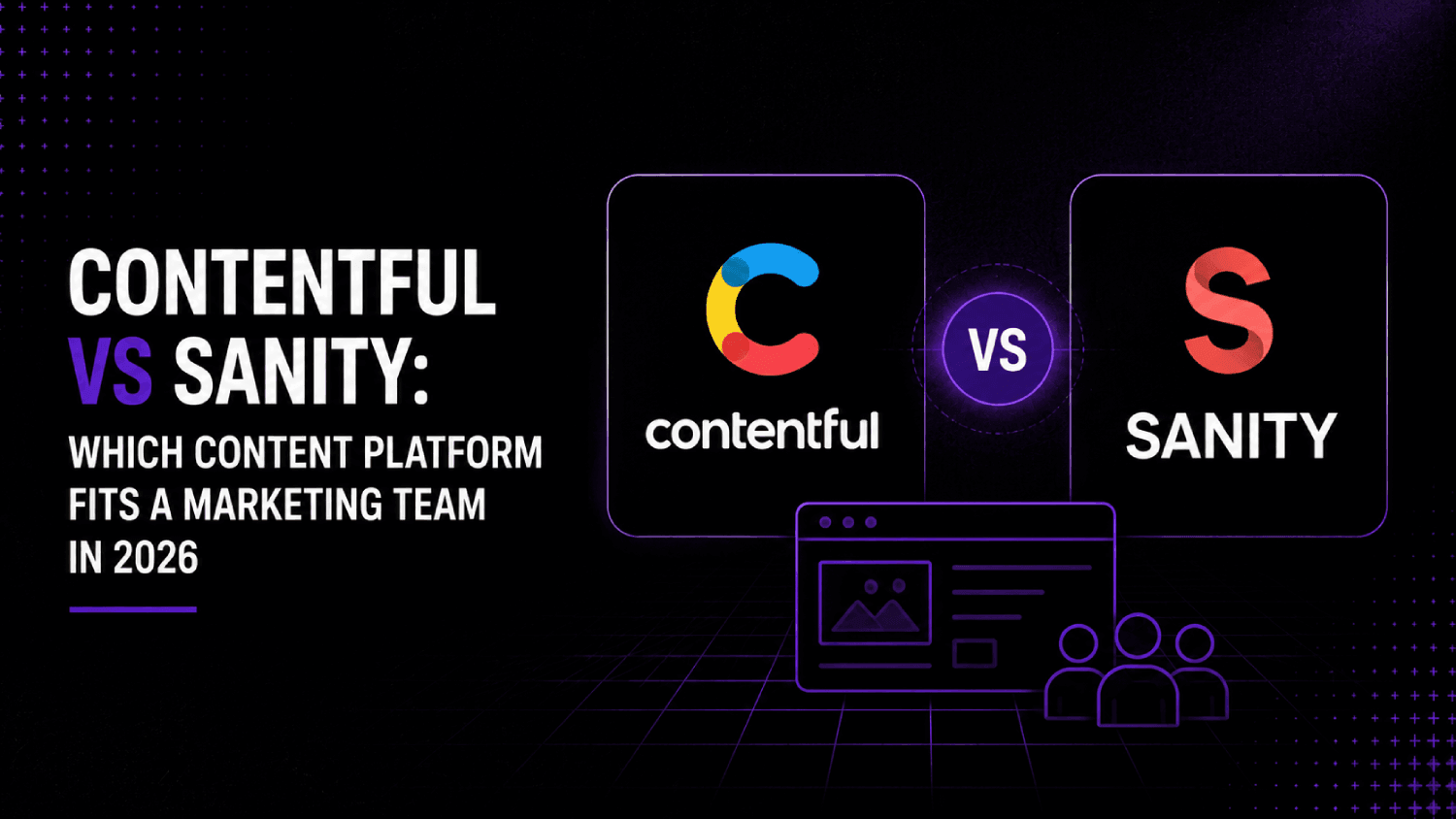

- Contentful and Sanity share almost nothing architecturally beyond the “headless CMS” label. Their editing models, pricing curves, and content modeling philosophies diverge sharply at scale.
- Contentful charges per locale and per content type at higher tiers, which makes multi-region marketing operations expensive fast. Sanity’s Content Lake model prices primarily on API usage and seats, which tends to stay cheaper until query volume gets large.
- Non-technical editors get a more familiar, structured interface in Contentful. Sanity Studio is more powerful but requires configuration to become usable for content teams without developer help.
- Sanity wins on content modeling flexibility and real-time collaboration. Contentful wins on out-of-the-box editorial guardrails and enterprise compliance features.
- If you are already paying Contentful’s Team or Scale tier and content volume is growing, the math on switching to Sanity is worth running before your next renewal.
Contentful suits marketing teams that need structured editorial guardrails, established enterprise integrations, and a CMS their editors can use without developer hand-holding. Sanity suits teams with developer resources who need deep content modeling flexibility, real-time collaboration, and lower per-locale costs at scale. The choice is not about developer preference. It is about where your pricing pain and editorial workflow complexity actually live.
Why Most Teams Frame This Decision Wrong
Most headless CMS evaluations start with the developer team and end with the developer team. Engineering picks a tool based on API design, SDK quality, and local development experience, and marketing inherits whatever gets shipped. That workflow produces a CMS that developers like and editors tolerate.
The more useful frame for a marketing leader is to start with two questions: how will content editors actually create and update content without filing a ticket, and what does the pricing look like when content volume doubles? Both Contentful and Sanity have answers to those questions, but the answers are different enough to matter before you sign a contract.
Content operations teams evaluating either platform should also be thinking about how their CMS connects to the broader stack. If you are pulling structured content into personalization layers or feeding it to AI-generated experiences, the content model itself becomes an upstream constraint on what your tools can do downstream.
What Is Contentful’s Architecture, and How Does It Constrain Marketing Teams?
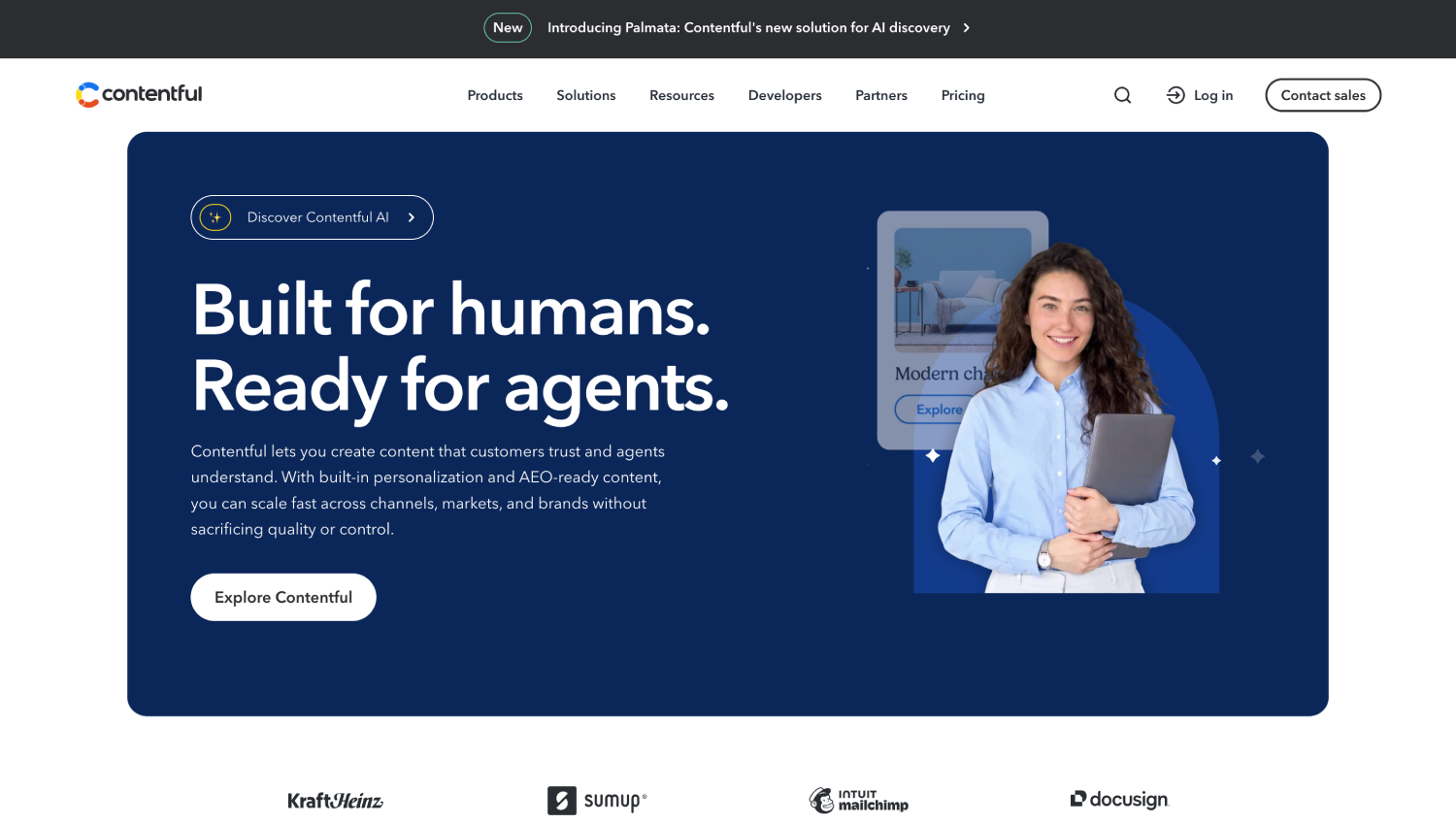
Contentful organizes content around Spaces and Environments. Each Space has a content model made up of content types, and those content types have fields. Editors work in the web-based Contentful app, which enforces the content model strictly. That structure is a feature for organizations that need content governance across large teams, but it is a constraint for teams that need to iterate on content models quickly.
Localization in Contentful is tied to locale configuration at the Space level. Every locale you add to a content type increases storage and adds to your monthly costs at higher tiers. For a marketing team running campaigns across six regions with distinct languages, that adds up in a predictable and uncomfortable way.
Contentful’s Rich Text field type is the main tool for long-form content editing. It renders in a familiar WYSIWYG-adjacent interface and supports embedded entries and assets, but it is deliberately constrained. Marketing teams migrating from WordPress often find it feels limiting. Teams coming from a traditional CMS with page-builder habits feel that constraint most acutely in the first 90 days.
What Is Sanity’s Architecture, and What Does “Content Lake” Actually Mean?
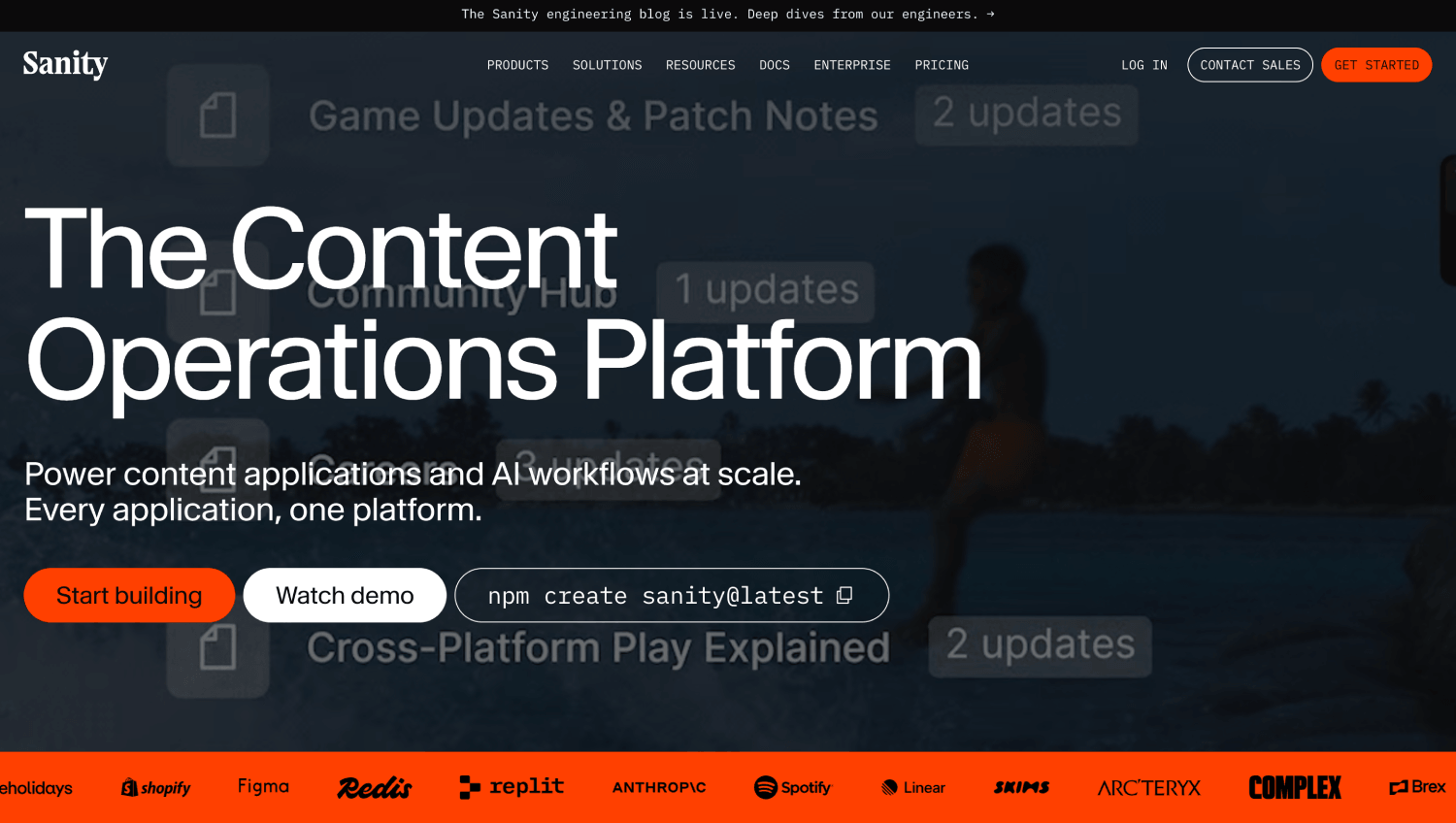
Sanity stores all content in a hosted, real-time document store called the Content Lake. Unlike Contentful’s field-and-type model, Sanity uses a document-oriented approach where content is stored as JSON and structured using schemas defined in code. That distinction sounds like a developer concern, but it has direct editorial consequences.
Because the content model is defined in code, changing it does not require going through an admin UI. A developer can add a new field, change a validation rule, or refactor a schema without touching a content migration tool. For marketing teams that run frequent campaign sprints, that speed matters. The trade-off is that the schema lives in a Git repository, which means non-developers cannot adjust the content model themselves.
Sanity Studio is the open-source, React-based editing interface that runs against the Content Lake. It is highly configurable but ships with a steeper learning curve than Contentful’s hosted editor. A team that deploys Sanity Studio without customization gets an interface that feels sparse to non-technical editors. A team that invests in Studio configuration, teams report this commonly takes two to four weeks of developer time, gets an editorial experience that can be genuinely purpose-built for their workflow.
How Do Contentful and Sanity Compare on Pricing at Scale?
Pricing is where this comparison gets concrete. Both vendors publish pricing pages, though enterprise tiers are quote-based on both sides.
According to Contentful’s public pricing page, the Free tier allows up to 5 users, 2 locales, and 25,000 records. The Basic plan starts at $300 per month (billed annually) and the Team plan runs $995 per month. The Scale tier requires a custom quote. The pricing architecture charges per locale and caps content types at each tier, which means international marketing teams hit tier ceilings faster than they expect.
According to Sanity’s public pricing page, the Free plan allows up to 3 users with 10 GB of assets and 200K API requests per month. The Growth plan starts at $15 per user per month. Enterprise pricing is quote-based. Sanity does not charge per locale, which is the single most important structural difference for multi-region marketing teams.
| Factor | Contentful | Sanity |
|---|---|---|
| Free tier users | 5 | 3 |
| Paid plan entry price (public) | $300/month (Basic) | $15/user/month (Growth) |
| Per-locale charges | Yes, caps at each tier | No locale-based pricing |
| Content type limits | Yes, varies by tier | No hard limits on content types |
| API pricing model | Included calls, overage fees | Included requests, overage fees |
| Self-hosted option | No | Studio yes, Content Lake no |
| Enterprise tier | Custom quote (Scale) | Custom quote |
To make this concrete: consider a B2B SaaS marketing team running eight locales, with 12 content editors and a content model covering product pages, blog posts, customer stories, and release notes. On Contentful’s Team tier, which caps locales and content records at published tier limits, that team would likely exceed those thresholds and need to negotiate a Scale contract. On Sanity’s Growth tier, locale count is irrelevant and the per-seat cost for 12 editors comes to $180 per month, before factoring in API usage overages. This scenario is illustrative and assumes a moderately sized content library; exact record counts vary by implementation. The structural difference in how localization is priced, however, holds regardless of those specifics.
Which Platform Is Easier for Non-Technical Editors?
Contentful wins here, and the margin is not small. The hosted Contentful editor is opinionated and polished. Editors get a consistent interface with clear field labels, validation feedback, and a preview workflow that does not require developer configuration. A content editor who has never worked in a headless CMS can be productive in Contentful within a day.
Sanity Studio, out of the box, presents editors with a document list and a form generated from the schema. It is functional, but it is not intuitive without customization. The structure tool, the desk tool configuration, and the document actions API are all developer-facing concepts that need translation before they become editorial-facing workflows. Marketing operations teams that evaluate Sanity without factoring in Studio setup time routinely underestimate the onboarding lift.
Sanity’s visual editing feature, which allows inline editing directly in a page preview, does narrow the gap. When configured properly, it lets editors click directly on page elements and edit content in context, which is closer to the traditional CMS experience that many marketers prefer. The catch is that visual editing requires front-end integration work that takes developer time to build and maintain.
How Do Contentful and Sanity Handle Content Modeling for Complex Marketing Use Cases?
Content modeling is where Sanity’s architecture shows its advantage for sophisticated teams. Because the schema is code, content types can reference each other in arbitrary ways, support polymorphic arrays (a single field that can contain one of several document types), and enforce custom validation logic written in JavaScript. A marketing team that needs to model a modular page system where any section can be a hero, a feature grid, a testimonial block, or a CTA panel will find that Sanity’s portable text and block content types handle this naturally.
Contentful can achieve similar results through reference fields and modular content patterns, but the composition gets verbose. A content type for a landing page that supports five different section types needs five separate reference fields or a complex linked-entries structure. Developers familiar with both platforms consistently describe Contentful’s content model as easier to explain to non-developers but harder to keep clean at scale.
For structured content that feeds AI-driven experiences or personalization engines, the JSON-first nature of Sanity’s Content Lake is an advantage. The content is already in a format that downstream systems can consume without transformation, which matters when you are connecting your CMS to a personalization layer or feeding product descriptions into a generative content workflow. Teams thinking about building a first-party data stack should consider how structured content fits into that architecture from the start.
The AboutMartech Editor-to-Developer Ratio Test
No existing framework captures the Contentful-vs-Sanity decision cleanly, so here is one that does. Call it the Editor-to-Developer Ratio Test. Before signing either contract, map three ratios. These are proposed decision thresholds based on observed patterns in content operations, treat them as diagnostic guidelines rather than validated universal benchmarks:
- Editing ratio: How many content updates per week will come from editors without developer involvement? If the number is above 80%, Contentful’s structured editor is worth the premium. Below 50%, Sanity’s flexibility becomes the better trade.
- Schema change frequency: How often does the content model itself change? Monthly or more frequently means Sanity’s code-based schema pays off. Quarterly or less means Contentful’s admin-configurable types cause less friction.
- Locale multiplier: Multiply your current locale count by 1.5 to estimate where you will be in 18 months. If that number exceeds four locales, model Contentful’s pricing at your projected tier explicitly before signing. Sanity’s flat pricing structure becomes structurally cheaper past that threshold in most configurations.
Run all three ratios, weight them against your team composition, and the answer usually becomes clear. Teams with large editorial staffs and few developers land on Contentful. Teams with developer bandwidth and complex content models land on Sanity.
How Does Localization Work in Each Platform?
Contentful’s localization model is field-level. When you enable localization for a content type, individual fields can have values per locale, with a fallback chain configured at the Space level. This is a mature, well-documented approach that editorial teams understand quickly. The downside is that adding locales costs money and increases the complexity of the content model as the locale count grows.
Sanity handles localization through a community-supported plugin architecture rather than a built-in feature. The sanity-plugin-internationalization library is the standard approach, and it works by creating linked document variants per locale. That approach is more flexible than Contentful’s field-level model, particularly for markets that have meaningfully different content rather than just translated text, but it requires more upfront setup and a developer who understands the tradeoffs between document-level and field-level i18n.
Teams running campaigns in 10 or more markets, where some markets need entirely different content rather than translations, tend to prefer Sanity’s document-per-locale approach. Teams running standard multilingual sites where translation is the main concern usually find Contentful’s field-level localization simpler to manage.
Should You Migrate from Contentful to Sanity?
Migration is a real consideration for teams already on Contentful who are watching their bills grow. The case for migrating strengthens when three conditions converge: locale count is increasing, the engineering team has capacity to own a Studio configuration project, and the content model is evolving frequently enough that Contentful’s admin UI is slowing down schema iteration.
The case against migrating is also real. Contentful has a larger set of pre-built integrations, particularly for enterprise tooling like Salesforce, Commercetools, and Contentful’s own App Framework marketplace. If your CMS sits at the center of a complex integration web, the migration cost is not just the content export and import. It includes rebuilding every integration connection and re-training an editorial team that has built habits around Contentful’s interface.
Content migration tools exist for both directions. Contentful exports content via its Management API in JSON. Sanity’s import tooling can ingest that format with transformation scripts, but portable text conversion from Contentful’s rich text format requires custom work. Budget two to six weeks of developer time for a mid-sized content library migration, not counting QA and editorial retraining.
For marketing teams also evaluating how their CMS connects to product analytics and behavioral data, understanding how content performance signals flow into measurement tools matters. The headless architecture of both platforms makes CMS-to-analytics connections possible through custom implementations rather than built-in integrations, which is a factor worth flagging to whoever owns marketing analytics at your organization.
How Do Developer Experience and Integration Options Compare?
Both platforms have strong SDKs and good documentation. The differences come down to philosophy rather than capability gap.
Contentful’s developer experience centers on its Content Delivery API and Content Management API, with official SDKs in JavaScript, PHP, Ruby, Python, Java, .NET, and Swift. The content model is defined in the UI and consumed via API, which means front-end developers do not need to touch schema files. That separation works well in organizations where content architecture decisions are made by non-developers.
Sanity’s developer experience centers on GROQ, its open-source query language for the Content Lake. GROQ allows complex, deeply nested queries in a single request, which reduces round trips compared to REST-based fetching patterns. Developers who learn GROQ consistently report preferring it to GraphQL for content querying, though there is a learning curve for teams coming from REST-only backgrounds. Sanity also supports a GraphQL API for teams that prefer it.
The Sanity Studio codebase being open-source means teams can build custom input components, document actions, and desk tools. That extensibility is genuinely useful for organizations with unusual editorial workflows. Contentful’s App Framework offers similar extensibility but within a more constrained sandbox model.
Which Platform Fits AI-Driven Content Operations?
Both Contentful and Sanity have moved to add AI features. Contentful has integrated AI content generation assistance into its editor, and Sanity has published patterns for AI-assisted content generation using its Studio plugin architecture. Neither platform has a definitively superior AI content layer at this point, and the more important question is how well the content model supports AI workflows downstream.
Sanity’s document-based, schema-in-code approach makes it easier to build AI generation pipelines that write directly to the Content Lake via the Mutations API. A developer can build a workflow where an AI tool generates structured JSON matching the content schema and publishes it as a draft for editorial review, without any CMS UI involvement. That kind of automation is possible in Contentful but requires more abstraction work because the content model is owned by the API layer rather than a codebase.
For marketing teams building AI content workflows, this distinction matters less for blog post generation and more for structured data, such as product descriptions, metadata fields, and structured comparison content. Teams thinking seriously about AI content at scale will find Sanity’s architecture more composable. Teams evaluating AI content tools for their marketing stack should factor CMS compatibility into their assessment, not treat it as a separate conversation.
Frequently Asked Questions
Is Sanity cheaper than Contentful for most marketing teams?
For teams with multiple locales and a modest number of editors, Sanity tends to be cheaper because it does not charge per locale. Contentful’s Basic tier starts at $300 per month, while Sanity’s Growth tier starts at $15 per user per month. A 10-person editorial team on Sanity Growth pays $150 per month before overages. The comparison shifts at scale if API request volume is high, since both platforms charge for overages. Enterprise pricing on both platforms is quote-based and depends heavily on usage patterns.
Which platform is easier for non-technical content editors?
Contentful is easier for non-technical editors out of the box. Its hosted editor is structured, consistent, and requires no developer configuration to be usable. Sanity Studio is more powerful but ships in a developer-ready state, not an editor-ready state. A team that deploys Sanity without customizing the Studio interface will find editors confused and frustrated within the first week. Sanity’s visual editing feature narrows this gap when configured, but it requires front-end integration work that takes developer time.
How does Contentful vs Sanity pricing change at scale?
Contentful’s pricing scales with locale count, user count, and content record volume, all of which increase simultaneously as a marketing operation grows. Teams on the Team tier at $995 per month frequently find themselves needing a Scale custom quote when they add regional markets. Sanity’s pricing scales primarily with API request volume and user count, with no locale penalty. Multi-region teams with developer resources almost always find Sanity cheaper at scale, though the exact crossover depends on API usage patterns specific to each team’s front-end architecture.
Does Contentful support visual editing?
Contentful offers a live preview capability that shows content changes in context, but it requires front-end integration work to configure. Sanity’s visual editing feature, introduced in recent versions of the Studio, is more tightly integrated and allows inline editing directly on the page preview when configured correctly. Both implementations require developer setup and ongoing maintenance to keep the preview environment in sync with the production front end.
Can you migrate from Contentful to Sanity without losing content?
Content migration from Contentful to Sanity is technically achievable using Contentful’s Management API export and Sanity’s import tooling, but it requires custom transformation scripts, particularly for rich text content. Contentful’s rich text format does not map directly to Sanity’s portable text format, so a developer needs to write a converter. Budget two to six weeks of developer time for a mid-sized migration, and expect additional time for editorial retraining. Structured fields and references carry over more cleanly than long-form rich text content.
Which platform handles localization better for international marketing?
Contentful’s field-level localization is simpler to configure and explain to editorial teams running standard multilingual sites. Sanity’s document-per-locale approach, via the internationalization plugin, is more flexible for markets that need distinct content rather than just translations, and it avoids Contentful’s per-locale pricing penalties. Teams running more than four locales should model Contentful’s pricing at their projected tier before deciding. Teams with developer resources and complex per-market content requirements will generally prefer Sanity’s approach.
Which platform integrates better with enterprise marketing stacks?
Contentful has a larger pre-built integration library, including the Contentful App Framework marketplace with connectors for Salesforce, Commercetools, Shopify, and various DAM platforms. Sanity’s integrations are more often custom-built using the Mutations API and Studio plugin architecture. For teams at enterprise organizations where procurement requires certified integrations, Contentful’s marketplace reduces implementation risk. For teams comfortable with custom API integrations, both platforms connect equally well to the broader martech stack.
Is Sanity’s Content Lake the right architecture for a content-heavy marketing operation?
The Content Lake is a good fit for teams that query content from multiple channels simultaneously, need real-time collaboration between editors, and want content stored in a format that downstream systems can consume as JSON without transformation. It is less suited to teams that need on-premises or single-tenant hosting, since the Content Lake is a hosted service with no self-hosted option. Teams with strict data residency requirements should verify Contentful’s and Sanity’s regional hosting options against their compliance needs before proceeding with either platform.
The Verdict: Which Platform to Choose
Contentful is the right choice for marketing teams with large editorial staffs, limited developer bandwidth, multi-channel publishing needs, and enterprise compliance requirements. The structured editor, mature localization workflow, and established App Framework integrations justify the higher cost for organizations where content governance is the primary concern. Teams that are already deep in Salesforce or Commercetools integrations should not underestimate the integration advantage.
Sanity is the right choice for teams with developer resources who need content modeling flexibility, real-time collaboration, and a pricing structure that does not punish international expansion. The Content Lake architecture positions it better for AI-driven content pipelines and composable front-end architectures. Teams willing to invest in Studio configuration get an editorial environment that is genuinely purpose-built rather than generically structured. For teams building personalized, multi-channel experiences where content structure feeds directly into their broader B2B website personalization layer, Sanity’s composable architecture provides more room to operate.
The decision that most teams get wrong is treating this as a permanent infrastructure choice rather than a current-state fit question. Contentful works until per-locale pricing and content type limits force a renegotiation. Sanity works until the Studio configuration debt or API overage costs become visible. Run the Editor-to-Developer Ratio Test, model the pricing at 18 months of projected growth, and pick the platform that fits where your team actually is, not where you hope it will be.