
- Digital adoption platforms are not onboarding chrome. Companies that deploy in-app guidance see measurable drops in support ticket volume and faster time-to-first-value for new users.
- The category splits into two distinct buying lanes: enterprise DAPs with deep analytics and workflow automation (WalkMe, Whatfix), and product-led growth tools built for lean SaaS teams (Userpilot, Appcues, Chameleon).
- Pendo’s analytics layer is genuinely differentiated. No other DAP in this list matches its feature usage telemetry out of the box.
- Pricing is the sharpest dividing line. WalkMe and Whatfix are quote-only and rarely affordable below 500 seats. Userpilot and UserGuiding publish transparent tiers starting under $300/month.
- The right pick depends on whether your onboarding friction lives inside a complex SaaS product or across a blended software-plus-process workflow.
The best digital adoption platform for most SaaS onboarding teams is Userpilot for mid-market companies that want no-code in-app guidance with solid analytics, Pendo for teams that need feature usage data to drive their onboarding strategy, and WalkMe for enterprises managing adoption across multiple internal and customer-facing applications. Appcues and Chameleon are strong for product-led growth teams with developer resources. UserGuiding is the sharpest value play under $100/month.
Why Most SaaS Teams Underinvest in DAP Software Until It’s Too Late
The pattern is consistent: a SaaS company invests heavily in acquisition, then loses a third of new users before they reach a second meaningful session. The culprit is almost never product quality. It’s the gap between a user’s first login and the moment they understand what the product actually does for them.
Digital adoption platforms address that gap with in-app guidance tools: product walkthroughs, tooltips, checklists, hotspots, and in-product messaging that fire contextually based on where a user is and what they have or haven’t done. The category sits at the intersection of product analytics and in-app UX. A good DAP doesn’t just show users what to click next. It tells your team which users got stuck and where.
What most buying guides miss is that DAPs serve two fundamentally different buyers. Product and growth teams care about self-serve onboarding flows that reduce reliance on customer success headcount. IT and enterprise operations teams care about employee adoption of software like Salesforce or Workday, where the DAP sits on top of someone else’s application. Conflating these two use cases leads to buying the wrong tool entirely.
The AboutMartech Adoption Layer Test: How to Evaluate a DAP Before You Buy
Before reviewing individual tools, a consistent evaluation framework helps cut through vendor marketing. The AboutMartech Adoption Layer Test applies four checks to any DAP purchase:
- Guidance depth: Can the tool deliver multi-step walkthroughs, conditional logic, and branching flows, or only linear tooltips? Linear-only tools break down the moment your onboarding has more than one user persona.
- Analytics quality: Does the platform track flow completion rates, step drop-offs, and feature adoption over time natively, or do you need a separate analytics stack to answer those questions?
- Implementation overhead: Does installation require engineering, a Chrome extension, a snippet of JavaScript, or a full SDK integration? The answer directly determines how fast your team can iterate.
- Segmentation fidelity: Can you target guidance by user role, plan tier, lifecycle stage, company size, or custom attributes from your CRM or data warehouse? A one-size-fits-all onboarding flow is nearly always the wrong answer.
Run every vendor in this list through those four checks against your own stack. The rankings below reflect how each tool scores across all four, not just the glossiest demo feature.
What Are the 7 Best Digital Adoption Platforms for SaaS Onboarding?
| Platform | Best For | Pricing | No-Code Builder | Native Analytics | Segmentation |
|---|---|---|---|---|---|
| WalkMe | Enterprise, internal + external adoption | Quote-only | Yes | Strong | Advanced |
| Pendo | Product teams needing deep usage data | Free tier; paid is quote-based | Yes | Best in category | Strong |
| Userpilot | Mid-market SaaS, no-code onboarding | From $249/month (public pricing) | Yes | Good | Strong |
| Whatfix | Enterprise, complex workflow adoption | Quote-only | Yes | Good | Advanced |
| Appcues | PLG teams, fast iteration | From $249/month (public pricing) | Yes | Moderate | Good |
| Chameleon | Developer-friendly teams, custom UX | From $279/month (public pricing) | Partial | Moderate | Strong |
| UserGuiding | Early-stage, budget-constrained teams | From $89/month (public pricing) | Yes | Basic | Moderate |
1. WalkMe , Best for Enterprise-Scale Adoption Across Multiple Applications
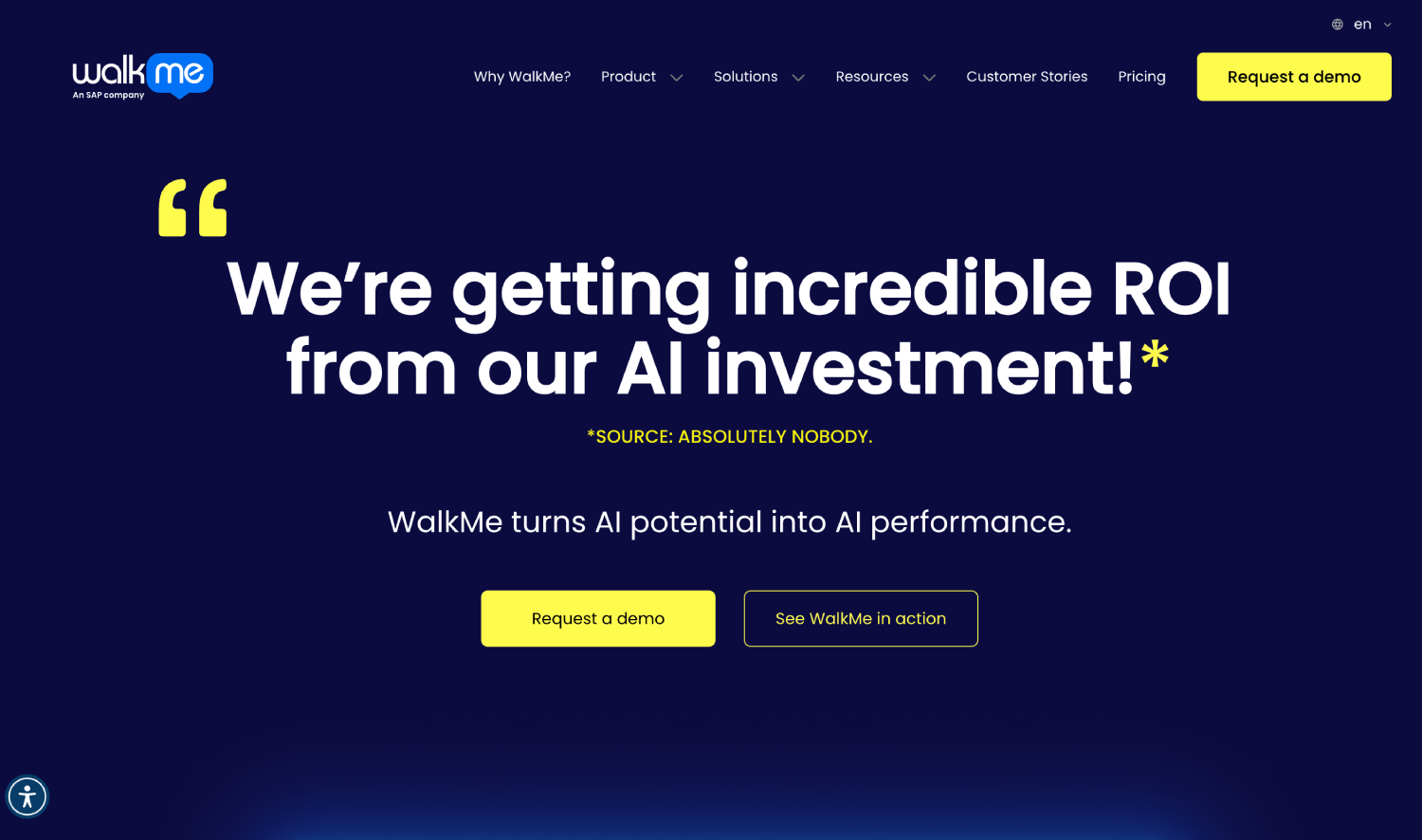
WalkMe is the category’s oldest and most opinionated player. It runs as a browser extension or JavaScript snippet that sits on top of any web application, which makes it well-suited to enterprises managing adoption across Salesforce, SAP, Workday, and custom internal tools simultaneously. No other DAP in this list handles that blended internal application environment as well.
The trade-off is real. WalkMe requires dedicated implementation time. Organizations without a dedicated digital adoption manager often find WalkMe’s full capability underused after the initial setup. Pricing is not publicly disclosed and typically enters enterprise territory.
WalkMe’s analytics console tracks task completion, time-on-task, and automation rates across guided flows. For an enterprise RevOps leader trying to prove software ROI to a CFO, those are the exact metrics that matter. The platform also supports self-service knowledge content and AI-assisted guidance, which it has expanded through its integration with SAP after the 2023 acquisition.
2. Pendo , Best for Teams That Use Product Data to Drive Onboarding Decisions
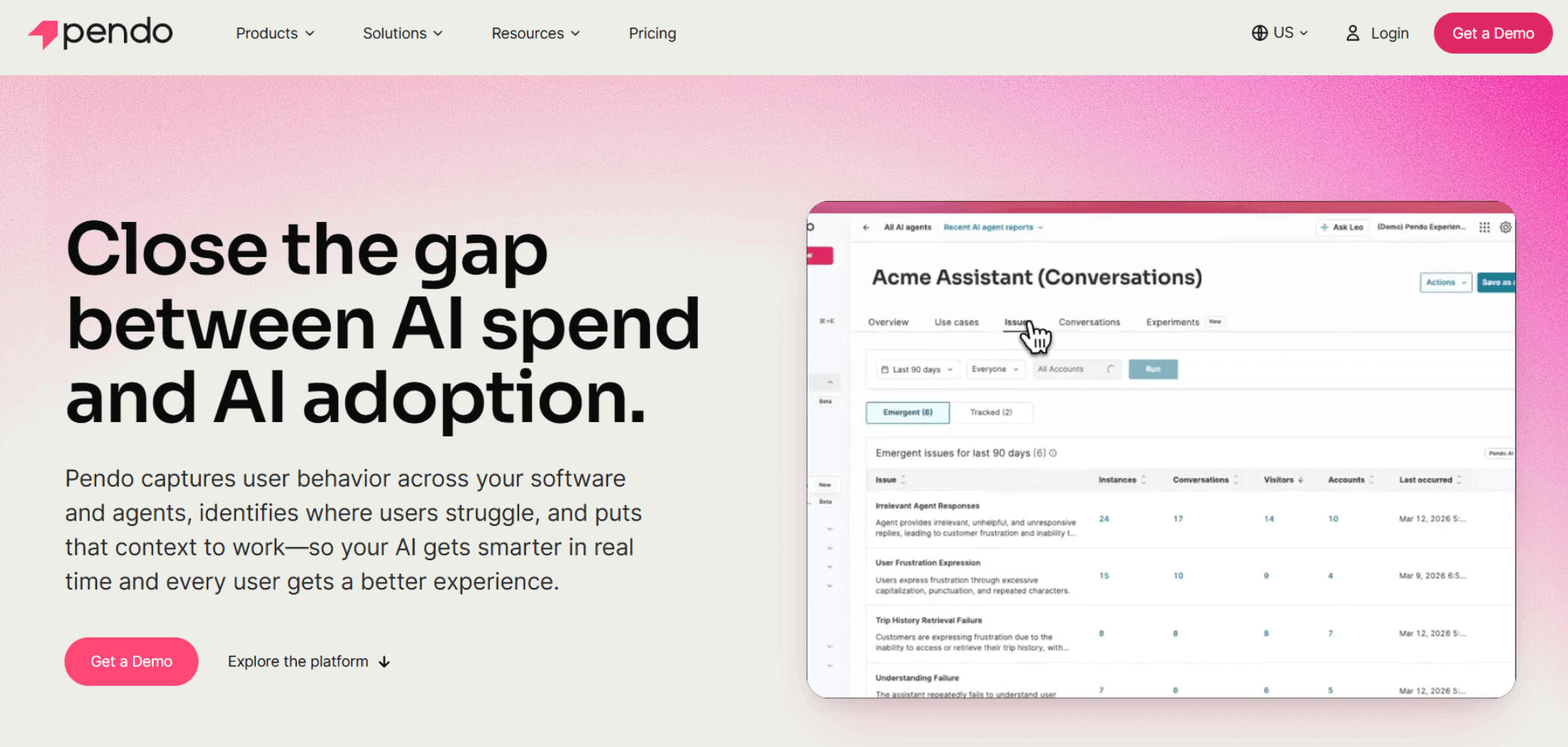
Pendo is the only DAP on this list where the analytics capability is the primary product, not a supporting feature. Its feature usage tagging, page-level analytics, and funnel reporting give product and growth teams a level of behavioral data that typically requires a separate tool like Amplitude or Mixpanel. Pendo consolidates both into one platform.
The in-app guidance builder handles tooltips, modals, banners, and resource centers. Segmentation runs off Pendo’s own behavioral data, so you can target walkthroughs at users who have logged in three times but never activated a specific feature. That closed loop between analytics and guidance is what separates Pendo from every other tool here.
Pendo offers a free tier with limited guidance and analytics. Paid plans are quote-based and scale by monthly active users. For teams that need both product analytics and in-app guidance and don’t want to manage two vendors, Pendo is the clearest answer. Teams that already run Amplitude or Mixpanel and only need guidance should look at Appcues or Chameleon instead.
3. Userpilot , Best Mid-Market DAP With Transparent Pricing
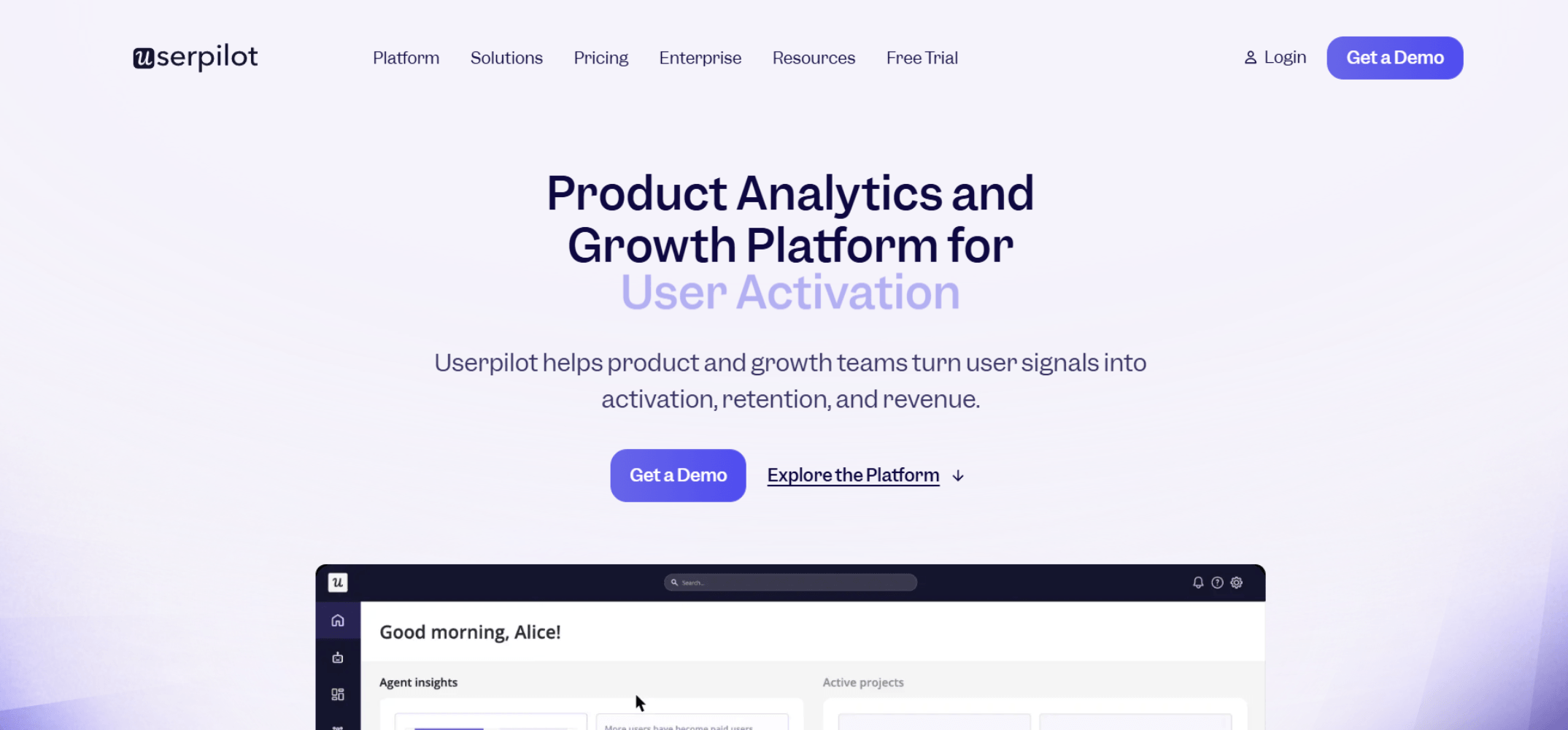
Userpilot is the most complete no-code DAP for SaaS teams that sit between early-stage and enterprise. Its builder handles multi-step onboarding flows, checklists, tooltips, modals, banners, and NPS surveys. Segmentation runs on user attributes, company attributes, and behavioral events, which covers most mid-market use cases without custom engineering.
The platform’s analytics dashboard tracks flow completion, feature adoption by cohort, and goal conversion. It’s not Pendo-level depth, but it covers the questions a growth or customer success team asks weekly without requiring a data analyst to interpret the output.
Userpilot’s public pricing page lists plans starting at $249/month for the Starter tier. The Growth plan adds advanced segmentation and A/B testing. Userpilot also integrates with Segment, HubSpot, Amplitude, and Intercom, which matters for teams where onboarding data needs to flow into CRM or customer success platforms. For teams evaluating the full onboarding stack, the best customer onboarding tools comparison on AboutMartech covers complementary platforms that pair well with a DAP like Userpilot.
4. Whatfix , Best for Enterprise Teams Managing Process-Heavy Software Adoption
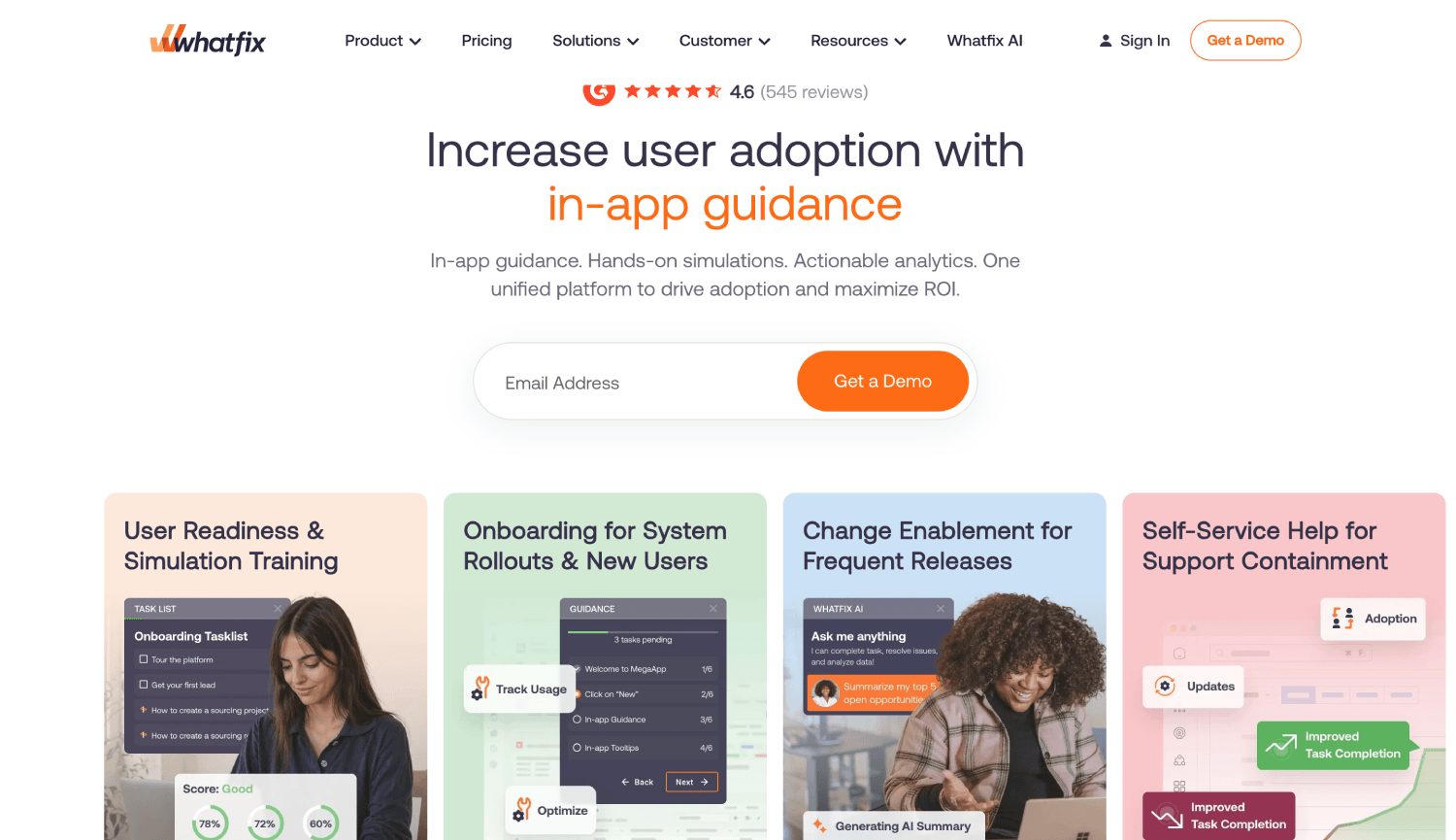
Whatfix occupies the same enterprise lane as WalkMe but with a stronger focus on regulated industries and complex workflow adoption. Its Smart Tips, Task Lists, and Self Help widget are designed for environments where users follow mandatory multi-step processes, not exploratory product discovery. Healthcare, financial services, and large-scale ERP implementations are Whatfix’s natural territory.
Whatfix’s Mirror environment is a differentiating feature. It creates a sandbox replica of your application where new users can practice workflows without touching live data. No other DAP on this list offers that. For software categories where a wrong click carries real consequences, like claims processing or loan origination software, Mirror changes the onboarding risk calculus entirely.
Pricing is quote-only. Implementation is more involved than Userpilot or Appcues, and Whatfix recommends dedicated admin resources. Teams evaluating Whatfix alongside WalkMe should map their use case to the tool’s core strength: WalkMe is broader across application types, Whatfix is deeper in structured process adoption. For teams using Whatfix alongside a broader customer success motion, the best customer success platforms for B2B SaaS covers the CS layer that complements in-app guidance.
5. Appcues , Best for Product-Led Growth Teams That Iterate Fast
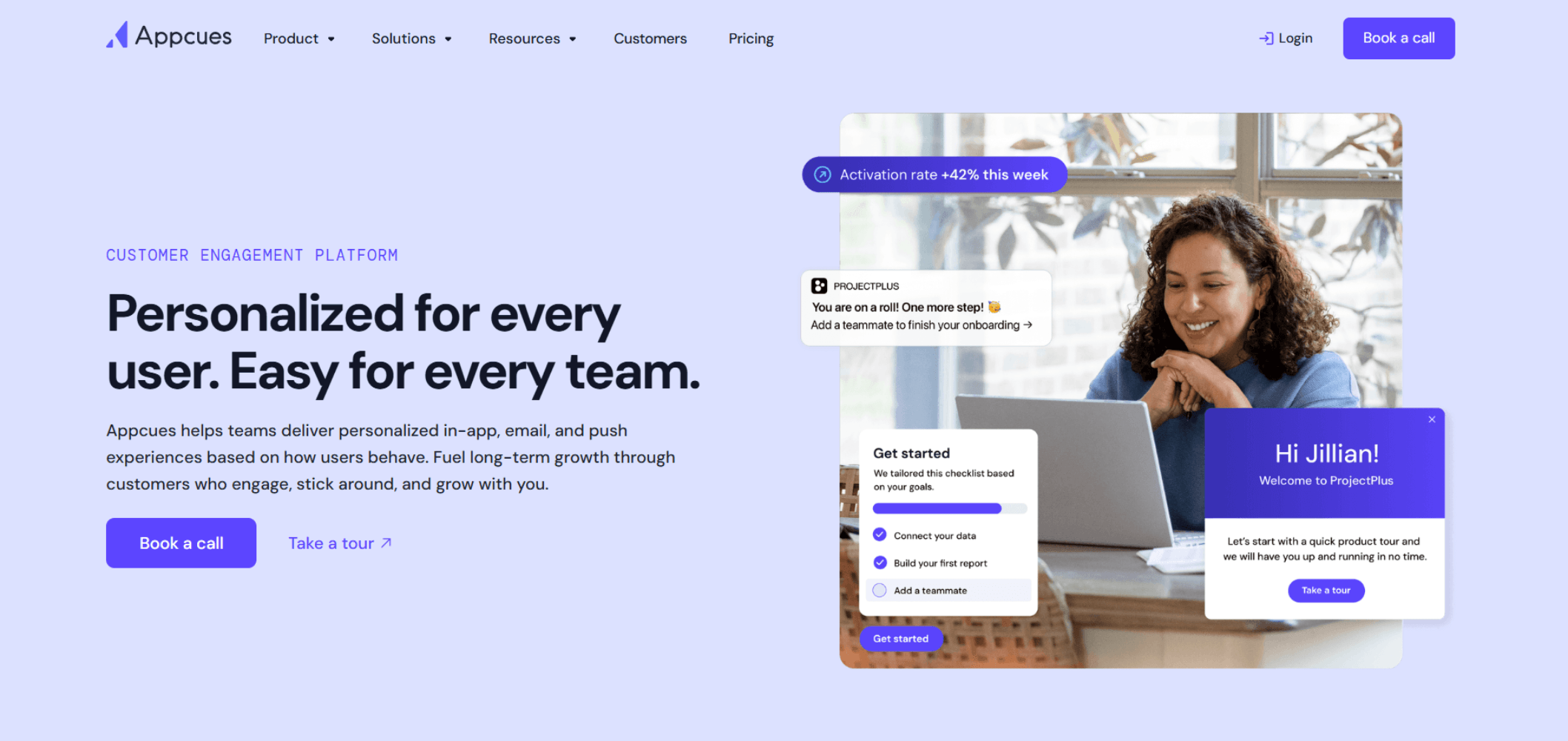
Appcues is built for the product-led growth playbook: ship an onboarding flow, measure completion, iterate without waiting on engineering. Its no-code builder is fast, the event tracking integrates with Segment and Amplitude, and the targeting logic is strong enough for most PLG use cases without requiring custom attributes from your data warehouse.
Where Appcues falls short relative to Pendo is native analytics depth. Appcues tells you what percentage of users completed a flow. Pendo tells you what those users did in your product before and after. Teams where product analytics and DAP analytics need to be unified should weight that difference heavily.
Appcues pricing starts at $249/month for up to 2,500 monthly active users. The Essentials plan covers flows, checklists, tooltips, and basic analytics. The Growth plan adds A/B testing and integrations. Appcues suits teams that already have a solid analytics stack and just need a fast, reliable in-app guidance layer on top of it.
6. Chameleon , Best for Developer-Friendly Teams That Want Full UI Control
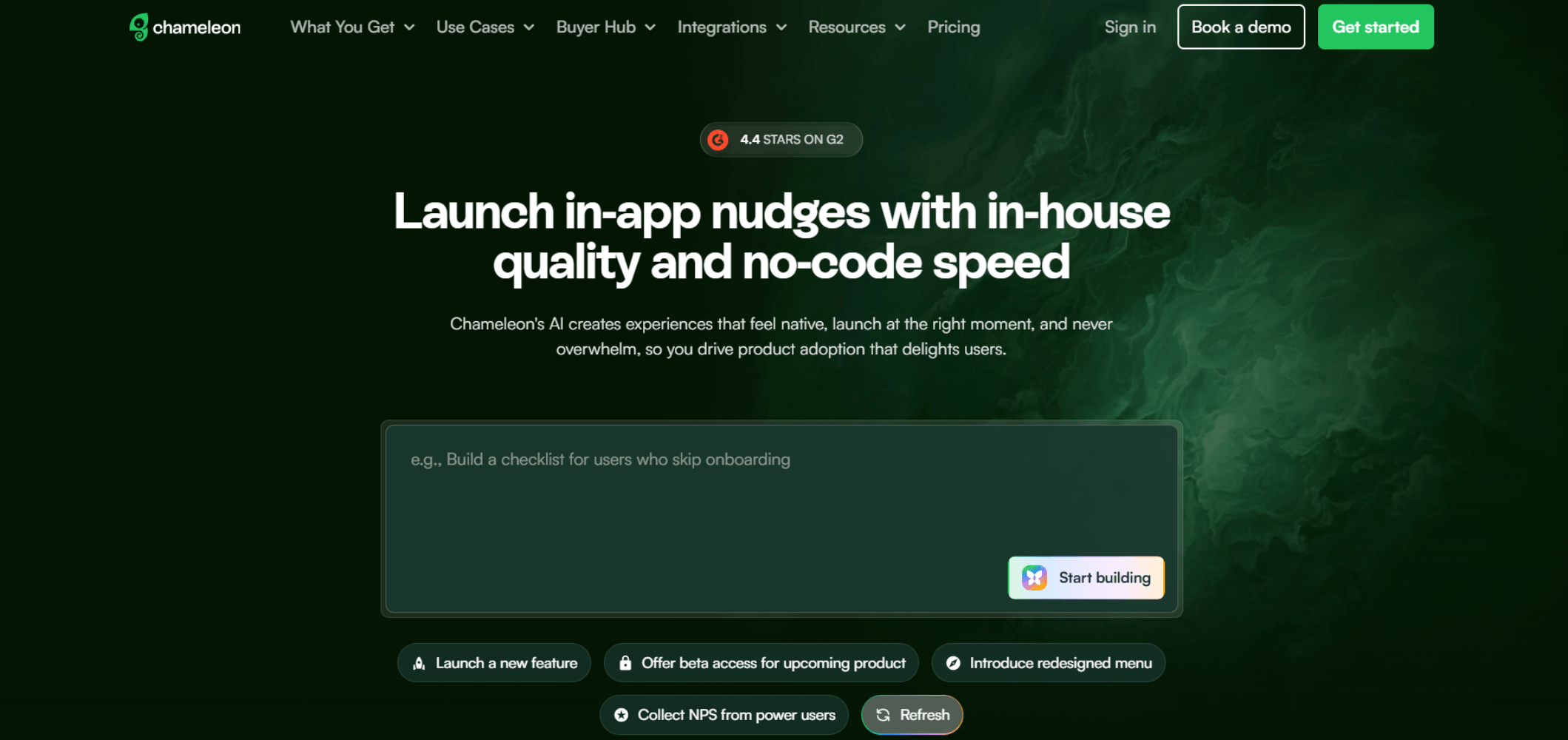
Chameleon is the most developer-oriented DAP in this list. Its API-first approach means engineering teams can deeply customize the appearance and behavior of every in-app element, matching your product’s design system without the visual inconsistencies that plague no-code-only tools. The Launchers feature (a customizable in-product menu) and Tours are both more style-flexible than anything Userpilot or Appcues produces by default.
The trade-off is that the no-code experience is genuinely partial. Non-technical marketers can build basic tooltips, but complex flows and custom targeting typically require developer involvement. That’s a real constraint for small growth teams where engineers are scarce.
Chameleon’s pricing starts at $279/month. Segmentation pulls from user properties, event data, and custom attributes passed via JavaScript, which gives it strong targeting fidelity when configured correctly. Teams that care deeply about in-product UX consistency and have developer support should evaluate Chameleon closely. Teams without that developer bandwidth should default to Userpilot or Appcues.
7. UserGuiding , Best Budget DAP for Early-Stage SaaS Teams
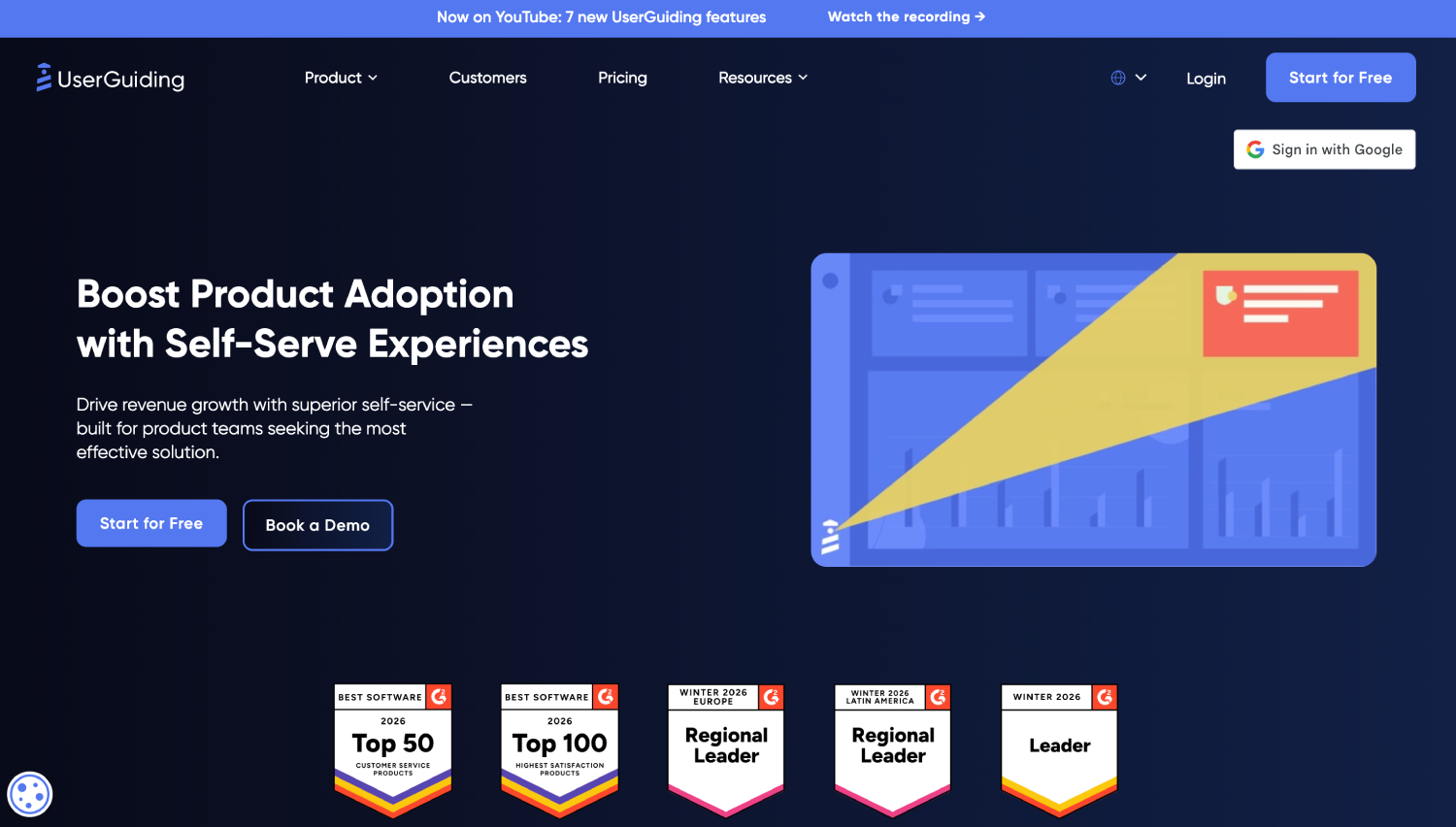
UserGuiding is the most accessible entry point in the DAP category. It handles product tours, checklists, tooltips, hotspots, and in-app announcements, and its no-code builder genuinely requires no engineering. Installation is a single JavaScript snippet.
The analytics are basic compared to Pendo or Userpilot. Completion rates, step views, and guide performance are visible, but cohort-level feature adoption analysis is not. Segmentation is limited to user properties and doesn’t support behavioral event targeting out of the box on entry-level plans.
UserGuiding pricing starts at $89/month for up to 2,500 monthly active users, which is the lowest public entry price in this roundup by a meaningful margin. For an early-stage SaaS company with under 500 monthly active users and no dedicated product operations team, UserGuiding delivers 80% of the functional value of Appcues at roughly a third of the cost. The gap narrows fast as segmentation and analytics needs grow.
What’s the Difference Between a DAP and a Product Onboarding Tool?
The terms are often used interchangeably, but the distinction matters for buying decisions. Product onboarding tools typically refer to email sequences, in-app checklists, and welcome flows that run at the start of a user’s lifecycle. They focus on activation. Digital adoption platforms are broader: they layer contextual guidance across the entire user lifecycle, not just the first session, and they typically include analytics to track adoption over time rather than just completion of a single onboarding sequence.
In practice, a tool like UserGuiding or Appcues can serve both functions. WalkMe and Whatfix are more squarely DAPs, not onboarding tools. Pendo spans both categories through its combination of in-app guidance and product analytics. If your primary problem is week-one activation, any tool on this list works. If your problem is getting users to adopt a specific feature three weeks into their subscription, you need a DAP with strong segmentation and behavioral triggering, not just a checklist builder.
For teams where onboarding connects to a broader customer data strategy, the best customer data platforms for B2B teams covers how CDP infrastructure can feed user attributes into DAP segmentation for more targeted in-app experiences.
How Much Do Digital Adoption Platforms Cost?
DAP pricing follows two models: transparent per-MAU tiers and opaque enterprise contracts. The transparent camp includes Userpilot (from $249/month), Appcues (from $249/month), Chameleon (from $279/month), and UserGuiding (from $89/month), all as listed on their public pricing pages. WalkMe and Whatfix are quote-only; expect five-figure annual contracts at enterprise scale. Pendo offers a free tier with limited features and moves to quote-based pricing as MAU and feature requirements grow.
The hidden cost in this category is implementation time. A WalkMe deployment in a large enterprise can take months and often requires a third-party implementation partner. UserGuiding can be live in an afternoon. Factor that delta into total cost of ownership, not just the subscription line item.
Which DAP Integrates Best With a Modern SaaS Stack?
Integration depth varies significantly. Pendo has native integrations with Salesforce, HubSpot, Zendesk, Amplitude, and Slack, among others, and its data model is well-documented for teams that want to push product usage data into a warehouse or CDP. Userpilot integrates with Segment, HubSpot, Amplitude, Intercom, and Mixpanel. Appcues also connects to Segment, which matters for teams where onboarding events need to land in a central customer data layer.
Chameleon’s API-first architecture makes custom integrations more achievable than its competitors, but they require engineering effort. WalkMe and Whatfix both offer enterprise integrations with major HRIS and CRM systems, relevant for internal software adoption use cases.
Teams running a warehouse-native data stack and wanting onboarding event data to flow back to their data warehouse should investigate whether a given DAP supports reverse ETL-compatible event schemas. The best reverse ETL tools for warehouse data activation covers the infrastructure layer that makes that flow possible.
Frequently Asked Questions About Digital Adoption Platforms
What is a digital adoption platform used for?
A digital adoption platform delivers contextual in-app guidance to software users, including product walkthroughs, tooltips, checklists, hotspots, and in-product messaging. SaaS companies use them to reduce onboarding friction and accelerate the time it takes for new users to reach their first meaningful outcome in the product. Enterprise IT teams use DAPs to improve employee adoption of business applications like Salesforce, Workday, or SAP without requiring repeated live training sessions.
How is a DAP different from a product tour tool?
A product tour tool typically delivers a linear walkthrough during a user’s first session. A digital adoption platform goes further: it delivers ongoing, contextual guidance throughout the user lifecycle based on what a user has and hasn’t done, supports complex segmentation and conditional logic, and includes analytics to track feature adoption over time. Most DAPs include product tours as one feature within a broader capability set.
Can small SaaS teams afford a DAP?
Yes. UserGuiding starts at $89/month as listed on their public pricing page, and Userpilot and Appcues both start at $249/month. These tiers are accessible for SaaS companies with a few hundred to a few thousand monthly active users. The enterprise-grade tools, WalkMe and Whatfix, are priced for organizations with large user populations and dedicated implementation resources, and are generally out of reach for teams under 500 seats without a substantial software budget.
Does implementing a DAP require engineering resources?
Most mid-market DAPs, including Userpilot, Appcues, and UserGuiding, require only a single JavaScript snippet installed by a developer once. After that, the no-code builder allows non-technical team members to create and publish in-app guidance independently. Chameleon requires more engineering involvement for customization. Enterprise platforms like WalkMe and Whatfix typically require ongoing admin resources or a dedicated implementation partner for initial setup.
Which digital adoption platform has the best analytics?
Pendo has the strongest native analytics of any DAP in this category. It tracks feature usage, path analysis, funnel drop-offs, and engagement trends at a level that rivals dedicated product analytics tools. Userpilot and Appcues offer solid onboarding-specific analytics focused on flow completion and feature adoption. WalkMe and Whatfix provide enterprise-grade reporting on task completion and automation rates. UserGuiding’s analytics are functional but limited to guide-level performance metrics.
What’s the fastest DAP to get live?
UserGuiding and Userpilot are typically live within a day for teams with a developer available to add the JavaScript snippet. Appcues is comparable. Chameleon takes longer if custom styling or complex targeting is needed. WalkMe and Whatfix implementations are measured in weeks to months, particularly in enterprise environments where the DAP is layered on top of third-party applications with complex DOM structures or security restrictions.
Should a SaaS team use a DAP and a customer success platform together?
Yes. DAPs handle in-app guidance and feature adoption tracking inside the product. Customer success platforms handle health scoring, account management, playbook automation, and QBR workflows. They operate at different layers. A user who completes your onboarding flow in Userpilot still needs a customer success motion if they’re a mid-market or enterprise account. The best Gainsight alternatives for teams without enterprise budgets covers the CS platform layer that pairs with in-app guidance tools.
Which DAP Should You Actually Buy?
The buying decision collapses to three variables: team size, analytics maturity, and where your onboarding friction actually lives. If your team already runs Amplitude or Mixpanel and you need a clean guidance layer on top, Appcues or Chameleon fit without duplicating your analytics investment. If you need both guidance and product analytics in one contract and don’t want to manage two vendors, Pendo is the answer. If you’re an enterprise IT or digital transformation team running adoption programs across Salesforce, SAP, or custom internal apps, WalkMe or Whatfix are the only tools built for that environment.
For the largest share of SaaS onboarding teams, Userpilot hits the right balance. Transparent pricing, genuine no-code capability, strong segmentation, and integrations that cover most common stacks. UserGuiding deserves a serious look from early-stage teams before they grow into Userpilot’s feature set.
One thing DAP buyers consistently underestimate is the segmentation requirement. A DAP that shows the same onboarding flow to a power user, a casual user, and an admin is generating noise for most of its audience. The right tool is one your team will actually use to build multiple flows for multiple personas, which means the builder has to be fast enough that iteration doesn’t become a project. That’s a stronger filter for the right tool than any feature comparison table.