TLDR
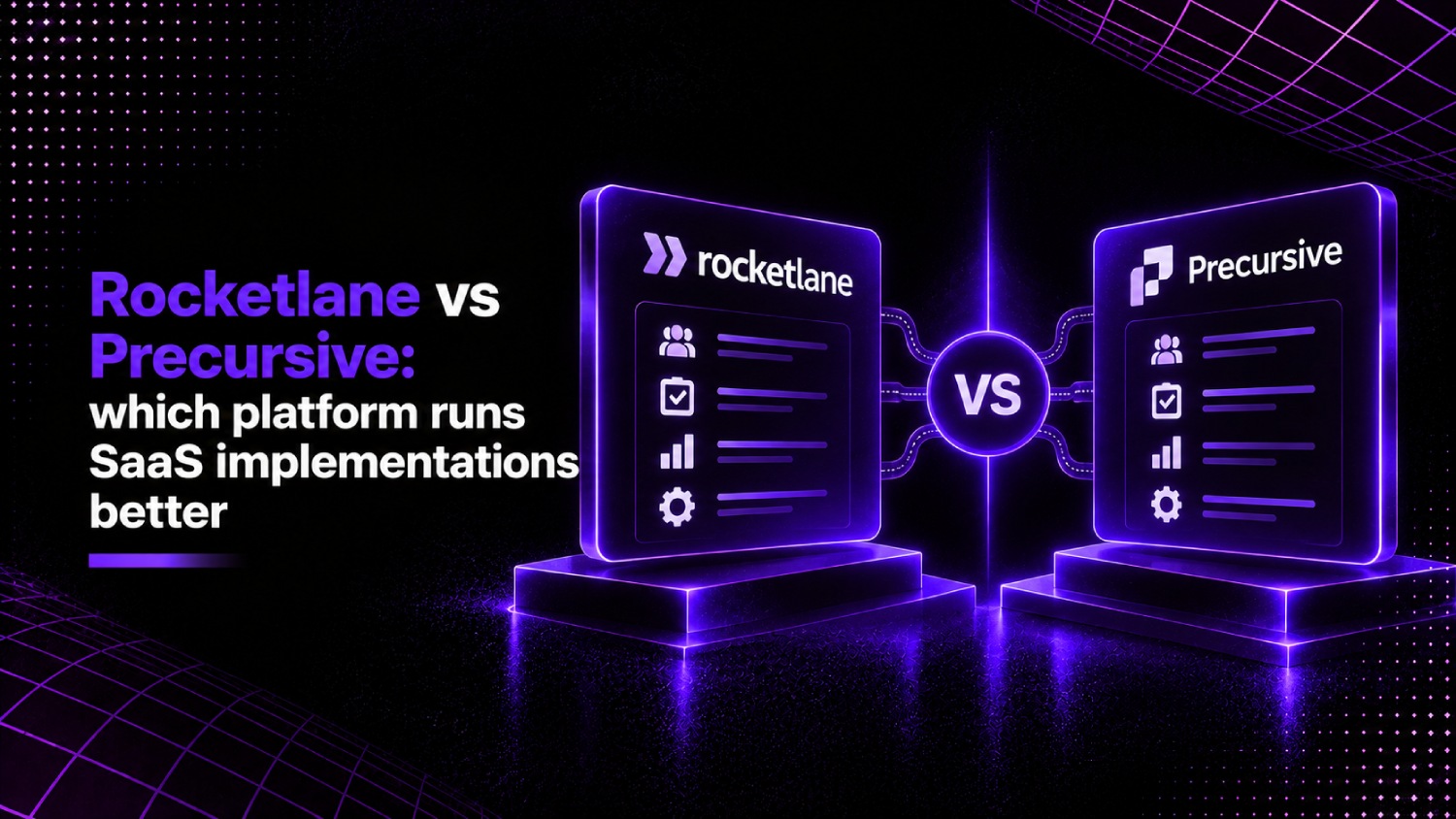
- Rocketlane and Precursive are both professional services automation platforms, but they are built around different assumptions about where your team lives and who your customer sees.
- Precursive is Salesforce-native, meaning it runs inside your org and inherits your CRM data, permissions, and reporting without a sync layer in between.
- Rocketlane built its reputation on the client-facing project portal, a branded workspace where customers track implementation progress alongside your team.
- If your PS team runs on Salesforce, Precursive eliminates a data layer. If your team needs a polished customer-facing delivery experience, Rocketlane is the stronger choice.
- Neither is just an onboarding checklist. Both have grown into full PSA platforms with resource management, time tracking, and financial controls.
Precursive is the stronger fit for Salesforce-native professional services teams that want resource planning, revenue recognition, and project delivery inside their existing CRM. Rocketlane suits SaaS implementation teams that prioritize the customer experience during onboarding, with a branded client portal, real-time collaboration, and a growing PSA layer that now includes timesheets, rate cards, and invoicing.
Why these two platforms are harder to separate than they look
Both Rocketlane and Precursive have been chasing the same buyer for the past three years: the head of professional services at a mid-market SaaS company who is tired of running implementation projects out of Jira, spreadsheets, and a Salesforce org that has no idea what the delivery team is doing. The problem is that each platform solved that pain from a completely different starting point, and the resulting products reflect those origins in ways that matter when you are writing a purchase order.
Rocketlane launched as a customer-facing onboarding portal and layered PSA features on top. Precursive started inside Salesforce and layered a delivery surface on top. That order of operations is not a footnote. It shapes where data lives, what your team adopts first, and what breaks when something goes wrong.
If your implementation team is evaluating both, you should also read the Rocketlane vs GuideCX comparison first. GuideCX sits in the same customer-portal category as Rocketlane’s original positioning, and understanding that pair makes the Rocketlane-versus-Precursive decision sharper.
What does Rocketlane actually do in 2025?
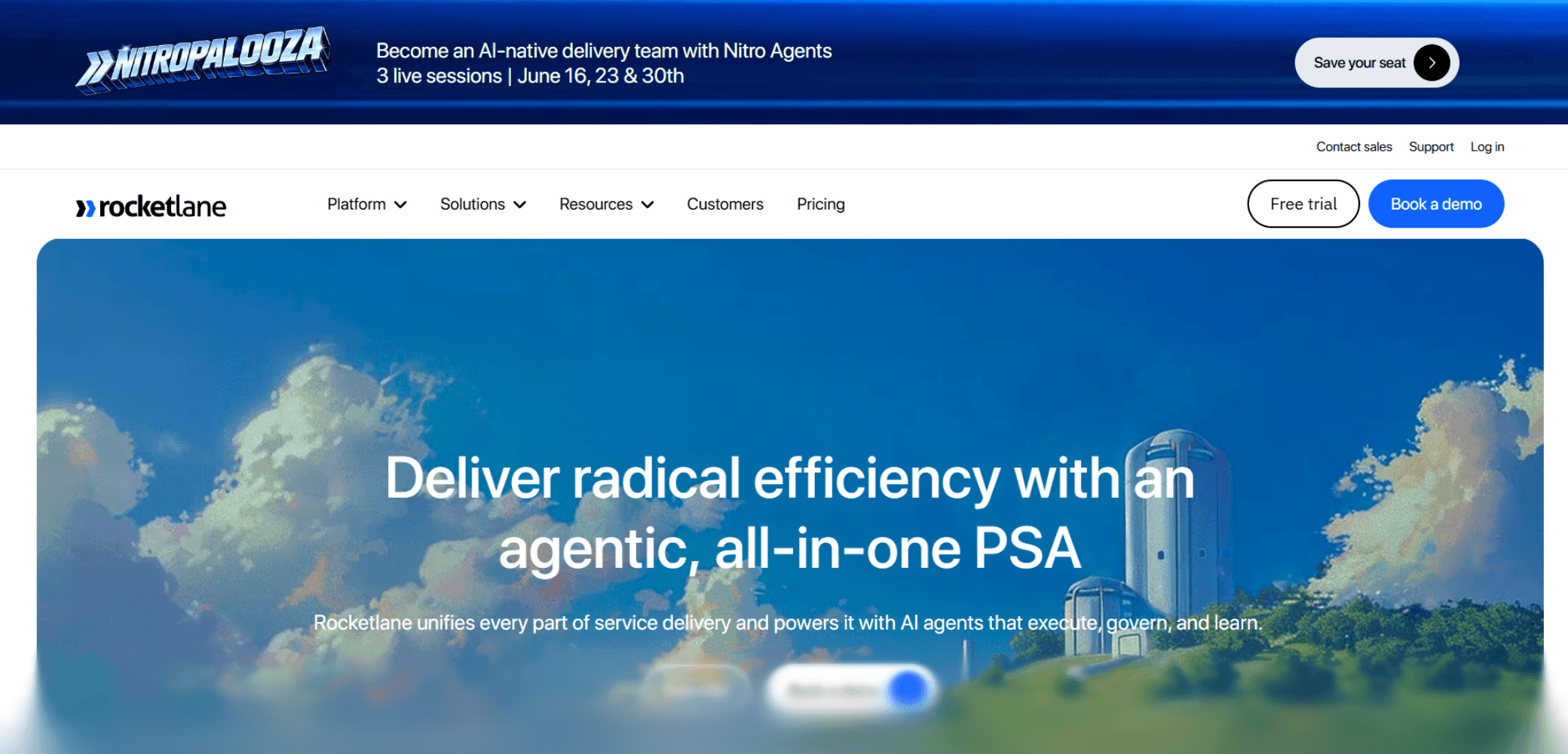
Rocketlane is now a full PSA platform. According to publicly available SERP data, they have added timesheets, resource planning, rate cards, invoicing, and margin tracking to what started as a project portal tool. The client-facing workspace remains the product’s signature feature: customers get a branded portal where they can see milestones, complete tasks, upload documents, and message the implementation team without logging into your internal systems.
That portal is not cosmetic. It reduces the back-and-forth email thread that kills implementation velocity at scale, and it gives CS and PS leaders a single URL to point customers toward instead of a patchwork of shared Google Docs and Zoom links. For SaaS companies where time-to-value is a retention lever, that visibility is worth real money.
Rocketlane’s ERP integrations are limited. According to publicly available comparison data, Rocketlane does not publicly list ERP integrations, which matters if your finance team is trying to pull project margin data into NetSuite or Sage Intacct.
What does Precursive actually do, and why does the Salesforce-native architecture matter?

Precursive is built as a Salesforce-native application, meaning it runs on the Force.com platform rather than alongside it. Your project data, resource records, and time entries live in Salesforce objects. Your existing Salesforce reports, dashboards, permission sets, and automation rules apply to Precursive data without configuration. You do not manage a sync.
For PS teams at Salesforce shops, that architecture closes a real gap. Sales closes a deal, the opportunity record is already there, and Precursive creates a project from it without a webhook, a Zapier flow, or a nightly batch job introducing lag. Revenue recognition, capacity planning, and project status all sit in the same data model your finance and sales teams already query.
According to publicly available comparison data, Precursive supports ERP integrations including NetSuite, SAP, Sage Intacct, QuickBooks, and Xero, which Rocketlane does not publicly match. For a PS organization that bills against contracts and needs to reconcile project revenue with an ERP, that list is not a minor footnote.
Precursive’s weakness is the customer-facing experience. The platform is operationally strong but does not offer the same polished branded portal that Rocketlane built its reputation on. Customers interact with your delivery through whatever surface you build, not through a purpose-designed workspace.
How do Rocketlane and Precursive compare on core PSA features?
| Feature | Rocketlane | Precursive |
|---|---|---|
| Architecture | Standalone SaaS | Salesforce-native |
| Client-facing portal | Yes, branded and purpose-built | Limited, operationally focused |
| Resource planning | Yes | Yes |
| Time tracking | Yes (added in PSA expansion) | Yes |
| Rate cards and invoicing | Yes (added in PSA expansion) | Yes |
| ERP integrations | Not publicly listed | NetSuite, SAP, Sage Intacct, QuickBooks, Xero |
| Salesforce data model | Integration-based | Native objects, no sync required |
| G2 user satisfaction | Higher overall score (per G2 reviewers) | Lower overall score vs Rocketlane |
| Target buyer | SaaS PS teams, customer-facing delivery | Salesforce-first PS orgs, revenue ops alignment |
The AboutMartech Stack-Fit Test: how to decide between Rocketlane and Precursive
Most comparisons end with a feature matrix and leave the buyer to figure out the rest. This one does not. The AboutMartech Stack-Fit Test for PSA platforms applies four checks in sequence. Answer them in order and the decision becomes mechanical.
Check 1: Where does your source of truth live? If your team runs on Salesforce and your sales, CS, and finance teams all query it, Precursive wins on data gravity alone. Every project record is a Salesforce record. You get Salesforce reporting, Salesforce security, and Salesforce automation without building a bridge. If your source of truth is somewhere else, or if you are deliberately building a stack that does not center on Salesforce, Rocketlane’s standalone architecture is less of a compromise.
Check 2: Does your customer need to see the project? If you are running complex multi-month implementations where the customer is an active participant, checking milestones and uploading deliverables, Rocketlane’s client portal is a genuine product differentiator. If your delivery model is largely internal, where the customer sees outcomes rather than process, that portal is overhead you are paying for.
Check 3: Do you need ERP-level financial reconciliation? If project margin has to reconcile against NetSuite or SAP, Precursive’s published ERP integration list solves a problem that Rocketlane does not currently address publicly. This check alone can eliminate Rocketlane for finance-led PS organizations.
Check 4: What does your team adopt fastest? Salesforce users who already spend their day in the CRM will adopt Precursive at lower friction because it looks and behaves like Salesforce. Teams that are less Salesforce-centric, or that are primarily project managers rather than CRM users, often find Rocketlane’s interface more approachable. G2 reviewers rate Rocketlane higher on overall user satisfaction, which reflects this pattern.
Rocketlane vs Precursive pricing: what is publicly known?
Rocketlane’s pricing page shows tiered plans with per-seat pricing, though the specific figures on public tiers change periodically and enterprise deals are negotiated separately. Precursive’s pricing is also seat-based and quote-driven for most enterprise configurations, given the Salesforce licensing dependency that underlies it. Buyers should factor in Salesforce platform costs when modeling Precursive’s total cost, since the application runs on top of an existing Salesforce org rather than replacing it.
For a fuller picture of what customer onboarding and implementation software actually costs across vendors, the customer onboarding software pricing breakdown on AboutMartech compares Rocketlane alongside GuideCX, Userpilot, and Appcues with actual tier data from public pricing pages.
A worked scenario: which platform fits a 20-person PS team at a Salesforce shop?
Consider a 20-person professional services team at a B2B SaaS company that sells to enterprise accounts, runs 90-to-180-day implementations, and has its entire revenue stack on Salesforce Sales Cloud. The head of PS needs project margin by account, capacity planning across consultants, and a way for the VP of Sales to see delivery status without emailing the PS team every week.
In this scenario, Precursive is the sharper fit. Project records inherit the account and opportunity data that Sales already owns. The VP of Sales can pull a Salesforce dashboard without a new login. Finance reconciles project revenue against Sage Intacct through Precursive’s native ERP connection. The PS team never leaves the system their company already runs on.
Now change one variable: the customers in those 90-to-180-day implementations are active participants. They need to approve milestones, upload configuration files, and track their own tasks without emailing a consultant. Suddenly Rocketlane’s client portal is not a luxury. The implementation experience becomes part of the product experience, and a branded workspace that the customer can log into is a retention argument, not just a project management feature.
Teams at this decision point should also consider how their customer success platform connects to delivery data. The best customer success platforms for B2B SaaS often integrate with PSA tools, and the direction of that integration changes depending on whether your project data lives in Salesforce or a standalone system.
How does Precursive compare to alternatives beyond Rocketlane?
The Precursive alternatives market is small but real. FinancialForce PSA (now Certinia) is the most direct Salesforce-native competitor, targeting larger PS organizations with deeper revenue recognition and ERP-adjacent financial controls. Kantata (formerly Mavenlink and Kimble) also plays in Salesforce-adjacent PSA but runs as a separate application rather than native objects. For teams that have already ruled out Salesforce-native architecture, GuideCX competes with Rocketlane on the customer-portal side of the market.
If your team is also evaluating whether a full PSA is the right category at all, versus a lighter customer onboarding tool, the best customer onboarding tools ranked by time-to-value covers that adjacent set of products.
What is professional services automation software, and how does it differ from project management?
Professional services automation software connects project delivery to the financial and resource systems a services business depends on. Standard project management tools like Asana or Jira track tasks and timelines. PSA platforms layer in billable time tracking, resource capacity planning, margin analysis, and revenue recognition on top of that delivery layer.
For SaaS companies, the distinction matters because implementation is not a cost center to be minimized. It is a predictor of renewal. A PSA that gives PS leaders visibility into margin per account, capacity utilization, and time-to-go-live by customer segment is a revenue analytics tool, not just a task manager. Both Rocketlane and Precursive operate in this space, which is why comparing them purely on onboarding UX misses most of what buyers actually need from them.
PS teams operating within a broader RevOps infrastructure should also look at how PSA data feeds the revenue operations stack. The best RevOps tools for revenue operations covers the platforms that sit above and around the PS layer.
Frequently asked questions
Is Precursive only for Salesforce users?
Precursive is built as a Salesforce-native application and runs on the Force.com platform, so a Salesforce org is a prerequisite. Teams without Salesforce cannot use Precursive. This is the single fastest disqualifier in the evaluation process. If your organization does not run Salesforce and has no plans to adopt it, Rocketlane, GuideCX, or another standalone PSA is the relevant category.
What does Rocketlane’s client portal actually give customers?
Rocketlane’s client portal gives customers a branded workspace where they can view project milestones, complete assigned tasks, upload documents, and communicate with the implementation team. It replaces the combination of shared Google Docs, email threads, and Zoom calls that characterizes most SaaS implementations. The portal is accessible without customers needing a Rocketlane license, which reduces the friction of getting customer-side stakeholders to actually use it.
Does Rocketlane integrate with Salesforce?
Rocketlane offers Salesforce integration, but it is integration-based rather than native. Project data syncs between Rocketlane and Salesforce through a configured connection rather than living natively in Salesforce objects. For most teams, this works. For teams that want project data to behave exactly like any other Salesforce record, with full access to Flow, Apex triggers, and standard reporting, the sync-based approach introduces a layer that Precursive eliminates entirely.
Which platform has better G2 ratings, Rocketlane or Precursive?
According to G2 reviewer data cited in publicly available comparison sources, Rocketlane scores higher on overall user satisfaction than Precursive. This likely reflects Rocketlane’s stronger end-user experience, particularly the client portal and project interface, compared to Precursive’s more operationally oriented design. G2 scores reflect the experience of users who reviewed both platforms, and Rocketlane’s score advantage is consistent across recent comparison data.
Can Precursive handle ERP integrations for revenue recognition?
Yes. Precursive publicly lists integrations with NetSuite, SAP, Sage Intacct, QuickBooks, and Xero. For PS organizations that need project revenue to flow into their ERP for proper recognition, this is a meaningful advantage over Rocketlane, which does not publicly list comparable ERP integrations. Finance teams evaluating PSA platforms for revenue recognition compliance should treat ERP connectivity as a hard requirement, not a nice-to-have.
How does Rocketlane compare to GuideCX?
Rocketlane and GuideCX compete most directly on the customer-facing portal side of the market. Both offer implementation workspaces for customers, but Rocketlane has invested more heavily in the broader PSA layer, adding timesheets, resource planning, and invoicing. GuideCX stays closer to its original focus on customer onboarding workflows. The AboutMartech Rocketlane vs GuideCX comparison covers that specific decision in full.
What is the right PSA platform for a SaaS company under 50 employees?
At under 50 employees, the overhead of a full Salesforce org plus a native PSA application is often more than the team needs. Rocketlane’s standalone architecture tends to fit smaller PS teams better because the setup cost is lower and the client portal delivers immediate value without a deep CRM implementation beneath it. Precursive becomes the right answer when the company already runs on Salesforce and PS data needs to connect cleanly with sales and finance reporting.
The real decision underneath the feature comparison
The Rocketlane versus Precursive decision is not fundamentally about feature parity. At the PSA tier both platforms now occupy, the feature sets have converged enough that the differences are architectural, not functional. You are choosing between a platform that treats Salesforce as a first-class data environment and a platform that treats the customer as a first-class participant in delivery.
Salesforce-native teams that choose Rocketlane are accepting a sync layer and a second interface to maintain. Teams that choose Precursive without caring about the customer portal are leaving the delivery experience to chance. Neither trade-off is catastrophic, but both are real costs that accumulate over time as your PS team grows and your implementation complexity increases.
The sharper insight is this: SaaS companies that sell a platform and then implement it are not just delivering a project. They are extending the product experience. The implementation is what the customer uses to form their opinion of your company before they have even gotten to value. Rocketlane’s design reflects that reality. Precursive’s design reflects a different one, where delivery is an internal operational problem that the customer should not need to see. Both are defensible positions. Only one is right for any given team.