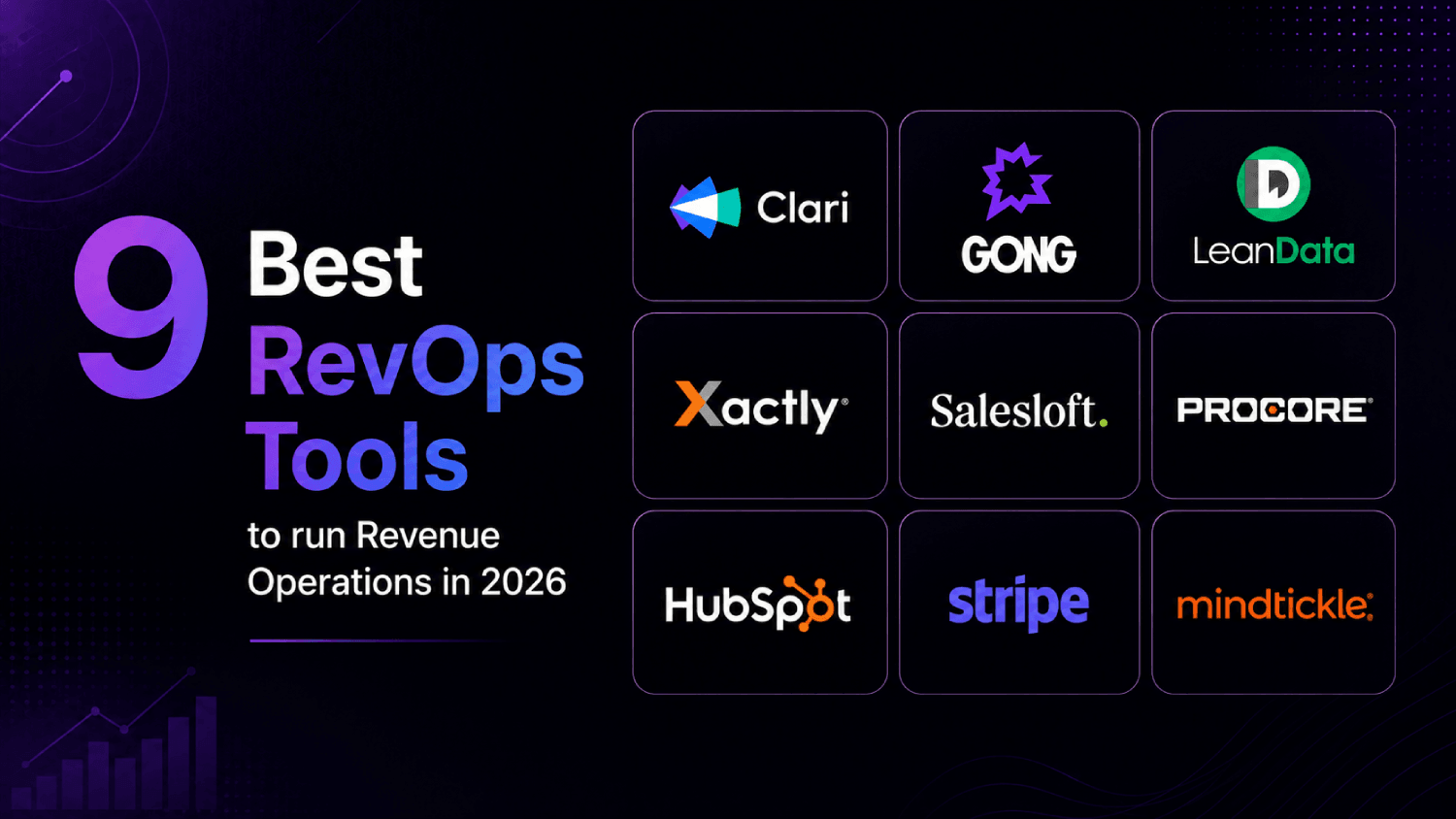

- RevOps software is not one category. It is a stack of four or five distinct layers: data unification, pipeline management, routing and enrichment, forecasting, and revenue intelligence.
- Clay dominates the enrichment and outbound-data layer. Clari owns pipeline forecasting for enterprise sales orgs. Default is the fastest-moving option for inbound routing and orchestration at the mid-market level.
- Most teams waste money buying a platform that covers two layers when they need five. Buying point solutions and wiring them together usually wins on coverage and cost, at least until you exceed roughly 200 seats.
- The tools below were selected on specificity of function, public pricing transparency, and how well each solves a documented RevOps failure mode: MQL-to-SQL leakage, bad data in the CRM, missed forecast accuracy, and slow lead routing.
- If you already have a CRM and a warehouse, your first purchase should be enrichment and routing, not another analytics layer you will barely open.
The best revops software stack combines a CRM of record, a data enrichment layer, an inbound routing and orchestration tool, a pipeline forecasting platform, and a revenue intelligence layer. No single vendor covers all five competently. For most B2B teams under 500 employees, the right picks are Clay for enrichment, Default for routing, Clari or Gong for forecasting and intelligence, HubSpot Operations Hub for data sync, and Fivetran to feed the warehouse.
Why RevOps Is a Stack Problem, Not a Software Category
Most teams arrive at “we need RevOps software” after a specific failure. The sales leader cannot trust the pipeline number. Marketing is generating leads that die in the handoff queue. The CRM has three records for the same account. Each of those failures traces to a different layer of the stack, which means each one requires a different fix.
The vendor marketing around “revenue operations platforms” implies that one tool handles all of it. A few large platforms, Salesforce Revenue Cloud and HubSpot’s full suite among them, come closer than most. But even they require point solutions to cover gaps in enrichment, partner data, or conversation intelligence.
The framework that clarifies this is what we call the RevOps Stack Layers Model: five distinct functional layers that every revenue team needs to operate, regardless of which vendor fills each slot.
- Data unification: Getting clean, deduplicated account and contact records into a single system of record.
- Enrichment and signal capture: Appending firmographic, technographic, and intent data to those records.
- Routing and orchestration: Moving leads and accounts to the right owner at the right time, with the right context.
- Pipeline forecasting: Translating deal activity into a number the CFO will believe.
- Revenue intelligence: Surfacing what is happening in deals (call recordings, email sentiment, buyer engagement) so reps and managers can act.
Every tool below maps to one or more of these layers. That mapping is the fastest way to evaluate whether you are buying what you actually need.
Which RevOps Tools Make the Short List, and Why?
The nine tools below were evaluated on how well they solve a documented RevOps failure mode, how transparent their pricing is, and how cleanly they integrate with the CRMs and data warehouses that already exist in most B2B stacks (Salesforce, HubSpot, Snowflake, BigQuery). Tools that are genuinely quote-only on pricing are noted as such rather than given a range that would be speculative.
| Tool | Primary RevOps Layer | Best For | Pricing Model |
|---|---|---|---|
| HubSpot Operations Hub | Data unification | HubSpot-native teams needing clean data and sync | Starts at $720/mo (Professional, per their public pricing page) |
| Clari | Pipeline forecasting | Enterprise sales orgs needing forecast accuracy | Quote-based |
| Clay | Enrichment and signal capture | Outbound and PLG teams building data-rich prospect lists | Free tier; paid plans from $149/mo (as of their public pricing page) |
| Default | Routing and orchestration | Mid-market inbound teams with complex routing logic | Quote-based |
| Salesforce Revenue Cloud | Data unification + forecasting | Enterprises already deep in the Salesforce platform | Quote-based |
| Gong | Revenue intelligence | Sales orgs wanting call and email signal in pipeline reviews | Quote-based |
| Crossbeam | Enrichment (partner data) | Teams with a partner or channel motion needing overlap data | Free tier available; paid plans are quote-based |
| LeanData | Routing and orchestration | Salesforce-native teams with ABM and complex territory logic | Quote-based |
| Fivetran | Data unification (warehouse ingestion) | Teams feeding a data warehouse for BI and RevOps reporting | Free tier; paid plans from $0 per MAR on consumption model (see their public pricing page) |
HubSpot Operations Hub: Best for Data Unification in HubSpot-Native Stacks
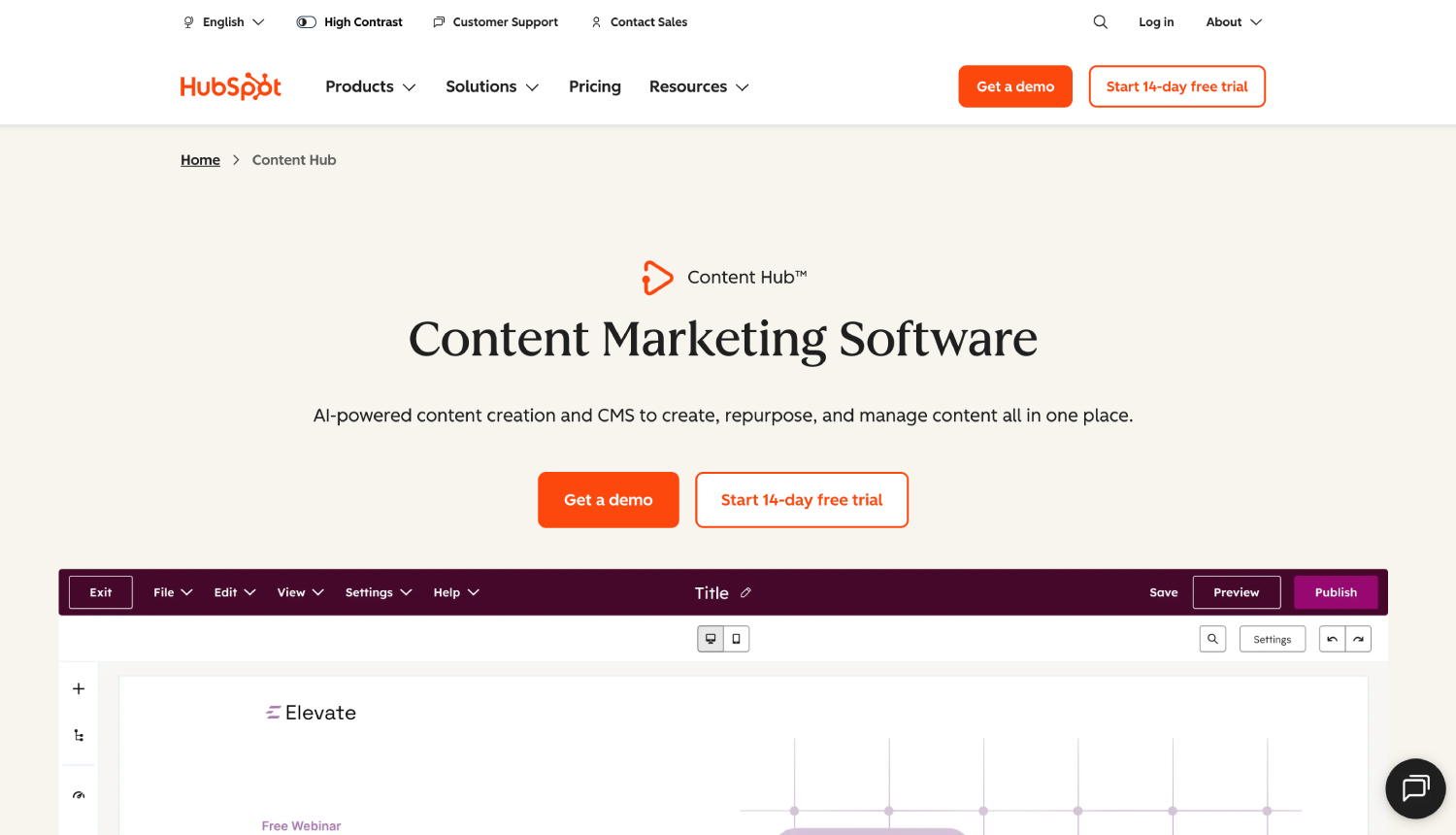
HubSpot Operations Hub occupies the unglamorous but operationally critical layer: keeping the CRM clean and keeping data in sync across tools. It handles programmable automations, data quality command center features, and bidirectional sync with third-party applications through native connectors and custom code actions.
The relevant detail for RevOps teams is that Operations Hub Professional includes data quality automation that identifies and fixes formatting inconsistencies, duplicate records, and empty required fields at scale. Without something doing this work, the CRM gradually fills with junk, and every downstream layer (forecasting, routing, reporting) becomes unreliable. HubSpot’s public pricing page lists Operations Hub Professional starting at $720 per month.
The limitation is obvious: this tool makes the most sense if HubSpot is your CRM. Teams on Salesforce will find they can replicate much of this functionality through Salesforce’s own native tools or through a dedicated data quality tool like Validity or Openprise.
Clari: Best RevOps Platform for Pipeline Forecasting
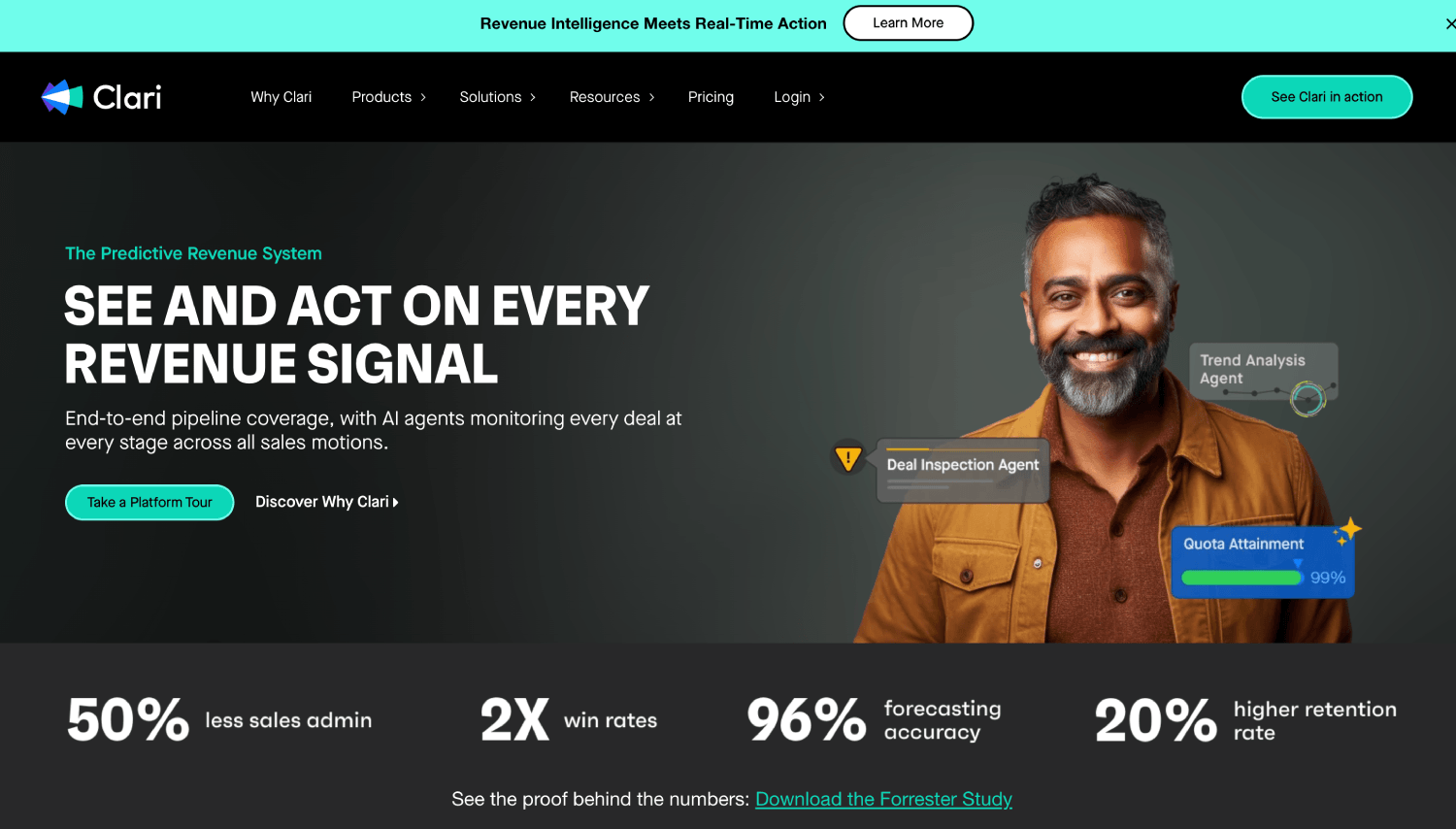
Clari is the tool that appears most frequently in enterprise RevOps conversations about forecast accuracy. Its core product captures CRM activity, email and calendar data, and rep-entered forecast calls, then applies AI-driven models to surface a bottoms-up number that the revenue leader can actually defend to the CFO.
What separates Clari from a CRM’s built-in forecasting is the activity capture layer. Clari ingests email and calendar data without requiring reps to log calls manually, which addresses one of the most persistent RevOps data-quality problems: reps who do not update Salesforce. The platform also surfaces deal inspection at the line level, so a VP of Sales can see which deals have gone dark (no outbound activity in 14 days) without running a custom report.
Clari’s pricing is quote-based and varies by module, seat count, and contract length. Teams evaluating it should request demos for both the Forecasting and Align modules rather than the full platform, since smaller teams rarely need the entire suite. Clari competes most directly with Gong Forecast and Salesforce’s own Einstein Forecasting.
Clay: Best Enrichment Tool for Outbound and PLG Teams
Clay has become the RevOps community’s favorite enrichment tool because it aggregates data from over 75 providers simultaneously rather than locking you into a single data source. A Clay table can waterfall through LinkedIn, Clearbit, Apollo, and Hunter in sequence, filling in the firmographic and contact fields that one provider misses and another catches.
The practical RevOps use case is prospecting and outbound enrichment. A team building a target account list can drop in a domain, and Clay will pull company size, headcount, tech stack, funding round, LinkedIn employee count, and verified email, all in one pass. The result is a record rich enough to write personalized outreach without a separate research step.
Clay also supports AI-generated columns, where a GPT-4-class model reads the enriched data and writes a customized value proposition per row. This is not a feature that belongs in every workflow, but for teams running high-touch outbound to a narrow ICP, it compresses what used to be a multi-hour manual research task. Clay’s public pricing page lists a free tier and paid plans starting at $149 per month, scaling by the number of credits consumed. For teams serious about their outbound data layer, it is the most cost-efficient option at the SMB and mid-market level.
Default: Best Inbound Routing and Orchestration Tool for Mid-Market Teams
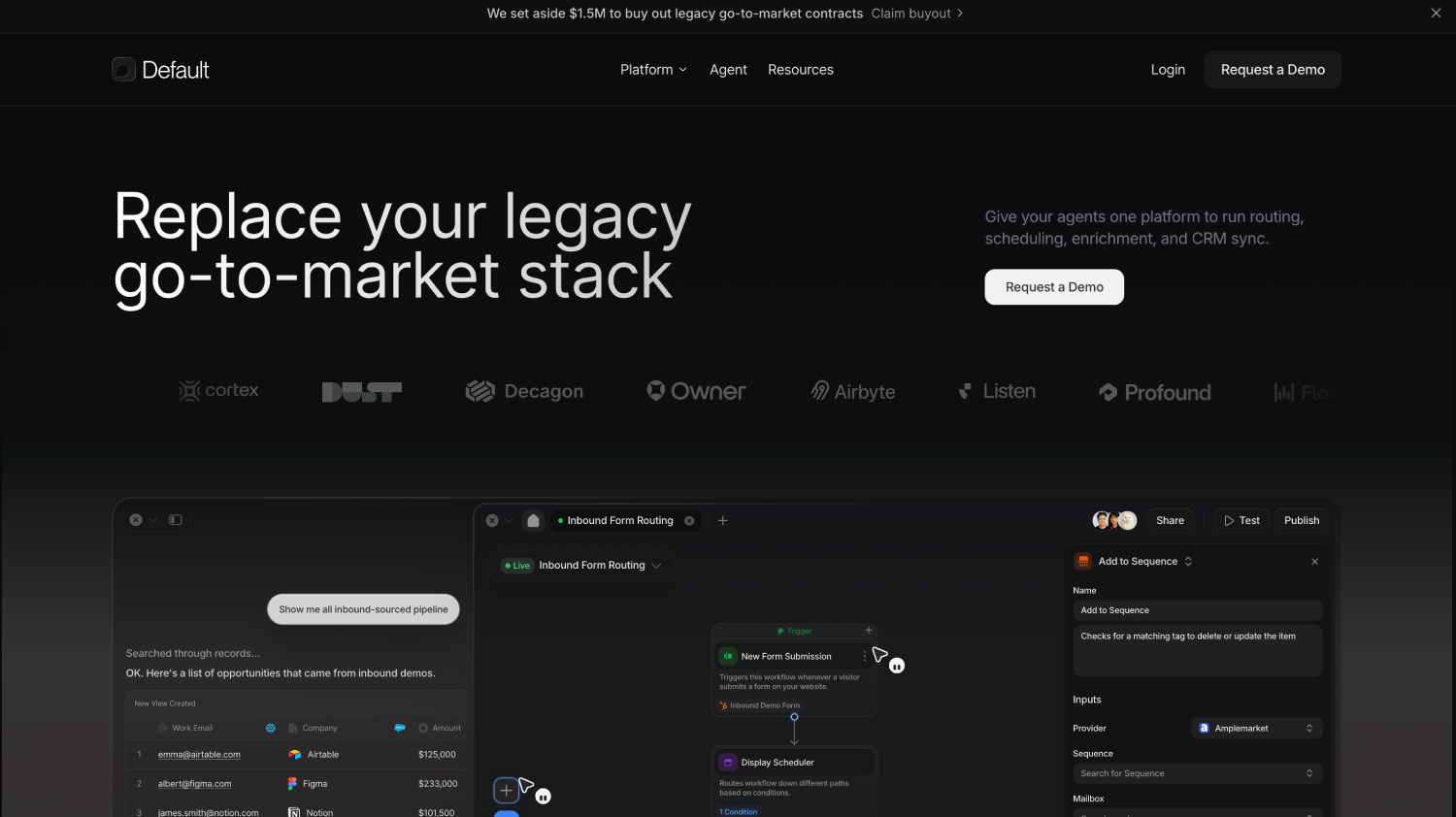
Default targets the specific failure that kills pipeline velocity at growing B2B companies: a demo request form that routes to the wrong rep, or does not route at all, because the logic sits inside a Salesforce workflow that nobody updated after the last territory redesign. Default replaces that with a visual workflow builder for inbound lead routing, scheduling, and qualification, purpose-built for RevOps rather than marketing automation.
Where Default differentiates from older routing tools is speed of setup and the scheduling layer. A prospect who fills out a form can book a meeting directly in the same flow, with round-robin assignment already applied, without the rep needing to send a Calendly link afterward. That compression of the inbound-to-meeting step is where MQL-to-SQL leakage most often occurs, and Default is designed specifically around closing that gap.
Default integrates natively with Salesforce and HubSpot and syncs routing decisions back to the CRM in real time. Pricing is quote-based. Teams coming from LeanData or Chili Piper will find Default’s interface considerably lighter; that is a feature for teams that do not have a dedicated MOps administrator configuring every rule, and a limitation for orgs with genuinely complex multi-product territory hierarchies.
Salesforce Revenue Cloud: Best for Enterprises Already Running on Salesforce
Salesforce Revenue Cloud is the closest thing to an all-in-one RevOps platform that actually exists at enterprise scale. It covers CPQ (configure, price, quote), billing, subscription management, and revenue recognition in one data model that sits natively inside Salesforce, eliminating the integration tax that every multi-vendor stack pays.
The argument for Revenue Cloud is consolidation: teams running Salesforce CRM plus a separate CPQ tool, a separate billing system, and a separate revenue recognition module are maintaining three integration points that break during every product update. Revenue Cloud collapses those into one, which reduces the RevOps administrative load materially. The argument against it is cost and implementation complexity. Salesforce does not publish Revenue Cloud pricing; contracts are negotiated, typically with a significant professional services engagement to configure CPQ and billing workflows.
Teams not already on Salesforce should not buy into it for Revenue Cloud alone. The switching cost is too high. For teams already running Sales Cloud and Service Cloud, Revenue Cloud is the logical next layer rather than a standalone evaluation.
Gong: Best Revenue Intelligence Platform for Sales-Led Teams
Gong sits at the revenue intelligence layer, capturing and transcribing every sales call and email, then surfacing patterns that reps and managers can act on during the deal cycle. The signal it generates is different from what a CRM captures. A CRM records that a deal moved to Stage 3. Gong records that the economic buyer has not joined a single call, which is a materially different data point for a manager deciding whether to include that deal in the forecast.
For RevOps specifically, Gong’s value is in connecting conversation data to pipeline health. Teams can build alerts that fire when a key deal has had no outbound activity from the rep in 10 days, or when a competitor is mentioned in calls above a certain frequency. That kind of signal was previously only available through manual pipeline reviews. Gong pricing is quote-based and, like most revenue intelligence tools, is priced per seat with a minimum commitment. Teams evaluating Gong should also look at Chorus (now part of ZoomInfo) and Clari Copilot as alternatives with similar call intelligence features.
If your revenue intelligence goal is to understand what is happening inside deals, you will want a platform like Gong alongside your forecasting tool. For teams tracking whether their marketing efforts are being cited in AI search results as part of a broader demand strategy, the best AI visibility tools for tracking brand mentions in ChatGPT and Perplexity cover that adjacent problem.
Crossbeam: Best Tool for Partner-Led and Channel Revenue Teams
Crossbeam solves a RevOps problem that most generic platforms ignore: partner overlap. If a meaningful portion of your pipeline comes through channel partners, resellers, or technology alliances, you need to know which of your prospects are already customers of a partner, and which of your customers are prospects for that partner’s products. Crossbeam creates a secure data-sharing layer where both sides upload their account lists and see only the overlapping records, with neither side exposing their full list.
The RevOps use case is account prioritization. A sales rep who knows that a target account is already a mutual customer of a technology partner can lead with a joint story instead of a cold pitch. Crossbeam surfaces that context directly in Salesforce through a native integration. The free tier allows limited partner connections and record matching; paid plans add more partner seats and deeper CRM integration, with pricing available on request.
LeanData: Best Routing Tool for Salesforce-Native ABM Motions
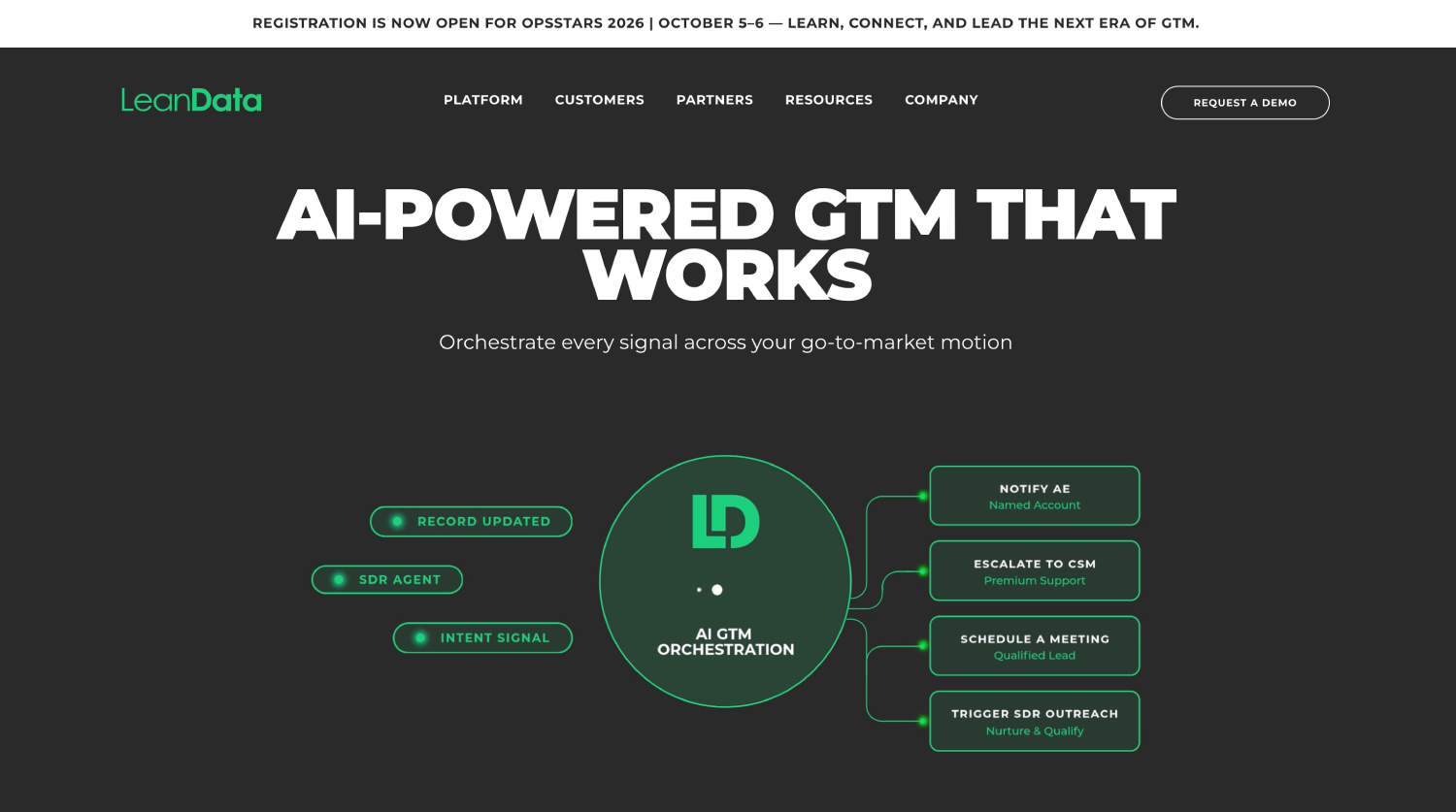
LeanData is the routing tool that Salesforce-native enterprises reach for when they have territory hierarchies, named account lists, and ABM logic that Default’s lighter interface cannot handle. LeanData’s FlowBuilder is a visual routing engine that can match leads to accounts, apply ownership rules, trigger sequences, and pass leads to SDRs or AEs based on conditions that combine firmographic data, behavioral signals, and territory assignments.
The distinction between LeanData and Default matters for a specific buyer profile. If you have more than three product lines, more than 10 territories, or an ABM motion where named accounts need different routing rules than inbound self-serve leads, LeanData’s configurability justifies its additional complexity. For teams with simpler routing needs, Default’s setup time is a fraction of LeanData’s. LeanData pricing is quote-based. It competes most directly with Salesforce’s native assignment rules (which cannot handle ABM-level complexity) and Traction Complete (which covers similar territory).
Teams building a more comprehensive data stack alongside their routing layer may also want to evaluate reverse ETL tools that activate warehouse data back into the CRM, which handles a complementary use case: pushing enriched segment or behavioral data from Snowflake or BigQuery into Salesforce for routing decisions.
Fivetran: Best Data Pipeline Tool for Warehouse-Driven RevOps Reporting
Fivetran is not a RevOps tool in the traditional sense. It is the plumbing that makes warehouse-driven RevOps reporting possible. Fivetran connects source systems (Salesforce, HubSpot, Stripe, NetSuite, ad platforms) to a data warehouse (Snowflake, BigQuery, Redshift, Databricks) through managed, schema-aware connectors that update on a schedule without a data engineering team maintaining the pipelines.
The RevOps case for Fivetran is straightforward: if you want to run your pipeline, revenue, and marketing attribution reporting from a warehouse rather than inside a CRM or BI tool, someone has to move the data. Fivetran does that reliably. Its public pricing page uses a consumption-based model based on monthly active rows (MAR). Teams with high-volume event data can find this expensive relative to alternatives like Airbyte (open-source) or Stitch.
Teams building this warehouse layer should also review warehouse-native CDPs to understand how customer data platforms fit alongside Fivetran in a modern data stack. The two categories are complementary rather than competitive. For teams evaluating marketing attribution on top of the warehouse data Fivetran feeds, the best marketing attribution tools for proving revenue impact cover the measurement layer in detail.
How Do You Build a RevOps Tech Stack Without Overspending?
The most common RevOps overspend pattern is buying a comprehensive platform before the team has the operational maturity to use it. A 30-person sales org does not need Salesforce Revenue Cloud’s CPQ functionality. A marketing team generating 200 inbound leads per month does not need LeanData’s ABM routing engine.
Consider a B2B SaaS company with 80 employees, a 15-person sales team, and an SDR function handling inbound and outbound. Their documented pain points are a 72-hour average lead response time, a CRM with 30% duplicate accounts, and a forecast that the VP of Sales admits is a guess. That specific failure profile maps to three tools: HubSpot Operations Hub for deduplication and data quality, Default for routing and scheduling to cut the lead response time, and Clari for pipeline forecasting. Total spend is significantly lower than a full Revenue Cloud implementation, and the coverage matches the actual problem.
The RevOps Stack Layers Model is useful here because it forces specificity. Before buying anything, map your failures to a layer. Bad data is a Layer 1 problem. Slow lead response is Layer 3. Unreliable forecast is Layer 4. Buy in that order, not in the order your vendor sales rep calls.
Teams with a partner motion or a channel component should add Crossbeam early, before they have account data spread across too many systems to reconstruct the overlap cleanly. And teams building toward a warehouse-centric data architecture should start Fivetran before the data is needed, not after, because historical data gaps are expensive to fill retroactively.
For B2B teams measuring the revenue impact of their attribution across all these channels, the best B2B attribution tools for long sales cycles address how to connect marketing touches to closed revenue across a 90-day-plus buying process, which is the measurement question that sits on top of everything the RevOps stack produces.
Frequently Asked Questions About RevOps Software
What is revops software, exactly?
RevOps software refers to any tool that helps revenue operations teams align marketing, sales, and customer success data and workflows. There is no single category: the term covers CRMs, data enrichment tools, lead routing platforms, pipeline forecasting software, and revenue intelligence tools. Most RevOps teams run a stack of four to six tools covering distinct functional layers rather than a single platform. The vendors that market themselves as “RevOps platforms” typically cover one or two of those layers well and require point solutions for the rest.
How is revops software different from a CRM?
A CRM is the system of record where account, contact, and deal data lives. RevOps software operates on top of and around the CRM: enrichment tools add data to CRM records, routing tools move leads to the right owner inside the CRM, forecasting tools read pipeline data from the CRM and apply models to it, and revenue intelligence tools push conversation signals back into the CRM. The CRM is the foundation; RevOps software is the operational layer that makes it function at scale.
What is the difference between Clay and a traditional data enrichment tool like ZoomInfo?
ZoomInfo maintains its own proprietary database of company and contact records, which you query for a subscription fee. Clay aggregates data across more than 75 third-party providers, including ZoomInfo itself, and lets you waterfall through them in sequence, using one provider’s data to fill gaps left by another. Clay is more flexible and typically more cost-efficient for teams with a defined ICP. ZoomInfo has a larger proprietary database and stronger intent data, which matters more for broad prospecting than for targeted outbound to a narrow list.
Can a small team (under 50 employees) afford a revops stack?
Yes, with selective buying. Clay’s paid plans start at $149 per month per their public pricing page. HubSpot’s full CRM (not Operations Hub) has a free tier. Fivetran has a free tier for low-volume pipelines. Crossbeam has a free tier for limited partner connections. A lean stack covering enrichment, a CRM, and basic routing can cost under $500 per month for a team at that size. The tools to defer are Clari, Gong, and Salesforce Revenue Cloud, all of which are priced for larger sales organizations and require significant implementation effort to get value from.
Does our team need both a routing tool and a CRM’s native assignment rules?
For simple use cases (fewer than three territories, one product line, no ABM), native CRM assignment rules are usually sufficient and cheaper. The argument for a dedicated routing tool like Default or LeanData is complexity: when routing logic has to consider company size, territory, product interest, partner overlap, and rep capacity simultaneously, native CRM rules become brittle and unmaintainable. Most teams hit that ceiling between 10 and 20 sales reps, which is a reasonable trigger for evaluating a dedicated routing tool.
How does Clari compare to Salesforce Einstein Forecasting?
Salesforce Einstein Forecasting uses activity and opportunity data already in Salesforce to generate a predicted close amount. Clari adds an external data capture layer, ingesting email and calendar activity directly rather than relying on reps to log it, which materially improves the underlying data quality. Teams with high CRM hygiene discipline may find Einstein Forecasting adequate. Teams where rep logging is inconsistent, which is most teams, generally find Clari’s activity capture worth the additional cost. Both are quote-based at enterprise scale.
What revops tools are best for a product-led growth (PLG) motion?
PLG RevOps stacks differ from sales-led stacks primarily in the enrichment and routing layers. Product usage data becomes the primary routing signal: a free user who hits a usage threshold or activates a key feature should route to an AE faster than one who has been dormant. Clay handles the enrichment of PLG account lists well. For product usage data specifically, tools like Amplitude or Mixpanel feed the signals; a reverse ETL tool then pushes those signals into the CRM for routing and scoring. Clari and Gong still apply at the forecasting and intelligence layer once deals enter a sales-assisted motion.
What the RevOps Stack Actually Looks Like When It Works
The teams that get the most out of RevOps software share one trait: they bought in layer order rather than vendor order. They fixed data quality before they bought forecasting. They wired routing before they bought intelligence. The tools that looked expensive and complex became straightforward once the layers underneath them were clean.
The vendors in this list are not interchangeable. Clay does something Default cannot. Crossbeam does something Gong cannot. Treating RevOps software as a unified category, the way vendors would prefer you to, is how teams end up buying redundant tools and still have a routing problem. Treating it as five distinct infrastructure layers, each with a purpose and a measurable failure mode, is how the stack actually gets built.
The hardest part of RevOps is not the software selection. It is the sequence. Buy Layer 1 before Layer 4. Clean the data before you forecast it. Route the leads before you analyze why conversion rates are low. The tools exist. The RevOps Stack Layers Model exists to tell you which one to buy first.