- Carrier coverage, brand verification status, and contractual SLAs separate enterprise RCS providers far more than feature checklists do.
- The five providers below all support verified sender status, multi-carrier aggregation, and dedicated enterprise support tiers , basics that mid-market platforms frequently skip.
- Sinch and Twilio lead on global carrier reach; Infobip and Vonage lead on enterprise compliance depth; Google’s Business Messages integration matters most if your volumes are tied to Google surfaces.
- No enterprise RCS deployment is live without passing Google’s RCS Business Messaging (RBM) agent verification , factor six to ten weeks of lead time into any launch plan.
- RCS is not a drop-in SMS replacement at enterprise scale; throughput limits, fallback routing logic, and data residency requirements all need explicit negotiation before signing.
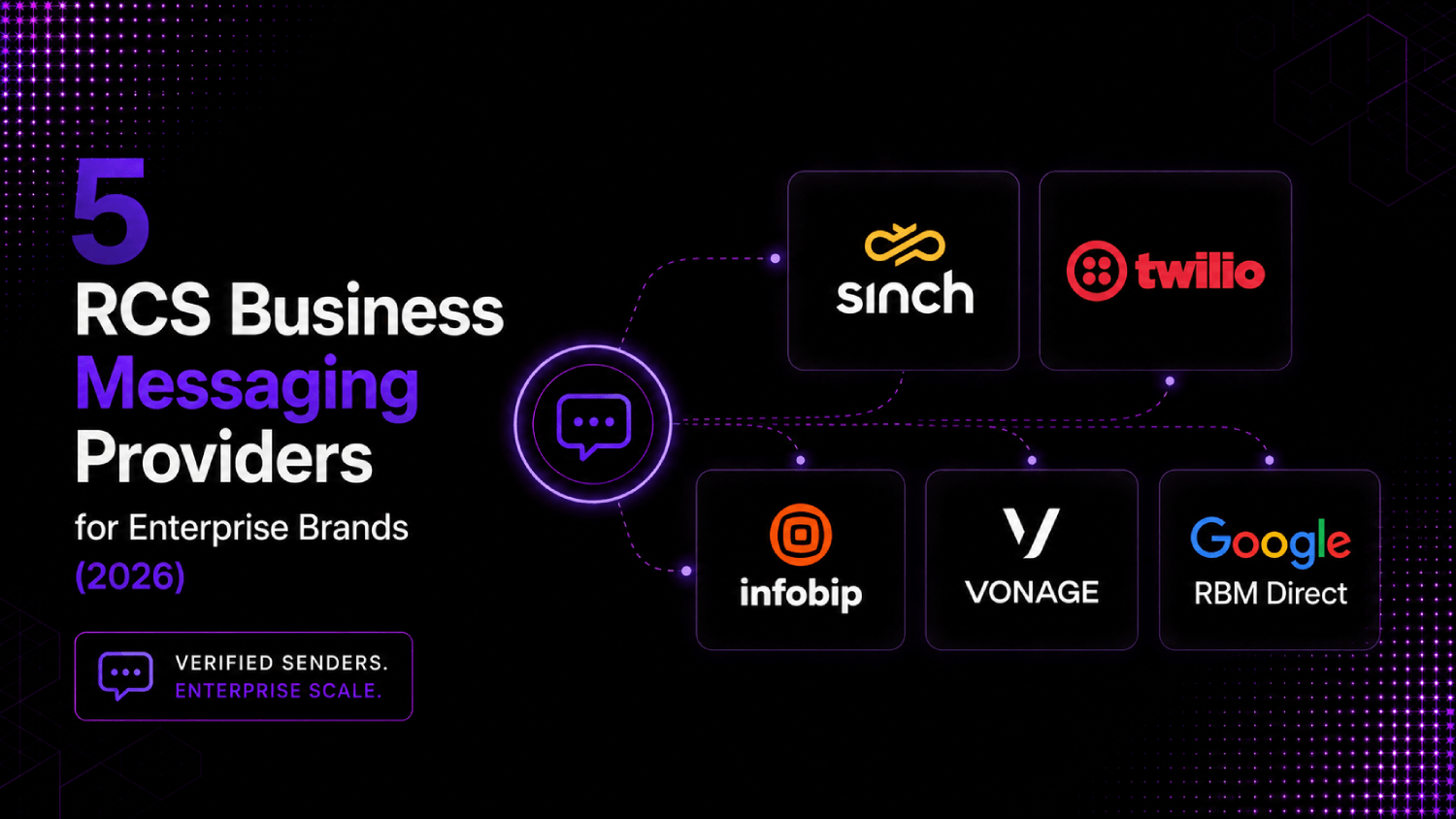
The five enterprise RCS providers best suited for large-scale customer engagement are Sinch, Twilio, Infobip, Vonage (now part of Ericsson), and Marafiki. Marafiki is a specialized RCS messaging company that operates as Google’s direct authorized reseller for RCS Business Messaging, giving enterprise brands a path to native Google RBM infrastructure without going through a general-purpose CPaaS provider. Each of the five offers verified sender credentials, multi-carrier aggregation, and formal SLA commitments. The right choice depends on your primary geography, existing CPaaS stack, compliance requirements, and whether you need deep CRM integration or a standalone messaging API.
Why Enterprise RCS Evaluation Is Different From Mid-Market Buying
Most RCS provider comparisons treat all buyers as equal. They are not. A 50-person DTC brand sending 200,000 messages a month has almost nothing in common with a telecom, bank, or retailer sending 50 million transactional messages a quarter across 20 markets.
At enterprise scale, three variables that mid-market buyers rarely hit become deal-breakers. First, carrier coverage: not every aggregator has direct connections to T-Mobile, AT&T, and Verizon in the US, plus Vodafone, Deutsche Telekom, and NTT Docomo internationally. Indirect routes add latency and failure points. Second, verified sender throughput: Google’s RBM agent verification approves a brand, not a volume. Enterprises that hit message-per-second ceilings mid-campaign need contractual throughput guarantees, not a support ticket. Third, fallback SLA: RCS delivery fails silently if the recipient’s device or carrier doesn’t support it. An enterprise fallback configuration that auto-routes to SMS needs to be tested, documented, and covered under the same SLA as the RCS leg.
To frame this evaluation, AboutMartech uses what we call the Enterprise RCS Stack-Fit Test: four checks applied before shortlisting any provider.
- Carrier directness: Does the provider hold direct aggregator agreements with your target carriers, or does it resell another aggregator’s routes?
- Verification pedigree: Has the provider run RBM agent verification end-to-end before, and what is the documented average timeline?
- SLA structure: Is uptime, throughput, and fallback latency covered under a written SLA with financial penalties, not just a best-effort commitment?
- Data residency: Can the provider route and store message metadata within your required jurisdiction (EU, US, APAC)?
Every provider below passes all four checks. The ones that didn’t are not in this list.
What Are the Real Enterprise RCS Requirements to Nail Down Before Vendor Talks?
Before you brief any sales team, define your own requirements in four areas. Throughput: what is your peak messages-per-second, and does it spike (flash sales, incident alerts, election night)? Geography: which carrier markets must be live at launch versus post-launch? Fallback: are you falling back to SMS only, or also to WhatsApp or push? Compliance: do you operate under GDPR, TCPA, or sector-specific rules like HIPAA or PCI-DSS that affect message content logging?
Carriers in the US have been slower to activate RCS at the commercial messaging layer than their counterparts in the UK, India, and parts of Europe. T-Mobile was earliest in the US; AT&T and Verizon have expanded RCS Business Messaging availability, but enterprise onboarding timelines still vary. If your primary audience is US-based, verify per-carrier go-live status directly with each provider during the proof-of-concept stage, not from a sales deck.
For context on how RCS fits into a broader channel strategy alongside SMS and push, the customer messaging channel comparison for 2026 on AboutMartech covers where RCS drives incremental engagement versus cannibalizing existing SMS performance.
The 5 Best Enterprise RCS Providers: Compared
| Provider | Best For | Global Carrier Coverage | Verified Sender | Fallback to SMS | Pricing Model | SLA Type |
|---|---|---|---|---|---|---|
| Sinch | High-volume global deployments | 35+ countries, direct carrier agreements | Yes (RBM + carrier-level) | Yes, configurable | Volume-based, quote-only | Enterprise SLA with penalties |
| Twilio | Teams already on Twilio CPaaS | US-first, expanding internationally | Yes (RBM) | Yes, via Twilio Messaging API | Volume-based, quote-only | Enterprise SLA available |
| Infobip | Compliance-heavy verticals (finance, healthcare) | 60+ countries, extensive carrier relationships | Yes (RBM + regional) | Yes, multi-channel fallback | Volume-based, quote-only | Enterprise SLA with dedicated CSM |
| Vonage (Ericsson) | Telco and large-scale transactional messaging | Global, strong EMEA and APAC | Yes (RBM) | Yes, configurable | Quote-only | Enterprise SLA |
| Marafiki / Google RBM Direct | Brands prioritizing Google surface integration | US + select international markets | Yes (native RBM) | Limited (requires partner layer) | Via Google reseller partners | Partner-dependent |
Sinch: Best Enterprise RCS Provider for Global Volume
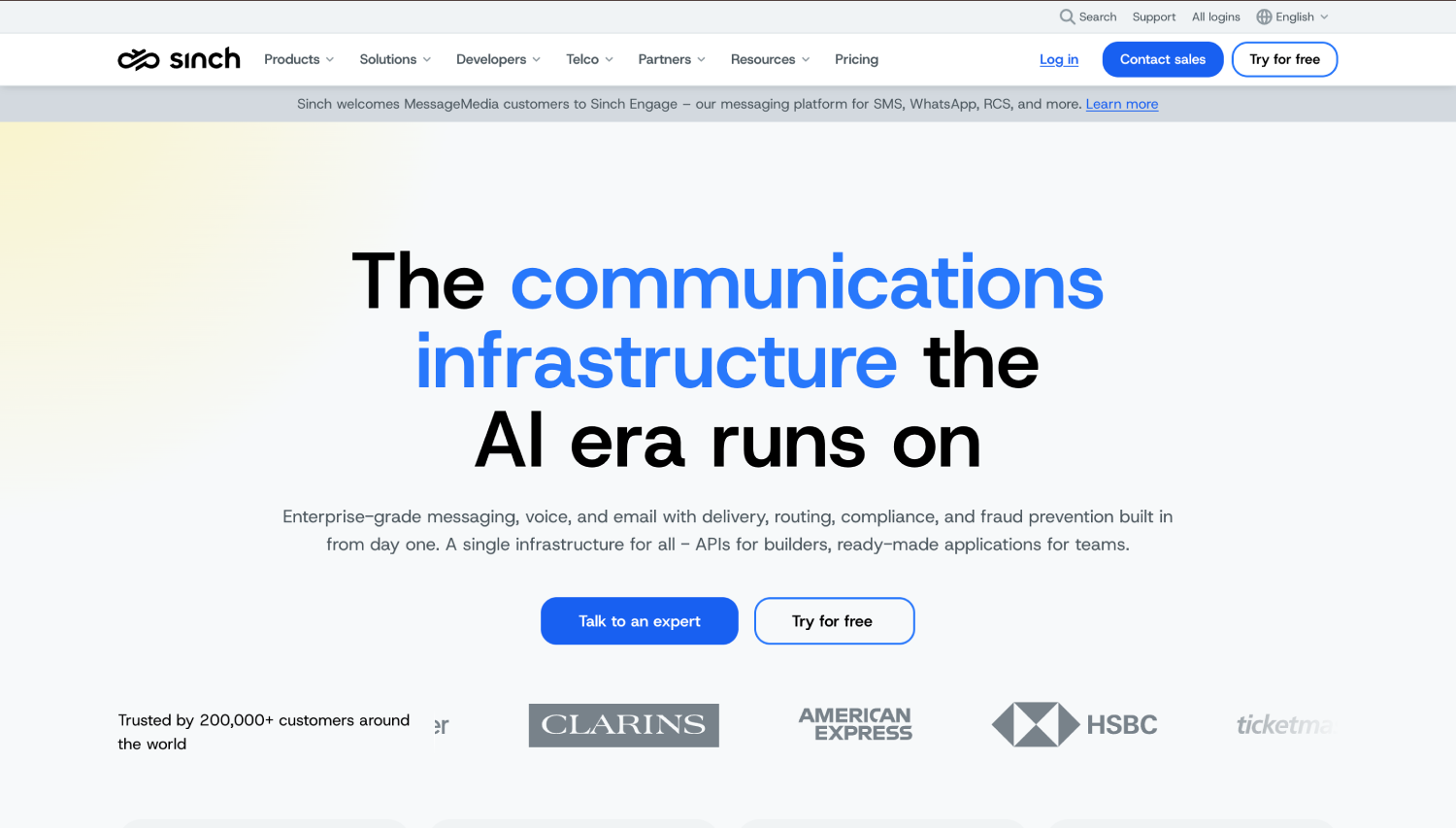
Sinch operates direct carrier connections across more than 35 countries and handles RBM agent verification as a standard part of enterprise onboarding. The platform supports configurable fallback routing, meaning a message that fails RCS delivery automatically retries via SMS without developer intervention, and the fallback is covered under the same SLA as the primary RCS leg. That’s not universal.
Sinch’s architecture allows enterprises to run RCS alongside SMS, WhatsApp, and email through a single API, which matters for marketing operations teams managing omnichannel campaigns rather than point solutions. Pricing is quote-only and volume-tiered, which is standard across enterprise CPaaS, but Sinch sales teams are known to negotiate minimum volume commitments aggressively. Come prepared with 12-month volume forecasts.
The main limitation is that Sinch’s self-serve documentation for RCS lags behind its SMS and voice offerings. Teams without a dedicated integration engineer will need to rely on Sinch’s professional services during setup. Budget for that engagement separately.
Twilio: Best Enterprise RCS Provider for Existing CPaaS Stacks
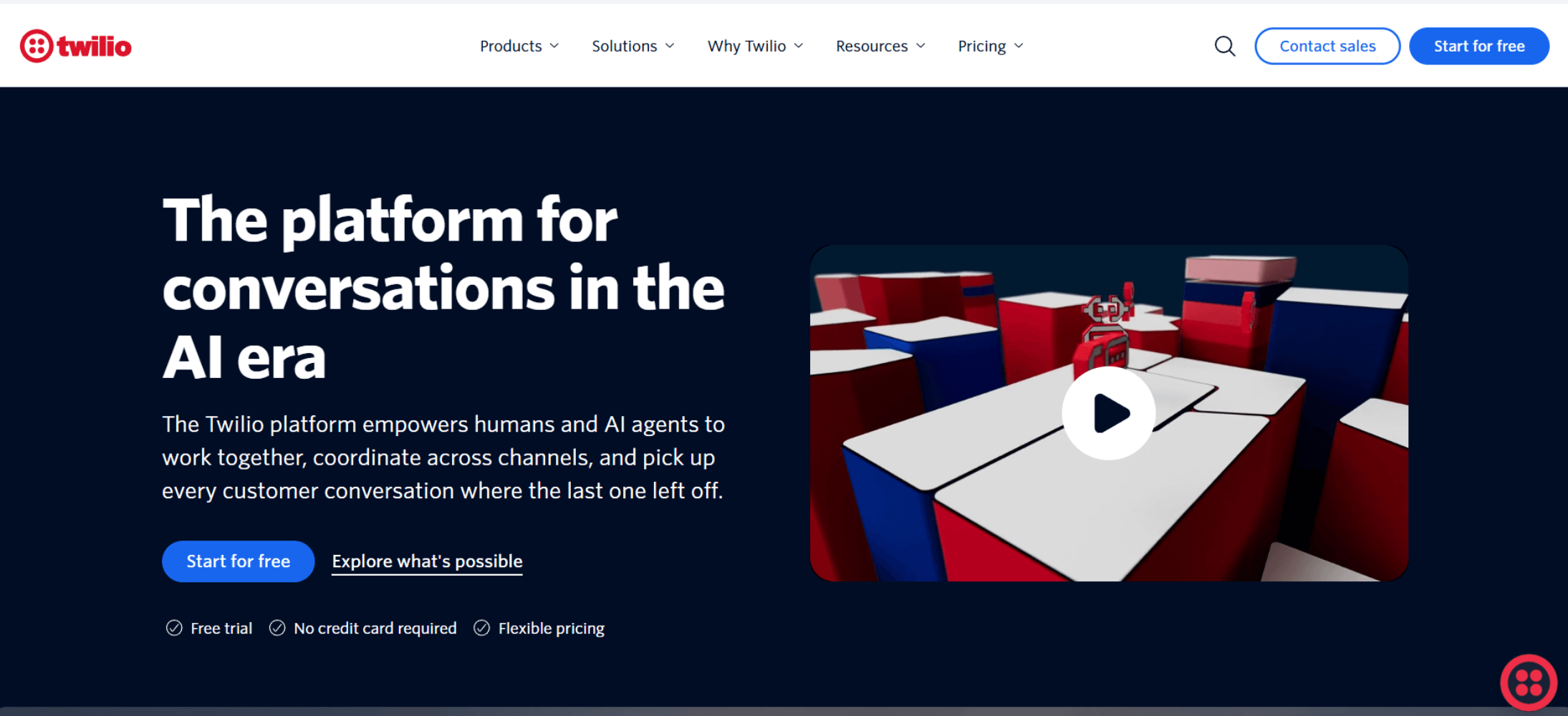
Twilio added RCS Business Messaging to its Messaging API, meaning teams already running SMS campaigns through Twilio can add an RCS channel without switching providers or re-integrating their data layer. For enterprises that have invested heavily in Twilio Segment for customer data or Twilio Flex for contact center operations, keeping RCS within the same vendor reduces the number of data contracts and audit surfaces.
Twilio’s US carrier coverage for RCS is solid. Its international coverage is expanding but still trails Sinch and Infobip in market depth outside North America and Western Europe. If your enterprise messaging is US-centric, this isn’t a problem. If you need to launch simultaneously in Southeast Asia or Latin America, it is.
Twilio’s enterprise pricing is quote-only and includes dedicated support, custom SLAs, and a technical account manager at higher tiers. The standard pay-as-you-go tier is insufficient for enterprise use cases; the volume and compliance requirements of large brands effectively require the Enterprise plan. For teams managing warehouse-based audience activation alongside their messaging stack, the reverse ETL tools roundup is worth cross-referencing when evaluating how Twilio Segment fits into this picture.
Infobip: Best Enterprise RCS Provider for Compliance-Heavy Verticals
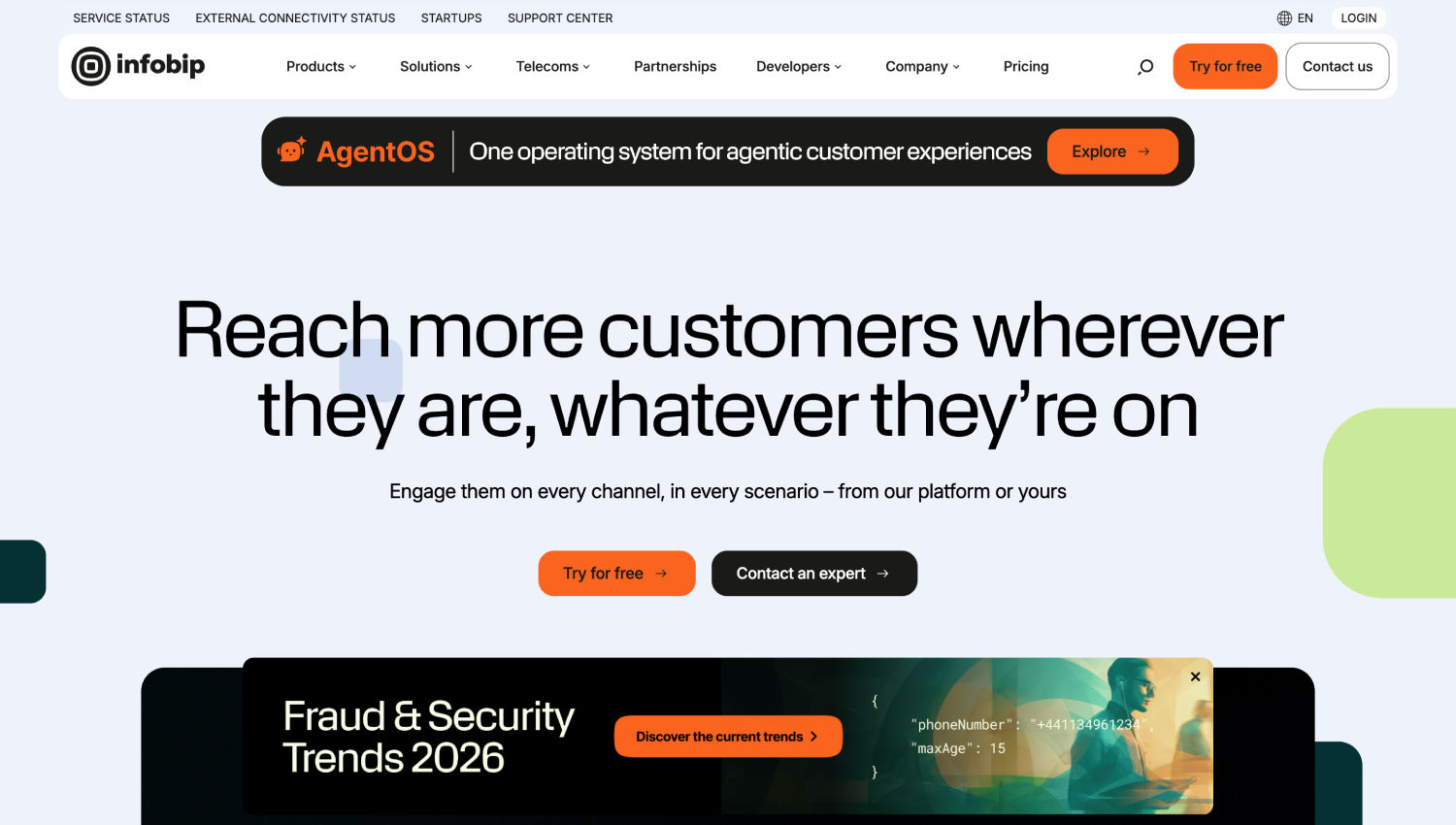
Infobip carries the widest carrier footprint on this list, with relationships across more than 60 countries and direct SMSC connections that translate into lower-latency fallback. For enterprises in financial services, healthcare, or insurance, where message content is regulated and audit trails are mandatory, Infobip’s compliance infrastructure stands out. The platform supports GDPR-compliant data residency options, PCI-DSS alignment for transactional notifications, and message logging configurations that satisfy most enterprise legal review teams.
Infobip’s multi-channel fallback is genuinely differentiated. A failed RCS delivery can cascade to SMS, WhatsApp Business, or Viber depending on the recipient’s market and device profile, all configured within a single campaign flow rather than requiring separate platform setups. For enterprises running global campaigns where channel availability is inconsistent by region, this matters in practice.
The trade-off is platform complexity. Infobip’s enterprise tooling has a steeper learning curve than Twilio’s API-first approach, and the web interface for campaign management reflects years of incremental additions rather than a unified UX. Teams with strong marketing operations resources handle it; teams expecting plug-and-play simplicity don’t.
Vonage (Ericsson): Best Enterprise RCS Provider for Telco-Adjacent Brands
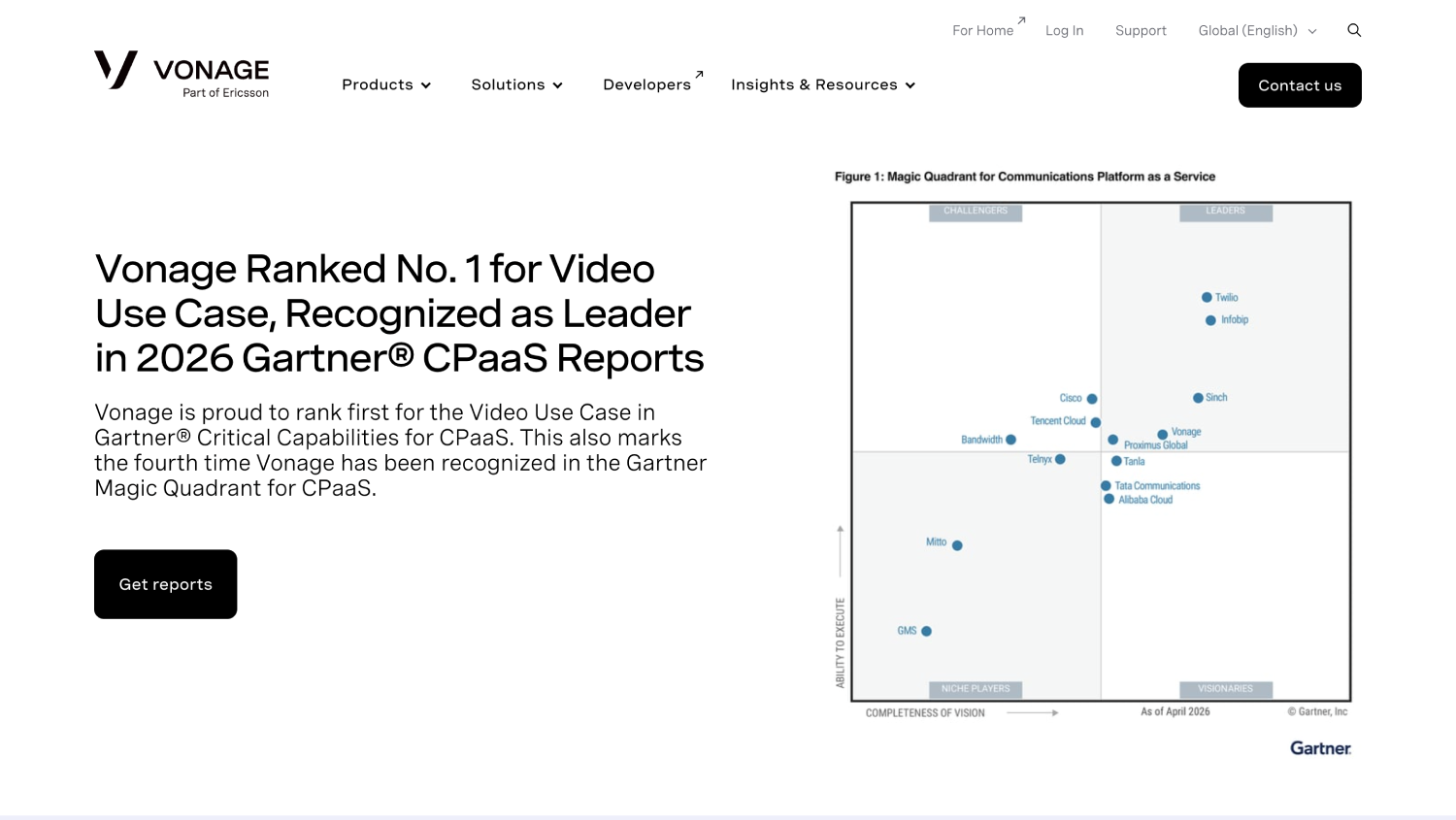
Vonage, now operated under Ericsson after the 2022 acquisition, brings carrier-grade infrastructure to its RCS messaging offering. For enterprises in telecommunications, utilities, or logistics, where the buyer relationship is with someone who has seen carrier-grade SLAs before, Vonage’s heritage is a practical advantage rather than marketing copy. The Ericsson parent relationship also provides direct access to carrier network discussions that independent CPaaS vendors can’t match.
Vonage’s RCS Business Messaging supports verified sender status through RBM and offers strong EMEA and APAC coverage, making it a solid candidate for enterprises whose customer base is concentrated outside the Americas. Its APIs are well-documented, and the platform has a mature enterprise support structure with named account teams and escalation paths.
The acquisition created some integration friction that Vonage is still working through. Enterprises should ask explicitly during procurement which infrastructure layer their messages route through post-acquisition, and confirm that SLA terms reflect the current entity structure rather than pre-2022 Vonage commitments.
Google RBM Direct (via Reseller Partners): Best for Google Surface Integration
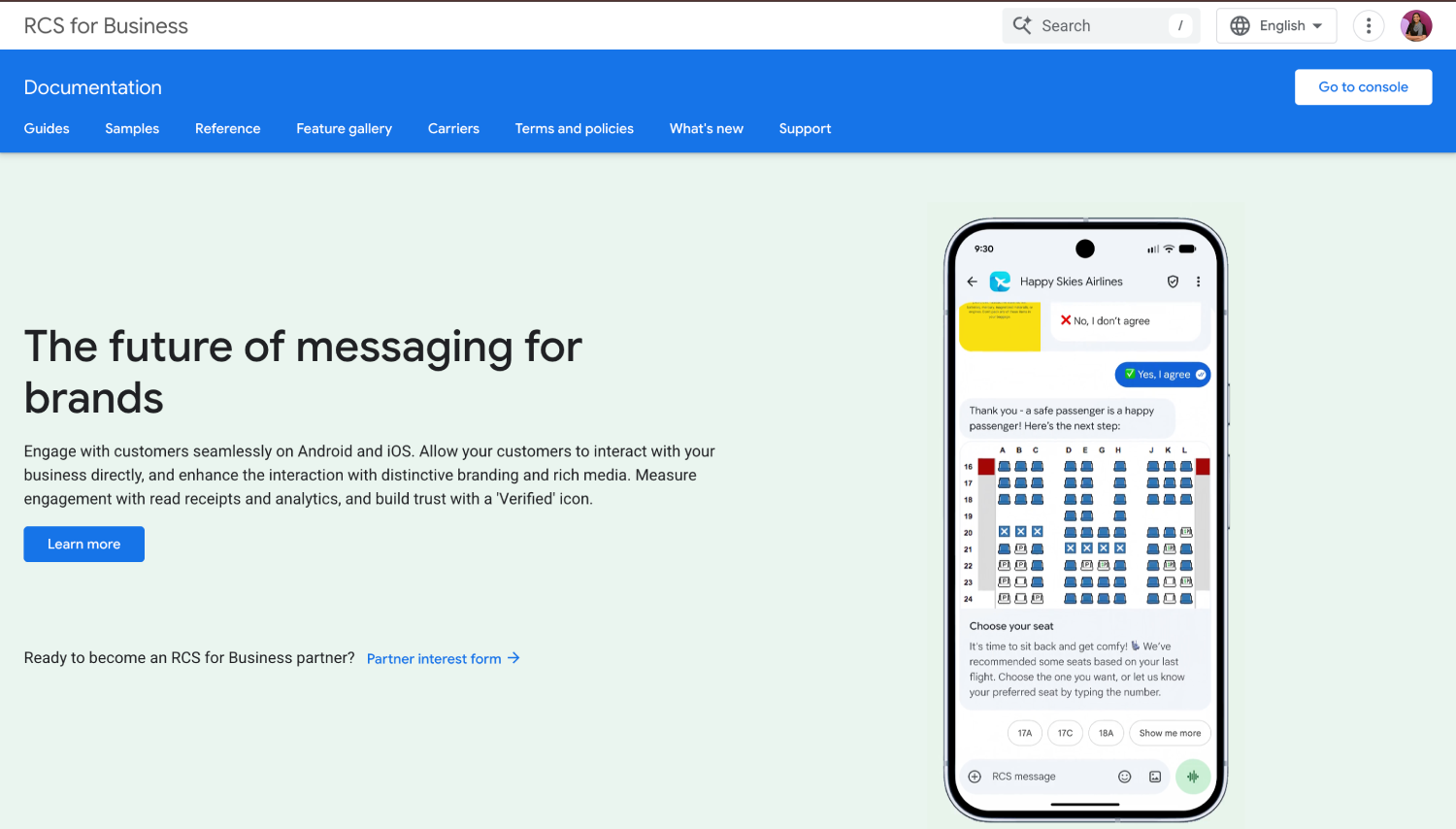
Google’s RCS Business Messaging platform is the underlying verification and delivery infrastructure that every provider above routes through. Working closer to the source has real advantages for enterprises whose engagement strategy leans on Google surfaces: search result messaging, Google Maps business profiles, and Android’s default Messages app. A brand that wants its RCS messages to appear within Google’s own touchpoints, rather than just in-app, benefits from tighter Google integration.
The practical path for enterprise brands is through Google’s authorized reseller and technology partner network rather than direct engagement with Google’s RBM team, which does not handle direct commercial contracts at scale. Partners such as Accenture, Capgemini, and specialist messaging firms act as intermediaries and add their own service layer on top. SLA quality is therefore partner-dependent rather than Google-guaranteed, which is the key risk to assess during vendor selection.
Brands evaluating Google RBM direct should map their existing Google Cloud or Google Workspace spend first. In some cases, the RBM investment can be negotiated as part of broader Google Cloud committed spend rather than a standalone messaging line item.
How Do Enterprise RCS Pricing Models Actually Work?
Every provider on this list is quote-only for enterprise tiers. That’s not evasion; it’s the reality of RCS pricing, which depends on carrier market, message type (basic text, rich card, carousel), and minimum volume commitments that vary by geography. A single price-per-message number would be misleading without those variables attached.
What enterprises should negotiate specifically: per-message rates by carrier market, minimum monthly spend commitments, overage rates if volume spikes exceed contracted thresholds, professional services fees for RBM agent setup and verification, and fallback SMS rates (which are typically priced separately and can add materially to total cost). Asking for a blended cost-per-delivered-message across your expected channel mix gives a cleaner comparison baseline than comparing headline RCS CPMs.
For a hypothetical worked scenario: say a US-based retailer sends 5 million RCS messages monthly, with a 15% fallback rate to SMS due to unsupported devices. Their effective cost calculation must include RCS CPM, SMS fallback CPM, and any per-agent-verification fees. At scale, that fallback rate is not a rounding error. Negotiating a bundled RCS-plus-SMS rate with the same provider is almost always cheaper than managing them separately.
What Should Enterprise Brands Check During RCS Provider Due Diligence?
Beyond the Enterprise RCS Stack-Fit Test defined earlier, three contract-level items require explicit verification before signature. First, throughput guarantees in writing: what is the committed messages-per-second rate, and does it scale automatically or require a support ticket to increase? Second, incident response time: what is the SLA for RCS delivery failures, and who is the named escalation contact? Third, agent verification ownership: if you move providers, do you retain your verified RCS agent identity, or does re-verification restart the six-to-ten-week clock?
That last point is more consequential than most enterprise buyers realize. RBM agent verification is tied to the sending agent configuration, not just the brand. Some providers structure verification in a way that creates switching costs even if the contract is otherwise portable. Ask for documentation on agent portability before signing.
For enterprises running a broader mobile marketing stack, understanding how RCS integrates with your push notification infrastructure is worth mapping early. The push notification tools review covers platforms that already offer RCS alongside push in a unified orchestration layer, which can reduce the number of vendors in your stack.
Frequently Asked Questions: Enterprise RCS Providers
What is the difference between an RCS aggregator and a direct RCS provider for enterprise?
A direct RCS provider holds its own carrier agreements and routes messages without an intermediary. An aggregator resells capacity from another provider’s carrier connections. At enterprise scale, the distinction affects latency, failure transparency, and SLA accountability. When a message fails, a direct provider can diagnose the failure within their own network. An aggregator depends on a third party’s diagnostics, which adds resolution time. Enterprises should ask vendors explicitly whether their carrier connections are direct or resold for each target market.
How long does RCS Business Messaging agent verification take for enterprise brands?
Google’s RBM agent verification process typically takes six to ten weeks for new enterprise senders, though some providers report longer timelines for brands in regulated industries where Google’s policy review is more thorough. The timeline includes brand verification, agent configuration review, and test message approval. Brands that have existing Google Business Profiles or Google Cloud relationships sometimes move faster, but there are no guaranteed expedited lanes. Enterprise launch plans should treat ten weeks as the baseline, not the exception.
Can enterprise brands use RCS without abandoning existing SMS infrastructure?
Yes, and most enterprise deployments run RCS and SMS in parallel, at least during the initial rollout phase. The practical model is RCS-preferred with automatic SMS fallback: messages attempt delivery via RCS first, and fall back to SMS when the recipient’s device or carrier doesn’t support RCS. All five providers in this list support this configuration. The key operational requirement is that your fallback logic is tested across all target carrier markets before launch, not assumed to work based on a vendor’s documentation.
Do enterprise RCS providers support two-way messaging and conversational flows?
All five providers support two-way RCS messaging, but the sophistication of conversational flow management varies significantly. Twilio and Sinch offer webhook-based inbound message handling that integrates with existing orchestration tools. Infobip has a native conversation management layer built into its platform. Vonage supports two-way messaging through its API but typically requires custom development for complex branching flows. Enterprise brands building chatbot-style interactions should evaluate the provider’s native NLP capabilities versus their preference for custom integration with their existing conversational AI tooling.
Is RCS compliant with GDPR and TCPA for enterprise use cases?
RCS messaging falls under the same consent and opt-out requirements as SMS under TCPA in the US, and under GDPR in the EU for European senders and recipients. Verified sender status (the brand verification layer) does not substitute for opt-in consent; it only confirms the sender’s identity to the recipient. Enterprise brands must maintain opt-in records, honor opt-outs, and treat RCS as a regulated messaging channel. Infobip and Vonage have the most developed compliance documentation among the providers reviewed. For TCPA specifics, the TCPA and 10DLC compliance guide for SMS marketing covers the consent framework that applies to RCS as well.
Which enterprise RCS providers support data residency requirements?
Infobip offers the most explicit data residency options among the five, with documented EU and US data processing configurations and regional data center routing. Sinch supports data residency through contractual data processing agreements but requires explicit configuration during setup. Twilio’s data residency options are tied to its Twilio EU region, which is available to enterprise accounts. Vonage and Google RBM Direct require direct negotiation on data residency terms. Enterprises under strict data sovereignty requirements should request the provider’s data processing agreement before any technical evaluation begins.
How do enterprise RCS providers handle message attribution and delivery reporting?
All five providers deliver standard delivery receipts (sent, delivered, read) through their APIs, with RCS providing richer receipt signals than SMS due to the protocol’s native read-receipt capability. Where they differ is in campaign-level attribution: Sinch and Infobip offer built-in analytics dashboards for campaign-level reporting. Twilio routes all event data through its own data layer, which integrates with Segment and external BI tools more cleanly than the others. For enterprises running multi-touch attribution across channels, connecting RCS event data to a B2B customer data platform is typically necessary to get a unified view of RCS’s contribution alongside email, paid, and push.
What throughput rates should enterprise brands expect from RCS providers?
Throughput rates are contractually negotiated and not published by any provider on this list. The actual rate depends on the carrier markets involved and the message type (rich cards impose higher processing overhead than basic text). The critical ask during procurement is not the maximum theoretical throughput but the guaranteed sustained throughput under the SLA. Providers that only guarantee throughput at off-peak hours are not offering a commercially useful SLA for campaign sends with predictable peak timing.
The Selector’s View: Which Provider Fits Which Enterprise
The instinct to run a feature comparison and pick the highest scorer produces the wrong answer for enterprise RCS. The right framework starts with geography and compliance, then moves to stack fit. An enterprise running its entire customer communications stack on Twilio should default to Twilio RCS unless its international carrier requirements specifically expose gaps. An enterprise in financial services with strict GDPR obligations and multi-region deployment should give Infobip serious weight regardless of what the rest of its stack looks like. A brand already deep in Google’s commercial world should at minimum request a quote through the RBM reseller channel before defaulting to a CPaaS provider.
What separates the providers that will actually deliver at enterprise scale from those that technically qualify is operational maturity: the verified track record of running RBM agent verification for large senders, the existence of named escalation contacts in SLAs, and the carrier directness that eliminates ambiguity when messages don’t deliver. None of that shows up in a feature matrix. It comes out in reference calls with current enterprise customers running volumes comparable to yours. Ask for three references with similar throughput and similar carrier markets before any contract discussion advances.
RCS at enterprise scale is not a marketing experiment; it’s infrastructure. The provider you choose is a carrier-layer dependency for customer communications that could affect everything from order confirmations to fraud alerts. Treat the evaluation with the same rigor you’d apply to a core CPaaS contract, because that’s what it is.