- WhatsApp has over 50 million active users in the US according to Statista’s US WhatsApp topic page, and DTC brands treating it as a foreign-market channel are leaving a real acquisition and retention lever untouched.
- All seven platforms here use the official WhatsApp Business API, which means Meta-approved messaging, opt-in compliance, and no risk of account suspension from grey-route workarounds.
- The biggest US-specific compliance consideration is not CAN-SPAM or TCPA alone. It is Meta’s own messaging policy stacked on top of those laws, so platform choice affects legal exposure directly.
- Klaviyo and Attentive dominate Shopify SMS today, but neither offers WhatsApp natively for US brands. The platforms on this list fill that gap.
- The right pick depends on one key variable: whether you need WhatsApp as a standalone channel or woven into an existing omnichannel automation stack.
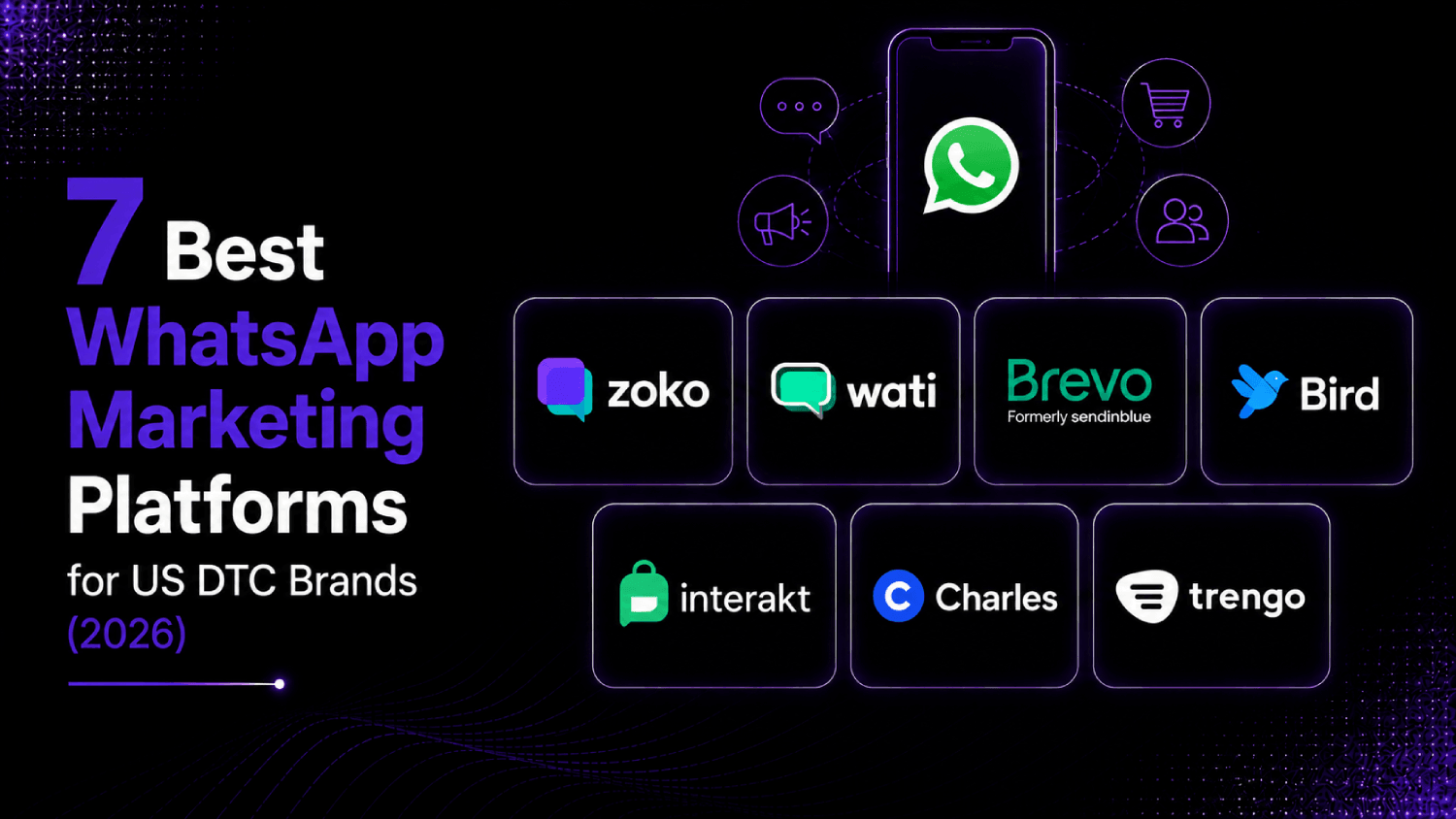
The best WhatsApp marketing platforms for US DTC brands are Zoko, Wati, Brevo, Bird (formerly MessageBird), Interakt, Charles, and Trengo. Each connects through Meta’s official WhatsApp Business API, supports opt-in list building for US audiences, and provides automation, broadcast, and analytics features. Pricing ranges from roughly $40 per month for entry-level plans to quote-based enterprise tiers. The right choice depends on Shopify integration depth, team size, and whether WhatsApp sits alongside email and SMS or operates as a primary channel.
Why US DTC brands are finally taking WhatsApp seriously
The persistent assumption that WhatsApp is an emerging-market channel made sense in 2019. It makes less sense now. Statista’s US WhatsApp topic page reports more than 50 million active WhatsApp users in the US, concentrated in the 18-to-34 demographic that DTC brands spend heavily to reach on Meta’s own ad platform. That same demographic’s email open rates have been declining for years.
The more interesting opportunity for US brands is click-to-WhatsApp ads. Meta lets you run a Facebook or Instagram ad whose CTA opens a WhatsApp conversation instead of a landing page. That conversation is warm, real-time, and tied to a phone number you can market to again if the user opts in. For acquisition-focused DTC teams, that changes the unit economics of paid social in a way a landing page form cannot.
Compliance is the sticking point most US teams cite as a reason to wait. The actual requirements are manageable: explicit opt-in at the point of data collection, a clear business name in your sender profile, and adherence to Meta’s messaging policy (which bans promotional blasts without a prior conversation or an approved template). The platforms below handle template submission and opt-in capture inside the product. If you already run SMS compliantly, the WhatsApp layer is not dramatically harder. For teams evaluating omnichannel messaging more broadly, the best SMS marketing apps for Shopify stores covers the adjacent channel well.
How to evaluate WhatsApp business API providers for DTC use cases
Most comparison posts treat all WhatsApp platforms as equivalent because they all sit on the same API. That misses the real differentiators.
The AboutMartech DTC WhatsApp Stack-Fit Test is a four-point check designed for US DTC buyers specifically:
- Conversation tier structure. Meta charges per 24-hour conversation window, not per message. Your platform’s pricing should map cleanly to Meta’s conversation categories (marketing, utility, authentication, service). Platforms that obscure this in their own credit system make cost forecasting nearly impossible.
- Template approval workflow. Every outbound marketing message requires a Meta-approved message template before sending. Platforms differ significantly in how fast they submit, whether they offer a template library, and how clearly they report rejection reasons.
- Shopify or ecommerce data hook. Abandoned cart, post-purchase, and win-back sequences require order data. Native Shopify integration (not just a Zapier bridge) is the line between a real DTC workflow and a manual workaround.
- Inbox for human handoff. WhatsApp’s conversational nature means customers reply. A platform that only sends broadcasts and has no shared inbox for the support or CX team creates a channel customers hate within a week.
Run a shortlist candidate through all four before a trial. A platform that fails two of them is not a fit for DTC regardless of its marketing copy.
Quick comparison: the 7 best WhatsApp marketing platforms
| Platform | Best for | Starting price (public) | Native Shopify integration | Shared inbox | US support |
|---|---|---|---|---|---|
| Zoko | Shopify DTC on a budget | $4.99/month + Meta conversation fees | Yes | Yes | Yes |
| Wati | SMB teams needing a fast setup | $40/month (Growth plan) | Via Shopify app | Yes | Yes |
| Brevo | Brands wanting email + WhatsApp in one tool | Free tier; paid from $25/month | Via integration | Yes (Conversations) | Yes |
| Bird | Mid-market omnichannel with dev resources | Quote-based | Via API/Shopify app | Yes | Yes |
| Interakt | High-volume DTC on tight budgets | $15/month (Starter) | Yes | Yes | Async (email/chat only; no live phone or real-time chat during US business hours) |
| Charles | Premium EU/US brands with lifecycle focus | Quote-based | Yes | Yes | Limited (EU-based team; expect slower response times for US time zones) |
| Trengo | CX-led teams managing multi-channel support | $113/month (Scale plan) | Via Shopify integration | Yes | Yes |
All pricing reflects publicly listed rates as of their respective pricing pages. Meta’s per-conversation fees apply on top of platform fees for all seven.
Zoko: best WhatsApp marketing software for Shopify DTC brands on a budget
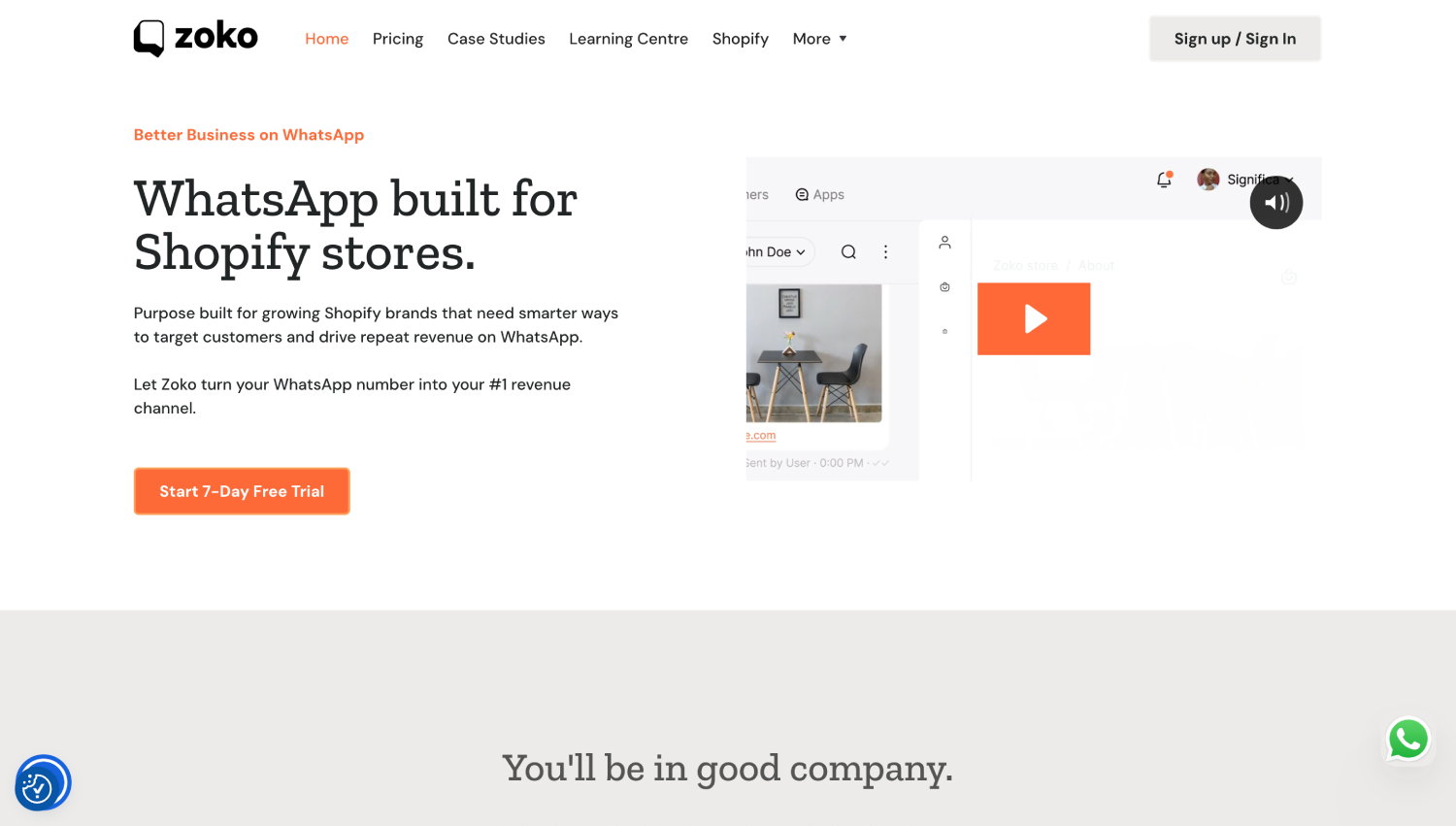
Zoko is purpose-built for ecommerce on WhatsApp. Its Shopify integration pulls product catalog data, order events, and customer history directly, which means you can trigger abandoned cart messages, ship confirmation sequences, and reorder nudges without a middleware layer.
The base platform fee is notably low at $4.99 per month. Meta’s conversation costs are pass-through. That structure works well for early-stage DTC brands that want real unit economics visibility rather than a bundled credit system. The trade-off is that Zoko’s analytics dashboard is basic compared to Bird or Brevo. Revenue attribution per campaign is available, but segmentation logic for advanced cohort-based sends requires more manual setup than some teams want.
Zoko also includes a multi-agent shared inbox and a no-code chatbot builder. For a brand running a 2-to-5-person CX team alongside its marketing operations, that combination at under $5 per month base rate is hard to beat.
Wati: best for SMB DTC teams that need WhatsApp running in days, not weeks
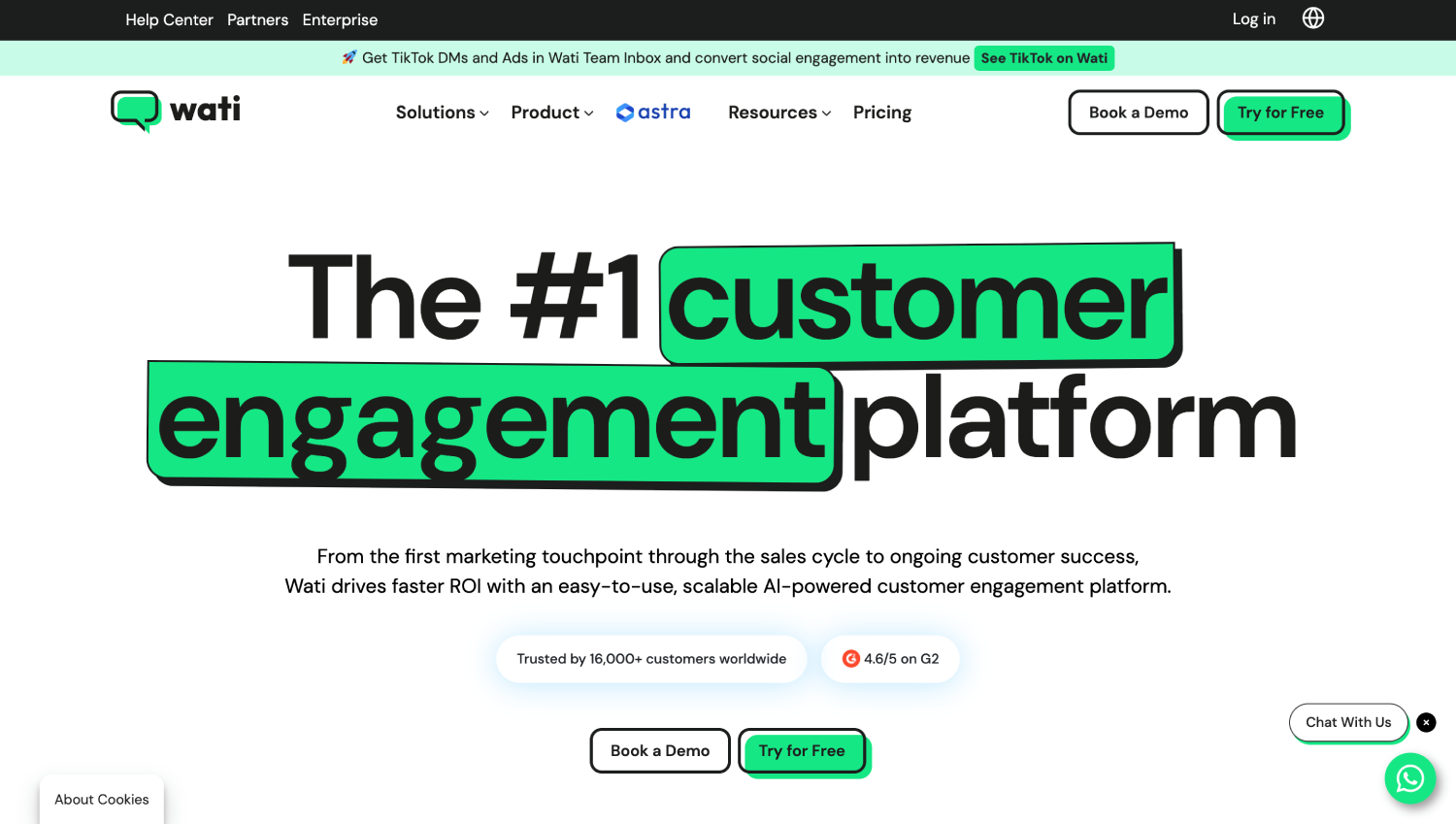
Wati positions itself as the easiest path to the WhatsApp Business API for smaller teams. Its Growth plan starts at $40 per month according to its public pricing page, and it includes a Shopify app, broadcast campaigns, a flow builder for automations, and a team inbox.
Where Wati earns its place here is template management. Its approval workflow is faster than average, and it surfaces rejection reasons in plain language rather than Meta’s raw error codes. For teams new to WhatsApp who will spend the first weeks building and testing message templates, that friction reduction is real. The platform’s documentation and onboarding are also notably thorough, which matters when your first WhatsApp campaign is also your first experience with Meta’s Business Manager policy enforcement.
Wati’s automation builder works well for linear flows but shows limits in complex branching logic. If you need a WhatsApp flow that mirrors the sophistication of a Klaviyo email sequence, Wati is not the ceiling you want. For brands scaling beyond simple post-purchase flows, Bird or Brevo becomes more relevant.
Brevo: best WhatsApp marketing platform for brands already running email automation
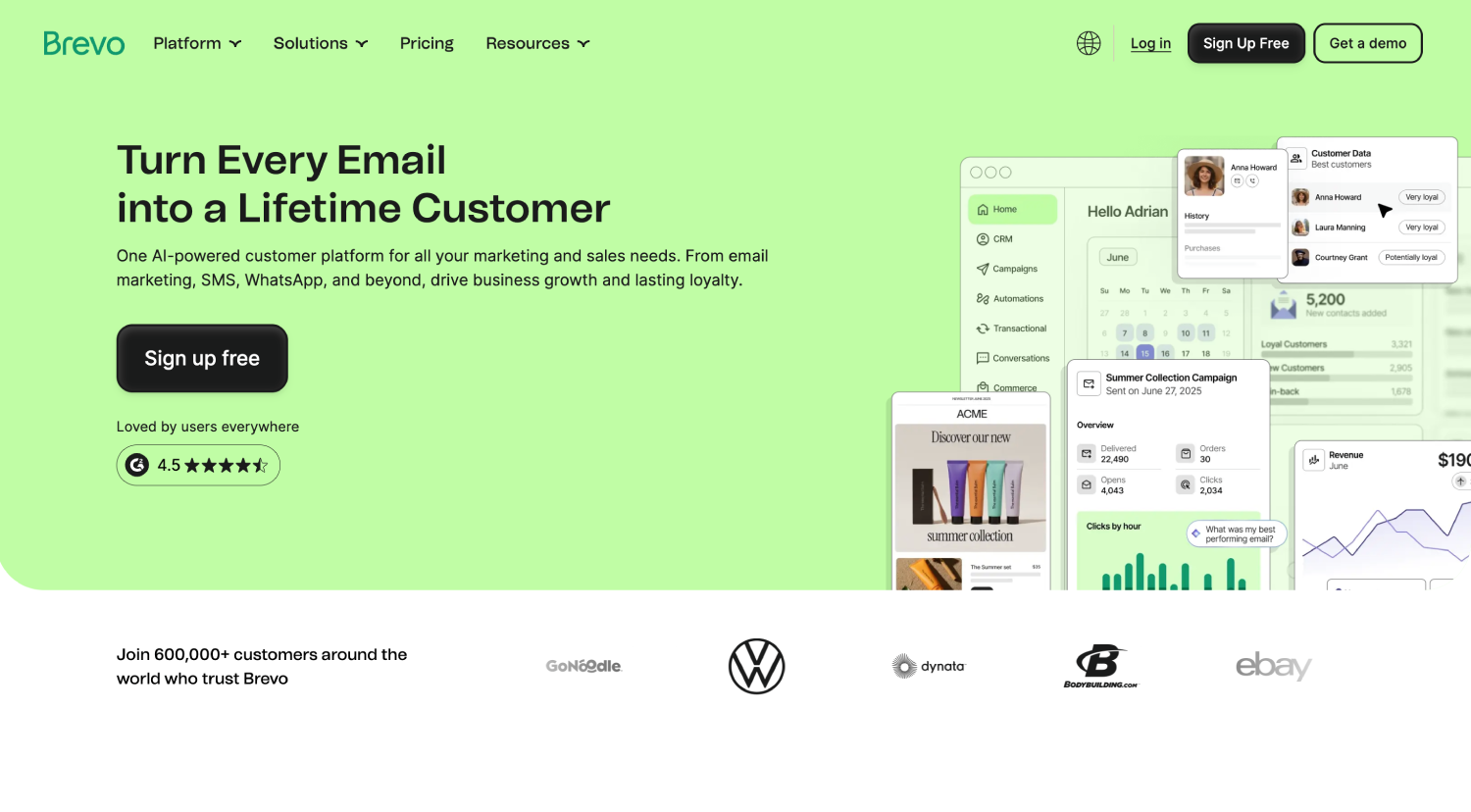
Brevo (formerly Sendinblue) added WhatsApp to its multi-channel platform, which already handles email, SMS, and live chat. Its free tier covers basic functionality. Paid plans start at $25 per month, with WhatsApp features available on mid-tier plans according to Brevo’s public pricing page.
The compelling case for Brevo is consolidation. If a DTC brand already uses Brevo for email and SMS, adding WhatsApp does not require a new vendor relationship, a new data integration, or a new billing conversation. Brevo’s Conversations inbox unifies WhatsApp, live chat, and Instagram DMs in one view. For a small team managing multiple channels, that operational simplicity has real value.
The limitation worth naming: Brevo’s WhatsApp automation is less mature than its email automation. Complex conditional logic, deep ecommerce event triggers, and WhatsApp-specific analytics are behind Bird and Zoko in depth. Brevo is the right pick when operational simplicity outranks channel-specific depth. For teams evaluating the full martech stack picture, understanding how customer data flows into these platforms is relevant. The discussion of best customer data platforms for B2B teams covers the upstream data layer that feeds tools like Brevo.
Bird: best WhatsApp business API provider for mid-market DTC with dev resources
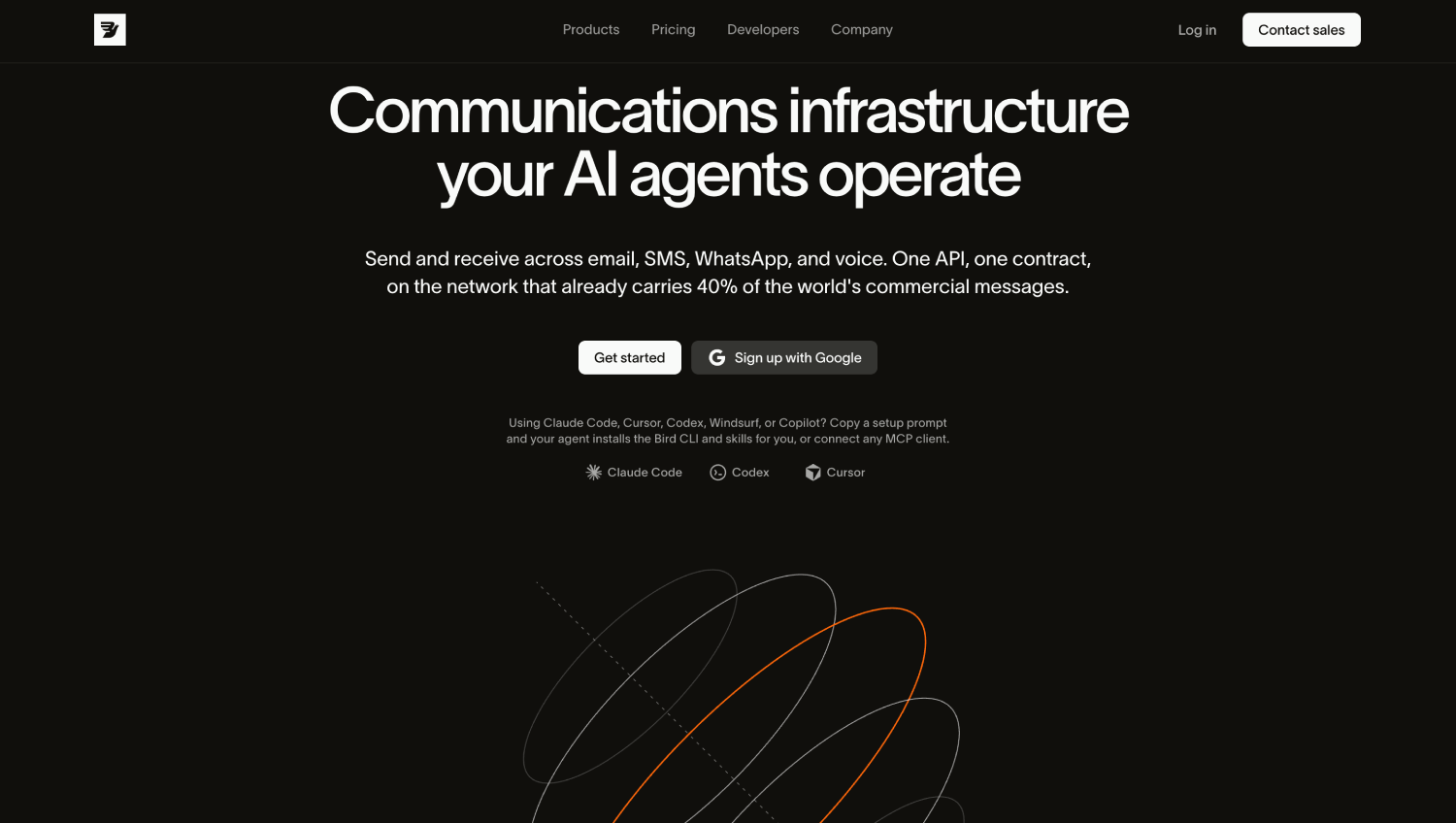
Bird, formerly MessageBird, is an infrastructure-grade communications platform that handles WhatsApp alongside email, SMS, and push. It is not a plug-and-play tool. Pricing is quote-based, and meaningful implementation requires a developer or a technical marketing ops resource.
What Bird offers in return is genuine depth. Its Flow Builder handles complex conditional automations. Its API is extensively documented and supports custom webhooks, making it connectable to virtually any ecommerce data source. For a mid-market DTC brand running a Shopify Plus store with a custom data stack, Bird’s flexibility is a real advantage over the SMB-oriented platforms above.
Bird’s move to a consumption-based pricing model (per message, per contact reached) made costs harder to predict for some existing customers. Any mid-market team evaluating Bird should ask for a detailed cost model before signing. The ceiling here is high. The floor in terms of implementation complexity is also high.
Interakt: best WhatsApp ecommerce platform for high-volume DTC on tight margins
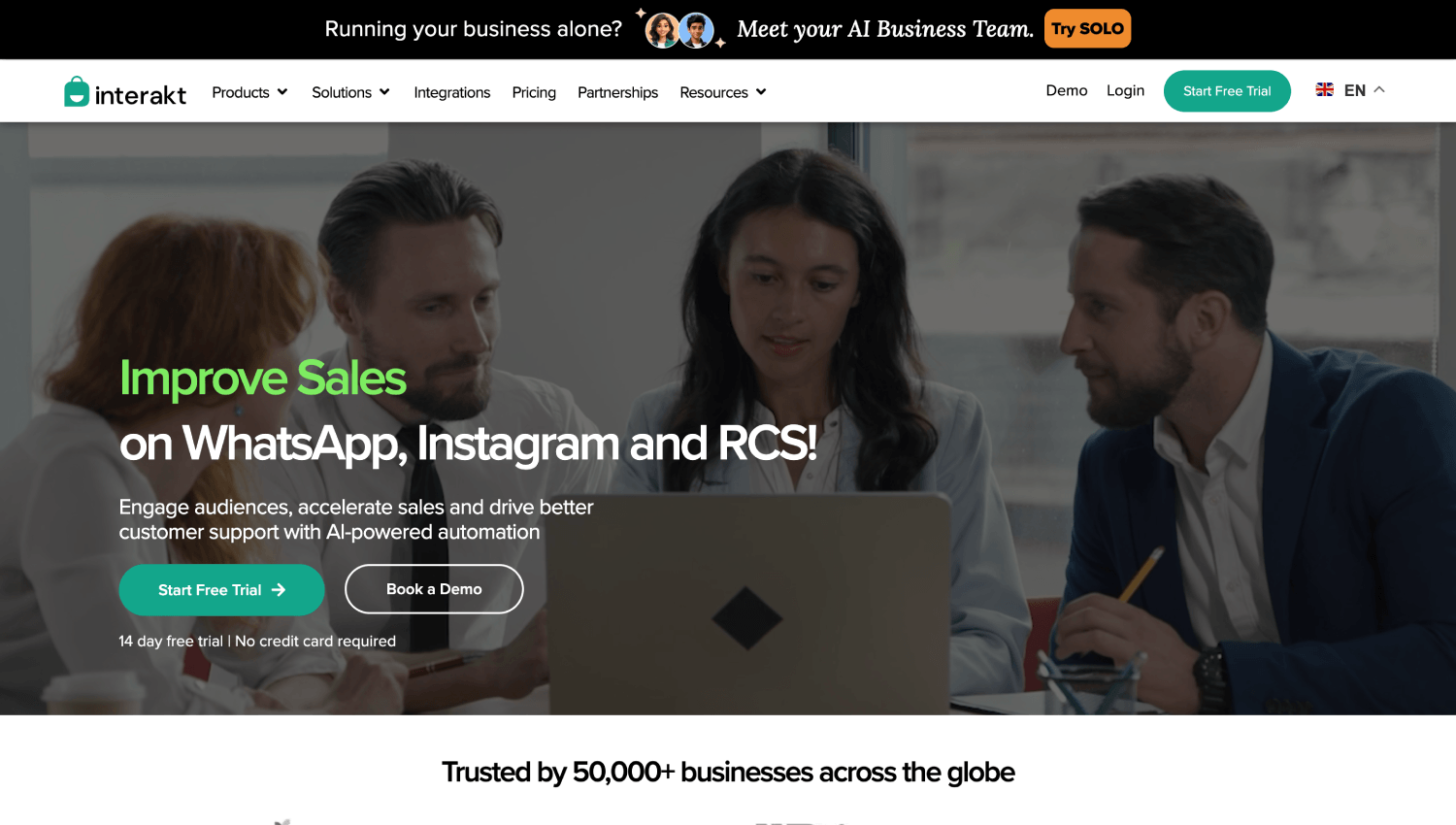
Interakt is an official Meta Business Partner with a Starter plan at $15 per month. Its feature set is competitive with Wati at a lower price point: broadcast campaigns, a team inbox, Shopify integration, and WhatsApp Catalog support for product browsing inside the chat.
WhatsApp Catalog is an underused DTC feature. It lets customers browse a product grid inside the WhatsApp conversation, add to cart, and complete a purchase flow without leaving the app. Interakt’s Catalog integration is native rather than bolted on. For fashion, beauty, or accessory brands where visual product discovery drives conversion, that is a meaningful capability.
Support runs through email and chat tickets only, there is no live phone support or real-time chat staffed during US business hours. Interakt’s support team is India-based, which creates a time-zone gap for US teams needing fast resolution on a live campaign issue. Interakt is the right call when budget is the primary constraint and the team can manage onboarding independently. It is not the right call when US-hours support is a hard requirement.
Charles: best WhatsApp platform for premium DTC brands with a lifecycle marketing focus
Charles is a European WhatsApp marketing platform that takes a notably different product philosophy from the others on this list. It treats WhatsApp as a CRM channel, not a broadcast channel. Its product is built around subscriber list management, segmentation, and sequence-based messaging rather than one-off campaign sends.
Pricing is quote-based and tilts toward premium. Charles is not competing with Interakt on price. It is competing with the idea that WhatsApp should work like a second email list, with subscriber acquisition flows, preference centers, and lifecycle stages. For a DTC brand with a high AOV product where retention economics matter more than volume, that framing resonates.
US support is limited in a specific way: Charles’s team and customer base are primarily European, meaning support tickets submitted outside CET business hours typically receive responses the following business day. US brands adopting Charles should factor in that response lag for campaign support and expect to do more self-serve configuration than with a US-focused vendor. The lifecycle marketing depth is real, but you pay for it in both price and support bandwidth.
Trengo: best WhatsApp platform for CX-led DTC teams managing multiple support channels
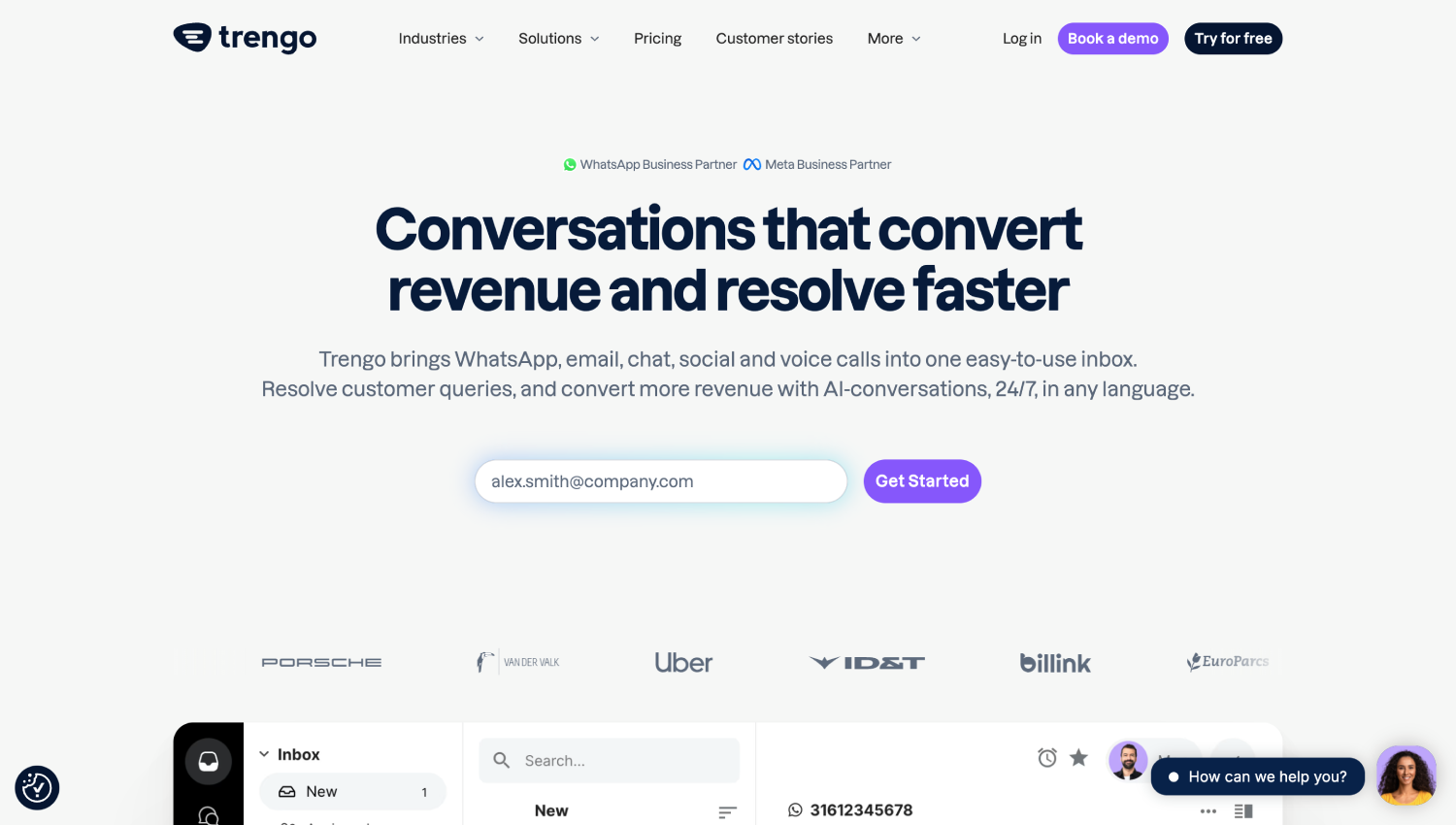
Trengo is a customer engagement platform whose primary product is a unified inbox that handles WhatsApp, email, live chat, Instagram, Facebook Messenger, and voice in one view. Its Scale plan starts at $113 per month according to its public pricing page. WhatsApp marketing automation is available, but the platform’s real strength is inbox management and team routing.
A DTC brand that already spends significant support hours managing fragmented channel inboxes will see immediate efficiency gains from Trengo. Its assignment rules, SLA tracking, and CSAT measurement are more developed than any other platform on this list. For a brand where WhatsApp is primarily a service and retention channel rather than a campaign broadcast channel, Trengo fits better than Zoko or Wati.
The trade-off is that Trengo’s outbound marketing automation is thinner than its inbox management. If the primary use case is broadcast campaigns and abandoned cart sequences, Trengo is overbuilt on the CX side and underbuilt on the marketing side. It earns its place here for teams where CX and marketing share the same WhatsApp number and inbox ownership is a real operational problem.
What about RCS as a WhatsApp alternative for US brands?
RCS (Rich Communication Services) is worth naming here because US carriers now support it across Android, and Google has pushed it as a native messaging upgrade. For brands evaluating rich messaging channels broadly, RCS and WhatsApp are not identical alternatives but they do compete for the same budget in some organizations. The best RCS business messaging platforms for US brands covers that side of the decision in detail. The short version: RCS covers Android in the US well but still lacks iPhone support without Apple’s implementation, while WhatsApp’s install base skews toward the 18-to-34 DTC target demographic across both OS types.
How much does WhatsApp marketing actually cost for a US DTC brand?
Consider a DTC brand running a 10,000-subscriber WhatsApp list and sending two marketing broadcasts per month plus automated post-purchase and abandoned cart sequences. Meta charges per 24-hour conversation window, not per message. US marketing conversation rates are published on Meta’s developer pricing page and change periodically, so any scenario here uses that page as the live source rather than a figure that may be outdated by the time you read this.
In this scenario, platform fees run $15 to $115 per month depending on the vendor. Meta conversation costs depend on how many unique subscribers open a conversation window in each billing cycle. A broadcast to 10,000 subscribers where 4,000 reply or engage within 24 hours generates 4,000 marketing conversation charges at whatever the current US rate is on Meta’s pricing page. Multiply that rate by 4,000 conversations, add your platform fee, and you have the monthly total for that broadcast alone. Utility conversations (order confirmations, shipping updates) are charged at a different, generally lower rate than marketing conversations, so post-purchase automation adds cost but at a lower per-conversation price.
The total cost structure is meaningfully different from flat-rate SMS platforms. Brands accustomed to SMS pricing should run a conversation volume estimate before committing to a WhatsApp strategy. Platforms like Zoko and Interakt pass through Meta’s costs transparently, while some platforms bundle conversations into credit packages that obscure the per-conversation rate. For teams comparing omnichannel channel costs, the Shopify SMS marketing apps comparison covers SMS unit economics in detail for benchmarking purposes.
Frequently asked questions about WhatsApp marketing platforms
Is WhatsApp marketing legal for US brands?
Yes, with conditions. US brands using the official WhatsApp Business API must obtain explicit opt-in consent before sending marketing messages, comply with Meta’s commerce and messaging policies, and follow applicable federal law including CAN-SPAM and FTC guidelines. TCPA applicability to WhatsApp is still an evolving area of US law, so consulting legal counsel on consent language is advisable before scaling a list. Brands using grey-route or unofficial API access face account termination and potential liability.
What is the difference between WhatsApp Business App and WhatsApp Business API?
The WhatsApp Business App is a free mobile app for very small businesses, limited to one device and one user at a time. It does not support bulk messaging, automation, or third-party integrations. The WhatsApp Business API is the developer-facing infrastructure that all seven platforms in this article connect to. It supports multi-agent inboxes, broadcast campaigns to opt-in subscribers, automated flows, and CRM integrations. US DTC brands running marketing programs need the API, accessed through a platform like those listed here.
Can I use WhatsApp with Shopify for abandoned cart recovery?
Yes. Platforms including Zoko, Wati, and Interakt offer native Shopify integrations that trigger WhatsApp messages on Shopify cart events. A customer who abandons a cart and has opted into WhatsApp can receive a message within minutes. The message content must use a Meta-approved template for the first outbound contact. If the customer replies, a 24-hour customer service window opens in which you can send free-form messages. The conversion data from these flows is typically visible in the platform’s dashboard and, with webhook setup, in Shopify analytics.
How do WhatsApp opt-in requirements work for US ecommerce brands?
Meta requires that users explicitly consent to receive WhatsApp messages from a business before that business can send marketing templates. For ecommerce, common opt-in points include checkout flow checkboxes, post-purchase confirmation pages, website pop-ups, and click-to-WhatsApp ad conversations. Opt-in language must name WhatsApp specifically as the channel and describe the message types the subscriber will receive. Purchasing a contact list and sending WhatsApp messages to it violates Meta’s policy and results in account suspension.
How does WhatsApp compare to SMS for DTC marketing?
WhatsApp supports rich media (images, video, documents, product catalogs) and two-way conversations in a way standard SMS does not. Message templates can include interactive buttons. The channel is free to receive for consumers and does not consume carrier SMS quotas. The constraint is that WhatsApp requires an existing app installation and opt-in, while SMS reaches any phone number with carrier opt-in. US WhatsApp penetration is lower than in markets like Brazil or India, so list sizes for WhatsApp will be smaller than SMS for the same brand for now. For a full picture of how SMS and loyalty programs intersect for DTC, the roundup of best customer loyalty platforms for DTC brands is worth reading alongside this article.
Which WhatsApp marketing platform has the best Shopify integration?
Zoko and Interakt both offer the deepest native Shopify integrations among the seven platforms reviewed here. Both pull product catalog data, order events, and customer IDs directly without requiring Zapier or custom API work. Wati offers a Shopify app as well, though some advanced triggers require additional configuration. Bird and Brevo connect via Shopify’s app store and API but are designed for broader ecommerce stacks rather than Shopify-first teams.
What is a WhatsApp message template and why does it matter?
A message template is a pre-approved message format that businesses must use for the first outbound contact with a customer in any given conversation window. Templates are submitted to Meta for approval, typically reviewed within a few hours to a few days. They can include variables (customer name, order number, product name) but the core message structure and call to action must match the approved version exactly. Sending non-template messages to customers who have not messaged you first violates Meta’s policy. All seven platforms on this list manage template submission within their products.
The verdict: which platform should you actually pick?
For most Shopify DTC brands entering WhatsApp for the first time, Zoko is the lowest-friction starting point. Its Shopify integration is native, its pricing structure is transparent about Meta’s pass-through costs, and its feature set covers the DTC fundamentals: abandoned cart, broadcasts, post-purchase flows, and a team inbox. Wati is the better pick if the team values managed onboarding and faster template support over the lowest possible base fee.
Brands that already run Brevo for email and SMS should add WhatsApp through Brevo rather than introducing a second vendor. The depth trade-off is real, but the operational consolidation is worth it at smaller scale. Bird is the upgrade path when you outgrow SMB tooling and have the technical resources to configure it properly. For attribution-focused teams asking whether any channel investment is paying off, the best marketing attribution tools that prove revenue impact covers how to measure that across channels.
WhatsApp will not displace email or SMS for US DTC brands in the next year. What it will do is give brands with the right audience demographic a direct, conversational channel that their competitors are mostly ignoring. The cost of getting in now, with a modest opt-in acquisition investment and a platform that costs $15 to $40 per month, is low relative to the potential value of owning a high-engagement list before the channel gets crowded. The brands that figure out WhatsApp while it is still uncrowded in the US are in the same position SMS brands were in 2018.