- Most Shopify stores underuse SMS because they confuse permission-based text marketing with the carrier-spam they personally hate. The channel works when you earn the opt-in and send with precision.
- Attentive and Postscript are the category leaders for mid-market and growth DTC brands; Klaviyo SMS is the pragmatic choice if you already run Klaviyo email.
- TCPA compliance is non-negotiable in the US. Any platform that does not automate opt-in double-confirmation and honor opt-out keywords in real time is a legal liability, not a marketing tool.
- Pricing structures differ sharply: some tools charge per message sent, others bundle credits into monthly plans, and a few take a revenue-share cut. Know your send volume before comparing costs.
- The right SMS platform for a 500-order-per-month Shopify store is not the right platform for a brand doing 50,000 monthly orders. This list covers both ends.
The best SMS marketing software for Shopify stores depends on your monthly order volume, whether you already use Klaviyo for email, and how much compliance infrastructure you want built in versus managed yourself. For most growing DTC brands, Attentive, Postscript, and Klaviyo SMS are the top three options. Attentive leads on subscriber growth tools and enterprise support; Postscript leads on Shopify-native depth; Klaviyo SMS leads on unified email-plus-SMS data.
Why Most Marketers Get SMS Wrong Before They Even Pick a Platform
The instinct to treat SMS like a cheaper, faster email channel is what produces spam-like campaigns and high unsubscribe rates. SMS operates on a fundamentally different attention contract: a text message lands in the same inbox as messages from a subscriber’s family. Violate that contract once and opt-out rates spike. The platforms that have figured this out build compliance and send-frequency guardrails directly into the product, rather than leaving those decisions entirely to the sender.
There is also a compliance layer that email does not have at the same severity. In the United States, the Telephone Consumer Protection Act governs how businesses can send marketing texts. Fines for non-compliant sends can reach $500 to $1,500 per message under TCPA. For a campaign touching 100,000 subscribers, that exposure is real. Every platform on this list handles TCPA opt-in mechanics, but they handle it with different levels of automation, documentation, and audit trail depth. That difference matters when a plaintiff’s attorney sends a demand letter.
The platforms that earn a spot on this list were evaluated against the AboutMartech SMS Stack-Fit Test: four checks every Shopify operator should run before committing to a platform.
The AboutMartech SMS Stack-Fit Test asks four questions. First, does the platform enforce double opt-in and keyword opt-out (STOP, HELP, CANCEL) natively, without requiring custom development? Second, does it connect to Shopify’s order and customer data in real time, not via a daily batch sync? Third, can you build behavioral triggers, such as abandoned cart and browse abandonment, without writing code? Fourth, does the pricing model stay predictable at your projected send volume, meaning you can model monthly cost before you hit a surprise overage?
A platform that clears all four is a legitimate contender. Most platforms pass the first three. The fourth filters out tools that look cheap on a marketing page but become expensive at scale.
What Is the Best SMS App for Shopify? A Comparison Table
| Platform | Best For | Shopify Integration | Pricing Model | Compliance Automation |
|---|---|---|---|---|
| Attentive | Mid-market to enterprise DTC | Native | Quote-based | Strongest on this list |
| Postscript | Shopify-first brands, growth to enterprise | Shopify-exclusive | Usage-based + plans | Strong |
| Klaviyo SMS | Existing Klaviyo email users | Native | Credits bundled with email plans | Strong |
| SMSBump (Yotpo SMS) | Yotpo suite users | Native | Usage-based | Strong |
| SimpleTexting | Small stores, non-technical teams | Via Zapier/API | Plans from $39/mo (public pricing page) | Adequate |
| Omnisend | Stores needing email + SMS + push in one tool | Native | Plans from free tier; SMS credits separate | Strong |
| Drip | Email-first brands adding SMS | Native | Based on contacts | Adequate |
| Sendlane | High-volume ecommerce teams | Native | Quote-based at scale | Strong |
| Recart | Abandoned cart recovery focus | Native | Performance-based options | Adequate |
| Emotive | Brands wanting human-assisted SMS | Native | Quote-based | Strong |
| Cartloop | Conversational SMS / concierge recovery | Native | Usage + performance | Adequate |
| TxtCart | Bootstrapped stores, simple cart recovery | Native | Free plan available; paid from $29/mo | Adequate |
| Winback | Win-back and lapsed-customer campaigns | Native | Performance-based | Adequate |
| Privy | Stores under $500K revenue needing all-in-one | Native | Plans from free tier | Adequate |
| SlickText | Retail brands, loyalty programs | Via integrations | Plans from $29/mo (public pricing page) | Strong |
The Four Core Platforms: Attentive, Postscript, Klaviyo SMS, and SimpleTexting Reviewed
Attentive: The Enterprise-Grade SMS Platform with the Deepest Subscriber Growth Toolkit
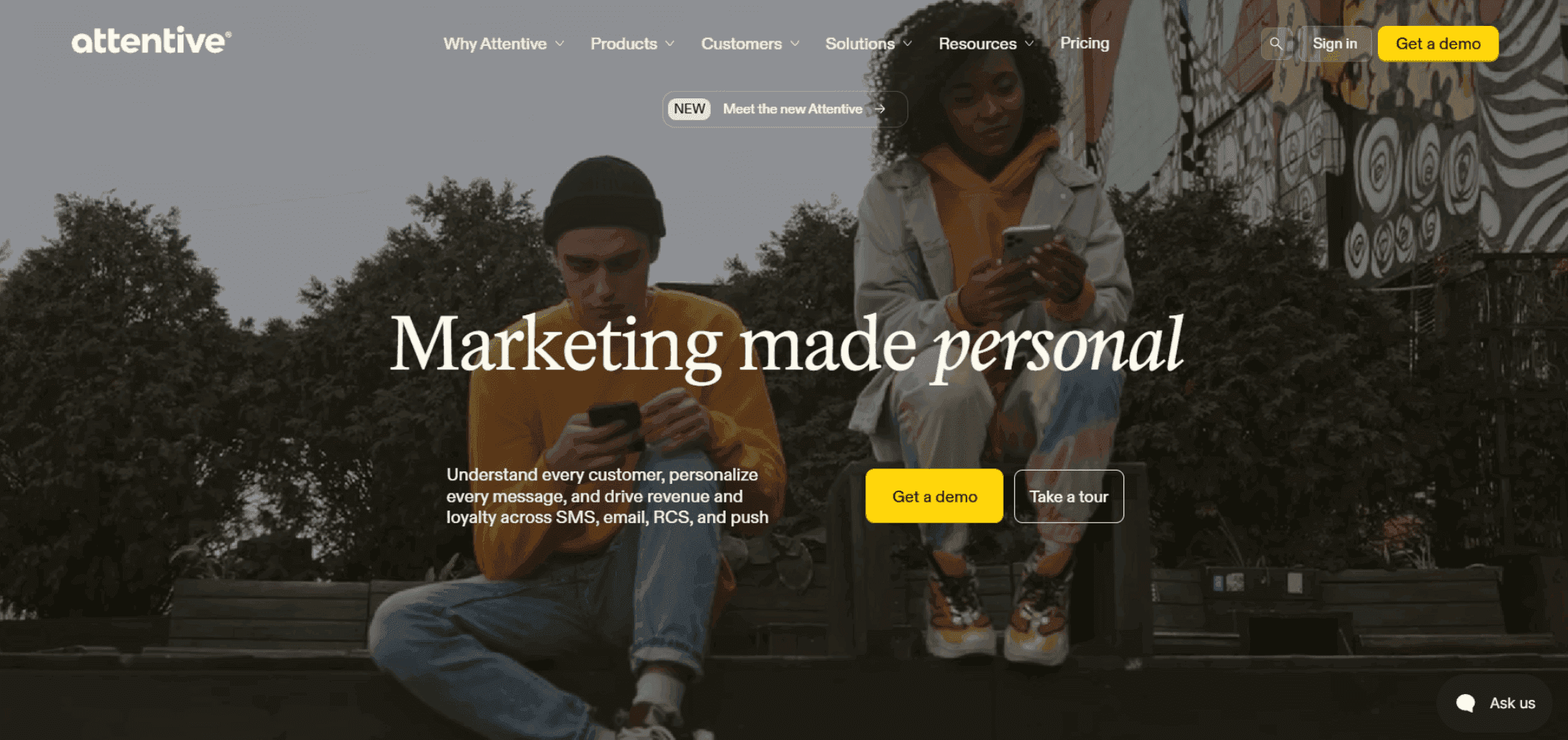
Attentive built its product around the two moments that matter most in SMS: the sign-up and the send. Its two-tap mobile sign-up technology collects phone numbers at a rate that most competing tools cannot match with standard pop-up forms. That subscriber acquisition advantage compounds over time, because a larger opted-in list means more revenue from every campaign send.
On the sending side, Attentive’s segmentation pulls live Shopify data: purchase history, browse behavior, product affinity, and predicted lifetime value. You can trigger a message to customers who viewed a product three or more times without purchasing, which is a behavioral signal most email-centric platforms struggle to act on quickly. Attentive’s compliance tooling is the strongest on this list, with automated double opt-in, quiet-hours enforcement, and detailed audit logs that hold up under TCPA scrutiny.
Attentive is quote-based and sized for brands generating meaningful revenue. It is not the right tool for a store doing under $1 million annually, and the vendor does not publicly disclose pricing. For brands above that threshold, the subscriber growth tools alone often justify the contract cost within the first 90 days.
Postscript: The Only Major SMS Platform Built Exclusively for Shopify
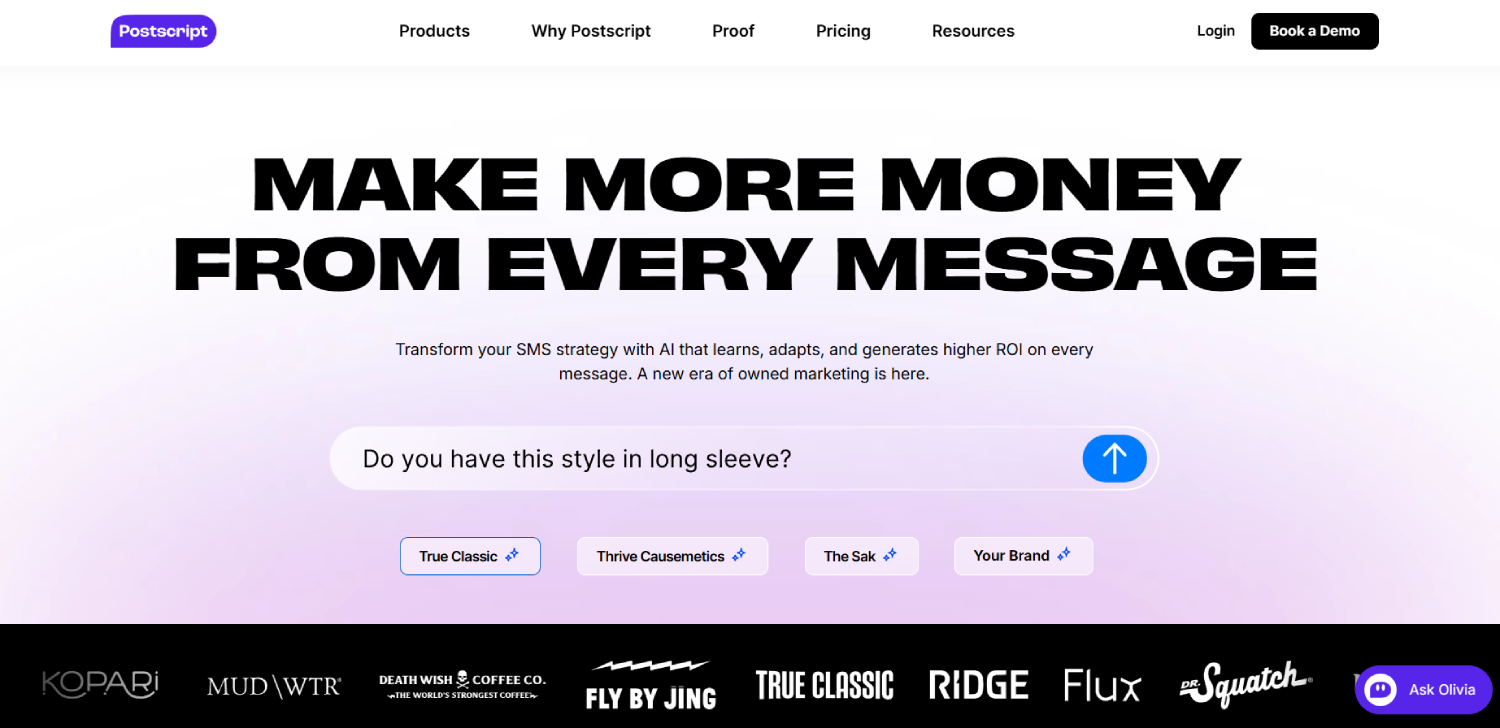
Postscript made a deliberate architectural choice to support only Shopify and Shopify Plus. That constraint is its core advantage. While every other platform on this list maintains integrations with WooCommerce, BigCommerce, or custom stacks, Postscript has spent its engineering cycles going deeper on Shopify’s data model. Real-time sync with Shopify’s order events, customer tags, and product catalog means automations fire faster and segment logic stays accurate.
Postscript’s flow builder handles the standard Shopify automation playbook: abandoned cart, post-purchase upsell, winback, and browse abandonment. The platform added a conversational SMS feature that lets subscribers reply to campaigns and receive automated responses, which lifts engagement metrics and keeps opt-out rates low. Pricing is usage-based with a plan structure; the vendor publishes rates on its public pricing page.
If your store will never leave Shopify and you want a platform that maps exactly to how Shopify structures its data, Postscript is the cleaner choice over Attentive. If you anticipate platform migration or multi-channel complexity, Attentive’s more abstracted data model holds up better.
Klaviyo SMS: The Right Choice If You Already Run Klaviyo Email
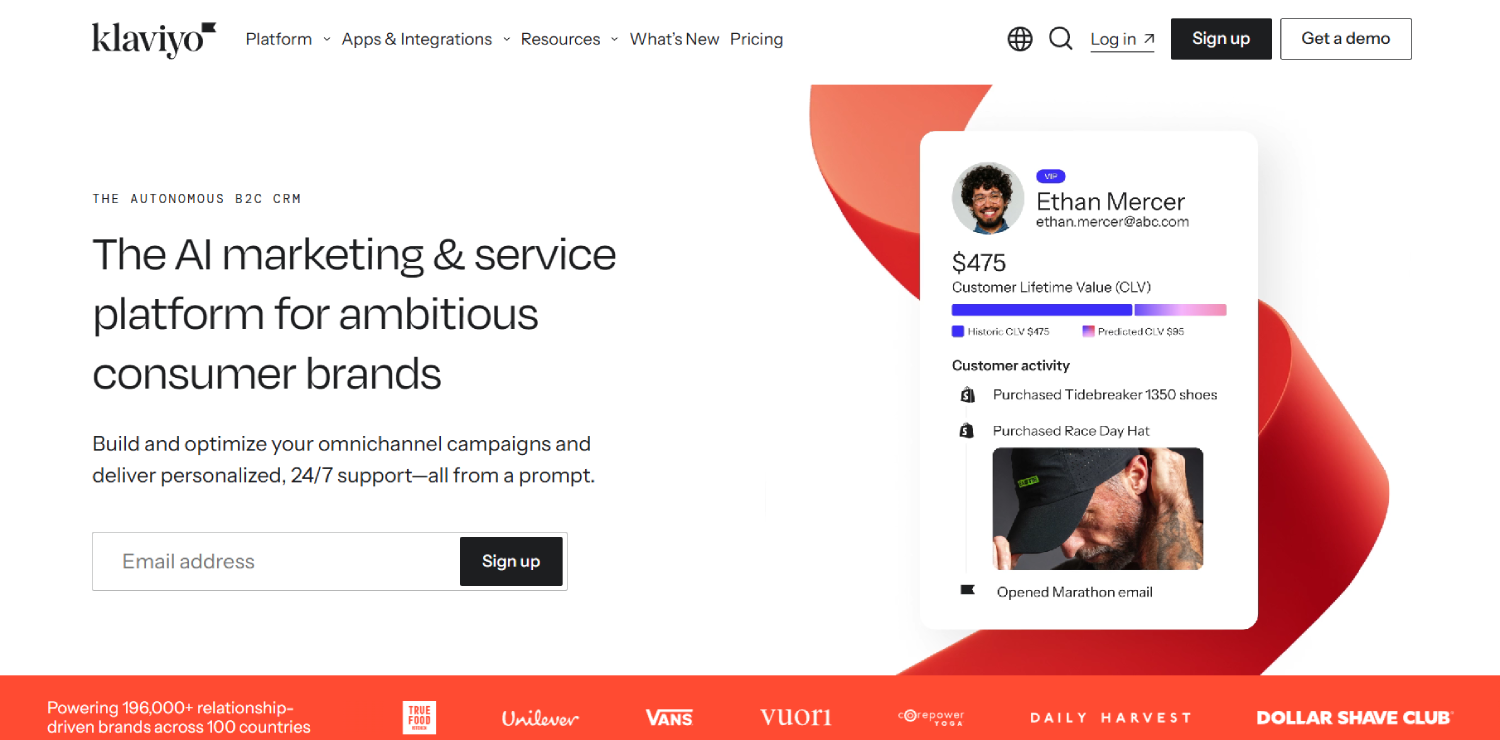
Klaviyo SMS is not the most powerful standalone SMS tool on this list. It is, without question, the best SMS tool if Klaviyo already runs your email program. The reason is identity resolution: Klaviyo’s unified customer profile merges email behavior, SMS behavior, purchase history, and site activity into a single record. That means a customer who clicks an email link and then abandons a cart 48 hours later can receive a coordinated SMS follow-up without any cross-system data plumbing.
Orchestrating SMS and email from the same flow builder also eliminates message overlap, where a customer receives both an email and a text within minutes of each other on the same trigger, which is one of the fastest ways to generate opt-outs. Klaviyo’s suppression logic handles this natively. SMS credits are purchased separately from email plan pricing, and Klaviyo publishes its SMS credit pricing publicly. The per-credit cost becomes competitive at mid-market volumes but is less aggressive than Postscript’s rates at very high send volumes.
SimpleTexting: The Straightforward Option for Smaller Stores and Non-Technical Teams
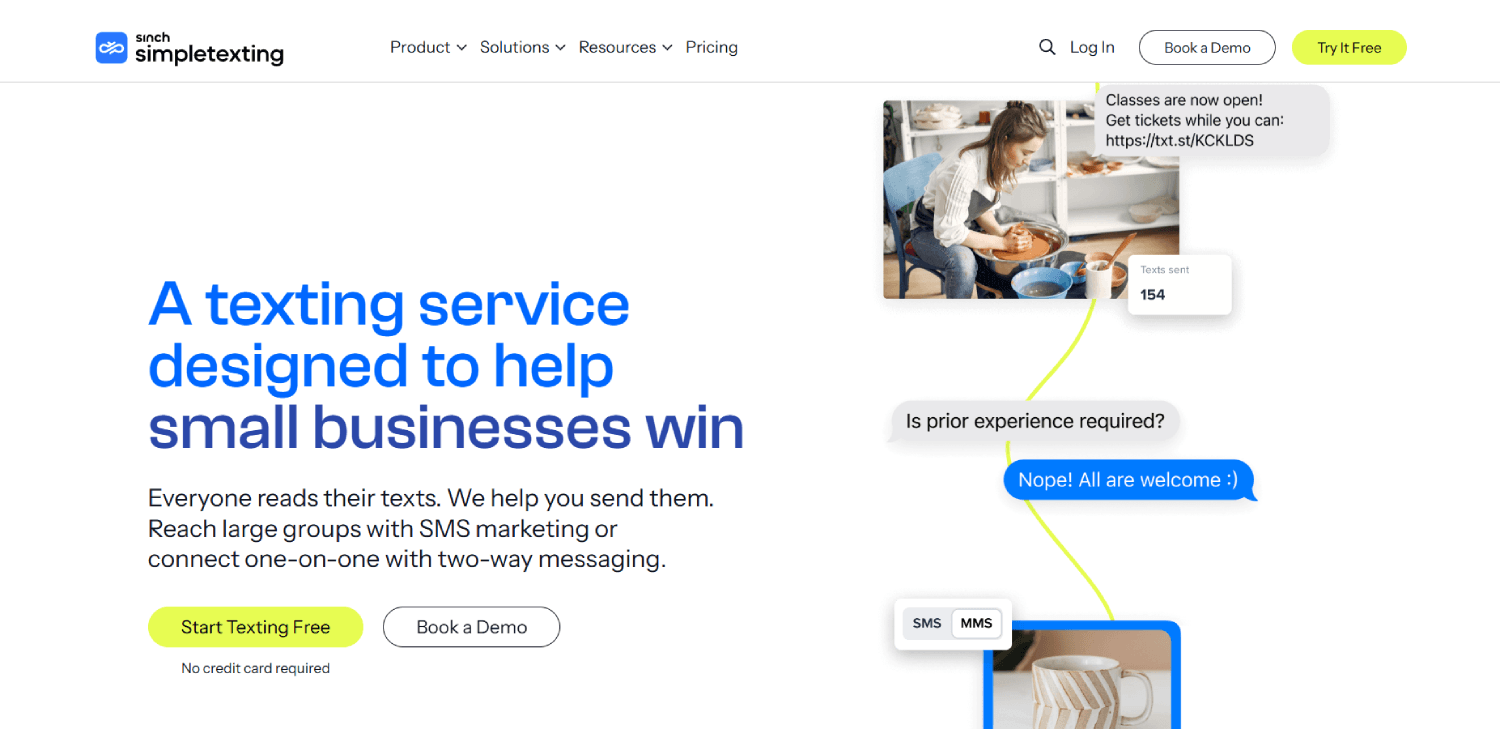
SimpleTexting positions itself as a general-purpose business texting platform, not an ecommerce-first tool. That positioning shows in its interface: the campaign builder is accessible to anyone without marketing automation experience, the pricing is transparent (plans start at $39 per month according to SimpleTexting’s public pricing page), and setup time is measured in hours rather than days.
The Shopify integration runs through Zapier rather than a native app, which introduces a meaningful trade-off. You can trigger SMS automations from Shopify order events, but the latency is higher and the data fidelity is lower than what Postscript or Attentive deliver natively. For a store sending fewer than 1,000 messages per month with simple use cases (order confirmations, flash sale announcements), that trade-off is acceptable. For a store relying on real-time behavioral triggers, it is not.
SimpleTexting’s compliance tools cover TCPA basics: keyword opt-out management and opt-in documentation. The audit trail depth is lighter than Attentive’s, which matters more as your subscriber list grows and regulatory exposure increases.
The Mid-Tier SMS Platforms: SMSBump, Omnisend, Drip, and Sendlane
SMSBump (Yotpo SMS)
SMSBump, now branded as Yotpo SMS after acquisition, is the natural choice for stores already inside the Yotpo suite using reviews, loyalty, or subscriptions. The platform’s value grows when those data sources feed SMS targeting. A loyalty point milestone trigger, for example, can fire a text when a customer reaches a reward threshold, which is a use case that requires no custom development if you run Yotpo Loyalty alongside it.
Standalone, without other Yotpo products, SMSBump competes directly with Postscript on Shopify and loses slightly on flow builder sophistication. Its pricing is usage-based, and the vendor publishes a calculator on its site. For brands already paying for Yotpo’s suite, the incremental cost of adding SMS through SMSBump is usually lower than licensing a separate SMS platform.
Omnisend
Omnisend covers email, SMS, and push notifications in a single platform built specifically for ecommerce. Its strength is breadth rather than depth: none of the three channels reaches the ceiling of a dedicated specialist tool, but the combination in one interface reduces the operational overhead of managing multiple vendor relationships. For a lean marketing team running a Shopify store without a dedicated channel specialist, that operational simplicity has real value.
Omnisend’s free tier exists but limits SMS sends significantly. Paid plans include email contacts; SMS credits are purchased separately. The automation builder is visual and handles the core ecommerce triggers well. Teams evaluating whether to unify all three channels under one tool (rather than stitching together Klaviyo plus Attentive plus a push notification tool) should run Omnisend through the AboutMartech SMS Stack-Fit Test before dismissing it as a second-tier option.
Drip
Drip built its reputation as an email automation platform for ecommerce and added SMS as a complementary channel. Its workflow engine is strong, and the Shopify integration is native and real-time. The SMS feature set covers the basics: campaign sends, automation triggers, and opt-out management. For a brand whose primary channel is email and whose SMS use case is limited to transactional messages and occasional promotional sends, Drip handles it cleanly inside a tool the team already knows.
Drip’s SMS does not offer the subscriber growth tools or advanced segmentation that Attentive and Postscript provide. Brands that want SMS to function as a primary revenue channel, rather than a supporting one, will find Drip’s SMS capabilities constraining within 6 to 12 months of serious use.
Sendlane
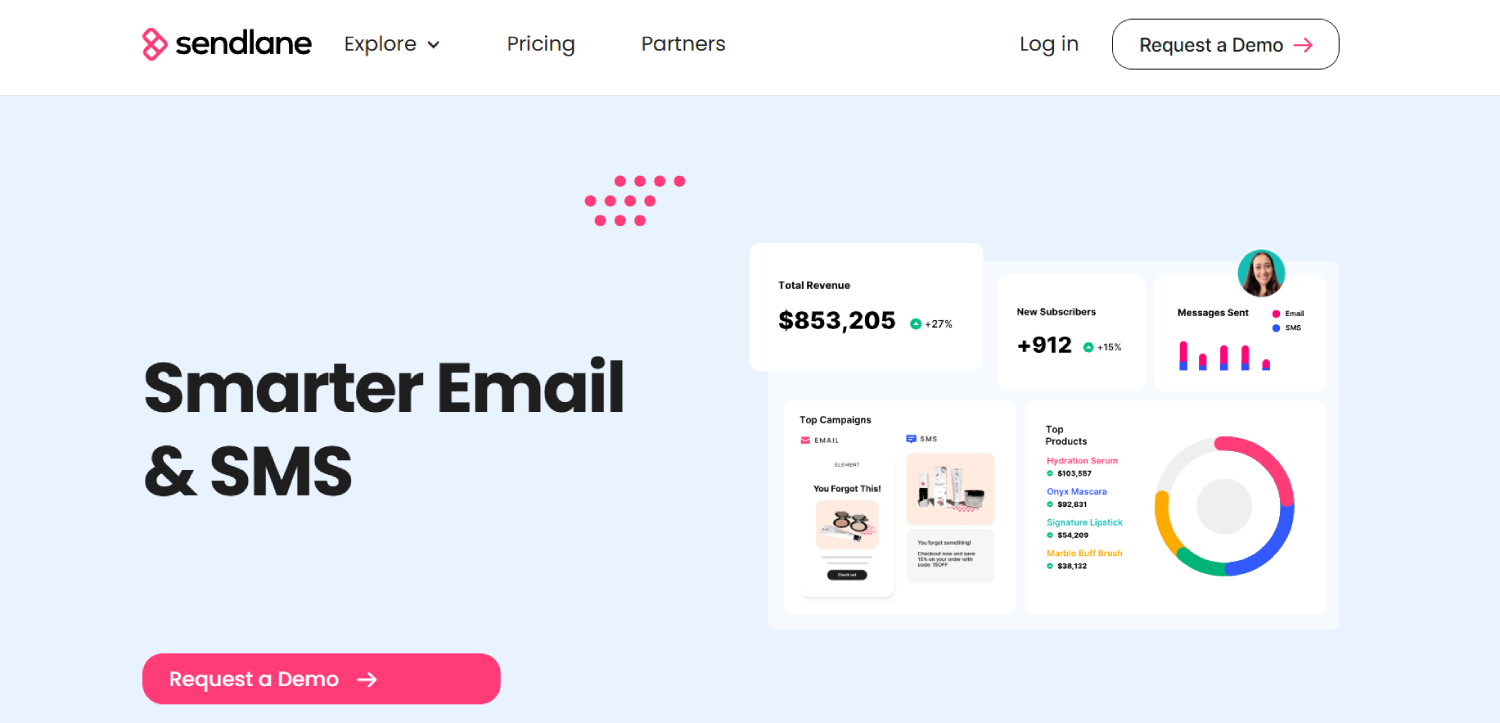
Sendlane targets high-volume ecommerce senders who need both email and SMS under a single data model with strong deliverability infrastructure. Its unified inbox and event-based automation work well for brands running complex multi-touch sequences across channels. The platform’s pricing moves to quote-based at the volumes where it performs best, which makes it difficult to model costs at the evaluation stage without a sales conversation.
Specialized and Niche SMS Tools for Shopify
Recart: Cart Recovery as the Primary Use Case
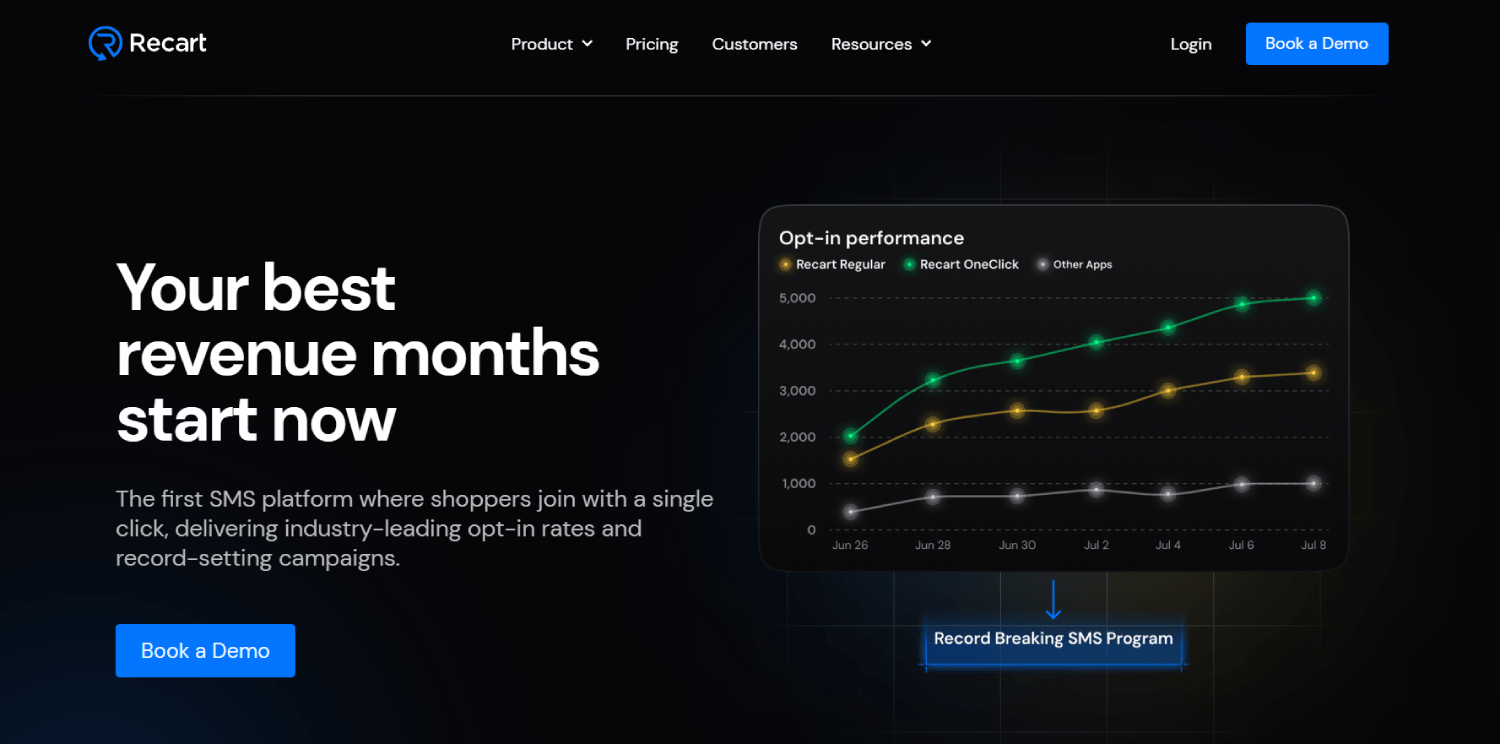
Recart started as a Messenger marketing tool and pivoted hard into SMS. Its product is built around a single high-value use case: recovering abandoned carts through conversational text sequences. If cart abandonment is your primary SMS goal and you want a platform optimized for that one workflow rather than a general-purpose tool, Recart is worth evaluating. Its performance-based pricing option aligns platform cost with revenue recovered, which removes the risk of paying for a tool that underperforms.
Emotive: Human-Assisted Conversational SMS at Scale
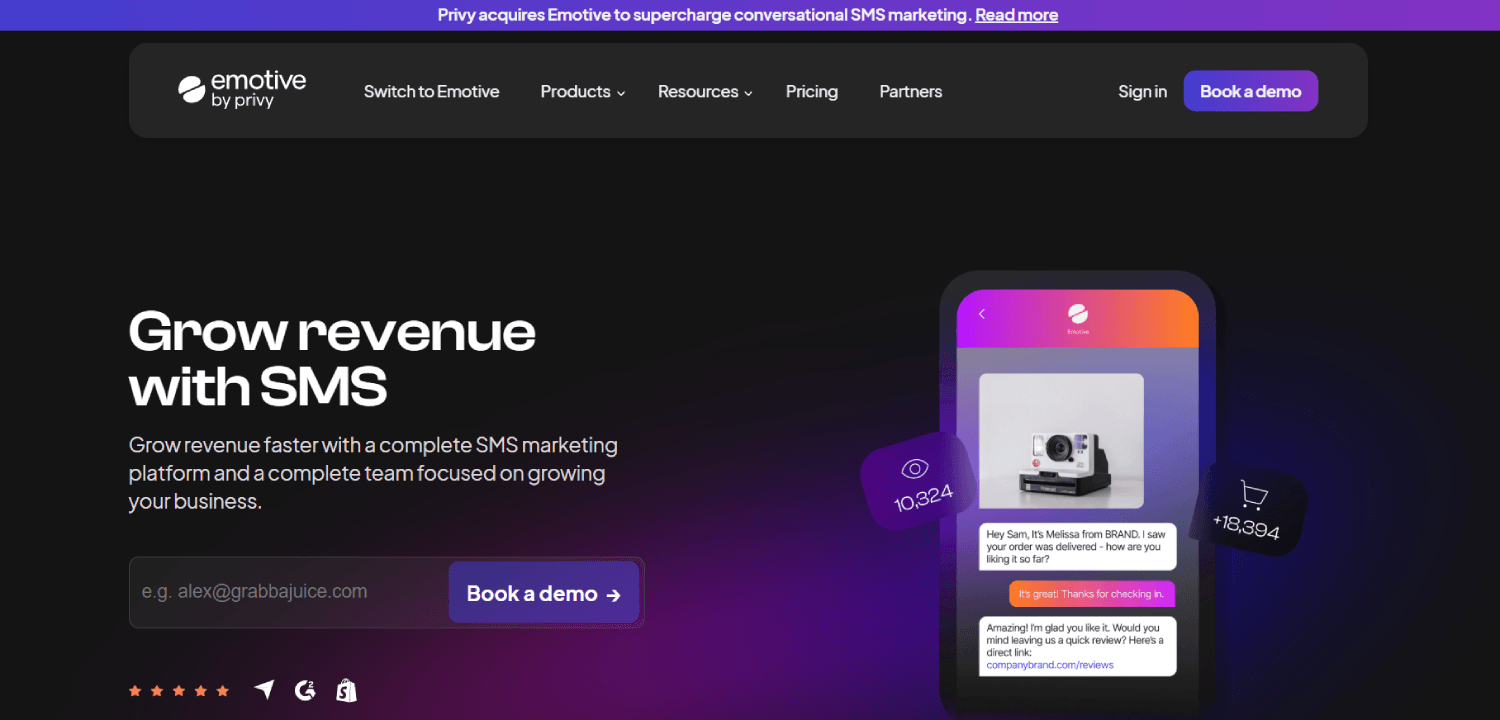
Emotive runs a hybrid model: automated SMS campaigns combined with a team of human agents who handle replies and conversations on the brand’s behalf. That model produces higher reply rates and more authentic two-way engagement than fully automated sequences, but it introduces a managed-service dependency that not every brand wants. Pricing is quote-based. For brands in categories where high-touch customer conversation drives conversion (fine jewelry, luxury apparel, high-consideration home goods), the Emotive model is worth the cost premium.
Cartloop: Concierge SMS for High-AOV Stores
Cartloop (rebranded to Siena AI) also operates in the conversational SMS space, with a focus on high-average-order-value stores where a single recovered cart justifies the per-conversation cost. Its agents handle real-time product questions, discount negotiations, and objection handling via text. This approach treats SMS as a sales channel rather than a broadcast channel, which is a legitimate framing for certain product categories.
TxtCart: The Entry Point for Bootstrapped Stores
TxtCart offers a free plan and paid plans starting at $29 per month according to its public pricing page, making it the lowest-friction entry point on this list. The platform focuses on abandoned cart recovery through conversational SMS, with a straightforward Shopify integration and a simple campaign builder. At this price point, it does not compete with Attentive or Postscript on segmentation depth or compliance automation. For a store generating fewer than $20,000 per month in revenue that wants to test SMS before committing to a higher-cost platform, TxtCart is a reasonable starting point.
Winback: Built Specifically for Lapsed-Customer Reactivation
Winback does one thing: it identifies customers who have not purchased in a defined window and sends them targeted SMS campaigns to reactivate them. The platform runs on a performance-based model, charging a percentage of revenue attributed to its messages. That pricing structure makes it easy to evaluate ROI but creates a dependency on the platform’s attribution methodology, which brands should scrutinize before relying on it as the primary measurement of success.
Privy: The All-in-One for Early-Stage Shopify Stores
Privy bundles pop-ups, email, and SMS into one tool designed for stores that have not yet reached the revenue threshold to justify multiple specialized platforms. Its SMS capabilities are basic: campaign sends, a small set of automation triggers, and simple list management. Stores that outgrow Privy typically migrate to Klaviyo for email and either Postscript or Attentive for SMS. Privy works as a starting point and should not be treated as a long-term infrastructure choice for brands with serious growth ambitions.
SlickText: Strong Compliance Tools for Retail Brands with Loyalty Programs
SlickText is a US-focused SMS marketing platform with a strong reputation for compliance documentation and a keyword-based subscriber growth model that works well for brick-and-mortar retailers extending into ecommerce. Its loyalty program features, including text-to-join keywords and points-based rewards, distinguish it from pure ecommerce SMS tools. Shopify integration runs through native and third-party connectors. Plans start at $29 per month according to SlickText’s public pricing page, with usage caps that scale with plan tier.
For Shopify brands with a significant offline retail presence where customers are accustomed to keyword opt-ins posted in-store, SlickText’s model fits the acquisition behavior. For pure-play ecommerce brands with no offline touchpoint, the tool’s keyword-centric approach is less relevant than the pop-up and checkout opt-in flows that Attentive and Postscript specialize in.
How Do You Choose Between These SMS Platforms for Your Shopify Store?
Consider a Shopify brand selling skincare at roughly 2,000 orders per month, running Klaviyo for email, and evaluating SMS for the first time. The instinct is often to add Postscript or Attentive because they are the category names. But the lower-friction choice is Klaviyo SMS: the list is already there, the flows share logic with existing email automations, and the team avoids learning a new interface. The per-credit cost is higher than Postscript at that volume, but the operational savings of managing one platform instead of two frequently outweigh the difference on a fully-loaded basis.
Now consider the same brand six months later, with 15,000 SMS subscribers and a dedicated SMS specialist running aggressive acquisition campaigns. At that point, Postscript’s Shopify-native depth and more competitive usage pricing start to justify a platform migration. The right SMS platform at launch is not necessarily the right platform at scale.
For brands that are already managing customer data in a CDP, connecting that customer data layer to your SMS platform changes the segmentation equation entirely. The best customer data platforms cover the infrastructure side of this, but ecommerce CDPs (like Segment or Bloomreach) follow the same integration logic when feeding behavioral signals into SMS triggers.
What Does SMS Marketing for Shopify Actually Cost?
Pricing across this list falls into four structural models. Per-message pricing (typically $0.01 to $0.02 per SMS in the US, though rates vary by platform and volume) is the most transparent and the most variable at scale. Monthly plan pricing with credit bundles, used by Omnisend, SimpleTexting, and SlickText, is more predictable but requires estimating send volume in advance. Quote-based enterprise pricing, used by Attentive, Sendlane, and Emotive, is opaque at the evaluation stage but often includes dedicated support and SLA guarantees that justify the model. Performance-based pricing, used by Winback and offered as an option by Recart, aligns platform cost with revenue attribution but demands careful scrutiny of how attribution is measured.
A straightforward illustration: a brand sending 50,000 messages per month at a $0.015 per-message rate pays $750 per month in send costs before platform fees. At 200,000 messages per month, that same rate produces a $3,000 monthly variable cost. At that volume, a negotiated enterprise rate or a plan with bundled credits almost always reduces total cost. Running this math before signing a contract is not optional.
TCPA compliance failures are an order of magnitude more expensive than any platform fee. Reviewing how US text marketing regulations work before finalizing any platform decision is worth the time investment. The Federal Communications Commission’s guidance on stopping unwanted texts outlines the consumer rights that TCPA enforces against senders.
Which SMS Platforms Integrate With Other Martech Tools Beyond Shopify?
Attentive, Klaviyo, and Omnisend all maintain integration libraries that connect to loyalty platforms (Yotpo, LoyaltyLion, Smile.io), review platforms (Okendo, Stamped), and subscription billing tools (Recharge, Bold Subscriptions). Postscript’s Shopify-exclusive architecture means its third-party integrations are narrower by design, focused on tools that exist within the Shopify app ecosystem.
SimpleTexting and SlickText connect to the broader martech stack through Zapier, Make (formerly Integromat), and API access. That approach is functional but introduces workflow complexity that native integrations avoid. For teams running a tightly connected ecommerce stack, native integration depth matters more than it appears during a product demo.
Brands running data-intensive operations sometimes route SMS event data back through a reverse ETL layer to activate warehouse-stored customer segments in their SMS platform. This is more common in mid-market and enterprise ecommerce than the tooling vendors typically highlight. The mechanics of reverse ETL tools that activate warehouse data apply directly to SMS list segmentation when your most reliable customer data lives in Snowflake or BigQuery rather than Shopify’s customer table.
Frequently Asked Questions About SMS Marketing Software for Shopify
What is the best SMS app for Shopify if you’re just getting started?
For most stores launching SMS for the first time, Klaviyo SMS is the lowest-friction starting point if Klaviyo already runs the email program. If you are not on Klaviyo, Postscript is the strongest dedicated SMS option for Shopify-only stores. TxtCart and Privy work for very early-stage stores under $20,000 per month in revenue where the priority is testing the channel before committing to a higher-cost platform.
Is SMS marketing legal for Shopify stores selling in the US?
SMS marketing is legal in the US when conducted in compliance with the Telephone Consumer Protection Act. That means obtaining explicit written consent before sending marketing texts, honoring opt-out requests immediately when a subscriber texts STOP, and maintaining documented records of consent. Every platform on this list handles the technical opt-out mechanics. Where they differ is in the depth of consent documentation and audit trail they provide, which matters if your compliance practices are ever challenged.
How does Postscript differ from Attentive for Shopify?
Postscript is built exclusively for Shopify and Shopify Plus, which gives it tighter real-time data sync with Shopify’s order and customer events. Attentive supports multiple ecommerce platforms and brings stronger subscriber acquisition tools, particularly its two-tap mobile sign-up technology. Attentive also offers a more mature enterprise compliance infrastructure and a larger customer success organization. Postscript wins on Shopify-native precision; Attentive wins on subscriber growth and enterprise support.
Can SMS marketing software connect to a customer data platform?
Most enterprise-grade SMS platforms expose webhook and API connections that allow a CDP to push segmented audiences into the SMS tool for targeted sends. Klaviyo functions as a lightweight CDP for ecommerce data, making the integration question largely moot for Klaviyo SMS users. For teams running a dedicated CDP like Segment, Bloomreach, or Treasure Data, the integration pattern involves syncing audience segments to the SMS platform on a scheduled or real-time basis. The strongest customer data platforms all support this connection pattern through native integrations or reverse ETL workflows.
What is the difference between a dedicated SMS platform and an all-in-one tool like Omnisend?
A dedicated SMS platform like Attentive or Postscript concentrates all product investment on SMS-specific capabilities: subscriber acquisition, segmentation depth, deliverability infrastructure, and compliance automation. An all-in-one tool like Omnisend or Privy distributes that investment across email, SMS, and push notifications. For a lean team that wants one vendor relationship, an all-in-one is operationally simpler. For a team treating SMS as a primary revenue channel that needs maximum capability from the tool, a dedicated platform produces better results.