TLDR
- Pick TrafficGuard for the lowest published entry price: Shield is $49 a month as a promo, for Google Search ads up to $30K in monthly spend.
- Pick ClickCease or ClickGuard if you run Google, Meta and Microsoft Ads and want flat monthly plans with agency tools.
- Pick Fraud Blocker if fake leads are a big problem, since its plans add email verification on lead forms.
- Pick Spider AF for placement blocking on Performance Max, YouTube and app placements.
- Pick Lunio or Polygraph for large budgets: Lunio quotes from $500K in annual ad spend, and Polygraph charges per click with a $450 monthly minimum.
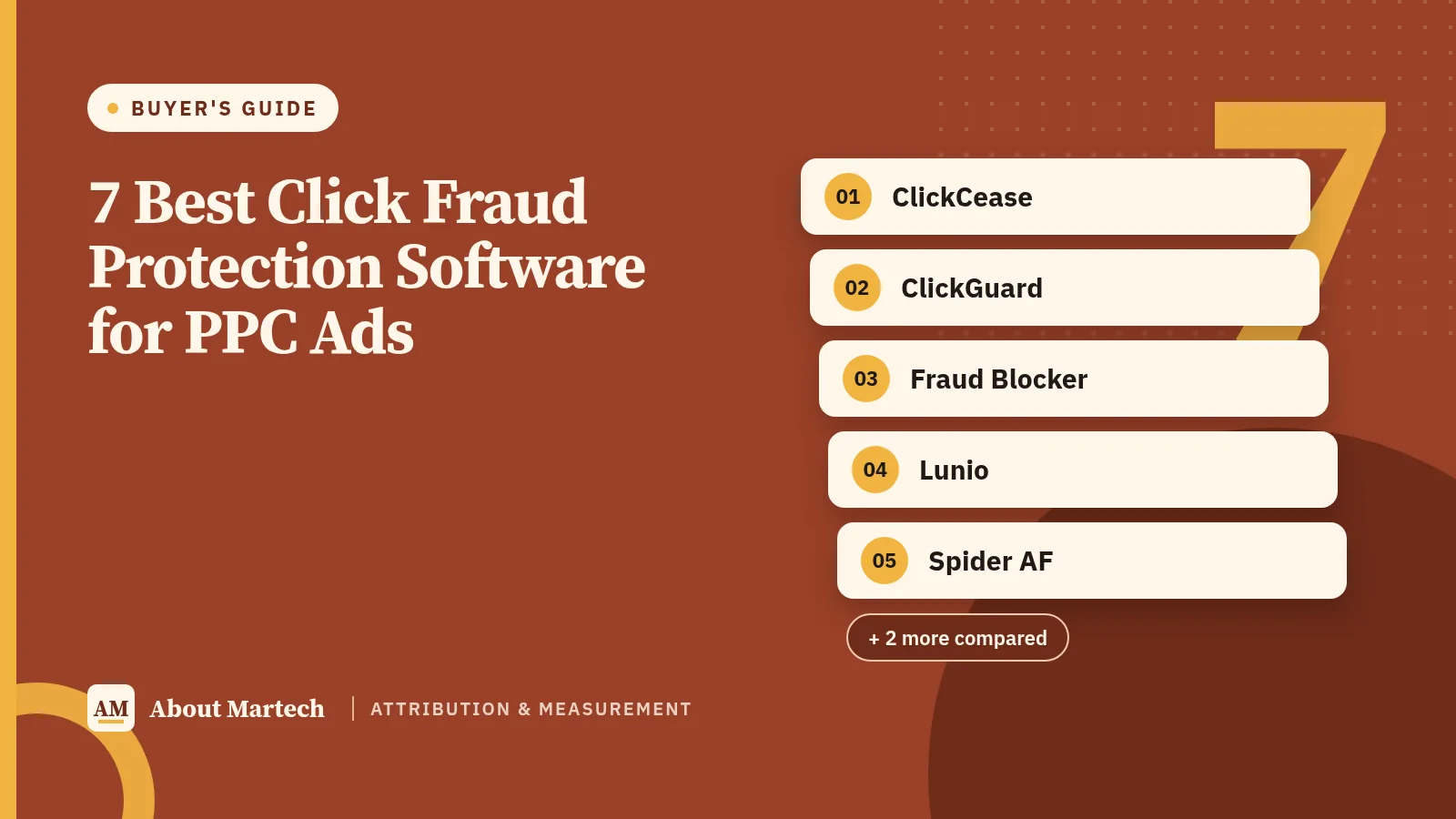
The best click fraud protection software in 2026 is ClickCease, ClickGuard, Fraud Blocker, Lunio, Spider AF, TrafficGuard and Polygraph. Each one watches the clicks on your paid ads, spots bots, click farms and repeat clickers, and stops them from seeing your ads again. They differ on which ad platforms they cover, plan limits and price.
This guide is for PPC managers, agencies and performance teams that pay per click on Google, Microsoft or Meta. Every price and plan limit below comes from a vendor pricing page or Google help doc read on October 30, 2026, linked next to the claim. Prices are in USD. If you run app install campaigns, our ad fraud prevention platforms guide covers MMP-side fraud tools.
In this guide
What is click fraud protection software?
Click fraud protection software finds paid ad clicks that come from bots, click farms, competitors or other sources with no buying intent. It tracks each visit with a script on your site, scores it, and then excludes the bad sources from your campaigns. The goal is less wasted spend and cleaner conversion data.
Google already filters some of this. Its help center says you are not charged for invalid clicks that its automated systems catch, and that clicks found later can come back as a credit. Third-party tools add a second layer for the traffic that gets through.
Most tools act in three ways:
- IP and device exclusions. The tool pushes bad IP addresses into your ad accounts so those visitors stop seeing your ads.
- Audience exclusions. On platforms like Meta, the tool builds an audience of flagged visitors and excludes it from targeting.
- Placement blocking. For Display, YouTube and Performance Max, the tool flags low-quality sites and apps so you can exclude them.
Click fraud protection software compared
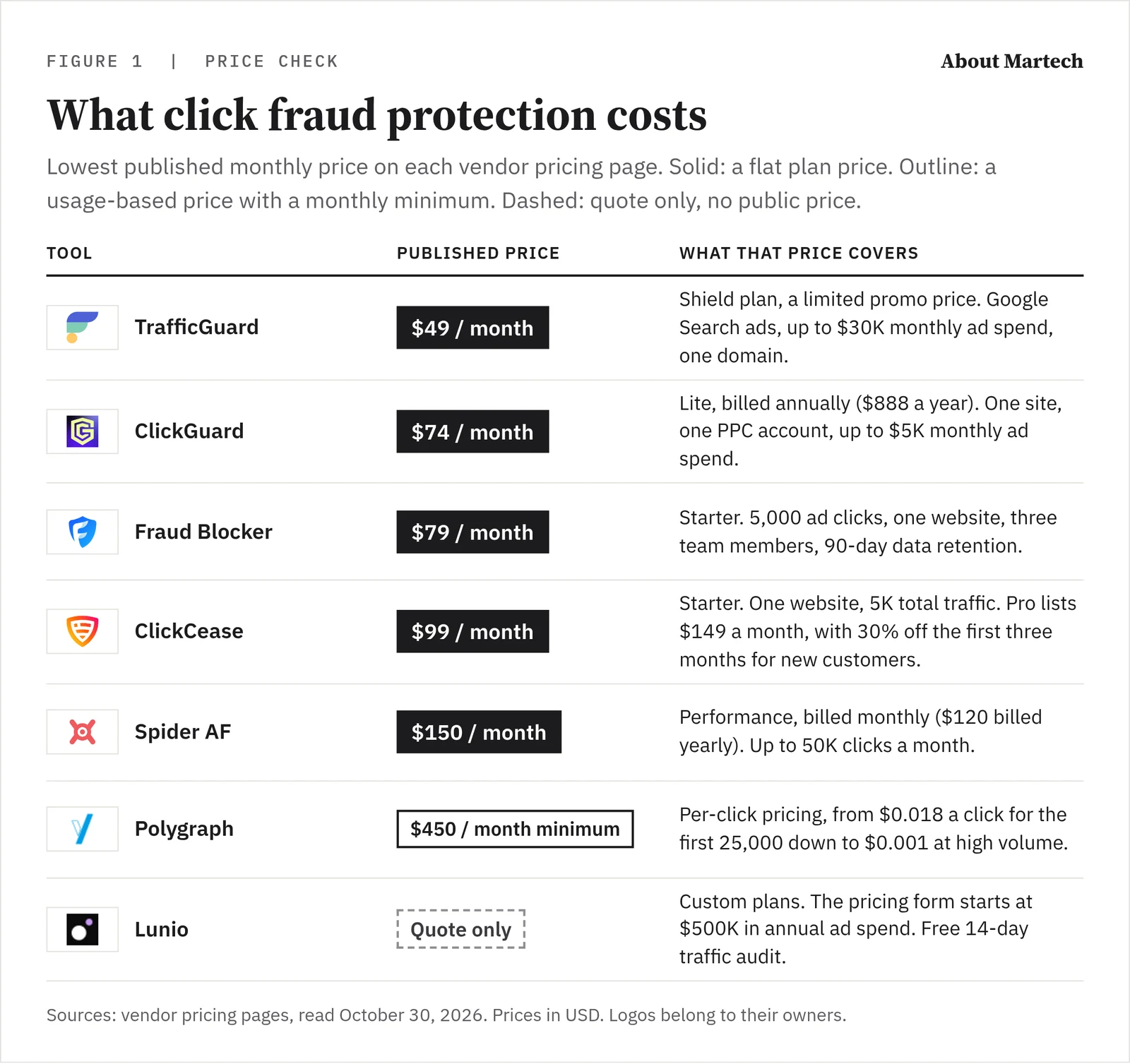
The table lists each tool’s ad platform coverage, the limit on its entry plan and its lowest published price. Five tools publish flat monthly plans, Polygraph prices per click, and Lunio quotes. Entry plans are capped by ad spend, ad clicks or traffic, so check the limit against your account. Swipe sideways on a phone for all columns.
| Tool | Ad platforms named on pricing page | Entry plan limit | Lowest published price |
|---|---|---|---|
| TrafficGuard | Google Search on Shield; Search, Meta, affiliate and mobile on Scale | Up to $30K monthly ad spend, one domain | $49 a month (promo); 30 day free trial |
| ClickGuard | Google, Meta and Microsoft Ads | One website, one PPC account, up to $5K monthly ad spend | $74 a month billed annually |
| Fraud Blocker | Google Ads and other PPC campaigns | 5,000 ad clicks, one website | $79 a month; 7 day free trial |
| ClickCease | Google, Meta and Microsoft Ads | One website, 5K total traffic | Starter $99 a month; Pro $149 a month |
| Spider AF | Google, Yahoo, Meta, Microsoft and more | Up to 50K clicks a month | $150 a month, or $120 billed yearly |
| Polygraph | Every ad network, per Polygraph | No click cap; pay per ad click | $450 a month minimum |
| Lunio | Google, Bing, Meta, LinkedIn, TikTok, Reddit and more | Pricing form starts at $500K annual ad spend | Quote only; free 14 day traffic audit |
Which click fraud protection software should you pick?
Pick the tool whose entry plan covers your monthly ad spend or click volume and every ad platform you buy from. Small Google Ads accounts can start on a low flat plan. Multi-channel teams and agencies need Meta and Microsoft support plus multi-account tools. Each profile below has a homepage screenshot and a best for and not for line.
1. ClickCease
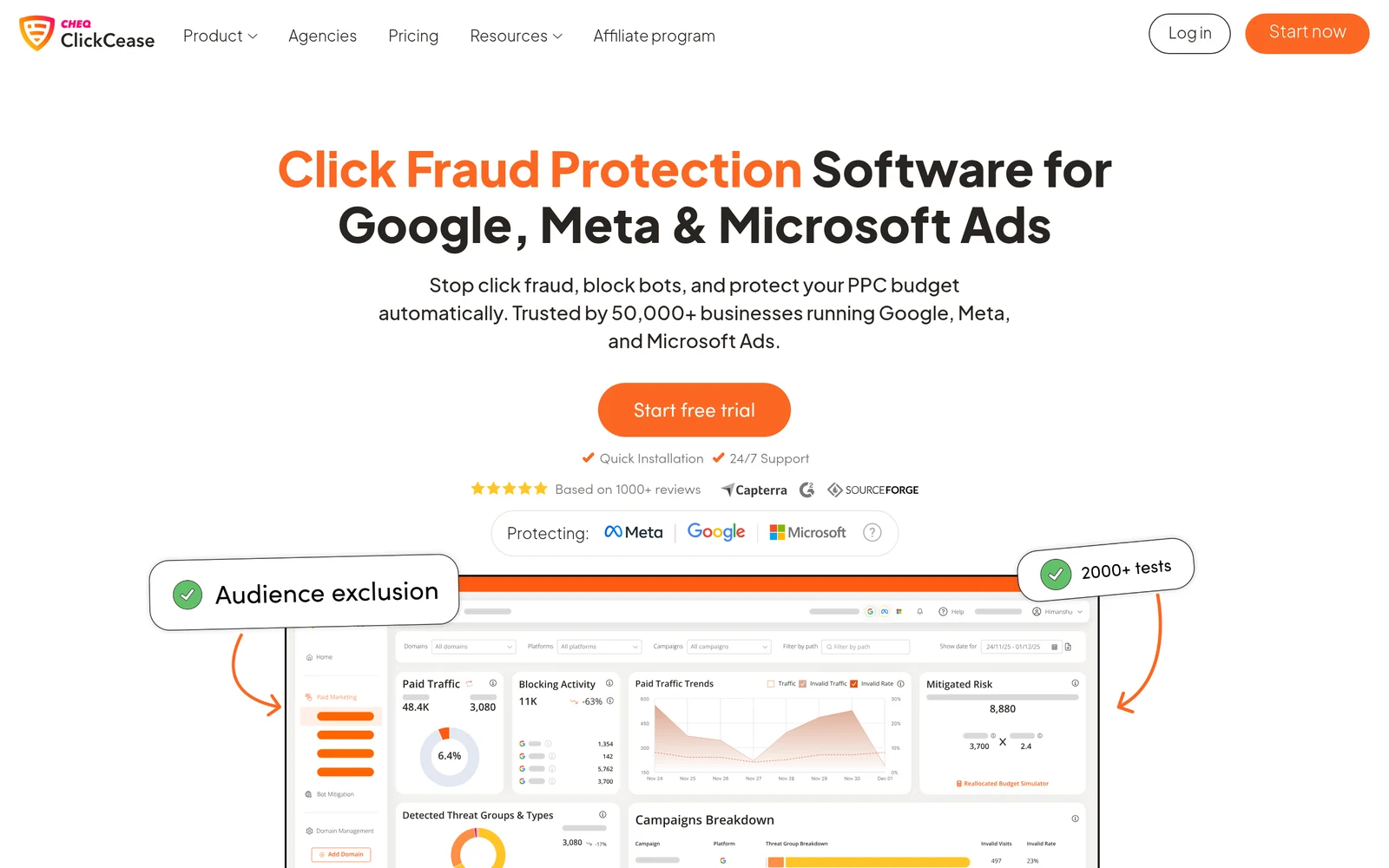
ClickCease covers Google, Meta and Microsoft Ads. On Google it blocks fraudulent IPs automatically, and on Facebook Ads it detects and excludes fraudulent audiences, according to the pricing page. All plans include unlimited Google Ads accounts, 24/7 support and a cancel any time policy.
Starter is listed at $99 a month for one website and 5K in total traffic. Pro lists $149 a month for multiple sites and adds agency permissions and white-label reporting. New customers get 30% off the first three billing cycles, and the page points brands with 1M+ annual web visits to CHEQ for enterprise protection.
Best for: small and mid-size advertisers and agencies on Google, Meta and Microsoft. Not for: teams that buy on LinkedIn, TikTok or Reddit and want those covered too.
2. ClickGuard
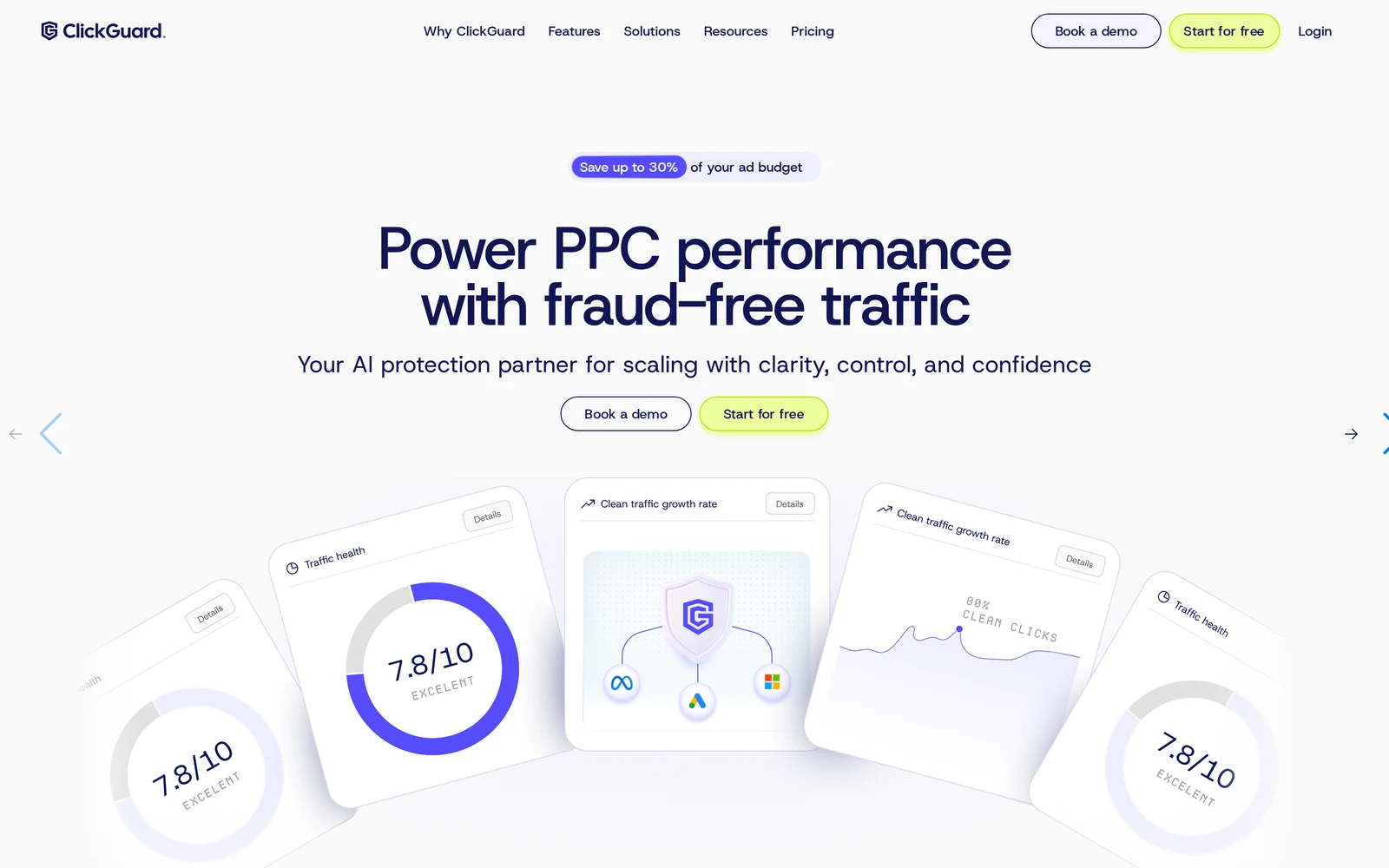
ClickGuard offers click fraud protection for Google, Meta and Microsoft Ads, with plans priced by monthly ad spend. Every plan on the pricing page includes unlimited clicks, click and behavior tracking, and management tools for agencies. There are no long-term contracts.
Lite is $74 a month billed annually ($888 a year) for one website, one PPC account and up to $5K in monthly ad spend. Standard is $119 a month for up to 50K spend, and Pro is $159 a month for up to 100K spend with conversion tracking. Custom plans add unlimited spend and a dedicated customer success manager.
Best for: agencies and growing accounts that want plans that scale with ad spend. Not for: advertisers whose spend changes a lot month to month and who want a click-based limit instead.
3. Fraud Blocker
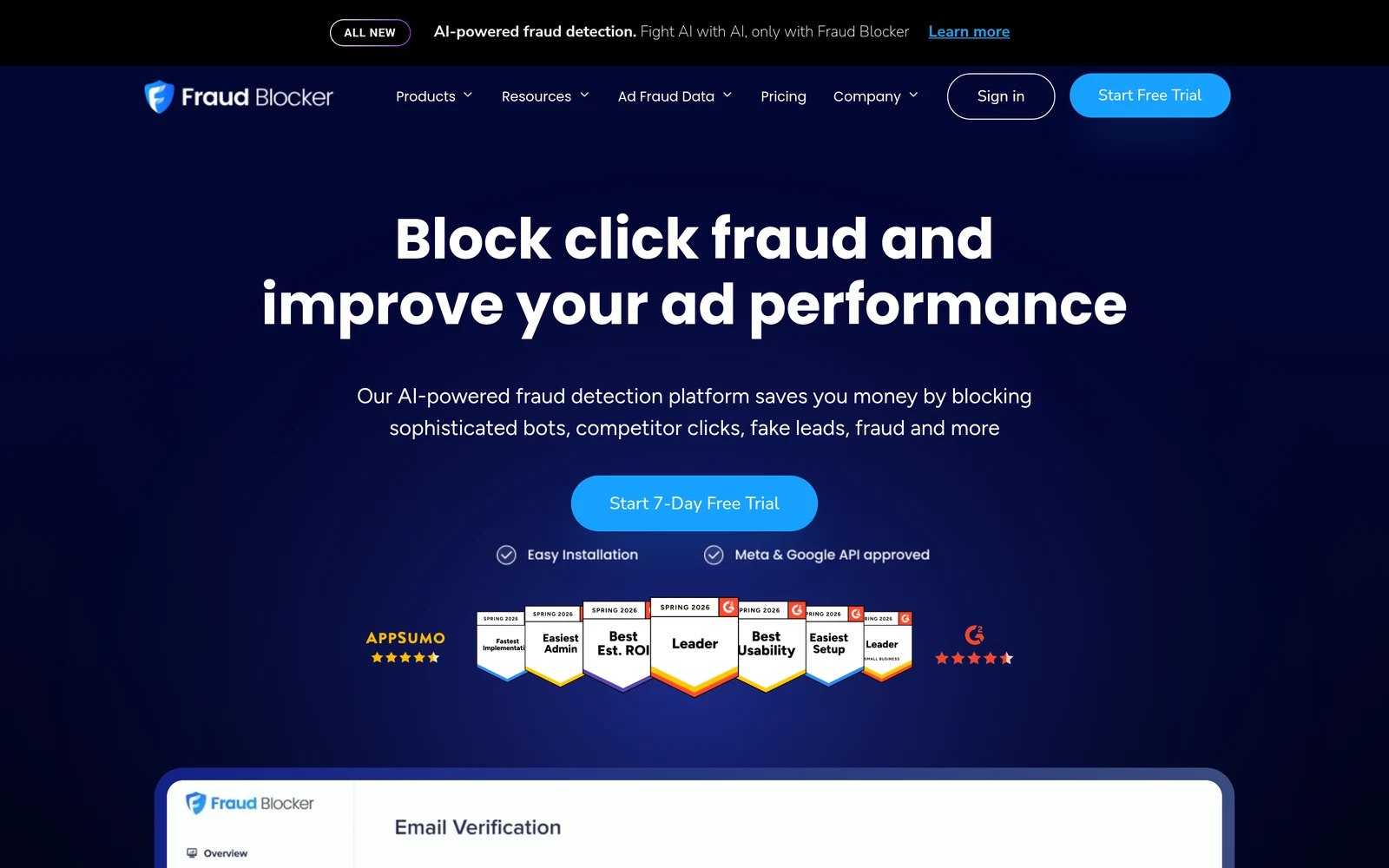
Fraud Blocker blocks bots, competitor clicks, click farms and fake leads on PPC campaigns. It works on WordPress, Shopify, Wix and other site builders. Beyond click blocking, it verifies emails on lead forms and shows visitor data such as IP, device, location and VPN use.
The pricing page lists Starter at $79 a month for 5,000 ad clicks, one website and three team members. Pro is $99 for 10,000 ad clicks and five websites, and Enterprise starts at $489 a month for 250,000 ad clicks with 12 months of data. Starter and Pro come with a 7 day free trial, and annual billing saves 20%.
Best for: lead generation advertisers who want fake lead checks with click blocking. Not for: high-traffic accounts that will outgrow click-based tiers fast. To score the real leads you keep, see our lead scoring software guide.
4. Lunio
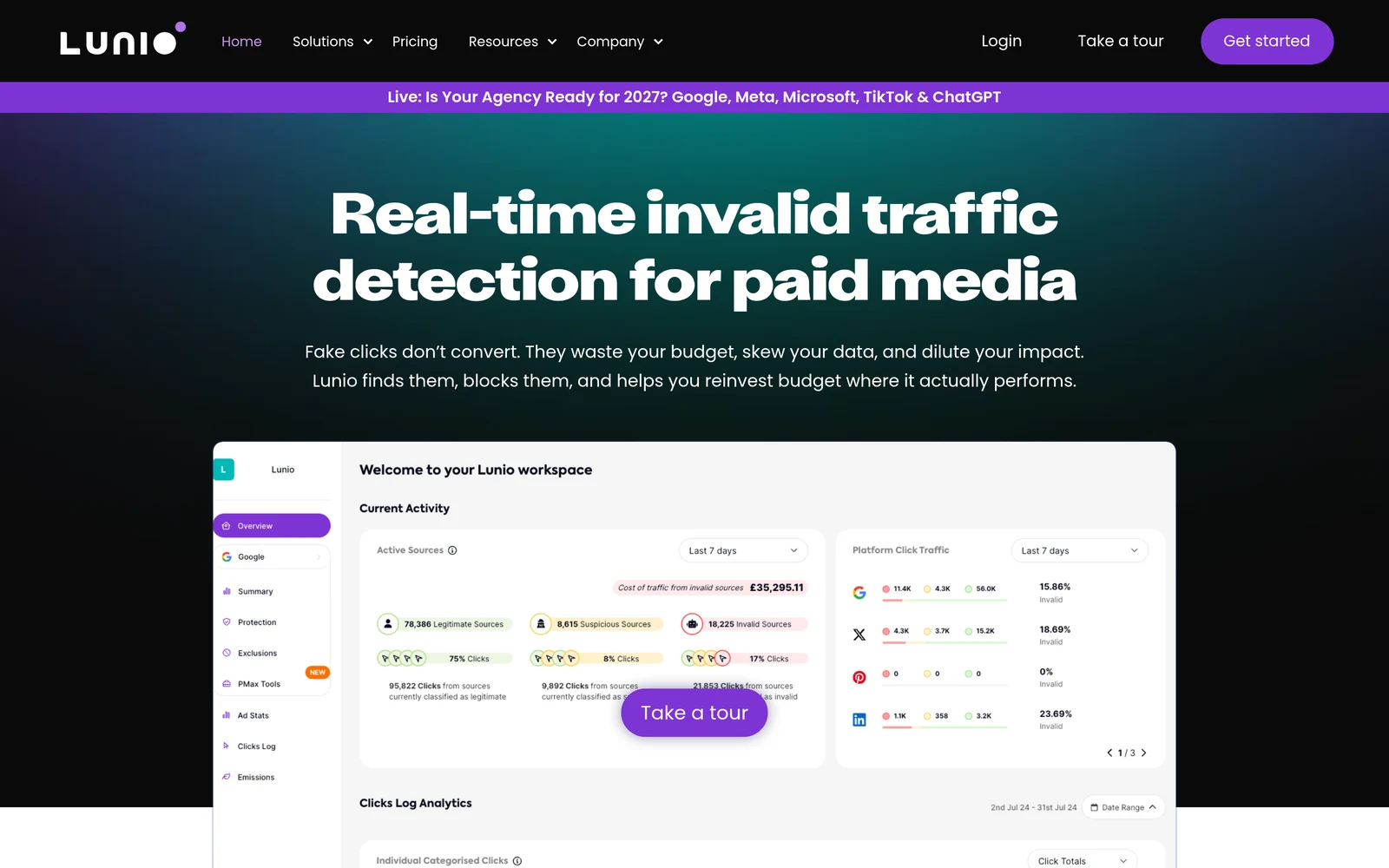
Lunio is built for larger paid media teams. The pricing page lists integrations with Google, Bing, Twitter, LinkedIn, Meta, Reddit, TikTok, Yandex, Naver and more. Detect an invalid IP in one campaign or platform, and Lunio can exclude it across the others.
Lunio stores click stream data from every ad channel as first-party data for two years. It supports multiple workspaces with separate admin and user controls. Pricing is custom, the sales form starts at $500K in annual ad spend, and you can request a 14 day free traffic audit.
Best for: enterprise and multi-channel teams spending $500K or more a year on ads. Not for: small advertisers who want a published monthly price.
5. Spider AF
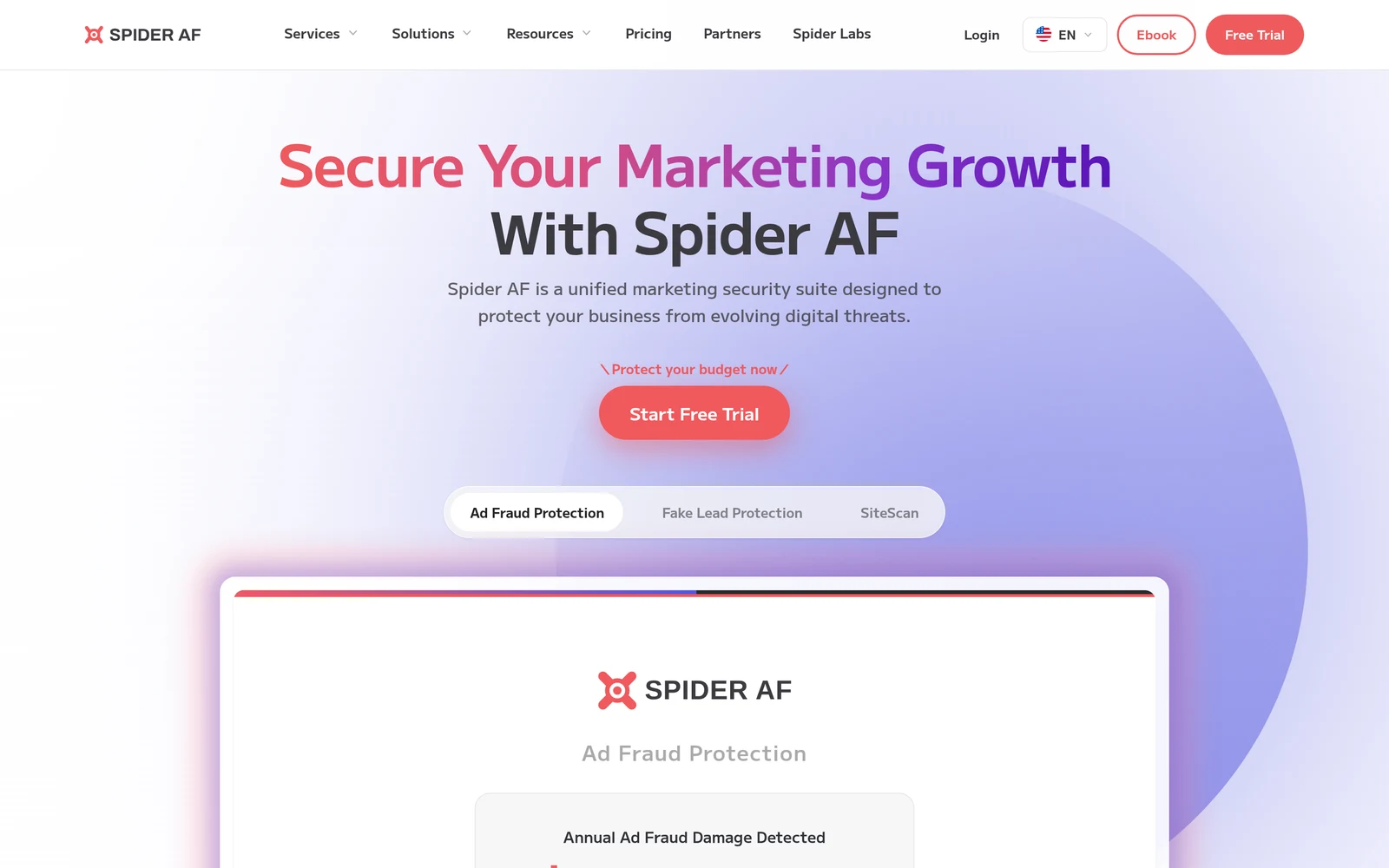
Spider AF is a marketing security suite with ad fraud protection, fake lead protection, affiliate fraud protection and a SiteScan tool. Its pricing page lists core support for Google, Yahoo, Meta and Microsoft, plus unlimited domains and no spend-based fees on every plan.
Performance costs $150 a month, or $120 a month billed yearly, for up to 50K clicks a month. Elite is $990 a month, or $790 billed yearly, for up to 150K clicks. The feature list includes placement blocking for Performance Max, mobile apps and YouTube, plus a GA4 integration.
Best for: advertisers who run Performance Max, Display or YouTube and need placement controls. Not for: teams that need long data history, since every listed plan keeps two months of data.
6. TrafficGuard
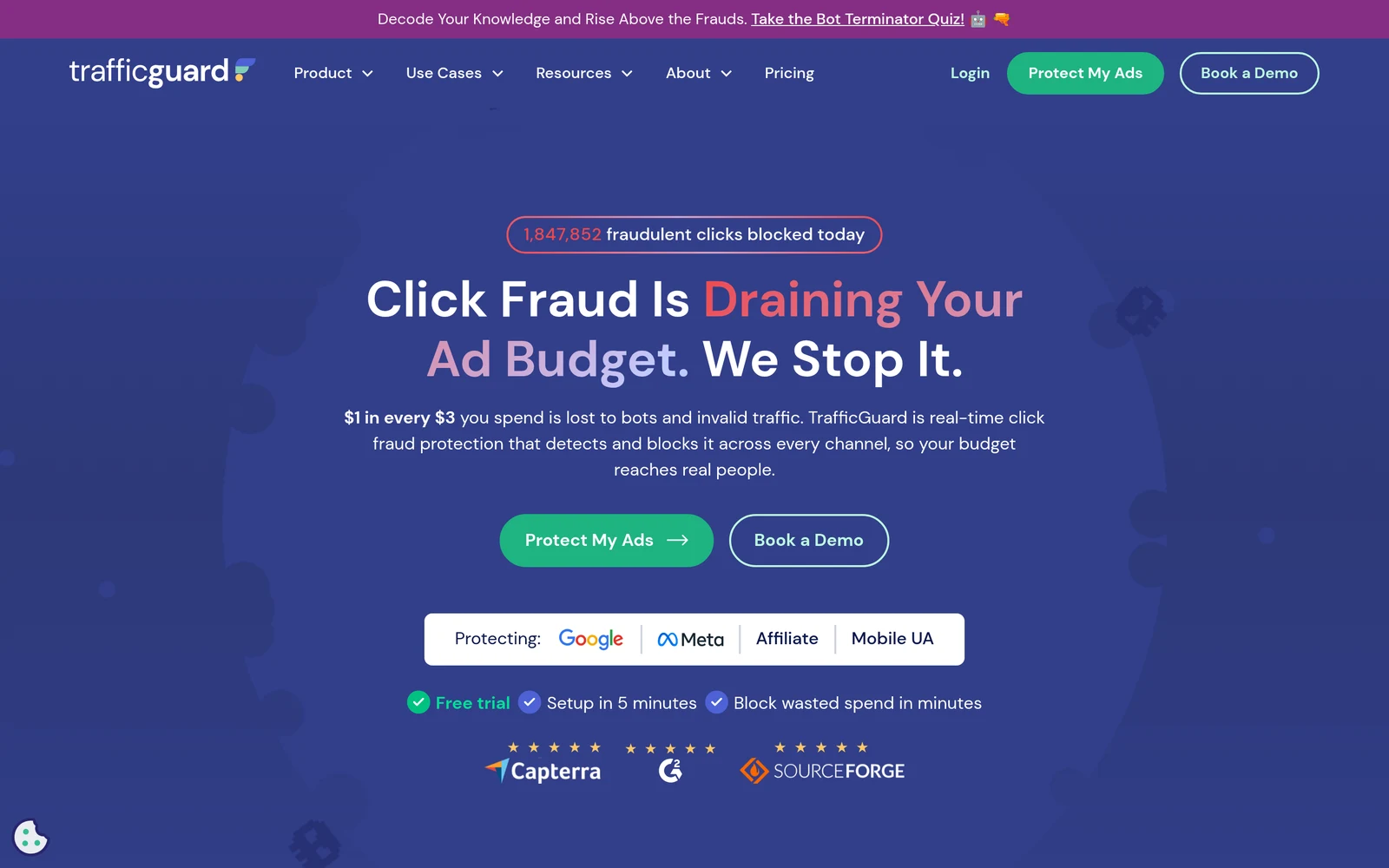
TrafficGuard covers Google Search, Performance Max, social, affiliate and mobile app campaigns. On the pricing page, the Shield plan protects one website connected to a Google Search Ads account, with unlimited users, custom click-frequency rules and email support.
Shield is $49 a month as a limited promo price and covers up to $30K in monthly ad spend. The 30 day free trial runs in detection mode, so you see invalid traffic before anything is blocked. The Scale plan is custom and adds omnichannel protection, Performance Max Shield and a dedicated success manager.
Best for: Google Search advertisers who want to test detection before they block. Not for: teams that need Meta or affiliate protection on the entry plan, since that starts on Scale.
7. Polygraph
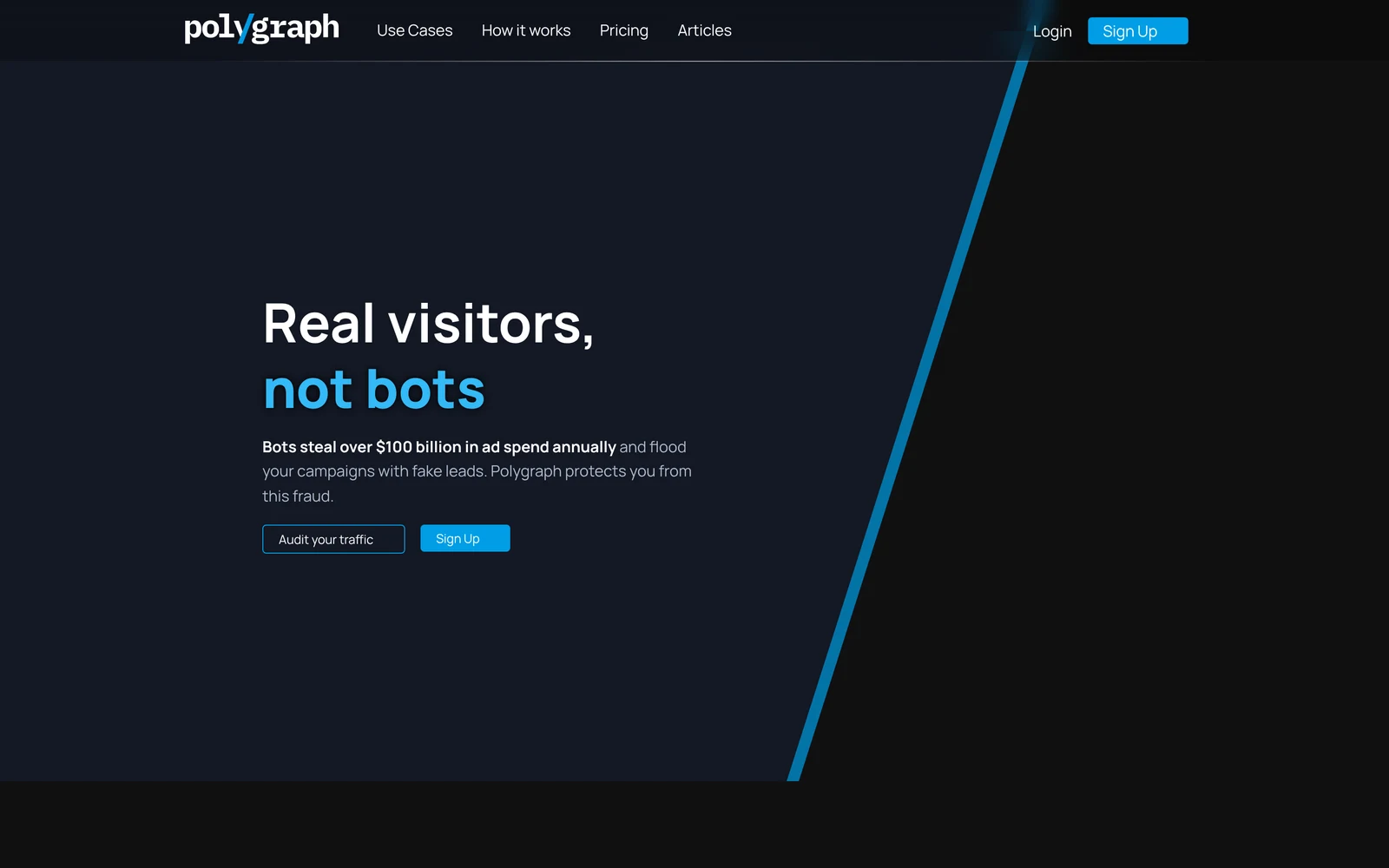
Polygraph is a Berlin-based tool that detects bots on your ads and blocks fake leads. It says real human visitors always get through, and it retrains ad networks to send human traffic instead of bots. All packages on the pricing page include unlimited websites, every ad network and a dedicated account manager.
Pricing is per ad click, from $0.018 a click for the first 25,000 visitors down to $0.001 at the highest volume. Every account pays at least $450 a month, and you can set a spending limit. A free traffic audit needs at least 10,000 ad clicks a month.
Best for: mid-size and large advertisers who want usage-based pricing across every ad network. Not for: small accounts, since the $450 monthly minimum is the highest flat entry in this list.
How much does click fraud protection software cost?
Published entry prices run from $49 a month for TrafficGuard Shield, a promo price, to a $450 monthly minimum for Polygraph. ClickGuard starts at $74 a month billed annually, Fraud Blocker at $79, ClickCease Starter at $99 and Spider AF at $150 billed monthly. Lunio is quote only and aims at teams with $500K or more in annual ad spend.
Three things move the final bill:
- The plan limit. ClickGuard and TrafficGuard cap by monthly ad spend, Fraud Blocker and Spider AF by ad clicks, and ClickCease by website traffic.
- Channels. Meta, Microsoft and Performance Max coverage often sits on higher tiers, so price the plan that covers every platform you buy.
- Sites and accounts. Agencies pay more for extra domains, ad accounts and white-label reports.
How do you set up click fraud protection?
Add the vendor tracking script to every landing page, connect your ad accounts, and run in monitor mode for a week or two before you block. Check which sources it flags against your own conversion data. Then turn on automatic exclusions and review the blocked list each month.
- Start with your biggest account. Most trials connect to Google Ads first, so test where most of your spend goes.
- Mind the IP limit. Google Ads lets you exclude up to 500 IP addresses per campaign, and account-level IP exclusions also cover Performance Max. Ask each vendor how it manages that cap.
- Whitelist your own team. Add office and agency IPs so internal visits are not flagged.
- Keep claiming refunds. Google still credits invalid clicks it catches, so a third-party tool adds to that rather than replacing it.
- Fix your reports. Clean traffic changes conversion rates, so revisit your attribution software models after a month.
Frequently asked questions about click fraud protection software
What is the best click fraud protection software?
There is no single best tool for every account. TrafficGuard has the lowest published entry at $49 a month for Google Search. ClickCease and ClickGuard suit Google, Meta and Microsoft advertisers on flat plans. Spider AF is strong on placements, and Lunio and Polygraph fit larger budgets across many ad networks.
Does Google Ads refund click fraud?
Google says you are not charged for invalid clicks that its automated systems filter out. When it finds invalid clicks after you were billed, you receive a credit on a later invoice where appropriate and possible. Google does not catch everything, which is why many advertisers add a third-party tool.
How does click fraud protection software work?
The tool loads a tracking script on your landing pages and scores every paid click by IP, device, behavior and location. Visitors that look like bots, click farms or repeat clickers get excluded from your campaigns. On Google that usually means IP exclusions, and on Meta it means excluded audiences.
Is there free click fraud protection software?
No tool here offers a free forever plan, but most offer a trial. TrafficGuard gives 30 days in detection mode, and Fraud Blocker offers 7 days. ClickCease, ClickGuard and Spider AF list free trials, and Lunio and Polygraph offer free traffic audits.
Does click fraud protection work for Performance Max campaigns?
Yes, on some plans. TrafficGuard offers Performance Max Shield on its Scale plan, and Spider AF lists placement blocking for Performance Max, YouTube and mobile apps. ClickCease says it blocks bots in Performance Max through IP blocking and audience exclusions. Google also supports account-level IP exclusions that cover Performance Max.
Can click fraud protection stop fake leads?
Several tools now cover fake leads as well as clicks. Fraud Blocker verifies emails on lead forms, ClickCease adds Lead Shield for HubSpot, and Spider AF sells a separate fake lead protection product. Polygraph also says it stops bots that submit fake leads using real people’s data.
Do I need click fraud protection for small ad budgets?
Not always. If you spend a few hundred dollars a month, Google’s own filtering and manual IP exclusions may be enough. Once spend reaches a few thousand dollars a month, a $49 to $99 plan can be worth testing. Run a trial in monitor mode first and compare the flagged clicks with the plan price.
The verdict: which click fraud protection software fits your team?
Small Google Search accounts should trial TrafficGuard Shield in detection mode first. Teams that run Google, Meta and Microsoft Ads should compare ClickCease and ClickGuard, and lead generation advertisers should look at Fraud Blocker. Spider AF fits heavy Performance Max and YouTube buyers who need placement controls.
Teams spending $500K or more a year across many channels should get a Lunio audit or a Polygraph quote. Whichever tool you pick, test it on real traffic before you block. For app install campaigns, read our ad fraud prevention platforms guide instead. If you also buy programmatic display, video or CTV, our IAS vs DoubleVerify comparison covers the ad verification side.