

TLDR
- Chili Piper is not the only production-grade inbound routing tool. RevenueHero, Default, LeanData, and LeadAngel all handle round-robin assignment, ownership matching, and CRM sync at comparable fidelity.
- The pricing gap is real. Several alternatives cost meaningfully less per seat, especially for HubSpot-native teams who do not need Salesforce’s object model.
- Calendly Routing is the right call for teams that primarily need scheduling with light routing rules, not full lead-distribution logic.
- LeanData remains the go-to for complex Salesforce environments where account-based matching and multi-step routing flows matter more than time-to-booking. For tools that replace LeanData itself, see our LeanData alternatives guide.
- Most switchers leave Chili Piper because of pricing increases or HubSpot integration friction, not feature gaps. Know which problem you are actually solving before picking a replacement.
The best Chili Piper alternatives for inbound lead routing are RevenueHero, Default, LeanData, LeadAngel, Calendly Routing, Salesloft Rhythm, and Zapier Interfaces. RevenueHero and Default are the strongest like-for-like replacements for teams running HubSpot or Salesforce at mid-market scale. LeanData is the correct choice for large Salesforce orgs with complex account hierarchies. Calendly Routing fits teams that need meeting scheduling with basic routing rules and do not require full lead-distribution logic.
In this guide
Why Are Marketers Looking for Chili Piper Alternatives Right Now?
Chili Piper built its reputation on one specific promise: a lead fills out a form, gets routed to the right rep, and books a meeting before leaving the page. That promise still holds. The complaints are mostly about what surrounds it.
The pricing model charges per seat across both the Distro (routing) and Concierge (scheduling) products, which means costs compound quickly as sales teams grow. HubSpot customers report friction with bidirectional sync and inconsistent activity logging. And Chili Piper’s interface, while functional, has not kept pace with newer tools that built routing logic visually from day one.
None of this makes Chili Piper bad. It makes it a poor fit for specific teams. A 15-person sales org running HubSpot is overpaying for enterprise-grade complexity they do not use. A 200-person Salesforce org with territory hierarchies may find Chili Piper’s routing logic too shallow. Both camps have better options.
The AboutMartech Routing-Fit Test: Four Checks Before You Switch
Before evaluating any alternative, run these four checks against your current stack. They filter out the noise faster than any feature comparison.
- CRM dependency: Is your team Salesforce-native, HubSpot-native, or CRM-agnostic? Routing tools are built around one data model or the other. LeanData is Salesforce-first. RevenueHero and Default have stronger HubSpot parity. Picking the wrong one means constant sync workarounds.
- Routing complexity: Do you route by territory, account ownership, product line, or just round-robin? Simple round-robin can run on Calendly Routing. Multi-condition logic with SLA tracking requires Default, LeanData, or LeadAngel.
- Scheduling surface: Does the buyer need to book a meeting at the moment of form fill (Concierge-style), or is async email routing acceptable? If scheduling is the primary use case, Calendly Routing or RevenueHero wins. If routing without scheduling is the goal, LeadAngel or LeanData may be sufficient.
- Volume and ops bandwidth: How many leads per month hit your routing rules, and who maintains them? Low-volume teams with one MOps person need a tool with a visual builder and minimal edge-case configuration. High-volume enterprise teams need audit logs, fallback rules, and dedicated support.
Run these four checks first. The tool that clears all four for your specific situation wins, regardless of how it ranks in any comparison article.
Which 7 Tools Are the Strongest Chili Piper Alternatives?
| Tool | Best For | CRM Fit | Pricing Model | Scheduling Included |
|---|---|---|---|---|
| RevenueHero | HubSpot-native inbound routing | HubSpot, Salesforce | Per router/month (public) | Yes |
| Default | Full routing + scheduling replacement | HubSpot, Salesforce | Per workspace (public) | Yes |
| LeanData | Complex Salesforce routing + ABM matching | Salesforce-first | Quote-based | Via add-on |
| LeadAngel | Mid-market teams wanting lower-cost routing | Salesforce, HubSpot | Per user/month (public) | Yes |
| Calendly Routing | Scheduling-first teams with light routing needs | HubSpot, Salesforce | Per seat/month (public) | Yes (native) |
| Salesloft Rhythm | Teams already running Salesloft cadences | Salesforce, HubSpot | Quote-based | Via Salesloft |
| Zapier Interfaces | Early-stage teams needing custom form-to-CRM routing | Any (via Zap) | Per task/month (public) | No (requires integration) |
1. RevenueHero
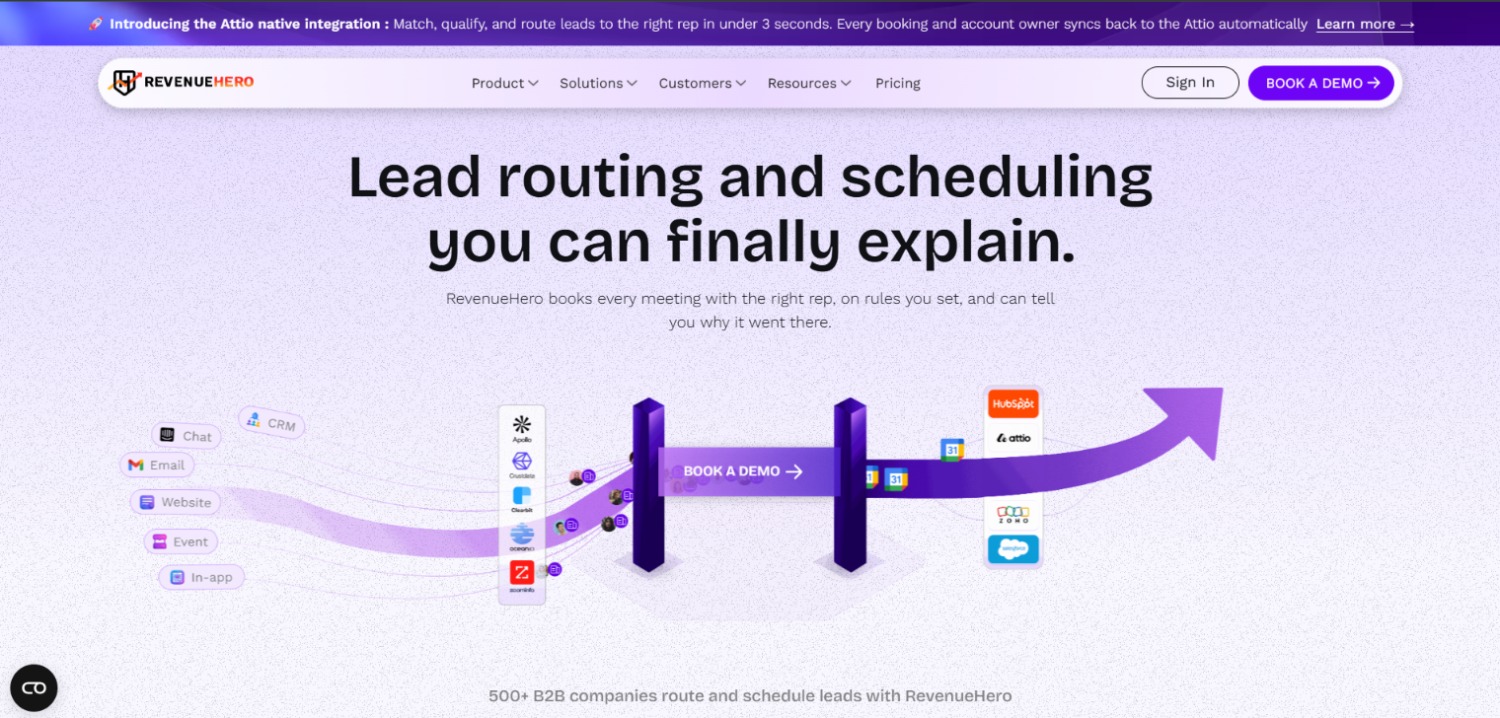
RevenueHero is the alternative most often recommended by HubSpot MOps teams, and the reason is specific: it was built with HubSpot’s data model in mind from the start, rather than retrofitted after Salesforce. Form-to-meeting routing works through a visual rule builder, and the CRM sync writes back to the correct contact and deal records without manual field mapping cleanup.
Routing logic in RevenueHero supports round-robin, account-based matching, territory rules, and rep availability. The booking page embeds directly into landing pages or appears as a post-form overlay, mirroring Chili Piper’s Concierge experience. Lead-to-account matching pulls from existing CRM data, so a known account’s inbound form fill routes to the assigned AE rather than triggering a new round-robin sequence.
RevenueHero publishes its pricing publicly, which Chili Piper does not. For teams evaluating on cost transparency alone, that matters. The platform also integrates with Salesforce, making it viable for orgs running both CRMs in a hybrid setup.
2. Default
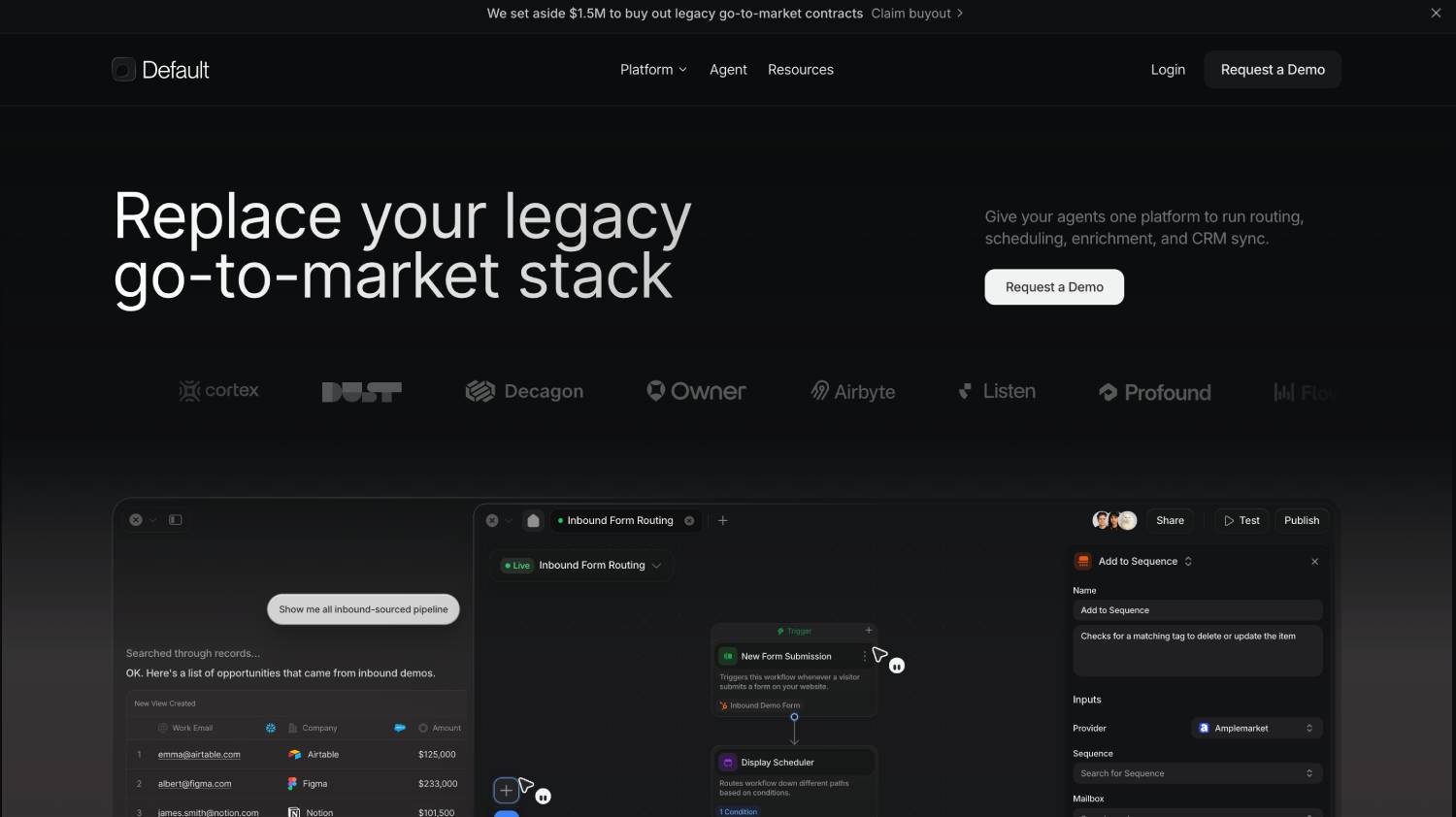
Default positions itself as a full revenue orchestration platform, but its core use case is identical to Chili Piper’s: capture a lead, route it, book a meeting. Where Default differentiates is in its workflow builder, which handles multi-step sequences (enrich, score, route, notify, book) in a single canvas rather than forcing separate tools for each step.
Teams using Default often consolidate their form builder, enrichment step, routing logic, and scheduling into one platform. That reduces the integration surface area and eliminates several failure points. Default integrates with Clearbit, Apollo, and other enrichment providers, so a lead can be enriched before routing rules evaluate it, improving match rates on account-based assignment.
Default appears at the top of the SERP for “Chili Piper alternatives” because it built an explicit comparison page. The product has genuine parity with Chili Piper’s core features and is frequently cited in community discussions on Reddit and RevOps forums as a like-for-like replacement. Pricing is available on their public site.
3. LeanData

LeanData is not a Chili Piper clone. It is a Salesforce-native routing and matching platform that handles the full lead lifecycle: lead-to-account matching, territory-based assignment, multi-step routing flows, and SLA tracking. Teams that have outgrown Chili Piper’s routing logic, not its scheduling surface, should look here first.
LeanData’s FlowBuilder lets RevOps teams construct routing trees with conditional branches, wait steps, ownership fallbacks, and audit trails. That level of configurability matters for enterprise orgs with named accounts, partner sourcing, and complex BDR-to-AE handoff rules. LeanData also powers reporting on routing performance, showing which paths leads took and where they fell off.
The trade-off is cost and complexity. LeanData is quote-based, and implementations typically require dedicated admin time. Teams that want a visual setup and a booking page in an afternoon will find it overkill. For Salesforce shops running ABM motions at scale, it is the most complete routing infrastructure available. You can see how LeanData fits into a broader stack in our overview of lead enrichment and routing tools for RevOps teams.
4. LeadAngel
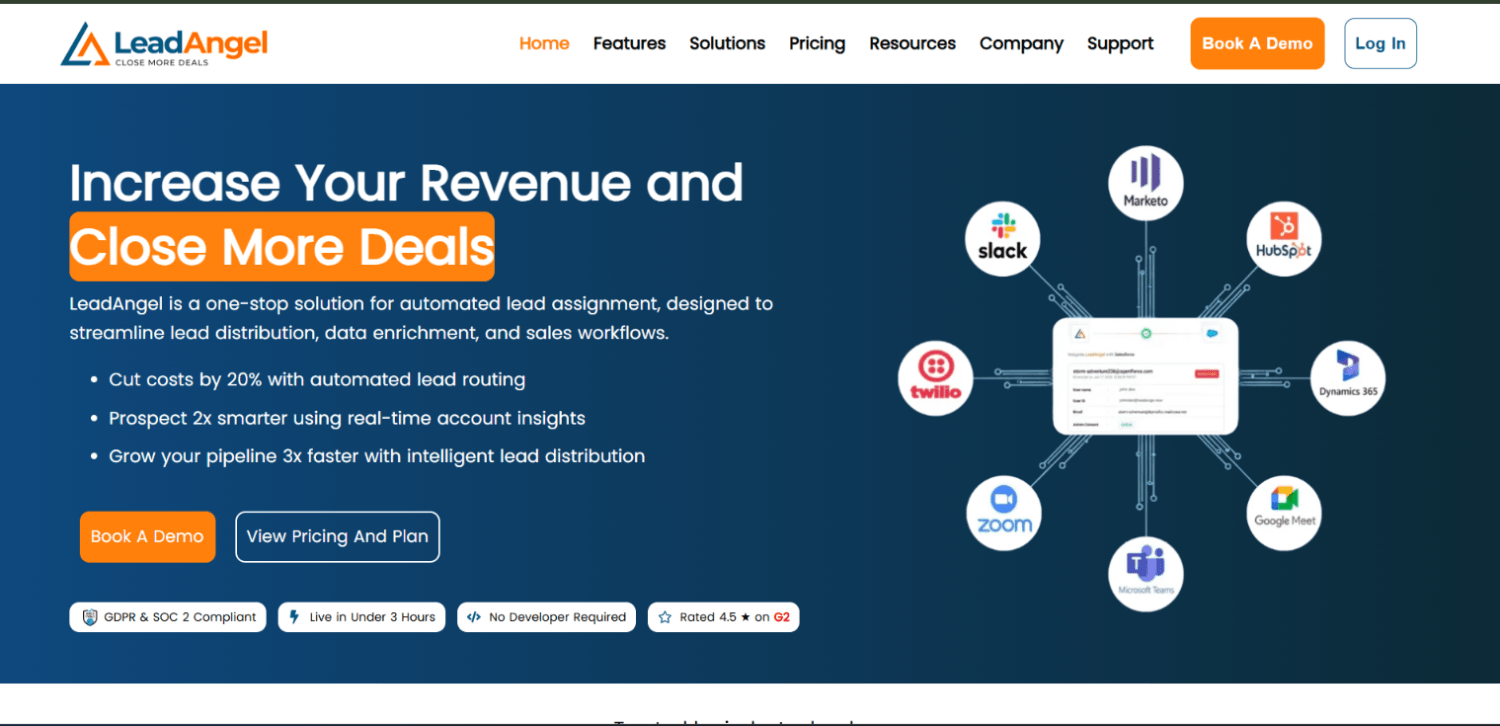
LeadAngel targets the mid-market gap between lightweight scheduling tools and enterprise routing platforms. It handles lead-to-account matching, round-robin and territory-based routing, scheduling, and CRM sync for both Salesforce and HubSpot. The pitch is feature parity with the category leaders at a lower per-seat cost.
Where LeadAngel earns its place on this list is in its matching engine. It uses fuzzy logic to match leads to accounts even when company names or email domains do not match exactly, catching deals that would otherwise fall to a generic round-robin queue. For teams with large existing account lists and high inbound volume from named accounts, that matching accuracy reduces MQL-to-SQL leakage.
LeadAngel publishes pricing publicly, which puts it in the same transparency bracket as RevenueHero. It does not have the same brand recognition as Chili Piper or LeanData, but in community discussions about cheaper alternatives, it comes up consistently. Teams evaluating it should test the matching logic against their actual CRM data before committing.
5. Calendly Routing
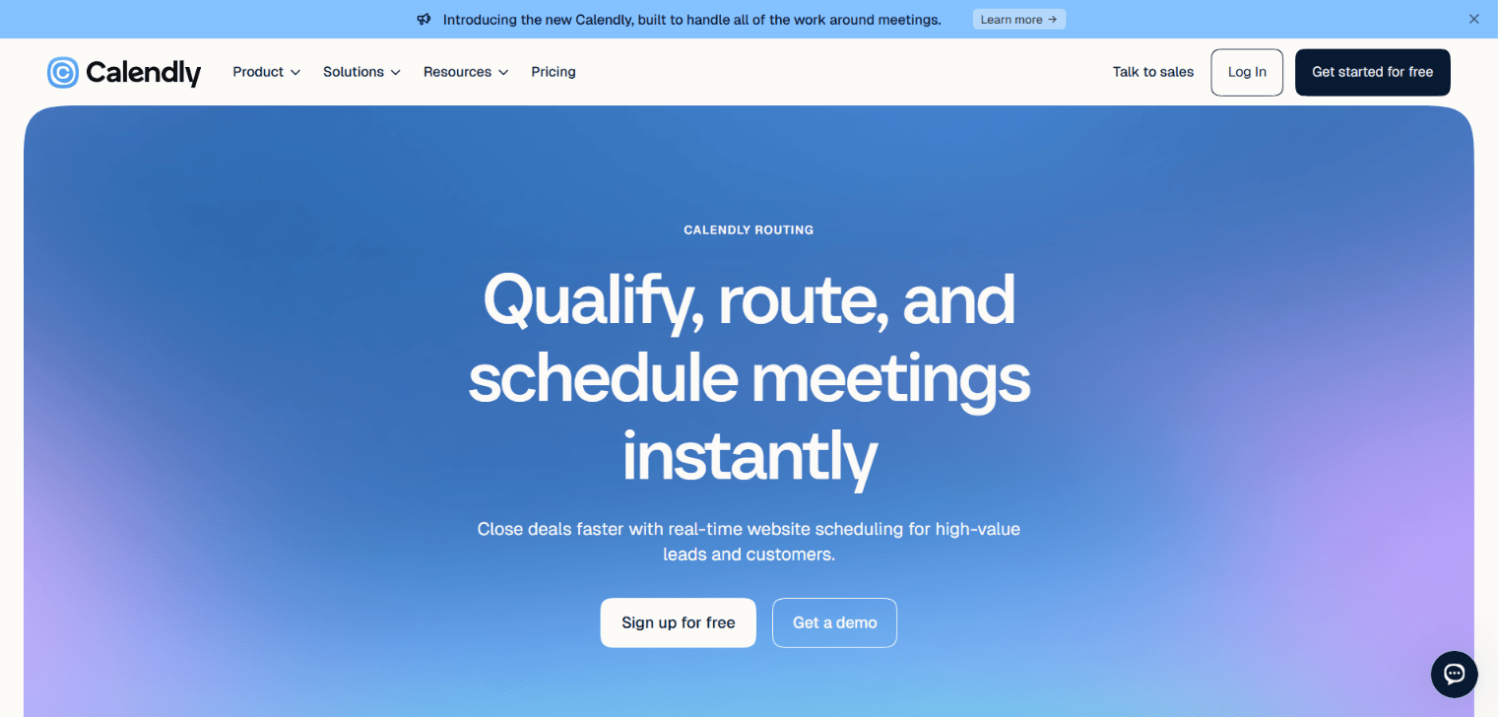
Calendly Routing is the right tool for a narrower problem than most Chili Piper evaluations assume. If the primary need is: form fills, ask qualifying questions, show the right booking page based on answers, then book a meeting, Calendly Routing handles it cleanly. It integrates with HubSpot and Salesforce to check CRM ownership before routing and logs meetings back to the correct records.
Where it falls short is in routing complexity. Calendly Routing does not support multi-step workflows, enrichment triggers, or account-based matching at the depth that Default or LeanData offer. It is a scheduling-first product with routing added on, not a routing engine with scheduling built in. That distinction matters operationally.
For small sales teams, early-stage companies, or marketing teams running targeted campaign flows where a single qualifying question (company size, use case) determines the right rep, Calendly Routing is likely all they need. It is also the most recognizable brand in the scheduling category, which reduces buyer-side friction when sharing booking links externally.
6. Salesloft Rhythm
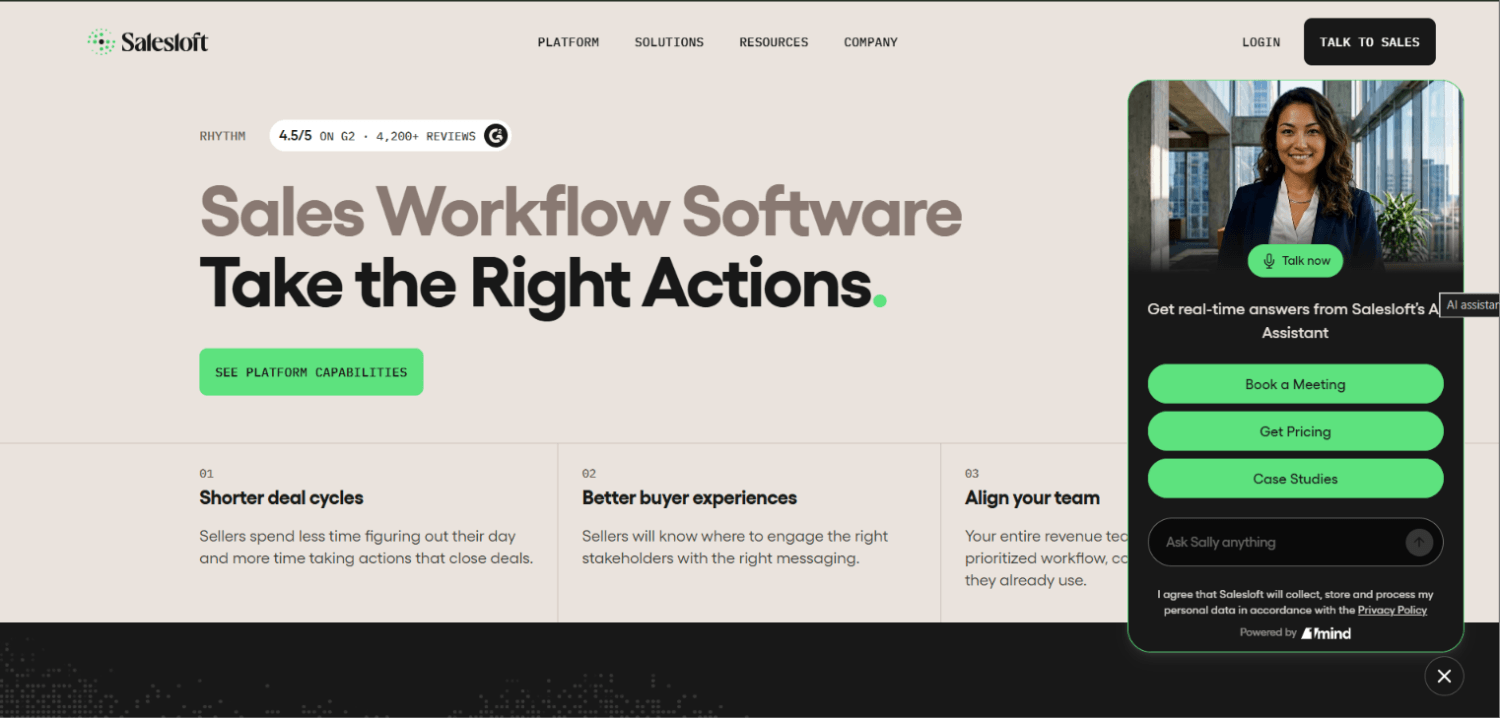
Salesloft Rhythm is only relevant here if the team already runs Salesloft as its sales engagement platform. Rhythm handles inbound signal processing: a prospect fills out a form, engages with an email, or visits a high-intent page, and Rhythm surfaces that as a prioritized task for the assigned rep. It is not a standalone routing tool and does not offer an embeddable booking page in the same way Chili Piper does.
For Salesloft customers evaluating Chili Piper as an add-on, the question worth asking is whether the scheduling and routing gap can be closed within Salesloft itself before adding another vendor. If the answer is yes, Rhythm plus Salesloft’s native meeting scheduling covers most of the Chili Piper use case. If the answer is no, one of the dedicated routing tools above is the better path.
Salesloft pricing is quote-based. Teams should request a demo scoped to the Rhythm use case specifically, not the full platform, to get an accurate cost comparison.
7. Zapier Interfaces
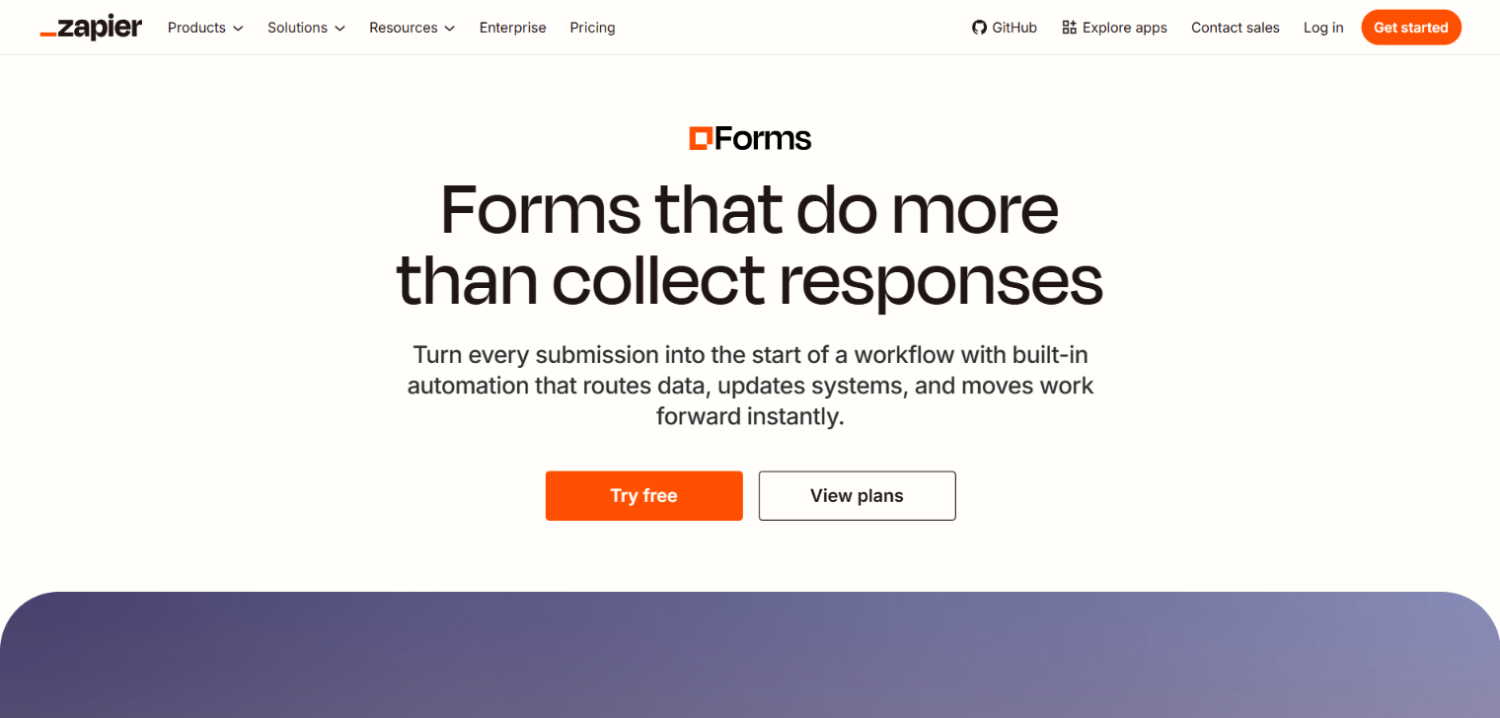
Zapier Interfaces is on this list for one audience: early-stage teams that need custom form-to-CRM routing and cannot justify a dedicated routing platform yet. Interfaces lets teams build forms that trigger Zaps, which can check CRM ownership, assign leads, send Slack notifications, and push to a scheduling tool like Calendly. It is not a routing platform, but it approximates one for low volumes.
The ceiling on this approach is real. As routing logic grows more complex, the Zap chains become brittle and hard to audit. There is no native lead-to-account matching, no round-robin with availability weighting, and no booking page. When the team hits that ceiling, they will need to migrate to one of the dedicated tools above. Zapier Interfaces is a bridge, not a destination.
Zapier publishes task-based pricing publicly. For teams sending fewer than a few hundred leads per month through a simple routing flow, the cost can be significantly lower than any dedicated routing platform.
How Do These Chili Piper Alternatives Compare on Pricing?
Pricing is where this category gets complicated. Chili Piper does not publish pricing publicly, which makes direct comparison difficult. The tools below represent what each vendor openly discloses on their public pricing pages.
| Tool | Pricing Transparency | Starting Price (Public) | Notes |
|---|---|---|---|
| Chili Piper | Not published | Quote-based | Separate Distro + Concierge products |
| RevenueHero | Public | Per router/month | Check public pricing page for current tiers |
| Default | Public | Per workspace/month | Includes routing + scheduling in one plan |
| LeanData | Not published | Quote-based | Enterprise-tier; expect significant investment |
| LeadAngel | Public | Per user/month | One of the more transparent pricing models in category |
| Calendly Routing | Public | Per seat/month | Routing requires Teams plan or above |
| Salesloft Rhythm | Not published | Quote-based | Bundled with Salesloft platform |
| Zapier Interfaces | Public | Per task/month | Cost scales with volume, not seats |
The practical takeaway: if public pricing is a procurement requirement, RevenueHero, Default, LeadAngel, Calendly, and Zapier are the vendors to shortlist. For teams with budget flexibility and complex routing needs, LeanData and Chili Piper both require a discovery call before any cost comparison is meaningful.
Which Chili Piper Alternative Works Best with HubSpot?
This is the most searched variant of the alternatives question, and the answer is RevenueHero or Default. Both were built with HubSpot’s contact, company, and deal structure in mind. Routing decisions read from and write back to the correct HubSpot records without requiring custom field mapping workarounds.
Chili Piper’s HubSpot integration has historically had more friction than its Salesforce integration, largely because Chili Piper was built on Salesforce’s data model first. That is not a disqualifier for HubSpot teams, but it means the out-of-the-box experience is less clean than with a tool designed for HubSpot from the start.
LeadAngel and Calendly Routing also support HubSpot, but with less depth. Calendly Routing can check HubSpot ownership before routing, but it does not write enrichment data or routing metadata back to HubSpot records. LeadAngel’s HubSpot integration is functional for most routing use cases but does not match the native feel of RevenueHero or Default.
For teams building a full inbound funnel where routing data needs to flow into attribution models, the CRM write-back fidelity matters more than the booking page UI. Understanding how routing data connects to downstream revenue reporting is worth reviewing alongside any marketing attribution tool evaluation you run in parallel.
What Is the Difference Between Lead Routing and Meeting Scheduling?
Most buyers conflate these two functions because Chili Piper packages them together. They are different problems.
Lead routing is the logic that decides which rep gets a lead. It evaluates rules: territory, account ownership, product interest, company size, round-robin order, and rep availability. It happens before or without a meeting being booked.
Meeting scheduling is the interface that lets a prospect pick a time on a rep’s calendar. It happens at the moment of form fill (inline scheduling) or asynchronously via a link sent in follow-up email.
Some teams need both in one tool. Others need routing without scheduling, or scheduling without complex routing. Calendly solves the scheduling problem well without assuming complex routing is needed. LeanData solves the routing problem without prioritizing the scheduling surface. Chili Piper, RevenueHero, and Default try to solve both in one platform, which is why they are the most direct competitive comparisons.
If a team is evaluating Chili Piper alternatives primarily because a rep missed a follow-up, the problem is likely routing logic or rep notifications, not the scheduling interface. If the complaint is that leads book on the wrong rep’s calendar, the problem is usually lead-to-account matching. Diagnosing the actual failure before buying any tool saves a migration cycle.
How Does LeanData Compare to Chili Piper for Complex Routing?
LeanData and Chili Piper overlap on routing but serve different operational maturities. Chili Piper’s routing is sufficient for most teams: round-robin, territory by region, account ownership check, fallback to queue. LeanData’s FlowBuilder goes further, supporting multi-branch conditional logic, timed SLA escalations, and partner-sourced lead handling within the same routing tree.
The enterprise use case LeanData owns is this: a lead comes in from a known account that has both an existing customer relationship and an active partner referral. LeanData’s routing tree can evaluate the account hierarchy in Salesforce, check the partner attribution record, apply the correct territory rule, assign to the named AE with a BDR cc, and log the routing path for audit. Chili Piper’s Distro handles simpler versions of this, but not the full chain without workarounds.
LeanData also powers lead-to-account matching as a standalone function, which matters for teams where the routing and the matching are separate operational concerns. Some RevOps teams use LeanData purely for matching and send the matched leads to a separate scheduling tool. That modularity is not something Chili Piper offers. The broader RevOps context for these tools is covered in our best RevOps tools overview.
Frequently Asked Questions
Is there a free alternative to Chili Piper?
Calendly offers a free individual plan for basic scheduling, but routing features require a paid Teams or Business plan. Zapier Interfaces has a free tier for very low task volumes, but it is not a routing platform. No tool in this category offers a fully featured free plan that covers inbound lead routing with CRM sync. For genuine budget constraints, LeadAngel’s entry-level pricing is one of the more accessible options with public pricing disclosed.
Which Chili Piper alternative is best for a HubSpot-only stack?
RevenueHero is the strongest choice for teams running only HubSpot. It was built with HubSpot’s contact and deal model as the primary data layer, which means routing decisions and meeting outcomes write back to the correct records without custom configuration. Default is a close second, particularly for teams that also want enrichment and multi-step workflow logic built into the same platform.
What is the difference between LeanData and Chili Piper?
LeanData is a Salesforce-native routing and lead-to-account matching platform designed for complex enterprise assignment logic. Chili Piper combines routing with an embeddable scheduling interface (Concierge) and is more accessible for mid-market teams. LeanData’s routing configurability is deeper, but it does not offer a native booking-page experience in the same way. Teams that need both functions typically pair LeanData with a separate scheduling tool.
Can Calendly replace Chili Piper for inbound routing?
Calendly Routing can replace Chili Piper for teams whose routing logic is simple: route by form answer, check CRM ownership, show the right calendar. It cannot replace Chili Piper for teams that need account-based matching, enrichment-triggered routing, round-robin with availability weighting, or multi-step SLA logic. Calendly is a scheduling tool with routing added; Chili Piper is a routing tool with scheduling added. The architectural difference shows up in edge cases.
What is inbound lead routing software and who needs it?
Inbound lead routing software is a category of tools that automates the assignment and handoff of form-fill leads to the correct sales rep based on defined rules. Teams need it when manual lead assignment creates delays, when CRM ownership data should determine who follows up, or when scheduling needs to happen at the moment of form fill rather than via email follow-up. It sits between form submission and CRM record creation in the inbound funnel.
Does Chili Piper have cheaper competitors that match its features?
RevenueHero and LeadAngel both publish lower entry-level pricing than Chili Piper’s undisclosed quote-based model and cover the core routing and scheduling features most teams actually use. Default is similarly priced for the features it bundles together. None of the cheaper alternatives match Chili Piper’s full feature set in every dimension, but most teams switching do so because they do not use the full feature set to begin with. The routing-fit test earlier in this article identifies which features matter for your situation.
How does lead-to-account matching work in routing tools?
Lead-to-account matching is the process of associating an inbound lead record with an existing company account in the CRM before routing decisions are made. Tools like LeanData and LeadAngel use fuzzy matching logic that accounts for domain variations, subsidiary relationships, and name discrepancies. When matching works correctly, an inbound lead from a known account routes to the assigned AE rather than entering a round-robin queue. Matching accuracy is the most important variable in routing quality for ABM-oriented teams.
What Should You Actually Do Before Switching from Chili Piper?
The teams that have the worst migrations are the ones that buy a replacement before auditing what they actually use. Chili Piper has two distinct products. Most teams use one heavily and the other incidentally. Map your current routing rules, identify where leads are falling through, and document which CRM fields the routing logic reads from. That documentation becomes the test suite for any replacement tool.
Run the AboutMartech Routing-Fit Test before any demo. A vendor that cannot clear all four checks in a discovery call is not the right fit, regardless of how the comparison pages read. The scheduling surface is the easiest part to evaluate, because it is visible to buyers. The routing logic and CRM write-back fidelity are harder to assess from a demo and are where most post-migration complaints originate.
One underappreciated angle: the tools that power your routing also generate data that flows into your attribution model. A routing system that does not correctly log which rep got which lead, or which routing path was followed, creates blind spots downstream. For teams investing in closed-loop attribution, the routing tool selection is not a standalone decision. It connects directly to how clean your pipeline-source data will be six months after migration. Our coverage of B2B attribution tools for long sales cycles is worth reading alongside this evaluation if revenue-source accuracy matters to your team.