
- Most RevOps teams lose pipeline not from bad leads but from stale data and slow routing , the average inbound lead sits unworked for hours because no one has firmographic context to assign it correctly.
- Clay is the most configurable enrichment layer available today, pulling from dozens of data sources simultaneously, but it requires a technical operator to get full value from it.
- Lead routing and enrichment are separate problems that most teams stitch together with CRM workflows, Zapier, and manual field mapping , dedicated tools collapse that into a single data-to-desk pipeline.
- The right tool depends on where enrichment needs to happen: at form submission, during a sales sequence, or continuously against your existing database.
- Pricing varies from free tiers (Apollo) to five-figure annual contracts (LeanData, Chili Piper enterprise) , team size and routing complexity are better budget predictors than seat count alone.
The best lead enrichment tools for RevOps teams in 2026 are Clay (most configurable, multi-source), Clearbit/HubSpot Breeze Intelligence (best for HubSpot-native stacks), Apollo.io (best value for small teams), Chili Piper (best for inbound speed-to-lead routing), LeanData (best for complex enterprise routing logic), Cognism (best European data coverage), and RB2B (best for website visitor identification without a form submission).
Why RevOps Teams Still Waste Hours on Lead Data That Shouldn’t Require Human Touch
A form submission lands in Salesforce with a first name, a last name, a business email, and maybe a company name. From that, someone needs to infer company size, industry, tech stack, funding stage, ICP fit, and the right sales rep to receive it. Without enrichment, that inference happens manually , or not at all, and the lead routes to a round-robin queue that ignores territory, account ownership, or deal stage entirely.
The average RevOps team patches this with a combination of CRM native fields, third-party data append services, and routing rules built in workflow automation tools. It works until a territory changes, a rep leaves, or the data provider’s match rates quietly degrade. Dedicated enrichment and routing tools exist because that patchwork breaks constantly and usually at the worst time , during a campaign spike or a sales sprint.
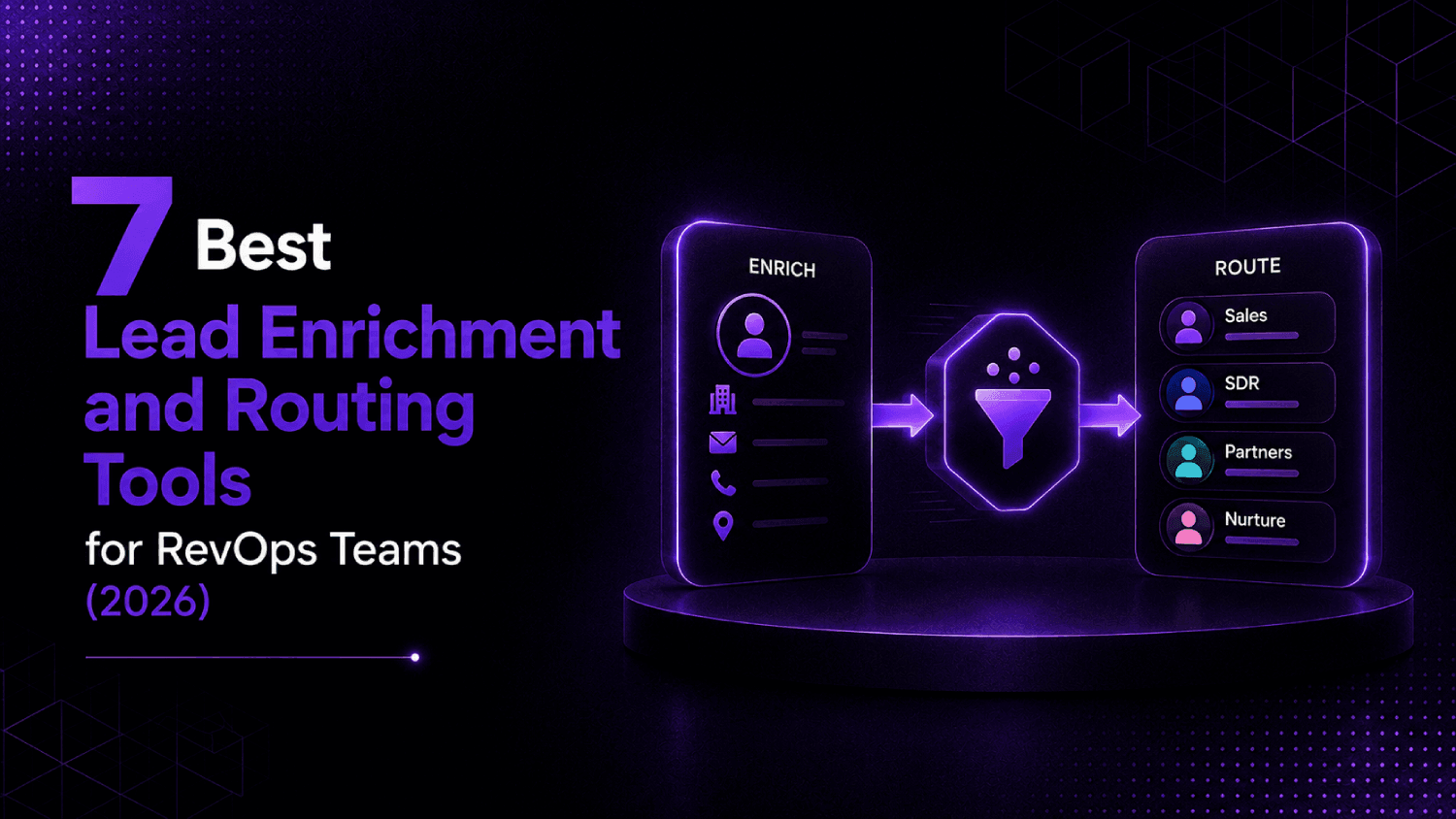
This article covers seven tools that solve different parts of the enrichment-to-routing chain. Some solve enrichment only. Some solve routing only. Two solve both. The picks are structured around what RevOps teams are actually trying to accomplish: get clean, complete lead data into the CRM fast, then get it to the right rep faster.
The AboutMartech Enrichment-Routing Stack Test: Four Checks Before You Buy
Before picking a tool, run it through these four checks. They filter out roughly 80% of the evaluation noise.
Match rate on your actual ICP: Every data enrichment vendor publishes coverage claims. Ask for a trial run against a sample of 200 to 500 real leads from your historical CRM data. Match rate on your ICP matters more than global database size. A vendor with 300 million profiles but 40% match rate on Series B SaaS companies is worse than one with 150 million profiles and 70% match rate on that same segment.
Freshness and update cadence: Firmographic data decays fast. Job title changes, company headcount swings, funding rounds close. Ask vendors directly: how often is a given company record refreshed? Monthly is acceptable. Quarterly is a risk for fast-moving markets. Some vendors do not publish this figure, which is itself an answer.
Routing logic flexibility: Can the tool handle conditional routing based on enriched fields? Round-robin with capacity weighting? Account-based ownership lookups before routing? Territory hierarchies? Simple tools route by field value. Advanced tools route based on the intersection of multiple enriched attributes, account ownership, and rep availability.
CRM write-back fidelity: Enriched data that lands in the wrong field, overwrites manually entered values, or creates duplicate records causes more damage than no enrichment at all. Check the field mapping controls and whether the tool has overwrite protection for fields that your reps populate by hand.
Which Tool Is Actually Best for Which RevOps Scenario?
| Tool | Primary Use Case | Best For | Routing Included? | Public Pricing Starts At |
|---|---|---|---|---|
| Clay | Multi-source enrichment automation | Technical RevOps teams building custom pipelines | No (via integrations) | Free tier; paid from $149/mo |
| Clearbit / HubSpot Breeze Intelligence | Real-time form enrichment + CRM append | HubSpot-native stacks | Via HubSpot workflows | Bundled with HubSpot; contact HubSpot for pricing |
| Apollo.io | Prospecting database + enrichment | Small teams doing outbound and inbound | Basic (Salesforce/HubSpot sync) | Free tier; paid from $49/user/mo |
| Chili Piper | Inbound lead routing and scheduling | Teams where speed-to-lead is a top KPI | Yes (core feature) | From $22.50/user/mo (Instant Booker) |
| LeanData | Complex multi-object routing in Salesforce | Enterprise teams with territory hierarchies | Yes (core feature) | Quote-based |
| Cognism | B2B contact and company data enrichment | Teams with significant EMEA pipeline | No | Quote-based |
| RB2B | Website visitor identification (US) | PLG and content-led teams without forms | Via Slack/CRM push | Free tier; paid from $149/mo |
Clay: The Most Configurable Enrichment Layer Available
Clay is not a data vendor. It is a data orchestration layer that connects to over 75 enrichment sources , ZoomInfo, Clearbit, LinkedIn, Apollo, Hunter, BuiltWith, and dozens more , and lets you build a waterfall logic that queries sources in sequence until a field is filled. You pay for each credit used against each provider, rather than paying a single vendor for their database.
For RevOps teams, this solves the most persistent enrichment problem: no single data provider has complete coverage across all ICPs. Clay lets you set rules like “try Clearbit first, then Apollo, then fallback to LinkedIn scraping” without writing custom code , though the tool does support JavaScript formulas for complex transformations. The learning curve is real. Teams that get the most out of Clay typically have a dedicated RevOps engineer or a technically fluent ops manager who treats Clay tables like a lightweight ETL pipeline.
Clay does not handle routing natively. Most teams pipe enriched records into Salesforce or HubSpot via native integrations and then use CRM-native routing or a dedicated routing tool downstream. According to Clay’s public pricing page, the free tier includes 100 credits per month, with paid plans starting at $149 per month for 2,000 credits.
What Clay does well
- Waterfall enrichment across multiple providers in one workflow
- AI column actions that can infer job function, write personalized first lines, or classify accounts
- Flexible enough to support both inbound form enrichment and outbound prospecting list building
What Clay does not do
- No native routing logic , you need a downstream tool or CRM workflows
- Not plug-and-play for non-technical operators
- Credit-based pricing can escalate quickly on high-volume inbound programs
Clearbit / HubSpot Breeze Intelligence: Best for HubSpot-Native Stacks
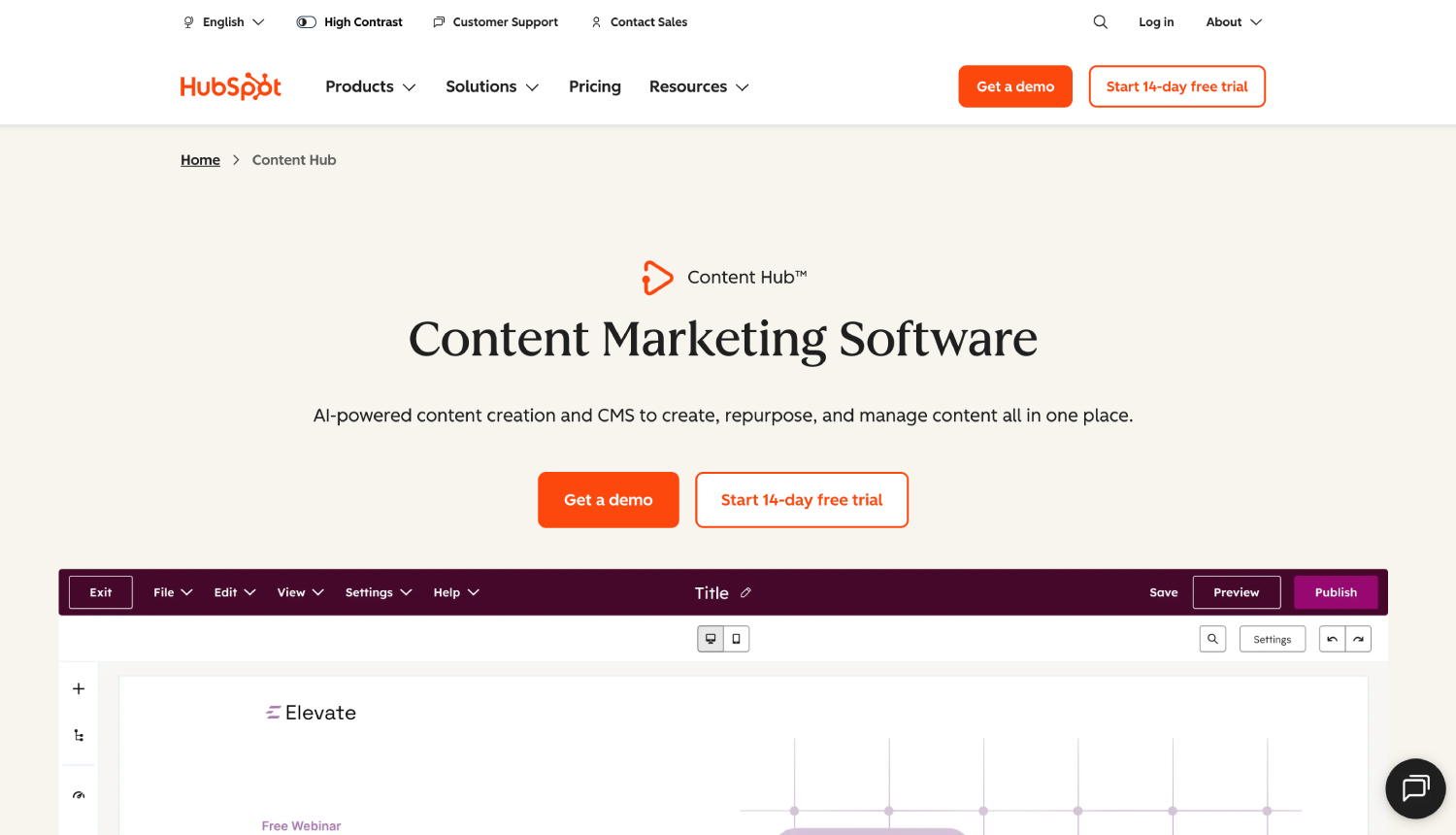
HubSpot acquired Clearbit in late 2023 and rebranded its enrichment capabilities as Breeze Intelligence. For teams running HubSpot as their CRM, this is the path of least resistance for real-time enrichment. When a contact submits a form or is created in HubSpot, Breeze Intelligence automatically appends firmographic and demographic data , company size, industry, technology used, LinkedIn URL, and more , without a separate integration.
The key limitation is that Breeze Intelligence is a HubSpot-only product. Teams running Salesforce as their CRM need to look elsewhere, because the legacy Clearbit API integrations have been progressively de-emphasized since the acquisition. HubSpot does not publish standalone Breeze Intelligence pricing; it is sold as an add-on with credit-based usage, and pricing requires a conversation with HubSpot sales for most tiers.
Routing for HubSpot teams happens through HubSpot’s native workflow automation, which handles straightforward territory-based or round-robin assignment reasonably well. Teams with complex routing logic , account-based ownership lookups, capacity weighting, or multi-object routing , will hit HubSpot’s ceiling and need a supplemental tool.
Apollo.io: Best Value for Small Teams Doing Both Outbound and Inbound Enrichment
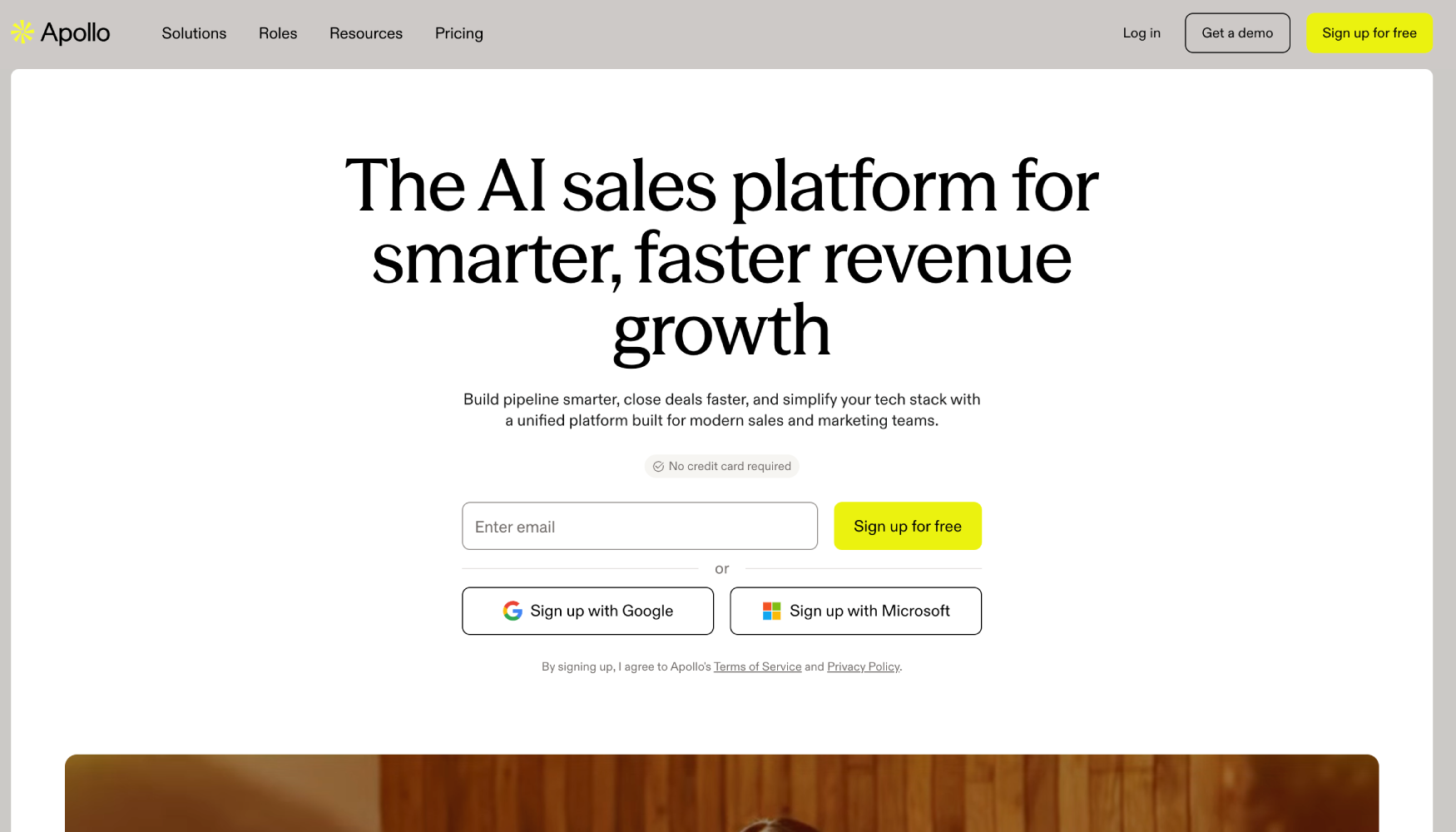
Apollo.io bundles a prospecting database of over 275 million contacts (per Apollo’s own published figures) with enrichment and basic CRM sync. For a small RevOps team that needs to both build outbound lists and enrich inbound leads, Apollo eliminates the need for two separate subscriptions. The free tier is genuinely functional, covering basic enrichment and limited exports, and the paid plans start at $49 per user per month as shown on Apollo’s public pricing page.
Apollo’s match rate on US B2B contacts is competitive at the mid-market, but drops on enterprise accounts with complex org structures and on non-US contacts , particularly in EMEA and APAC. The routing functionality is limited to CRM sync rather than native routing logic; you push enriched contact data to HubSpot or Salesforce and handle assignment there. Apollo works best when the primary problem is data completeness and cost efficiency, not routing complexity.
Chili Piper: Best for Speed-to-Lead Routing from Inbound Forms
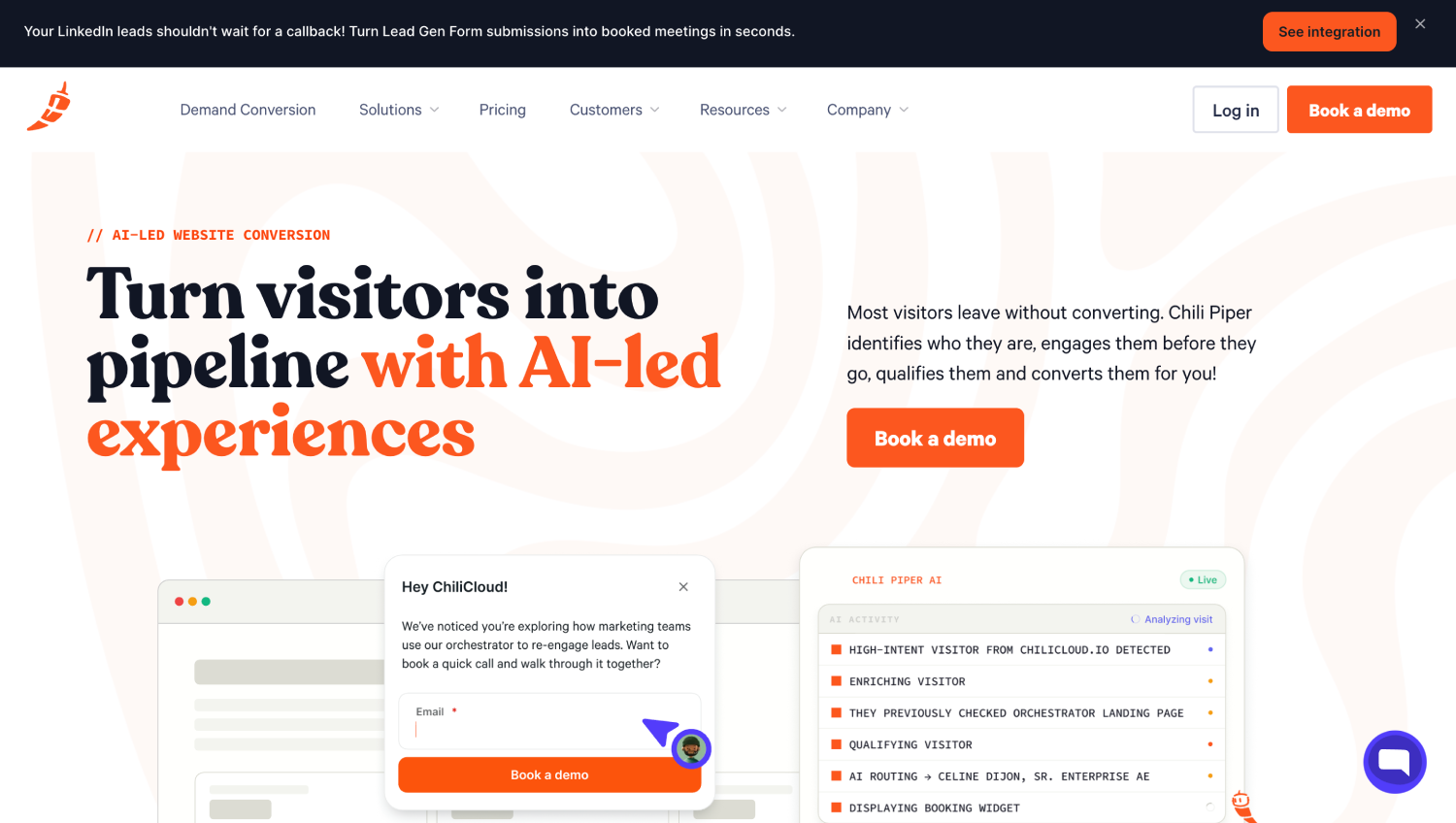
Chili Piper solves a specific, high-stakes problem: a prospect submits a demo request form, and the speed at which they reach a qualified sales rep predicts whether that opportunity converts. Chili Piper sits between the form submission and the calendar , it routes the lead to the right rep in real time and presents a booking interface immediately, while the prospect is still engaged on the page.
The routing logic in Chili Piper supports ownership-based routing (check if a company already has an account owner in Salesforce before assigning), territory rules, and round-robin with weighting. It integrates natively with Salesforce, HubSpot, and Marketo. According to Chili Piper’s public pricing page, Instant Booker starts at $22.50 per user per month, with the full Distro routing product priced separately and higher , enterprise packages are quote-based.
Chili Piper does not do enrichment. It routes based on the fields that exist in the CRM at the time of routing. Teams that want to route based on enriched firmographics need to enrich first , via Clay, Apollo, or Clearbit , and then feed those enriched fields into Chili Piper’s routing rules. That sequencing matters: routing before enrichment means routing on incomplete data.
For teams evaluating the full revenue operations stack, the best RevOps tools for revenue operations breakdown covers how scheduling, routing, and CRM systems fit together at the infrastructure level.
LeanData: Best for Enterprise Salesforce Teams with Complex Routing Logic
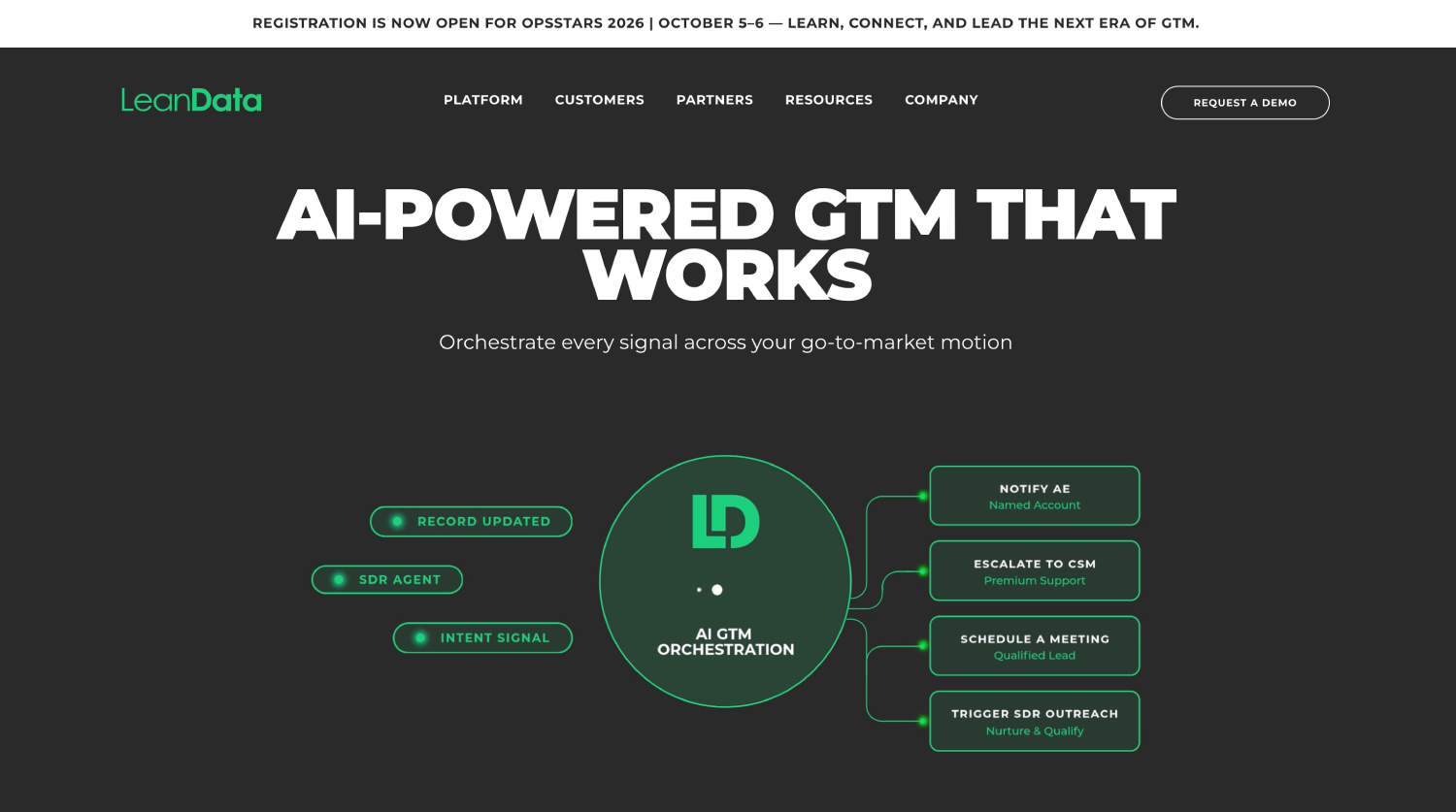
LeanData is the most mature dedicated routing platform in the market for enterprise Salesforce environments. It operates as a Salesforce-native application , meaning all routing logic runs within Salesforce, and all data stays in your CRM without external API calls on the critical path. The visual flow builder handles multi-object routing (lead-to-account matching, contact routing, opportunity routing), capacity-based assignment, and territory hierarchies that would require dozens of Salesforce workflow rules to replicate manually.
The lead-to-account matching capability is LeanData’s most differentiated feature. When a new lead arrives, LeanData checks whether the lead’s company domain matches an existing account in Salesforce , and if it does, routes the lead to the account owner rather than into a round-robin queue that would create a competing opportunity. This prevents the “same company, two reps” problem that costs enterprise teams measurable pipeline every quarter.
LeanData does not publish pricing. It is quote-based, and independent user reports on G2 and similar platforms suggest it sits in the mid-five-figures annually for most enterprise deployments. It is not a tool for teams under 50 sales reps , the complexity it solves does not exist at that scale, and the cost-to-value ratio suffers. LeanData’s enrichment capabilities are limited; it reads enriched fields from the CRM but does not append data itself. Stack it with Clay or Clearbit for enrichment, then route with LeanData.
Teams using LeanData alongside a multi-touch attribution model will find the best marketing attribution tools for proving revenue impact useful for connecting routed lead sources to closed-won outcomes.
Cognism: Best for Teams with Significant EMEA Pipeline
Cognism differentiates on GDPR-compliant B2B contact data with strong European coverage , a meaningful distinction for teams selling into the UK, Germany, France, and the Nordics, where ZoomInfo and Apollo’s coverage has historically been thinner and where data compliance is a genuine procurement consideration.
Cognism’s Diamond Data tier includes phone-verified mobile numbers, which is relevant for SDR teams where call connect rates matter. The platform integrates with Salesforce, HubSpot, Outreach, Salesloft, and other common sales stack tools. Pricing is not published and requires a sales conversation, which is a friction point for teams that want to self-serve an evaluation. Cognism is an enrichment tool, not a routing tool; like Apollo, it appends data to your CRM and you handle routing downstream.
Where Cognism earns its position is data quality for non-US markets , the coverage depth and compliance posture in EMEA outperforms US-centric alternatives for teams with meaningful pipeline outside North America. Teams with a predominantly North American pipeline and no EMEA motion will likely find the cost-to-coverage ratio less favorable than Apollo or Clay waterfall setups.
RB2B: Best for Identifying Website Visitors Who Never Fill Out a Form
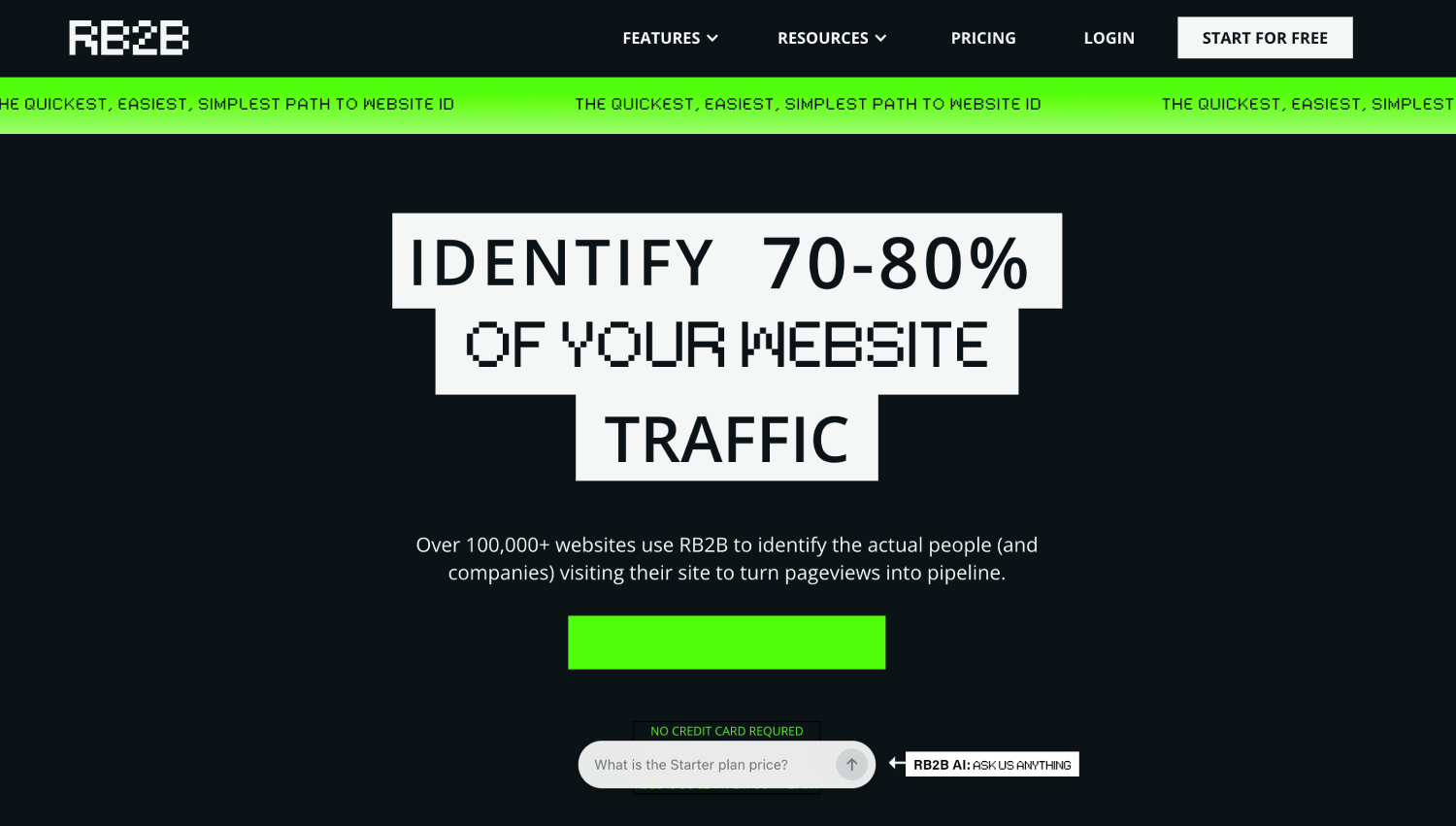
RB2B occupies a genuinely different position on this list. Where every other tool enriches leads you already have, RB2B identifies people visiting your website who have never submitted a form. Using a combination of IP resolution and identity graph matching, it surfaces the LinkedIn profile of individual visitors (US traffic only) and pushes that identification in real time to Slack or your CRM.
This matters most for product-led growth teams, content-heavy programs, and teams selling to audiences that research extensively before ever raising a hand. The free tier covers basic visitor identification, and paid plans start at $149 per month per RB2B’s public pricing page. The US-only limitation is material; teams with significant non-US inbound traffic will not see identification on a large portion of their visitors.
The routing functionality is primitive , RB2B pushes a Slack notification or a CRM record, and your routing logic handles assignment from there. Think of it as the top of the enrichment funnel rather than a full enrichment-plus-routing solution. Pairing RB2B with LeanData or Chili Piper for downstream routing is a common configuration for teams using it at volume.
Understanding how enriched contact data integrates with your broader data infrastructure is worth connecting to your B2B customer data platform evaluation , particularly if you are centralizing identity resolution across marketing and sales data sources.
How Do These Tools Fit Into a Full RevOps Enrichment and Routing Pipeline?
Consider a B2B SaaS team running 500 inbound form submissions per month, a 30-person sales org with three territories, and a mix of SMB and mid-market ICP. This is a realistic scenario for a Series B company where the routing problem has outgrown CRM-native workflows but does not yet justify LeanData’s complexity or cost.
A workable stack for this team: Clay handles waterfall enrichment at form submission (querying Apollo first, then Clearbit, then BuiltWith for tech stack), writes enriched firmographic fields to Salesforce, and flags ICP tier. Chili Piper then picks up the enriched record, checks for existing account ownership, applies territory rules, and presents a booking page to the prospect. The whole sequence runs in under 30 seconds from form submission to rep notification with a booking link in their calendar.
Without those tools, the same flow requires a human to look up the company, determine the right rep, reassign the lead, and follow up manually. That latency , even if measured in hours rather than days , correlates directly with conversion rate decay. Research from multiple sales velocity studies consistently shows that lead response time under five minutes significantly outperforms responses after 30 minutes. The enrichment-routing pipeline collapses that gap without adding headcount.
Teams investing in data infrastructure at this level often need parallel visibility into how that data flows to and from the warehouse. The best reverse ETL tools for warehouse data activation covers how to push enriched CRM data back into downstream tools without manual exports.
What Should RevOps Teams Avoid When Buying Lead Enrichment Software?
The most common mistake is buying an enrichment tool based on database size rather than match rate on the actual ICP. A vendor claiming 500 million profiles means nothing if 60% of your inbound leads come from mid-market manufacturing companies in the Midwest and the vendor’s coverage in that segment is sparse. Always run a proof-of-concept against real historical data before signing.
The second mistake is treating routing as an afterthought. Enrichment without routing gets you better-labeled leads sitting in the wrong rep’s queue. The tools that solve both problems , or that explicitly connect to tools that do , are worth the additional configuration investment. Fixing routing six months after enrichment is deployed means rebuilding the logic twice.
A third mistake is ignoring field overwrite behavior during implementation. Enrichment tools that overwrite manually entered values , a rep’s custom account notes, a corrected job title, a manually assigned territory , create trust problems with the sales team that are hard to recover from. Before deploying any enrichment tool into production, map every field the tool writes to and confirm the overwrite rules match your data governance policy.
Frequently Asked Questions About Lead Enrichment and Routing Tools
What is the difference between lead enrichment and lead routing?
Lead enrichment is the process of appending missing data to a lead record , firmographics like company size, industry, and technology stack, or contact data like direct phone and LinkedIn URL. Lead routing is the process of assigning that lead to the correct sales rep or queue based on defined rules. Enrichment feeds routing: better data produces smarter assignment logic. The two are often discussed together but are solved by different tools, and many RevOps stacks use separate products for each function.
Can I use Clay as a complete lead enrichment and routing solution?
Clay handles enrichment comprehensively through its multi-source waterfall logic, but it does not include native routing. Most teams using Clay for enrichment connect it to Salesforce or HubSpot via native integrations and then use CRM-native workflows or a dedicated routing tool like LeanData or Chili Piper for assignment. Clay is best understood as the data preparation layer, not the full pipeline. Teams that need end-to-end automation without deep technical involvement should consider pairing Clay with a dedicated routing tool from the start rather than trying to build routing logic inside Clay tables.
How do lead enrichment tools handle GDPR compliance for European contacts?
GDPR compliance in data enrichment depends on the vendor’s data sourcing and consent framework. Cognism is the most frequently cited vendor for GDPR-compliant B2B data in EMEA, using a combination of legitimate interest assessments and active opt-out mechanisms. ZoomInfo, Apollo, and Clearbit also have GDPR compliance documentation, but their European data coverage and compliance posture vary. Teams enriching European contact data should request the vendor’s GDPR data processing agreement and review how the vendor handles data subject requests before signing a contract.
What is lead-to-account matching and why does it matter for routing?
Lead-to-account matching is the process of checking whether an incoming lead belongs to a company that already exists as an account in your CRM before assigning the lead. Without it, a new lead from a company that already has an open opportunity or a named account owner gets routed to a round-robin queue , potentially to a rep who has no context on that account and may be competing with an existing relationship. LeanData is the most purpose-built solution for this problem in Salesforce environments. HubSpot handles basic lead-to-account matching natively, but complex matching logic (fuzzy domain matching, subsidiary hierarchies) requires a dedicated tool.
Is Apollo.io good enough for B2B lead enrichment or do I need a dedicated tool?
Apollo.io is sufficient for teams where enrichment is primarily about filling missing contact fields on US-based B2B leads and where the team is already using Apollo for outbound prospecting. The free and starter tiers cover a significant portion of small-team needs without additional cost. Teams that need EMEA coverage, tech stack enrichment, AI-driven classification, or waterfall enrichment across multiple providers will outgrow Apollo’s enrichment capabilities and benefit from Clay or a combination of providers. Apollo’s routing functionality is limited to CRM sync, so routing complexity in any form requires a downstream tool.
How much do lead enrichment tools typically cost for a 20-person sales team?
For a 20-person sales team, expect to spend roughly $500 to $2,000 per month across enrichment and routing tools combined, depending on volume and complexity. Apollo’s paid tier at $49 per user per month covers enrichment for 20 reps at under $1,000 monthly. Clay’s paid plans start at $149 per month for moderate credit volumes. Chili Piper’s Instant Booker starts at $22.50 per user per month, adding roughly $450 monthly for 20 reps. LeanData and Cognism are quote-based and generally more expensive, designed for larger teams with more complex routing needs.
What metrics should RevOps teams track to measure enrichment and routing performance?
The four most useful metrics are: enrichment match rate (what percentage of inbound leads receive at least one enriched field), field completeness score (average number of key fields populated per lead record), speed-to-route (time from form submission to CRM assignment), and routing accuracy rate (percentage of leads assigned to the correct rep on the first pass without manual reassignment). Tracking routing accuracy requires a manual audit sample or a correction-logging mechanism in the CRM. Teams that only track enrichment volume without measuring downstream routing accuracy miss the most operationally costly failure mode.
Picking the Right Stack Depends on Where Your Data Problem Actually Lives
The common thread across all seven tools is that they each solve a different point of failure in the same pipeline. Clay solves data incompleteness. Chili Piper solves routing latency. LeanData solves routing logic complexity. Cognism solves geographic coverage gaps. RB2B solves the absence of a form submission entirely. Buying the wrong tool for the wrong problem is easy because the marketing language overlaps heavily. Enrich, route, convert , every vendor claims to do all three.
The practical test is to map where your current pipeline breaks down. If leads are arriving with empty company size and industry fields and routing by hand, enrichment is the gap. If enriched leads are sitting unrouted in a queue because the assignment logic is too simple or the CRM workflows can’t handle account ownership lookups, routing is the gap. Most teams have both problems, but one is causing more revenue leakage than the other, and that one should be solved first.
The teams that get the most from this category treat enrichment and routing as infrastructure rather than a one-time project. Data providers’ coverage shifts, territories change, ICPs evolve. The configuration that works at 200 inbound leads per month breaks at 2,000. Building with that trajectory in mind , choosing tools with flexible routing logic and multi-source enrichment rather than the cheapest point solution , is the decision that ages well.