
- Most AI visibility platforms are architected for single brands. Agencies buying multiple seats pay per-seat pricing, which destroys the unit economics of reselling the service.
- A small group of vendors now offer genuine agency tiers: shared workspaces, per-client prompt tracking, and white-label reporting that can be exported under your agency’s brand.
- White-label geo dashboards and multi-client AI search reporting change what you can charge. When the report looks like yours, the data becomes a billable deliverable rather than a vendor receipt.
- The tools below were selected specifically for agency operators. Semrush, SE Ranking, and Rankscale are excluded from this list.
- The per-client cost table midway through this article is the fastest way to evaluate unit economics across all seven platforms.
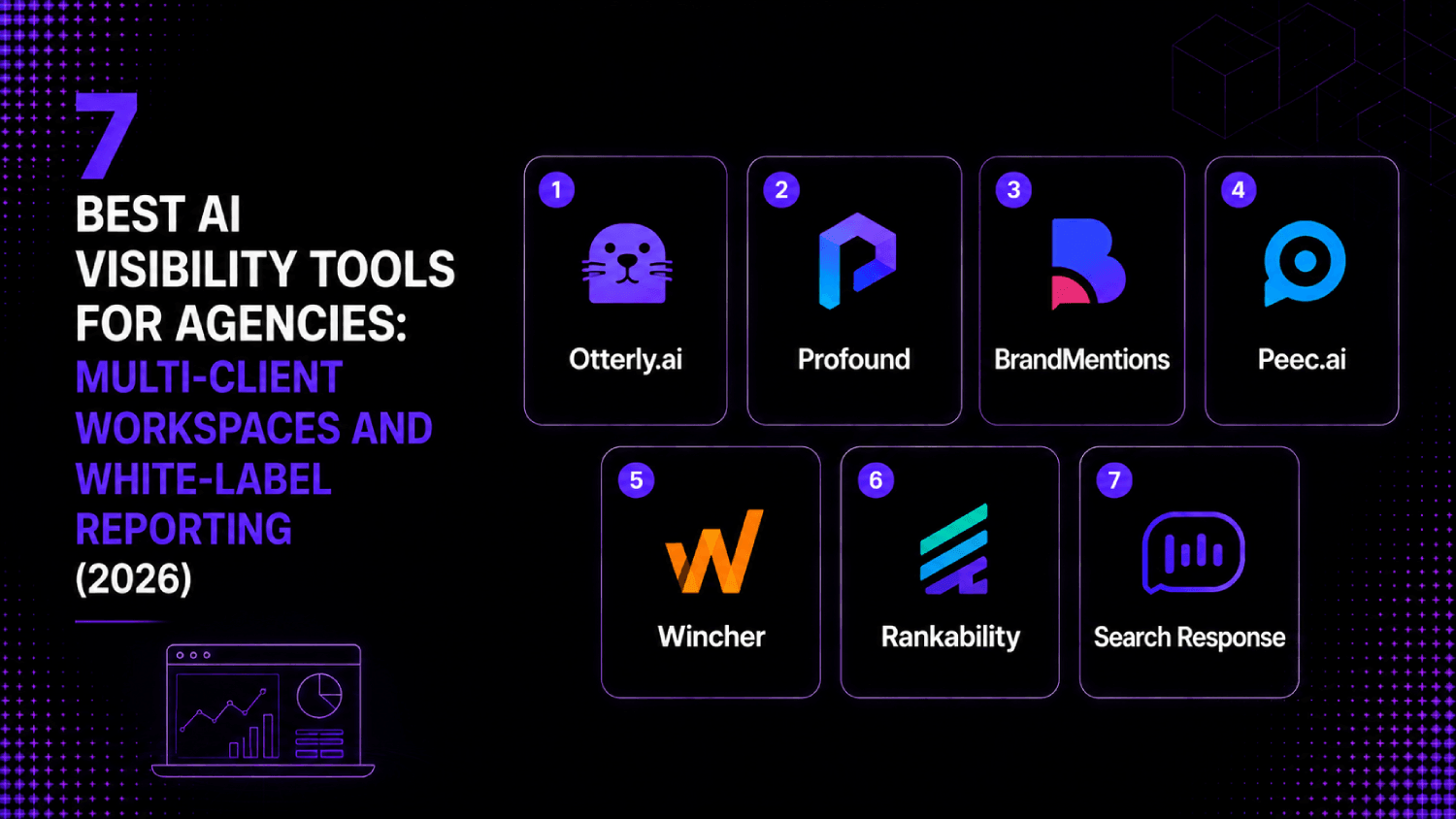
The best AI visibility tool for agencies managing multiple clients includes Otterly.ai, Profound, BrandMentions, Peec.ai, Wincher, Rankability, and Search Response. Each offers either a dedicated agency workspace, white-label reporting exports, reseller pricing, or per-client prompt tracking that makes the service economically viable to package and sell.
Why Single-Brand AI Visibility Pricing Breaks for Agencies
Most AI visibility platforms were built between 2023 and 2025 with a single customer archetype in mind: a brand’s in-house marketing team tracking one company across ChatGPT, Perplexity, Google AI Overviews, and Claude. The pricing reflects that assumption. You get one workspace, one set of tracked prompts, and one reporting view.
Agencies don’t have one client. A mid-size SEO or digital agency managing 15 to 40 clients can’t run 40 separate subscriptions at full retail and then resell the data at a margin. The math fails before the first invoice. What agencies actually need is a platform that treats each client as an isolated workspace, rolls up billing into a single agency account, and ideally produces a report that can carry the agency’s brand rather than the vendor’s logo.
This is the same structural problem agencies faced with traditional rank tracking a decade ago, and the vendors who won that market built for the reseller model from the start. The AI visibility market is in the early innings of that same transition.
If you want a broader view of the category before narrowing to agency-specific options, the 13 best AI visibility tools for tracking your brand in ChatGPT and Perplexity covers the full set of platforms. This article covers only the subset with genuine agency infrastructure.
What Makes an AI Visibility Tool Actually Work for Agencies?
Before the tool list, a framework. There are four checks that determine whether an AI visibility platform is viable for an agency at volume. We call this the AboutMartech Agency-Fit Test, and it applies regardless of how a vendor positions itself.
1. Workspace isolation: Can each client live in a completely separate environment with its own tracked prompts, its own brand entities, its own reporting, and no data bleed between clients? If the platform uses a single workspace with project folders, that’s not the same thing. Folder-based systems require manual discipline and break when two clients operate in overlapping categories.
2. White-label output: Can the report be exported under the agency’s brand, with the vendor’s name removed or suppressed? This matters for positioning. An agency that delivers a report with a competitor’s logo on it is training the client to go direct.
3. Per-client prompt tracking: Can the agency define a distinct prompt set for each client and get response-level data showing how often that client’s brand appears, in what context, and with what sentiment? Shared prompt libraries don’t work when a client is asking “what’s the best accounting software for small business” and another client is asking “best CRM for real estate.”
4. Reseller or agency pricing: Is there a pricing tier that reflects volume economics, either a flat agency fee, a per-seat-but-discounted structure, or a client-slot model where adding clients doesn’t trigger full-price seat additions?
A tool that passes all four is a genuine agency product. A tool that passes two or three is a workaround. The distinctions matter when you’re building a service you plan to sell.
The 7 Best AI Visibility Tools for Agencies
1. Otterly.ai , Best White-Label AI Search Reporting for Agencies
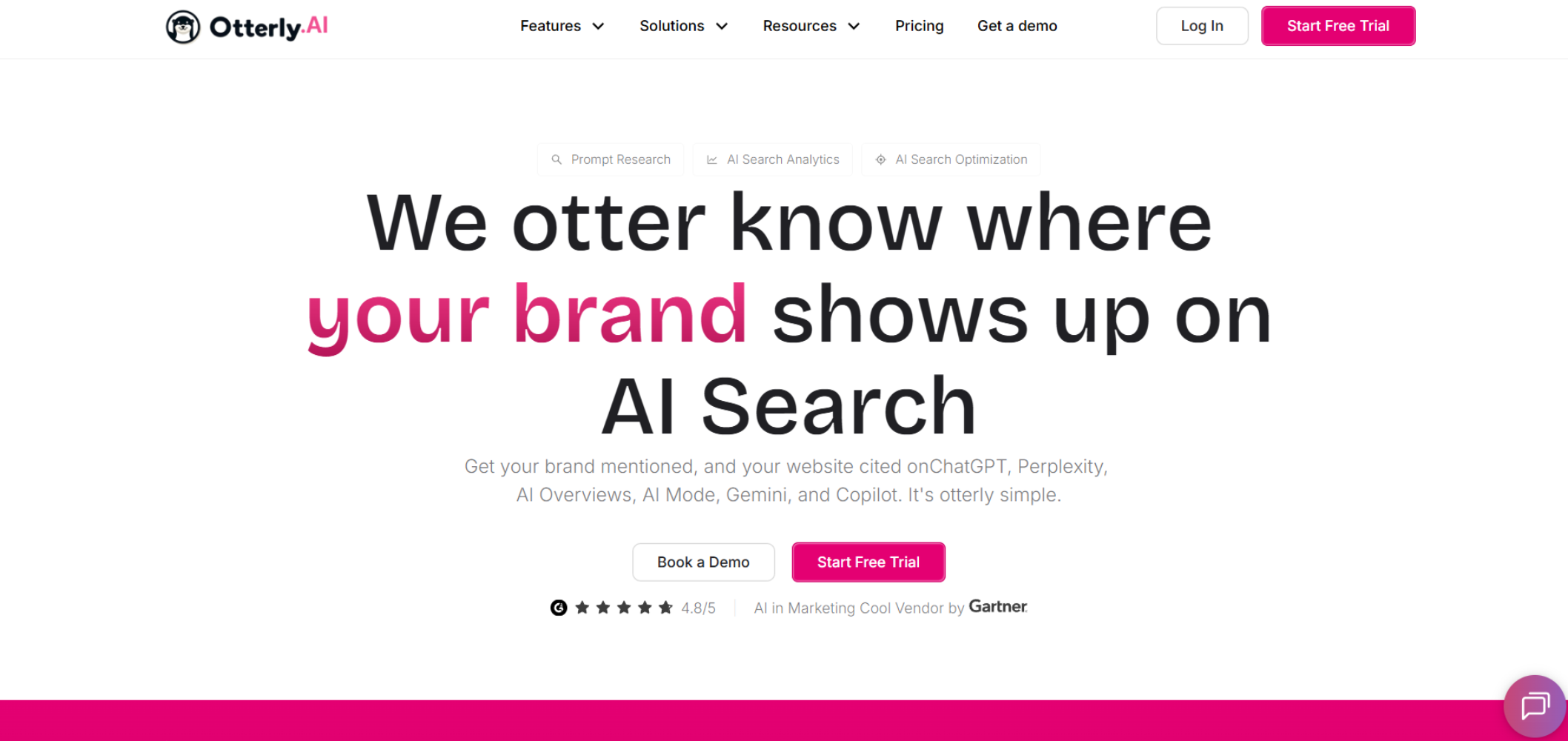
Otterly.ai was built with agency use cases in the product from early in its development. It tracks brand visibility across ChatGPT, Perplexity, Google AI Overviews, Bing Copilot, and Claude, and it offers multi-client workspace separation where each client gets an independent project environment with its own prompt sets and reporting views.
The white-label reporting capability is genuine. Agencies can export reports stripped of Otterly’s branding and add their own logo and color scheme. Per-client prompt tracking is granular: you define the queries for each client based on the actual prompts their target buyers are using, not a generic template. The agency plan pricing is structured around client slots rather than per-seat, which changes the math significantly when you’re managing more than five clients.
Where Otterly can feel limited is depth of competitor tracking. If a client needs side-by-side citation share data for six competitors across five AI engines, the interface requires more manual configuration than some alternatives. The Profound vs. Otterly head-to-head goes deeper on that specific comparison.
Best for: Mid-size SEO and digital agencies building a white-label AI search reporting service as a standalone deliverable.
2. Profound , Best for Per-Client Prompt Depth and Multi-Engine Coverage
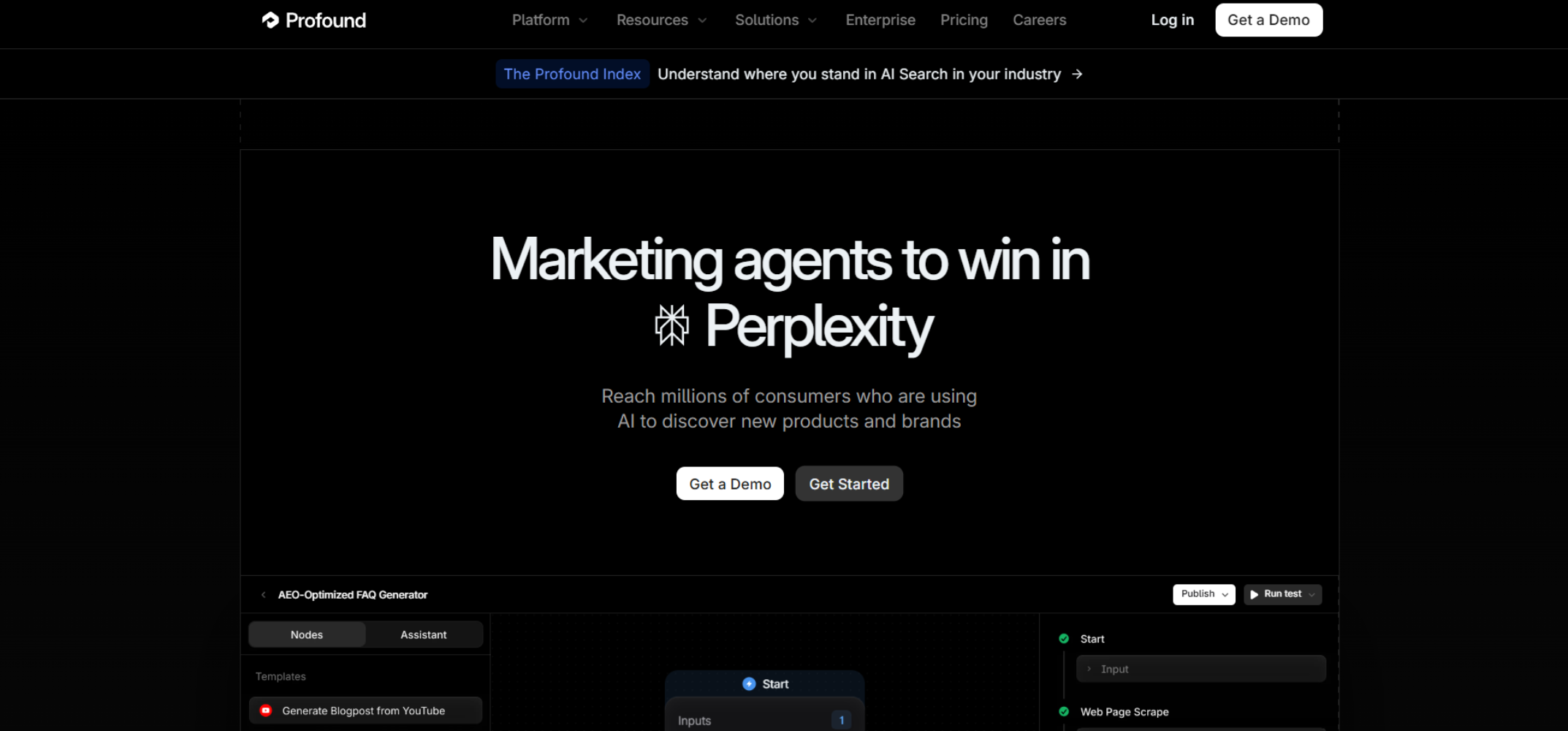
Profound is one of the most technically sophisticated AI visibility platforms available, covering a wide range of AI engines and providing response-level data that shows not just whether a brand was mentioned, but where in the response, with what framing, and alongside which competitors.
For agencies, Profound’s strength is in per-client prompt tracking at scale. You can build extensive prompt libraries for individual clients, run them across multiple AI engines, and get citation-level granularity. The platform supports multi-client management, and its reporting outputs are detailed enough to build an agency AI search reporting practice around.
The trade-off is price. Profound sits at the higher end of the market, and its pricing is not self-serve for agency tiers. You’ll need to request a demo and negotiate based on client volume. It is not the cheapest multi-client AI visibility platform, but for agencies with larger retainers and clients who need enterprise-grade data, it’s the most complete option available.
Best for: Agencies with larger, more sophisticated clients who need multi-engine, response-level citation analysis and are willing to pay for depth.
3. BrandMentions , Best for Agencies That Need AI Visibility Inside a Broader Brand Intelligence Package
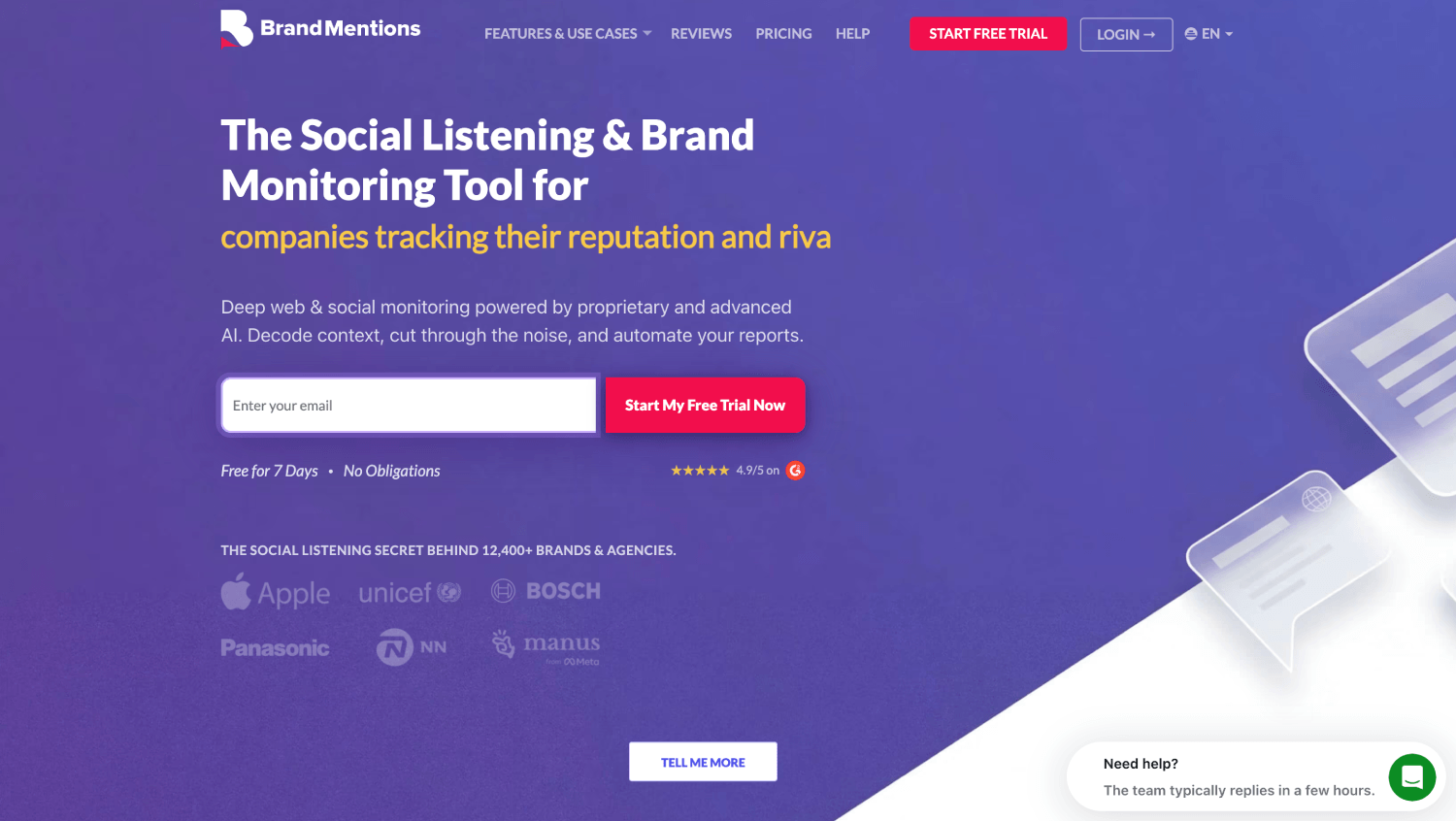
BrandMentions is primarily a brand monitoring platform, but it has extended its coverage to include AI-generated mentions, picking up when brands appear in AI engine responses alongside traditional web, social, and news monitoring.
For agencies that already sell brand monitoring as a service, BrandMentions is a natural extension. The multi-client structure is built for agencies: each client is a separate project, billing is consolidated, and reports can be white-labeled and scheduled for automated delivery. The platform’s reporting UI is one of the cleaner options in this list, which matters when the deliverable is going to a client who doesn’t live in marketing dashboards all day.
The limitation is specificity. BrandMentions approaches AI visibility from the monitoring direction, meaning it detects mentions when they occur rather than actively running prompts to test for citation probability. For agencies whose clients want to know “how often does ChatGPT mention us when someone asks about X,” a prompt-testing tool like Otterly or Profound gives more direct answers. BrandMentions is better suited to “show me every time our client appeared in an AI engine last month.”
Best for: Agencies bundling AI visibility into a broader brand monitoring retainer, particularly those already using BrandMentions for traditional media coverage.
4. Peec.ai , Best Geo-Targeted Multi-Client AI Visibility Tracking
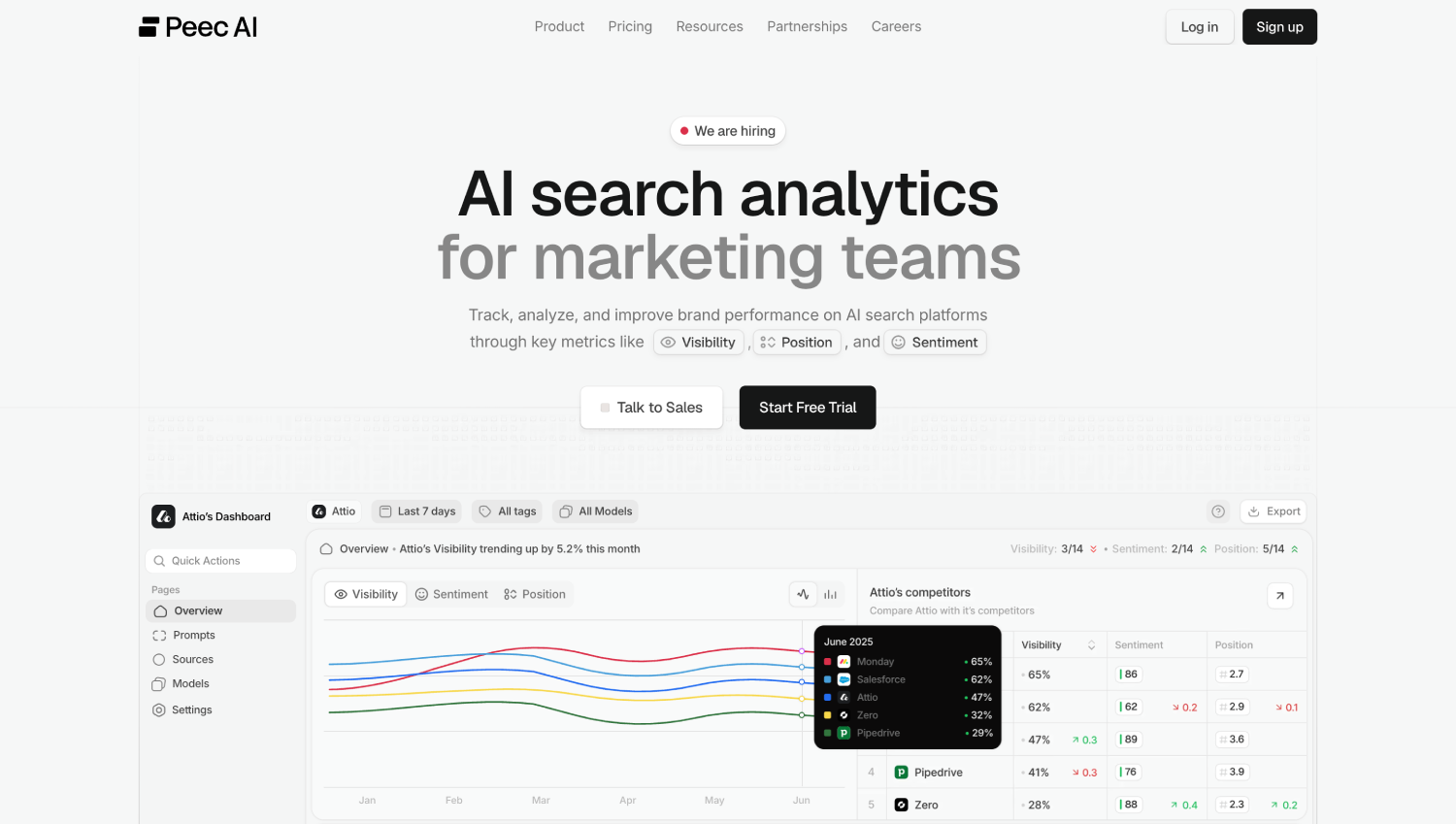
Peec.ai has carved out a specific niche in the AI visibility market: geo-targeted prompt tracking. The platform runs AI queries as if they’re being asked from specific locations, which matters for agencies with local or regional clients who need to understand whether their brand is cited differently in Chicago versus Dallas versus London.
This makes Peec.ai the strongest option for agencies running multi-client geo tracking. The white-label geo dashboard is an actual differentiator here, not a marketing claim. Agencies can show clients a geographic heat map of AI citation coverage, which is a genuinely novel deliverable compared to anything traditional SEO reporting offers. Per-client workspaces are supported, and the platform is designed with agency reseller pricing in mind.
The downside is that Peec.ai’s strength is also its constraint. If your clients are national brands with no geo-specific concern, some of the platform’s core value doesn’t apply. It’s purpose-built for location-sensitive AI search reporting, and generalist agencies may find the geo focus too narrow for their full client roster.
Best for: Agencies with local SEO or multi-location brand clients who need white-label geo dashboards showing AI citation coverage by region.
5. Wincher , Best Lightweight Agency Option for Teams Adding AI Visibility to an Existing SEO Retainer
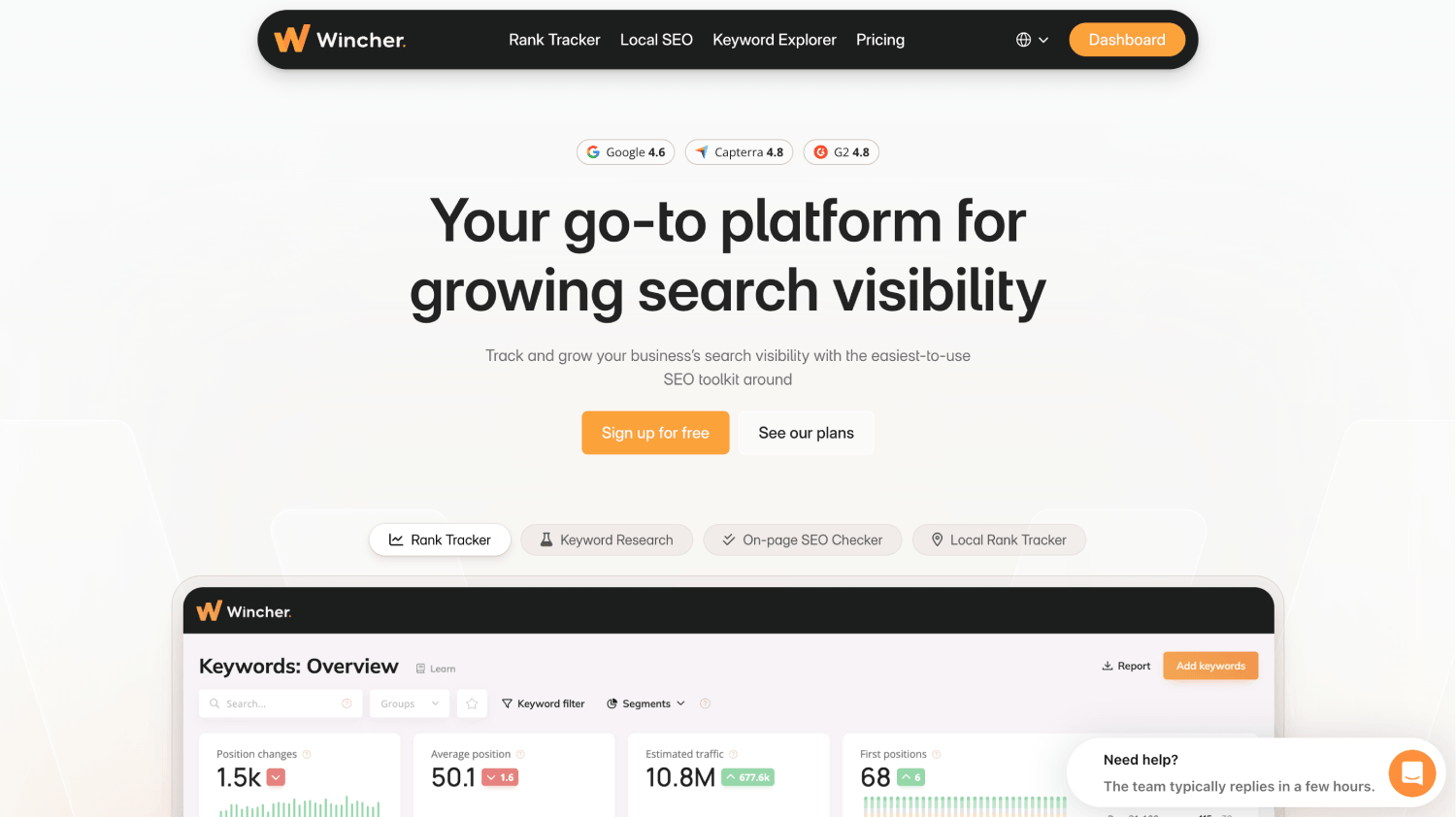
Wincher is primarily a rank-tracking platform that has added AI visibility features. For agencies that already use it for traditional keyword ranking, the agency plan gives multi-client access with white-label reporting and consolidated billing. Wincher publishes its agency plan pricing on its public pricing page at wincher.com/pricing, making it one of the more accessible options in this list without requiring a sales call.
The agency tier is priced with client volume in mind. Adding clients doesn’t trigger proportional cost increases at the same rate as single-brand plans, and the reporting templates are clean and brandable. The AI visibility coverage is not as deep as Profound or Otterly , it focuses primarily on Google AI Overviews and doesn’t offer the same prompt-level granularity as dedicated AI visibility platforms.
For agencies whose AI search reporting is a line item in a broader SEO retainer rather than a standalone service, Wincher is worth evaluating as an accessible entry point. It’s not the right tool if a client specifically wants per-prompt citation tracking across Claude and Perplexity. It is the right tool if you need something defensible and presentable to add to an existing deliverable package.
Best for: SEO-focused agencies adding AI visibility as a value-add to existing rank-tracking retainers without building a separate service line.
6. Rankability , Best for Agencies That Need AI Visibility Tied to Content Strategy
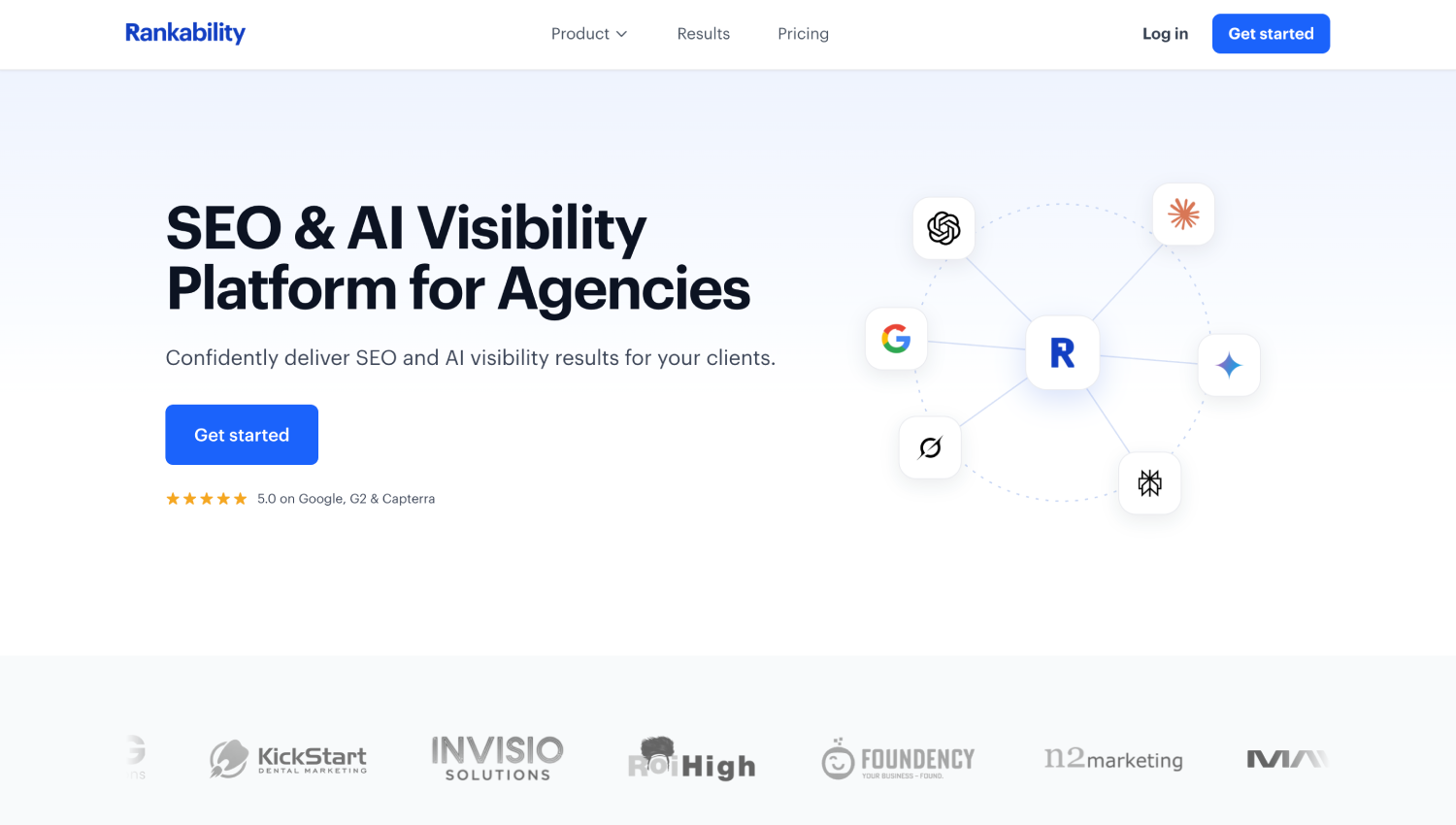
Rankability connects AI citation analysis to content recommendations. The platform identifies which topics and content assets are generating AI citations for a client, then suggests the content gaps that are causing competitors to appear instead. For agencies running content strategy alongside AI visibility reporting, this integration saves significant manual work.
The multi-client structure supports separate client environments, and the reporting can be produced under the agency’s brand. The pricing model is more content-volume-sensitive than client-volume-sensitive, which can work in an agency’s favor if you have clients with high content output but isn’t ideal if your clients are in lower-content verticals.
The agency AI search reporting angle here is distinct from the other tools on this list. Rankability positions the AI visibility data as input for content strategy, not just a performance metric. That framing is more useful for agencies selling content retainers than for those selling pure monitoring. Agencies evaluating the broader category of AI content tools should also review the 11 AI content tools marketers actually use in 2026 for context on where Rankability fits in the wider stack.
Best for: Content-led agencies that want to connect AI citation performance directly to editorial decisions and content gap analysis.
7. Search Response , Best for Agencies That Need Automated, Scheduled White-Label AI Visibility Reporting
Search Response focuses heavily on the reporting and delivery layer of AI visibility tracking. The platform runs prompts across major AI engines, logs citation data, and then packages that data into scheduled, white-labeled reports that go directly to the client contact if the agency prefers that workflow.
For agencies managing 20 or more clients, automated report delivery is not a minor convenience. It’s the difference between a service that scales and one that requires manual effort every month per client. Search Response’s agency tier is designed around this workflow, with branded report templates, scheduled delivery, and per-client prompt libraries that can be set once and run on a recurring basis.
The depth of data is not as granular as Profound or Peec.ai for geo-targeted needs, but for agencies whose primary deliverable is a clean, consistent monthly report showing AI citation trends, Search Response gets that job done with less operational overhead than any other tool on this list.
Best for: High-volume agencies (20+ clients) where automated white-label report delivery is more valuable than maximum analytical depth.
Per-Client Cost Comparison: Agency AI Visibility Platforms
The table below models what each platform costs on a per-client basis at agency scale. Where agency-tier pricing is not published on a public pricing page, that is noted and a sales conversation is required to get actual numbers. Numbers that reflect publicly available pricing pages are linked directly. Actual costs will vary based on volume, contract length, and feature tiers negotiated directly with vendors.
| Platform | Agency Pricing Model | Estimated Per-Client Cost (10 clients) | White-Label Reports | Workspace Isolation | Geo Tracking | Best-Fit Agency Size |
|---|---|---|---|---|---|---|
| Otterly.ai | Client-slot model, agency tier available | Quote-based; contact vendor for agency pricing | Yes | Yes, per-project | Limited | 5 to 30 clients |
| Profound | Enterprise/quote-based | Quote-based; contact vendor for agency pricing | Yes | Yes | Partial | 10+ clients, larger retainers |
| BrandMentions | Project-based agency plans | Quote-based; contact vendor for agency pricing | Yes | Yes, per-project | No | 5 to 20 clients |
| Peec.ai | Agency/reseller pricing available | Quote-based; contact vendor for agency pricing | Yes | Yes | Yes, core feature | Agencies with local/regional clients |
| Wincher | Agency plan with publicly listed pricing | See wincher.com/pricing for current agency rates | Yes | Yes, per-client | Limited | 5 to 50 clients adding AI to SEO |
| Rankability | Content-volume-based tiers | Varies by content volume; check vendor for current rates | Yes | Yes | No | Content agencies, 5 to 25 clients |
| Search Response | Agency tier, client-slot model | Quote-based; contact vendor for agency pricing | Yes, automated delivery | Yes | No | High-volume agencies, 20+ clients |
A note on the “cheapest multi-client AI visibility platform” question agencies frequently ask: Wincher is the only platform on this list with an agency plan priced on a public pricing page, meaning you can review the cost structure without a sales call. Peec.ai and Otterly may be more competitive for agencies where AI visibility is the primary deliverable, but you’ll need to request pricing to get the actual numbers. BrandMentions, Profound, and Search Response are all quote-based for agency tiers.
How Do Agencies Actually Report on AI Search Visibility?
The reporting workflow that works at agency scale looks different from what individual brands do. Most in-house teams log into a dashboard and pull data manually. That approach doesn’t scale past five or six clients.
Agencies that are operating this well have standardized on three report components. First, a prompt coverage metric: of the N prompts tracked for this client, what percentage returned a citation for their brand? This gives clients a number they can track over time. Second, a share-of-voice view: when the brand is cited, who else is cited in the same response, and how does citation frequency compare to competitors? Third, a change log: what moved, and what content changes or external events plausibly explain the movement?
The white-label piece matters more for the third component than the first two. When an agency is explaining why a client’s citation rate dropped and recommending what to do about it, that analysis should look like it came from the agency, not from a vendor’s template. That’s where white-label reporting transitions from a cosmetic feature to a client retention mechanism.
For agencies building out a GEO or AEO practice alongside AI visibility reporting, the 9 best AEO and GEO tools for getting cited by AI covers the content and optimization side of the equation that these visibility tools measure.
Can You Resell AI Visibility Tracking to Clients?
Yes, with conditions. Every platform on this list permits reselling in the sense that you can build a service using their data and charge clients for it. What varies is whether the vendor actively supports a reseller model with reseller pricing, white-label agreements, or client-slot billing that gives you a margin to work with.
Peec.ai and Otterly have the most explicitly agency-oriented reseller positioning. Both will discuss reseller pricing, and both offer the white-label geo dashboard or reporting exports that make the service presentable as your own. Profound and Search Response also support reselling but operate through more traditional enterprise sales conversations rather than self-serve reseller programs.
The practical question isn’t whether reselling is permitted , it’s whether the vendor pricing leaves you enough margin to make the service worth productizing. An agency charging clients $500 per month for AI visibility reporting needs a platform cost per client that leaves room for the analyst time, the reporting production, and the actual margin. At full single-seat retail pricing, that math often doesn’t work. At agency-tier pricing negotiated with volume, it usually does.
Which AI Visibility Tool Has Agency Pricing?
All seven platforms on this list have some form of agency pricing. The key differences are in how they structure it. Wincher’s agency plan is self-serve and publicly priced on their pricing page, meaning you can configure clients and start running without a sales call. That’s the exception. Most of the others , Profound, Peec.ai, Otterly, Search Response , require a conversation to get to agency-tier pricing.
That’s not a dealbreaker. Vendors with quote-based agency pricing are typically open to negotiating based on committed client volume, and the numbers you’ll get through a sales conversation will almost always be lower than what you’d pay stacking individual subscriptions. Come to that conversation with a specific number of clients, an estimated prompt volume per client, and whether you need white-label output , those three inputs define where you land on their pricing grid.
For agencies that are also evaluating how AI visibility fits into a broader GEO strategy, the guide on GEO vs. SEO in 2026: what changes, what stays, and what to do about it explains the underlying channel dynamics that make this category worth investing in.
Frequently Asked Questions: AI Visibility Tools for Agencies
What is the best AI visibility tool for agencies managing multiple clients?
Otterly.ai is the best starting point for most agencies because it combines genuine workspace isolation, per-client prompt tracking, and white-label reporting in a single platform designed for multi-client management. Profound is the stronger option for agencies with larger clients who need response-level citation analysis across more AI engines. The right choice depends on whether your primary need is operational simplicity (Otterly) or analytical depth (Profound).
Which geo tools offer white-label reporting for agencies?
Peec.ai is the most purpose-built option for white-label geo dashboards. It runs prompts from specified geographic locations and presents the citation data in a format agencies can export under their own brand. Otterly.ai and Search Response also offer white-label exports, though neither focuses on geo-targeted prompt simulation the way Peec.ai does. If regional or local AI citation coverage is a core client need, Peec.ai is the only platform on this list where geo is a first-class feature rather than an add-on.
How do agencies report on AI search visibility to clients?
The most effective agency AI search reporting format combines three components: a prompt coverage rate (how often the brand appears across tracked queries), a competitive share-of-voice metric (citation frequency relative to named competitors), and a month-over-month change log with explanatory context. White-label reporting tools like Otterly, Peec.ai, and Search Response let agencies produce these reports under their own brand. Automated scheduled delivery, available on Search Response, removes the manual work from high-volume client rosters.
Can I resell AI visibility tracking to clients?
Yes. All seven platforms covered here permit agencies to build services using their data and bill clients for it. Peec.ai and Otterly have the most explicit reseller positioning with dedicated agency and reseller pricing tiers. The unit economics depend on negotiating agency-tier rates based on committed client volume, not on whether reselling is technically permitted. At single-seat retail pricing, the margin rarely works. At negotiated agency pricing, it usually does.
What is the cheapest multi-client AI visibility platform for agencies?
Wincher is the only platform on this list with agency-tier pricing published on a public pricing page, which means you can evaluate the cost structure without a sales call. All other platforms on this list require a vendor conversation to get agency-tier rates. If your clients need geo-targeted tracking or deep prompt-level citation analysis, Wincher’s coverage may not be sufficient, and a Peec.ai or Otterly conversation will be worth the extra cost.
What is per-client prompt tracking, and why does it matter for agencies?
Per-client prompt tracking means the platform runs a distinct, client-specific set of queries against AI engines to measure how often and how prominently that client’s brand appears in responses. The alternative, a shared prompt library, doesn’t work at agency scale because different clients operate in different categories with different buyer language. Per-client prompt tracking lets an agency tell a cybersecurity client how often they appear when someone asks “what’s the best endpoint protection for SMBs” without that data mixing with a healthcare client’s prompt set.
How should agencies evaluate AI visibility tools before signing a contract?
Run the AboutMartech Agency-Fit Test before committing to any platform: check for workspace isolation (true client-level separation, not just folders), white-label output (the vendor’s logo can be removed), per-client prompt tracking (custom query sets per client), and reseller-friendly pricing (a per-client cost that leaves margin after analyst time). A tool that passes all four is built for agencies. A tool that passes two or three requires workarounds that cost time at scale.
How does AI visibility reporting differ from traditional SEO reporting?
Traditional SEO reporting measures ranking position in search results that users actively browse. AI visibility reporting measures citation frequency in AI-generated responses where users never see a ranked list at all. A brand can rank number one organically and still be absent from every ChatGPT response about its category. The two metrics are related , content quality and authority signals influence both , but they don’t move together reliably enough to use one as a proxy for the other. Agencies need to report on both separately. A clear breakdown of how the two channels diverge is in the GEO vs. SEO analysis.
The Bottom Line on Agency AI Visibility Tools
The single most important insight from evaluating this market is structural: AI visibility tools that were built for brands don’t become agency tools by adding a “switch client” dropdown. The workspace isolation, white-label reporting, per-client prompt architecture, and reseller pricing have to be in the product’s original design. Agencies evaluating these platforms should test workspace isolation early in any trial, specifically by asking whether two client environments in the same account can have entirely separate prompt libraries, separate reporting, and separate user access without any configuration overlap.
The economics of reselling AI visibility tracking are workable, but only if you negotiate the right contract. The vendors who want the agency channel will make room for margin. The vendors who haven’t prioritized agencies will offer you a volume discount on single-brand pricing, which is different. The distinction between a client-slot pricing model and a discounted-seat model is worth understanding before you sign anything. One model keeps your cost flat as you add clients; the other scales linearly.
For agencies that get this right, AI search reporting becomes a durable service line. The category is growing, clients don’t yet know what benchmarks look like, and a consistent monthly deliverable with a clear metric is exactly what retainer relationships are built on. The agencies that build the internal workflow now, around the right platform, will have a defensible practice before the category gets crowded. The ones still running manual demos of a single-brand tool for every client won’t.