- Most DTC loyalty programs fail not because the concept is wrong, but because they run on undifferentiated point mechanics that train customers to wait for discounts instead of buying at full price.
- The platforms that actually move repeat purchase rate share one trait: they connect loyalty data to your broader customer data stack, not just your cart.
- Shopify merchants on tight budgets have strong options under $200/month (Smile.io, Rivo, Stamped.io); brands with complex rules engines or enterprise volume need Talon.One or Open Loyalty.
- Yotpo Loyalty earns its position at the top of most shortlists by combining reviews, SMS, and loyalty in a single data model, but it requires budget and a willingness to consolidate more of your stack with one vendor.
- The right loyalty platform for a 50-SKU skincare brand is almost never the right platform for an omnichannel apparel brand with a physical retail footprint.
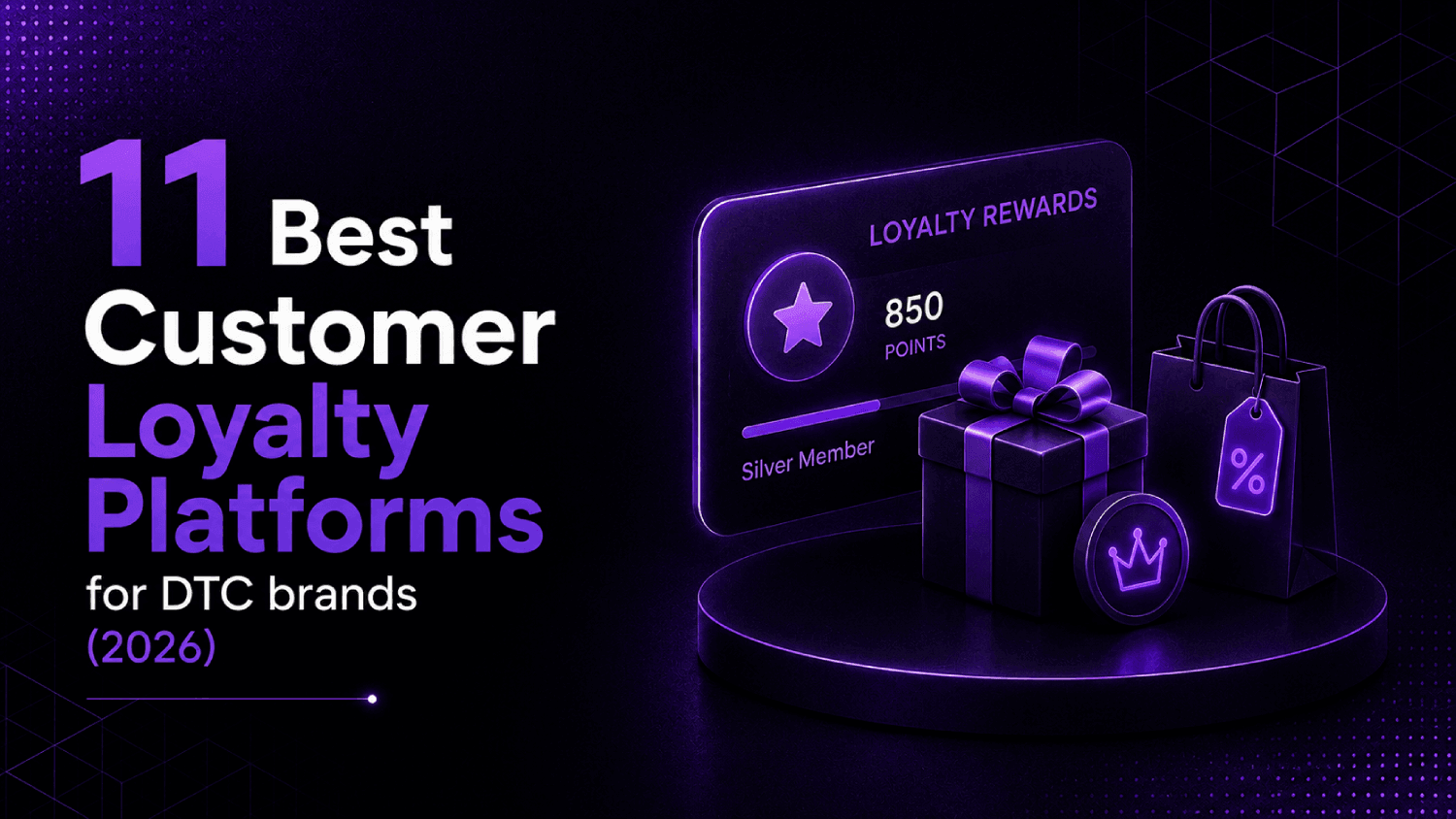
The best customer loyalty platforms for DTC brands in 2026 are Yotpo Loyalty, Smile.io, Talon.One, Open Loyalty, LoyaltyLion, Stamped.io, Okendo Loyalty, Rivo, Antavo, Marsello, and Zinrelo. Yotpo leads for brands already consolidated on its platform; Smile.io and Rivo are the strongest Shopify-native picks for SMBs; Talon.One and Open Loyalty serve complex, API-first requirements; and Antavo is the clearest choice for omnichannel programs spanning retail and ecommerce.
Why most loyalty programs are discount engines wearing a costume
The skepticism is earned. A standard earn-and-burn points program where one dollar equals one point and 100 points equals one dollar off is, mathematically, a 1% discount program with extra steps. Customers figure this out quickly, and the brands that run them spend money to train their best buyers to hold off on purchases until they’ve accumulated enough points to take a discount.
What separates a loyalty platform from a coupon engine is program architecture. Platforms that let you configure tiered status, experiential rewards, early access mechanics, and referral loops give customers reasons to engage that aren’t purely transactional. The infrastructure to build that kind of program, and to connect it to your email, SMS, and CDP layers, is what you are actually buying when you evaluate loyalty software.
To illustrate the economics: imagine a hypothetical DTC supplements brand doing $3M in annual revenue, where 40% of orders come from repeat customers and average order value runs $65. A purely discount-based loyalty program giving back 5% in points costs $60K in annual redemption value on repeat purchases alone, before accounting for customers who bought at full price and then waited to redeem. A well-configured tiered program with early access to new products and free samples at the top tier can generate the same repeat rate with a fraction of the redemption cost, because the perceived value of the reward exceeds its actual cost to the brand. That gap between perceived and actual reward cost is where loyalty platforms earn their keep.
The AboutMartech Loyalty Stack-Fit Test: four checks before you buy
Before evaluating any specific platform, run these four checks. They will eliminate half the market immediately.
Check 1: Shopify-native or API-first? If you run Shopify and don’t have a dedicated engineering resource, you need a platform with a certified Shopify app, native checkout extension support, and pre-built integrations with Klaviyo and your review tool. If you have engineers and complex rule requirements, you need an API-first platform that won’t constrain your logic.
Check 2: How does loyalty data flow to your marketing stack? A loyalty platform that doesn’t push tier status, point balances, and redemption events to your ESP or CDP is a dead end. You want to be able to segment “Gold tier members who haven’t purchased in 60 days” in Klaviyo or your customer data platform, not just in the loyalty dashboard.
Check 3: What is the redemption mechanics model? Platforms differ on whether rewards are issued as discount codes, store credit, gift cards, or free product. Each has different accounting treatment and different customer behavior implications. Free product rewards, for example, pull customers back into the purchase experience rather than reducing the value of a transaction they’ve already committed to.
Check 4: Pricing model versus your order volume. Several platforms price per order or per monthly active members. At 5,000 orders per month, a per-order fee compounds fast. Get the per-order or per-MAM rate in writing before you sign.
What should a loyalty platform cost?
Pricing across this category ranges from free tiers on Smile.io and Rivo to custom enterprise contracts running well into five figures annually for platforms like Talon.One and Antavo. The table below reflects publicly available pricing as of each vendor’s public pricing page. Quote-based platforms are noted as such.
| Platform | Starting Price | Pricing Model | Free Tier | Best For |
|---|---|---|---|---|
| Yotpo Loyalty | Quote-based | Per plan / custom | No | Mid-market to enterprise DTC |
| Smile.io | $49/month (Starter) | Flat monthly | Yes (limited) | Shopify SMBs |
| Talon.One | Quote-based | API calls / custom | No | Enterprise / API-first |
| Open Loyalty | Quote-based (cloud); self-hosted option | License / SaaS | Community edition | Enterprise, custom builds |
| LoyaltyLion | $359/month | Flat monthly (order caps) | No | Mid-market Shopify/BigCommerce |
| Stamped.io | $23/month (Basic) | Flat monthly | Yes (reviews only) | Shopify brands needing reviews + loyalty |
| Okendo Loyalty | Quote-based (bundle pricing) | Per module / custom | No | Brands already using Okendo Reviews |
| Rivo | $49/month | Flat monthly | Yes | Shopify SMBs on a budget |
| Antavo | Quote-based | Custom enterprise | No | Omnichannel / retail + ecommerce |
| Marsello | $135/month | Flat monthly | No | Omnichannel with POS |
| Zinrelo | Quote-based | Custom | No | Data-driven mid-market to enterprise |
The 11 best customer loyalty platforms reviewed
1. Yotpo Loyalty
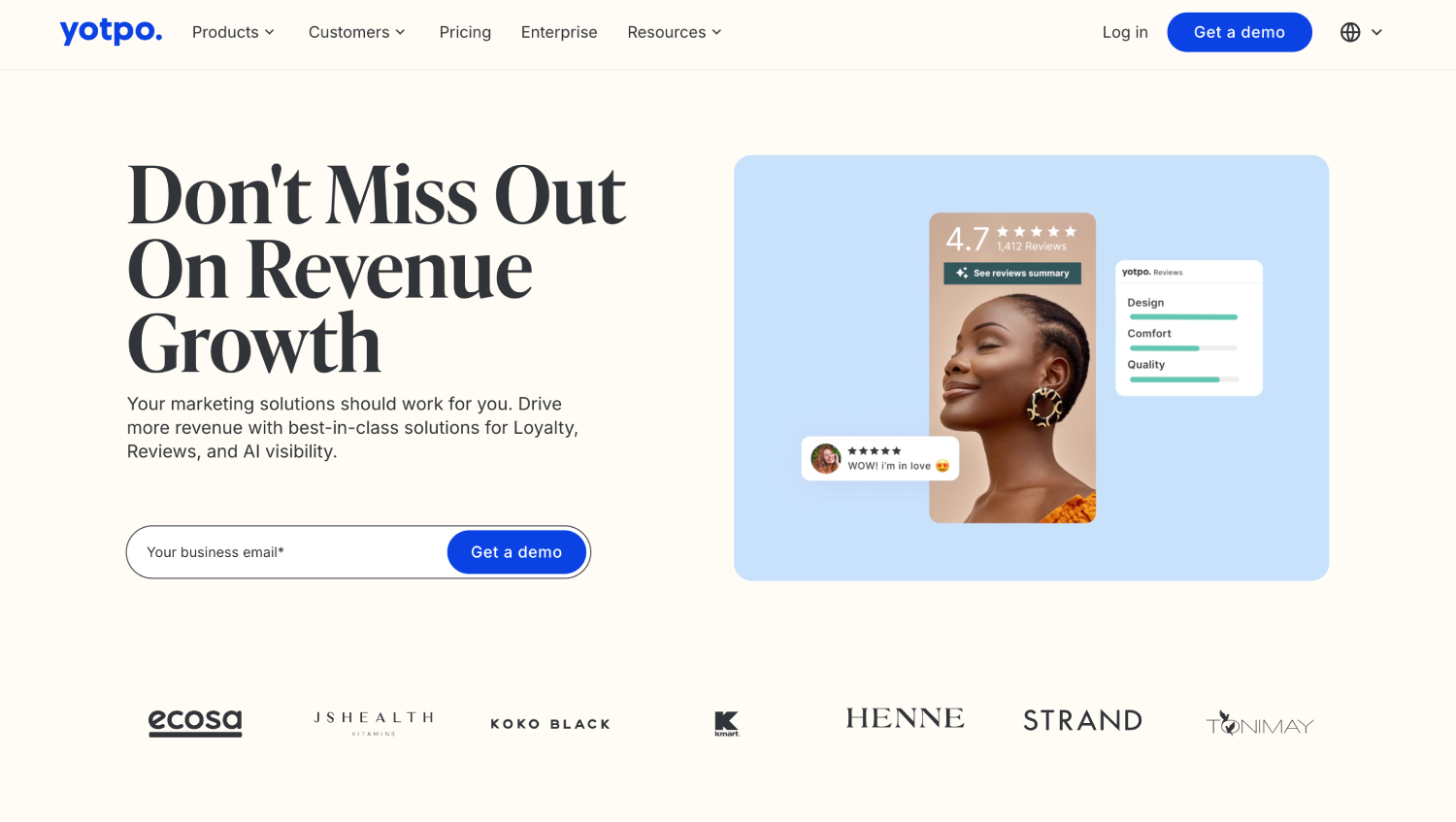
Yotpo Loyalty is the natural choice when a brand already uses Yotpo for reviews, UGC, or SMS. The platform’s core advantage is data consolidation: a customer’s review behavior, purchase history, referral activity, and loyalty tier live in one data model, which means you can actually act on combinations of those signals in your marketing. A customer who is Gold tier, has left three reviews, and hasn’t purchased in 45 days is a very different segment from a customer with no review history at the same tier and recency gap.
The program mechanics are strong: points, VIP tiers, referrals, and custom campaigns with expiry controls. Pricing is quote-based and meaningfully higher than SMB alternatives, so Yotpo Loyalty makes sense when you’re spending enough on the full suite to justify platform consolidation. Brands evaluating it as a standalone loyalty tool will find the math harder to justify.
2. Smile.io
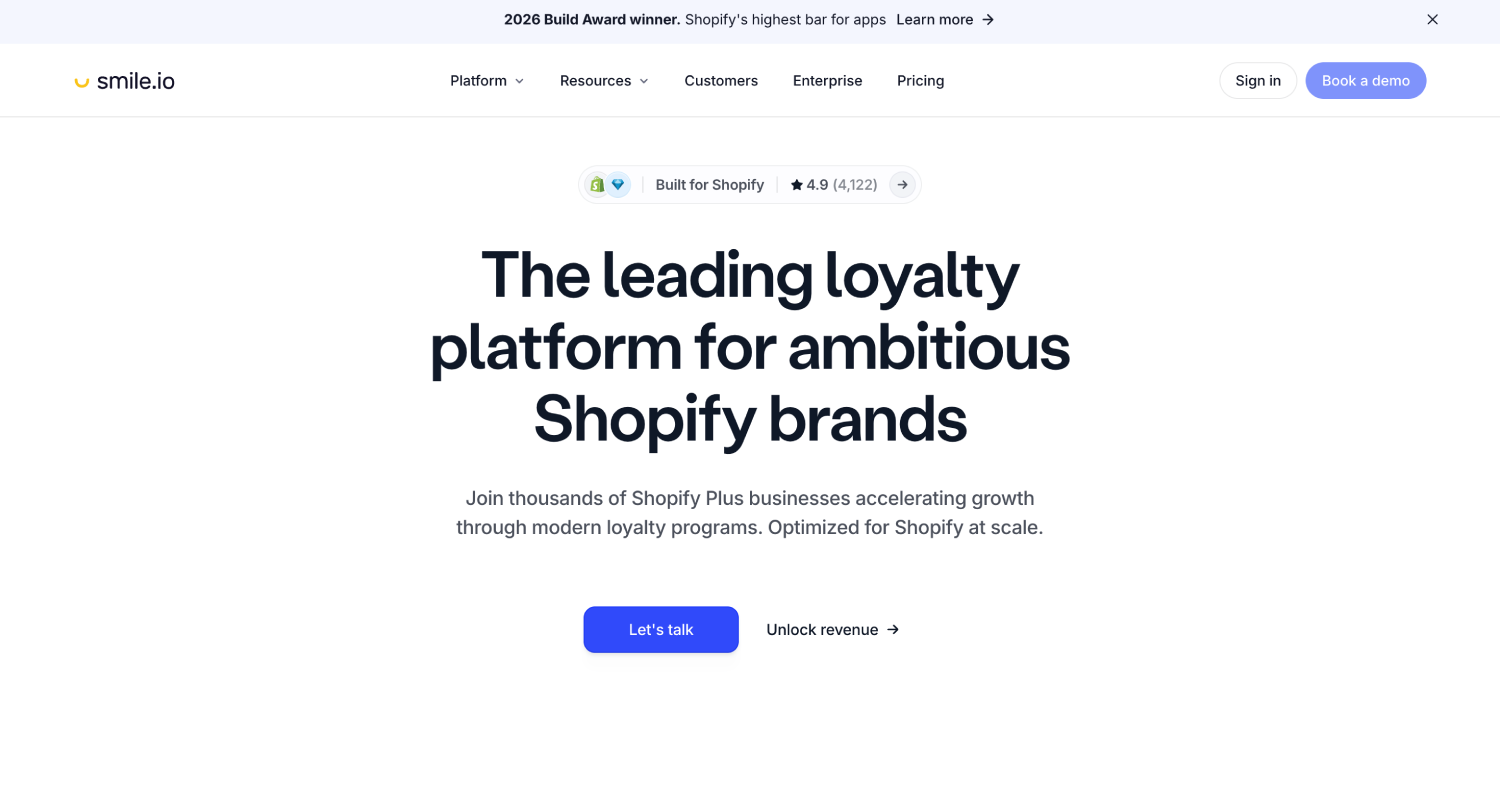
Smile.io has built the largest installed base of any Shopify loyalty app, and the reason is straightforward: it works out of the box in under an hour, the free tier is genuinely functional, and the program logic covers the majority of what a growing DTC brand actually needs. Points, referrals, and VIP tiers are all available on paid plans starting at $49/month.
The ceiling is real, though. Smile.io’s rules engine is less configurable than Talon.One or Open Loyalty, and its data integrations, while solid for Klaviyo, don’t match the depth of Yotpo’s native connections. For a Shopify brand under $5M in annual revenue that wants a loyalty program live before next quarter, Smile.io is the lowest-friction path.
3. Talon.One
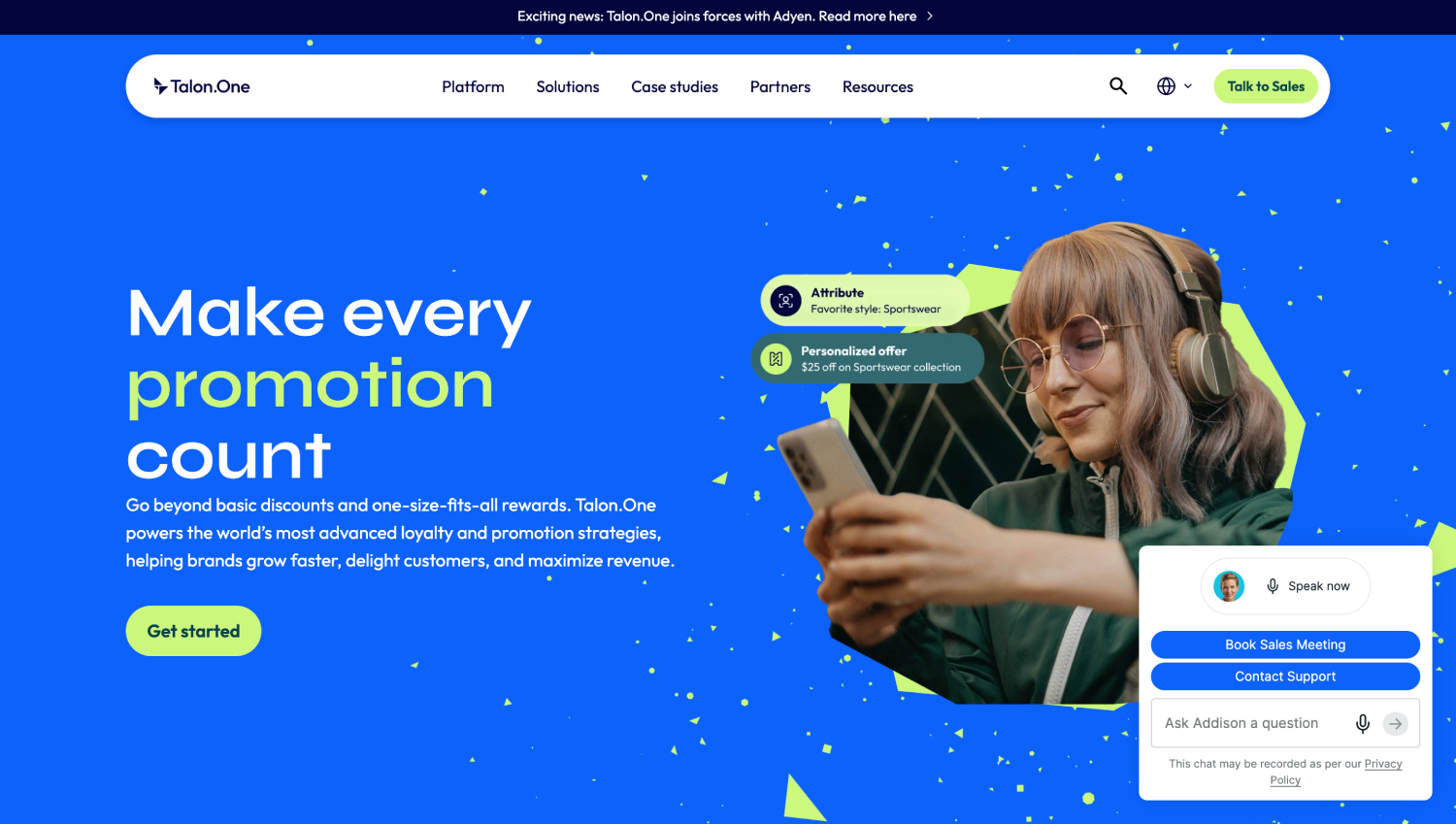
Talon.One is a promotions and loyalty engine built for engineering teams, not marketers clicking through a UI. Its rules engine is the most configurable in this category: you can define any condition, any trigger, and any reward type via API, which means the platform can model loyalty logic that no code-only tool can approximate. Loyalty points, coupon campaigns, referral programs, and cart-level promotions all run through the same rule set.
The tradeoff is implementation time. Talon.One is not a Shopify app you install on a Friday afternoon. Initial setup requires developer resources, and the platform is priced for companies with the budget to support that. For a DTC brand that has custom membership mechanics, multi-currency requirements, or loyalty logic that needs to interact with a mobile app and a physical retail system, Talon.One is frequently the only platform that can actually handle it.
4. Open Loyalty
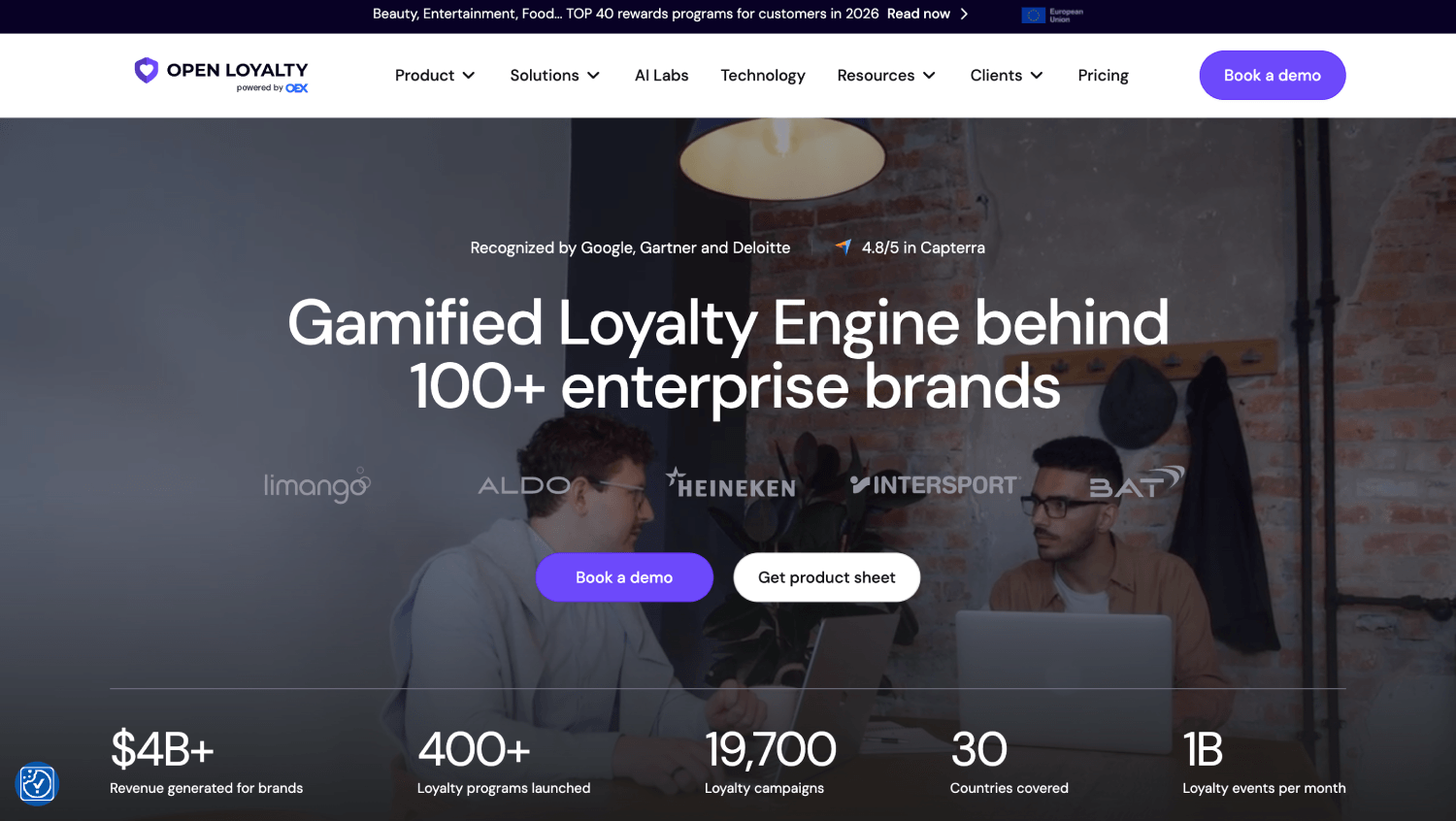
Open Loyalty is the only platform in this list that offers a true open-source, self-hosted option alongside its cloud SaaS product. That distinction matters for brands with data residency requirements, heavily customized frontends, or engineering teams that want to own the loyalty layer completely. The community edition gives you the core engine without a license fee; the enterprise cloud product is quote-based.
Program features are comprehensive: points, tiers, rewards catalog, campaigns, and a built-in gamification layer. The platform’s API is well-documented, and its headless architecture makes it genuinely composable in a way that hosted SaaS tools are not. Brands building on a modern commerce stack with a headless frontend should put Open Loyalty at the top of their evaluation list.
5. LoyaltyLion
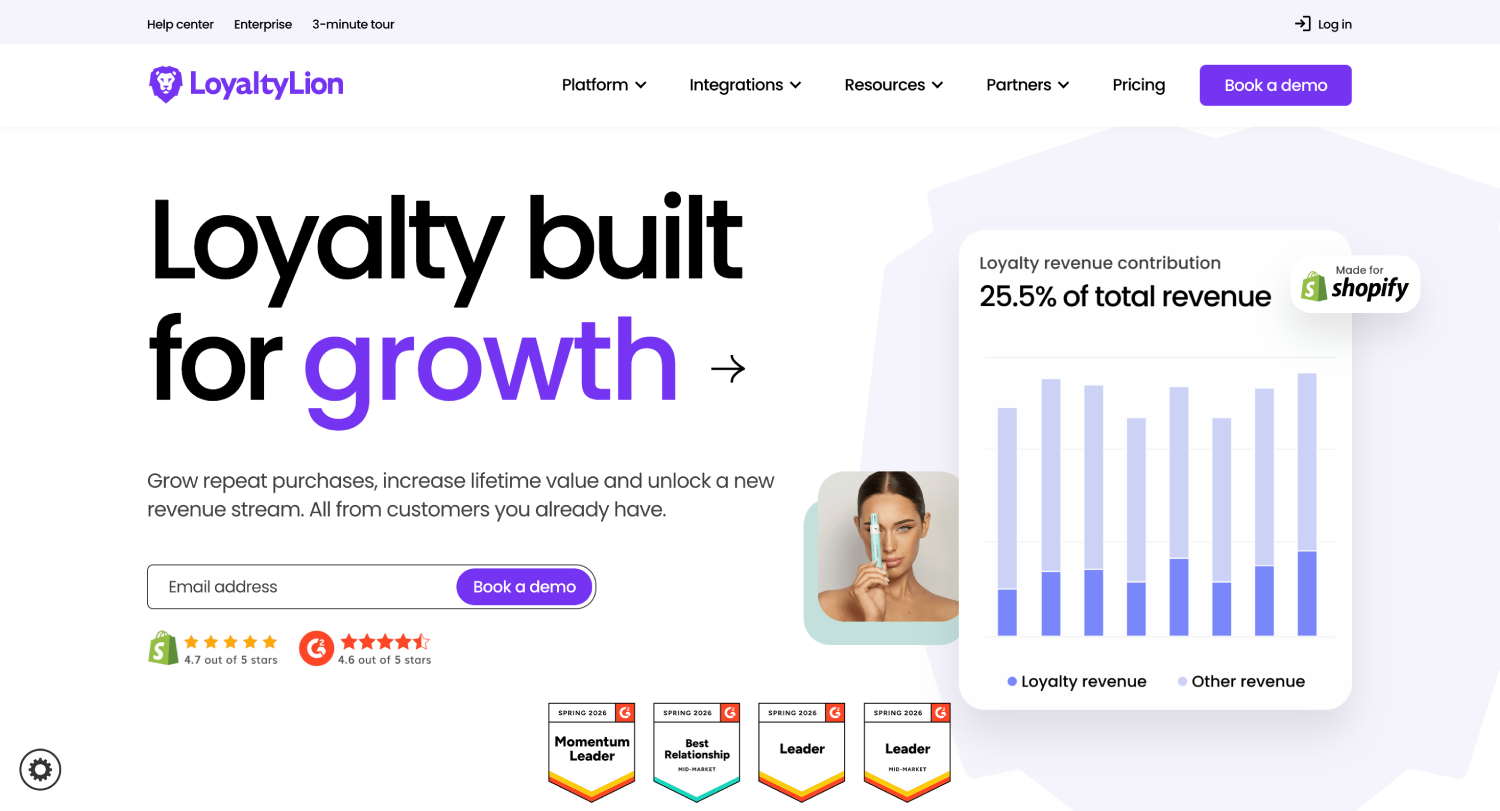
LoyaltyLion sits between Smile.io’s simplicity and Talon.One’s complexity, which makes it a natural fit for mid-market Shopify and BigCommerce brands. Its analytics dashboard is among the strongest in the SMB segment, surfacing repeat purchase rate, loyalty-influenced revenue, and cohort-level engagement without requiring a separate BI tool. Plans start at $359/month with order volume caps, so high-volume merchants need to model the cost carefully.
The Klaviyo integration is deep enough to pass loyalty data as custom properties, enabling meaningful segmentation in email and SMS flows. LoyaltyLion also supports in-store redemption through POS integrations, which matters for DTC brands that also run pop-ups or showrooms.
6. Stamped.io
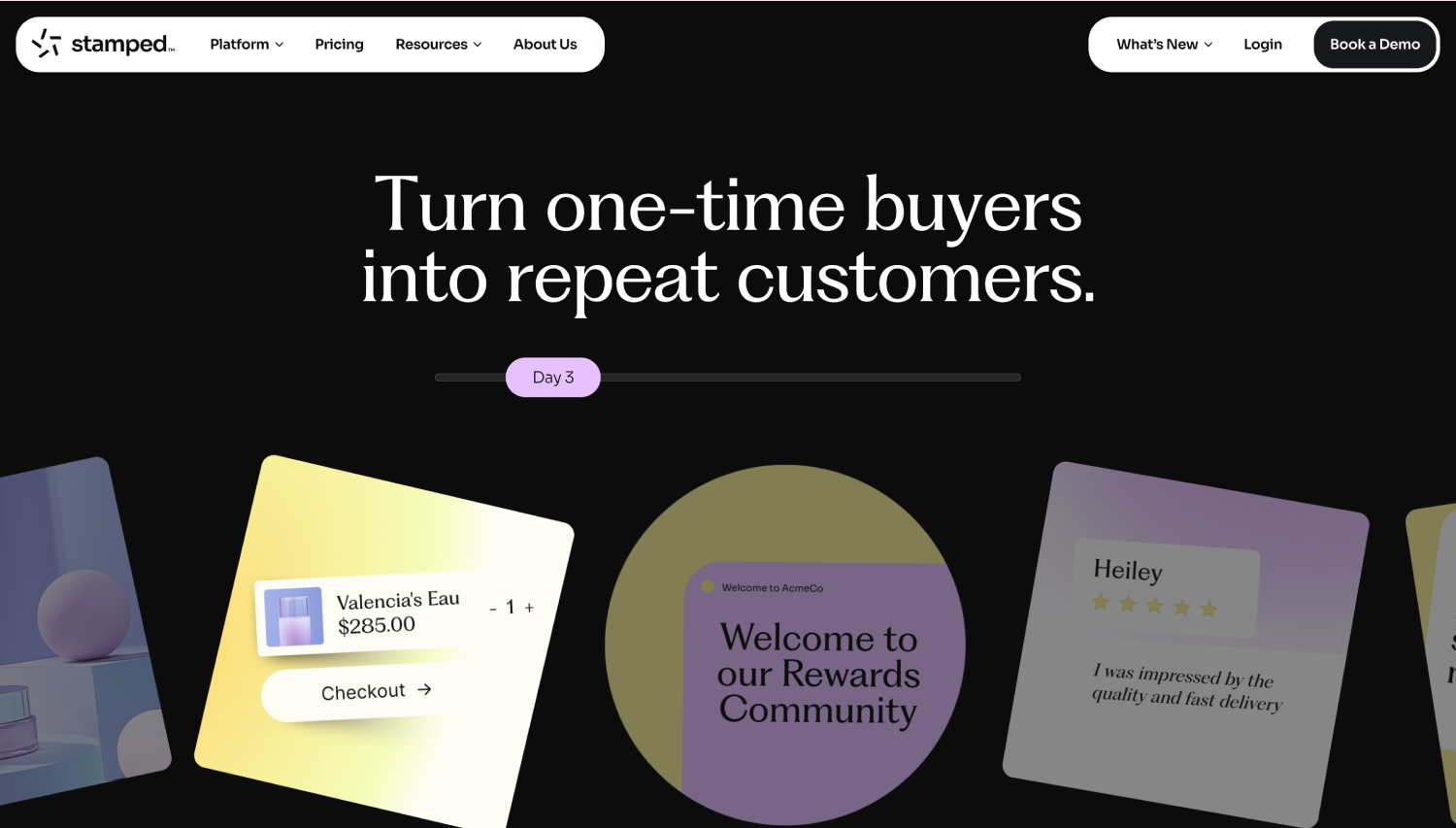
Stamped.io bundles product reviews, NPS, and loyalty in a single platform, and its entry-level pricing makes it one of the more accessible options for growing Shopify brands. The loyalty module handles points, referrals, and VIP tiers. Where Stamped.io earns its place is in the reviews-to-loyalty connection: you can reward customers for leaving reviews, which drives both UGC volume and program engagement simultaneously.
The loyalty logic isn’t as flexible as LoyaltyLion’s at higher tiers, and the UI is occasionally clunky. But for a brand spending under $100/month that wants reviews and loyalty in one dashboard, Stamped.io avoids the integration overhead of running two separate tools.
7. Okendo Loyalty
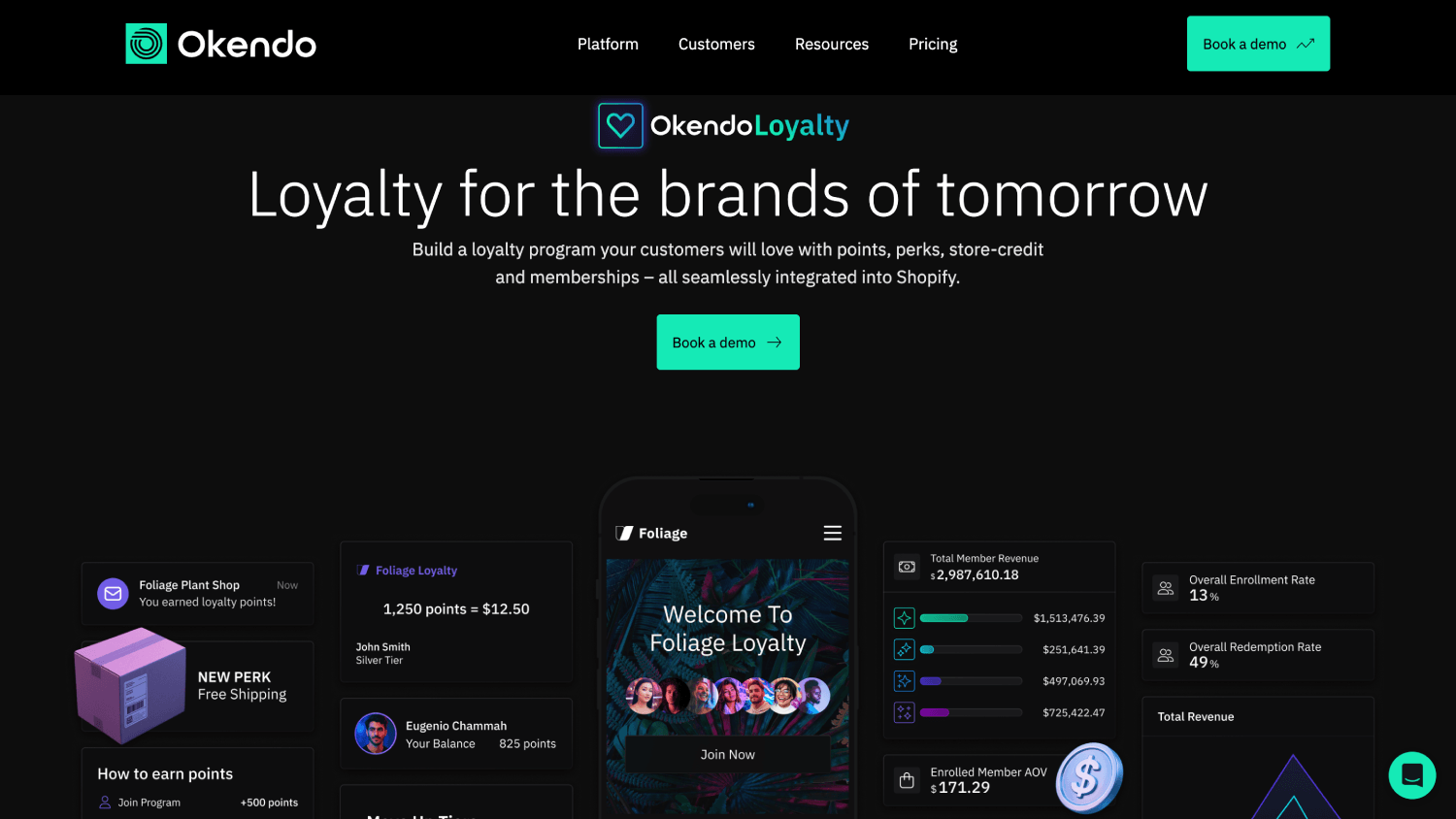
Okendo Loyalty follows the same bundle logic as Stamped.io but targets the upper end of the Shopify market. Okendo built its reputation on reviews and quizzes, and its loyalty module plugs into that existing customer profile data. The result is a loyalty program that can factor in review behavior, quiz responses, and purchase history when determining reward eligibility.
Pricing is quote-based and typically bundled with the reviews module, which means Okendo Loyalty is most defensible for brands already paying for Okendo Reviews. As a standalone loyalty purchase, the cost-to-feature ratio doesn’t compete with LoyaltyLion or Smile.io at equivalent spend levels.
8. Rivo
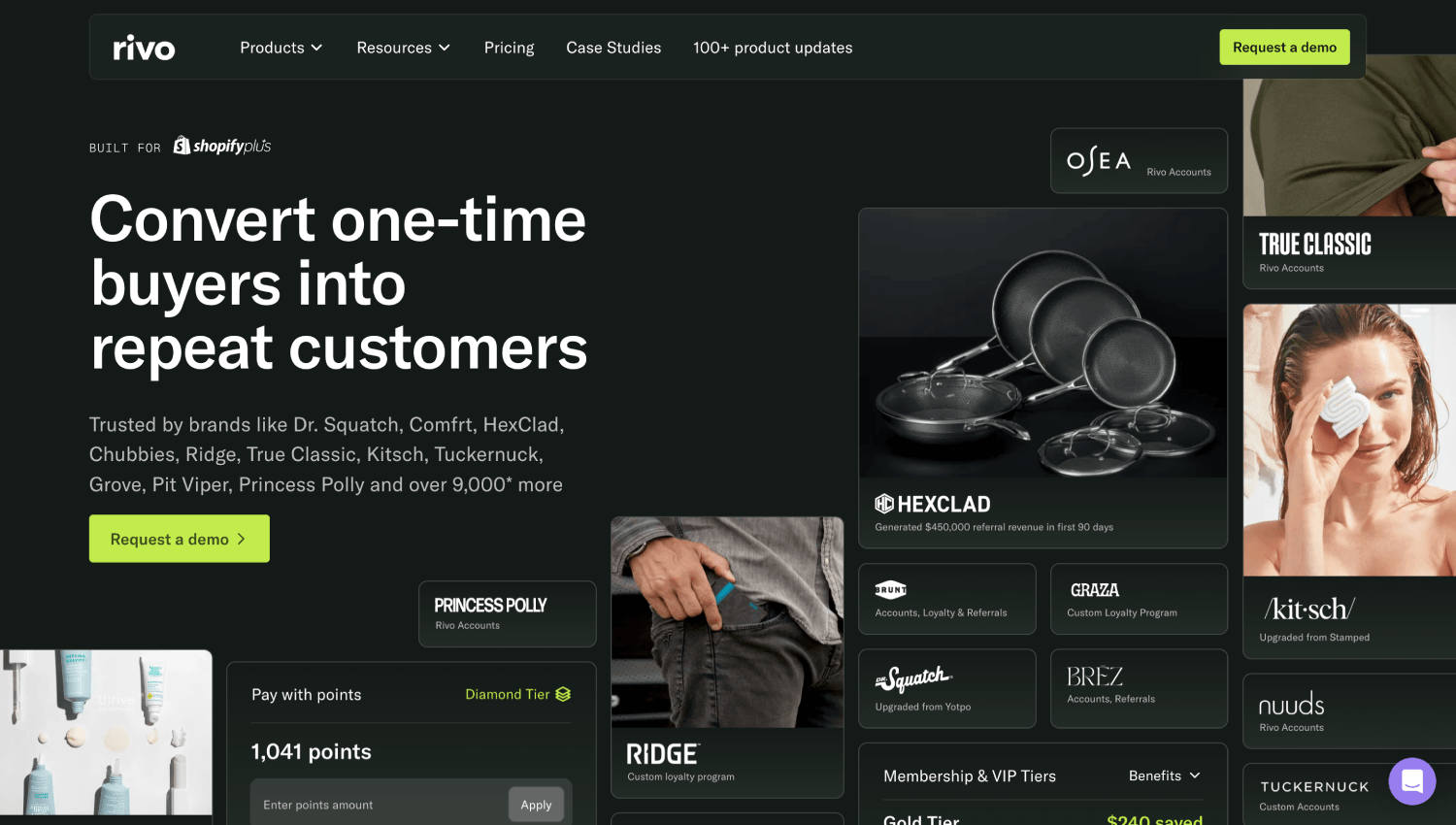
Rivo is the fastest-growing challenger in the Shopify loyalty app market, and its free tier is genuinely competitive with Smile.io’s paid entry tier. Points, referrals, and a basic VIP program are available without a subscription, with Rivo monetizing through revenue-share on higher plans. Paid plans start at $49/month.
The platform’s design sensibility is strong, the onboarding is fast, and the Klaviyo and Postscript integrations are pre-built. For a Shopify brand in early growth mode that wants to run a real loyalty program without committing to a six-month contract, Rivo is the lowest-risk starting point. If you’re also evaluating SMS marketing apps for your Shopify store, Rivo’s Postscript integration means loyalty events can trigger SMS flows without custom middleware.
9. Antavo
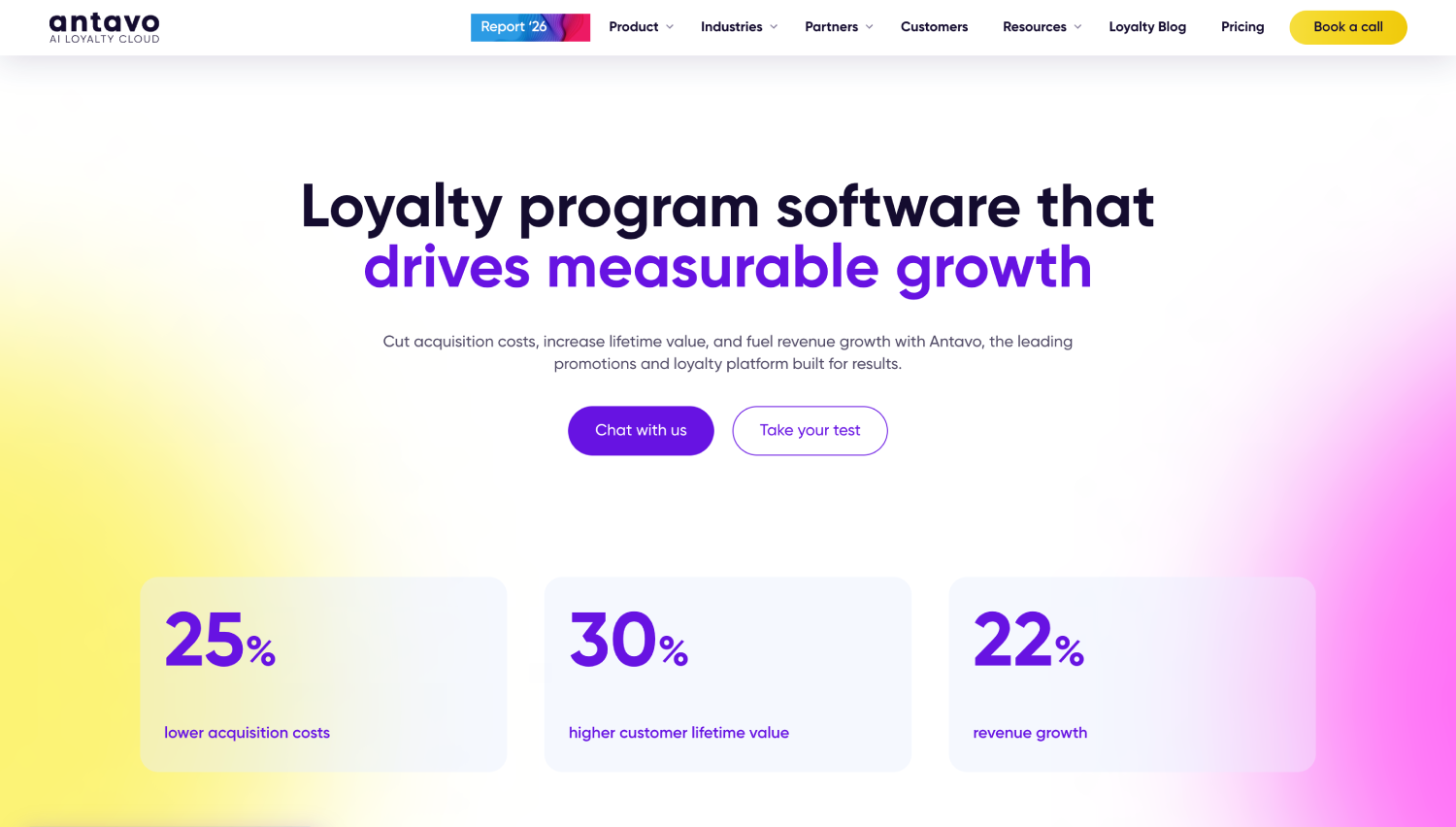
Antavo targets enterprise brands running loyalty programs across both ecommerce and physical retail. Its Loyalty Cloud is purpose-built for omnichannel complexity: the same tier status, point balance, and reward history follows a customer whether they bought online, in-store, or through a branded mobile app. Pricing is enterprise and quote-based.
Antavo’s program configuration goes deeper than most: gamification mechanics, paid loyalty tiers (think Amazon Prime’s model), partnership rewards, and experiential benefit management are all native. For a mid-sized apparel or beauty brand with 50-plus retail locations and an ecommerce operation, Antavo solves problems that Smile.io and Rivo aren’t designed for.
10. Marsello
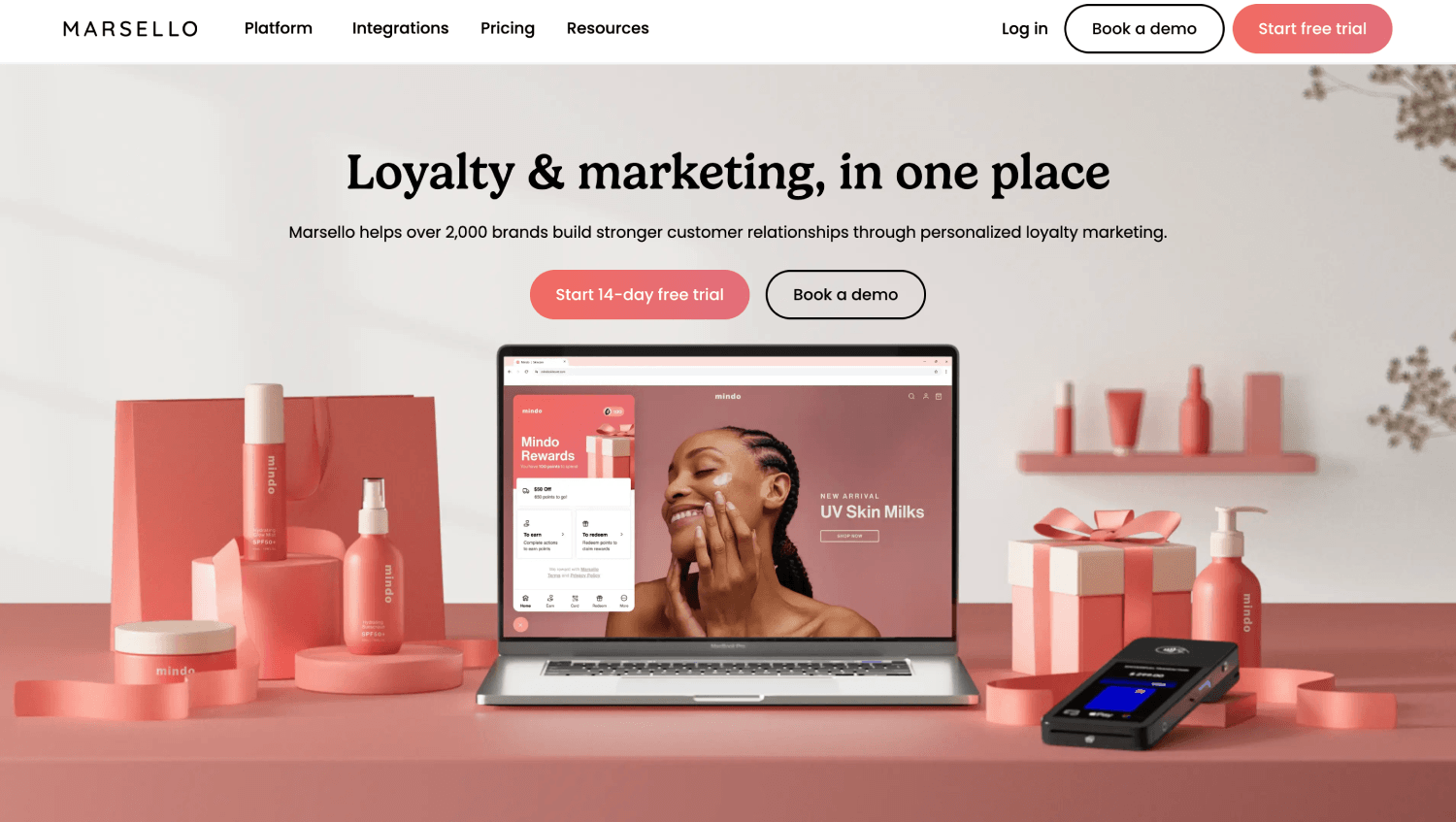
Marsello combines loyalty, email marketing, and POS integration in one platform, which makes it unusual in this category. It connects to Shopify, BigCommerce, WooCommerce, Lightspeed, and Vend, giving omnichannel DTC brands a single tool to manage loyalty and marketing automation without stitching together separate platforms. Plans start at $135/month.
The email marketing functionality is competent but not as deep as dedicated ESPs like Klaviyo. Marsello’s value proposition is consolidation: if you currently pay separately for a loyalty app and an email tool, Marsello may reduce your total stack cost while adding POS-level loyalty tracking.
11. Zinrelo
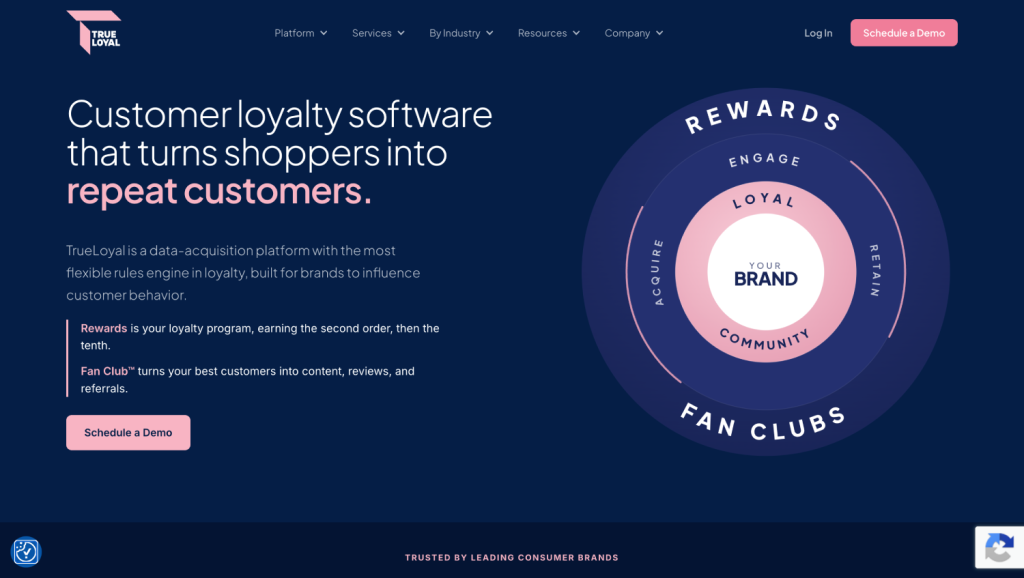
Zinrelo (part of true loyal) differentiates on data science and program analytics. The platform includes a built-in analytics layer that surfaces cohort-level loyalty performance, redemption patterns, and program ROI in more depth than most competitors. Pricing is quote-based and positioned at mid-market to enterprise.
Zinrelo supports multi-channel programs spanning ecommerce, retail, and mobile, and its integration library covers the major ESPs and CRMs. The deeper analytics capability makes it worth evaluating for brands that want to treat loyalty as a measurable revenue channel rather than a line item, though the data depth requires someone on the team who will actually act on it. For teams investing heavily in connecting loyalty data across their stack, pairing Zinrelo’s output with a customer data platform or using reverse ETL to push loyalty events back into your warehouse can produce genuinely useful customer intelligence.
Which loyalty platform is best for Shopify specifically?
Shopify’s app marketplace has more loyalty options than any other commerce platform, which makes the decision simultaneously easier and more confusing. The certified Shopify Plus partners in this category include Yotpo, Smile.io, LoyaltyLion, Stamped.io, Rivo, Okendo, and Marsello.
For brands on Shopify Standard under $1M GMV: Smile.io free tier or Rivo free tier. Both install cleanly, connect to Klaviyo, and run a functional program without a monthly commitment.
For brands on Shopify Plus between $1M and $10M GMV: LoyaltyLion or Yotpo Loyalty, depending on whether you want a dedicated loyalty measurement layer or full platform consolidation. LoyaltyLion’s analytics are better for teams who want to own loyalty measurement themselves; Yotpo wins if you’re already paying for Yotpo Reviews and SMS.
For Shopify Plus brands above $10M GMV with custom requirements: Talon.One or Open Loyalty. Both require developer resources but remove the ceiling on what your program can do.
How does loyalty program data connect to the rest of the marketing stack?
The most common failure mode in DTC loyalty programs isn’t program design. It’s data isolation. A loyalty platform that stores tier status and point balances internally, without pushing events to your ESP, SMS tool, or customer data layer, is running a program that exists outside your marketing workflow.
The connection that actually matters is: when a customer moves from Silver to Gold tier, does that event trigger a Klaviyo flow within minutes? When a high-value loyalty member abandons a cart, does your SMS tool know their tier status when deciding whether to send a VIP offer or a standard recovery message? These are the integrations worth testing before you commit to a platform.
Platforms with native Klaviyo integrations that push loyalty properties as custom profile attributes: Yotpo, Smile.io, LoyaltyLion, Stamped.io, Rivo, Okendo, and Marsello. Talon.One and Open Loyalty handle this via API and webhooks, which is more flexible but requires engineering setup. Understanding how loyalty events flow through your data layer connects directly to broader questions about marketing attribution, specifically whether repeat purchases driven by loyalty can be correctly credited in your attribution model rather than defaulting to last-click direct.
Frequently asked questions about customer loyalty platforms
What is the difference between a loyalty platform and a rewards program app?
The terms are used interchangeably, but there’s a functional distinction worth noting. A rewards program app typically handles points, referrals, and basic tier mechanics through a pre-built UI with limited configuration. A loyalty platform, in the enterprise sense, offers a rules engine that can model complex program logic, multi-channel attribution of loyalty events, and API access for custom integrations. Smile.io and Rivo are rewards apps; Talon.One and Open Loyalty are loyalty platforms in the fuller sense.
Can loyalty programs actually improve repeat purchase rate, or is the data cherry-picked?
The vendors all publish case studies showing strong repeat purchase lift, and those numbers should be treated skeptically because they reflect the brands that succeeded, not the average. What is structurally true is that a well-configured program with tiered status and non-discount rewards gives high-value customers a reason to stay exclusive to your brand. Programs that only offer discount-based rewards often improve repeat rate while reducing margin per order, which is a net-neutral or negative outcome depending on your LTV math.
Is Talon.One worth the implementation cost for a mid-sized DTC brand?
Talon.One’s implementation cost is real, typically requiring at least several weeks of developer time for a clean integration. The platform earns that investment when your program logic can’t be expressed in a point-and-click rules builder, when you need loyalty to interact with a mobile app and a backend system simultaneously, or when you’re running multi-currency or multi-region programs. For a single-storefront Shopify brand with standard tier mechanics, Talon.One is almost certainly over-engineered and over-budget. LoyaltyLion or Yotpo covers that use case at a fraction of the cost.
What should I look for in a loyalty platform’s Klaviyo integration?
The minimum bar is bidirectional sync: loyalty events (tier change, points earned, reward redeemed) should flow into Klaviyo as custom profile properties and triggerable events within minutes, not hours. The higher bar is segmentation depth: can you build a Klaviyo segment of “Gold tier members with 500+ points who haven’t redeemed in 90 days” directly in Klaviyo without exporting a CSV? Yotpo, LoyaltyLion, and Smile.io all pass the minimum bar. Yotpo and LoyaltyLion come closest to the higher bar on native integration depth.
How does Open Loyalty’s open-source option work in practice?
Open Loyalty’s community edition is available on GitHub and can be self-hosted without a license fee. It covers core loyalty mechanics including points, tiers, rewards, and campaigns. The enterprise cloud version adds managed hosting, SLAs, professional support, and advanced features. Self-hosting makes sense for brands with engineering resources who need full data control, custom frontend flexibility, or regulatory constraints around data residency. Brands without a dedicated backend engineering team should use the cloud product or a different platform entirely.
Do loyalty platforms work for DTC brands that also sell wholesale or B2B?
Most of the platforms reviewed here are designed around consumer loyalty, not B2B account management. A brand selling both DTC and through wholesale accounts will find that most platforms handle consumer-facing mechanics well but struggle with account-level B2B logic. Talon.One and Open Loyalty are the most capable here because their rules engines can differentiate customer types programmatically. Platforms like Smile.io and Rivo are designed for consumer-facing Shopify stores and don’t handle B2B account structures well.
What is paid loyalty, and which platforms support it?
Paid loyalty is a membership model where customers pay a recurring fee for premium benefits, following the logic of Amazon Prime or Restoration Hardware’s RH Members program. Benefits typically include free shipping, early access, exclusive pricing, or bonus points multipliers. Antavo has the most developed paid loyalty feature set in this category. Yotpo and LoyaltyLion support paid tier configurations but with less dedicated tooling. This mechanic is worth evaluating for DTC brands with a customer base that shows strong engagement signals, because paid members have higher purchase frequency almost by definition given the sunk cost of the membership fee.
The platform is infrastructure. The program is strategy.
Picking the right loyalty software is a necessary condition for a functioning program, but it’s not sufficient. The brands that see genuine repeat-revenue lift from loyalty investment tend to share a few operational habits: they review redemption rates by tier at least monthly, they A/B test reward types rather than assuming points outperform free product, and they treat the loyalty platform’s data as an input to their segmentation strategy rather than a vanity dashboard. For teams thinking seriously about customer retention metrics, integrating loyalty signal data alongside the kind of behavioral tracking that feeds customer success workflows can surface at-risk high-value customers before they churn quietly.
The platform choice itself comes down to three variables: your commerce platform (Shopify or not), your team’s technical capacity (no-code vs. API-first), and your program complexity (standard tier mechanics vs. multi-channel custom rules). Brands that choose a platform mismatched to one of those three variables almost always end up either constrained by their tool or paying for complexity they never use.
The default assumption that loyalty is a discount program is a product of lazy program design, not an inherent feature of the category. The platforms built for experiential rewards, tiered status, and data-connected segmentation give brands the infrastructure to run something different. Whether they use it is a marketing decision, not a software limitation.