Rocketlane is one of the strongest customer onboarding and implementation platforms on the market, which is exactly why teams outgrow it in two directions. Smaller onboarding teams find they are paying for professional services automation (PSA) they never use, with a five-seat minimum on every plan. Larger services organisations find the opposite: they want deeper resourcing, financials or governance than Rocketlane’s Standard plan gives them.
We read the pricing page of Rocketlane and every alternative below on November 1, 2026, priced each one for a five-person and a ten-person team, and grouped them by the job you actually need done. If you are building a shortlist from scratch rather than switching, start with our customer onboarding software guide.
TLDR
- Rocketlane today: Standard is $49 and Premium $69 per team member a month, billed annually, with a five-member minimum. Resourcing and financials are Premium-only (Rocketlane pricing).
- Closest like-for-like switch: GUIDEcx, if you want a dedicated onboarding platform with project governance and an iPaaS built in. Pricing is quote-only.
- Cheapest per seat: LaunchBay matches Rocketlane’s $49 Standard price but has no seat minimum and an Essentials plan at $19. Ruddr is the cheapest PSA at $14 per billable user.
- Best for sales-to-CS handoff: Dock, with a free plan and Standard at $350 a month for five users.
- Best for AI-driven, high-volume onboarding: OnRamp, from $15,000 with its Aero AI agents included in every plan.
- Heavier PSA than Rocketlane: Kantata, quote-only, for firms where utilisation and margin are the buying criteria.
In this guide
Why teams look for Rocketlane alternatives
Rocketlane combines a branded customer portal, project delivery, time tracking and, on Premium, resource and financial management. That breadth is the reason people buy it and the reason they leave. The switching triggers we see most often:
- The five-seat minimum. A three-person onboarding team still pays for five seats, which is $2,940 a year on Standard before you add anyone.
- Paying for PSA you do not use. If onboarding is a checklist with a customer portal, timesheets, sprint planning and epics are overhead.
- Resourcing and financials sit on Premium. Rate cards, margins, revenue recognition, invoicing, capacity and utilisation tracking all start at $69 per seat.
- AI is a separate conversation. Rocketlane’s Nitro agents are sold as Nitro Premium and Nitro Enterprise through sales, on top of the platform plan.
- CRM fit. Standard includes HubSpot; the Salesforce integration starts on Premium. Salesforce-first services teams often look at Salesforce-native tools instead.
None of this makes Rocketlane a bad choice. It means the right alternative depends on which of those triggers applies to you. For a direct head-to-head with its two closest rivals, see Rocketlane vs GuideCX and Rocketlane vs Precursive.
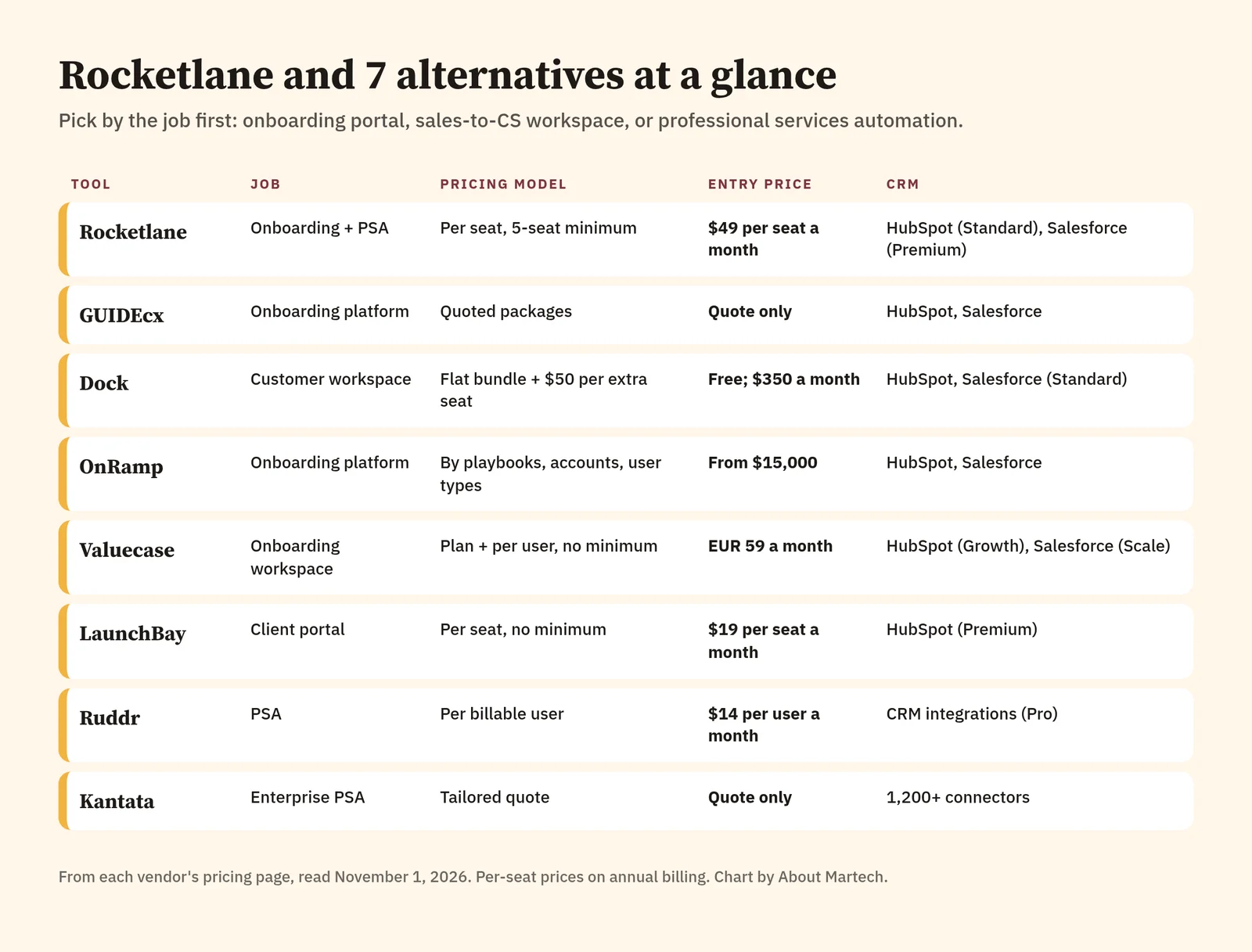
Rocketlane alternatives at a glance
List prices from each vendor’s own pricing page, read on November 1, 2026. Per-seat prices are per month on annual billing unless noted.
| Tool | Type | Starting price | Seat minimum | Free plan or trial | Best for |
|---|---|---|---|---|---|
| Rocketlane (baseline) | Onboarding + PSA | $49 per team member, Standard | 5 team members | Free trial | Implementation teams that want portal, delivery and time tracking in one |
| GUIDEcx | Onboarding platform | Quote only | Not published | Demo and tour | Structured, milestone-heavy onboarding at scale |
| Dock | Customer workspace | $0 free; $350 a month (5 users) | Bundled seats | Free plan | Sales-to-CS handoff and client portals |
| OnRamp | Onboarding platform | From $15,000 | Priced by volume | Sandbox during evaluation | High-volume onboarding with AI follow-up |
| Valuecase | Onboarding workspace | EUR 59 a month (1 user) | None | 14-day free trial | Lean B2B SaaS teams, especially in Europe |
| LaunchBay | Client portal + onboarding | $19 per team member | None | Free trial | Small teams that want Rocketlane-style portals without the minimum |
| Ruddr | PSA | $14 per billable user | None; non-billable users free | 30-day free trial | Services teams that need time, budgets and invoicing on a budget |
| Kantata | Enterprise PSA | Quote only | Not published | Demo | Large services firms managing utilisation and margin |
What a five- and ten-person team actually pays
Headline prices hide the seat maths, so we priced each tool with a published price for two common team sizes on annual billing. OnRamp, GUIDEcx and Kantata do not publish enough to model.
| Tool and plan | 5-person team, per year | 10-person team, per year | How we got there |
|---|---|---|---|
| Rocketlane Standard | $2,940 | $5,880 | $49 x seats x 12; 5-seat minimum |
| Rocketlane Premium | $4,140 | $8,280 | $69 x seats x 12; 5-seat minimum |
| LaunchBay Essentials | $1,140 | $2,280 | $19 x seats x 12; no minimum |
| LaunchBay Standard | $2,940 | $5,880 | $49 x seats x 12; no minimum |
| Dock Standard | $4,200 | $7,200 | $350 a month with 5 users, plus $50 a month per extra user |
| Dock Premium | $12,000 | $12,000 | $1,000 a month billed annually, 10 users included |
| Valuecase Starter | EUR 3,540 | EUR 7,080 | EUR 59 a month incl. 1 user, plus EUR 59 per extra user |
| Valuecase Growth | EUR 5,028 | EUR 9,528 | EUR 119 a month incl. 1 user, plus EUR 75 per extra user |
| Ruddr Team | $840 | $1,680 | $14 x billable users x 12; non-billable users free |
| Ruddr Pro | $1,440 | $2,880 | $24 x billable users x 12 |
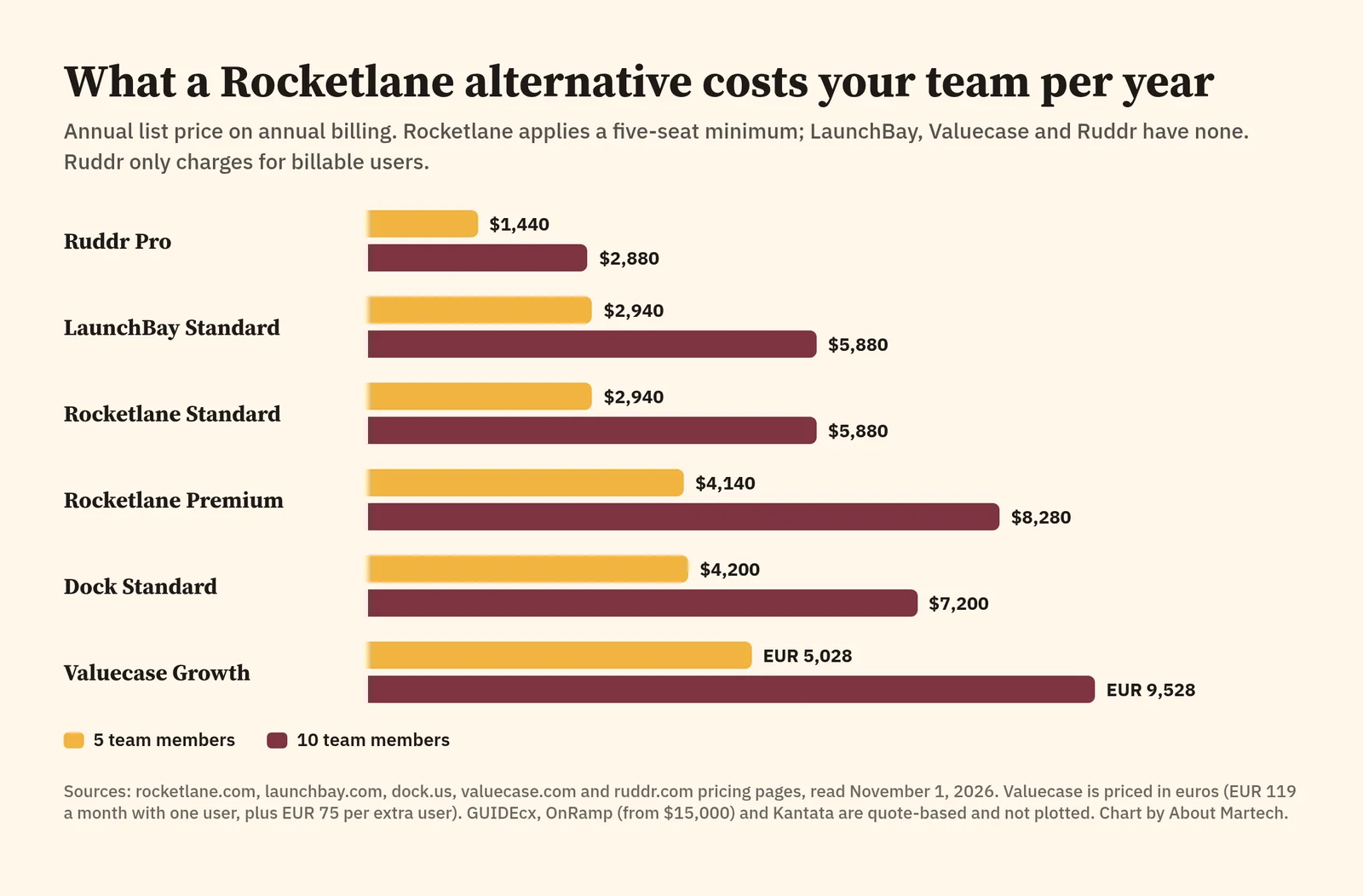
Two patterns stand out. First, at five seats LaunchBay Standard and Rocketlane Standard cost exactly the same, so LaunchBay only saves money for teams under five people or teams happy on its $19 Essentials plan. Second, Dock’s bundled seats make it cheaper than Rocketlane Premium at ten people but pricier than Standard at five. Ruddr is far cheaper than everything here, but it is a PSA for billable work, not a customer-facing onboarding portal.
The 7 best Rocketlane alternatives in 2026
1. GUIDEcx: the closest like-for-like switch
| Best for | The closest like-for-like switch |
| Starting price | Quote only (Starter, Premium, Advanced) |
| Pricing model | Packages quoted by sales; unlimited projects and customers on every plan |
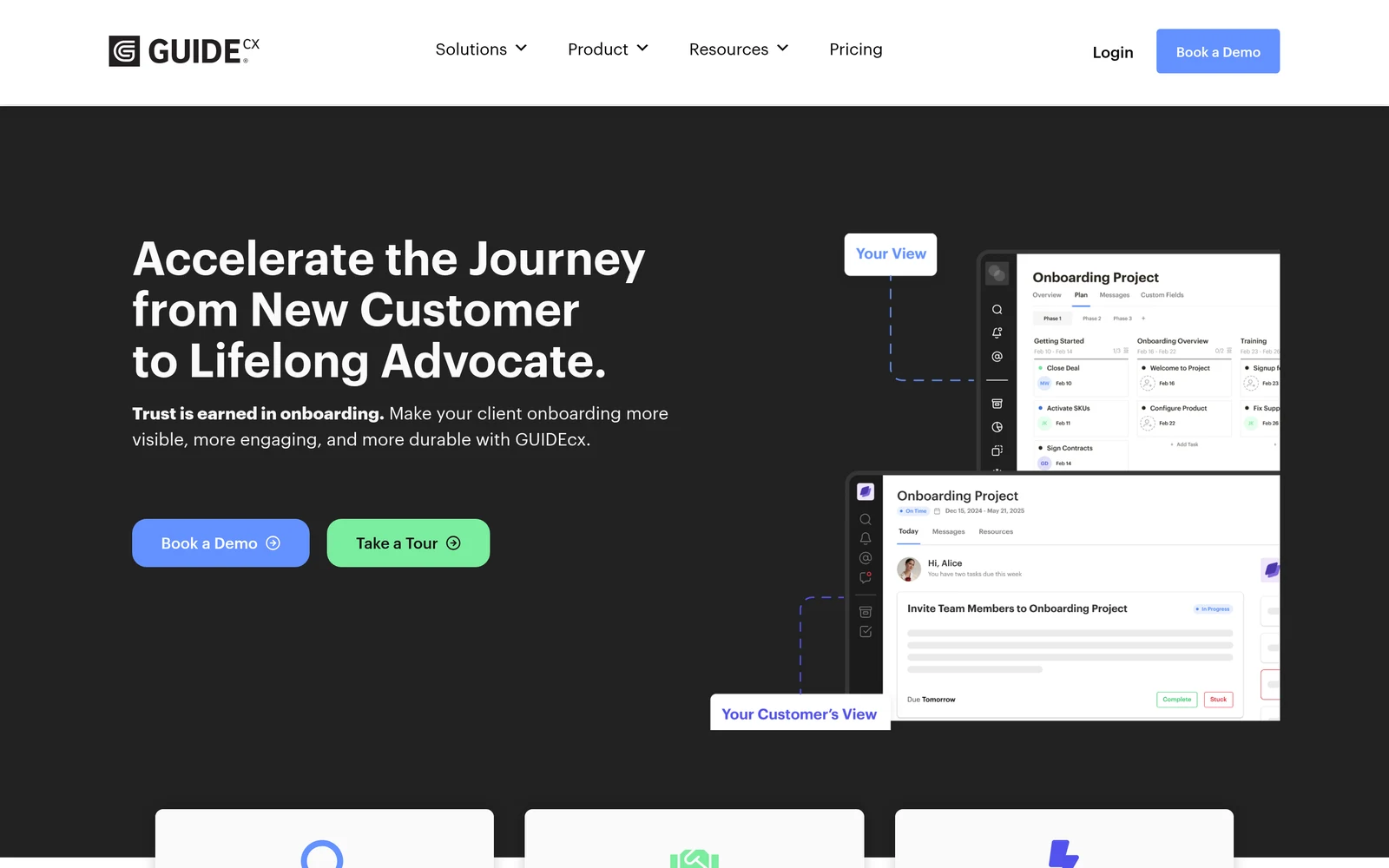
GUIDEcx is the platform Rocketlane is most often compared with, because it does the same core job: run every customer implementation as a project with tasks, dependencies, milestones and a customer-facing view. GUIDEcx says more than 500,000 projects have been completed on the platform (GUIDEcx pricing).
All three packages include unlimited projects and customers. Starter covers the onboarding portal, white-label logo and email, login-free customer access through secure links, task and email automation, Gantt, list and board views, end-date forecasting and partner management. Premium adds a built-in iPaaS (a Workato subscription with 250,000 automation tasks), single sign-on, SMS notifications, CSAT surveys, an analytics API and a named customer success manager. Advanced adds an embedded portal, program management, a sandbox and PSA features: resource management, utilisation tracking, flexible billing, margins and advanced time tracking.
Where it beats Rocketlane: customer accountability and governance. Login-free access, SMS reminders and forecasting are built for getting customers to finish their tasks, and the Workato-based iPaaS on Premium covers integrations Rocketlane would need Zapier or Workato for.
Where it falls short: no published prices, so you cannot compare cost without a sales cycle. PSA features only arrive on the top Advanced package.
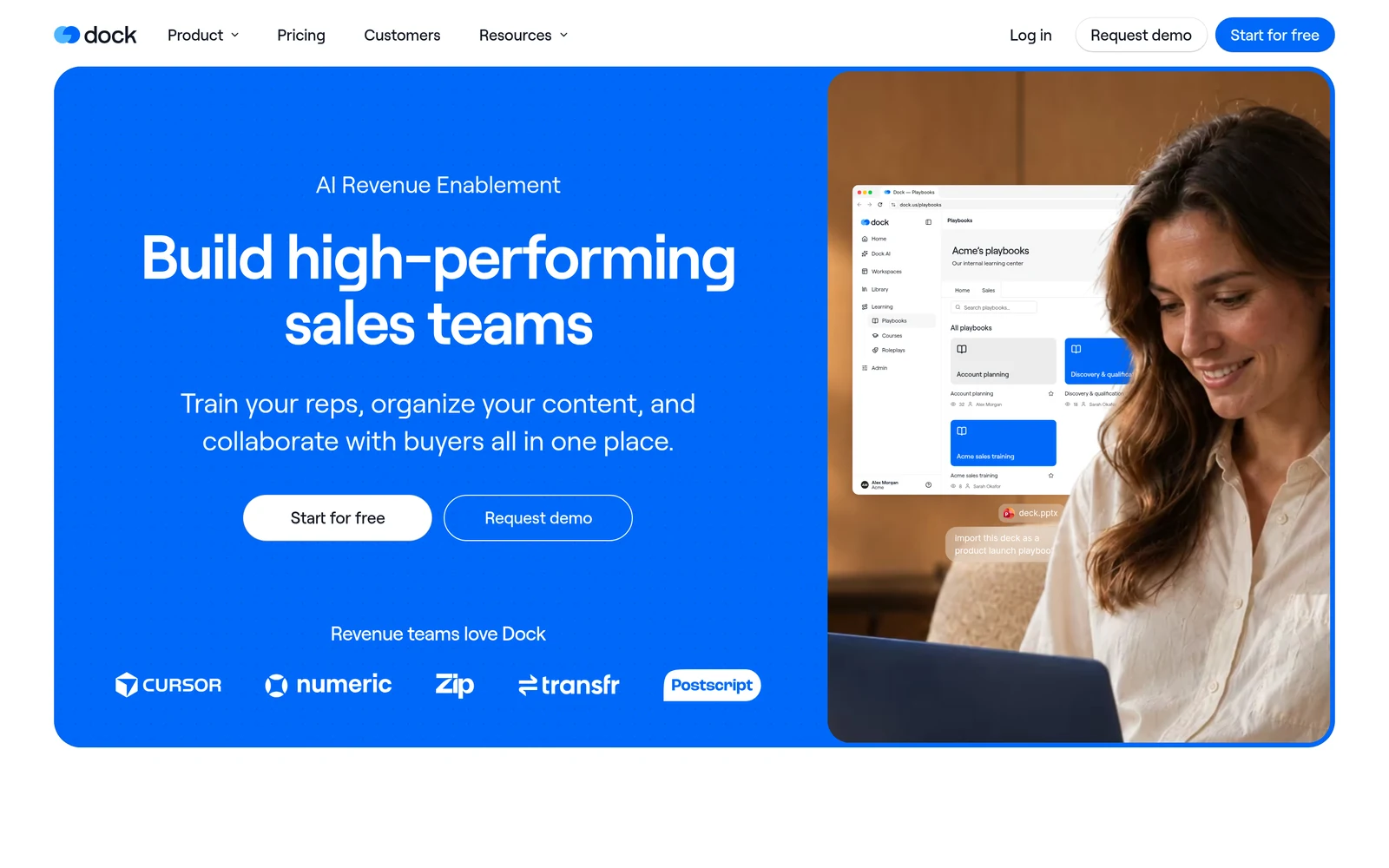
2. Dock: sales-to-CS handoff and client portals
| Best for | Sales-to-CS handoff and client portals |
| Starting price | Free; Standard $350 a month (5 users) |
| Pricing model | Flat monthly bundles with included seats; extra seats $50 a month |
Dock started as a client workspace and now pitches itself as a revenue enablement platform, but customer onboarding, client portals and client project plans are still core product lines. The appeal for Rocketlane switchers is continuity: the same workspace a prospect used during the sale becomes the onboarding hub after the deal closes (Dock).
The Free plan includes 10 workspaces, one playbook and one course, with custom branding and Slack and Microsoft Teams integrations. Standard costs $350 a month with five users, unlimited workspaces and the Salesforce and HubSpot integrations. Premium is $1,000 a month billed annually with ten users, unlimited playbooks and courses, custom fields, webhooks and the option to remove the Dock logo. API access, automations, SCIM and custom domains are Enterprise only.
Where it beats Rocketlane: price of entry and the sales handoff. You can start free, and sales rooms, mutual action plans and onboarding plans live in one tool.
Where it falls short: no time tracking, resourcing or project financials. Automations and the API sit on the custom Enterprise plan, which matters if you want onboarding to start automatically from a closed-won deal.
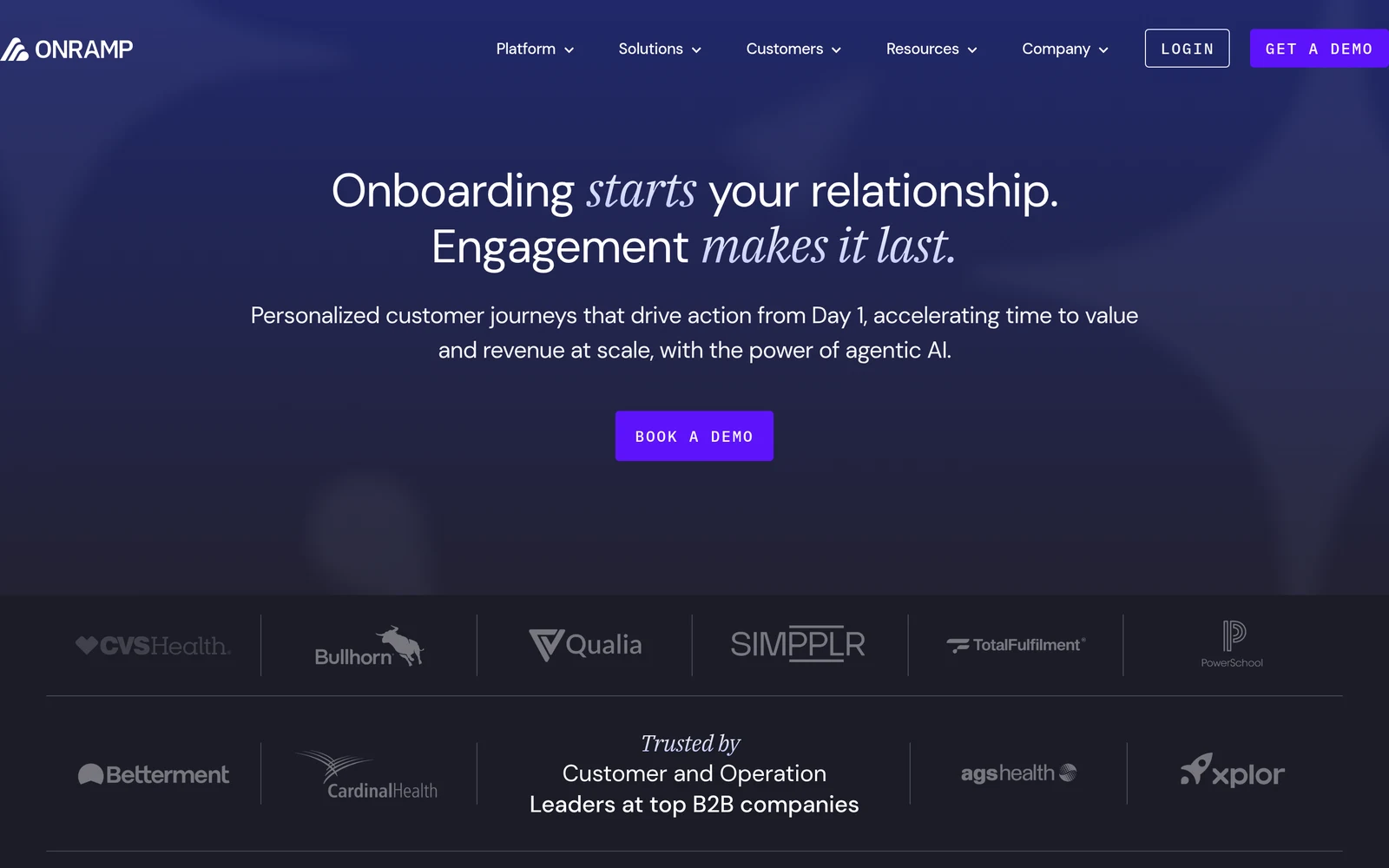
3. OnRamp: AI-driven, high-volume onboarding
| Best for | AI-driven, high-volume onboarding |
| Starting price | From $15,000 |
| Pricing model | Quoted by number of playbooks, active customer accounts and user types |
OnRamp is a dedicated customer onboarding platform built around reusable playbooks and a branded, guided customer portal. Its pricing FAQ says plans start at $15,000 and scale with onboarding volume, team size, playbooks and integrations, from Basic up to Premier (OnRamp pricing).
Every plan includes Aero, OnRamp’s agentic AI layer, which generates playbooks from plain-language input, detects stalled onboardings and re-engages customers who go quiet. Plans also include unlimited customer users, CRM-triggered project creation from closed-won deals in Salesforce or HubSpot, task dependencies and conditional logic, time-to-value reporting and SOC 2 Type II security. There is no self-serve trial; OnRamp gives evaluating teams a sandbox instead. It cites AGS Health cutting onboarding time by 30% and Flosum going from 48 days to under three.
Where it beats Rocketlane: AI included rather than sold as an add-on, and pricing tied to customer accounts rather than every internal seat.
Where it falls short: a $15,000 floor, which is more than Rocketlane Standard costs for a ten-person team. It is an onboarding tool, not a PSA, so there is no time tracking or billing.
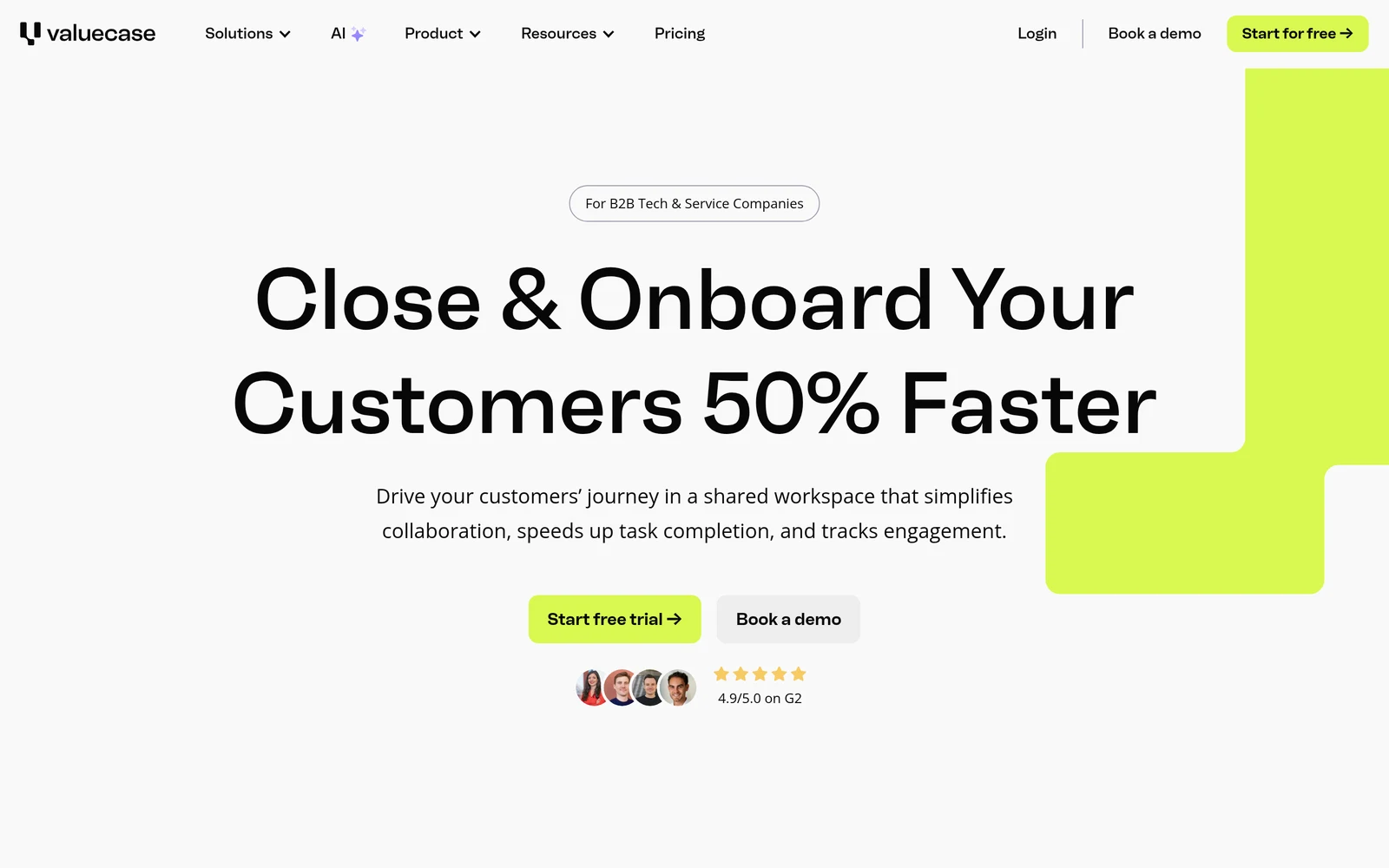
4. Valuecase: lean B2B SaaS onboarding teams
| Best for | Lean B2B SaaS onboarding teams |
| Starting price | EUR 59 a month (Starter, 1 user, billed annually) |
| Pricing model | Plan fee with one user included, plus a per-user fee |
Valuecase gives each customer a shared, branded Space with the onboarding plan, tasks, forms, resources, video and stakeholders in one link. It is built for B2B tech companies and works for both the sales stage and onboarding (Valuecase).
Starter is EUR 59 a month on annual billing (EUR 75 monthly) with one internal user, extra users at EUR 59, unlimited customers and Spaces and up to three templates. Growth is EUR 119 a month annually (EUR 159 monthly), with unlimited templates, extra users at EUR 75, HubSpot and Pipedrive integrations, API access and completion analytics. Scale is custom and adds Salesforce, HubSpot custom objects, enterprise SSO and a shared Slack or Teams support channel. A custom domain is a EUR 40 a month add-on, and there is a 14-day free trial (Valuecase pricing).
Where it beats Rocketlane: no seat minimum, a self-serve trial and forms with conditional logic that customers fill in without logging in. Multi-language Spaces help teams onboarding customers across Europe.
Where it falls short: prices are in euros, Salesforce needs the custom Scale plan, and there is no resource or financial management.
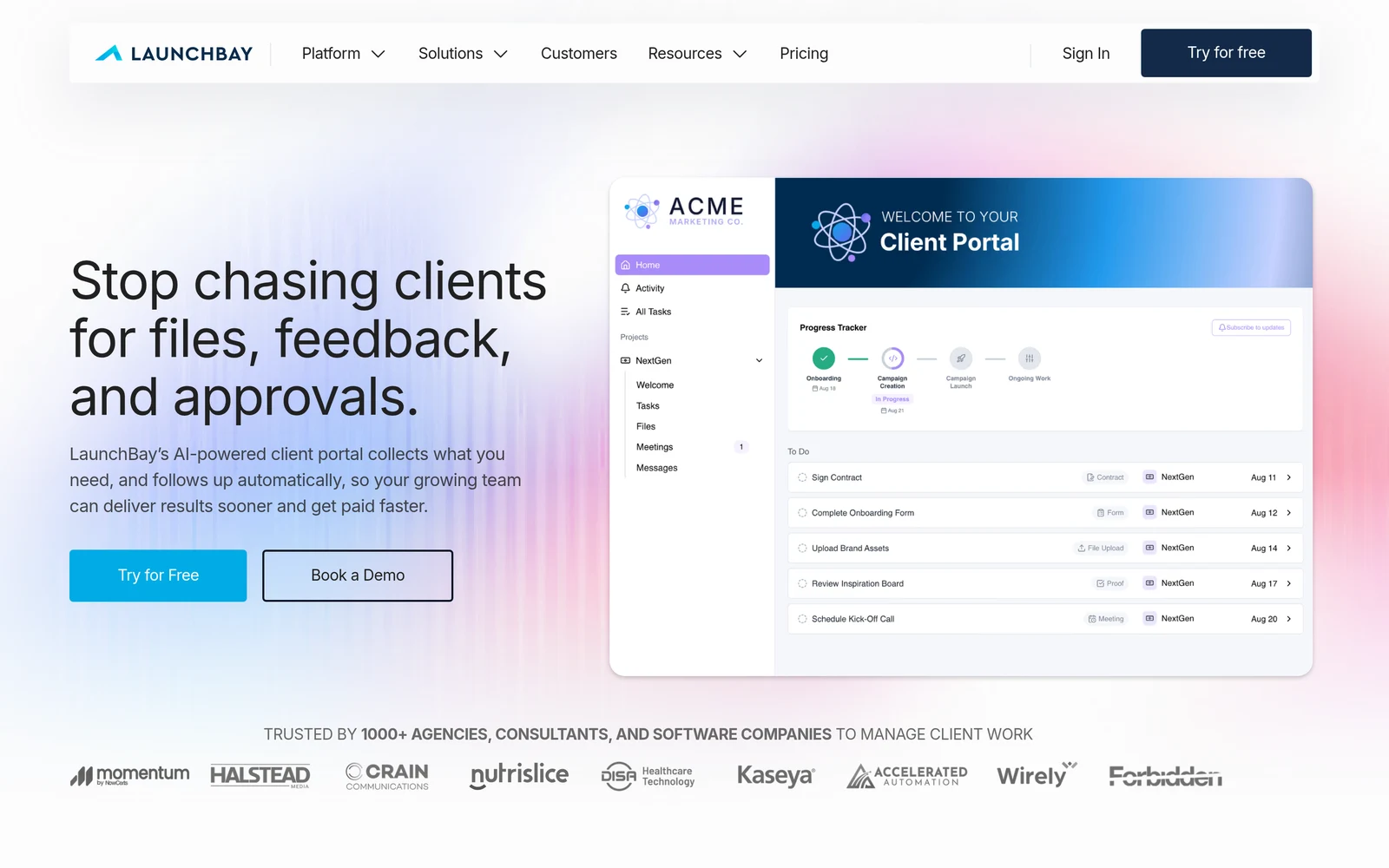
5. LaunchBay: small teams that want portals without a seat minimum
| Best for | Small teams that want portals without a seat minimum |
| Starting price | $19 per team member a month (Essentials, billed annually) |
| Pricing model | Per team member, no minimum |
LaunchBay is the closest match to Rocketlane’s customer-facing side at a lower commitment. Every plan includes a branded client portal, unlimited projects, unlimited clients, magic-link portal access, intake forms, an AI form and project builder, invoicing and payments and digital contracts (LaunchBay pricing).
Essentials is $19 per team member a month billed annually or $29 monthly. Standard, at $49 annually or $59 monthly, adds automations, Zapier, Slack and Calendly integrations, client requests, recurring tasks, meetings, custom fields and reporting. Premium, at $69 annually or $79 monthly, adds a white-labelled portal, a custom sending domain, password-protected portals, the HubSpot integration, an MCP connector and LaunchBay’s AI chat and agents. None of the plans has a team-member minimum.
Where it beats Rocketlane: a one- or two-person onboarding team pays for one or two seats, not five, and invoicing and e-signature are built in for agencies and consultants.
Where it falls short: HubSpot only arrives on Premium, there is no Salesforce integration listed, and there is no resourcing or utilisation tracking.
6. Ruddr: services teams that need a lighter, cheaper PSA
| Best for | Services teams that need a lighter, cheaper PSA |
| Starting price | $14 per billable user a month (Team, billed annually) |
| Pricing model | Per billable user; non-billable users are free |
If your reason for leaving Rocketlane is the PSA side, Ruddr is the most affordable serious option. The Team plan at $14 per user a month on annual billing ($17 monthly) already covers projects, budgets, Kanban boards, timesheets, expenses, invoicing and payments, utilisation and profit analysis, an API and an MCP server, SSO and the Ruddr AI assistant (Ruddr pricing).
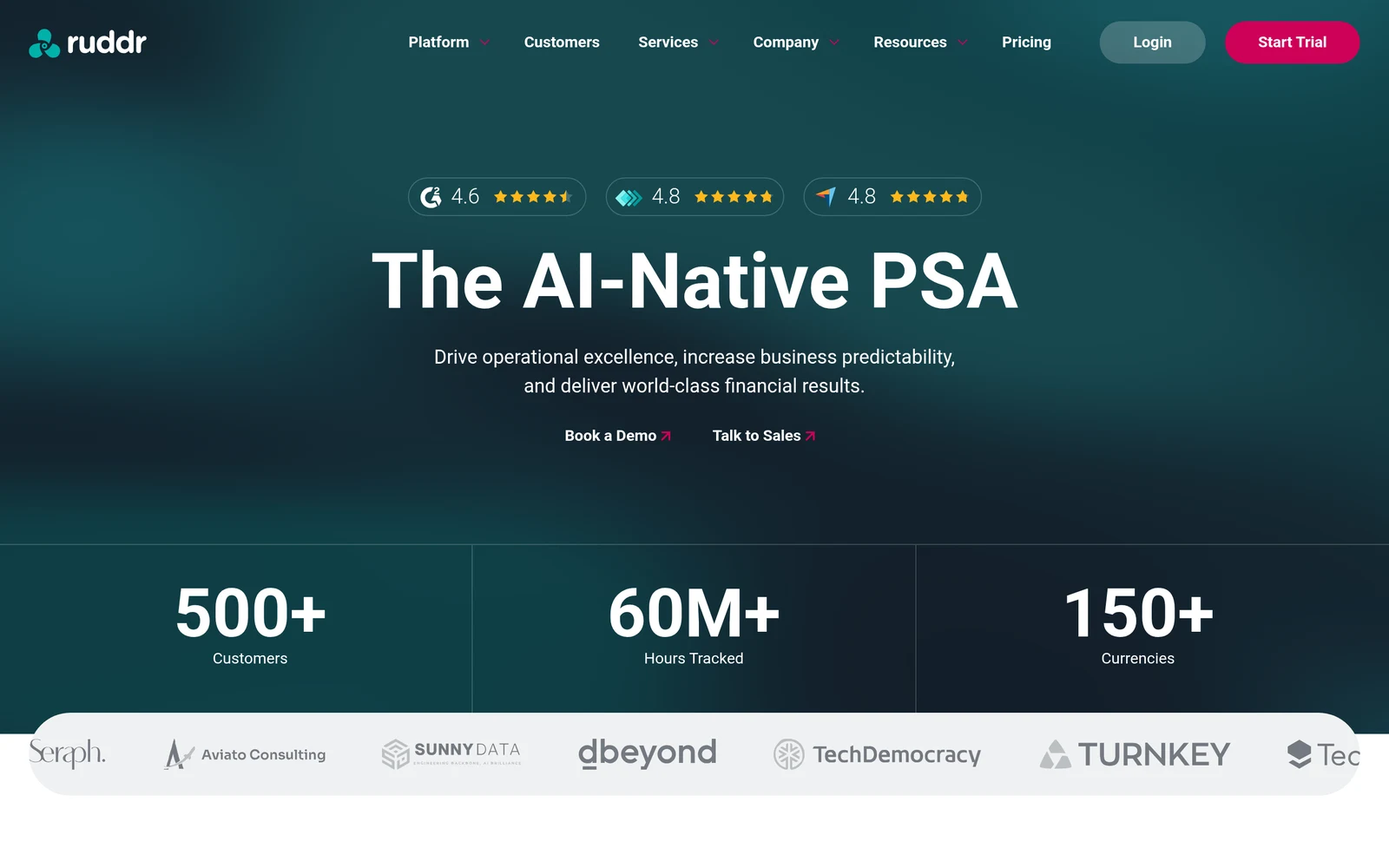
Pro, at $24 annually ($30 monthly), adds multicurrency, resource allocations, client approvals, project health tracking, revenue recognition methods, rate cards, purchase orders, a sales pipeline, CRM integrations, forecasting and a sandbox. Only billable team members count toward the bill, and there is a 30-day free trial with no credit card. Ruddr’s homepage reports 500+ customers and 60M+ hours tracked.
Where it beats Rocketlane: cost. A ten-person billable team on Pro pays $2,880 a year, against $8,280 for Rocketlane Premium, which is the plan where Rocketlane’s resourcing and financials begin.
Where it falls short: no branded customer onboarding portal. Clients can approve time and expenses, but Ruddr is built for running the services business, not for guiding customers through onboarding tasks.
7. Kantata: large services firms that need more PSA than Rocketlane
| Best for | Large services firms that need more PSA than Rocketlane |
| Starting price | Quote only |
| Pricing model | Tailored by company size and use case |
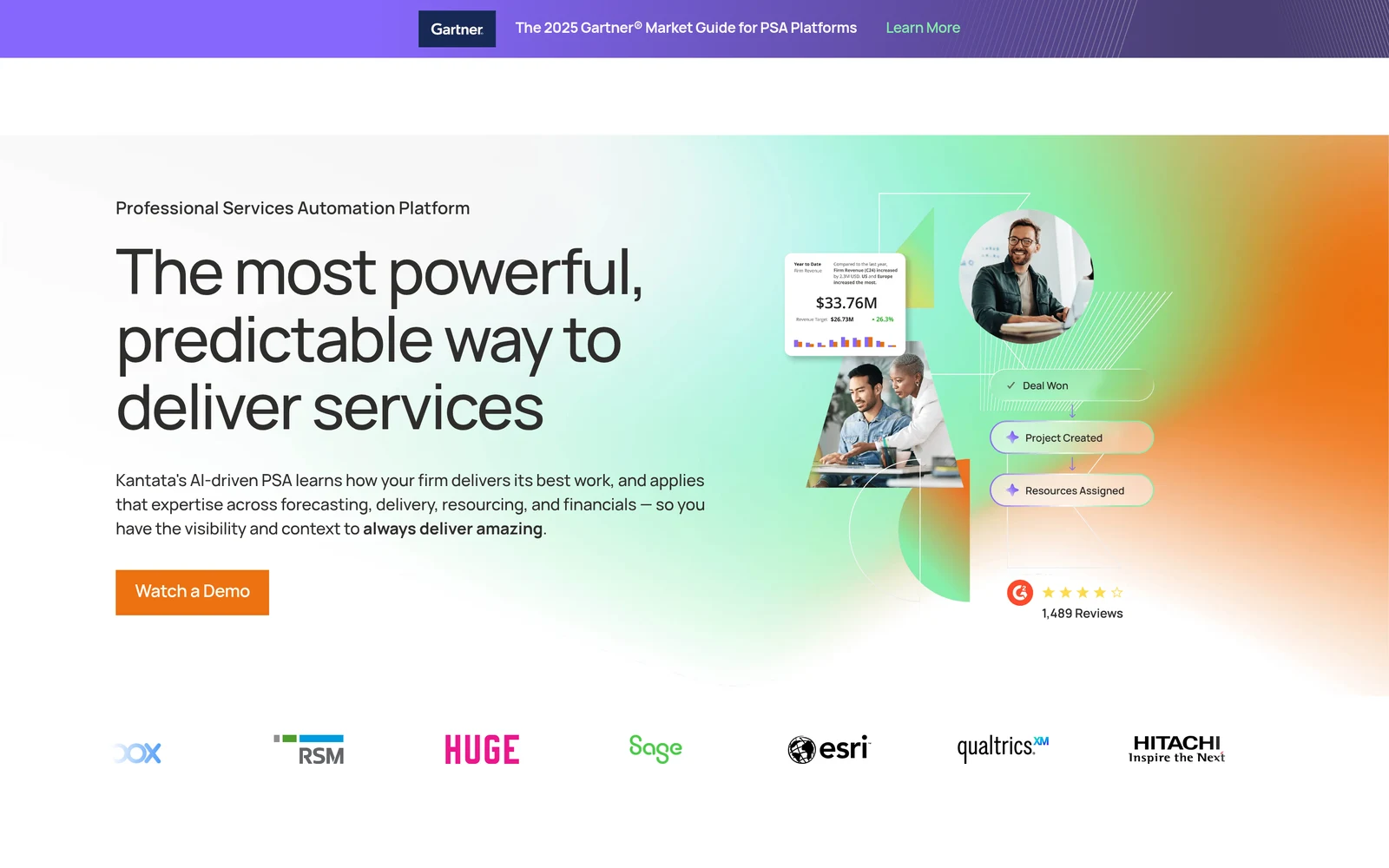
Kantata is the heavyweight PSA in this list. It sells an AI-driven professional services platform across forecasting, delivery, resourcing and financials, with customers such as RSM, Qualtrics, Esri and Hitachi shown on its homepage (Kantata). Pricing is tailored to company size and goals through a PSA advisor, and Kantata lists more than 1,200 prebuilt connectors with built-in MCP support (Kantata pricing).
Teams move from Rocketlane to Kantata when services, not onboarding, is the business: hundreds of concurrent billable projects, multi-entity financials and utilisation targets that the CFO watches. Rocketlane itself publishes a comparison page against Kantata, which tells you they meet in the same deals.
Where it beats Rocketlane: depth of resource management, project accounting and forecasting for large, billable services organisations.
Where it falls short: no public pricing, longer implementation, and a customer-facing onboarding experience that is secondary to the PSA. For most SaaS onboarding teams it is more platform than they need.
Rocketlane vs the alternatives: feature comparison
| Capability | Rocketlane | GUIDEcx | Dock | OnRamp | Valuecase | LaunchBay | Ruddr | Kantata |
|---|---|---|---|---|---|---|---|---|
| Branded customer portal | Yes | Yes | Yes | Yes | Yes | Yes | No (client approvals only) | Secondary |
| No-login customer access | Magic link | Secure links | Shared workspaces | Portal | Shareable Space link | Magic link | No | Not listed |
| Time tracking and timesheets | Yes | Advanced plan | No | No | No | No | Yes | Yes |
| Resource management | Premium | Advanced plan | No | Capacity insights | No | No | Pro | Yes |
| Invoicing and billing | Premium | Flexible billing (Advanced) | Order forms (CPQ) only | No | No | Yes | Yes | Yes |
| HubSpot integration | Standard | Yes (HubSpot Marketplace) | Standard | Yes | Growth | Premium | Pro (CRM integrations) | Via connectors |
| Salesforce integration | Premium | Yes (AppExchange) | Standard | Yes | Scale | Not listed | Pro (CRM integrations) | Via connectors |
| AI included | Nitro sold separately | AI coach and Tempo AI (Premium) | AI usage by plan | Aero on every plan | Valuecase AI | Premium | AI assistant | Yes |
Read “No” as “not listed on the plan pages we checked on November 1, 2026”. Vendors in this category ship quickly, so confirm anything critical in a demo or trial.
One correction to older lists: Arrows, long cited as a HubSpot-native onboarding alternative, now sells an AI agent that works deals for account executives, scoped and priced per engagement (Arrows pricing). We have left it out for that reason.
How to choose the right Rocketlane alternative
- You like Rocketlane but want more governance and customer accountability: GUIDEcx.
- Your onboarding team is under five people: LaunchBay or Valuecase, both with no seat minimum.
- Sales and CS share the customer journey: Dock, starting on the free plan.
- You onboard hundreds of accounts a quarter and want AI chasing stalled customers: OnRamp.
- You mainly need time, budgets, utilisation and invoicing: Ruddr for small and mid-sized teams, Kantata for large firms.
- You run everything in Salesforce: compare Rocketlane Premium with Salesforce-native PSA tools; our Rocketlane vs Precursive breakdown covers that trade-off.
Before you switch, export your project templates, task lists and customer contacts, and check whether your new tool can rebuild dependencies and milestones. If you are also replacing the people who run onboarding, our customer onboarding services list covers outsourced options, and our onboarding software pricing guide covers in-app tools like Userpilot and Appcues.
Frequently asked questions about Rocketlane alternatives
What is the best alternative to Rocketlane?
GUIDEcx is the closest like-for-like alternative for dedicated customer onboarding and implementation. LaunchBay and Valuecase suit small teams that want a branded portal without Rocketlane’s five-seat minimum, Dock suits teams that want one workspace from sale to onboarding, and Ruddr or Kantata suit teams that mainly need PSA features.
How much does Rocketlane cost?
Rocketlane Standard costs $49 and Premium $69 per team member a month, billed annually, with a minimum of five team members. Enterprise is custom. Every plan includes unlimited projects and unlimited customer members, and Rocketlane’s Nitro AI agents are sold separately through sales.
Is there a free alternative to Rocketlane?
Dock has a free plan with 10 workspaces, one playbook and custom branding. Most other alternatives offer free trials instead: 14 days on Valuecase, 30 days on Ruddr, and trials on LaunchBay. GUIDEcx, OnRamp and Kantata sell through demos.
Does GUIDEcx publish its pricing?
No. GUIDEcx lists three packages, Starter, Premium and Advanced, and asks you to speak to sales for pricing on all of them. Every package includes unlimited projects and unlimited customers.
What is the cheapest Rocketlane alternative?
Ruddr is the cheapest at $14 per billable user a month on annual billing, but it is a PSA rather than a customer onboarding portal. For a portal, LaunchBay Essentials costs $19 per team member a month with no minimum, and Dock has a free plan.
Does Rocketlane have a seat minimum?
Yes. Both published Rocketlane plans require a minimum of five team members. LaunchBay, Valuecase and Ruddr have no seat minimum, and Dock bundles five users into Standard and ten into Premium.
Which Rocketlane alternative includes AI at no extra cost?
OnRamp includes its Aero AI agents in every plan, for playbook generation, stall detection and customer re-engagement. Valuecase includes Valuecase AI on all plans, and Ruddr includes its AI assistant from the Team plan. Rocketlane sells its Nitro agents separately.
Is Kantata a good Rocketlane alternative?
Kantata is a good alternative if professional services delivery, utilisation and margins are your main concern and you run many billable projects. For SaaS teams whose main need is customer onboarding, it is usually more PSA than necessary, and its pricing is quote-only.
The verdict
Rocketlane remains a strong all-rounder, so switch for a specific reason. If the five-seat minimum or unused PSA features are the problem, LaunchBay, Valuecase and Dock give you a branded onboarding experience for less. If you need more structure and accountability, GUIDEcx and OnRamp are purpose-built onboarding platforms with more automation. If the PSA side is what you need, Ruddr is the budget pick and Kantata the enterprise one.
Shortlist two, run a real customer through each trial or sandbox, and compare time to first milestone before you sign. For the wider market, see our full customer onboarding software comparison.