- Customer onboarding software and customer onboarding services are two different buying decisions. Software gives you the tools; a services partner does the work.
- For complex B2B SaaS products, the implementation gap between going live and reaching time-to-value is where most churn originates, not post-renewal neglect.
- The five providers below cover distinct use cases: white-glove enterprise implementation, product-led onboarding build-outs, RevOps-adjacent configuration, and specialized CS infrastructure.
- Pricing across this category ranges from project-based engagements under $10,000 to retainer relationships exceeding $50,000 per month for enterprise accounts.
- The right partner depends on your product complexity, internal CS headcount, and whether your onboarding failure is a process problem or a tooling problem.
The top customer onboarding services and implementation partners for B2B SaaS teams include specialized agencies and consultancies such as Winning by Design, Bain Public, Artera (formerly Motive), CS2 (Customer Success Squared), and Glide Consulting. These firms bridge the gap between purchasing onboarding software and actually running a repeatable, measurable onboarding motion. They are best evaluated on industry focus, methodology transparency, and whether they operate as one-time implementers or ongoing advisory partners.
Why Are You Looking at Services and Not Just Software?
Most teams start with software. They buy customer onboarding tools like Appcues, Pendo, or Intercom, wire up a few product tours, and assume the motion will run itself. It rarely does.
The problem is not the technology. It is that onboarding is fundamentally a designed process, and designing processes requires expertise in your specific product, your customer’s job-to-be-done, and the handoff mechanics between sales, CS, and product. Software gives you the canvas. A services partner brings the playbook.
There is also a scale argument. A CS team of three handling fifty accounts can iterate on onboarding manually. A team of three handling three hundred accounts cannot. That inflection point, usually somewhere between Series A and Series B, is where most companies start looking at external partners to systematize what was previously improvised.
The overlap between “onboarding software” and “onboarding services” searches causes real confusion. If you landed here looking for a platform like Gainsight or Totango, that is a different article. This one is for teams that already have a tool (or are buying one) and need help turning it into a working customer motion.
What Is the AboutMartech Implementation Readiness Test?
Before evaluating any external partner, run this four-part diagnostic. Developed by the AboutMartech editorial team, it determines whether you have a process problem, a tooling problem, or both, and tells you which category of partner to hire.
The AboutMartech Implementation Readiness Test:
- Time-to-Value Baseline: Do you know the median number of days between contract signature and a customer hitting their first meaningful activation milestone? If not, you do not have a measurement problem yet. You have a definition problem, and no software will fix it.
- Handoff Fidelity: When a deal closes, does the CS team receive a structured brief with use case, stakeholder map, and success criteria, or does it receive a Salesforce record and a forwarded email chain? A broken handoff is a RevOps problem, not an onboarding tool problem.
- Playbook Coverage: Does a written onboarding playbook exist for at least your top three customer segments by ARR? If it exists only in someone’s head, you are one resignation away from complete knowledge loss.
- Churn Attribution: Can you confidently say what percentage of churned accounts in the last 12 months cited onboarding confusion or slow time-to-value as a contributing factor? If your churn analysis does not isolate onboarding, you cannot measure whether any partner engagement worked.
A team that scores two or fewer “yes” answers needs strategic consulting first, then implementation. A team that scores three or four needs execution help, not another workshop.
Which Types of Onboarding Implementation Partners Actually Exist?
The market here is fragmented in a way that makes vendor comparison genuinely hard. There are four distinct types of firms operating under the “customer onboarding services” label, and conflating them leads to bad hiring decisions.
CS strategy consultancies redesign your onboarding motion from first principles. They map the customer path through early activation, define milestones, build segmentation logic, and write the playbooks. They typically do not touch your technology stack directly.
Platform implementation partners are certified or preferred partners of specific tools, most commonly Gainsight, Salesforce, or HubSpot. They configure the technology to match your process. If your process is broken, they will configure a broken process efficiently.
Embedded CS teams operate as fractional customer success managers, running your onboarding program under your brand while you build internal capacity. This is the fastest path to a working motion but the hardest to transition away from.
Full-service agencies do all three. They are the most expensive option and the most appropriate for companies with genuinely complex multi-product onboarding or enterprise-grade compliance requirements.
The 5 Top Customer Onboarding Services and Implementation Partners
1. Winning by Design
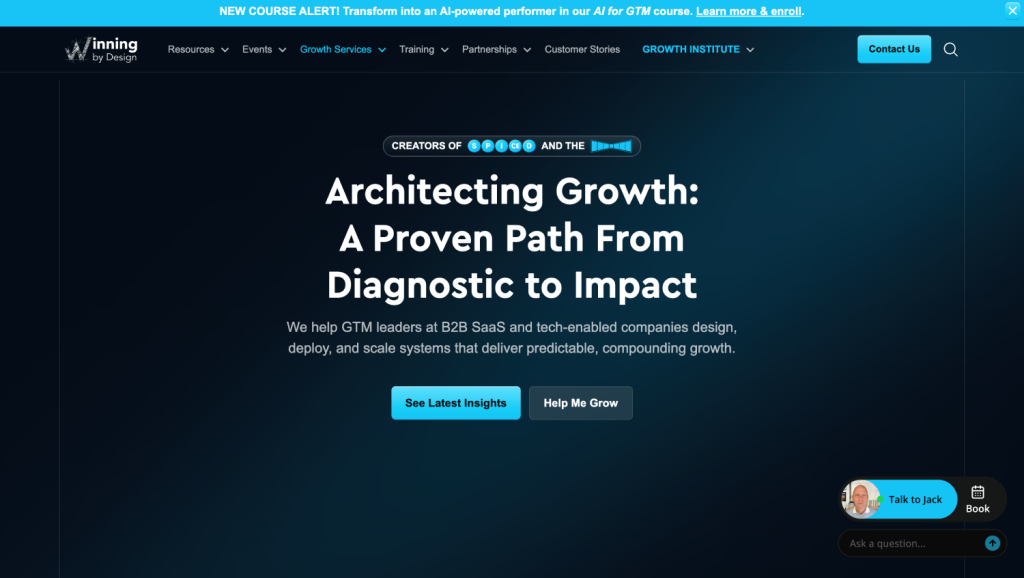
Winning by Design is the most methodology-driven firm in this category. Their approach is built around what they call the SPICED framework (Situation, Pain, Impact, Critical Event, Decision), which was originally a sales qualification model but has been extended into onboarding design and customer success architecture. They train internal teams as well as implement programs, which matters if you want to own the motion after the engagement ends.
Their client work spans mid-market and enterprise SaaS. They publish their frameworks openly, which is either a confidence signal or a commoditization risk depending on how you look at it. The published playbooks mean you can evaluate their thinking before signing anything.
Winning by Design does not publicly disclose pricing. Engagements are quote-based and typically structured as a combination of a diagnostic phase, program design, and training delivery. Best for teams that need methodology and organizational alignment, not just tool configuration.
2. CS2 (Customer Success Squared)
CS2 operates as a fractional customer success consultancy with a specific focus on early-stage and scaling SaaS companies. Their model is closer to embedded advisory than one-time implementation. They will run your onboarding motion or sit alongside your existing team to build it.
What distinguishes CS2 from pure strategy consultancies is their willingness to work inside the tools. They operate in Gainsight, Totango, ChurnZero, and HubSpot CS configurations directly, which means the handoff from engagement to ongoing operation is cleaner than with firms that only deliver documentation. Their footprint is particularly strong with Series A and Series B companies that have three to eight CS headcount and are formalizing their first real onboarding program.
Pricing is not public. Engagements are typically structured as monthly retainers. Best for scaling SaaS teams that need an experienced operator in the seat, not a deck of recommendations.
3. Bain Public
Bain Public is a Montreal-based consulting firm focused on customer success and onboarding architecture for SaaS companies. Their positioning is explicitly mid-market, and their deliverables include customer journey mapping, success plan templates, QBR frameworks, and onboarding playbooks built for specific customer segments.
Their published content is technical enough to be credible. They engage substantively with concepts like segmentation-driven onboarding (building different tracks for self-serve, commercial, and enterprise customers), which is the right abstraction level for teams that have already tried generic onboarding and found it breaks at segment edges. Pricing is quote-based. Best for teams that know they need segment-specific onboarding logic and have not been able to build it internally.
4. Artera (formerly Motive)
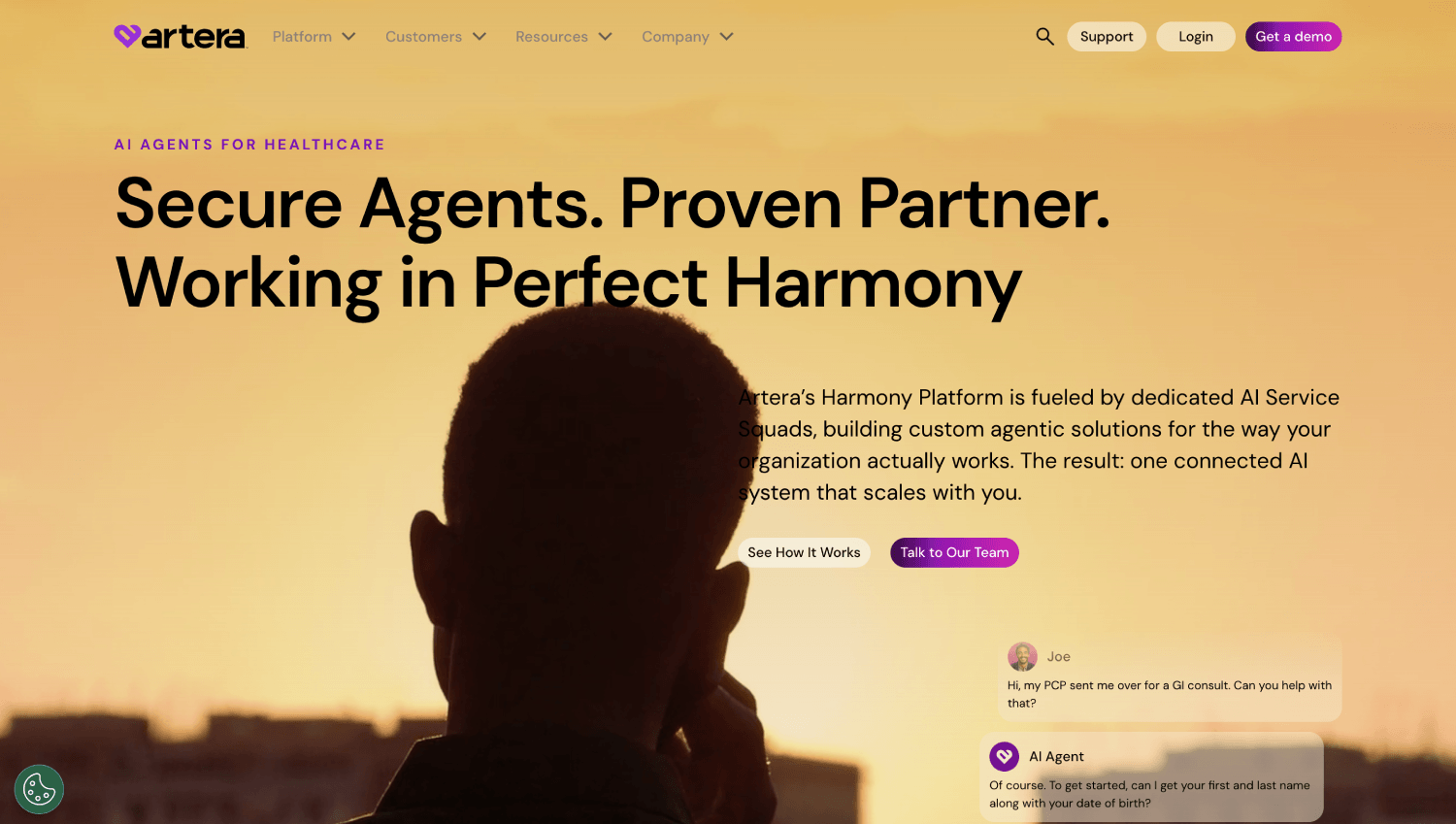
Artera sits at an unusual intersection: they are a healthcare communications platform that also runs onboarding implementation services for enterprise healthcare SaaS buyers. If your product serves the healthcare vertical, this specificity matters enormously because HIPAA-compliant onboarding workflows have requirements that general CS consultancies consistently underestimate.
For non-healthcare buyers, Artera is not the right fit. But for healthcare SaaS companies trying to onboard provider groups or health system customers, the vertical depth justifies the evaluation. Their implementation team understands EHR integration points, patient communication compliance constraints, and the organizational complexity of health system procurement in a way that generalist onboarding firms simply do not. Pricing is enterprise and quote-based.
5. Glide Consulting
Glide Consulting focuses on Gainsight and Salesforce implementation with a customer success specialization. If your onboarding problem is specifically that you purchased Gainsight and it is not configured correctly, or that your Salesforce org does not support a clean CS handoff, Glide is the most direct solution. They are a certified Gainsight partner and take on both implementation and optimization engagements.
The trade-off is scope. Glide will make your technology work. They will not redesign your onboarding philosophy or run your CS motion for you. That makes them an efficient hire for companies that have already done the strategic work and need technical execution. For a fuller look at how customer success platforms compare before you decide which one to implement, the ranked list of B2B customer success platforms covers the tool options in depth. Pricing is project-based and quote-driven.
Side-by-Side Comparison: Which Partner Fits Which Situation?
| Partner | Best For | Engagement Type | Tech Platform Depth | Pricing Model |
|---|---|---|---|---|
| Winning by Design | Methodology-first SaaS teams; revenue team alignment | Training + program design | Platform-agnostic | Quote-based |
| CS2 | Series A-B SaaS; fractional CS leadership | Embedded retainer | Multi-platform (Gainsight, HubSpot, ChurnZero) | Monthly retainer |
| Bain Public | Mid-market SaaS; segment-specific playbook build | Project + advisory | Platform-agnostic | Quote-based |
| Artera | Healthcare SaaS companies; HIPAA-compliant onboarding | Enterprise implementation | Healthcare-stack specific | Enterprise quote |
| Glide Consulting | Teams with Gainsight or Salesforce already purchased | Technical implementation | Gainsight, Salesforce certified | Project-based |
How Much Do Customer Onboarding Services Actually Cost?
None of the five firms above publish a rate card, which is standard practice in B2B services where engagement scope varies dramatically. The ranges below reflect what buyers and practitioners in this category commonly report; they are not sourced from a specific survey or vendor disclosure, and actual quotes will vary by company size, scope, and region.
One-time diagnostic and playbook projects typically run between $8,000 and $25,000 depending on company size and deliverable scope. Full program design engagements, where the partner maps the entire customer path, builds segmentation logic, writes playbooks, and trains the team, tend to fall between $30,000 and $80,000. Retainer-based embedded CS partnerships range from $5,000 to $20,000 per month for fractional coverage, scaling with account volume.
Technology implementation (Gainsight configuration, Salesforce CS setup) is typically project-scoped. A Gainsight implementation for a mid-market company with standard use cases can run from $15,000 to $40,000 depending on data complexity and custom object requirements. Enterprise implementations with custom integrations regularly exceed $100,000. If you are still evaluating which CS platform to implement before hiring a partner, the comparison between ChurnZero and Vitally for lean teams is a useful starting point for mid-market buyers.
What Should You Actually Evaluate Before Hiring an Onboarding Partner?
The sales process for services firms is built to obscure differentiation. Every firm will show you a customer journey map template and a slide about their proprietary methodology. Here is what to probe instead.
Ask for a specific example of an onboarding program they built, including the before state, the changes they made, and the measurable outcome. If they cannot produce a concrete before-and-after with a metric, they are selling you process theater. Time-to-first-value improvement is the right metric. Activation rate by cohort is the right format.
Ask whether they will leave behind documentation that your team can operate without them. Some firms are structurally incentivized to create dependency. The firms that publish their frameworks openly, like Winning by Design does, tend to be more comfortable with knowledge transfer because their competitive advantage is judgment, not proprietary templates.
Ask how they handle the handoff between your sales team and your CS team. This is where most onboarding programs fail in practice. A partner who does not have an explicit answer about handoff fidelity is optimizing the wrong part of the problem. The RevOps connection here is real: broken CRM handoffs are often the upstream cause of onboarding failure, and the RevOps tooling stack that feeds data into your CS platform matters as much as the CS platform itself.
How Do Onboarding Services Relate to Digital Adoption Platforms?
Digital adoption platforms (DAPs) like WalkMe, Whatfix, and Pendo are sometimes positioned as a substitute for onboarding services. They are not. A DAP automates in-product guidance. A services partner designs the program that the DAP then executes.
If you buy a DAP without designing the underlying onboarding logic first, you will automate a bad experience efficiently. This is a common pattern: companies purchase a DAP, build a handful of tooltips and product walkthroughs, measure click-through rate on the tours, and conclude onboarding is “handled.” The best digital adoption platforms for SaaS teams all assume that the implementer knows what the correct user path looks like. When that knowledge does not exist internally, a services partner fills the gap.
The right sequencing is: define the onboarding program first (strategy partner or internal), then instrument it (DAP or onboarding software), then measure and iterate (CS platform). Most teams do steps two and three before step one, which explains why so many onboarding programs underperform despite significant software investment.
Frequently Asked Questions
What is the difference between customer onboarding software and customer onboarding services?
Customer onboarding software (Appcues, Pendo, Intercom, Gainsight) provides the tooling to build and automate onboarding flows. Customer onboarding services are firms that design, build, or run the onboarding program itself, either strategy-first or through technical implementation of the software. Software is self-serve. Services are done-for-you or done-with-you. Most teams need both, but in that order: program design before tool configuration.
When does it make sense to hire an onboarding implementation partner?
Three situations justify an external partner: when your product is complex enough that self-serve documentation fails a meaningful percentage of customers; when you have purchased a CS platform like Gainsight and lack the internal expertise to configure it correctly; or when your onboarding motion is not producing consistent results and internal iteration has stalled. Early-stage companies with fewer than twenty accounts can usually handle onboarding manually. Companies scaling past one hundred accounts typically cannot.
Are customer onboarding agencies the same as customer success consultancies?
There is significant overlap, but they are not identical. Customer success consultancies tend to cover the full post-sale lifecycle, including renewal management, expansion playbooks, and churn prevention. Onboarding agencies focus specifically on the period between contract signature and the customer’s first substantive value realization. Some firms, like CS2 and Winning by Design, operate across both. Firms like Glide Consulting are more narrowly focused on technology implementation for the CS motion.
How long does a typical onboarding services engagement take?
Diagnostic and playbook engagements typically run four to eight weeks. Full program design and implementation, including technology configuration, can run three to six months depending on scope. Embedded fractional CS retainers are ongoing by design, with most clients running them for six to eighteen months before transitioning to fully internal operations. Technology implementation projects for platforms like Gainsight typically run eight to sixteen weeks for mid-market configurations.
Do onboarding implementation partners work with specific software platforms?
Some do. Glide Consulting, for example, is a certified Gainsight and Salesforce partner. Other firms like Winning by Design and Bain Public are platform-agnostic, meaning they will design a program and let you choose the tooling. Platform-certified partners are the right choice when you have already selected your CS technology. Platform-agnostic firms are better when you need to design the program first and then evaluate tooling options.
What metrics should I use to evaluate an onboarding services engagement?
The primary metric is time-to-first-value: the median number of days between contract signature and a customer reaching a defined activation milestone. Secondary metrics include onboarding completion rate by segment, early-stage churn rate (accounts churning within the first ninety days), and CS team capacity per account (a proxy for how efficiently the onboarding motion scales). If a partner cannot help you define these before the engagement starts, that is a red flag.
The Case for Treating Onboarding as Infrastructure
The framing that most SaaS companies apply to onboarding is program-level: build a few flows, assign a CSM, run a kickoff call. The framing that actually predicts retention is infrastructure-level: onboarding is the first chapter of the customer’s product experience, and its quality sets a ceiling on every downstream metric. Churn, expansion, referral, NPS. All of them correlate with how well the customer understood the product in the first thirty days.
That infrastructure framing is what changes when you hire a services partner over a software tool. A tool gives you a mechanism. A partner forces the organizational conversation about what success actually means for each customer segment and who owns getting them there. That conversation, done well, is worth considerably more than any single configuration of any single platform. The companies that do this well also tend to have cleaner data flowing into their customer data infrastructure, because defining activation milestones forces you to instrument them.
The five firms above are not a complete census of the market. The category is fragmented, regional players abound, and many excellent practitioners operate as independent consultants without a firm name. What makes these five worth evaluating is that each occupies a specific and defensible position: methodology, embedded execution, segment specialization, vertical depth, or technical implementation. Match the position to your actual problem, run the AboutMartech Implementation Readiness Test, and you will hire the right partner for the right job.