- Most headless CMS buying decisions are made by developers, then handed to marketing teams who spend months working around a tool that was never chosen with their workflow in mind.
- Visual editing quality, content modelling flexibility, and localization depth vary so dramatically across platforms that the CMS you pick determines how many pages your team can ship per week without developer requests.
- The platforms below are evaluated on marketer throughput: time-to-publish, translation workflow, structured content reuse, and the presence of a functional live-preview editing experience.
- Contentful, Sanity, and Storyblok are the three platforms where the marketing-usability gap is narrowest. Each excels for a different team profile, and the differences matter.
- If your team publishes more than 50 pages a month across multiple locales, the CMS infrastructure layer directly caps your output. This is a marketing throughput decision, not a dev preference.
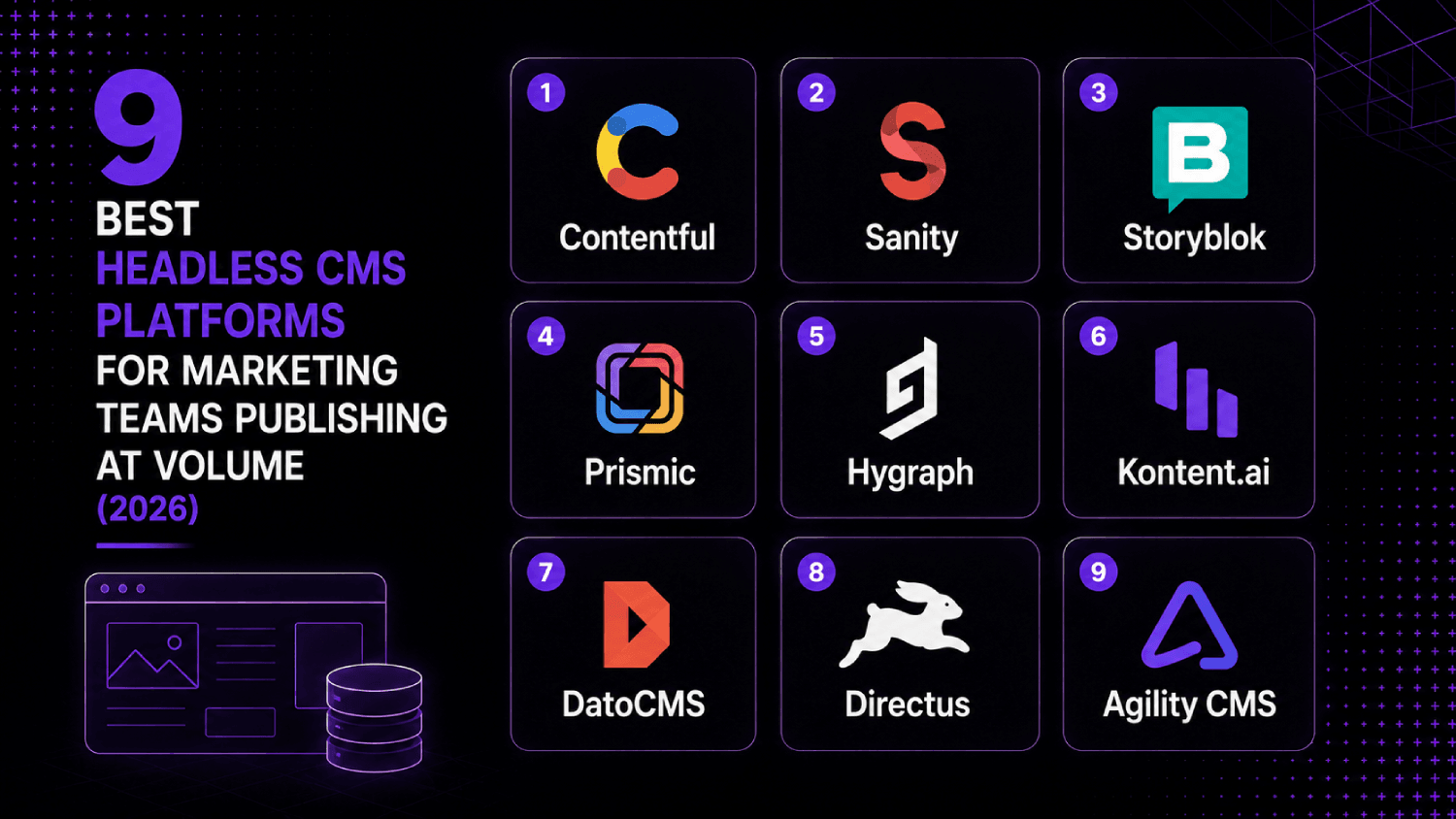
The best headless CMS for marketing teams depends on two factors that rarely appear in developer-focused reviews: whether non-technical editors can publish independently, and whether the content model supports structured reuse across locales and channels without a developer ticket each time. Finding the right headless CMS for marketing means evaluating these editorial dimensions as carefully as API flexibility. Contentful suits enterprise teams with complex content models and global localization needs. Sanity fits teams that publish at high velocity and want maximum content modelling control. Storyblok is the strongest choice for marketers who require visual, in-context editing as a non-negotiable. Prismic, Hygraph, Kontent.ai, DatoCMS, Directus, and Agility CMS round out the field with distinct trade-offs in pricing, localization, and editor experience.
Why Headless CMS Is a Marketing Throughput Decision, Not Just a Developer Architecture Choice
The standard pitch for headless CMS focuses on API flexibility, Jamstack compatibility, and omnichannel content delivery. All of that is real. What it omits is that the choice of content model, editorial interface, and localization workflow determines whether a marketing team of five can publish 200 pages a month independently, or whether every campaign brief turns into a development sprint.
Traditional CMS platforms like WordPress couple content to presentation. Headless platforms decouple them, which gives developers freedom but creates an editor experience problem: without careful implementation, marketers are left editing raw JSON fields with no page preview. The platforms that have solved this problem built visual editing layers on top of their structured APIs. The ones that have not require a developer to build or buy that layer separately, and the quality varies widely.
There is a second dimension that rarely gets discussed in CMS roundups: content modelling. In a headless system, a “content model” is the schema that defines what fields exist on a page, article, or product entry. A well-designed content model lets a marketer reuse a testimonial block across 40 landing pages without touching code. A poorly designed one buries that testimonial inside a single page entry, making global updates a manual, error-prone task. Teams that publish at volume need both good visual editing and a content model that was designed for reuse. These two criteria are the foundation of what we are calling the AboutMartech Marketer Throughput Test: visual independence (can marketers publish without a developer?), model reuse (can components be updated globally?), localization depth (is translation workflow native or bolted on?), and editorial speed (how many steps from draft to live?).
How to Evaluate a Headless CMS Before Your Marketing Team Touches It
Before comparing specific platforms, the four-part Marketer Throughput Test gives you a consistent frame. Run each candidate through all four checks.
Visual independence: Can a marketer create a new landing page, add a component, edit copy, and publish without filing a developer ticket? Test this in a trial environment with a non-technical team member. If they cannot complete the task in under 20 minutes the first time, the editing experience will create a backlog in production.
Model reuse: Does the platform support global references, meaning a single piece of structured content (a CTA block, a pricing table, a testimonial) that propagates changes across every page where it appears when updated once? Platforms without true reference fields force copy-paste maintenance at scale.
Localization depth: Is localization a native content model feature, or is it a translation plugin added afterward? Native localization means locale-specific field values exist alongside the base content entry, with workflow states per locale. Bolt-on translation integrations usually create duplicate entries, which breaks global reference reuse.
Editorial speed: Count the steps from a blank entry to a published, live page. Include content modeling setup time for a new content type. Platforms that require a developer to define new content types before a marketer can use them add latency to every new campaign format.
The 9 Best Headless CMS Platforms for Marketing Teams
1. Contentful
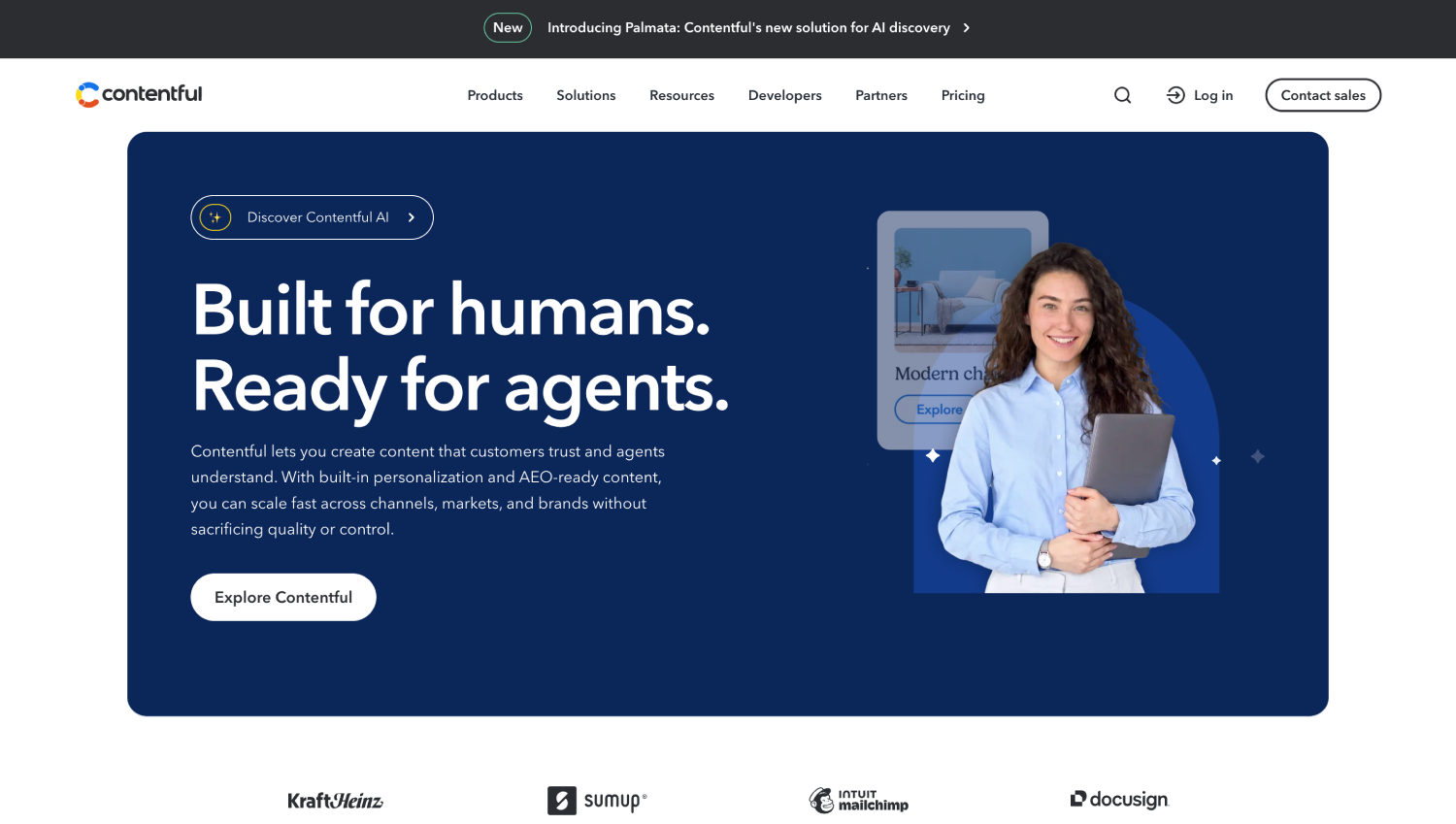
Contentful is the dominant enterprise headless CMS, and for marketing teams running complex content operations across multiple brands and locales, that position is earned. Its content model is the most mature of any platform here, with deep reference field support, rich locale management, and a large partner network for implementation.
The editorial interface is functional but not particularly intuitive for first-time users. Marketers at companies that have invested in Contentful implementations generally work through customized editor apps and sidebar widgets built by their dev teams, rather than the default interface. Contentful’s Contentful Studio (formerly Ninetailed) adds visual editing and personalization capabilities, closing the editor experience gap significantly. Studio is available on higher-tier plans.
Localization is a documented strength with specific capabilities to match. Contentful supports locale-specific field values natively at the content entry level, and its Workflow feature manages multi-locale publishing states with role-based publishing gates per locale. For teams managing 10 or more locales, this is one of the few platforms that does not break under that load. Pricing is based on public tiers on their site, with a free community plan, and paid plans requiring contact with sales for enterprise pricing. The free plan is sufficient for evaluation but not production use at volume.
2. Sanity
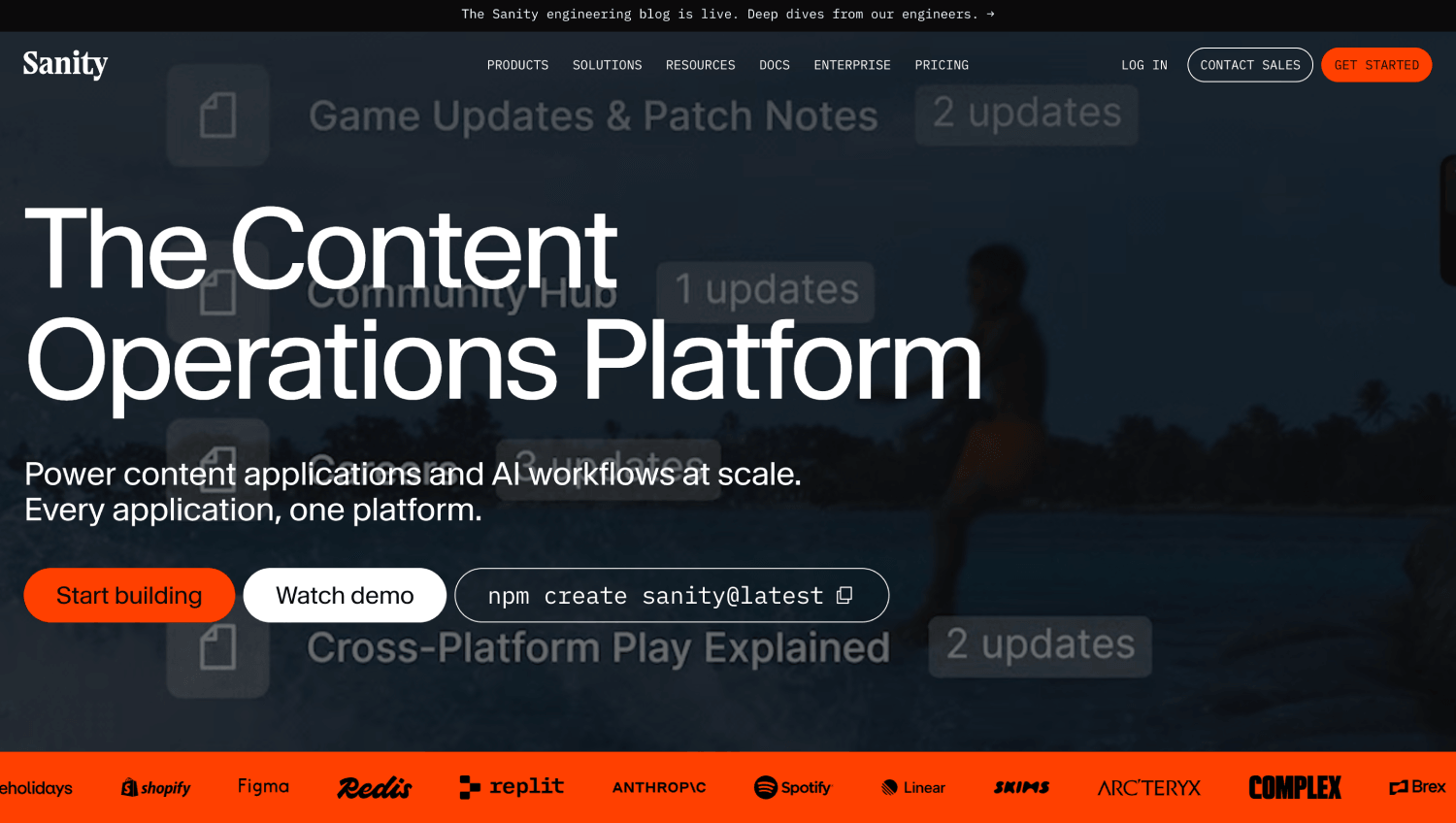
Sanity takes a different approach. Its content model is defined in code by developers, which gives the greatest flexibility of any platform on this list, but it also means the initial setup requires engineering time. Once configured, the Sanity Studio editing experience is clean and fast, and the platform supports real-time collaborative editing, a feature that matters when multiple writers work simultaneously on campaign content.
Sanity’s Portable Text format for rich text is structured and serializable, meaning rich text fields can be rendered differently across channels without re-authoring. For teams publishing the same content to a website, an email, and a native app, that is a real workflow advantage. Localization in Sanity is handled through a community plugin and custom field configuration, which is less turnkey than Contentful’s native approach but highly customizable for teams with developer resources.
Pricing starts with a free tier, and paid plans are listed on Sanity’s public pricing page. Sanity is strongest for teams publishing at very high velocity where content model flexibility and editor performance are the primary concerns, and where a developer is available for ongoing model maintenance.
3. Storyblok
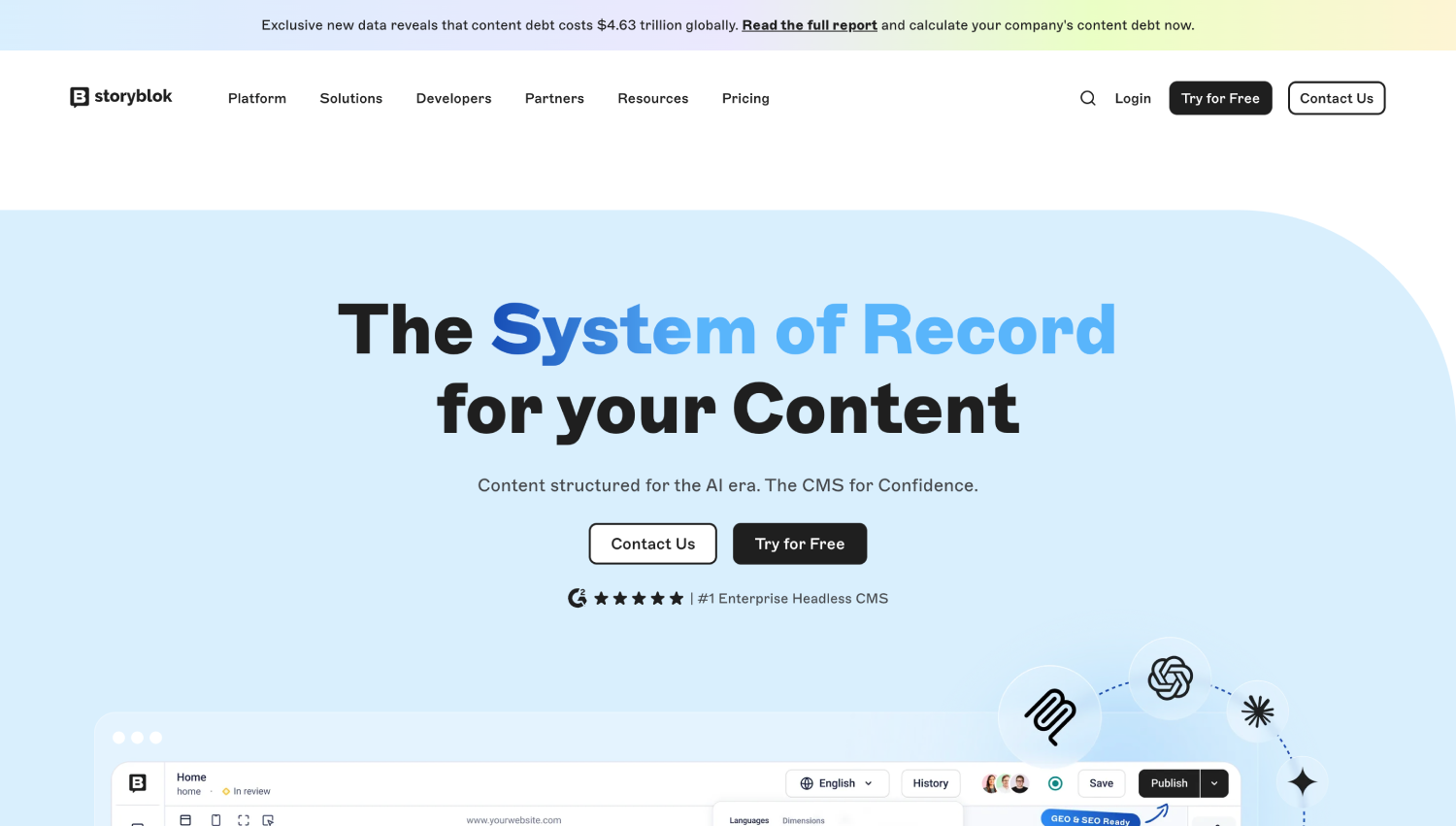
Storyblok has the best visual editing experience of any headless CMS on this list. Its side-by-side editor renders a live preview of the page as the marketer edits component fields, meaning there is no mental translation between “what I typed in a field” and “what the page looks like.” This is not a gimmick. It is the feature that most directly determines whether a marketing team can publish independently.
The platform’s component-based content model maps naturally to how marketing teams think about pages: a hero block, a features section, a testimonial row. Adding or reordering components in the visual editor requires no developer involvement once the component library is built. Building that initial component library does require a developer, but subsequent page creation and editing is genuinely marketer-owned.
Localization in Storyblok is native, with per-locale field translations and workflow tools. Pricing tiers are publicly listed, starting with a community plan, with team and enterprise tiers above that. Storyblok is the right choice for marketing teams that publish high volumes of landing pages, campaign pages, and blog content, and where visual editing autonomy is the deciding criterion.
4. Prismic
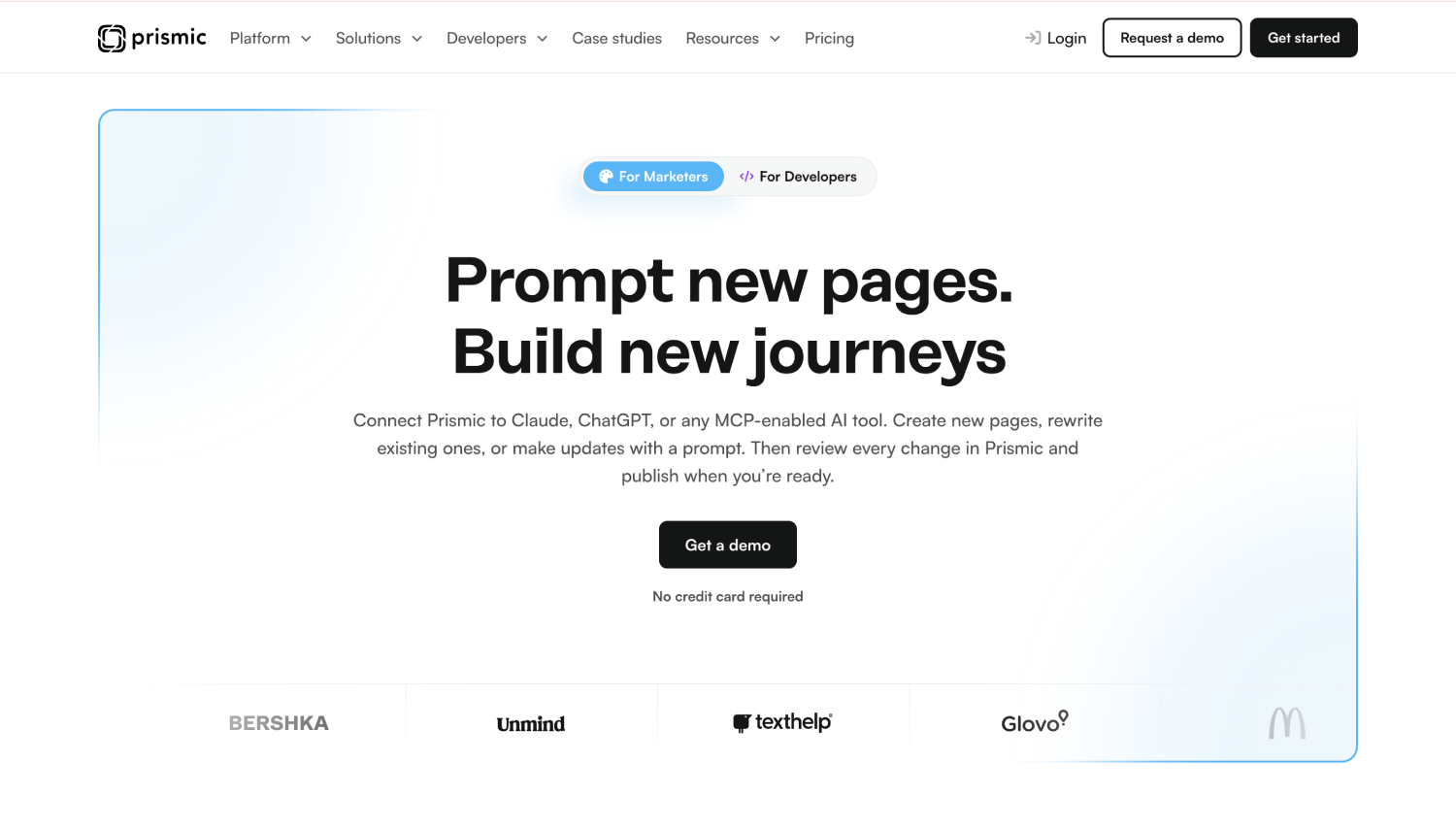
Prismic built its reputation on a concept called Slices, which are reusable content sections that map to pre-built page components. A marketer building a campaign page selects from an approved slice library, meaning they always work within a design system without needing to understand it technically. The editing experience is clean and fast, with a slice simulator that shows a preview of each component.
Where Prismic is weaker is in complex content modelling. For teams that need deeply nested reference structures, custom content types with many relational fields, or multi-locale workflow states, Prismic’s simpler model becomes a constraint. For teams publishing standard marketing pages at volume, that constraint is rarely hit. Pricing starts free, with paid tiers listed publicly. Prismic suits growing marketing teams that prioritize publishing speed and editorial simplicity over content architecture depth.
5. Hygraph
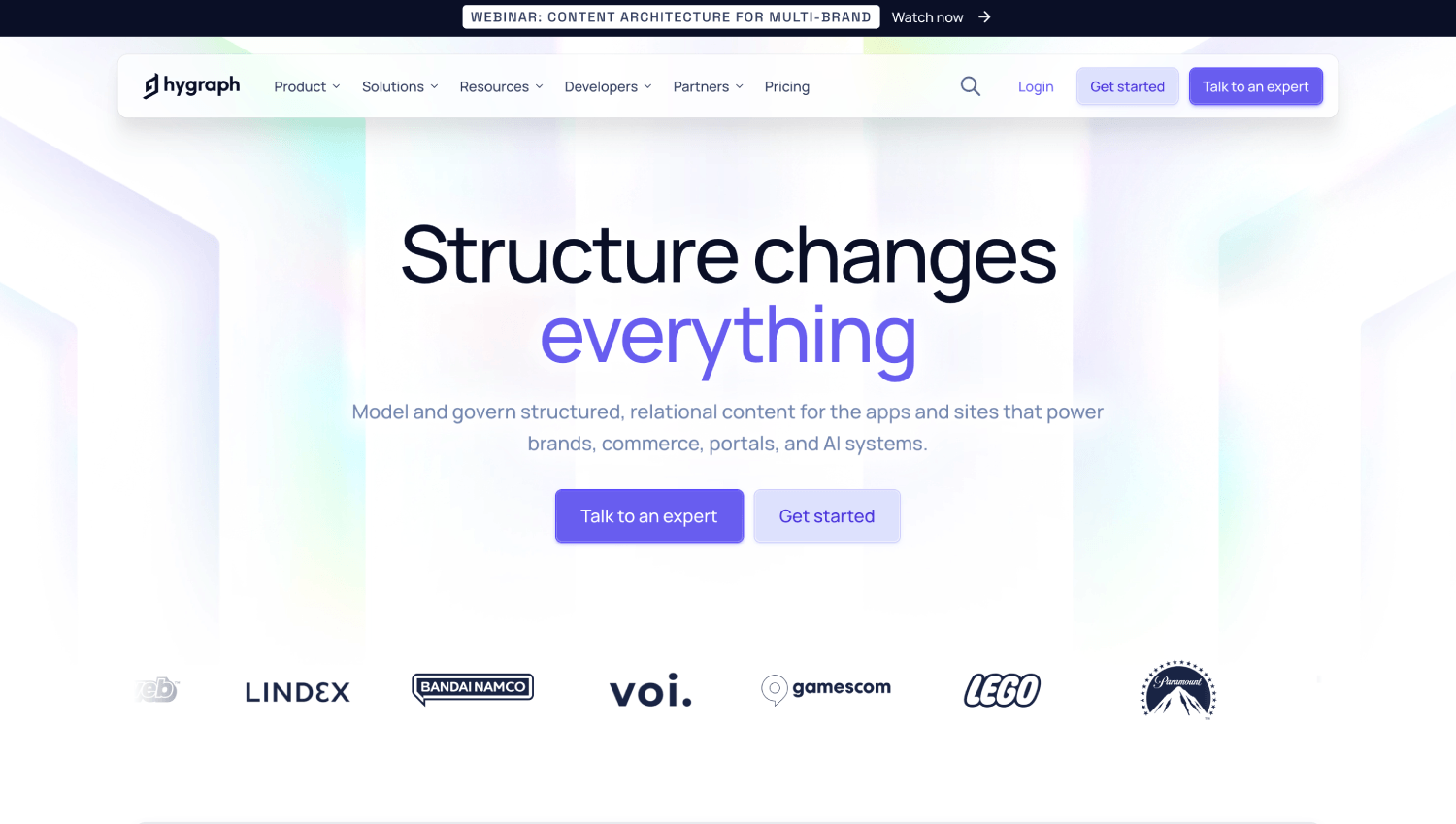
Hygraph (formerly GraphCMS) is built around a GraphQL-native API and is unusually strong at content federation, meaning it can pull data from external systems (a PIM, a CRM, an ERP) and expose it through the same content model. For marketing teams at B2B companies whose content overlaps with product catalog data, customer data, or pricing tables that live in other systems, this is a meaningful architectural advantage.
The editorial interface is functional but sparse compared to Storyblok or Prismic. Hygraph is not the platform for teams whose primary need is visual, marketer-friendly page building. It is the platform for teams that need content to compose with data from external sources. Localization is supported natively. Pricing is available on their public pricing page, with a free tier for development use.
6. Kontent.ai
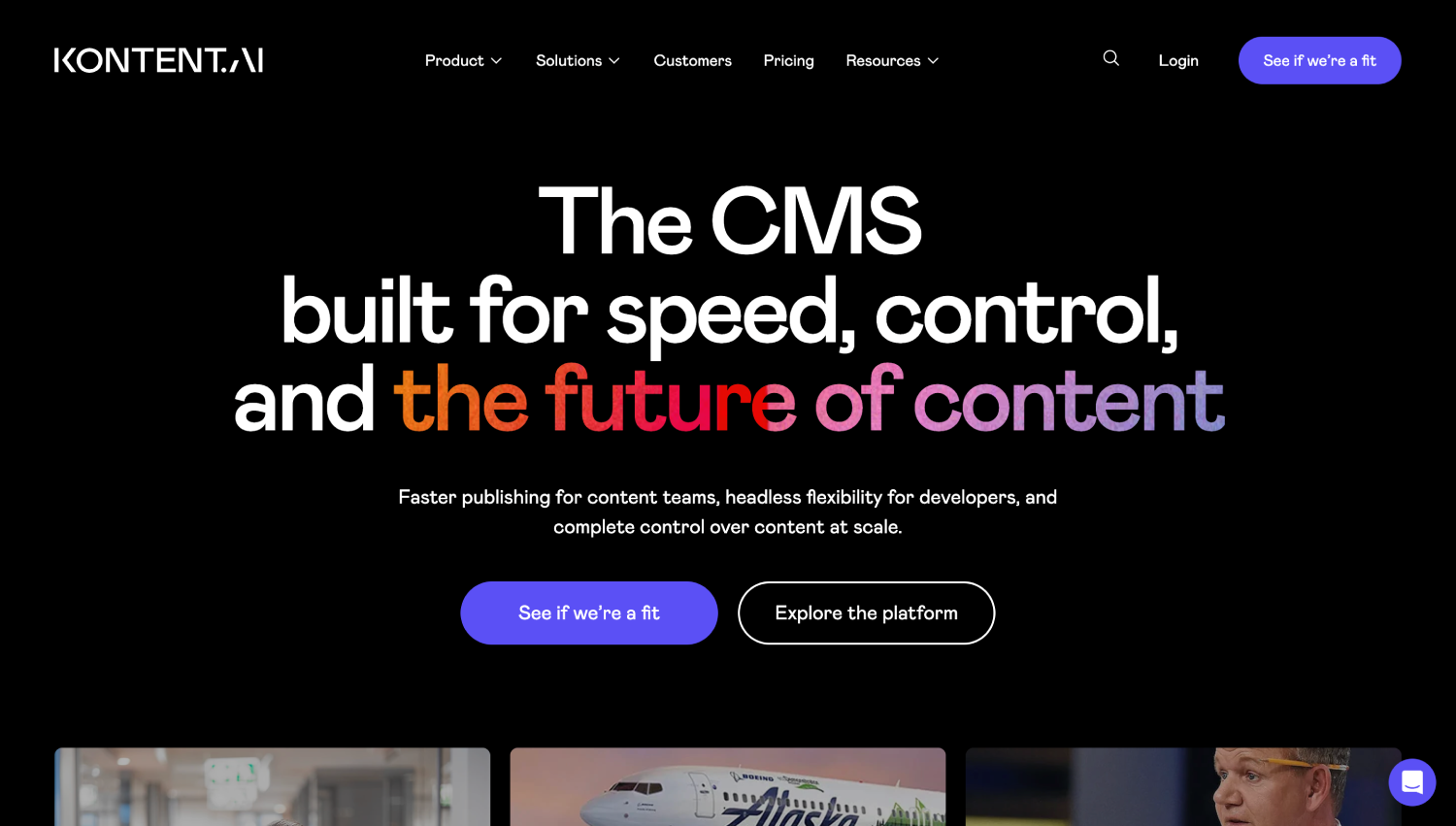
Kontent.ai (formerly Kentico Kontent) is purpose-built for large enterprise marketing teams and has the most mature workflow management of any platform here. Content items move through defined workflow states (Draft, In Review, Approved, Scheduled), with role-based permissions that restrict which team members can advance content through each stage. For marketing operations teams at companies with editorial compliance requirements or regulated industries, this is not a nice-to-have.
The content modelling system is well-structured, with rich support for linked items, taxonomy terms, and content type snippets (reusable field groups). Localization is native and handles multi-locale publishing workflows. The editor experience is functional but not visually led. Kontent.ai pricing is enterprise and requires contacting their sales team for quotes. It is the strongest platform for marketing teams at mid-market and enterprise companies where workflow governance, audit trails, and structured publishing processes matter as much as editorial speed.
7. DatoCMS
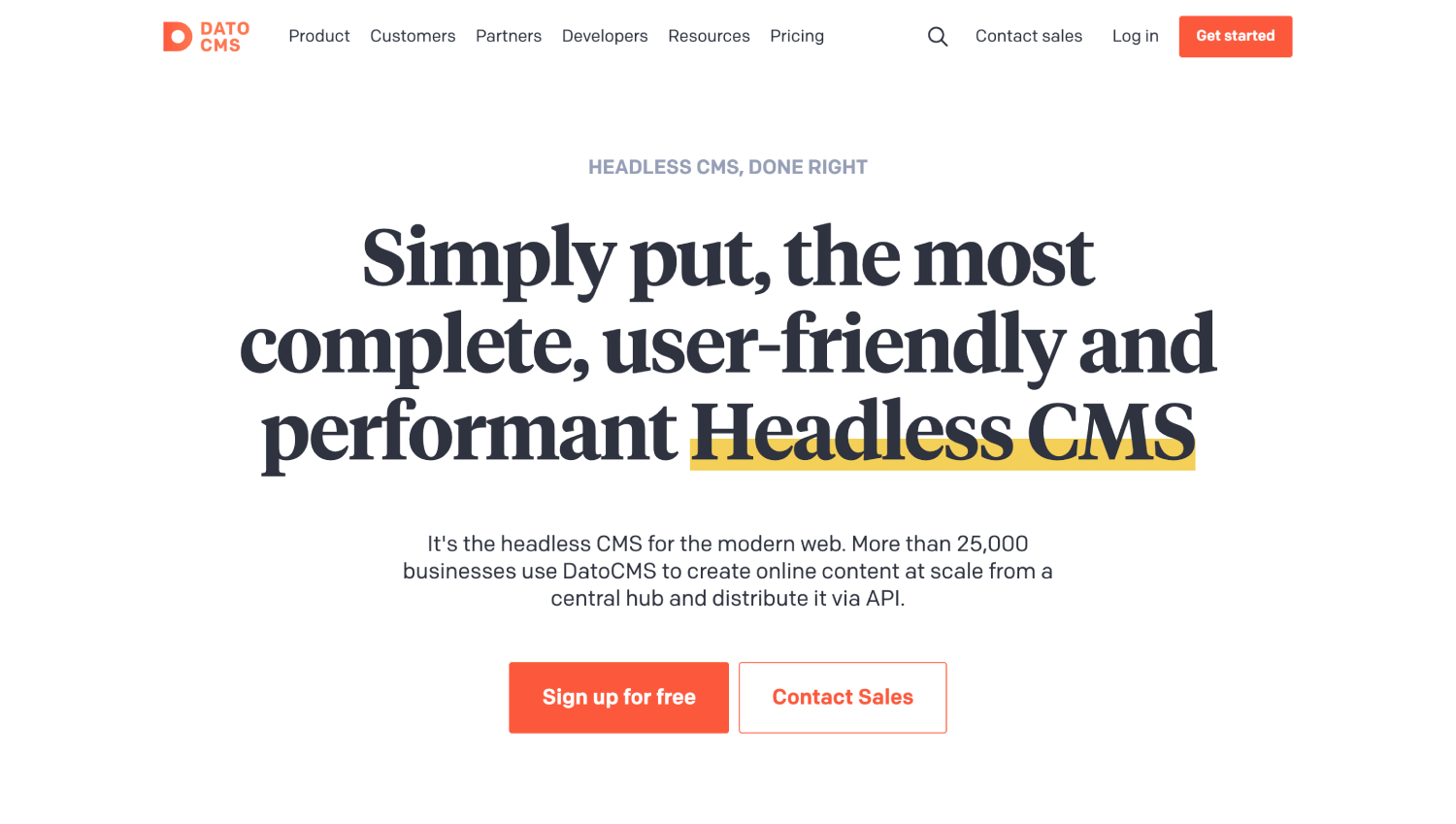
DatoCMS is a European-founded headless CMS that has carved out a niche among digital agencies and marketing teams that run Jamstack sites at volume. Its content model supports modular blocks (similar to Storyblok’s components) and has a clean, well-organized editorial interface. The live preview integration is real-time and works without custom configuration for most Next.js and Gatsby setups.
Localization support is native, and DatoCMS handles all-fields-per-locale translation rather than relying on a separate translation layer. One practical advantage: the platform’s webhook and scheduled publishing system is among the most straightforward to configure of any platform here, which reduces the ops overhead for teams managing content calendars across multiple properties. Pricing is publicly listed, with a free plan and paid tiers based on records, locales, and API calls. DatoCMS is a strong choice for agency-managed marketing sites and teams that prioritize clean editorial UX without the implementation complexity of Contentful.
8. Directus
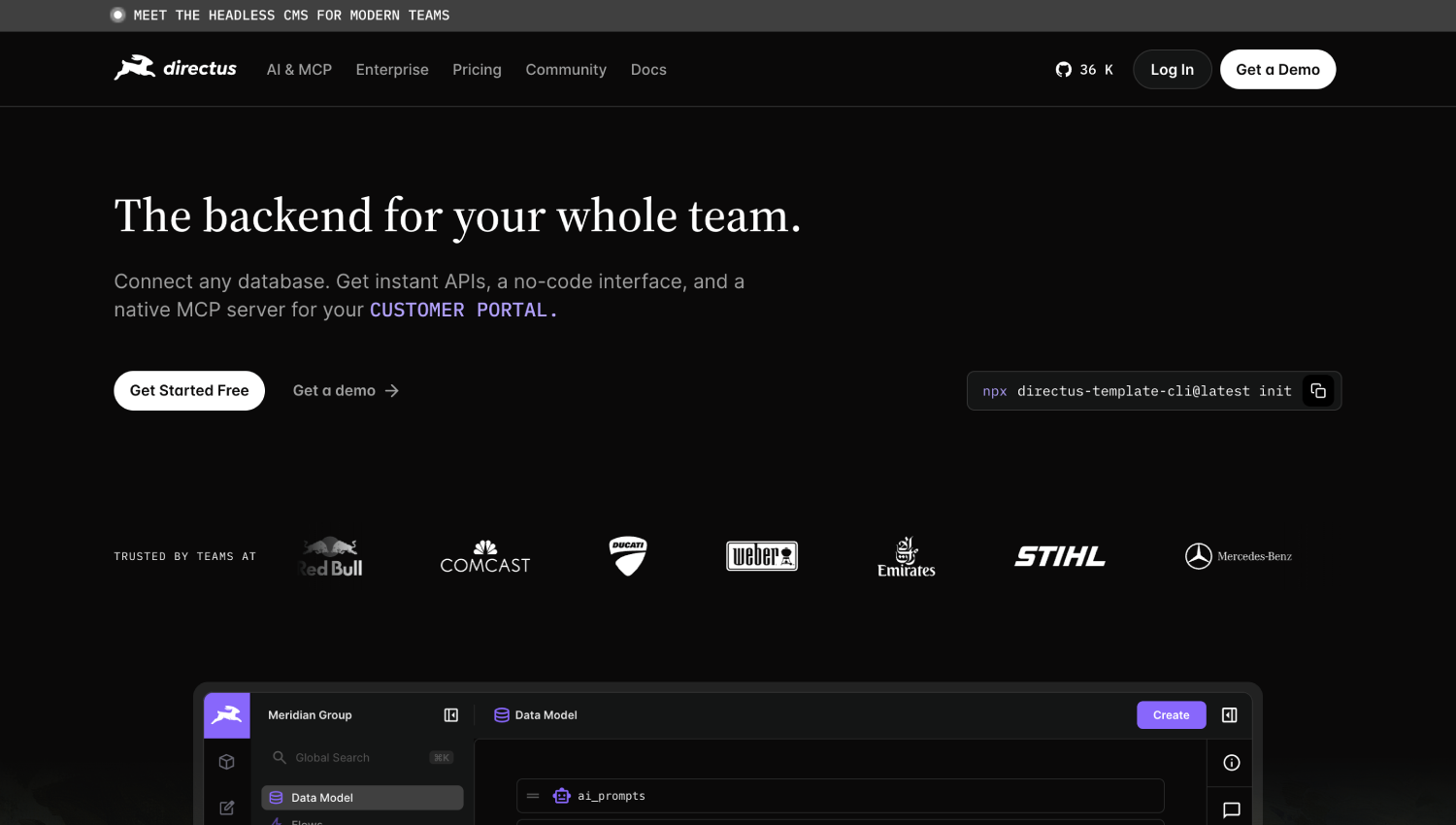
Directus is an open-source data platform that wraps any SQL database (Postgres, MySQL, SQLite) in a CMS interface. For teams that want full data ownership and the ability to self-host, it is the only platform on this list that is genuinely self-contained without a vendor dependency. The content model is the database schema itself, which gives complete flexibility but also means there is no predefined content structure for marketing use cases.
Directus is not the fastest path to a marketer-friendly publishing environment. It requires developer configuration to set up content types, permissions, and a front-end delivery layer. Once configured, the editorial interface is clean and the platform handles both structured content and relational data well. For teams with developer resources who need data sovereignty or who are building content alongside transactional data in the same database, Directus is worth evaluating. Directus Cloud pricing is listed publicly, and the self-hosted open-source version is free.
9. Agility CMS
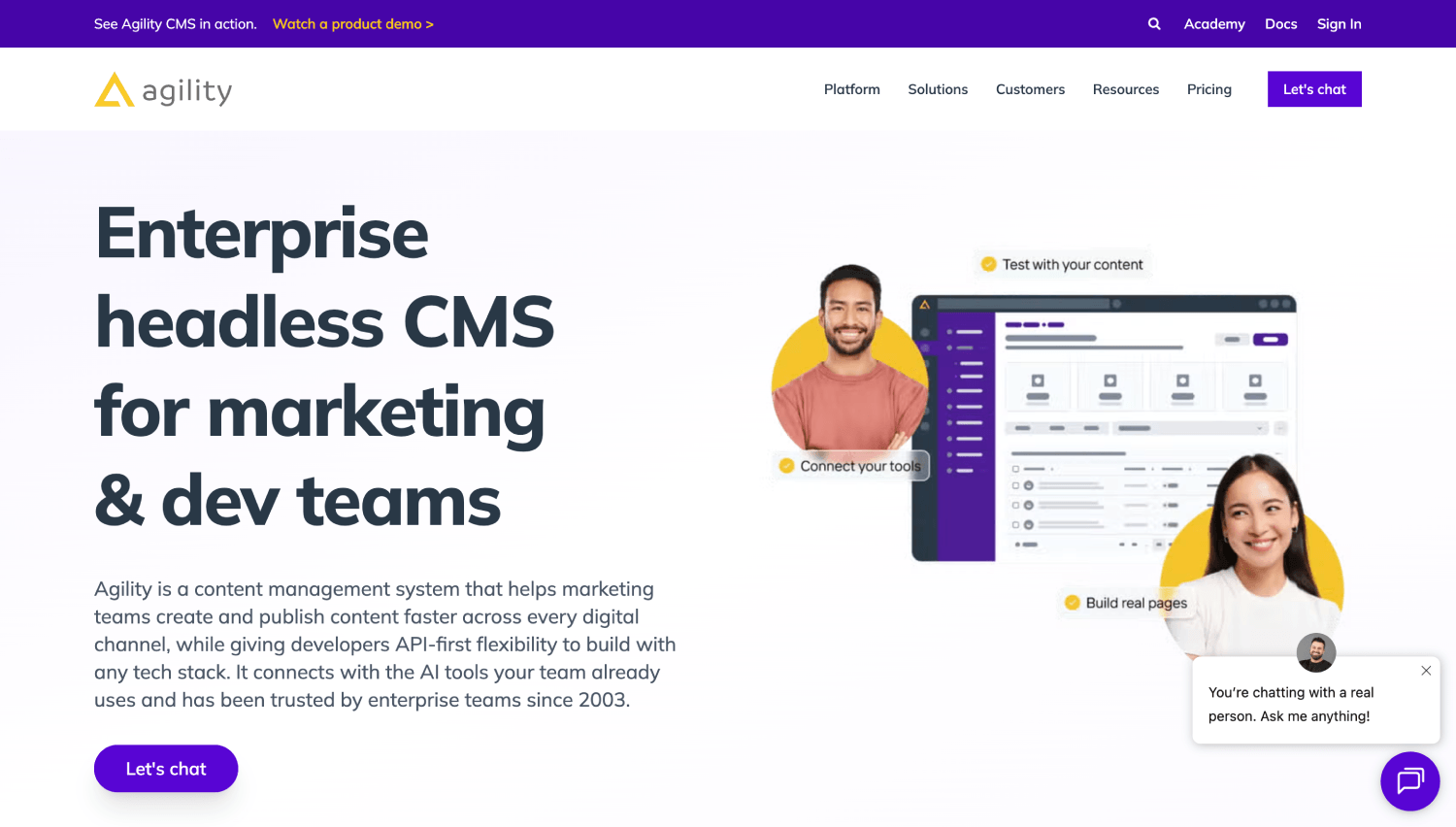
Agility CMS is a Canadian-founded platform that combines headless API delivery with a hybrid page management system, meaning marketers can manage URL structures, sitemaps, and page routing directly, without routing being a developer concern. This is a meaningful differentiator for marketing teams that frequently create campaign microsites, landing page structures, or new content sections and cannot wait on developer sprints to configure routing.
The editorial interface includes a page tree view that feels familiar to teams coming from traditional CMS environments, reducing the learning curve for editors accustomed to WordPress or Drupal. Localization is supported, and the platform integrates with translation services. Agility CMS pricing requires contacting sales for enterprise plans, with a base tier available for smaller teams. It is most appropriate for marketing teams at mid-market companies that need headless API delivery but also want direct control over site architecture and URL management without developer involvement.
Headless CMS Comparison: Marketer Throughput
| Platform | Visual Editing | Content Model Flexibility | Native Localization | Marketer Independence | Best For |
|---|---|---|---|---|---|
| Contentful | Via Studio add-on | Very high | Yes, native | Medium (requires dev setup) | Enterprise, multi-locale, complex models |
| Sanity | Limited, via plugins | Highest (code-defined) | Via plugin, customizable | Medium (dev-heavy setup) | High-velocity teams, omnichannel |
| Storyblok | Strongest on this list | High (component-based) | Yes, native | High | Campaign-heavy marketing teams |
| Prismic | Good (Slice simulator) | Medium | Yes, native | High | Growing teams, simple page structures |
| Hygraph | Basic | High (GraphQL-native) | Yes, native | Low-medium | Data-federated content, B2B SaaS |
| Kontent.ai | Basic | High | Yes, native | Medium (strong workflow tools) | Enterprise, regulated industries |
| DatoCMS | Good (real-time preview) | High | Yes, native | High | Agency-managed sites, Jamstack teams |
| Directus | Basic | Very high (schema-first) | Via configuration | Low (dev-heavy setup) | Self-hosted, data sovereignty |
| Agility CMS | Good (page tree) | Medium-high | Yes, supported | High (URL/routing control) | Mid-market, microsite-heavy teams |
Do Marketers Actually Need Developers to Publish in a Headless CMS?
The honest answer is: it depends on which platform and how it was implemented, but the gap between platforms is large enough that your choice of CMS determines the answer more than your budget for developer time.
On Storyblok, a marketer with no technical background can build a new campaign page from an approved component library in under 30 minutes, with live visual feedback throughout. On Sanity with a default Studio configuration and no custom components, that same marketer is editing raw structured fields with no page preview. Both are headless CMS platforms. The developer experience rating of each platform would not tell you this.
Consider a scenario that illustrates the operational difference. Say a demand-gen team needs to ship 15 localized landing pages for a product launch across three regions, each with a unique hero, regional pricing, and a locale-specific testimonial. On a platform with native localization and visual editing (Storyblok, Contentful with Studio), a single content entry with locale variants can be managed entirely by the marketing team once the base template is built. On a platform where localization is a plugin or requires duplicate entries, each of those 15 pages is a separate creation task with no shared reference to update. The multiplication of effort is not linear. It compounds every time a headline needs to change before launch.
If your team’s throughput goal is 50 or more pages per month, treat visual editing and native localization as non-negotiable requirements, not optional features. Teams that skip this filter during CMS evaluation consistently end up in the same place: a content operations backlog that requires developer resources to clear.
Headless CMS vs Traditional CMS for Marketing Teams: What Actually Changes
The transition from a traditional CMS like WordPress to a headless platform changes two things that matter to marketing operations teams. First, content and presentation are decoupled, meaning the same content entry can render on a website, a mobile app, and an email template without re-authoring. Second, the editorial experience is no longer a bundled product. It is a layer that each headless platform builds differently, and the quality spread is wide.
What does not change is the need for content governance. Headless platforms do not automatically give you better workflows, approval processes, or content calendars. Kontent.ai and Contentful have strong workflow tooling built in. Sanity and DatoCMS have lighter default workflow systems that require custom configuration or third-party integrations (Sanity has a scheduling and workflow plugin; DatoCMS has built-in scheduling). If your content operations require multi-step approval, role-based publishing gates, or audit logs for compliance, evaluate workflow tooling as a first-class criterion alongside visual editing.
The content operations layer also intersects with how your team handles AI-generated content at scale. Teams using AI content tools for marketing need a CMS content model that can accept structured AI output without breaking the editorial workflow. Platforms with a well-defined Portable Text or modular block model (Sanity, Storyblok, Prismic) handle this better than platforms where rich text is a single unstructured blob field.
Which Headless CMS Handles Localization Best?
Localization support in headless CMS platforms falls into three tiers. The first tier has native, field-level localization built into the content model: Contentful, Storyblok, Prismic, Hygraph, Kontent.ai, and DatoCMS all qualify. The second tier handles localization through a plugin or custom configuration that integrates with a translation management system (TMS): Sanity’s localization plugin and Directus’s field-based approach both work but require setup. The third tier treats localization as a separate content entry per locale, which breaks global reference reuse and multiplies editorial workload with each new language.
For teams managing more than five locales, the distinction between tier one and tier two matters operationally. Native localization means a base content entry in English can have French, German, and Japanese field values attached to the same entry, so updating a shared image or global CTA component updates across all locale variants simultaneously. Plugin-based localization usually duplicates the entry per locale, breaking that shared reference chain.
Contentful and Kontent.ai are the most mature for teams managing 10 or more locales with complex workflow states per locale. Storyblok’s native localization handles the majority of marketing use cases with less configuration overhead. For teams evaluating localization depth, the practical test is to create a content entry, add a global reference (a reusable testimonial block), translate the entry to a second locale, then update the global reference and verify whether the change propagates to both locale variants automatically. Platforms that pass this test have true native localization. Platforms that do not will create hidden maintenance debt at scale.
What Does a Good Content Model Look Like for a Marketing Team Publishing at Volume?
A content model built for marketing throughput has three characteristics. It separates global content from page-specific content, using reference fields to link shared components (navigation, CTAs, testimonials, pricing blocks) that can be updated once and reflected everywhere. It uses content types that map to marketing team workflows, meaning a “landing page” type exists with pre-defined sections, rather than forcing marketers to assemble pages from scratch each time. And it restricts the content model surface area to what the team actually publishes, avoiding the trap of over-engineering a schema that no editor can work through.
The platforms that make content modelling most accessible to non-technical stakeholders are Storyblok and Prismic. In both platforms, a developer can define a component library once, and marketers select from those components in a visual interface. This is composable content in practice, not just in marketing copy. Contentful’s content model is more powerful but also more abstract, and teams without a dedicated CMS architect often end up with a schema that works for the first six content types and then becomes unwieldy as the site grows.
Marketing teams that care about how their content model intersects with their broader data stack, such as passing structured content to a CDP or personalizing content based on customer segment, should also evaluate how each CMS exposes its content via API. Understanding customer data platform integration requirements before finalizing a CMS content model saves significant re-architecture work later.
Pricing Reality Check: What Do These Platforms Actually Cost?
Most headless CMS platforms use a tiered model based on some combination of users, API calls, bandwidth, records, and locales. The free tiers are real and useful for evaluation, but they are generally not production-ready for teams publishing at volume. The practical cost range for a mid-market marketing team runs from a few hundred dollars per month on platforms like DatoCMS and Prismic to several thousand per month on Contentful and Kontent.ai at enterprise scale.
Contentful’s pricing is enterprise-gated for plans above the basic tier, requiring sales engagement for a quote. Sanity’s paid plans are listed publicly and scale based on dataset usage and API request volume. Storyblok’s team and enterprise plans are listed publicly with a starting price, and higher tiers require sales contact. DatoCMS and Prismic both publish transparent pricing tiers with clear limits, making budget forecasting easier for teams without enterprise procurement cycles.
The hidden cost in headless CMS is implementation. A Contentful implementation at a mid-market company typically requires 4 to 8 weeks of developer time to configure the content model, build the front-end delivery layer, and create the custom editor experience. Platforms like Prismic and Storyblok, with their template-friendly architectures, generally reduce that to 2 to 4 weeks for standard marketing site use cases. That gap represents real budget that does not appear on any pricing page.
How Does a Headless CMS Fit Into a Broader Martech Stack?
A headless CMS sits at the content production and delivery layer of the marketing stack. It does not replace a CDP, a marketing automation platform, or an analytics tool. What it does is serve as the system of record for structured content that gets delivered across every channel where the brand publishes.
The integration points that matter most for marketing teams are: a DAM (digital asset management) system for media files (Contentful has a native media library; others integrate with Cloudinary, Bynder, or similar), a translation management system for localization workflows (most platforms integrate with Phrase, Lokalise, or Smartling), a personalization layer if content needs to vary by segment (Contentful Studio has personalization built in; Storyblok and Hygraph integrate with external personalization tools), and analytics for understanding content performance.
Teams that are also thinking about how their content performs in AI-generated search results should be aware that structured, well-modelled content published through a headless CMS with clean semantic HTML output tends to be more retrievable by LLMs than content buried in page builder markup. If that dimension is relevant to your team, the content operations work starts at the CMS layer. The broader question of how to optimize content for AI engine visibility connects directly to how your CMS structures and delivers content at the API layer.
Frequently Asked Questions
What is the best headless CMS for a marketing team that needs to publish without developers?
Storyblok is the strongest choice for marketing teams that need genuine publishing independence. Its visual editor renders a live page preview alongside the editing interface, meaning non-technical editors can build and publish campaign pages from an approved component library without any developer involvement. Prismic and Agility CMS are close seconds for simpler page structures. Contentful with Studio is competitive at enterprise scale but requires more implementation investment to reach the same level of marketer independence.
How does a headless CMS differ from a traditional CMS for marketers?
A traditional CMS like WordPress ties content to a specific page template and presentation layer. A headless CMS stores structured content independently and delivers it via API to any front-end: websites, apps, email systems, or digital displays. For marketers, the practical difference is that content authored once can appear across multiple channels without re-authoring, but the editorial experience is only as good as the visual editing layer each platform provides, which varies significantly.
Which headless CMS has the best localization support?
Contentful and Kontent.ai have the most mature native localization, with per-locale field values, workflow states per locale, and translation integrations with Phrase and Lokalise. Storyblok, DatoCMS, and Hygraph offer solid native localization for most marketing use cases. Sanity’s localization is plugin-based and requires developer configuration. For teams managing more than five locales with complex approval workflows per locale, Contentful or Kontent.ai are the safer choices.
Do I need a developer to set up a headless CMS content model?
Yes, for all platforms on this list, the initial content model setup and front-end delivery layer require developer work. The difference is in what happens after setup. On Storyblok and Prismic, marketers can create new pages from existing components independently. On Sanity and Contentful, adding a new content type or component requires developer involvement. Budget for 2 to 8 weeks of implementation depending on the platform and the complexity of your content requirements before your team can publish independently.
Is Contentful worth the cost for a mid-market marketing team?
Contentful’s content model depth and localization maturity make it the strongest platform for complex enterprise use cases: teams managing many locales, deeply nested content types, or cross-channel content requirements that simpler platforms cannot model without workarounds. For a mid-market team publishing standard marketing pages across a small number of locales, the cost and implementation complexity will likely exceed what is needed. DatoCMS or Storyblok deliver the majority of Contentful’s editorial capability at lower cost and faster implementation time. Contentful earns its position when the editorial and localization requirements are genuinely complex, not when a mid-market team is hoping they might be someday.
Can a headless CMS integrate with a personalization or A/B testing platform?
Yes, and this is an area where platform architecture matters. Contentful Studio has personalization built in. Storyblok, Hygraph, and DatoCMS integrate with external personalization tools through their APIs. The content model needs to be designed for personalization from the start, with content variants as separate entries or locale-adjacent structures that a personalization layer can select between at render time. Teams that are evaluating website personalization tools for B2B marketing should validate API compatibility with their chosen CMS before committing to either platform.
What is structured content, and why does it matter for publishing at volume?
Structured content means content stored as discrete, typed fields (a title field, a body text field, an image reference, a CTA reference) rather than as a single blob of HTML. When content is structured, a single testimonial entry can be referenced by 40 landing pages, and updating the testimonial once propagates across all 40 pages. Teams publishing at volume without structured content models end up doing manual find-and-replace updates at scale, which is where throughput breaks down.