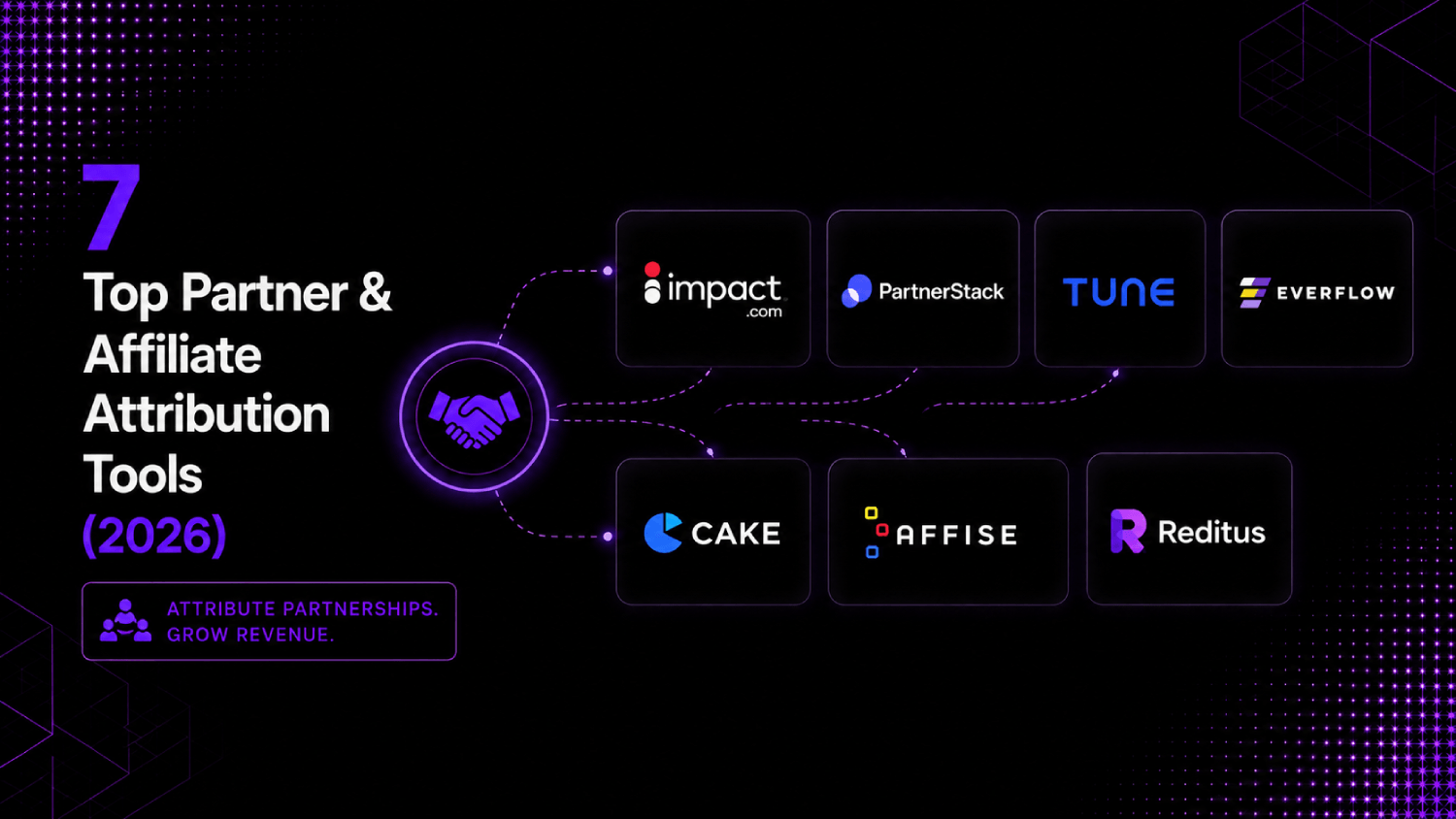
- Most attribution stacks treat partner and affiliate channels as an afterthought, routing commissions through spreadsheets while paid media gets pixel-perfect multi-touch credit.
- The seven tools below all solve the core problem differently: some sit inside the partner relationship management layer, others bolt onto your existing ad-measurement stack, and one is warehouse-native.
- For B2B SaaS teams with long sales cycles, the gap between click credit and closed-won credit is where partner ROI gets distorted most.
- Pricing ranges from free tiers for early-stage affiliate programs to six-figure annual contracts for enterprise channel networks, so stack fit matters more than feature count.
- Pick the tool that matches your channel mix first, your commission logic second, and your CRM integration third.
The best partner attribution tools for most teams are Impact.com (for complex enterprise channel programs), PartnerStack (for B2B SaaS partner and affiliate co-selling), and Everflow (for performance marketers running affiliate networks at scale). Each tool tracks partner-sourced and partner-influenced revenue across touchpoints, connects to CRMs and ad platforms, and handles commission payout logic, though they diverge sharply on pricing, flexibility, and the depth of multi-touch attribution across paid and organic channels.
Why Does Partner Attribution Break Down in Standard Stacks?
Standard marketing attribution tools, Google Analytics 4 included, are built around sessions and UTM parameters. A partner or affiliate link fires a click, sets a cookie, and if the user converts within the attribution window, the partner gets credit. That is last-touch affiliate attribution, and it has two failure modes that compound each other.
First, in B2B sales cycles longer than 30 days, the cookie expires or gets overwritten by a retargeting click. The partner who sourced the lead gets zero credit at closed-won. Second, when a deal involves both a channel partner and a paid search touchpoint, standard attribution tools assign credit to one or the other based on the model, not the actual commercial relationship. Your affiliate dashboard says the partner drove the deal. Your ad platform says paid search did. Your CRM has no opinion. Finance pays no commission.
This is the problem a dedicated partner attribution tool solves: it holds partner identity across the full sales cycle, not just the click session, and it reconciles that identity against CRM events, not just web conversions. For a fuller picture of how attribution models behave across channels, the multi-touch vs. last-touch attribution breakdown on AboutMartech covers the model mechanics in detail.
The Channel Credit Conflict: Why Paid and Partner Attribution Fight Over the Same Deals
Here is a scenario that plays out across B2B SaaS channel programs regularly. A company runs a reseller channel alongside Google Ads. A prospect clicks a reseller’s referral link in January, visits the pricing page, then clicks a branded paid search ad in March before booking a demo. The reseller drove first touch. Paid search drove last touch. The deal closes in April after five sales calls.
In this scenario, Google Ads claims the conversion. The reseller’s affiliate platform sees a click but no tracked conversion, because the attribution window lapsed. Finance pays no reseller commission. The reseller complains, the relationship frays, and the program shrinks.
A purpose-built partner attribution tool handles this by anchoring partner identity at the lead level in the CRM, not at the session level in the browser. When the deal closes in the CRM, the tool looks up the originating partner ID and fires the commission event regardless of what happened in the paid media stack. CRM-anchored attribution vs. session-anchored attribution is the core distinction that separates partner attribution software from standard analytics, and it is what determines whether your channel program survives a long sales cycle intact.
The AboutMartech Partner Attribution Stack-Fit Test
Before matching a tool to a team, run four checks:
- Channel type: Are your partners affiliates (content creators, coupon sites), resellers (VARs, agencies), or co-sell partners (ISVs, system integrators)? Each type needs different commission logic and different attribution windows.
- Sales motion: Is your conversion a web checkout (e-commerce) or a CRM opportunity (B2B SaaS)? E-commerce stacks need pixel-level accuracy. B2B stacks need CRM integration and deal-stage attribution.
- Commission complexity: Do you pay flat rates, tiered rates, or revenue-share that varies by product SKU or deal size? Simple flat rates work in almost any tool. Tiered or variable commission logic narrows the field quickly.
- Existing stack: Which CRM, data warehouse, and paid media tools are already in place? A tool that cannot write back partner-sourced opportunity data to Salesforce is a dead end for most B2B teams.
Run all four checks before reading the vendor summaries below. If you skip step two, you will likely buy an e-commerce-grade affiliate tool for a B2B program, or an enterprise PRM for a 20-partner affiliate network, and neither fit will end well.
Which Partner and Affiliate Attribution Tools Actually Deliver?
1. Impact.com
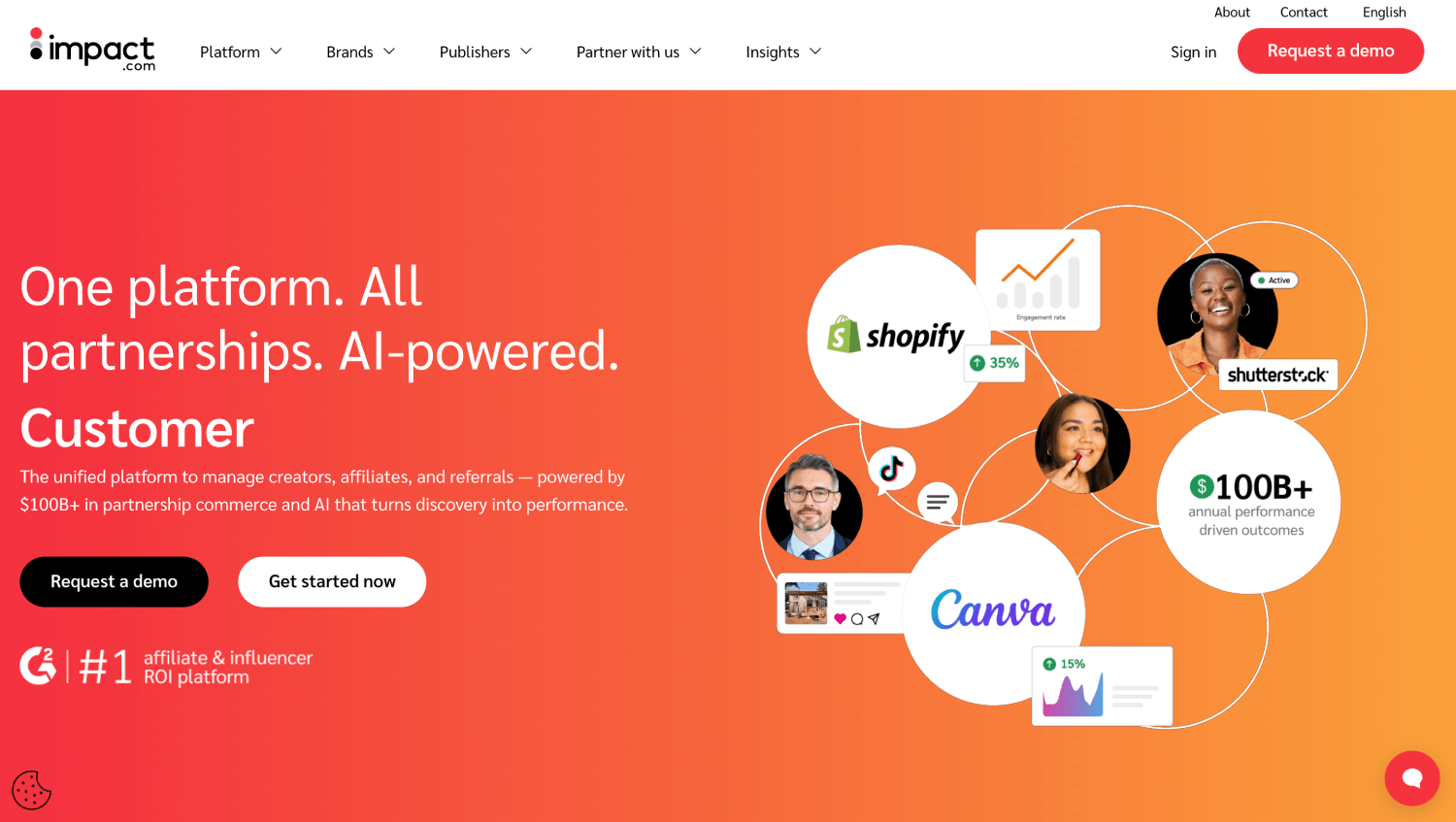
Impact.com is the closest thing the affiliate and partner space has to a full-stack platform. It handles partnership recruitment, contract management, tracking, fraud detection, and payouts inside one interface, and its multi-touch attribution layer assigns credit across partner, affiliate, and paid media touchpoints using configurable rules.
The attribution engine supports first-touch, last-touch, linear, and custom weighted models, and it can resolve identity across devices using deterministic matching against email addresses collected at checkout or form fill. For brands running both affiliate publishers and managed channel partners, Impact’s ability to segment commission rules by partner type within a single program is genuinely useful.
Pricing is quote-based. Impact does not publish tiers publicly, but the platform is generally positioned for mid-market and enterprise programs with meaningful partner counts. It is not the right tool for a startup running 10 affiliates.
Best for: Mid-market and enterprise brands with mixed partner types (affiliates, influencers, resellers) who need fraud filtering and multi-touch credit in one platform.
2. PartnerStack
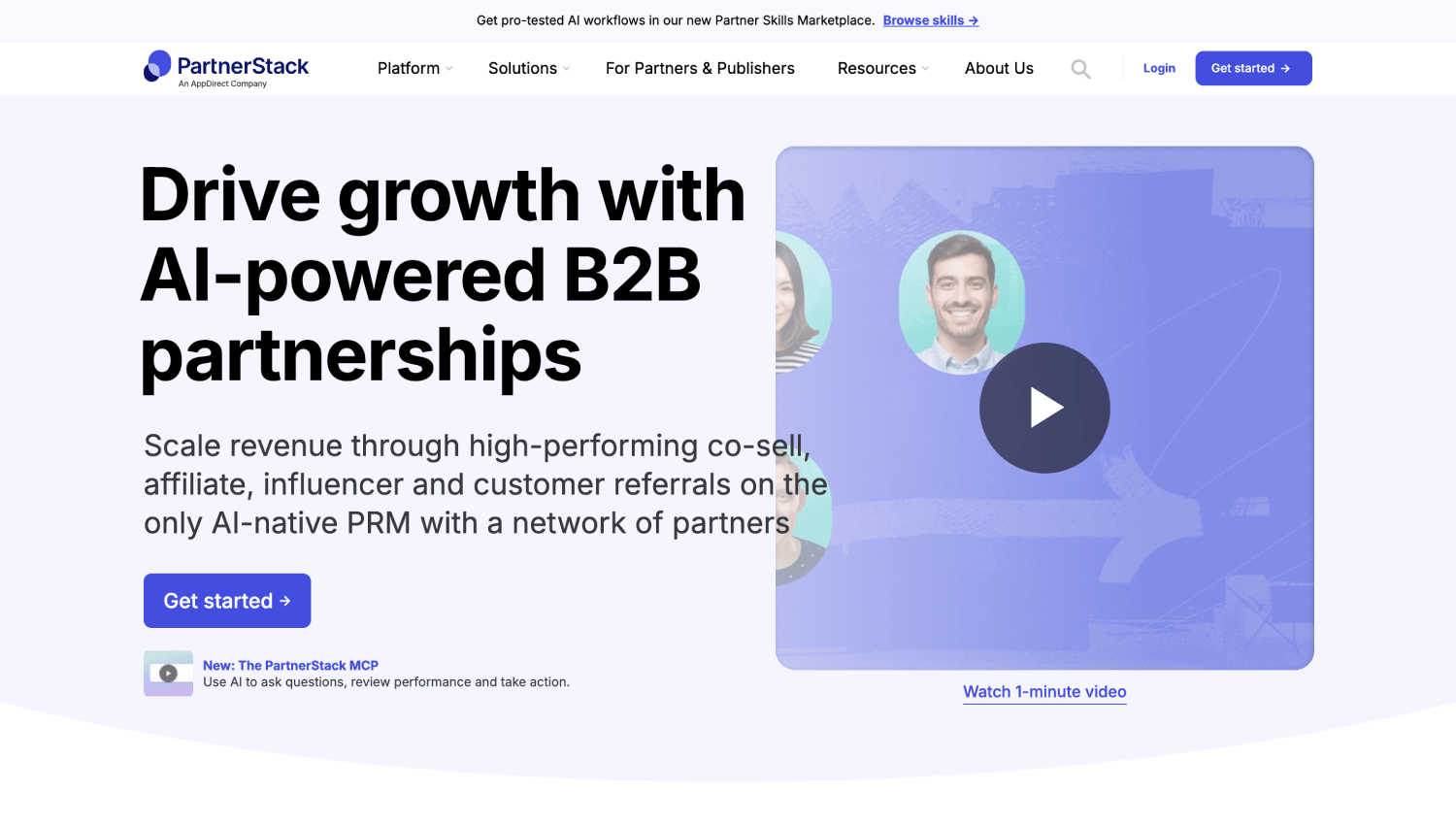
PartnerStack is built specifically for B2B SaaS channel programs, which makes it the most relevant tool on this list for software companies running reseller, referral, or agency partner programs. Its attribution model anchors partner credit at the lead level inside the partner’s referral link, then syncs that lead data to Salesforce or HubSpot so partner-sourced opportunities appear correctly in the CRM pipeline.
Where PartnerStack differs from Impact is in the partner experience layer. Partners get a self-service portal where they track their own referrals, download co-marketing assets, and view commission statements. That transparency reduces the support burden on the channel team and tends to improve partner engagement in recurring programs.
PartnerStack’s attribution does not natively do probabilistic cross-device matching at the sophistication level of Impact, but for most B2B SaaS programs where form fills anchor identity, that is rarely a problem. Pricing is quote-based and scales with program revenue.
Best for: B2B SaaS companies building or scaling a structured channel partner or affiliate referral program with HubSpot or Salesforce as the CRM backbone.
3. Tune

Tune (formerly HasOffers) is a performance marketing platform aimed at networks, brands, and agencies running high-volume affiliate programs. Its attribution engine is event-based rather than session-based, meaning it tracks individual actions (install, registration, purchase, trial activation) rather than page sessions, which matters for mobile app programs and subscription products with multi-step conversion funnels.
Tune’s reporting is detailed enough to split commission rates by traffic source, geo, and device type within the same affiliate relationship. For brands managing hundreds of affiliates across multiple geographies, that granularity reduces payout disputes. The platform also supports server-to-server (S2S) postback tracking, which is more durable than pixel tracking under ITP and cookie restrictions.
Pricing is quote-based for the brand-side product. Tune is technical enough that non-technical marketers will want an implementation partner or a dedicated MOps resource to manage it.
Best for: Performance marketing teams and affiliate networks running high-volume, multi-event programs where pixel tracking is insufficient and S2S postbacks are required.
4. Everflow

Everflow positions itself as the modern alternative to older affiliate network software, with a cleaner interface and stronger analytics than platforms like Cake or older HasOffers deployments. Its channel attribution reporting lets you break down performance by source, placement, sub-affiliate ID, and creative, which is the level of detail performance marketers need to optimize spend across a network.
Everflow supports both click-based and impression-based attribution, configurable attribution windows, and multi-touch models including first-touch, last-touch, and linear. It integrates with major ad platforms (Meta, Google, TikTok) so partner-driven conversions can be reconciled against paid media conversions in a single reporting view, which addresses the channel credit conflict directly.
According to Everflow’s public pricing page, plans start at $750 per month. That entry point is reasonable for a mid-size affiliate program but too high for a brand just beginning to build a partner channel.
Best for: Performance marketing teams running affiliate networks who need cross-channel reconciliation between paid and partner-driven conversions without building custom infrastructure.
5. Cake

Cake is an enterprise affiliate attribution and partner marketing platform that has been in the market long enough to have deep integrations with legacy ad-tech infrastructure. Its attribution layer supports multi-touch models and can ingest impression data from DSPs alongside click data from affiliate links, making it one of the few tools on this list that can genuinely unify display, paid search, and affiliate attribution in a single data model.
That breadth comes with complexity. Cake requires significant setup and ongoing management, and its interface reflects its enterprise heritage more than its current competitors. For organizations with an existing investment in Cake and a dedicated channel operations team, the depth is an asset. For teams evaluating fresh, there are more modern options.
Pricing is quote-based and typically enterprise-scale.
Best for: Enterprise brands with existing Cake deployments or complex ad-tech integrations that require impression-level data alongside affiliate click attribution.
6. Affise
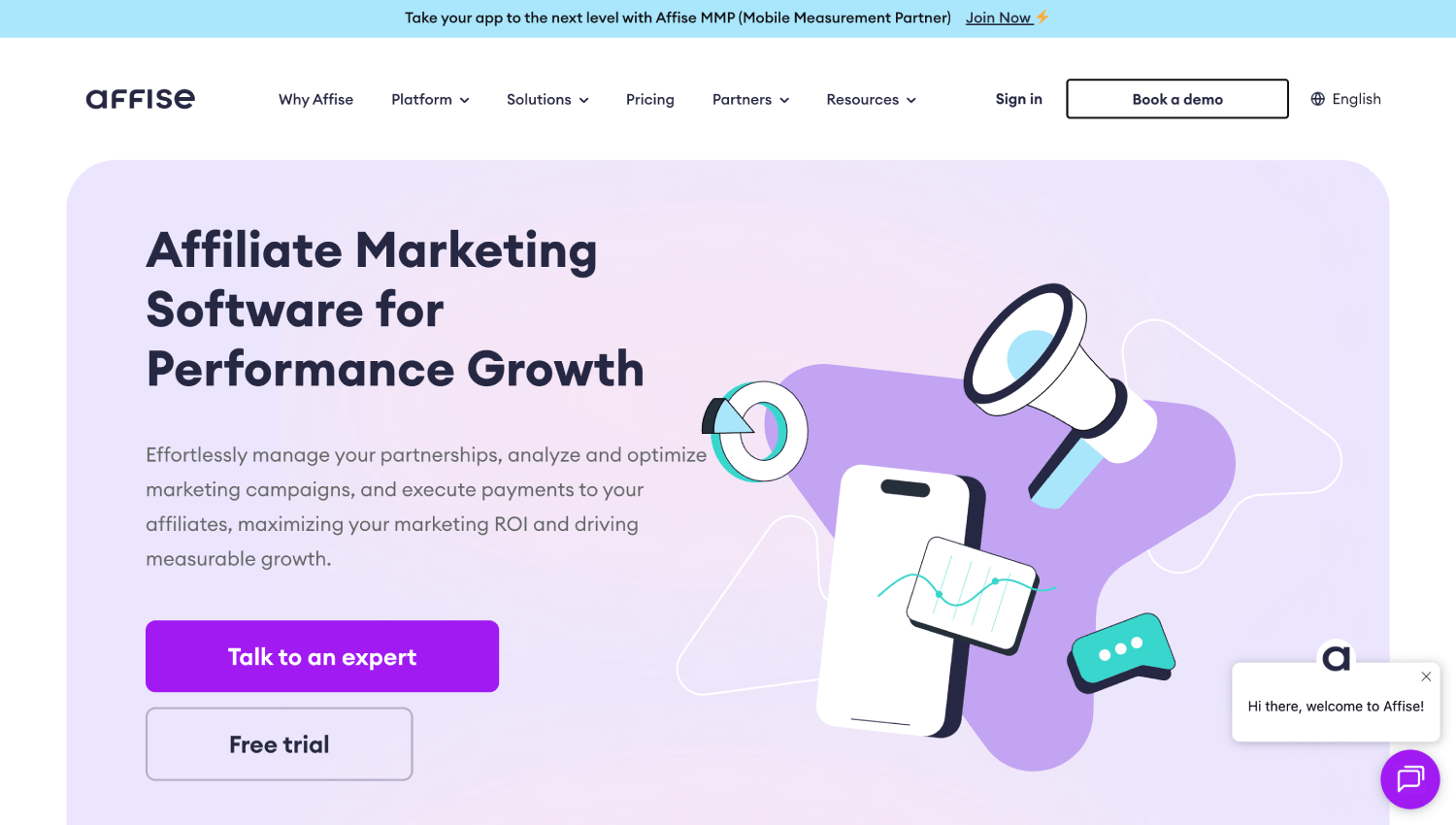
Affise is a performance marketing platform that competes directly with Tune and Everflow for affiliate network operators and performance-focused brands. Its attribution engine supports S2S postback tracking, multiple attribution models, and granular sub-affiliate tracking. The platform includes a built-in BI layer with customizable dashboards, which reduces the need for a separate reporting tool if your partner program operates in relative isolation from the broader marketing stack.
Affise’s differentiator is its automation layer. You can set rules that automatically flag affiliates for fraud signals, pause campaigns that fall below a performance threshold, or trigger commission adjustments based on real-time conversion data. For teams managing large affiliate rosters, those automations reduce manual oversight significantly.
Affise publishes tiered pricing on its website, with plans starting at $500 per month for the performance product. An enterprise tier with advanced analytics is available at quote-based pricing.
Best for: Affiliate network operators and performance marketers who need automated fraud detection and campaign rules without building custom tooling.
7. Reditus
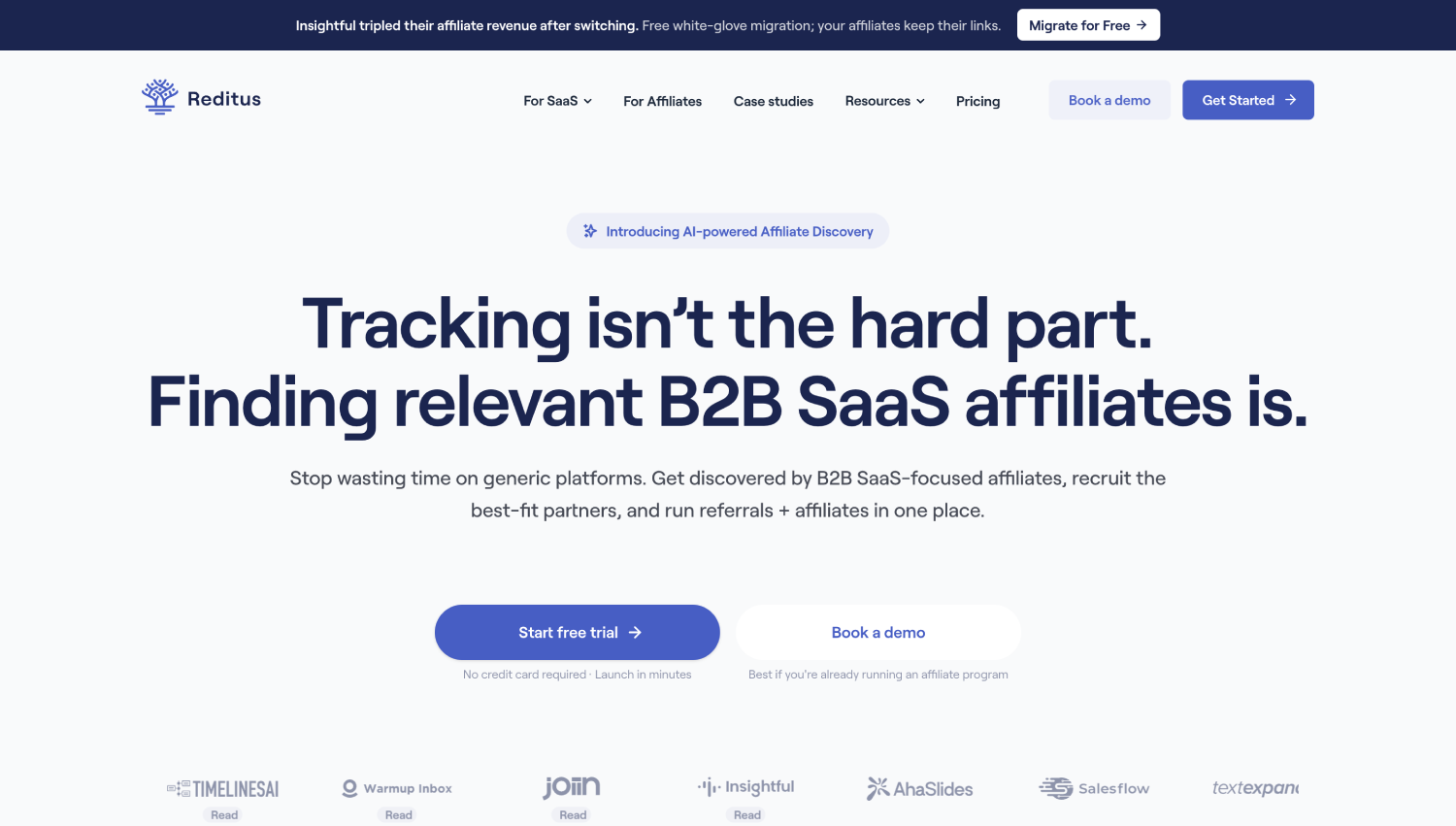
Reditus is the lightest-weight option on this list and the most appropriate for early-stage B2B SaaS companies launching a first affiliate or referral program. It connects to Stripe for subscription-based commission tracking, syncs with HubSpot, and provides affiliates with a simple portal to track their referrals and commissions. Attribution is last-touch and cookie-based, which is honest about what the tool does and does not do.
Reditus is not a multi-touch attribution platform. It does not reconcile paid and partner channels. It is a clean, affordable tool for getting a basic affiliate program running quickly without the overhead of an enterprise PRM. According to Reditus’s public pricing page, there is a free tier for early programs, with paid plans scaling based on program revenue.
Best for: Early-stage SaaS companies launching a first affiliate or referral program on Stripe who need functional attribution without the cost or complexity of an enterprise tool.
How Do These Partner Attribution Tools Compare Side by Side?
| Tool | Best Channel Type | Attribution Models | CRM Integration | Paid Channel Reconciliation | Pricing |
|---|---|---|---|---|---|
| Impact.com | Affiliates, influencers, resellers | Multi-touch, custom weighted | Salesforce, HubSpot | Yes | Quote-based |
| PartnerStack | B2B SaaS channel partners | Lead-anchored, last-touch | Salesforce, HubSpot | Partial | Quote-based |
| Tune | High-volume affiliates, mobile | Event-based, multi-action | Limited | Via S2S postbacks | Quote-based |
| Everflow | Affiliate networks, performance | First, last, linear, multi-touch | Salesforce (via Zapier) | Yes (Meta, Google, TikTok) | From $750/mo |
| Cake | Enterprise, display + affiliate | Multi-touch, impression-level | Enterprise CRMs | Yes (DSP-level) | Quote-based |
| Affise | Affiliate networks, performance | Multi-touch, S2S | Limited native | Via integrations | From $500/mo |
| Reditus | Early SaaS affiliates/referrals | Last-touch, cookie-based | HubSpot, Stripe | No | Free tier available |
What Should B2B Teams Do Differently With Partner Attribution?
B2B partner attribution has a structural problem that e-commerce programs do not face: the conversion event that matters, a closed deal in the CRM, happens weeks or months after the partner interaction. Standard affiliate tracking windows max out at 90 days in most platforms, and even that is often too short for enterprise sales cycles.
The practical fix is to anchor partner identity at the lead record level, not at the cookie level. When a partner link generates a form fill, the partner ID should write to a CRM field on the contact or lead object at that moment, independent of any cookie or session. When the opportunity closes, that CRM field is the source of truth for commission calculation, not the attribution platform’s click database.
PartnerStack does this natively for HubSpot and Salesforce. Impact.com does it with more configuration. For teams already invested in a warehouse-native data stack, reading partner attribution from CRM fields and calculating commissions via a reverse ETL pipeline is a viable alternative to a dedicated PRM. If you are curious about that approach, the overview of reverse ETL tools on AboutMartech covers the activation layer in detail.
For teams with long sales cycles running B2B programs, it is also worth reading the B2B attribution tools roundup alongside this one, since several tools in that list handle multi-touch attribution across paid and partner channels for complex pipelines.
How Does Fraud Affect Partner Attribution Accuracy?
Affiliate fraud is not a niche problem. Click stuffing, cookie dropping, and fake lead submissions inflate partner-sourced conversion counts and trigger commission payouts for revenue that does not exist. For programs paying on cost-per-lead rather than cost-per-acquisition, fraud risk is highest because the payout event happens before any revenue is confirmed.
Impact.com and Affise both include built-in fraud detection that scores affiliate traffic in real time and flags anomalous patterns. Everflow includes traffic quality filters and sub-affiliate blocking. Tune supports S2S postback validation, which at minimum prevents pixel-based fraud by requiring a server-side conversion confirmation before firing a commission event.
PartnerStack and Reditus have less sophisticated fraud tooling, which is acceptable given their target segments. A 50-partner B2B SaaS referral program with vetted agency partners has a very different fraud profile than a 5,000-publisher performance network.
Frequently Asked Questions About Partner Attribution Software
What is a partner attribution tool and how is it different from standard marketing attribution?
A partner attribution tool tracks revenue credit for channel partners, affiliates, and resellers across the full sales cycle, not just the click session. Standard marketing attribution tools (GA4, ad platform pixels) measure web sessions and assign credit based on the last or first touchpoint in a browsing window. Partner attribution tools anchor partner identity at the CRM lead or contact level, hold that identity across long sales cycles, and calculate commissions based on closed-revenue events rather than web conversions.
Can affiliate attribution software work alongside paid media attribution?
Yes, but the integration requires explicit configuration. Tools like Impact.com and Everflow can ingest conversion data from Meta, Google, and TikTok alongside affiliate click data, then reconcile overlapping touchpoints using a configurable attribution model. Without that integration, paid and partner channels run separate attribution stacks and routinely claim credit for the same conversions. The result is over-attribution and inflated commission payouts unless the two stacks are reconciled at the CRM or data warehouse level.
Which partner attribution tool is best for B2B SaaS with a long sales cycle?
PartnerStack is the most purpose-built option for B2B SaaS with long sales cycles. It anchors partner credit at the lead level in HubSpot or Salesforce at the moment of form fill, independent of cookie expiration. When a deal closes months later, the partner ID on the CRM record drives commission calculation. Impact.com handles this too but requires more configuration. For teams with simpler programs and fewer than 25 partners, Reditus is a lower-cost starting point.
What attribution models do affiliate platforms support?
Most dedicated affiliate attribution platforms support last-touch as the default, with first-touch and linear multi-touch as options. Impact.com and Cake support custom weighted models where you can assign percentage credit to each touchpoint position. Tune and Affise support event-based attribution for multi-step conversion funnels. The model that matters most for B2B programs is less about weighting clicks and more about whether the tool can hold partner identity through a multi-month sales cycle, which is a CRM integration question as much as an attribution model question.
How much do partner attribution tools cost?
Pricing varies widely. Reditus offers a free tier for early-stage programs. Affise starts at $500 per month according to its public pricing page. Everflow starts at $750 per month. Impact.com, PartnerStack, Tune, and Cake are all quote-based and typically scale with program revenue or partner count. For enterprise channel programs with significant partner revenue, budget $2,000 to $10,000 per month is a realistic range, though vendors do not publish those tiers publicly.
Can I use a CDP or data warehouse instead of a dedicated partner attribution tool?
For simple programs, yes. If you store partner IDs on CRM records and calculate commissions in a BI tool or via a reverse ETL pipeline, you can build basic partner attribution without a dedicated platform. The gaps are payout automation, partner-facing portals, fraud detection, and real-time postback tracking. Those gaps matter most for large programs with many partners. For a 10-partner referral program, a CRM-plus-warehouse approach is often sufficient. For a 500-publisher affiliate network, it is not. A B2B CDP can anchor identity across partner and paid touchpoints but will not replace payout management or fraud detection.
What is server-to-server (S2S) postback tracking and why does it matter for affiliate attribution?
Server-to-server postback tracking fires a conversion signal directly from your server to the affiliate platform’s server when a purchase or lead event occurs, bypassing the browser entirely. Because it does not rely on cookies, pixels, or browser-side JavaScript, it is not affected by ITP, ad blockers, or cookie deprecation. For affiliate programs where conversion accuracy directly drives commission payouts, S2S tracking is more reliable than pixel-based attribution. Tune and Affise support S2S natively. Impact.com and Everflow also support it as an alternative to pixel tracking.
Which Tool Should You Actually Choose?
The choice comes down to two variables that matter more than any feature list: your sales motion and your partner count. If you are a B2B SaaS company with a CRM-managed pipeline and fewer than 200 partners, PartnerStack handles the attribution mechanics cleanly and the partner experience layer reduces program management overhead. If you are a performance marketer running an affiliate network with hundreds of publishers and paid media running in parallel, Everflow’s cross-channel reconciliation at $750 per month is the most direct path to unified reporting. Impact.com is the right call when you need to manage multiple partner types, fraud detection, and multi-touch attribution inside one contract, and when budget is not the primary constraint.
The broader attribution picture, covering how paid channels, organic, and partner all interact across a full funnel, benefits from pairing a partner attribution tool with a general-purpose multi-touch attribution layer. The marketing attribution tools roundup covers that broader category if you are evaluating both simultaneously.
One thing worth keeping in mind: partner attribution accuracy is ultimately bounded by CRM data quality. A tool that writes partner IDs to contact records is only as accurate as the CRM hygiene that preserves those IDs through the pipeline. Before implementing any of the tools above, audit whether your CRM ownership fields survive lead-to-contact and lead-to-opportunity conversions. If they do not, fix that first. No attribution software patches a broken CRM data model.