- Ruler Analytics is a capable closed-loop attribution tool, but it is not the only option, and for many teams it is not the right one.
- If your primary need is call tracking plus lead attribution, tools like CallRail and Invoca offer deeper phone intelligence at comparable or lower cost.
- For B2B teams with long sales cycles, Dreamdata and Attribution give you account-level mapping across the full buying cycle that Ruler’s lead-centric model does not.
- The tools below cover five use cases: call-heavy lead gen, B2B multi-touch, agency multi-client, DTC/e-commerce, and lightweight SMB attribution.
- Pricing ranges from self-serve plans under $100/month to quote-based enterprise tiers.
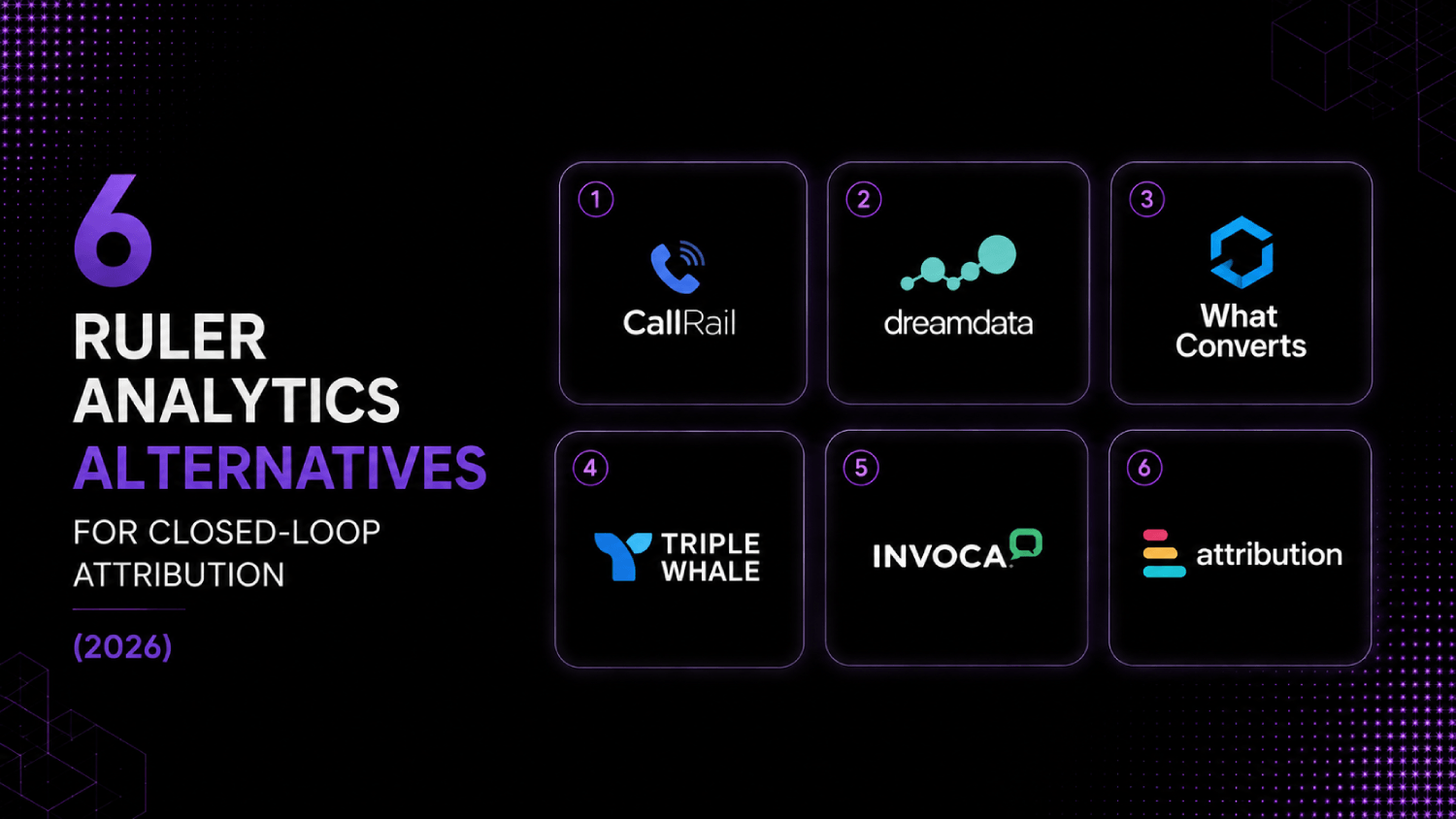
The strongest Ruler Analytics alternatives for closed-loop attribution are CallRail for call-heavy lead gen, Dreamdata for B2B revenue attribution, Triple Whale for DTC brands, WhatConverts for agencies managing multiple clients, Invoca for enterprise call intelligence, and Attribution for teams that want a simple multi-touch view without heavy implementation. Each one outperforms Ruler in at least one specific dimension, whether that is call data depth, account-level stitching, or pricing transparency.
Why Are Marketers Looking for Ruler Analytics Alternatives?
Ruler Analytics built its reputation on one specific promise: connecting anonymous website visitors to phone calls and form fills, then stitching that data back to CRM revenue. For agencies and lead-gen-heavy SMBs in the UK market, it became a default. But three friction points keep surfacing in buyer conversations.
First, Ruler’s pricing is not publicly listed, which creates friction during vendor evaluation. Second, its call tracking features are functional but not as deep as dedicated call intelligence platforms, which matters when phone volume is high. Third, teams with complex B2B buying committees or multi-product portfolios often find Ruler’s visitor-level model too thin to capture account-level data across a long sales cycle.
None of that makes Ruler a bad tool. It makes it a specific tool, and the alternatives below are better fits for specific situations Ruler does not cover well. For broader context on the attribution market, our roundup of the best marketing attribution tools covers the full category.
The AboutMartech Attribution Fit Test
Before evaluating any vendor, run four checks against your actual stack and workflow. This is the AboutMartech Attribution Fit Test , the diagnostic framework we applied to select and categorize the alternatives below. Use it before booking a demo with any tool in this list.
- Lead type: Are your conversions primarily phone calls, form fills, chat, or a mix? Call-heavy lead gen needs dedicated call intelligence. Form-heavy B2B needs session-to-CRM stitching.
- Sales motion: Single-touch transactional, or multi-stage with a sales team? Long sales cycles with multiple stakeholders need account-level attribution, not visitor-level.
- Client or internal: Are you attributing for one brand or reporting to multiple clients? Agency-mode multi-client reporting is a distinct product requirement most tools do not prioritize.
- Data destination: Where does your attribution data need to land? CRM only, BI warehouse, or both? Warehouse-native tools like Dreamdata behave differently from CRM-append tools like Ruler.
Match these four answers to the tools below before booking a demo.
What Are the Best Ruler Analytics Alternatives for Closed-Loop Attribution?
| Tool | Best for | Call tracking | B2B account-level | Public pricing |
|---|---|---|---|---|
| CallRail | Call-heavy lead gen SMBs | Yes, core product | No | Yes, from $45/month |
| Dreamdata | B2B SaaS revenue attribution | No | Yes, native | Freemium + paid tiers |
| WhatConverts | Agencies with multi-client reporting | Yes | No | Yes, from $30/month |
| Triple Whale | DTC/e-commerce brands | No | No | Yes, paid tiers public |
| Invoca | Enterprise call intelligence | Yes, AI-enhanced | Partial | Quote-based |
| Attribution | Lightweight multi-touch for SMBs | No | No | Yes, tiered plans |
CallRail: The Best Ruler Analytics Alternative for Call-Heavy Lead Gen
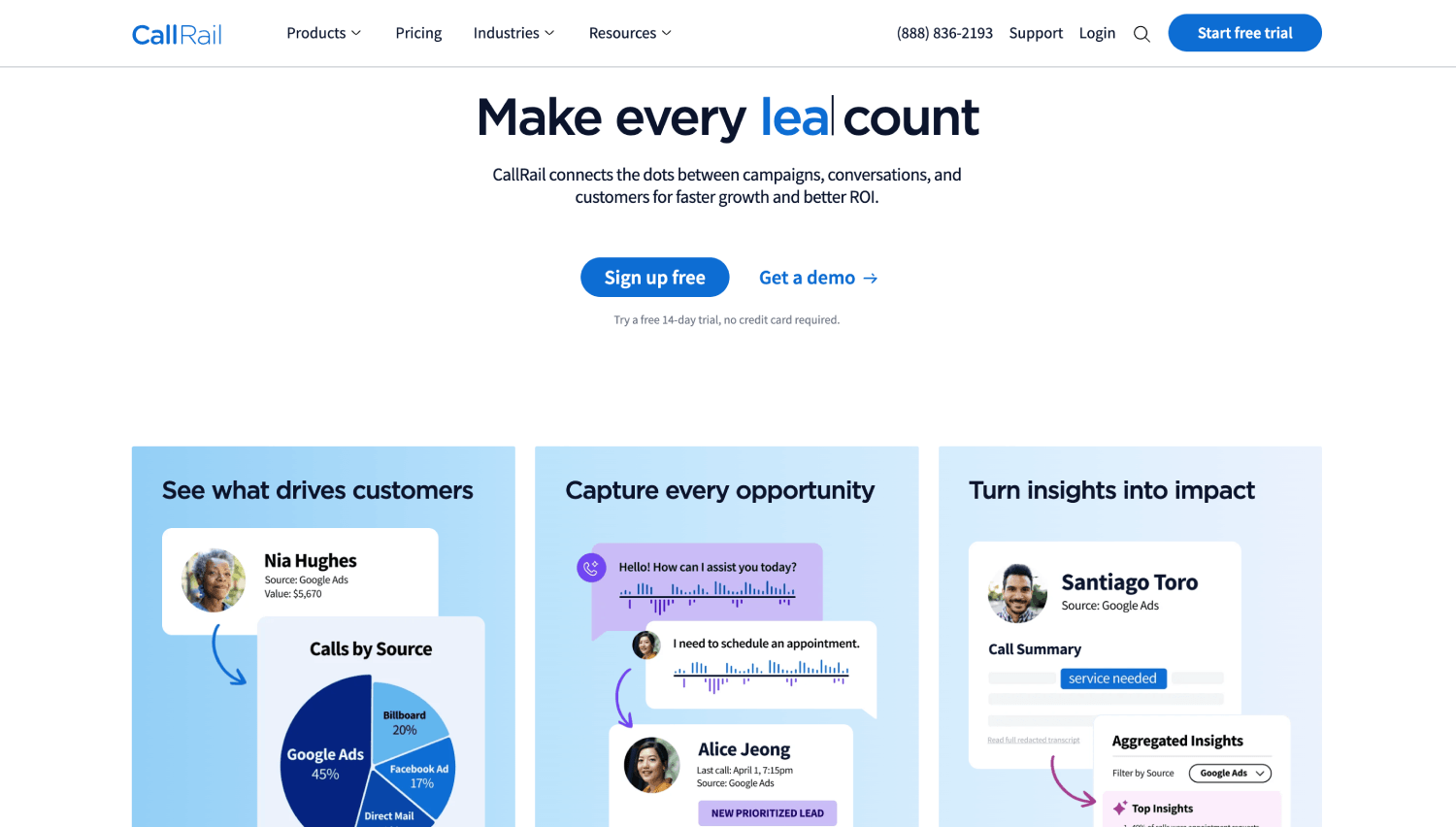
CallRail is the most direct call tracking alternative to Ruler Analytics for businesses where phone conversions drive a meaningful share of revenue. Where Ruler treats calls as one conversion type among many, CallRail treats call intelligence as its entire product surface, with conversation analytics, call scoring, and keyword-level attribution that traces a specific ad click through to a recorded, transcribed call.
According to CallRail’s public pricing page, plans start at $45 per month for the Call Tracking tier, with higher tiers adding conversation intelligence and form tracking. That transparent pricing structure is itself an advantage over Ruler during procurement cycles, particularly for smaller agencies that need to budget predictably per client.
The gap CallRail does not close is CRM revenue stitching at the account level. It will tell you which keyword drove a call and whether the caller converted, but it is not designed to follow a prospect through a 90-day B2B sales cycle across multiple touchpoints. For that use case, look at Dreamdata below.
Who should pick CallRail over Ruler Analytics
Home services, healthcare, legal, and financial services businesses where a large fraction of leads come in by phone. Also agencies managing paid search campaigns for those verticals, where keyword-to-call proof is non-negotiable for client reporting.
Dreamdata: The Best Alternative for B2B Multi-Touch Revenue Attribution
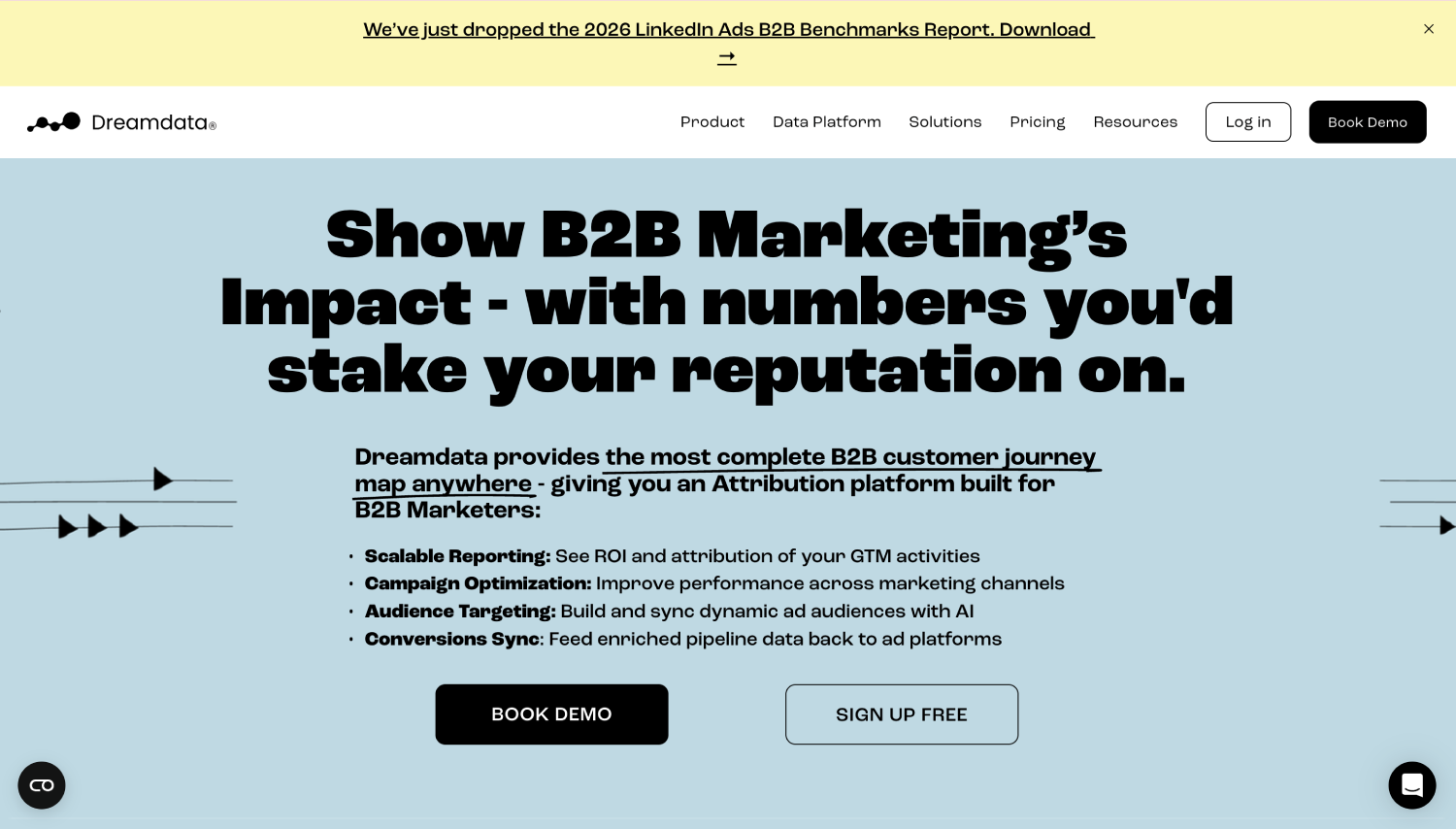
Dreamdata solves a problem Ruler was not really built for: attributing B2B revenue across a buying committee where multiple people from the same account touch your marketing over months before a deal closes. Dreamdata stitches anonymous web sessions to known contacts, groups them by account using deterministic matching, and maps the full path from first touch to closed-won inside your CRM.
The architecture is warehouse-native, meaning Dreamdata reads from and writes to your data warehouse directly, rather than sitting as a standalone silo. Teams running a modern data stack with Snowflake or BigQuery will find the integration significantly cleaner than Ruler’s pixel-and-CRM-connector approach. Dreamdata offers a free tier with limited historical data, making it one of the few attribution platforms where you can validate the model before spending anything.
The limitation is scope. Dreamdata is built for B2B SaaS and tech companies with sales teams. If you are a B2C brand or a service business relying on phone leads, it does not map to your workflow. For a deeper look at B2B-specific tooling, our guide to B2B attribution tools for long sales cycles covers Dreamdata alongside its direct competitors.
Who should pick Dreamdata over Ruler Analytics
B2B SaaS companies with sales cycles longer than 30 days, ABM programs, or any team that needs to prove pipeline contribution by channel at the account level rather than the lead level.
WhatConverts: The Best Ruler Analytics Alternative for Agencies
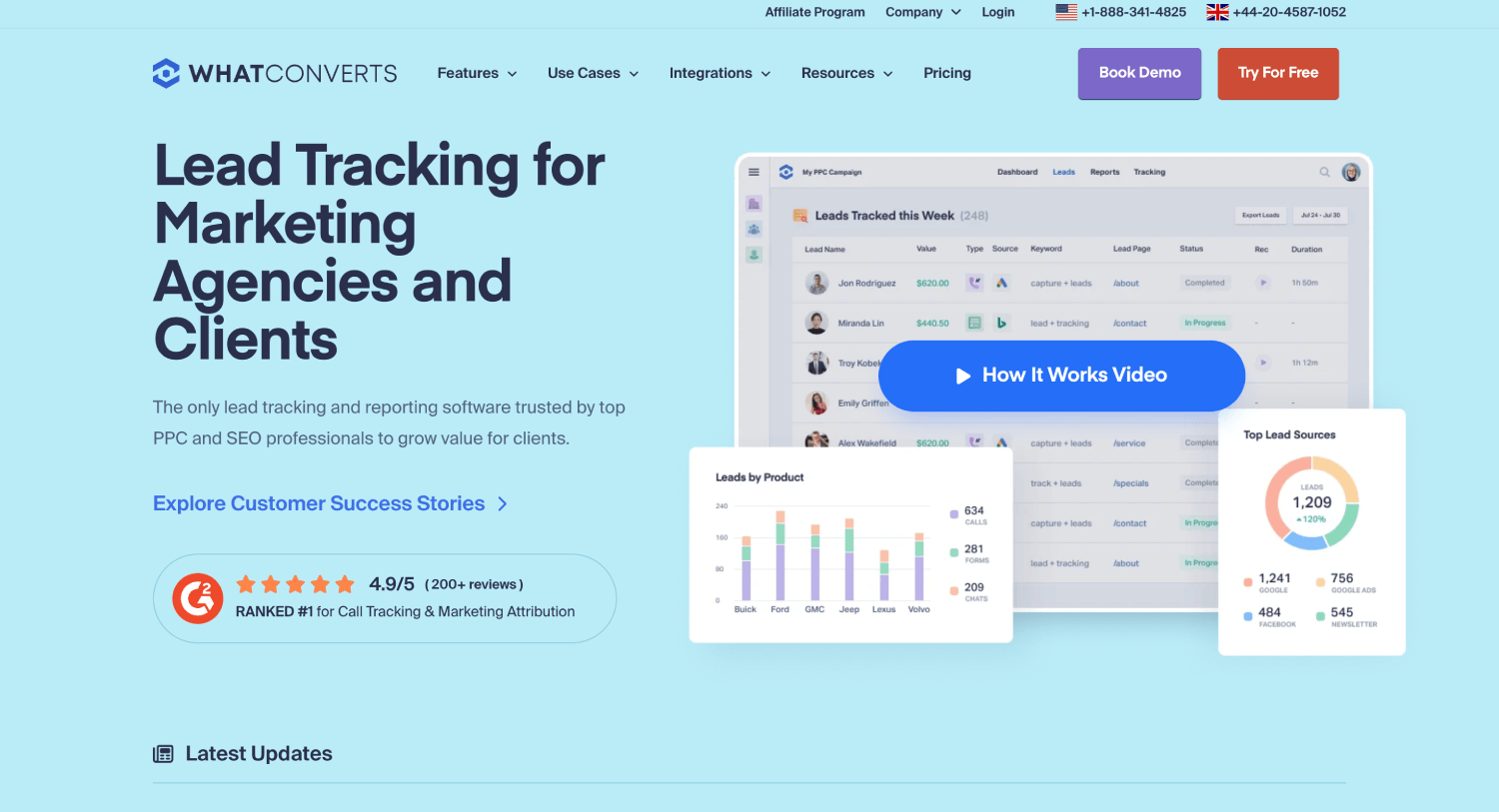
WhatConverts is the tool most agencies looking at Ruler should evaluate first, because its entire product design assumes a multi-client reporting context. Each client gets its own workspace, with call tracking numbers, form tracking, and chat lead capture all feeding into a lead manager that separates conversions by source, campaign, and keyword.
According to WhatConverts’ public pricing page, plans start at $30 per month for the basic tier, with agency plans scaling based on the number of tracking numbers and client accounts. The pricing is significantly more transparent than Ruler’s, and the agency dashboard design means less manual work reconciling data across client accounts in spreadsheets.
WhatConverts does not attempt to be a full multi-touch attribution platform. It captures where a lead came from and what happened on that call or form, then lets you filter and report on lead quality. If you need probabilistic multi-touch modeling or warehouse integration, it is not the right fit.
Who should pick WhatConverts over Ruler Analytics
PPC and digital agencies running paid search and local SEO campaigns for SMB clients, particularly in lead-gen verticals where call and form volume is high and per-client ROI reporting is a retention mechanism.
Triple Whale: The Best Ruler Analytics Alternative for DTC and E-Commerce

Triple Whale occupies a part of the attribution market Ruler does not serve: direct-to-consumer brands running paid social and trying to reconcile platform-reported ROAS against actual Shopify revenue. Ruler is a lead-gen attribution tool. Triple Whale is an e-commerce attribution tool, and the distinction matters.
Triple Whale’s Pixel sits on Shopify storefronts and tracks customer paths from ad click through purchase, applying configurable attribution models including first-party data that does not depend on third-party cookies. Its Creative Cockpit surfaces which ad creatives are actually driving purchases, not just clicks, which is a distinct value-add for performance marketing teams managing large creative libraries.
Pricing tiers are available on Triple Whale’s public pricing page, structured around Shopify store revenue. Triple Whale is not relevant for lead-gen businesses, B2B teams, or service companies. It is purpose-built for Shopify-native DTC brands spending meaningfully on Meta and TikTok.
Who should pick Triple Whale over Ruler Analytics
DTC brands on Shopify with active paid social programs who need pixel-level attribution that is not reliant on platform-reported data from Meta or Google.
Invoca: The Best Ruler Analytics Alternative for Enterprise Call Intelligence
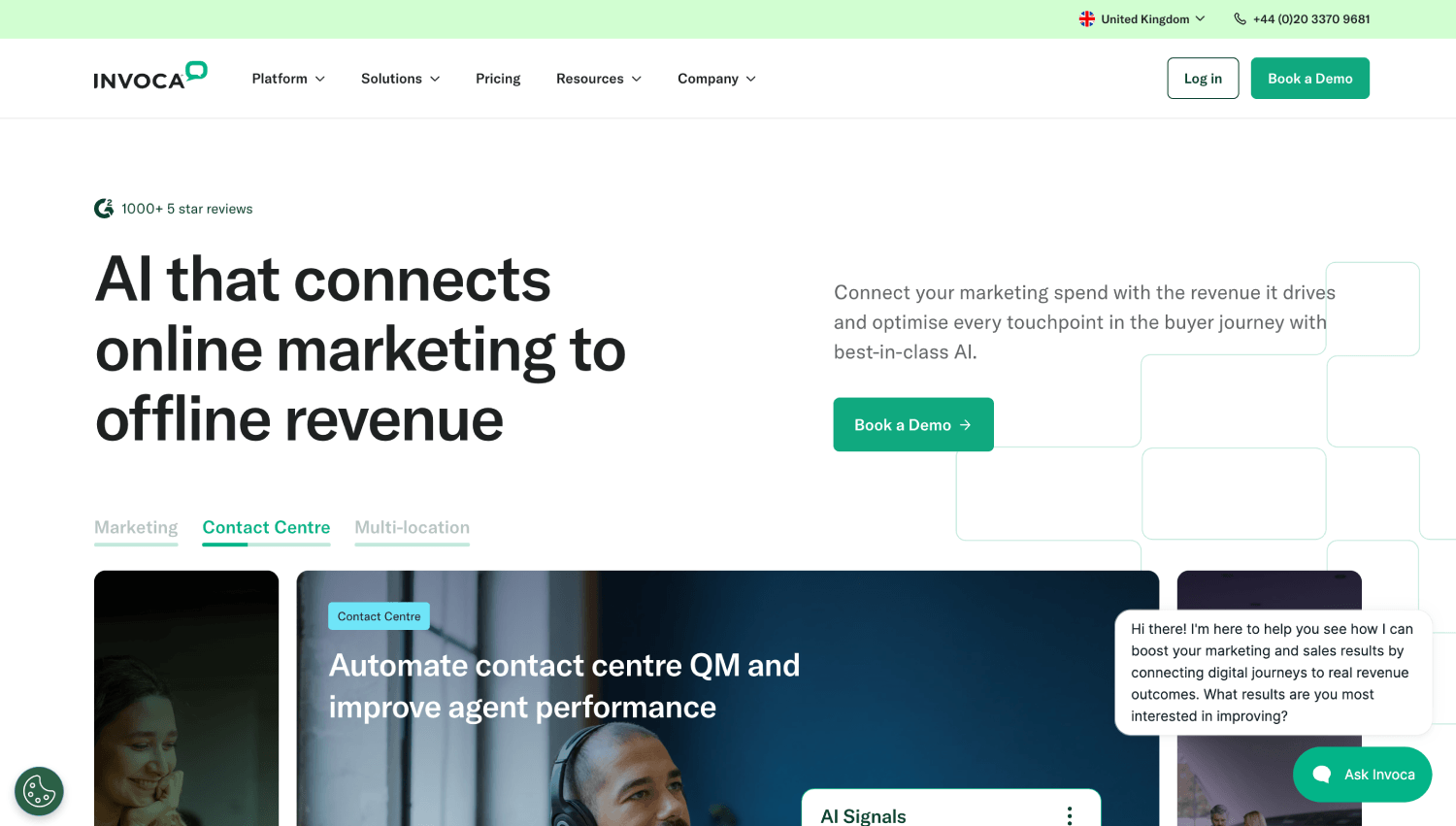
Invoca sits at the high end of the call attribution market, and its distance from Ruler Analytics in terms of sophistication and price is significant. Where Ruler and CallRail handle call tracking, Invoca adds AI-powered conversation analytics that can classify call outcomes, detect purchase intent signals in real time, and push that data into ad platforms to optimize bidding against call quality rather than call volume.
Invoca’s integrations run deep into enterprise ad tech stacks: Google Ads, Meta, Adobe Experience Cloud, Salesforce Marketing Cloud, and others. For brands running omnichannel campaigns where phone conversion is a major revenue driver, those integrations allow attribution data to feed directly back into campaign optimization, not just reporting. Invoca’s pricing is quote-based and positions it firmly in the enterprise segment.
The trade-off is implementation complexity and cost. Invoca is not a plug-and-play tool for a 10-person marketing team. It requires buy-in from paid search, analytics, and often the call center or sales operations team to deploy meaningfully.
Who should pick Invoca over Ruler Analytics
Enterprise brands in insurance, financial services, automotive, and healthcare where phone calls represent high-value conversions and the team has resources to implement deep call intelligence across paid channels.
Attribution: The Best Lightweight Multi-Touch Alternative
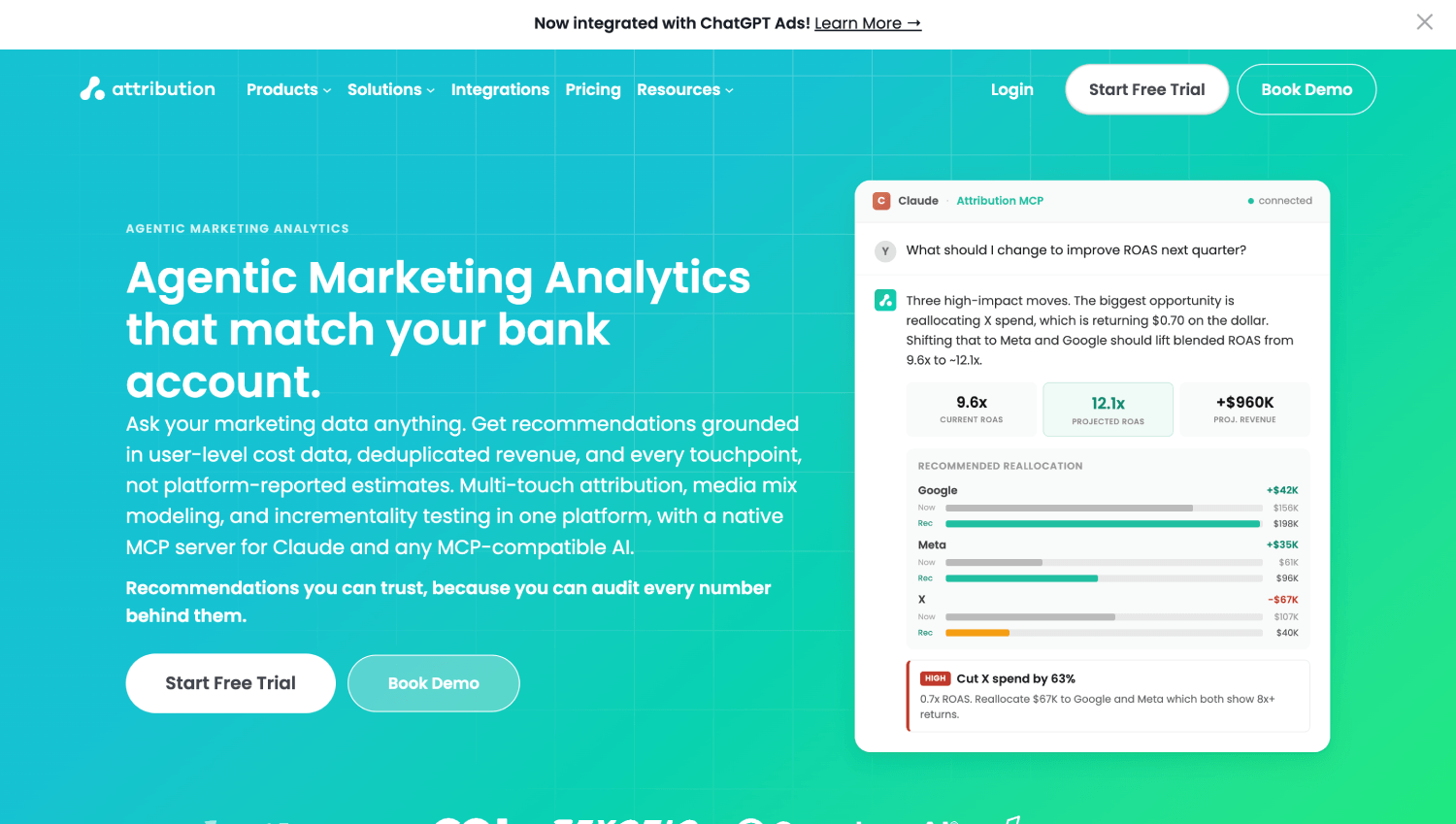
Attribution (the company, not the concept) is a straightforward multi-touch attribution SaaS that sits between a lightweight UTM-based reporting tool and a full revenue attribution platform. It tracks visitor paths across marketing channels, assigns credit using configurable attribution models including linear, time-decay, and first-touch, and reports conversion paths without requiring a data warehouse or heavy technical setup.
For SMBs and early-stage teams who find Ruler’s setup process or pricing opaque, Attribution’s self-serve onboarding and tiered pricing model offer a lower-friction entry point. The product does not include call tracking, so it is not a like-for-like Ruler replacement for call-heavy lead gen. Its value is in mapping digital touchpoints to conversions for teams that primarily generate leads through forms and content.
It lacks the depth of Dreamdata for B2B account-level attribution and the call intelligence of CallRail. For teams that need a single clear view of which digital channels are driving pipeline without committing to an enterprise contract, it covers the basics well. Our breakdown of multi-touch vs last-touch attribution models explains why the choice of model itself matters as much as the tool.
Who should pick Attribution over Ruler Analytics
Early-stage SaaS companies and SMBs running primarily digital campaigns who want configurable multi-touch attribution without the overhead of a warehouse integration or a long implementation cycle.
A Worked Scenario: Which Tool Fits Which Team
Consider three different companies all currently evaluating Ruler Analytics alternatives.
A regional HVAC company with a 6-person marketing operation runs Google Ads and Local Services Ads. Roughly 70% of their leads come in by phone. They need to know which keywords drive calls that turn into booked jobs, and they need that data in a simple dashboard their office manager can read. CallRail or WhatConverts fits this team. Ruler could work, but the pricing opacity and broader feature set add friction without adding value for their use case.
A B2B SaaS company with 80 employees, a 6-person sales team, and a 60-day average sales cycle needs to prove that their LinkedIn campaigns are influencing pipeline, not just generating MQLs that stall. Visitor-level attribution will not capture the CFO who visits the pricing page three times from organic before the AE closes the deal. Dreamdata’s account-level stitching is the right call here. Ruler’s model would undercount LinkedIn’s contribution systematically.
A DTC skincare brand on Shopify spending aggressively on Meta is seeing platform ROAS that does not match Shopify revenue. They need first-party pixel data that does not depend on Meta’s attribution window. Triple Whale is purpose-built for this. Ruler is irrelevant to this team’s core problem.
Frequently Asked Questions About Ruler Analytics Alternatives
Is there a free alternative to Ruler Analytics?
Dreamdata offers a free tier with limited historical data and a capped number of tracked accounts, making it the most viable free starting point for B2B teams. Most other alternatives, including CallRail and WhatConverts, offer trial periods but not permanent free plans. If your budget is zero, Google Analytics 4 combined with UTM tracking covers basic channel attribution without closed-loop CRM stitching.
What is the difference between Ruler Analytics and CallRail?
Ruler Analytics is a broader lead attribution platform that tracks calls, forms, and live chat, then connects that data to CRM revenue. CallRail is primarily a call tracking and conversation intelligence tool. CallRail goes deeper on call-specific data, including AI-powered call transcription, scoring, and keyword-level call attribution. Ruler goes broader across conversion types. For phone-heavy businesses, CallRail’s depth on call data typically wins.
Can Dreamdata replace Ruler Analytics for B2B teams?
For B2B SaaS teams with a defined sales team and CRM, Dreamdata is a stronger fit than Ruler in most cases. It does not include call tracking, so if phone calls are a meaningful conversion type, you would need to pair Dreamdata with a call tracking tool. For teams that generate leads primarily through digital channels and need account-level attribution across a sales cycle, Dreamdata’s model is more accurate than Ruler’s visitor-level approach.
Which Ruler Analytics alternative works best for agencies?
WhatConverts is the clearest choice for digital agencies managing multiple client accounts, because its product design centers on multi-client reporting, separate client workspaces, and lead-level detail that can be filtered by source and keyword. CallRail also has agency-friendly features, including a partner program and sub-account management. The choice between them typically comes down to whether call tracking or overall lead management is the agency’s primary reporting need.
Does Triple Whale work for non-Shopify stores?
Triple Whale is built primarily for Shopify. It does have integrations for other platforms, but its pixel, analytics, and creative reporting are optimized around the Shopify data model. Teams on WooCommerce, BigCommerce, or custom storefronts should evaluate whether Triple Whale’s integrations cover their specific setup before committing. For non-Shopify DTC brands, other attribution tools with broader e-commerce support may be a safer choice.
What is closed-loop attribution and why does it matter?
Closed-loop attribution connects marketing touchpoints (ad clicks, organic visits, email opens) to actual revenue outcomes in a CRM or order management system, closing the loop between spend and outcome. Without it, marketers see conversions but not which conversions became paying customers, which distorts channel ROI calculations. Ruler Analytics, Dreamdata, and CallRail all claim to close this loop, but they do it at different levels of granularity and with different data models.
Are there open-source alternatives to Ruler Analytics?
There are no widely adopted open-source platforms that replicate Ruler’s closed-loop attribution model out of the box. Some teams build approximations using open-source analytics tools like Matomo combined with custom CRM integrations, but that requires significant engineering investment. For most marketing teams, the maintenance cost of a custom-built attribution stack exceeds the subscription cost of a commercial tool.
Which Ruler Analytics Competitor Should You Actually Pick?
The answer depends almost entirely on what type of conversion drives your business. Ruler Analytics was built for a specific use case: visitor-to-lead-to-revenue stitching for lead-gen businesses, particularly those in agency settings or UK-based SMB markets. That is a real use case. It is just not the only one, and several of the tools above do it better within their own lanes.
For most B2B SaaS teams reading this, Dreamdata is the honest answer. The account-level model is more accurate for complex buying cycles, the warehouse integration is cleaner, and the free tier lets you validate the approach before spending. For call-heavy service businesses, CallRail’s call intelligence runs deeper than anything Ruler provides on that specific channel. If you manage attribution across multiple clients, WhatConverts will save hours of reporting overhead per month.
The worst outcome is picking a tool because it is the default in your category, not because it matches your actual conversion model. For more context on how attribution models interact with your broader measurement strategy, our guide to measuring marketing ROI without third-party cookies covers the first-party data infrastructure that makes any attribution tool more accurate. And if your stack is more complex and you are considering the full revenue operations picture, our RevOps tools roundup places attribution in the context of the broader revenue operations stack.