- Most enterprise CS platforms are architected for teams of 20+ CSMs with six-figure contracts. Early-stage startups do not need that, and several lighter alternatives exist at a fraction of the price.
- The tools that matter most at the seed and Series A stage are those that surface churn risk passively, without requiring a full-time admin to configure health scores.
- Vitally and Custify are the clearest fits for startups: both offer startup-friendly pricing, fast onboarding, and health score automation that does not require a dedicated ops person.
- HubSpot Service Hub makes sense only if you are already in the HubSpot CRM. Otherwise you are paying for integration overhead you should not need at this stage.
- Avoid Gainsight and Salesforce Success Cloud entirely until you have a dedicated CS team. The implementation cost alone can exceed the annual budget of many Series A startups.
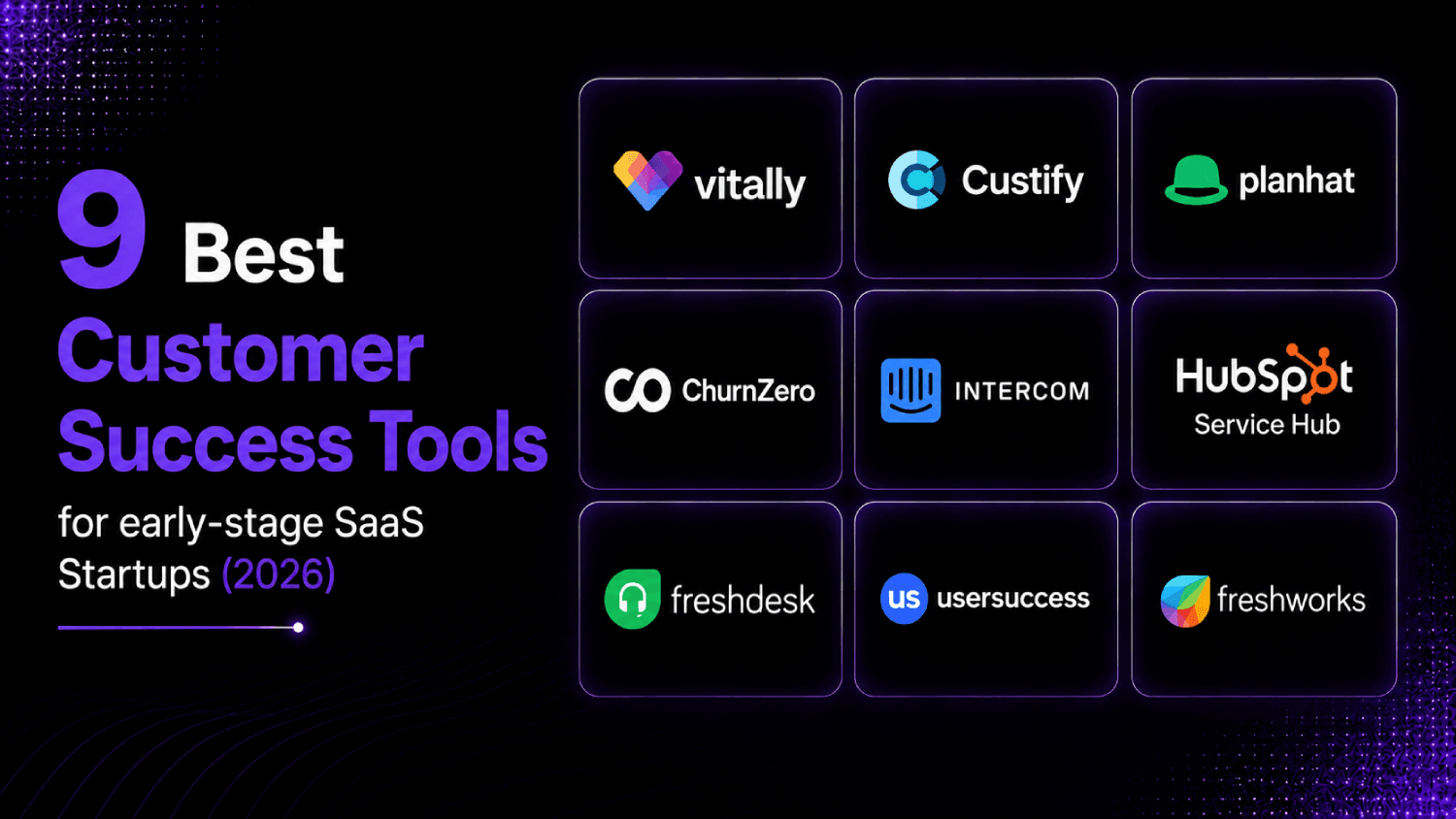
The best customer success software for startups right now includes Vitally, Custify, Planhat, Totango, ChurnZero, Intercom, HubSpot Service Hub, Freshdesk, and UserSuccess. These tools cover health scoring, churn alerts, onboarding tracking, and customer communication without requiring enterprise-level implementation budgets or dedicated CS operations staff. Startups at the seed through Series B stage can get meaningful retention infrastructure running in days, not months.
Why Most CS Software Reviews Miss the Startup Buyer
Almost every roundup of customer success platforms is written for a company that already has a CS team. That framing changes everything: which features get prioritized, which pricing tiers get highlighted, which integrations get praised. For a startup where the founder or a single CSM is handling 50 accounts while also onboarding new ones, the buying criteria are completely different.
The mistake most early-stage teams make is treating CS software as a future investment, something to buy “when we scale.” The data tells a different story. Churn compounds fastest in the first 90 days after a customer signs. A startup without visibility into which accounts are struggling during onboarding is flying blind at exactly the moment when intervention matters most.
For context on how enterprise-grade tools compare, the 13 best customer success platforms for B2B SaaS covers the full-featured market. This article focuses specifically on what works before you have a CS operations team to configure and maintain it.
The AboutMartech Startup CS Stack-Fit Test
Before selecting any tool, run it against four checks specific to early-stage buying situations. We call this the Startup CS Stack-Fit Test.
- Time-to-first-insight: Can a non-technical founder or CSM see a meaningful health score within one week of signing up? If the answer requires a data engineer or a professional services engagement, the tool fails this test at the startup stage.
- Transparent pricing below $500/month: If pricing is entirely quote-based with no published entry tier, budget predictability disappears. Startups cannot model headcount-based pricing against a burn rate they are actively managing.
- Native integration with your existing stack: At the startup stage, you likely have Stripe, HubSpot or Salesforce, and maybe Segment or a warehouse. A CS tool that requires a custom ETL build to ingest product usage data is not lightweight, whatever the vendor claims.
- Churn signal automation without manual tagging: A tool that only surfaces churn risk when a CSM manually logs a red flag is a glorified spreadsheet. Automated health scoring based on product usage, support volume, or NPS signals is a minimum requirement.
Every tool in this list passed at least three of these four checks. The few that only passed three are flagged with the specific reason.
Which Customer Success Tools Actually Work for Early-Stage SaaS?
1. Vitally , Best overall for seed to Series B
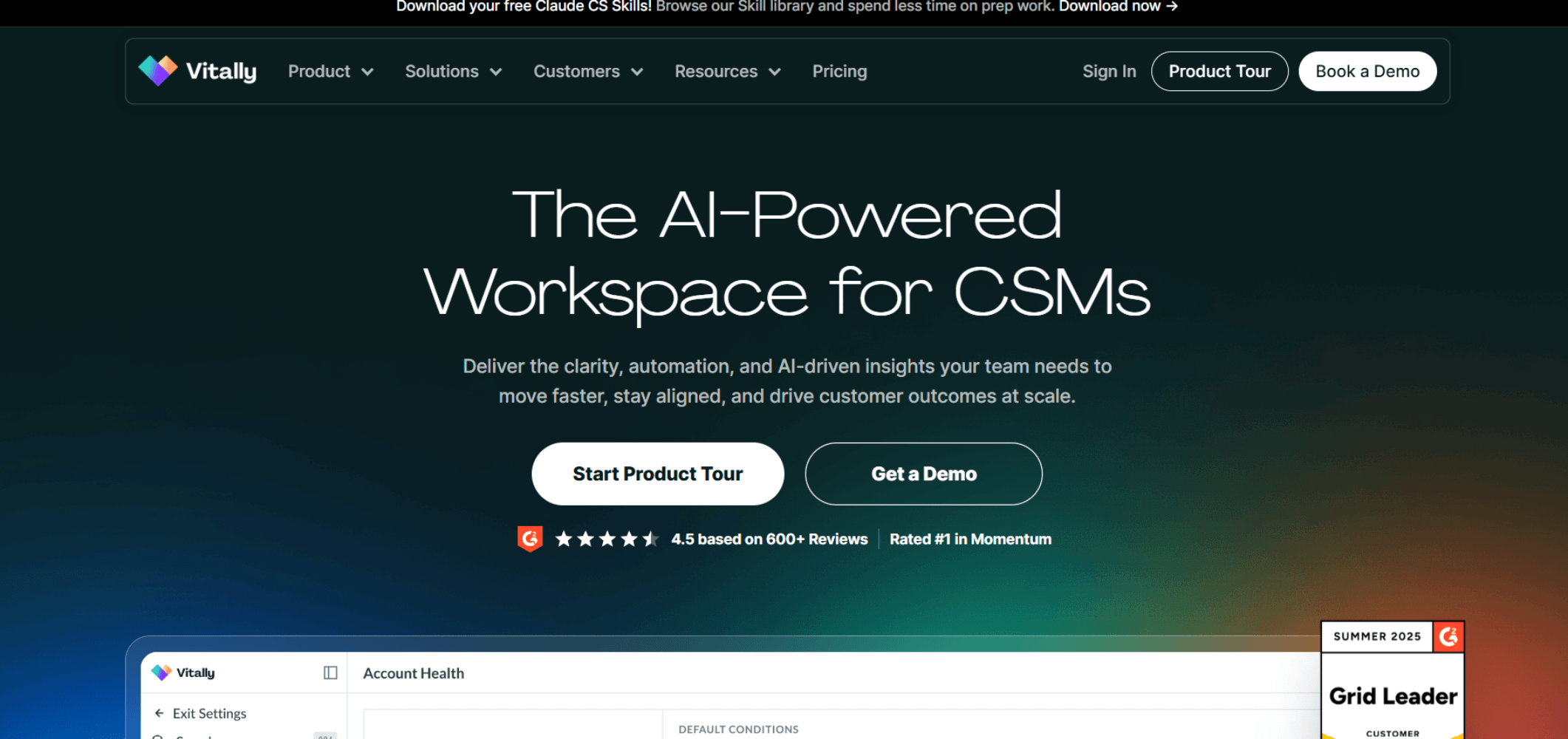
Vitally was built with product-led and mid-market SaaS in mind, and it shows. The UI is closer to Notion or Linear than to Salesforce, which matters when your CSM is also doing implementation calls. Health scores pull from product usage data, Zendesk or Intercom ticket volume, and CRM data, and they update automatically without manual configuration.
Pricing starts at a published rate for smaller teams, though Vitally has shifted toward custom pricing for most plans as it has moved upmarket. The startup tier remains accessible relative to Gainsight or Totango’s enterprise entry points. The onboarding workflow builder is particularly strong: you can map customer milestones with defined completion criteria, assign tasks to CSMs, and track time-to-value across the cohort.
The one limitation worth noting: Vitally’s reporting layer is less flexible than Planhat’s for teams that want to build custom revenue dashboards. For a startup tracking basic retention and expansion metrics, that gap is irrelevant.
2. Custify , Best for startups that want health scoring without an admin
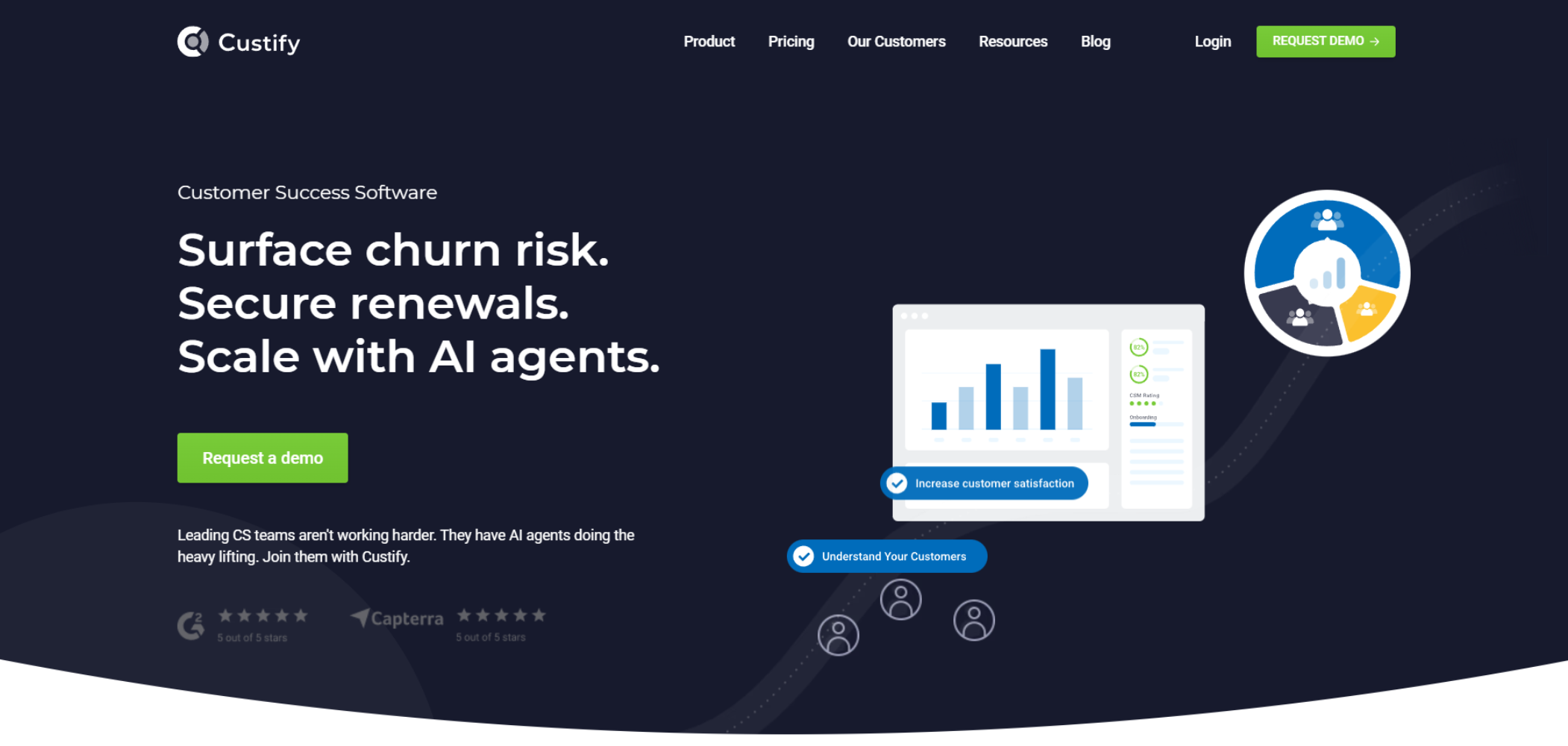
Custify is the clearest product-market fit story in this list. It was designed explicitly for small CS teams and SaaS startups, and the configuration experience reflects that. Health scores can be configured by a non-technical user in under an hour using point-and-click rules, not YAML or custom logic.
Published pricing starts at $199/month for small teams, making it one of the most transparently priced options in the market. The playbook automation runs on triggers like product inactivity, overdue tasks, or low NPS, and fires off email sequences or Slack alerts without requiring an ops person to build the workflow. For a founder managing 30 accounts solo, this is meaningful.
Custify’s weakness is its integration depth. Salesforce sync works, but users on forums report it is less reliable than Vitally’s or ChurnZero’s at high data volumes. For a startup under 200 accounts, this is unlikely to matter.
3. Planhat , Best for startups that want revenue-focused CS metrics
Planhat occupies an interesting middle position: it handles health scoring and playbooks like a CS platform but presents revenue data (NRR, GRR, expansion MRR) in a way that looks more like a RevOps dashboard. If your CS team is also owning the renewal conversation, this dual view is genuinely useful.
Pricing is quote-based, which is a partial fail on the Startup CS Stack-Fit Test’s transparent pricing check. Planhat has published that it offers a startup program, but the entry cost is not publicly listed. Teams should request a startup pricing conversation directly rather than assuming enterprise rates apply.
The data model is more sophisticated than Custify or Vitally, which means setup takes longer. Planhat is the right call for a Series A or B team that has at least one dedicated CS hire and wants to graduate from basic health scoring to full revenue reporting in one tool.
4. ChurnZero , Best for startups with a recurring-revenue focus and a small team
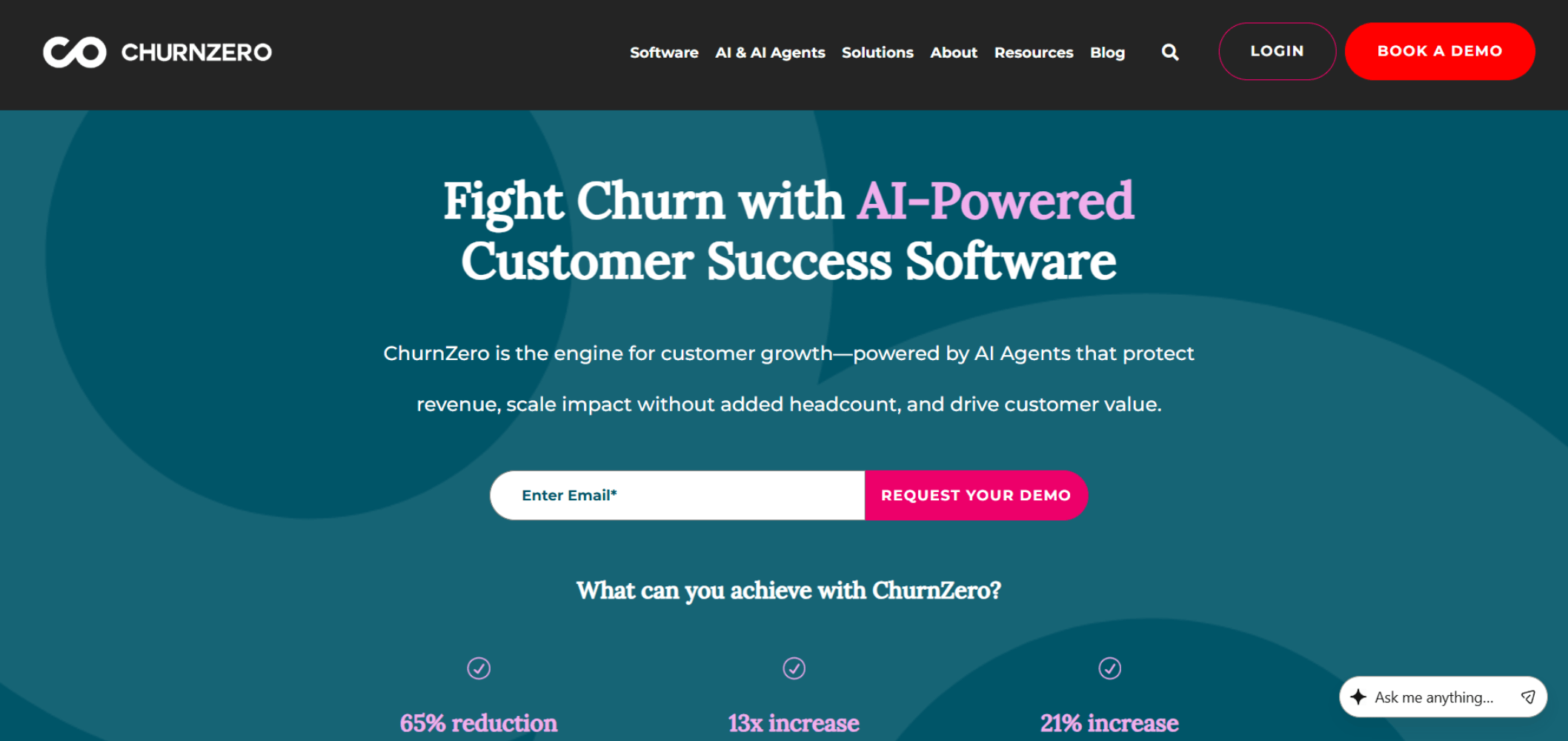
ChurnZero built its reputation on churn prediction specifically, not broad CS workflow management. The ChurnScore feature is its core differentiator: it generates an account-level churn risk score using product usage, login frequency, and support interaction data, and it updates daily.
Pricing is not publicly listed, which is a friction point for startups comparing options on a budget. ChurnZero has historically positioned itself for companies with $1M+ ARR and a dedicated CSM, so it sits at the higher end of this list for startup-friendliness. Still, teams that have raised a seed round and need serious churn visibility should request a demo. For a deeper look at how it compares to a key competitor, the ChurnZero vs Vitally breakdown covers the trade-offs directly.
5. Intercom , Best for startups that want CS and support in one tool
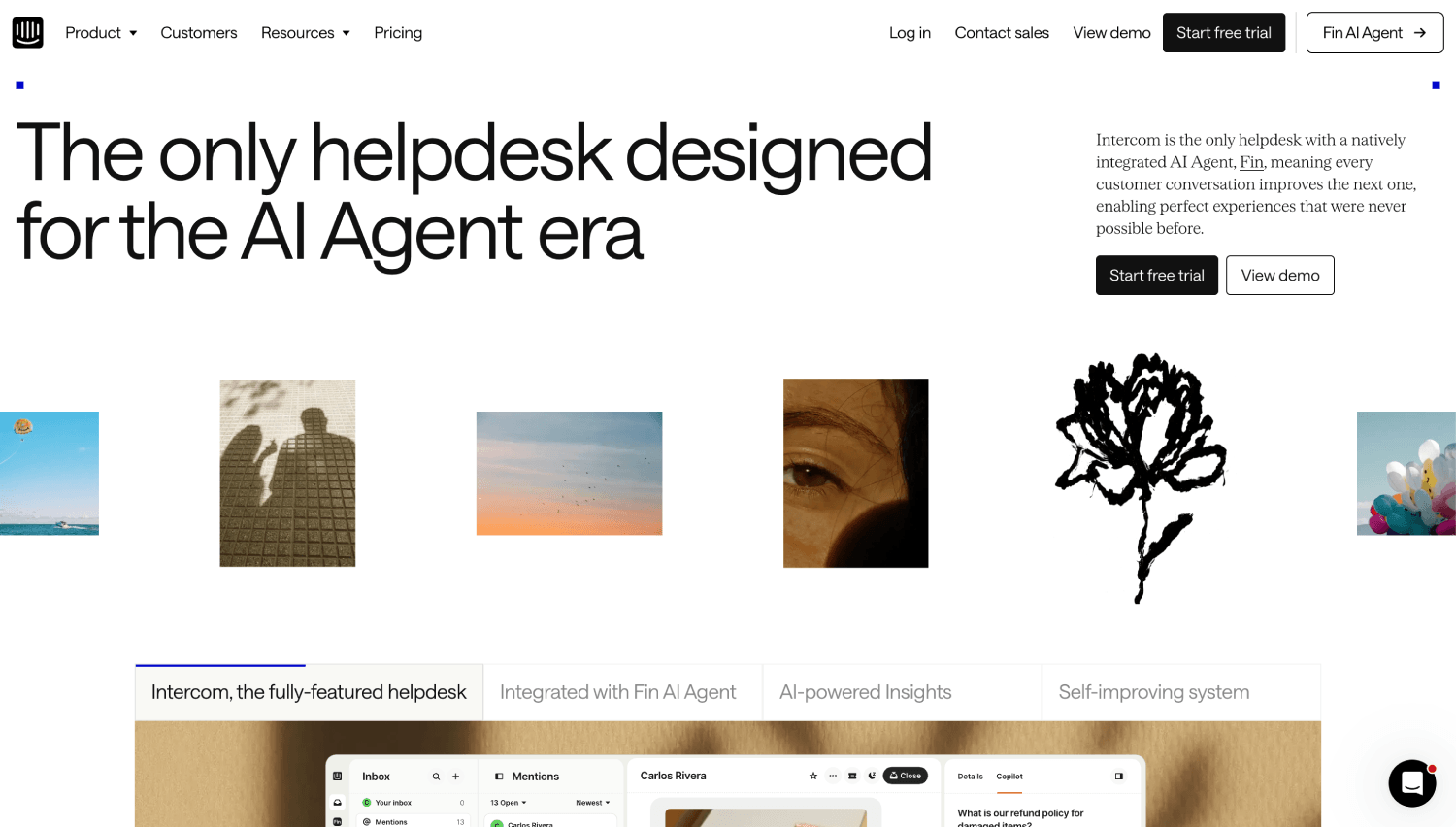
Intercom is not a pure CS platform, but for early-stage teams it often acts as one. The combination of in-app messaging, automated onboarding tours, proactive support, and a shared inbox covers a meaningful portion of what a dedicated CS tool does, without the complexity of running two systems.
Pricing starts at $39/month on the Starter plan as of Intercom’s public pricing page, though the features relevant to CS (product tours, proactive messages, series automation) require higher tiers that add up quickly. The real cost for a startup using Intercom as a CS tool is typically $200-400/month once you factor in the feature tiers you actually need.
Intercom’s limitation as a CS tool is that it lacks account-level health scoring and revenue metrics. It tells you how individual users are engaging with support, not whether an account is at risk of churning. For a startup under 50 accounts, that gap is manageable. Above that threshold, the absence of a health score becomes a real operational blind spot.
6. HubSpot Service Hub , Best for startups already inside the HubSpot CRM
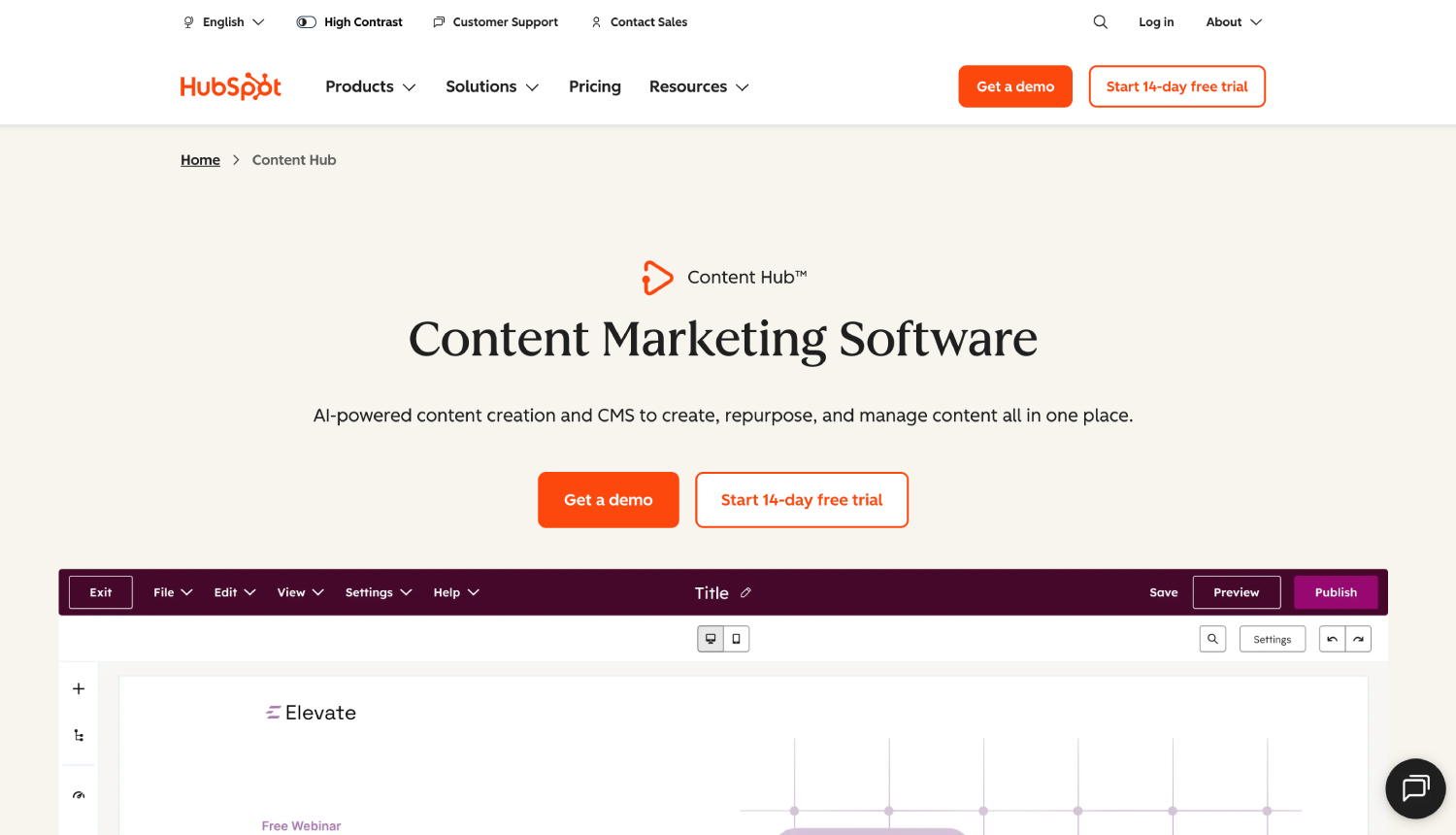
HubSpot Service Hub earns its place on this list with one major asterisk: it is only the right choice if your company is already using HubSpot CRM. In that case, the integration overhead drops to near zero and you get ticketing, NPS collection, and customer portal features without adding another vendor.
As of HubSpot’s public pricing page, Service Hub starts at $15/month per seat on the Starter tier. The features that matter for CS, specifically automated pipelines, health score-like lifecycle stages, and SLA tracking, require the Professional tier at $90/seat/month. For a team of two, that is manageable. For a solo founder, it may be overkill.
HubSpot does not offer native health scoring the way Vitally or ChurnZero do. You can approximate it with custom properties and workflows, but that requires configuration time a startup often does not have.
7. Totango , Best for startups that want a modular approach
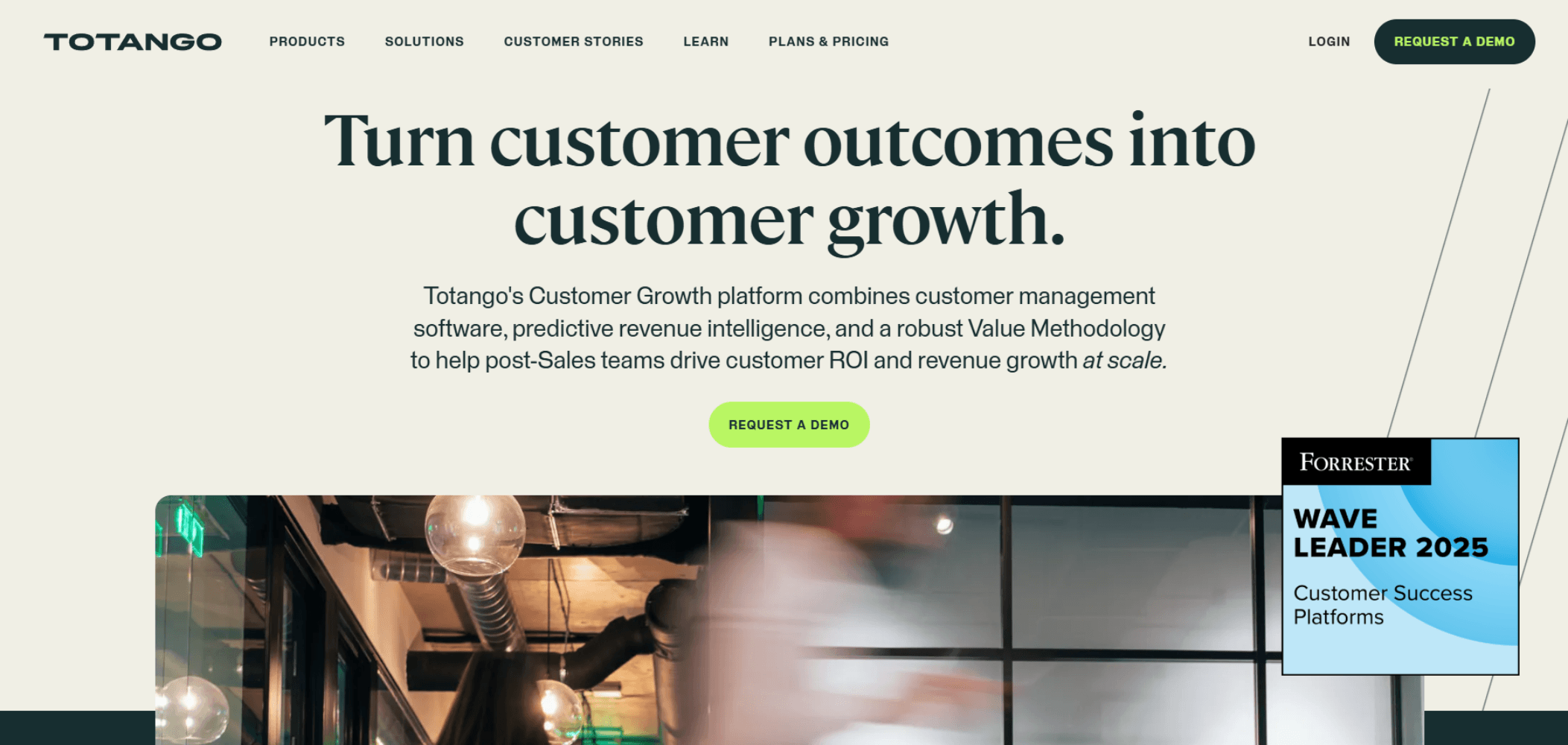
Totango pioneered the concept of SuccessBLOCs, which are pre-built playbook modules covering common CS workflows like onboarding, QBR prep, and renewal management. For a startup with no prior CS process documentation, this is a genuine shortcut.
Totango offers a free tier with limited accounts, which is one of the few genuinely free CS platform options in the market. The paid tiers scale with customer count and CSM seats. The trade-off is that Totango’s UI has historically been more complex than Vitally or Custify, and the data ingestion setup requires more technical effort to get product usage data flowing correctly.
For a startup with a technical co-founder who can spend a few days on setup, Totango’s free tier is worth testing before committing budget. For a non-technical team, Custify is a faster path to first value.
8. Freshdesk , Best for startups that need support-first CS with a free entry point
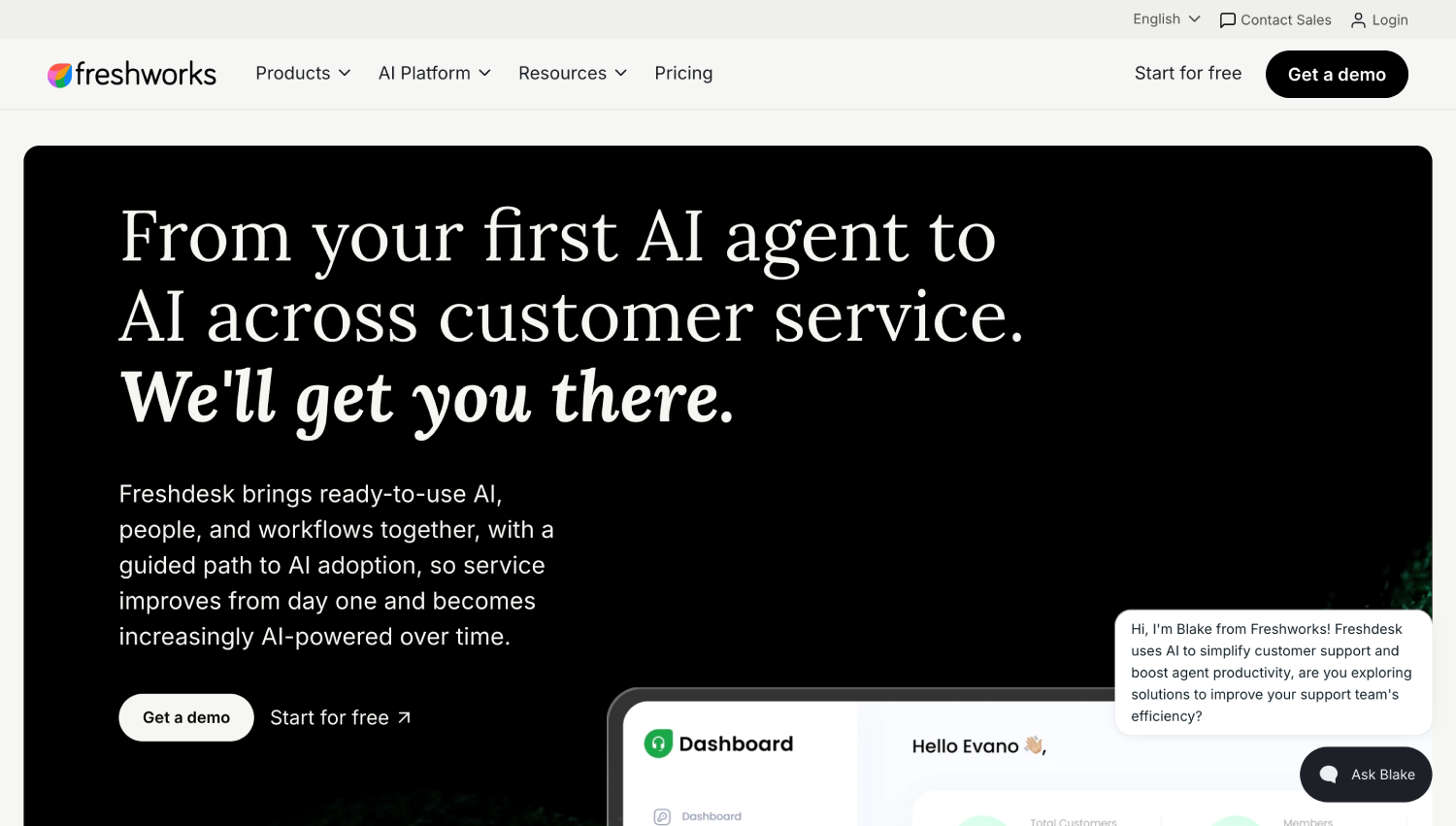
Freshdesk is primarily a support ticketing platform, but it handles the support-to-CS handoff better than most pure support tools. The free tier covers unlimited agents, which is genuinely rare in this category. For a startup where the CS workflow is mostly reactive, responding to support tickets and escalating at-risk accounts, Freshdesk can serve as a lightweight starting point.
What Freshdesk cannot do is proactive CS. There are no automated health scores, no playbooks triggered by product inactivity, and no expansion opportunity tracking. It is a support tool that touches CS at the edges, not a CS platform. Teams that start here typically outgrow it once they hit 100+ accounts and need to shift from reactive to proactive retention.
9. UserSuccess , Best for startups that want CS built on spreadsheet logic
UserSuccess is a lightweight option that occupies the space between a dedicated CS platform and a structured spreadsheet. It is built for very small teams, typically one or two CSMs managing fewer than 100 accounts, that want basic health scoring and task management without the complexity of a full platform.
Pricing is published and lower than most alternatives on this list. The interface resembles a project management tool more than an enterprise CS platform, which is either a feature or a limitation depending on how your team thinks. For a pre-Series A startup with a simple CS motion and tight budget, UserSuccess earns a look. Teams expecting to scale to 500+ accounts quickly should start with Custify or Vitally instead to avoid migrating again in 18 months.
How Do These Tools Compare on Startup-Relevant Criteria?
| Tool | Published Startup Pricing | Health Scoring | Playbook Automation | Free Tier | Best For |
|---|---|---|---|---|---|
| Vitally | Startup tier (contact sales) | Yes, automated | Yes | No | Seed to Series B |
| Custify | From $199/month | Yes, no-code config | Yes | No | Solo CSM or small team |
| Planhat | Quote-based (startup program) | Yes | Yes | No | Series A/B with CSM hire |
| ChurnZero | Quote-based | Yes, ChurnScore | Yes | No | Recurring-revenue focus |
| Intercom | From $39/month (Starter) | No (user-level only) | Partial (messaging) | No | Sub-50 accounts, messaging-first |
| HubSpot Service Hub | From $15/seat/month | Approximated via workflows | Partial | Free tools tier | HubSpot CRM users only |
| Totango | Free tier available | Yes | Yes (SuccessBLOCs) | Yes | Technical teams, tight budgets |
| Freshdesk | Free tier available | No | No | Yes (unlimited agents) | Reactive support-first CS |
| UserSuccess | Published low-cost tiers | Basic | Basic | No | Pre-Series A, sub-100 accounts |
What Should a Startup Actually Build First: CS Process or CS Tool?
A tool without a defined process produces nothing useful. A startup that buys Vitally without deciding what a “healthy” account looks like will configure health scores that mean nothing. The right sequence is: define your onboarding milestones first, then map them to product events, then pick the tool that can ingest those events and surface alerts against those milestones.
If you have not yet mapped your onboarding milestones, the best customer onboarding tools that cut time-to-value is a useful companion read. Onboarding and CS are distinct motions, and the tools often overlap more than their positioning suggests.
For teams already using a product analytics tool, check whether it can serve as a partial substitute for CS health scoring before buying a dedicated platform. A Mixpanel or Amplitude cohort showing 30-day activation rates tells you a lot about account risk without any additional software spend. The 13 best product analytics tools beyond Google Analytics covers which platforms expose this kind of cohort data most accessibly.
What About Teams That Want to Move Data from a Warehouse into a CS Tool?
Some startups that have already invested in a data warehouse, even just a basic Snowflake or BigQuery setup, will find that their best CS health scores come from warehouse-native customer data rather than from a CS tool’s own tracking pixel. In this case, the question worth asking is not which CS tool has the best native integrations, but which can consume data from a warehouse without a full ETL pipeline.
Vitally and Planhat both support data ingestion from warehouses via API or native connector. For teams that want to push warehouse data into a CS tool systematically, a reverse ETL layer can handle this cleanly. The 9 best reverse ETL tools to activate warehouse data covers the options that work well in this architecture.
Frequently Asked Questions
What is the most affordable customer success software for a startup?
Custify is the most affordable dedicated CS platform with transparent published pricing, starting at $199/month. Totango and Freshdesk both offer free tiers that work for very early-stage teams. HubSpot Service Hub has a free tools tier as well, but the CS-relevant features require paid plans. For startups under 50 accounts, Totango’s free tier is the lowest-risk starting point before committing budget.
Can a startup use Intercom as a customer success tool instead of a dedicated CS platform?
Yes, but with clear limitations. Intercom handles in-app messaging, onboarding sequences, and proactive support well. It does not provide account-level health scoring or churn prediction. For a startup under 50 accounts where CS is mostly reactive, Intercom works as a CS tool. Above that threshold, the absence of automated health scoring creates blind spots that a dedicated CS platform like Vitally or Custify addresses directly.
When should a SaaS startup invest in a dedicated CS platform versus using a CRM?
A CRM tells you what deals closed and what the relationship history looks like. It does not tell you whether an account is using the product or heading toward churn. The decision point for a dedicated CS platform is typically when you have 30 or more paying accounts and no systematic way to know which ones are at risk. At that scale, manual CRM notes cannot replace automated health scoring.
What does a startup CS health score actually need to measure?
At minimum: product login frequency, feature adoption relative to the account’s contracted tier, and support ticket volume. A customer who logs in daily and uses core features is not churning. A customer who has not logged in for 14 days after onboarding is a churn signal regardless of what they told you on the last call. Health scores that only track relationship sentiment without product usage data are structurally incomplete.
Is Gainsight worth considering for a startup?
Almost certainly not. Gainsight’s implementation typically requires a dedicated CS operations resource or a professional services engagement, and pricing is enterprise-oriented. For teams considering alternatives to Gainsight, the 7 best Gainsight alternatives for teams without enterprise budgets covers the realistic options, most of which are on this list.
How does a startup CSM prioritize accounts without a CS tool?
The usual approach is a manual tiering spreadsheet: high ARR accounts get proactive outreach, low ARR accounts get reactive-only support. The problem is that ARR is a poor proxy for churn risk. A $500/month account that is deeply embedded in your product is less likely to churn than a $5,000/month account that has not logged in since the kickoff call. Any CS tool on this list surfaces that distinction; a spreadsheet cannot.
What integrations does a startup CS tool actually need at minimum?
Stripe (or your billing system) for subscription status and MRR. Your CRM for account context. And ideally your product’s event data, either via a direct integration, a tool like Segment, or a reverse ETL connector. Email integration for logging customer communications is useful but secondary. A CS tool without billing and product event data is limited to tracking relationship history, which is table stakes.
Does a startup need a CDP before buying a CS platform?
No. A CDP solves a different problem: unifying identity and activating data across channels at scale. A CS platform needs product usage data for one purpose, health scoring, which you can feed via a direct integration or API without full CDP infrastructure. That said, if your team is already evaluating a CDP for other marketing use cases, the 11 best customer data platforms for B2B teams is worth reviewing to understand whether a single platform could serve both needs.
The Clearest Path Forward for an Early-Stage Team
The startup CS software market has matured enough that the “it’s too expensive and too heavy” objection no longer holds for most of these tools. Custify, Vitally, and Totango’s free tier have collectively removed the budget barrier for teams at or before Series A. The real friction now is setup time and data plumbing, not price. A CS tool that cannot ingest your product usage data within a week of purchase is not lightweight, regardless of how the pricing page reads.
For a pre-Series A team with one CSM handling under 100 accounts: start with Custify or Totango’s free tier. Define three to five product events that signal a healthy account before you configure anything. Connect Stripe and your CRM first, product events second. You should have a working health score in under a week.
For a Series A team with a dedicated CS hire and 100-300 accounts: Vitally is the clearest call, with Planhat as the alternative if you want revenue metrics alongside CS workflows. Both will serve you through Series B without requiring a platform migration, which is the metric that matters most when you are choosing infrastructure at this stage.