- Most teams buy attribution software and then spend months arguing about the data. Attribution providers handle the modeling, the data plumbing, and the interpretation, which is a fundamentally different purchase.
- The right choice between a software vendor and a managed provider usually comes down to one question: does your team have someone who can own the model full-time?
- B2B sales cycles with six or more touchpoints over ninety-plus days break most out-of-the-box attribution models. Providers that specialize in long-cycle B2B are a different category from general marketing analytics firms.
- Several firms on this list offer both software and managed services. The services layer is what separates them from pure-play tools.
- Pricing for attribution services is almost universally quote-based. Any published figure should be treated as a floor, not a ceiling.
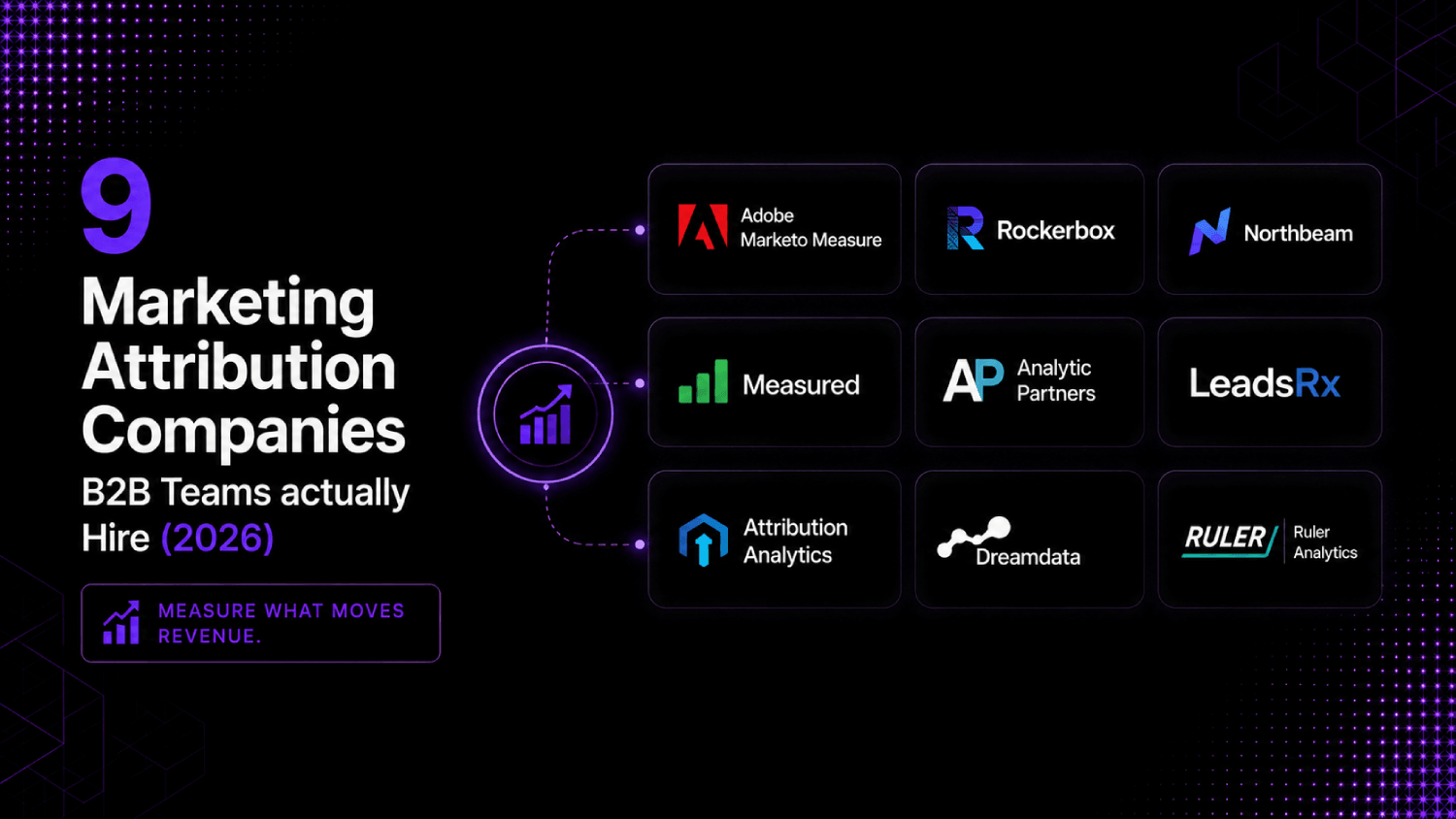
The marketing attribution companies that B2B teams actually hire include a mix of managed-service firms, consulting practices embedded in software platforms, and specialist agencies: Bizible (now Adobe Marketo Measure), Rockerbox, Northbeam, Measured, Analytic Partners, LeadsRx, Attribution, Dreamdata, and Ruler Analytics. The best fit depends on your sales cycle length, data infrastructure, and whether you need a model built for you or one you can run yourself.
Why does the “attribution company” market look so different from the software list?
When marketers search for “marketing attribution companies,” they are often not looking for another SaaS login. They want someone to tell them which channels are working. That distinction drives every decision in this roundup.
The attribution software market is covered separately in our ranking of the best marketing attribution tools. This article covers providers where the service relationship is the product: firms and platforms where you are buying analyst time, modeling expertise, or managed infrastructure, not just a dashboard. Several vendors straddle both categories, and where they do, the managed-services tier is what earns them a spot here.
B2B teams face a specific problem that makes this market relevant. A ninety-day sales cycle with sales development reps, marketing-qualified leads, field events, paid search, and executive outreach does not map cleanly onto any default attribution model. Last-touch gives all the credit to the demo request form. First-touch gives it to a cold LinkedIn ad the prospect barely remembers. Neither answer helps a CMO decide where to reallocate budget next quarter.
The Provider-Fit Test: four questions before you hire an attribution firm
Before evaluating any vendor on this list, run what we call the AboutMartech Provider-Fit Test. It is a four-question filter that separates teams who need a provider from teams who just need better software.
One: Do you have a marketing operations person who can own the attribution model week to week? If yes, software is probably enough. If no, you need a provider.
Two: Is your average deal size above $20,000 and your sales cycle longer than sixty days? If yes, standard e-commerce attribution models will misfire on your data. You need B2B-specific methodology, which most self-serve tools do not offer by default.
Three: Does your revenue data live in Salesforce or HubSpot, completely disconnected from your ad platforms? The data plumbing work to close that gap is where most DIY attribution projects fail. Providers absorb that integration cost.
Four: Have you already bought attribution software and stopped trusting the numbers? That trust gap is the clearest signal that you need a human layer on top of the tooling.
If you answered yes to two or more, the rest of this article is for you.
Which attribution companies do B2B teams actually hire?
| Provider | Best for | Model type | Pricing | Managed services? |
|---|---|---|---|---|
| Adobe Marketo Measure | Marketo + Salesforce shops | Multi-touch, custom | Quote-based | Yes (via Adobe partners) |
| Rockerbox | DTC to mid-market B2B | MTA + MMM | Quote-based | Yes |
| Northbeam | High-spend paid media teams | Multi-touch, ML-driven | Quote-based | Onboarding + support |
| Measured | Teams who want incrementality testing | Incrementality + MMM | Quote-based | Yes (analyst-led) |
| Analytic Partners | Enterprise, board-level measurement | Commercial mix modeling | Quote-based (enterprise) | Full service |
| LeadsRx | Mid-market, broadcast + digital mix | Multi-touch | Quote-based | Yes |
| Attribution | SMB and growth-stage teams | Multi-touch | Starts at $299/month (public pricing) | Limited |
| Dreamdata | B2B SaaS, long sales cycles | Account-level MTA | Free tier; paid from $999/month (public pricing) | Yes (onboarding) |
| Ruler Analytics | Agencies and lead-gen businesses | Multi-touch, call tracking | From £199/month (public pricing) | Yes |
Adobe Marketo Measure: the default choice for Marketo-Salesforce stacks
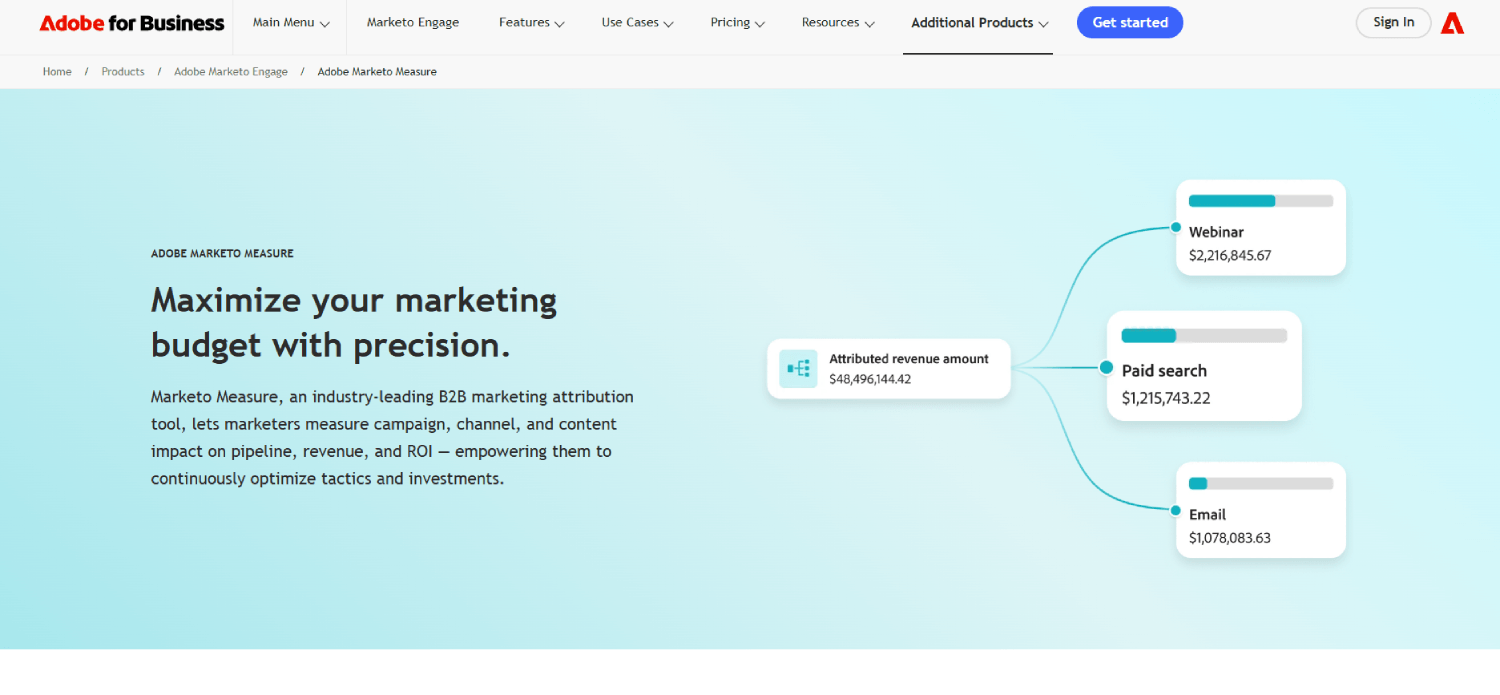
Formerly Bizible, Adobe Marketo Measure is the attribution layer that ships inside Adobe Marketo Engage. For teams already paying for Marketo and Salesforce, it is the path of least resistance because the touchpoint data model is purpose-built around Salesforce opportunity stages.
The platform supports custom attribution models, boomerang touchpoints for re-engaged contacts, and account-based measurement, which matters because B2B deals rarely involve a single contact. The trade-off is cost and dependency. Marketo Measure is quote-only, lives inside the Adobe license conversation, and becomes painful to migrate away from once your historical touchpoint data is inside it.
Teams without Marketo should look elsewhere. The integrations outside the Adobe-Salesforce corridor require meaningful configuration work, and you will end up paying for capability you cannot use.
Rockerbox: when you need multi-touch attribution and media mix modeling in one contract
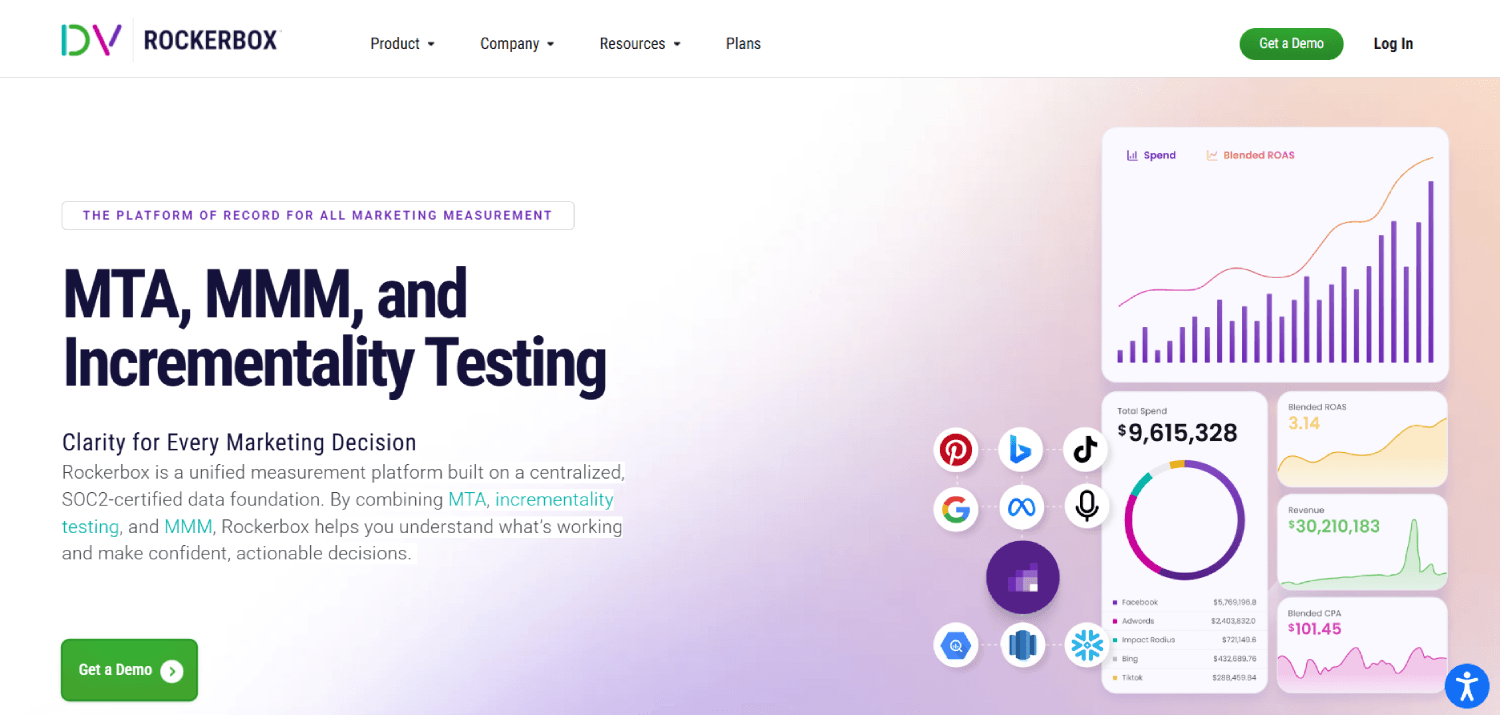
Rockerbox started as a DTC attribution platform and has moved deliberately into B2B and mid-market. Its current positioning combines de-duplicated multi-touch attribution with marketing mix modeling (MMM), which is a meaningful combination for teams who want both a tactical view (which campaign drove the pipeline?) and a strategic view (what would happen if we cut Facebook spend by 30%?).
The managed-services component is real. Rockerbox assigns customer success and data analysts who help interpret model outputs, not just onboard you to the software. For teams without an in-house data scientist, that analyst relationship is the actual product.
Pricing is not published. Expect a conversation before seeing a number.
Northbeam: built for teams spending heavily across paid channels
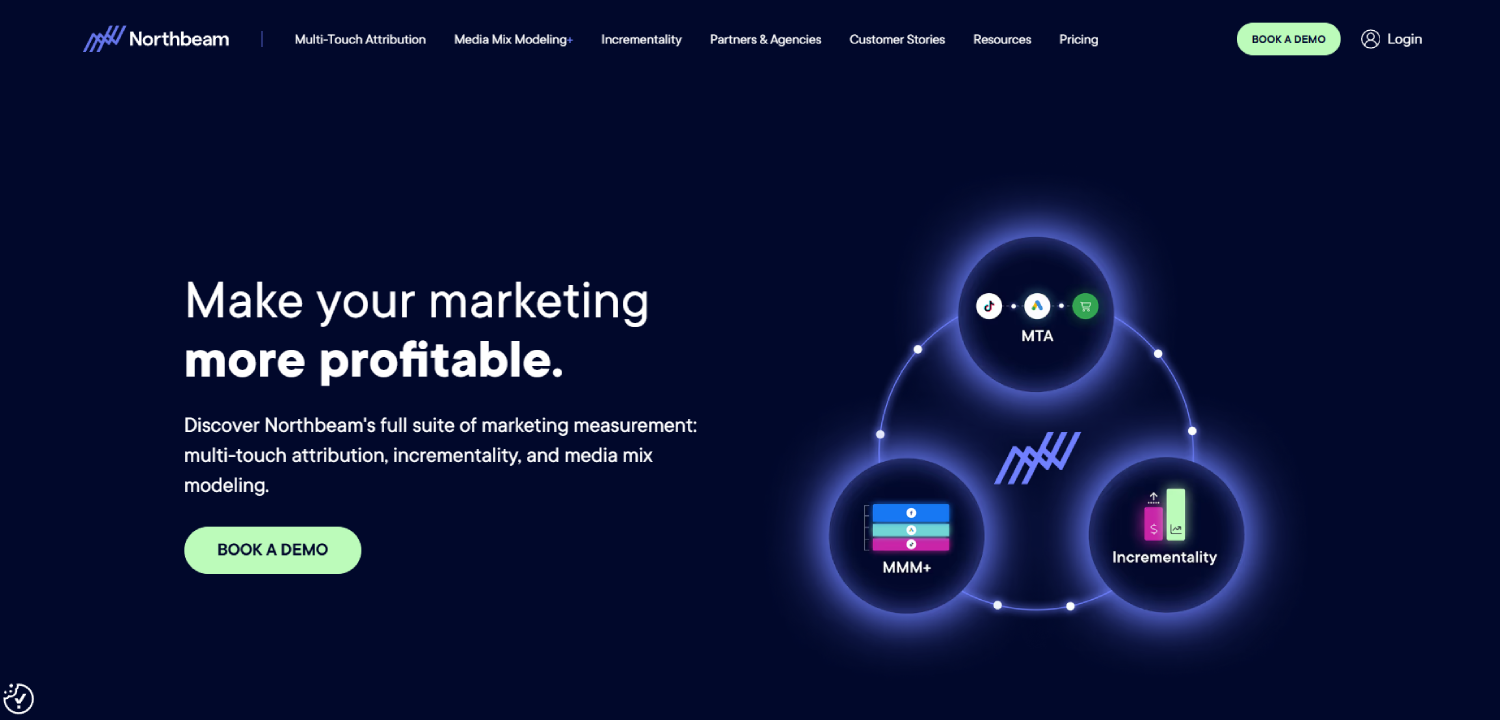
Northbeam positions itself as a machine-learning attribution platform for performance marketers running significant paid spend across Meta, Google, TikTok, and programmatic. Its synthetic data approach attempts to model conversion paths that are invisible due to iOS privacy changes and browser restrictions.
The managed-services element here is lighter than Measured or Analytic Partners. Northbeam is closer to a sophisticated software tool with a strong onboarding and support layer than a true full-service firm. Teams who want someone else to own the model will find it underwhelming. Teams with a performance marketing manager who wants better data will find it well-suited.
It is worth understanding how multi-touch attribution models actually differ from last-touch before evaluating Northbeam, because the platform’s value is entirely dependent on moving off last-touch thinking.
Measured: the incrementality-first attribution provider
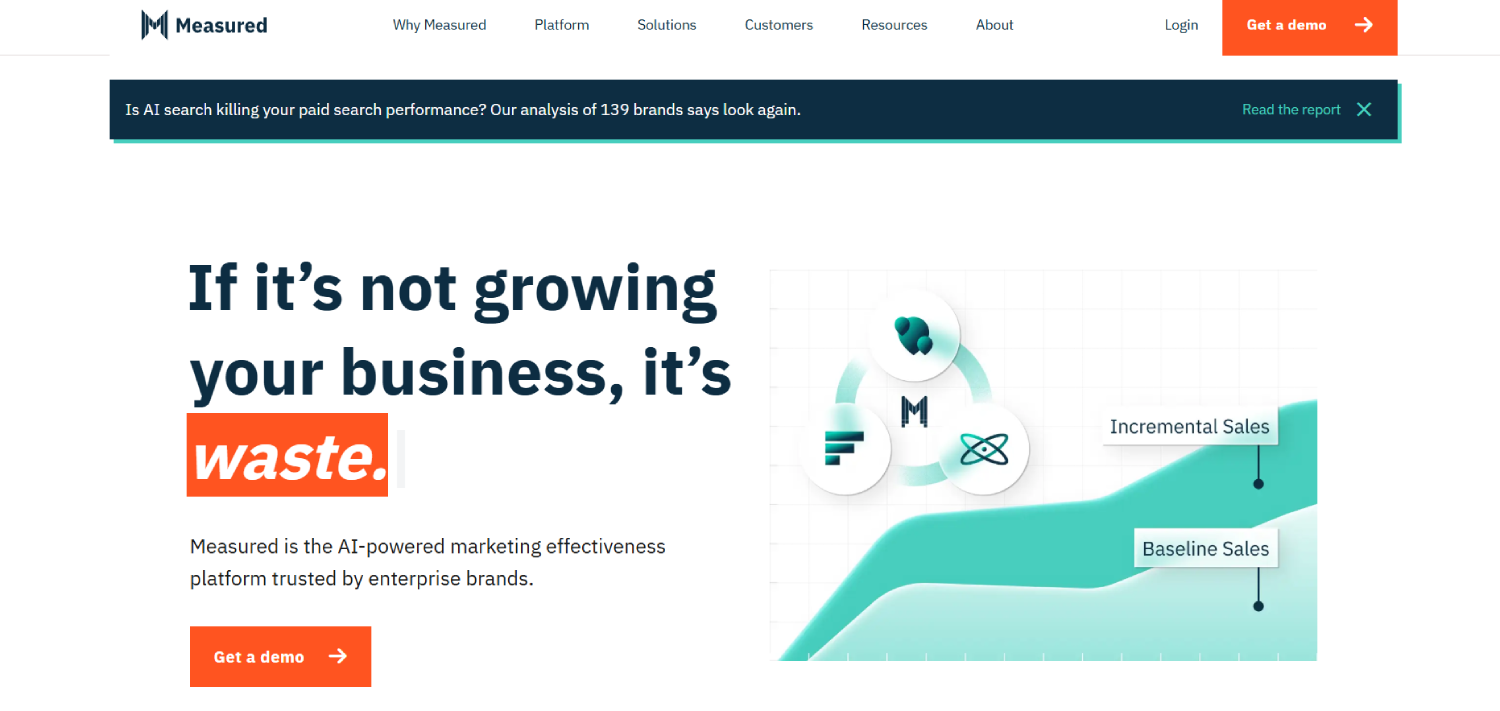
Measured takes a different methodological stance than most attribution vendors. Its primary output is incrementality testing: controlled experiments that measure what revenue lift a channel actually caused versus what it would have captured anyway. This is a harder methodology to run but produces more defensible numbers than touchpoint-counting models.
The firm operates as a true managed service. Clients work with Measured analysts who design tests, interpret results, and translate findings into budget recommendations. For a CMO who needs to defend channel mix decisions to a CFO, that analyst relationship matters more than any dashboard feature.
The model is well-suited to teams with enough media spend to run statistically meaningful holdout tests. Under roughly $2 million in annual media spend, the testing infrastructure may be overkill relative to cost.
Analytic Partners: enterprise commercial mix modeling
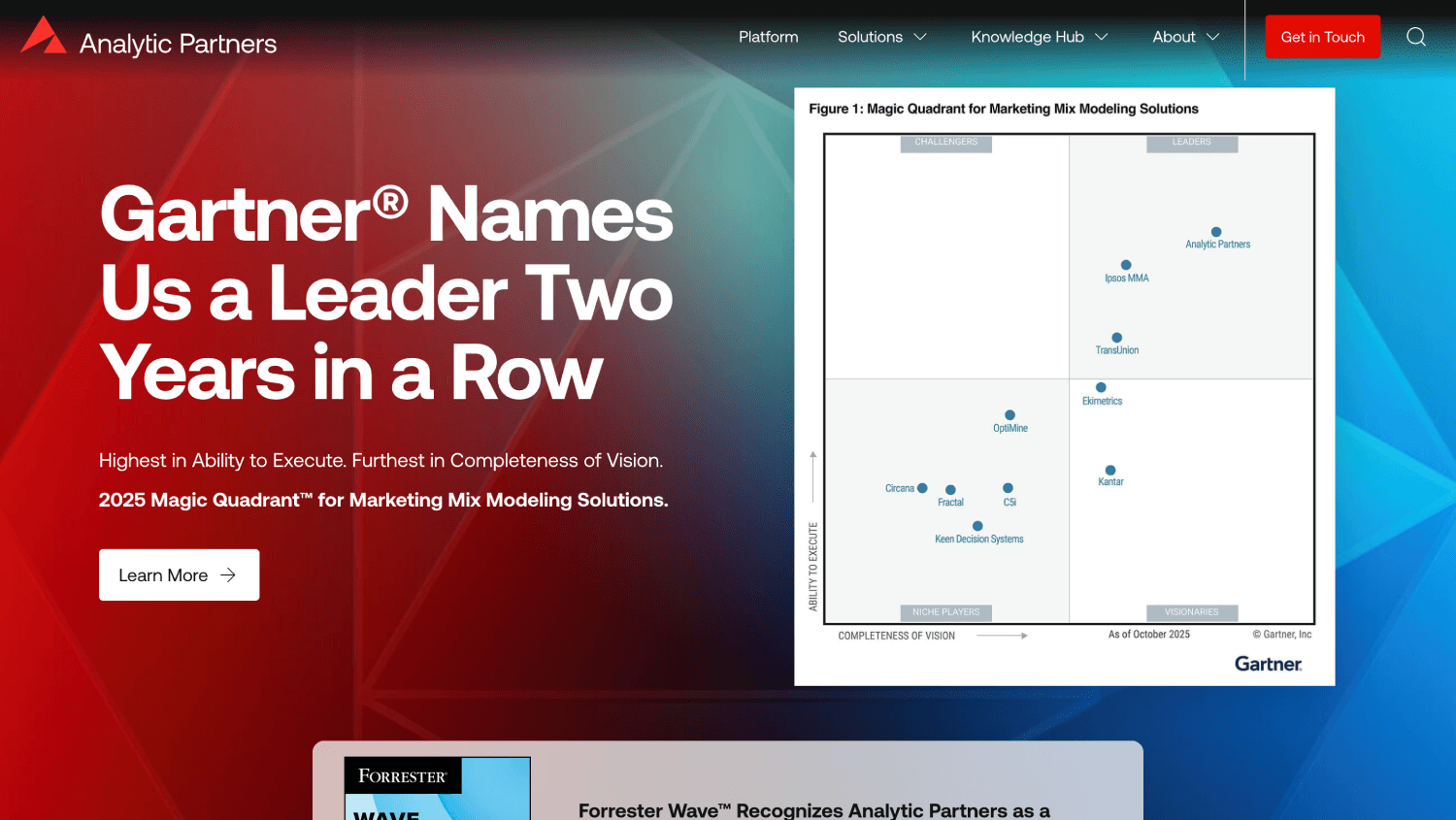
Analytic Partners operates at the top of the market in terms of both methodology and price. The firm’s core product is commercial mix modeling (CMM), which is their framing for marketing mix modeling applied across the full commercial picture: pricing, distribution, promotions, and media together, not just channel mix.
Clients tend to be large enterprises running eight or nine figures in media spend annually. The firm produces board-level measurement work that quantifies ROI across multi-year campaigns, not just last quarter’s digital spend. This is not a tool you configure; it is an engagement you staff.
For the B2B teams in this audience, Analytic Partners is relevant if you are at a company with a dedicated marketing finance function and a measurement mandate that runs upward to the CFO. Below that level, the engagement cost will not pencil out.
LeadsRx: multi-touch attribution for teams mixing broadcast and digital
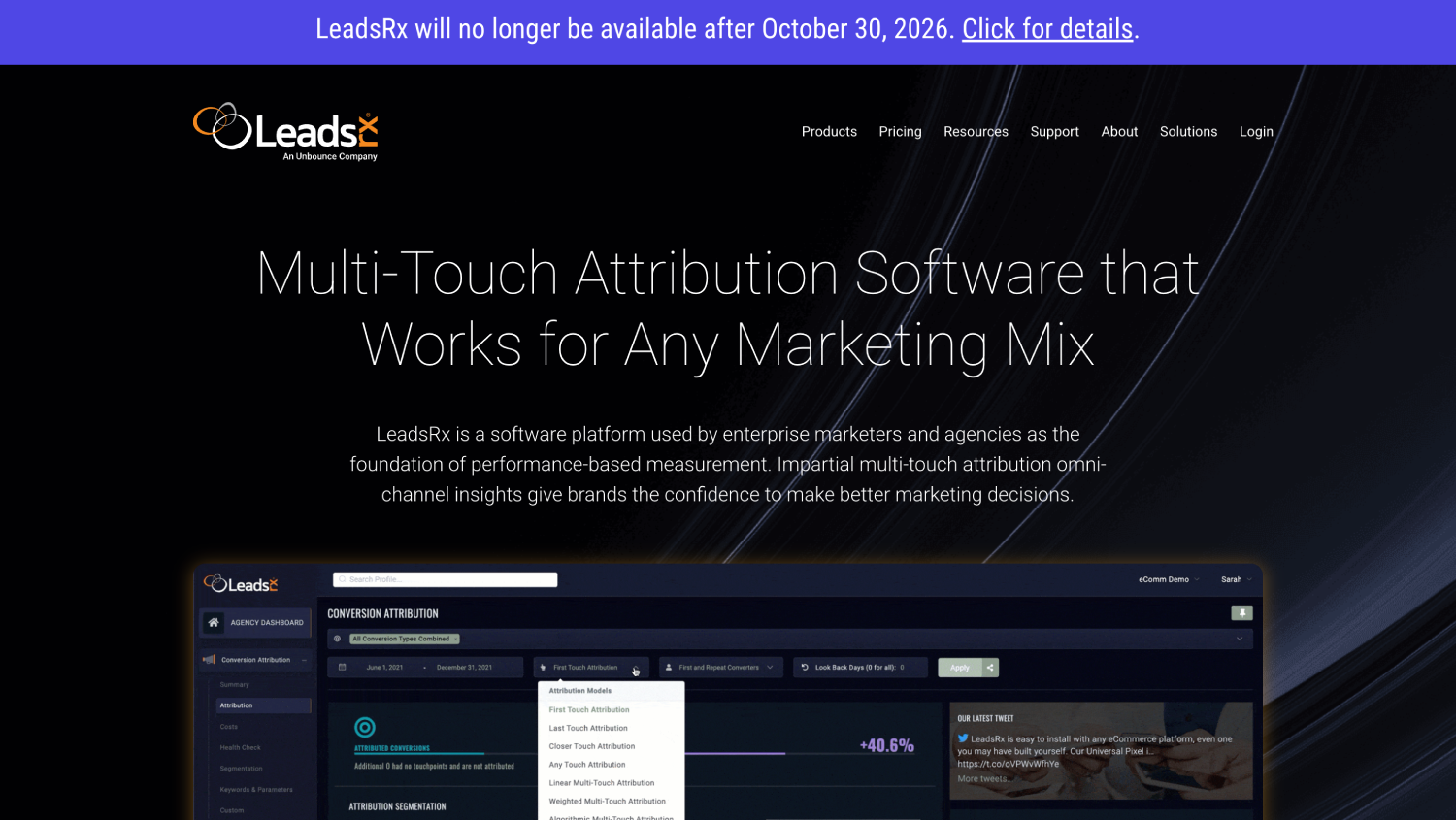
LeadsRx occupies a distinct niche: attribution for teams running a combination of digital and broadcast advertising, including radio, podcast, streaming TV, and linear television. Most attribution platforms handle digital touchpoints well and treat offline media as a black box. LeadsRx tracks performance marketing across both.
The managed-services component includes onboarding support and customer success management. Pricing is quote-based and the platform targets mid-market companies rather than enterprise. For a B2B company with a national radio buy alongside Google Ads, LeadsRx solves a problem that Dreamdata or Ruler Analytics does not touch.
Attribution: the accessible entry point for growth-stage teams
Attribution (the company, not the concept) is the most accessible option on this list. According to the company’s public pricing page, plans start at $299 per month, which puts multi-touch attribution within reach for growth-stage teams who cannot afford the managed-service engagements above.
The trade-off is depth. The platform covers web and app attribution across major ad networks and CRM integrations, but the managed-services layer is thin compared to Measured or Rockerbox. Teams buying Attribution are largely buying the software with basic support, which means someone internal needs to own the model.
For teams evaluating whether managed attribution is worth the premium, starting with Attribution’s self-serve tier is a reasonable way to test the concept before committing to a $50,000 annual services contract.
Dreamdata: purpose-built for B2B SaaS with long sales cycles
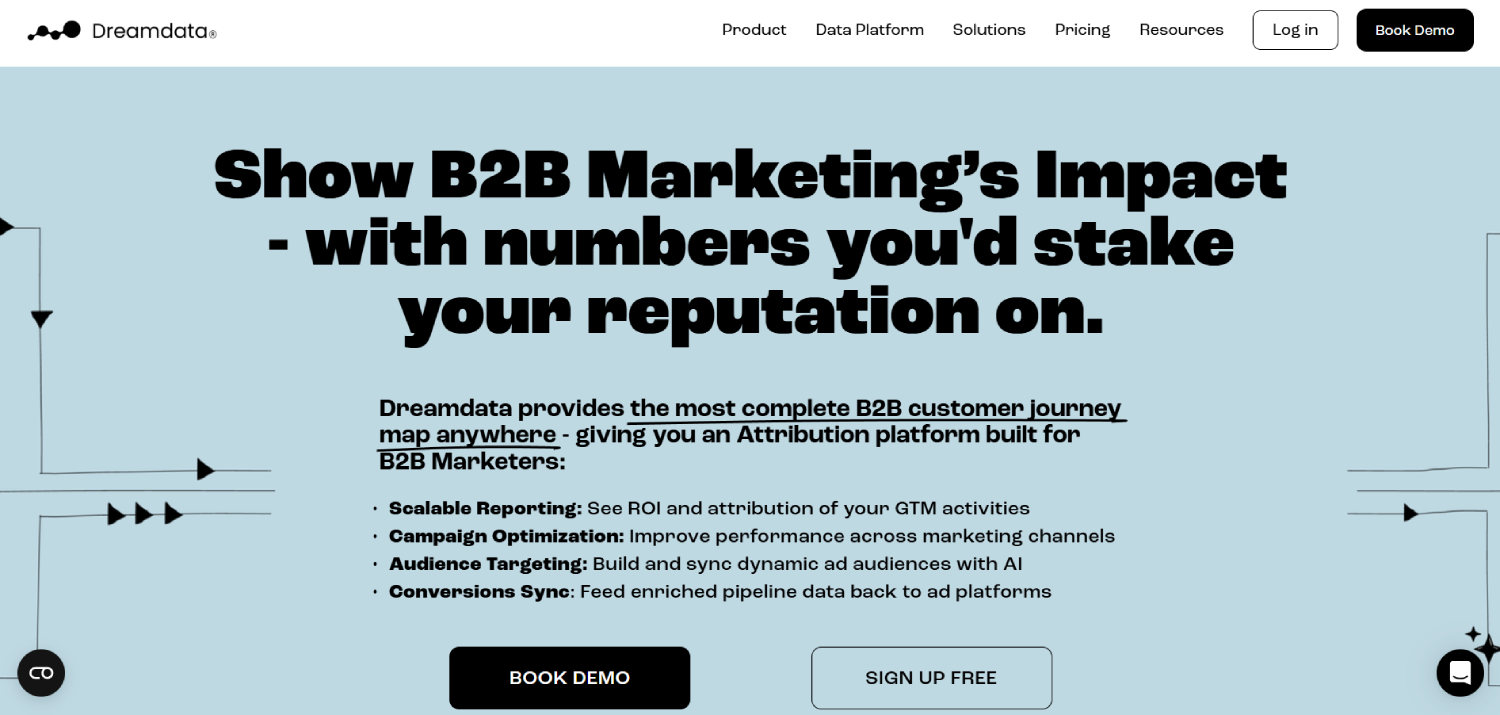
Dreamdata is the provider most directly built for the reader this article targets. The platform operates at the account level rather than the individual contact level, which is how B2B revenue actually works. A deal involving a champion, an economic buyer, and a technical evaluator generates touchpoints under three different email addresses. Dreamdata stitches those into a single account-level view.
According to Dreamdata’s public pricing page, a free tier exists for smaller teams, with paid plans starting at $999 per month. The onboarding and implementation support is included in paid tiers, and the customer success function is active rather than reactive.
For B2B SaaS teams running HubSpot or Salesforce alongside a standard martech stack, Dreamdata’s data model fits without significant custom work. Our ranking of the best B2B attribution tools for long sales cycles covers Dreamdata alongside its direct competitors in more detail.
Ruler Analytics: built for agencies and lead-gen businesses
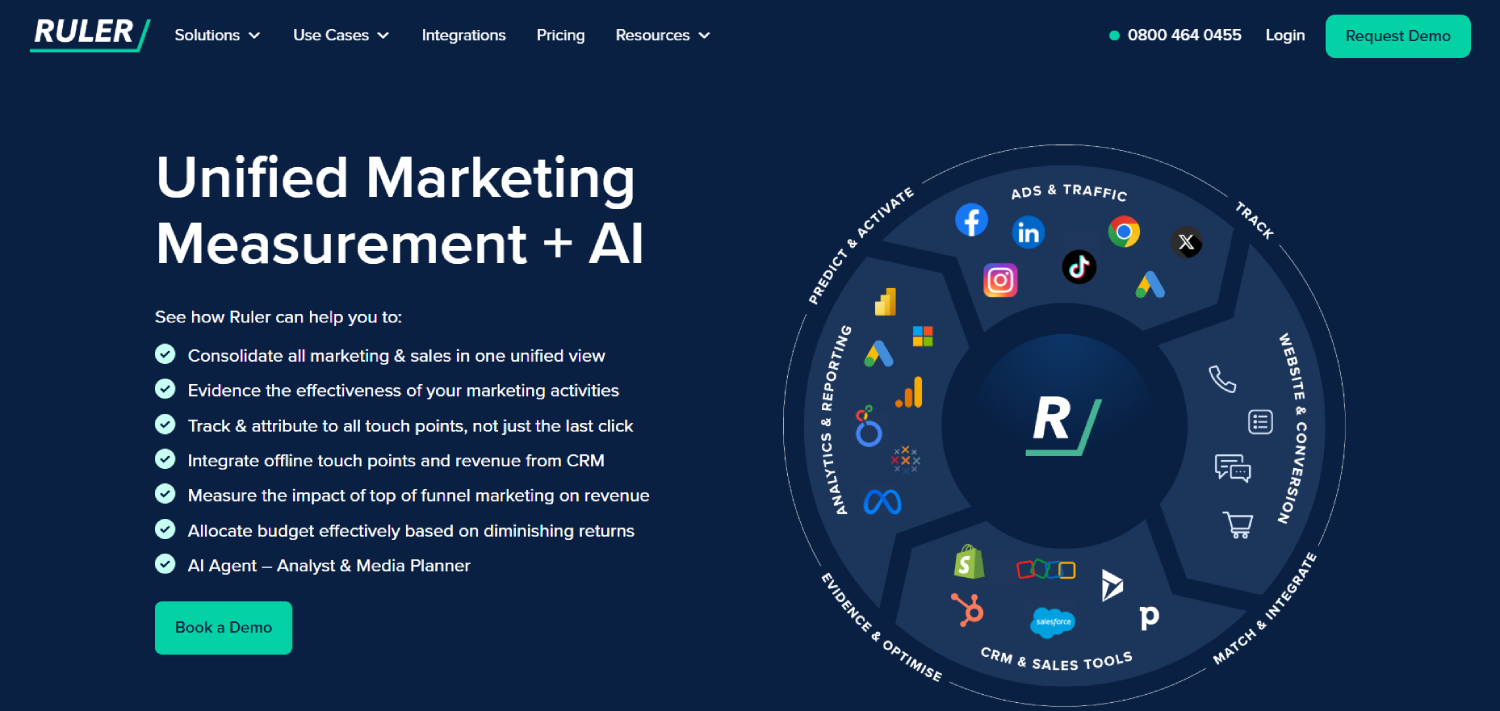
Ruler Analytics serves a specific use case: marketing agencies and businesses where phone calls and form fills are the primary conversion events. The platform connects marketing touchpoints to CRM revenue data and includes call tracking, which most attribution tools treat as an afterthought.
According to Ruler’s public pricing page, plans start at £199 per month. The platform is UK-based but serves US customers. For agencies managing attribution across multiple client accounts, the multi-account structure is a practical advantage over single-tenant tools.
The managed-services offering includes implementation support and ongoing customer success. Teams running paid search campaigns that generate phone inquiries, which is common in professional services, healthcare tech, and real estate, will find Ruler’s call-to-revenue attribution model genuinely useful.
How do attribution consulting firms differ from attribution software vendors?
The cleanest way to think about this is by asking who owns the model. With attribution software, your team owns the configuration, the data connections, and the interpretation. With an attribution consulting firm or managed-service provider, the vendor owns some or all of that work.
Several providers on this list are hybrids. Dreamdata and Ruler Analytics are primarily software with a meaningful support layer. Measured and Analytic Partners are primarily services with proprietary software behind them. Rockerbox and Marketo Measure sit in the middle.
The practical implication for buyers: a software-first vendor will quote you a monthly platform fee and onboarding cost. A services-first vendor will quote you an annual engagement that includes analyst time. Both can produce good attribution data. What separates them is whether you have the internal capacity to use software-generated data without a human to interpret it.
Teams building more sophisticated data infrastructure often find that attribution providers sit on top of a broader stack question. Understanding how marketing mix modeling tools complement multi-touch attribution is worth doing before committing to any single provider’s methodology.
What does attribution consulting actually cost?
Published pricing in this market is rare. Most providers list “contact us” rather than a rate card, which tells you something about how these engagements are scoped.
From the public pricing data available, the range is wide. Attribution’s self-serve software starts at $299 per month. Dreamdata’s paid tier starts at $999 per month according to their public pricing page. Ruler Analytics starts at £199 per month. Above that, Rockerbox, Northbeam, Measured, Marketo Measure, LeadsRx, and Analytic Partners are all quote-based with no publicly disclosed floor.
Enterprise services engagements with firms like Analytic Partners or a full Measured deployment are likely to run six figures annually when analyst time is included. Teams should budget accordingly and evaluate the ROI question before entering a contract negotiation: if you cannot articulate what better attribution data would change about your budget decisions, the engagement will not pay for itself.
Frequently asked questions
What is a marketing attribution company versus an attribution software tool?
An attribution software tool is a platform your team configures and operates. A marketing attribution company is a vendor that provides methodology, analysis, and often human expertise alongside any software they offer. The distinction matters because some teams need the tool, some need the service, and some need both. Companies like Measured and Analytic Partners are primarily services businesses. Companies like Attribution and Dreamdata are primarily software businesses with support layers.
Which attribution provider is best for B2B SaaS companies?
Dreamdata is purpose-built for B2B SaaS with account-level attribution that handles multi-stakeholder buying committees, which is how enterprise and mid-market B2B deals actually close. Marketo Measure is the right answer for teams already running Marketo and Salesforce, because it is native to that stack. For teams that want incrementality testing rather than touchpoint modeling, Measured works across B2B contexts regardless of the underlying martech stack.
Do attribution companies handle offline and broadcast media?
Most do not, well. LeadsRx is the clearest exception on this list, with explicit support for radio, streaming audio, podcast, and television attribution alongside digital channels. Analytic Partners’ commercial mix modeling methodology includes offline media as a standard input at the enterprise level. Teams running a significant portion of spend in broadcast should evaluate both before assuming a digital-native attribution platform will cover their full media mix.
How long does it take to see results from an attribution provider?
Onboarding and data integration typically takes four to twelve weeks depending on the complexity of the martech and CRM stack. Meaningful model output requires historical data, usually six to twelve months of clean touchpoint and revenue data. Teams starting from scratch should plan for a longer ramp before the model output becomes reliable enough to drive budget decisions. Providers like Dreamdata and Ruler Analytics tend to have faster time-to-value because their integrations are more standardized.
Can attribution companies connect offline revenue to digital touchpoints?
Yes, and this is one of the core reasons B2B teams hire providers rather than running software themselves. Closing the loop between a digital marketing touchpoint and a Salesforce opportunity requires bidirectional CRM integration that most marketing teams find difficult to maintain. Providers like Dreamdata, Marketo Measure, and Ruler Analytics handle this connection as a core part of their offering. The data plumbing is often the hardest part of attribution, and managed providers absorb that complexity.
What attribution model do most providers use for B2B?
Multi-touch attribution (MTA) is the most common default, often with a W-shaped or custom model that distributes credit across first touch, lead creation, and opportunity creation stages. Incrementality testing, offered by Measured in particular, is a different methodology that runs controlled experiments rather than dividing credit across touchpoints. Marketing mix modeling (MMM) operates at the aggregate level and is more common in enterprise engagements. No single model is universally correct, which is part of why the provider relationship matters: a good analyst will tell you which model fits your sales motion.
Is it worth hiring an attribution consulting firm instead of building in-house?
For companies without a dedicated marketing data analyst, hiring a provider is almost always faster and cheaper than building in-house during the first one to two years. In-house attribution requires clean CRM data, a data engineer to build pipelines, an analyst to interpret outputs, and ongoing model maintenance as channels and platforms change. Providers absorb all of that. The in-house path makes sense when attribution has become a core competitive advantage and the team has the data maturity to support it.
How do attribution providers handle privacy restrictions and cookieless tracking?
The approaches vary significantly. Northbeam uses synthetic data modeling to reconstruct conversion paths that iOS and browser restrictions have made invisible. Ruler Analytics uses first-party tracking via a JavaScript tag and server-side integrations to reduce cookie dependency. Measured’s incrementality approach sidesteps the individual-tracking problem entirely by operating at the aggregate level. Our guide to measuring marketing ROI without third-party cookies covers the underlying methodology in more detail.
What most teams get wrong about hiring an attribution provider
The most common mistake is buying an attribution platform expecting the data to speak for itself. It does not. Raw attribution output is a model, and every model has assumptions baked into it. A W-shaped model gives 30% credit to first touch, 30% to lead creation, and 30% to opportunity creation, with 10% spread across everything in between. That is a choice, not a fact. Teams that do not have someone to interrogate those choices end up with attribution data they do not trust, which is worse than no attribution data at all because it creates false confidence in specific decisions.
The second mistake is evaluating attribution providers only on their dashboards. The dashboard is the least important part of the engagement. What matters is the data model, the CRM integration quality, and whether the provider’s analysts will tell you something you did not already know. Ask any provider to show you a case study where their attribution output contradicted a client’s prior belief about channel performance. If they cannot produce one, their model is probably just validating existing assumptions.
The providers that earn long-term client relationships, and the ones worth paying for, are the ones whose data occasionally makes a marketing leader uncomfortable. That discomfort is the signal that the model is doing something the team could not do on its own. Teams that want their existing channel mix confirmed should buy software. Teams that want to know what is actually working should hire a provider. The RevOps infrastructure that surrounds the attribution layer matters just as much as the model itself, because attribution is only as good as the revenue data it connects to.