- Most SMS platforms price themselves for enterprise send volumes. Small businesses sending under 10,000 messages per month routinely overpay by 3x to 5x on per-message rates when they pick the wrong tool.
- The best budget SMS tools separate on three variables: per-message cost, keyword and automation depth at lower tiers, and whether compliance tools (TCPA opt-in flows, 10DLC registration support) are included without an upsell.
- Free plans at platforms like Textmagic and SlickText are real starting points, not lead-gen traps, but they carry meaningful restrictions on contacts and send volume.
- If you are on Shopify, this list is not for you. The best SMS apps for Shopify stores involve different integrations and pricing logic.
- Carrier registration (10DLC) is not optional. Any tool that does not handle it will get your messages filtered. Factor that into your evaluation before price.
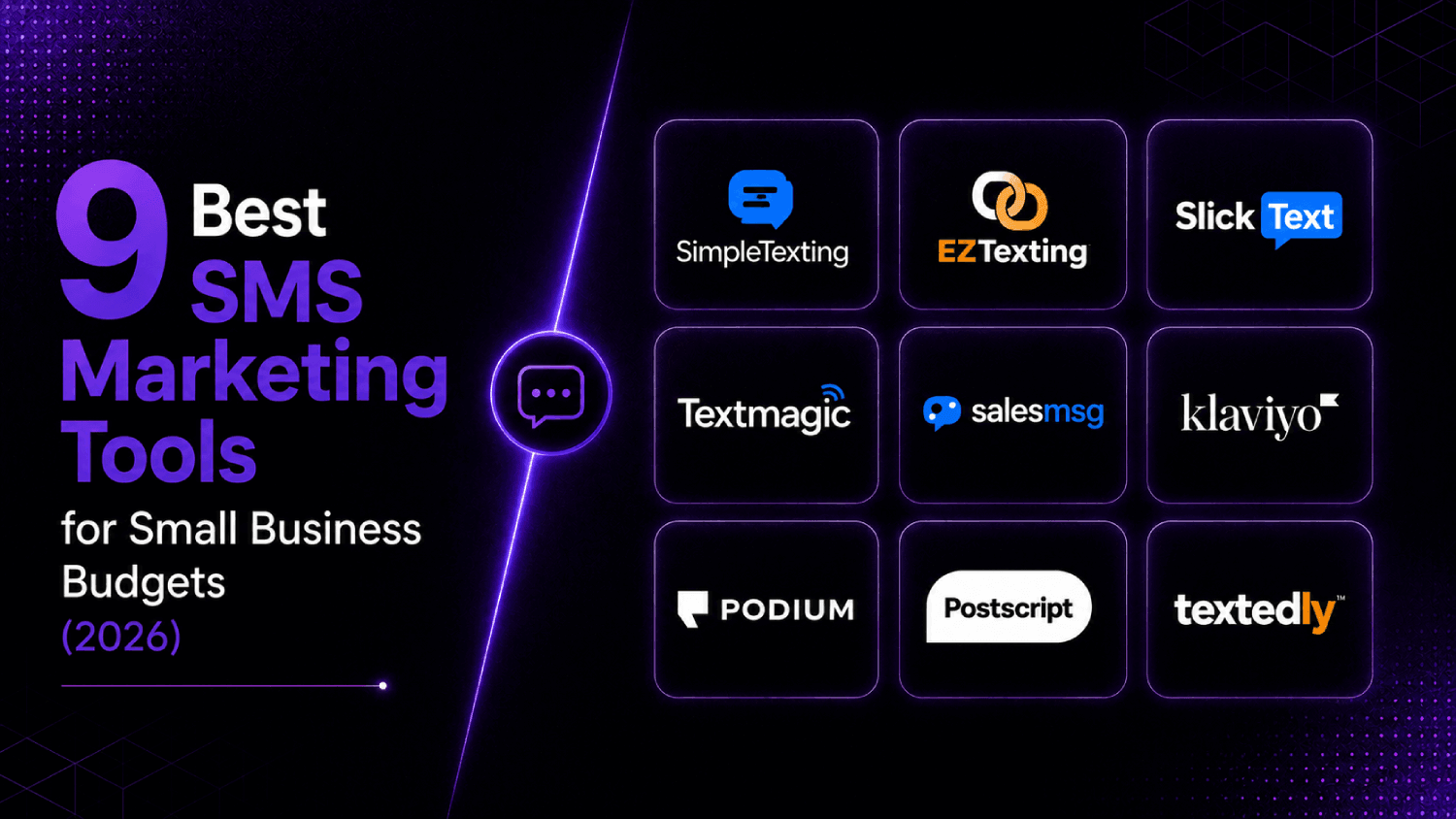
The cheapest SMS marketing software for small businesses includes SimpleTexting, EZTexting, SlickText, Textmagic, Salesmsg, Klaviyo (SMS add-on), Attentive (SMB tier), Podium, and Postscript. Most offer pay-as-you-go or starter plans under $30 per month for lists under 500 contacts. Carrier compliance (10DLC registration), two-way messaging, and keyword automation are the features that separate workable tools from ones that will create legal or deliverability problems at scale.
Why “enterprise-priced” SMS is mostly a myth for the right list size
The belief that good SMS tools cost hundreds of dollars per month traces back to platforms like Twilio and Attentive, which built their reputations on high-volume ecommerce. Those tools do skew expensive at low volumes. But the category has fragmented hard in the last three years, and a second tier of platforms now competes almost entirely on affordability for smaller senders.
The actual cost structure of SMS marketing has two components most buyers conflate: the platform fee (monthly subscription for the software) and the messaging cost (per-SMS or per-segment credit). Platforms that look cheap at $20 per month can cost $0.05 per outbound message on top, making a 1,000-contact broadcast cost $50 in credits alone. Budget buyers need to price both sides of that equation together, not just the headline subscription rate.
There is also a compliance cost that rarely shows up in comparison posts. The 10DLC registration system (required for business SMS in the US since 2023) adds a one-time brand registration fee, typically $4 to $20 depending on the carrier, plus an ongoing campaign registration fee. Some platforms absorb this. Others charge it passthrough. That gap can be $100 per year or more for a small sender, which matters when you’re on a tight budget.
The AboutMartech Budget SMS Fit Test: four checks before you buy
Before comparing tools, run these four checks against your actual situation. This framework is designed specifically for buyers at or under $500 per month in total SMS spend.
Check 1 , Monthly send volume: Estimate your list size times your send frequency. A 500-contact list sending four broadcasts per month generates roughly 2,000 outbound messages. Tools priced by credits punish this differently than flat-rate plans.
Check 2 , Two-way vs. one-way: Broadcast-only SMS (coupons, announcements) and conversational SMS (customer support, appointment reminders) route to different platforms. Most budget tools do both, but two-way inbox features often live behind higher tiers.
Check 3 , Automation depth needed: If you want keyword-triggered autoresponders, drip sequences, or cart abandonment flows, verify that the tier you can actually afford includes them. Many platforms reserve automation for mid-tier plans.
Check 4 , Stack compatibility: An SMS tool that does not connect to your CRM or email platform forces manual list management. At small volumes that is survivable. At 2,000+ contacts it becomes a real ops burden. Check native integrations before committing.
Which 9 SMS tools actually work on a small business budget?
| Tool | Starting Price | Free Plan? | Per-Message Cost (starter) | 10DLC Included? | Best For |
|---|---|---|---|---|---|
| SimpleTexting | $39/mo | No (14-day trial) | Included up to plan credits | Yes | All-around budget pick |
| EZTexting | $25/mo | No (free trial) | Included up to plan credits | Yes | Beginners, simple broadcasts |
| SlickText | $29/mo | Limited free plan | Included in plan | Yes | Keyword-heavy campaigns |
| Textmagic | Pay-as-you-go | Free trial credits | Approx. $0.04/SMS (US), per public pricing page | Yes | Irregular senders |
| Salesmsg | $25/mo | No (14-day trial) | 500 credits included | Yes | CRM-connected two-way SMS |
| Klaviyo (SMS) | SMS from $15/mo add-on | Free up to 150 SMS/mo | Credit-based | Yes | Email + SMS under one roof |
| Podium | $399/mo (all-in) | No | Included | Yes | Local/service businesses |
| Postscript | $100/mo | No | $0.01/SMS + $0.03/MMS | Yes | DTC brands scaling from Shopify |
| Textedly | $26/mo | No (14-day trial) | 1,200 messages/mo included | Yes | High message volume, low list |
Pricing above reflects publicly listed rates as of each vendor’s pricing page and is subject to change. Always verify current rates before purchasing.
What makes each tool worth its cost at the small business tier?
SimpleTexting: the clearest feature-to-price ratio at entry level
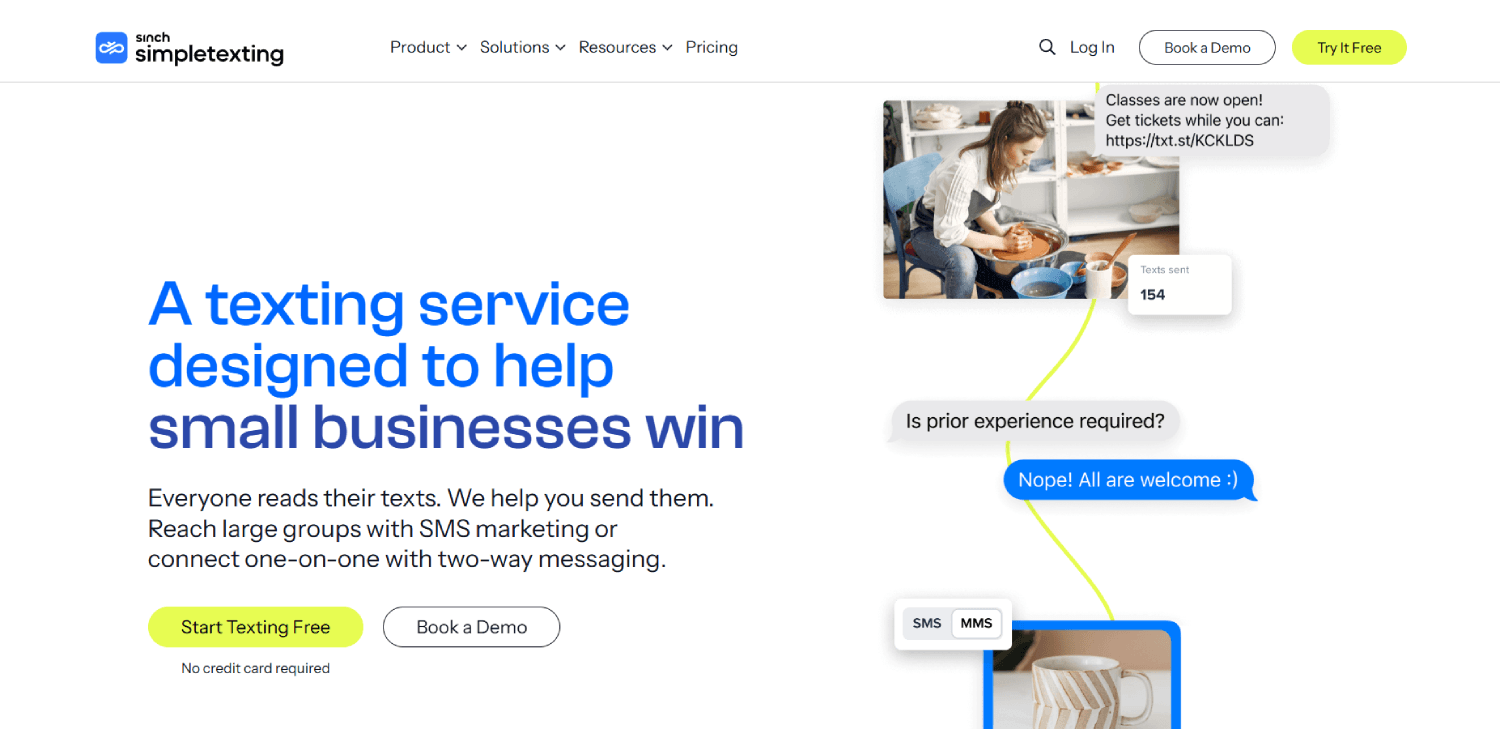
SimpleTexting starts at $39 per month for 500 credits, with rollover credits and a clean automation builder that is available on all paid plans. That matters because most competitors gate drip sequences and triggered messages behind higher tiers. The interface is genuinely uncomplicated, and the 14-day trial does not require a credit card, which is rare in this category. 10DLC brand registration is handled inside the platform without a third-party handoff.
The ceiling is the contact limit on lower plans and the credit cost for MMS, which counts as three credits per message. Heavy MMS senders will watch credits disappear fast. For text-only broadcast campaigns under 1,500 monthly messages, it is the most capable entry-level option.
EZTexting: the most approachable interface for non-technical owners
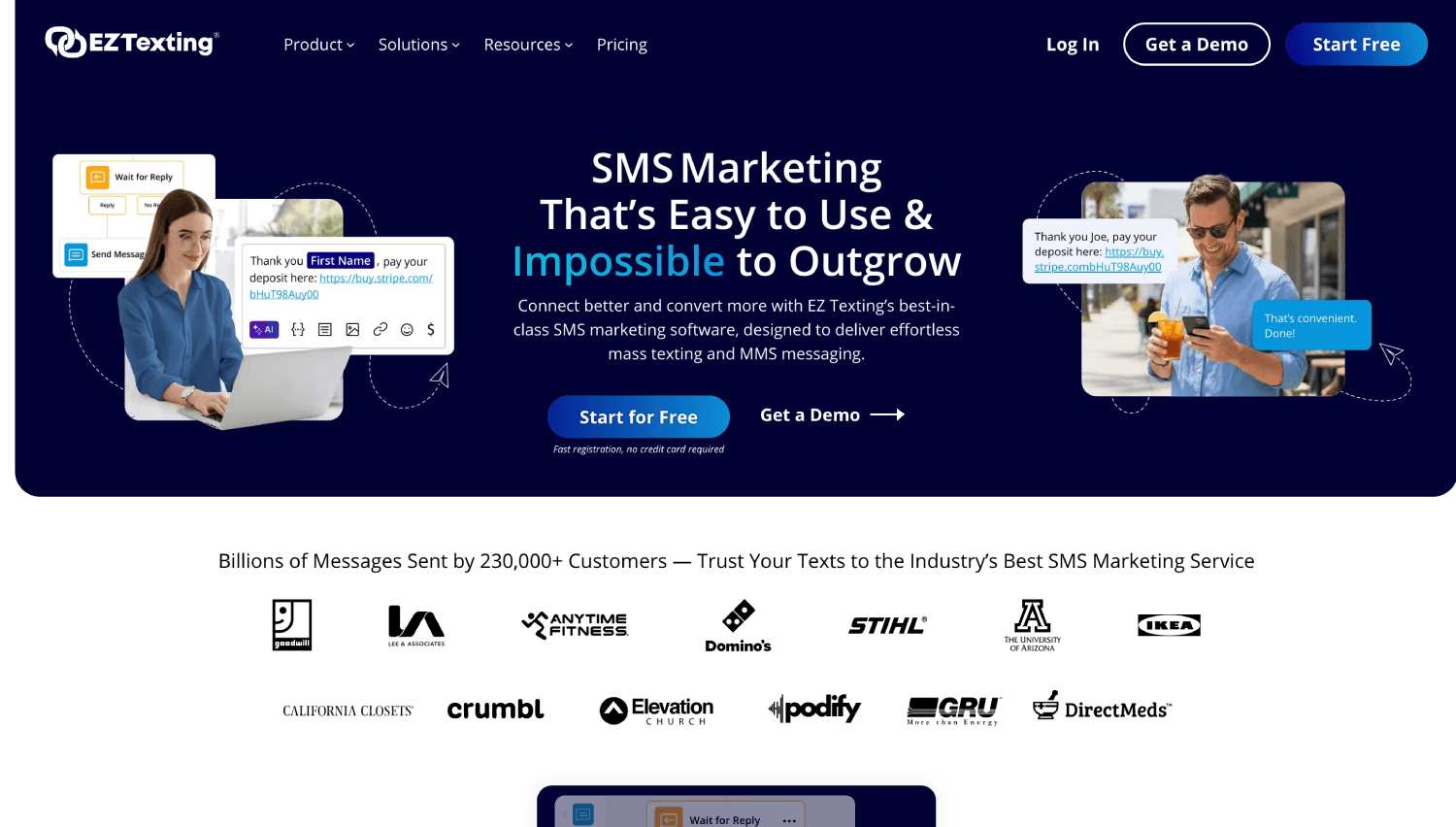
EZTexting prices from $25 per month and has arguably the flattest learning curve in this list. The message builder, contact upload, and keyword setup all work within a few clicks. The platform integrates natively with Mailchimp, Constant Contact, and HubSpot, which matters for small businesses already using those tools and not looking to manage a separate contact database. According to EZTexting’s public pricing page, plans scale by contacts rather than message volume, which simplifies cost prediction for steady senders.
The automation logic is less sophisticated than SimpleTexting. If you need branching drip sequences or multi-step keyword flows, EZTexting will hit a wall. For straightforward campaigns, coupons, appointment reminders, and new subscriber welcomes, it delivers cleanly.
SlickText: the right call when keywords drive your growth
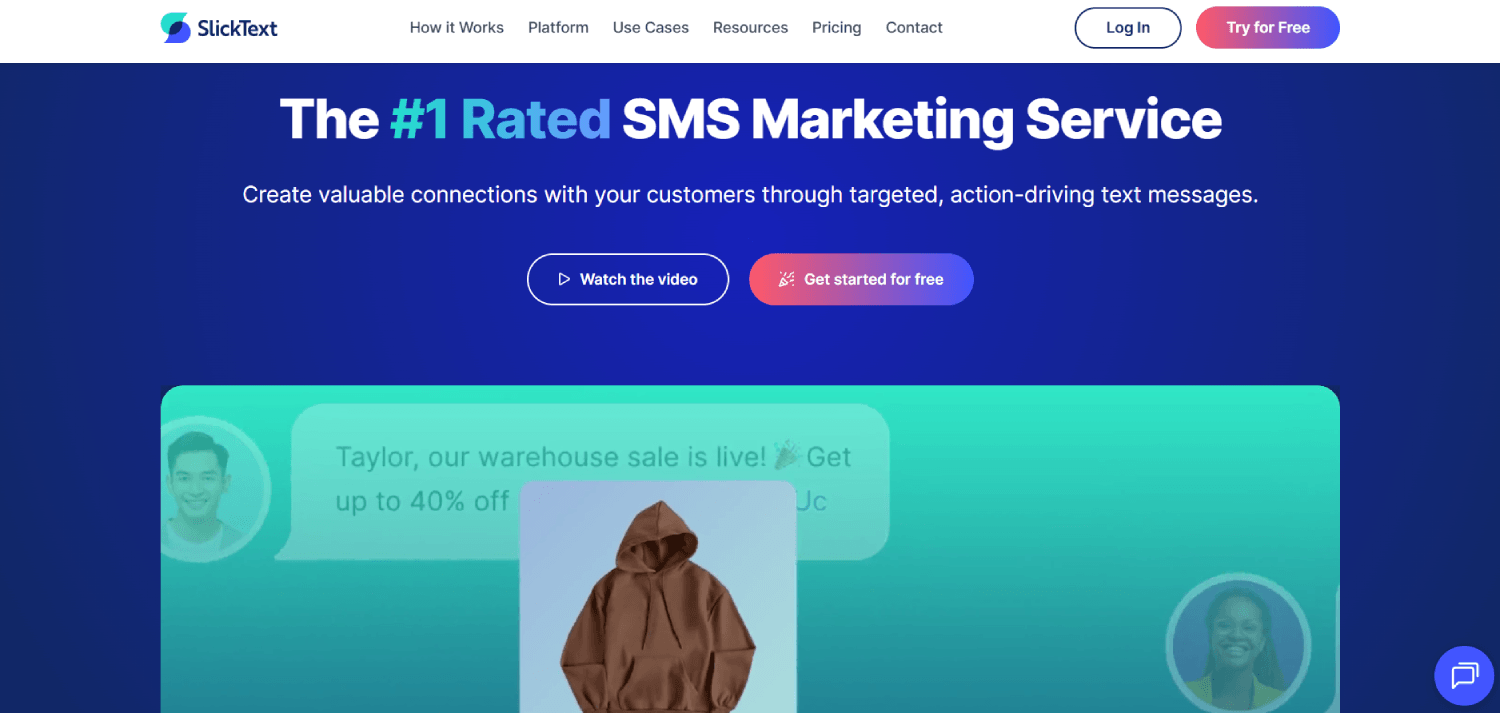
SlickText built its product around keyword-based opt-in campaigns, and that focus shows. At $29 per month, the basic plan includes one keyword (a shortcode word subscribers text to opt in), 500 texts, and unlimited contacts. Additional keywords are available for purchase, and the platform charges per keyword rather than per message above the included volume, which is an unusual pricing structure. Businesses that run “Text WIN to 12345” style promotions will find this structure advantageous.
The workflow automation is solid for the price point. The integration library is smaller than EZTexting’s, but it covers Zapier, which effectively extends connectivity to most tools a small business is likely running.
Textmagic: the only true pay-as-you-go model in this list
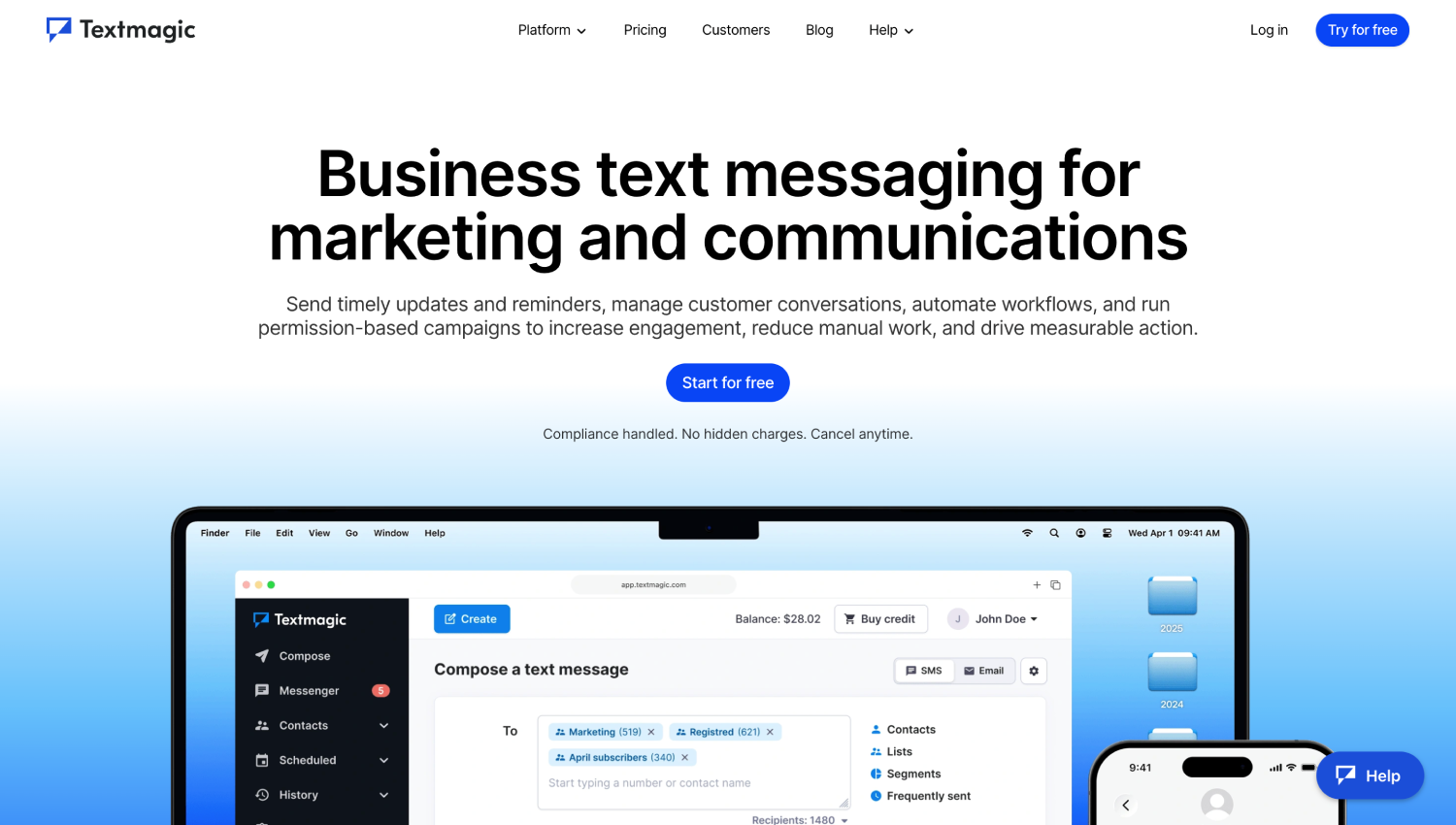
Textmagic charges approximately $0.04 per SMS to US numbers (per its public pricing page) with no monthly subscription fee, making it the right fit for businesses that send in bursts rather than steady monthly campaigns. A restaurant running one promotion per quarter would overpay on any subscription plan. Textmagic solves that directly.
The platform supports two-way SMS, bulk sends, distribution lists, and basic scheduling. It is not an automation-first product. If you want behavioral triggers or drip sequences, Textmagic is not the tool. For volume-flexible, set-and-send campaigns, it is the most cost-honest option in the category.
Salesmsg: the SMS tool built for CRM-connected workflows
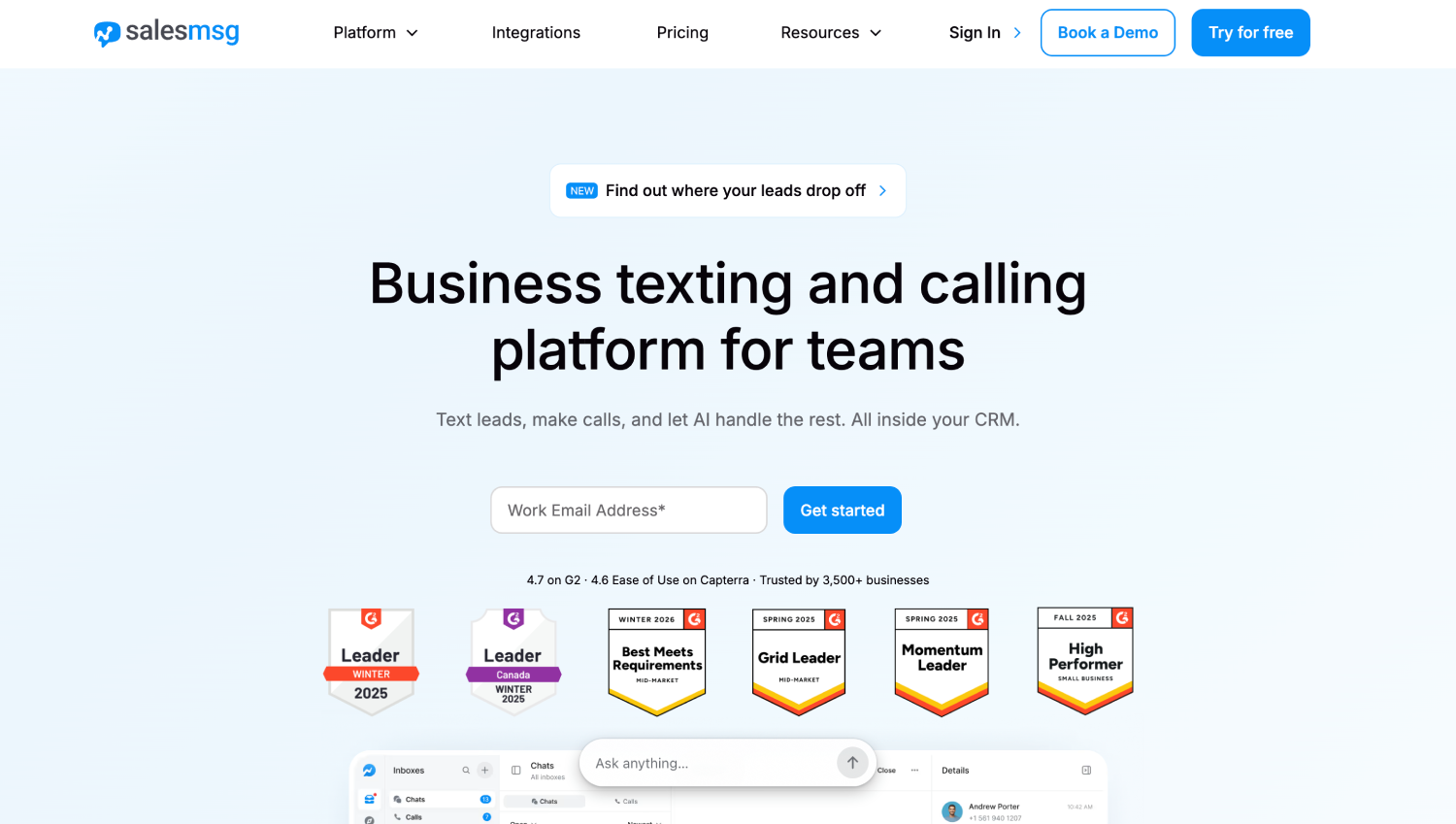
Salesmsg charges $25 per month for 500 credits and focuses on two-way conversational SMS tied directly to CRM records. Its native integrations include HubSpot, Salesforce, Pipedrive, and ActiveCampaign, with contact sync that updates in real time rather than on a scheduled batch. For a small business using SMS as part of a sales follow-up workflow, that CRM connection is the real product. The broadcast and automation tools are competent but secondary to the conversation inbox.
The per-credit cost climbs quickly for high-volume senders. Salesmsg is priced for teams sending hundreds of messages per month, not thousands. Pair it with the right CRM, and for small B2B and service businesses, it punches well above its price.
Klaviyo SMS: the strongest option if you already use Klaviyo for email
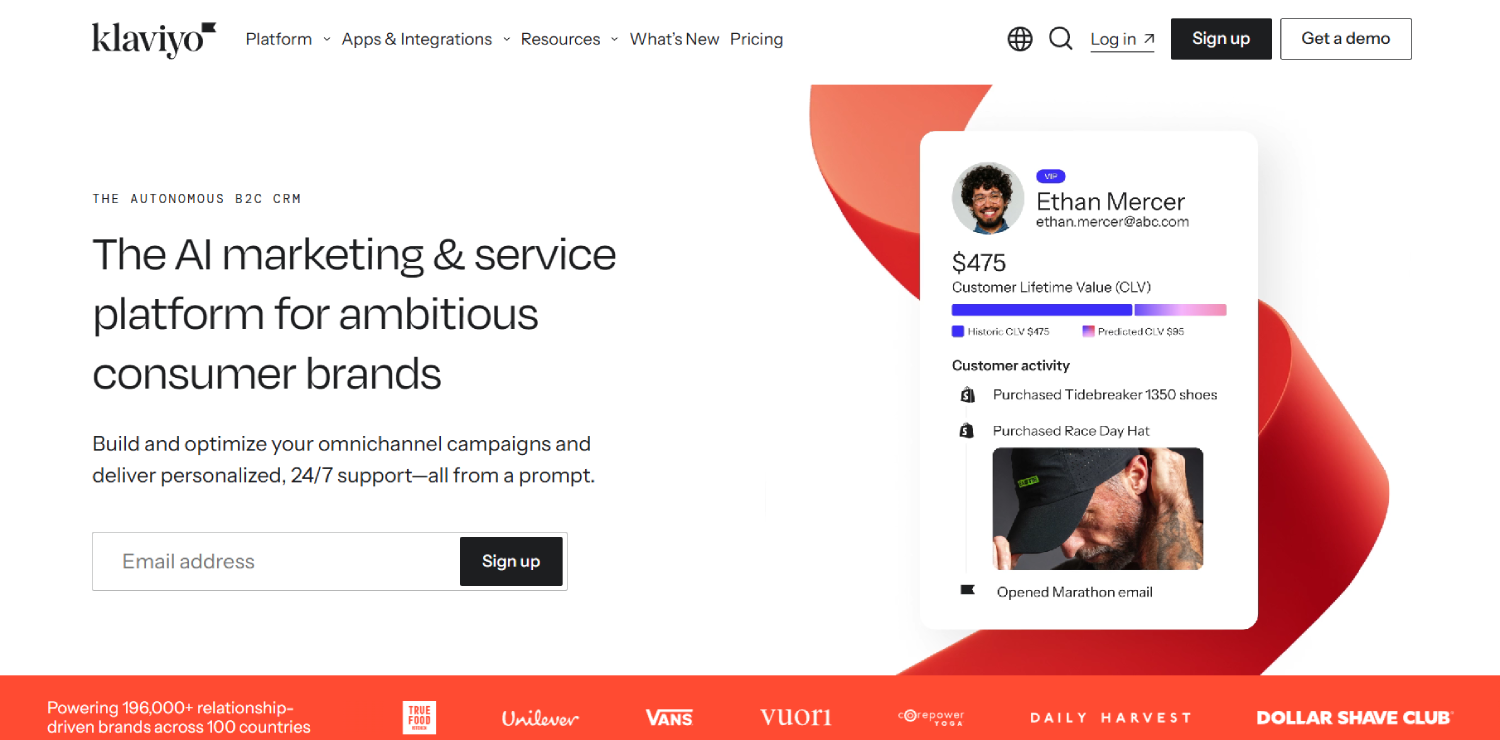
Klaviyo treats SMS as a channel add-on rather than a standalone product, which is a significant advantage for brands already running email in the platform. Audiences, segments, flows, and reporting are all shared between email and SMS, which eliminates the double-entry problem that plagues businesses managing two separate tools. Klaviyo’s free plan covers up to 150 SMS sends per month, which is enough for a very small list testing the channel. Paid SMS credits stack on top of an existing Klaviyo plan.
For a pure SMS play with no email component, Klaviyo is overbuilt and overpriced. The value comes entirely from the unified data model. Teams already running Klaviyo email campaigns should not buy a separate SMS tool when they can extend the one they have.
Podium: the premium option that justifies its price for local service businesses
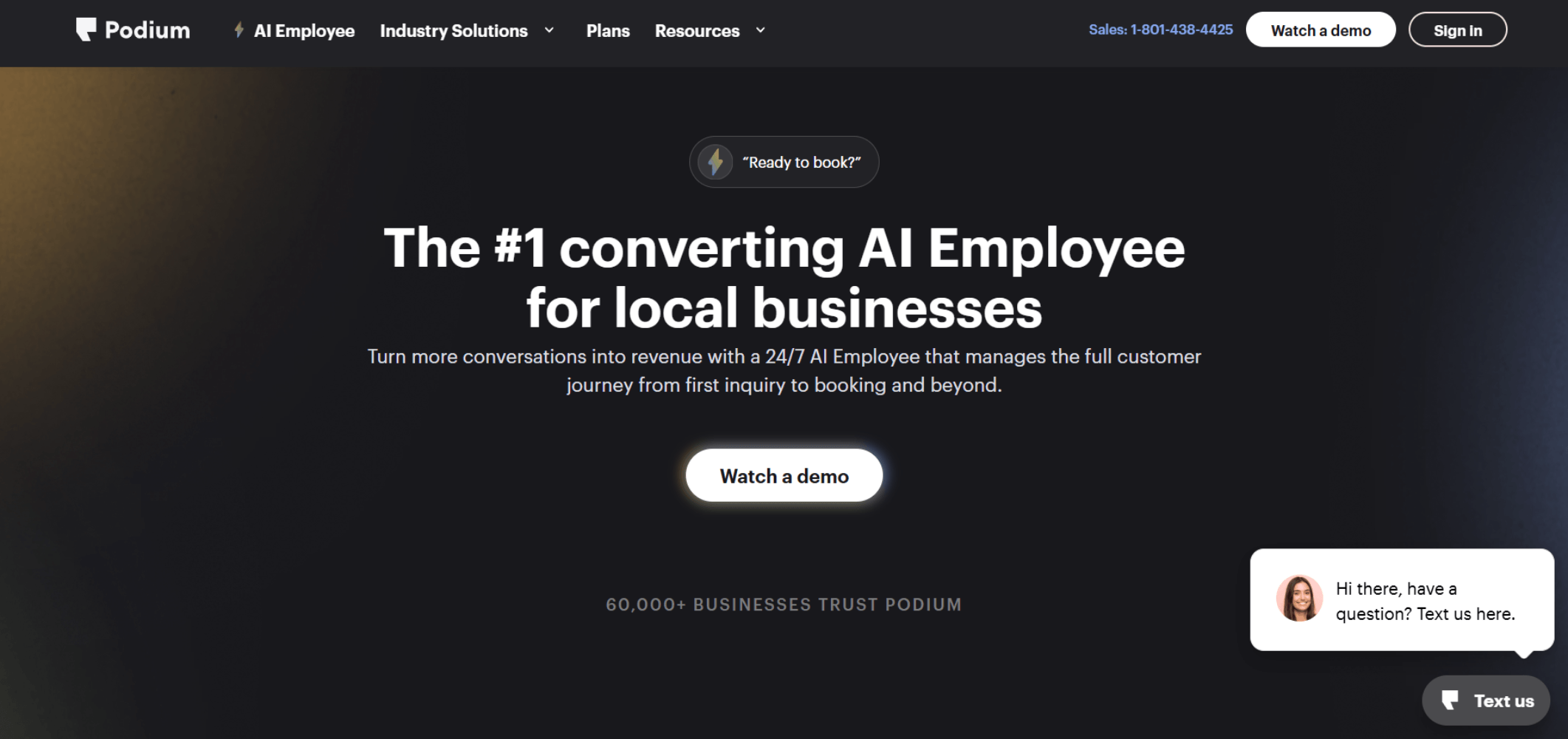
Podium is the most expensive tool on this list at $399 per month, which disqualifies it for many small businesses. It earns its place here because it bundles SMS marketing, two-way messaging, review requests, webchat, and payment collection in one platform, making the cost comparable to buying each of those tools separately. For a dental office, auto shop, or home services business that wants to run its entire customer communications through one inbox, the all-in price makes more sense than it initially appears.
Podium’s SMS capabilities on their own are not worth $399 per month. The calculus changes when you price the stack it replaces.
Postscript: priced low enough to compete, built for DTC growth
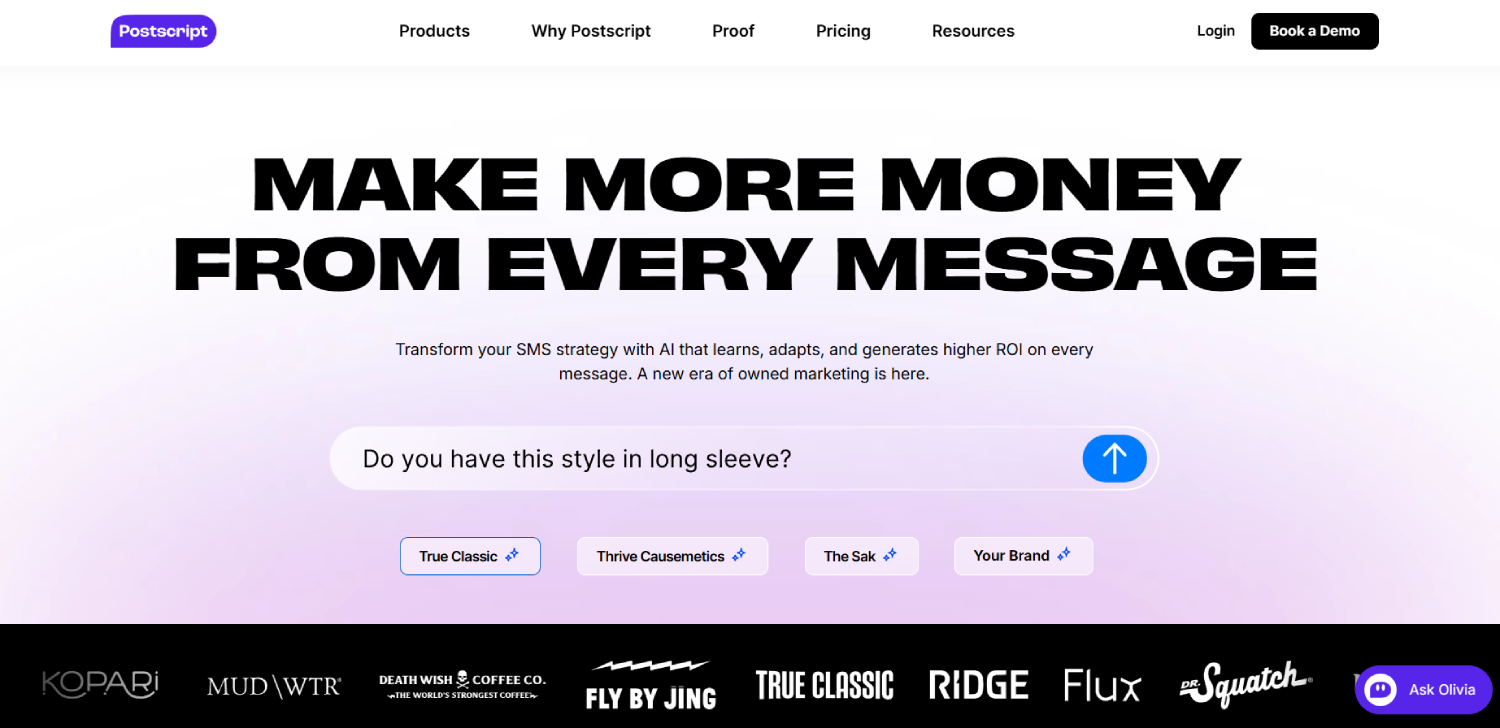
Postscript starts at $100 per month. Its per-message pricing ($0.01 per SMS, $0.03 per MMS, as listed on its public pricing page) is among the lowest in the category at scale. The automation, segmentation, and A/B testing tools are more sophisticated than most budget platforms. The $100 entry point is not trivial, but it makes sense for DTC or product brands with a list of 1,000 or more who are willing to send frequently. Teams choosing between Postscript and Attentive for a Shopify store can find a detailed breakdown in the Attentive vs. Postscript comparison.
Textedly: best dollar-per-message value for high-frequency, small-list senders
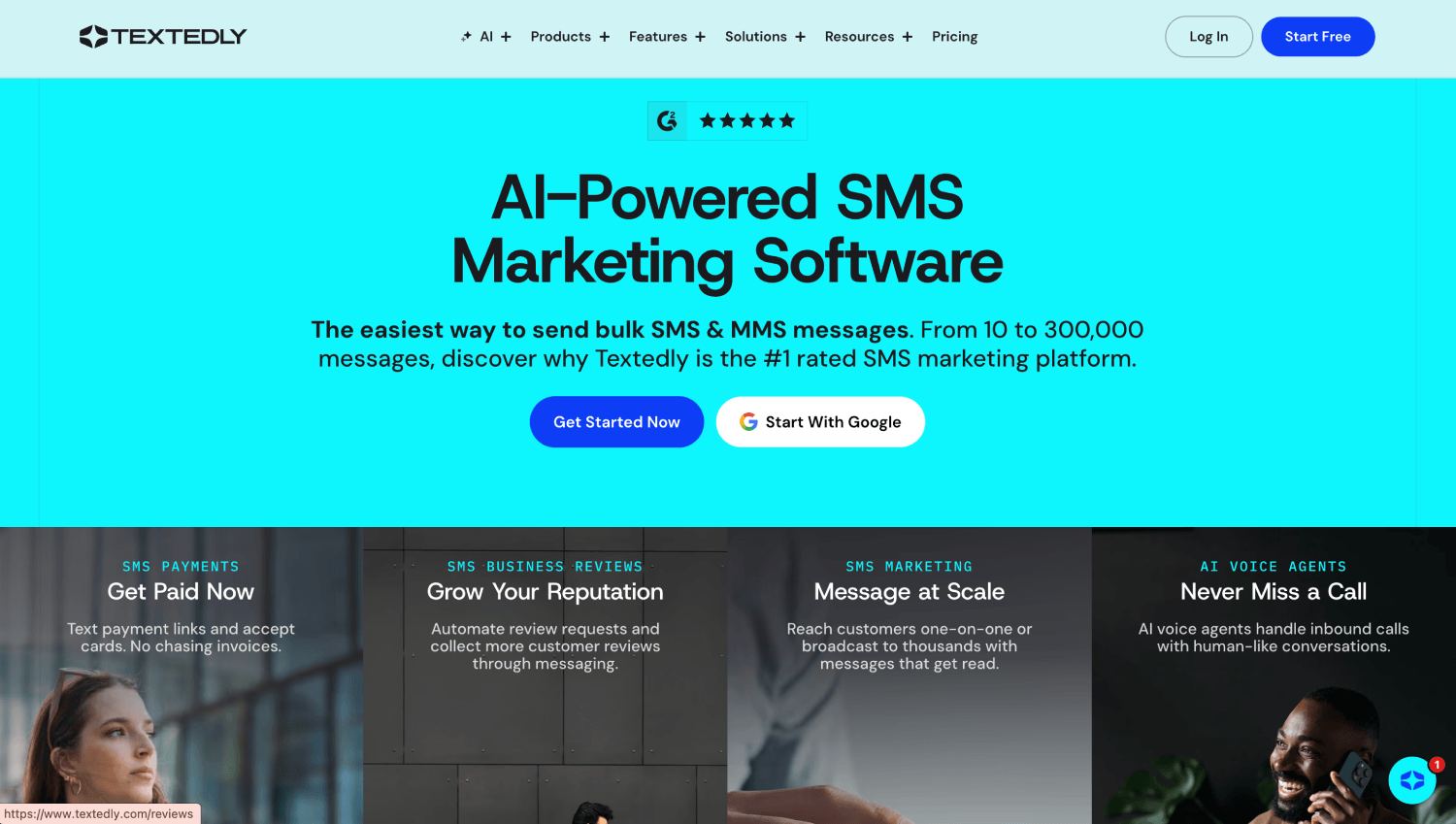
Textedly prices its basic plan at $26 per month for 1,200 messages, which works out to roughly $0.022 per message when you include the subscription, well below most competitors at that volume. Contacts are unlimited on all plans. For a business with a compact list that sends frequently (think weekly deals for a local retailer), that structure is more cost-effective than credit-based tools that meter the same usage at 3x the cost.
The feature set is utilitarian. Scheduling, basic keyword opt-ins, and drip sequences are present. Advanced segmentation and behavioral triggers are limited. Textedly wins on price transparency, not sophistication.
What does a real small business SMS budget actually look like?
Consider a local fitness studio with 400 contacts sending four campaigns per month (one weekly offer) plus automated welcome messages to new subscribers. That generates roughly 1,800 outbound messages per month. On Textedly’s basic plan at $26 per month for 1,200 messages, they would need a plan upgrade. On SimpleTexting at $39 per month for 500 credits plus $0.055 per additional credit, the math runs closer to $90 per month at that volume. On Textmagic at approximately $0.04 per SMS, the same 1,800 messages costs around $72 with no monthly fee.
The lowest-cost option for that scenario is Textmagic. But if that studio wants a welcome drip sequence triggered when a new member opts in, Textmagic’s limited automation forces a workaround. SimpleTexting handles it natively. The difference per month is the cost of not managing a manual onboarding sequence. That is a legitimate business decision, not an obvious error.
For teams also thinking about push notifications as a companion channel, the best push notification tools follow a similar pricing structure, with volume-based credits and free tiers that are usable for very small lists.
What compliance requirements do small business SMS senders actually face?
Every US-based business SMS program requires 10DLC registration as of 2023. This means registering your brand and campaign use case with The Campaign Registry, a shared industry database that carriers query before delivering your messages. Unregistered senders face message filtering, which means your texts simply do not arrive. This is not a legal gray area. It is a hard technical requirement.
All nine tools on this list support 10DLC registration. Where they differ is in whether they absorb the registration fees or pass them through to the customer. SimpleTexting, SlickText, and EZTexting include basic 10DLC brand registration without an additional charge on their starter plans. Textmagic and Salesmsg pass the carrier fees through at cost. The difference is typically small ($4 to $20 one-time), but worth confirming before you commit.
TCPA compliance (Telephone Consumer Protection Act) requires documented opt-in consent for every subscriber before you send marketing messages. Every tool on this list provides opt-in capture tools. What they do not all provide is compliant opt-in language by default. Review your platform’s default keyword opt-in confirmation messages before you go live and make sure they include the required disclosures: message frequency, message-and-data-rates-may-apply language, and opt-out instructions.
How does SMS fit into a broader small business marketing stack?
SMS works best as a retention and conversion channel rather than an acquisition channel. Opt-in lists grow slowly relative to email. The economics only make sense if the messages you send are high-value enough that subscribers stay opted in rather than replying STOP after the second promotion. That means limiting broadcast frequency, segmenting by engagement, and treating the channel as a premium touchpoint rather than a mass medium.
For small businesses evaluating SMS alongside other retention tools, the channel fits naturally between email (higher volume, lower urgency) and personal outreach (lower volume, higher effort). Teams building out a fuller customer data picture may find it useful to understand how B2B CDPs unify customer data across channels before layering SMS into a fragmented stack.
RCS (Rich Communication Services) is also worth watching. It allows branded, image-rich messages delivered through the default Android messaging app without requiring a separate app download. For small businesses, RCS tooling is still maturing in the US, but it is likely to affect SMS economics over the next two to three years. Our coverage of RCS business messaging platforms tracks which vendors are building this out and which are still SMS-only.
Frequently asked questions about cheap SMS marketing software
What is the cheapest SMS marketing software available for small businesses?
Textmagic is the cheapest option for irregular senders because it has no monthly subscription fee, charging approximately $0.04 per message for US sends (per its public pricing page). For businesses with consistent monthly volume, Textedly at $26 per month for 1,200 messages or EZTexting at $25 per month offer lower effective per-message costs than pay-as-you-go pricing once volume exceeds around 600 messages per month. The cheapest tool depends entirely on how many messages you send each month and how consistently you send them.
Do free SMS marketing plans work for actual campaigns, or are they just lead-gen traps?
SlickText’s free plan and Klaviyo’s free SMS tier are functional for very small lists (under 50 contacts) and low send frequency, making them genuine starting points for testing the channel. Most free tiers restrict keywords, automation, and contact counts in ways that make them unsuitable for any real growth use case. They are most useful for validating the channel’s ROI before committing to a paid plan, not for running ongoing campaigns at scale.
Is 10DLC registration required, and which tools handle it for you?
Yes, 10DLC registration is required for all US business SMS marketing as of 2023. Unregistered messages are actively filtered by major carriers, resulting in non-delivery. All nine tools on this list support 10DLC registration. SimpleTexting, SlickText, and EZTexting include basic brand registration fees in their starter plans. Textmagic and Salesmsg pass carrier fees through at cost. The process typically takes one to three business days and must be completed before launching any campaign.
Can small businesses use SMS for B2B marketing, not just consumer promotions?
Yes, though the consent and use-case requirements differ. B2B SMS works well for appointment reminders, sales follow-up sequences, and event notifications, particularly when combined with a CRM. Salesmsg is the strongest B2B-oriented option on this list because of its native HubSpot and Salesforce integrations. SimpleTexting and EZTexting also support B2B use cases but have less CRM connectivity at the entry level. TCPA consent requirements apply regardless of whether the recipient is a consumer or a business contact.
What is the difference between a dedicated long code, a shared short code, and a toll-free number for SMS?
A dedicated long code is a standard 10-digit phone number assigned to your business, required for 10DLC compliance. A shared short code is a 5 or 6-digit number shared across multiple brands, which carriers are phasing out for marketing use. A toll-free number (800, 888, etc.) can send SMS at reasonable rates and is a common choice for service businesses that also use the number for inbound voice calls. Most budget platforms provision dedicated long codes by default. Verify which number type a platform assigns before purchasing, as it affects deliverability and registration requirements.
How much does SMS marketing typically cost per month for a list of 1,000 contacts?
For a list of 1,000 contacts sending two broadcasts per month (2,000 messages), total monthly cost ranges from roughly $30 to $80 across the tools on this list, depending on platform fees, per-message rates, and whether MMS is involved. Textedly’s $39 per month plan covers 2,400 messages, making it the most cost-effective option at that volume. SimpleTexting’s starter plan covers 500 credits with additional credits available at $0.055 each, putting the same campaign at approximately $94 per month. These are ballpark figures based on public pricing as of early 2025.
Do any of these tools support automated SMS drip sequences on their cheapest plans?
SimpleTexting includes drip sequences (called “autoresponders”) on all paid plans including the $39 per month starter. SlickText includes basic automation at the $29 per month level. EZTexting’s drip campaigns are available on starter plans. Textmagic does not support multi-step automation. Salesmsg supports sequences but the contact and credit limits on the base plan restrict how far you can take them. If automation is your primary use case, SimpleTexting and SlickText offer the best entry-level access without requiring a plan upgrade.
The bottom line on budget SMS marketing tools
The most common mistake budget buyers make is optimizing only for the monthly subscription cost and ignoring per-message rates, credit structures, and registration fees. A $20 per month platform that charges $0.05 per message costs more than a $39 per month platform with credits included, once you send more than a few hundred messages. Run the math on your actual expected monthly volume before comparing headline prices.
For most small businesses sending under 2,000 messages per month, SimpleTexting offers the best combination of automation depth, compliance support, and predictable pricing. For irregular senders or anyone not yet sure of their volume, Textmagic’s pay-as-you-go model removes the risk of paying for unused capacity. For businesses already in Klaviyo, adding SMS through that platform is almost always more efficient than buying a standalone tool. Those three cover the majority of small business SMS scenarios without requiring a deep feature evaluation.
The channel itself is underused at the small business level relative to its effectiveness for time-sensitive offers and appointment-based businesses. That means the cost-per-contact is still low and opt-in rates are still high compared to more saturated channels. The budget tools exist and they work. The limiting factor is rarely the software.