- Most AI visibility tools track a single brand against a handful of queries. Enterprise brands run multiple sub-brands, product lines, and regional entities simultaneously, which instantly breaks the single-brand model.
- The real enterprise filter is not feature count. It is SSO, role-based access control, multi-brand workspaces, and competitive share of voice across AI engines, all in one contract.
- Only a small subset of the AI visibility market has built for this. Several popular tools that rank well for general audiences collapse at the enterprise tier.
- Pricing at the enterprise tier is almost universally quote-based. Any vendor quoting a flat monthly rate for unlimited brands and seats deserves a follow-up call to confirm what that actually covers.
- The sharpest evaluation question to ask any vendor: can your platform track my brand’s mention rate across ChatGPT, Perplexity, Claude, and Google AI Overviews in a single dashboard, segmented by sub-brand?
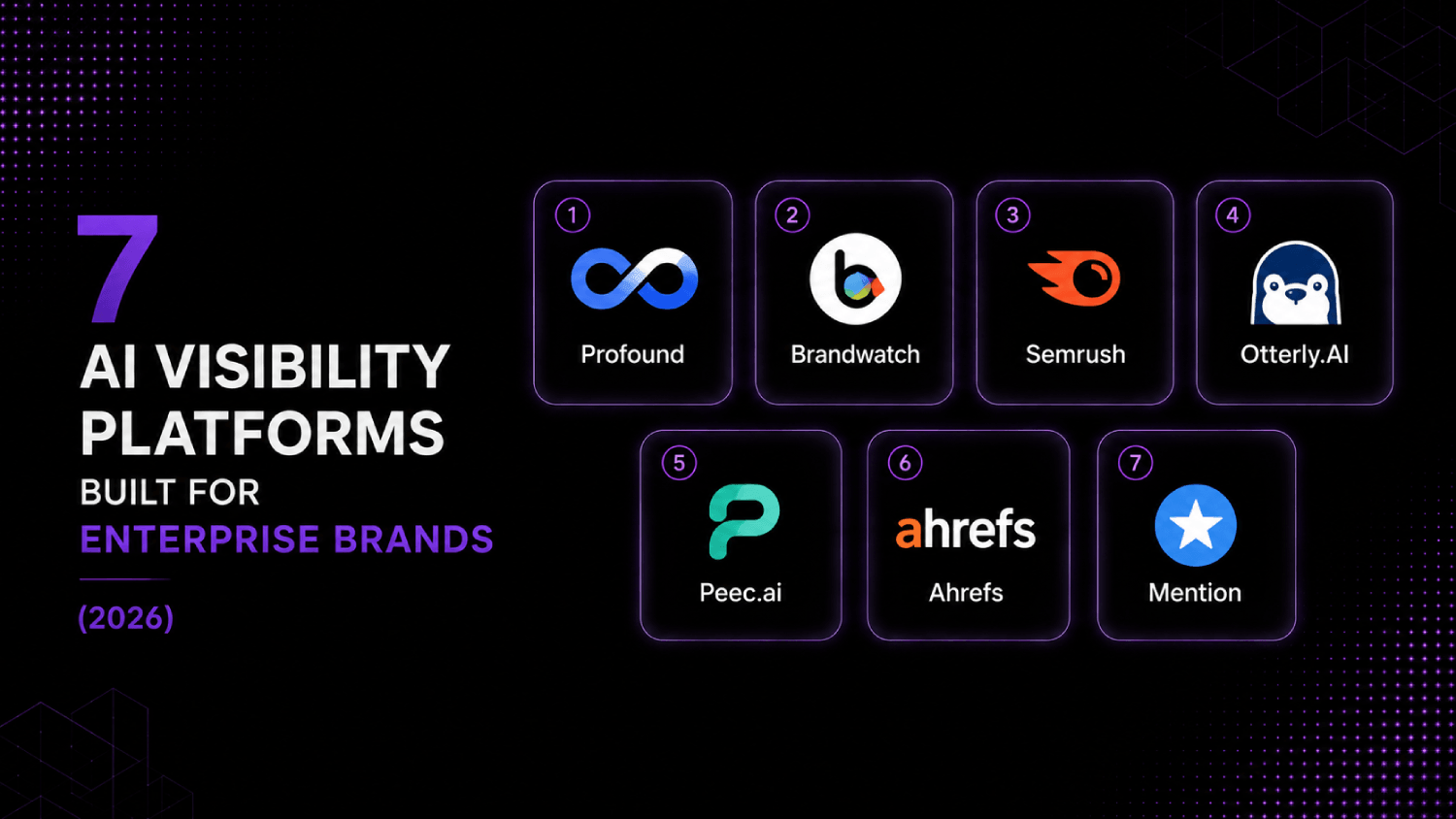
Enterprise AI visibility platforms with genuine multi-brand support, SSO, and competitive share-of-voice tracking across large language model engines include Profound, Brandwatch, Semrush’s AI Toolkit, Otterly.AI, Peec.ai, Ahrefs, and Mention. Most general-purpose AI visibility tools are built for single-brand teams and lack the workspace architecture, access controls, and cross-brand competitive reporting that enterprise marketing organizations require.
Why Do Enterprise Brands Need a Different AI Visibility Platform?
The typical AI visibility tool assumes one brand, one team, one dashboard. That works for a 20-person SaaS company tracking whether ChatGPT recommends them in a product category. It does not work for a global consumer brand managing six product lines, three regional teams, and governance requirements such as restricting raw competitive data exports to credentialed analysts only , a common IT and compliance constraint in regulated industries.
Enterprise requirements create a hard filter that most of the market cannot pass. The four that matter most are: SSO and SAML-based identity management (a non-negotiable for IT procurement), multi-brand workspaces where each brand’s data is isolated by default, competitive AI share of voice across multiple LLM engines simultaneously, and seat-based or role-based access with audit logging. Strip away the tools that fail even one of these, and the field shrinks fast.
There is also a measurement complexity issue. An enterprise brand does not just want to know if it appears in ChatGPT. It needs to know how its mention rate compares to three named competitors, broken down by query category, across at least ChatGPT, Perplexity, and Google AI Overviews, with trend data going back at least 90 days. That is a fundamentally different product from a single-brand tracker.
The AboutMartech Enterprise AI Visibility Checklist: Four Gates Every Platform Must Pass
Before reviewing any individual tool, run it through what we call the Enterprise AI Visibility Checklist, four minimum criteria that separate genuine enterprise platforms from tools that simply offer a higher pricing tier:
- Identity Gate: Does the platform support SSO via SAML 2.0 or OIDC, with role-based permissions and audit logs? If the answer is “contact us to discuss,” that means it is probably not built yet.
- Multi-Brand Gate: Can you create isolated workspaces per brand or sub-brand within a single contract, with consolidated reporting across all of them at the account level?
- SOV Gate: Does the platform measure competitive AI share of voice, not just your own mention rate? Share of voice requires tracking named competitors across the same query set simultaneously.
- Engine Coverage Gate: Does it cover at least ChatGPT, Perplexity, and Google AI Overviews? Ideally also Claude and Gemini. Single-engine tools leave critical blind spots.
Any tool that fails two or more of these gates is a single-brand tracker with an enterprise price tag, not an enterprise platform. Use this checklist when vendors pitch you during demos.
Which Platforms Actually Pass the Enterprise AI Visibility Checklist?
The table below maps each of the seven platforms against the four checklist criteria. A checkmark means the feature is confirmed on the vendor’s public documentation or marketing materials. “Quote” means the feature exists but is gated behind a custom contract. “No” means the feature is absent or not confirmed.
| Platform | SSO / SAML | Multi-Brand Workspaces | Competitive AI SOV | Engine Coverage | Best For |
|---|---|---|---|---|---|
| Profound | Quote | Yes | Yes | ChatGPT, Perplexity, Claude, Gemini | Enterprise with deep LLM SOV needs |
| Brandwatch | Yes | Yes | Yes (AI mentions layer) | ChatGPT, Perplexity, Google AIO | Large teams already in the Brandwatch platform |
| Semrush AI Toolkit | Yes (Enterprise plan) | Yes (sub-accounts) | Partial (keyword-level) | ChatGPT, Perplexity, Google AIO | Brands already running Semrush for SEO |
| Otterly.AI | Quote | Yes | Yes | ChatGPT, Perplexity, Claude | Mid-market to enterprise; fast deployment |
| Peec.ai | Quote | Partial | Yes | ChatGPT, Perplexity, Gemini | Brands needing European data residency |
| Ahrefs | Yes (Enterprise) | Yes (workspaces) | Partial (AI mention tracking) | ChatGPT, Perplexity, Google AIO | Brands needing AI visibility plus full SEO stack |
| Mention | Quote | Partial | No | Limited (monitoring-focused) | Teams wanting media monitoring with LLM signals |
1. Profound: Built Ground-Up for Enterprise LLM Visibility
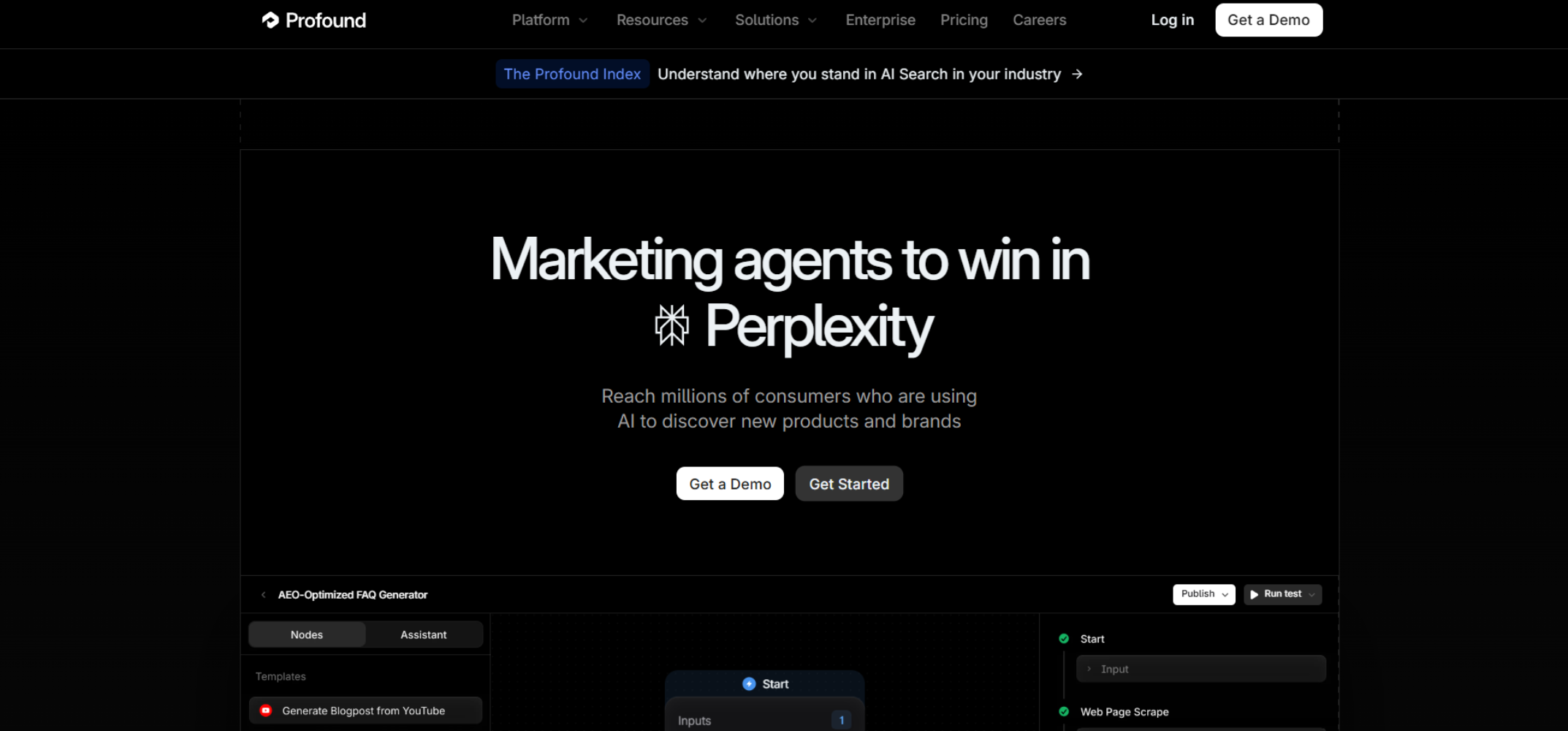
Profound is the clearest purpose-built enterprise AI visibility platform in the current market. It tracks brand mentions and competitive share of voice across ChatGPT, Perplexity, Claude, and Gemini simultaneously, with query-level granularity across a broad range of LLM engines. The multi-brand workspace architecture is a first-class feature, not an afterthought.
Where Profound separates from the pack is its competitive SOV reporting. You can set up a query set around a product category, add five named competitors, and see your brand’s AI mention rate versus theirs over time, broken down by LLM engine. That is the measurement layer a VP of Digital or a CMO at a Fortune 500 actually needs to make budget arguments internally. Pricing is quote-based; Profound does not publish rates publicly.
The one caveat: SSO is available but listed as a feature for enterprise contracts, which means you will need to negotiate it explicitly rather than toggling it in a self-serve settings panel. For more on tracking brand mentions across AI engines generally, our overview of AI visibility tools across all tiers covers the broader market context.
2. Brandwatch: The Enterprise Incumbent Adding an AI Layer
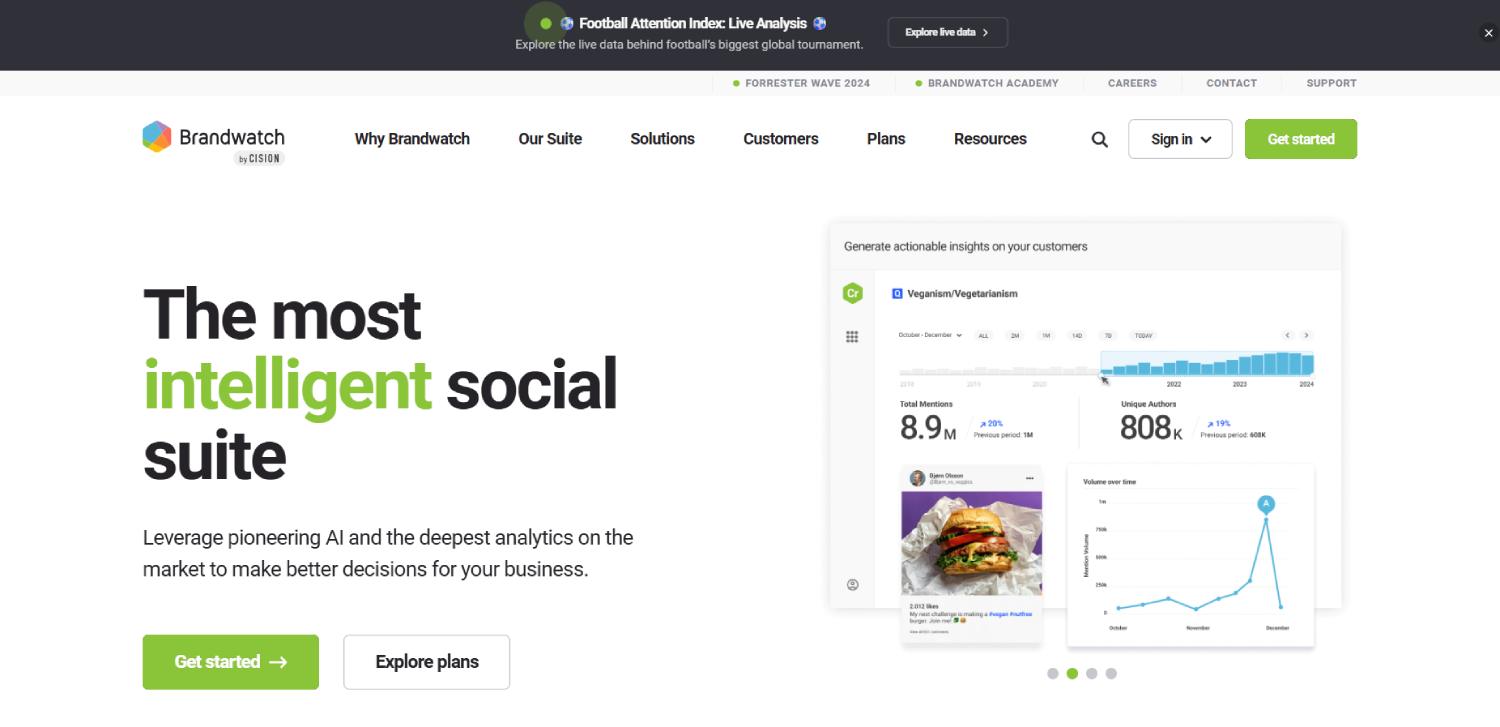
Brandwatch is not a native AI visibility tool. It is a mature enterprise social and media intelligence platform that has added AI mention tracking on top of an existing infrastructure that already has SSO, role-based permissions, multi-brand workspaces, and the kind of procurement documentation a Fortune 1000 IT team expects. That existing foundation is exactly why it clears the enterprise checklist where newer tools struggle.
The AI visibility layer tracks brand mentions inside ChatGPT, Perplexity, and Google AI Overviews, and surfaces them alongside traditional web mentions in a unified dashboard. For enterprise marketing teams that already have Brandwatch in their stack for brand health monitoring, adding AI visibility means one less vendor contract, one less SSO integration, and no new data governance conversation. The trade-off is that the AI-specific analytics are less deep than a purpose-built tool like Profound. Brandwatch is better at breadth; Profound is better at depth.
3. Semrush AI Toolkit: Best for Brands Already on the Semrush Enterprise Plan
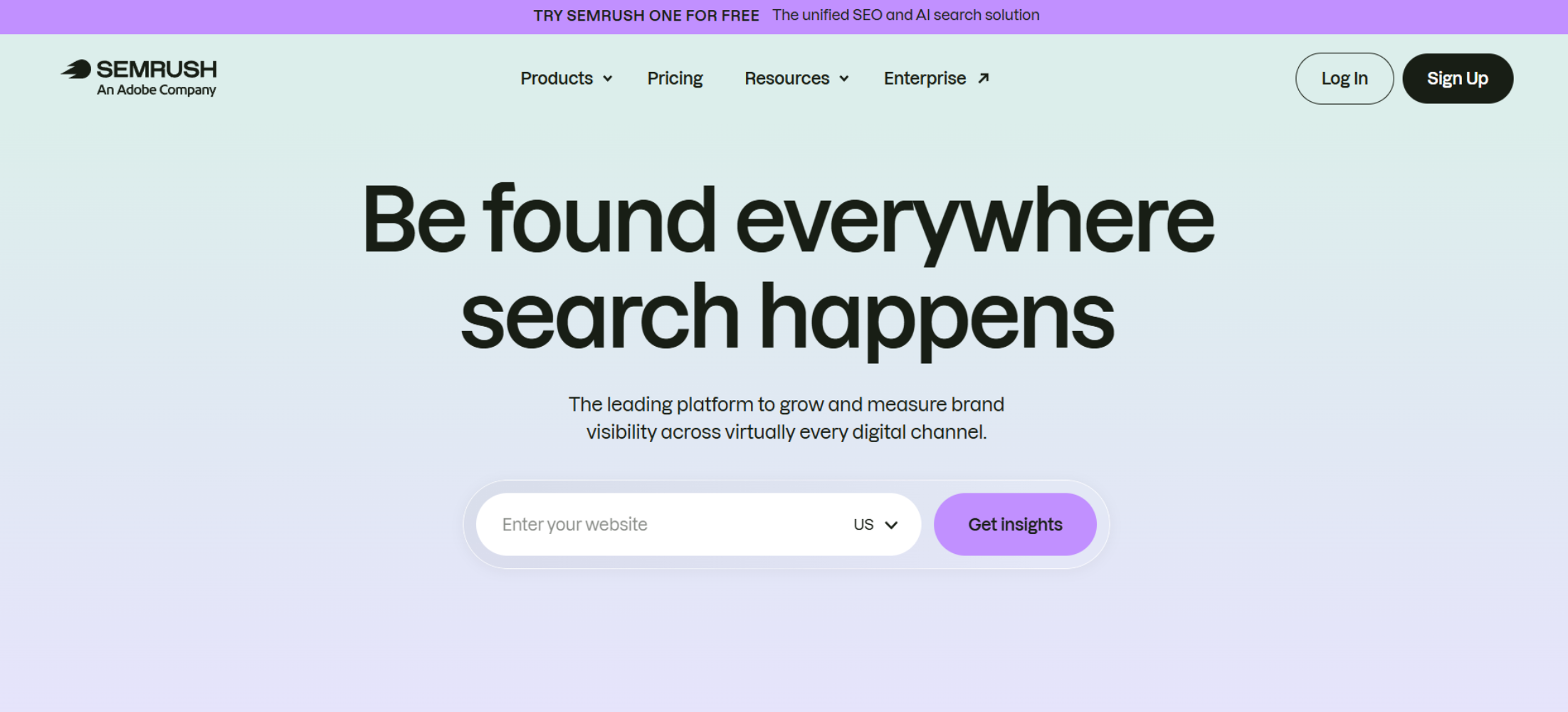
Semrush has been expanding its AI Toolkit features inside the existing platform, adding what it calls AI Presence tracking, which measures how often a brand appears in AI-generated search results across ChatGPT and Perplexity. The enterprise plan supports sub-accounts and SSO, and Semrush’s workspace model is mature enough to handle multi-brand deployments.
The honest limitation is that Semrush’s competitive SOV at the AI layer is keyword-level rather than entity-level. You can track whether your brand appears for a given query set, but the cross-engine competitive benchmarking is shallower than what Profound or Brandwatch offer. For a brand that already runs Semrush for SEO and content, adding the AI layer is a logical consolidation play. For a brand whose primary use case is AI visibility with no existing Semrush relationship, there are better starting points. Pricing for the enterprise plan is quote-based.
4. Otterly.AI: Fast Deployment, Strong Multi-Brand Support
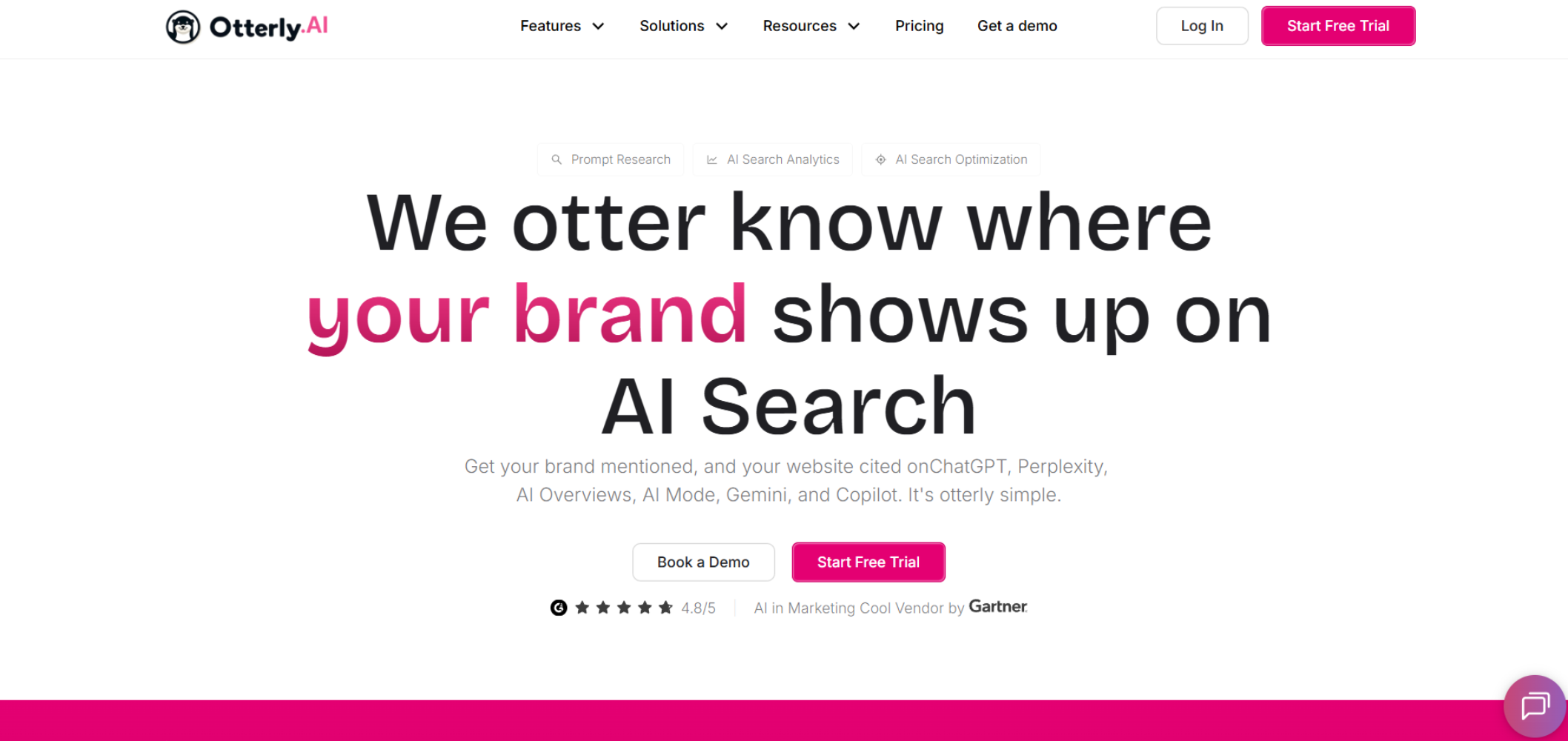
Otterly.AI built its product with agencies and multi-brand teams in mind from the start. The platform supports separate client or brand workspaces, competitive AI share of voice tracking across ChatGPT, Perplexity, and Claude, and query monitoring at a frequency and volume that single-brand tools rarely offer. Deployment is measurably faster than enterprise incumbents because the product is SaaS-native with no legacy data model underneath it.
The gap versus Profound is engine depth. Otterly does not currently cover Gemini with the same fidelity it covers OpenAI-based engines. For brands where Google AI Overviews are a primary concern because their audience skews toward Google Search, that is a real limitation to validate during an evaluation period. SSO is available at the enterprise tier but requires a custom contract. For a head-to-head look at how Otterly compares to Profound specifically, our Profound vs. Otterly comparison covers the feature-level differences in detail.
5. Peec.ai: Enterprise AI Visibility with European Data Residency
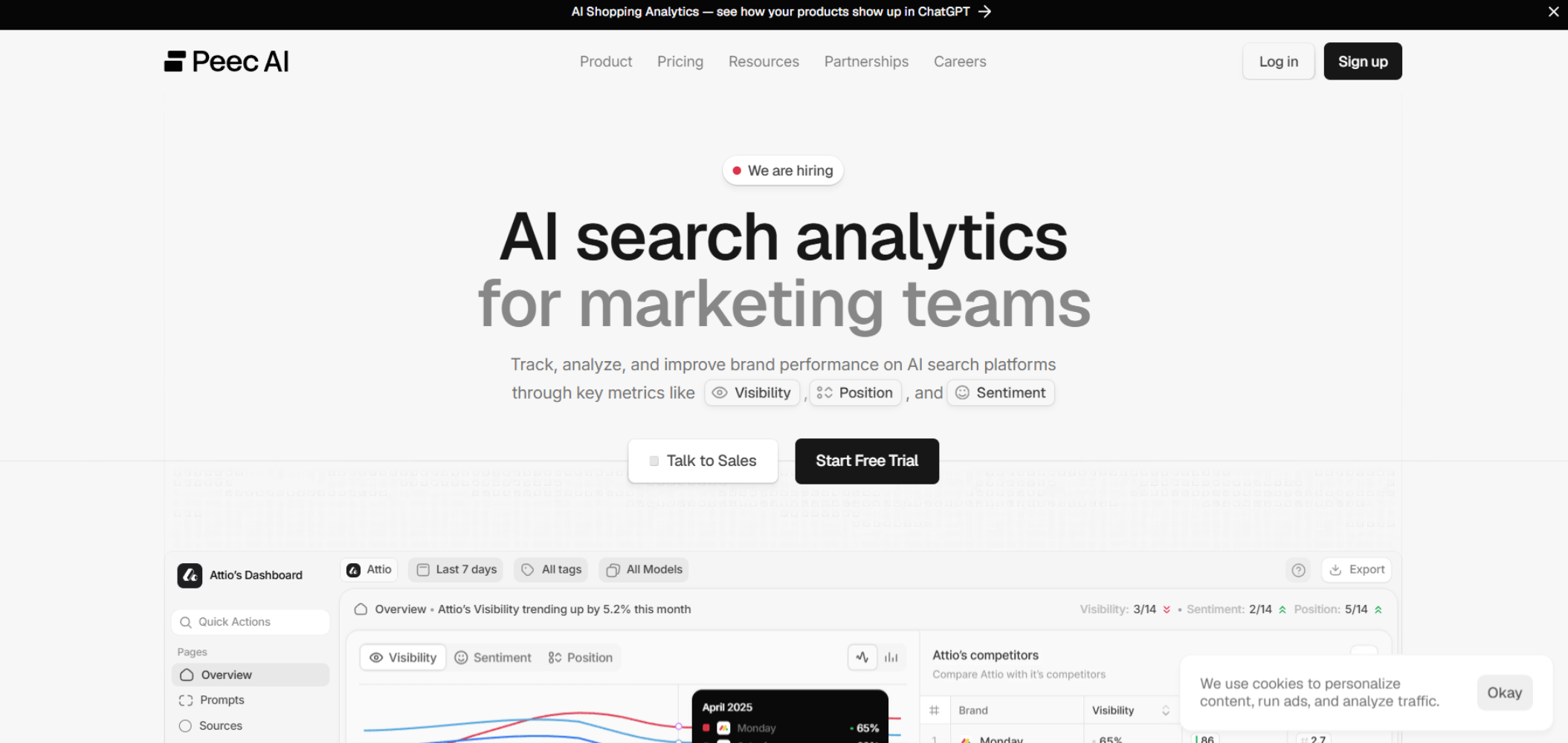
Peec.ai is a less-discussed platform that fills a specific gap: European enterprises that need data residency and GDPR-compliant processing for their AI monitoring workflows. The platform tracks brand mentions and competitive AI SOV across ChatGPT, Perplexity, and Gemini, with a reporting layer built for marketing teams that need to brief senior stakeholders rather than analysts who live in raw data exports.
Multi-brand support is partial compared to Profound or Otterly. You can run multiple brands, but the workspace isolation and cross-brand rollup reporting are less mature. For a European-headquartered enterprise that has already exhausted Brandwatch’s AI layer and needs a purpose-built alternative with a clear EU data story, Peec.ai is worth a serious evaluation. For any team without a specific data residency requirement, the other tools in this list have more mature enterprise feature sets.
6. Ahrefs: AI Mention Tracking Embedded in a Full SEO Stack
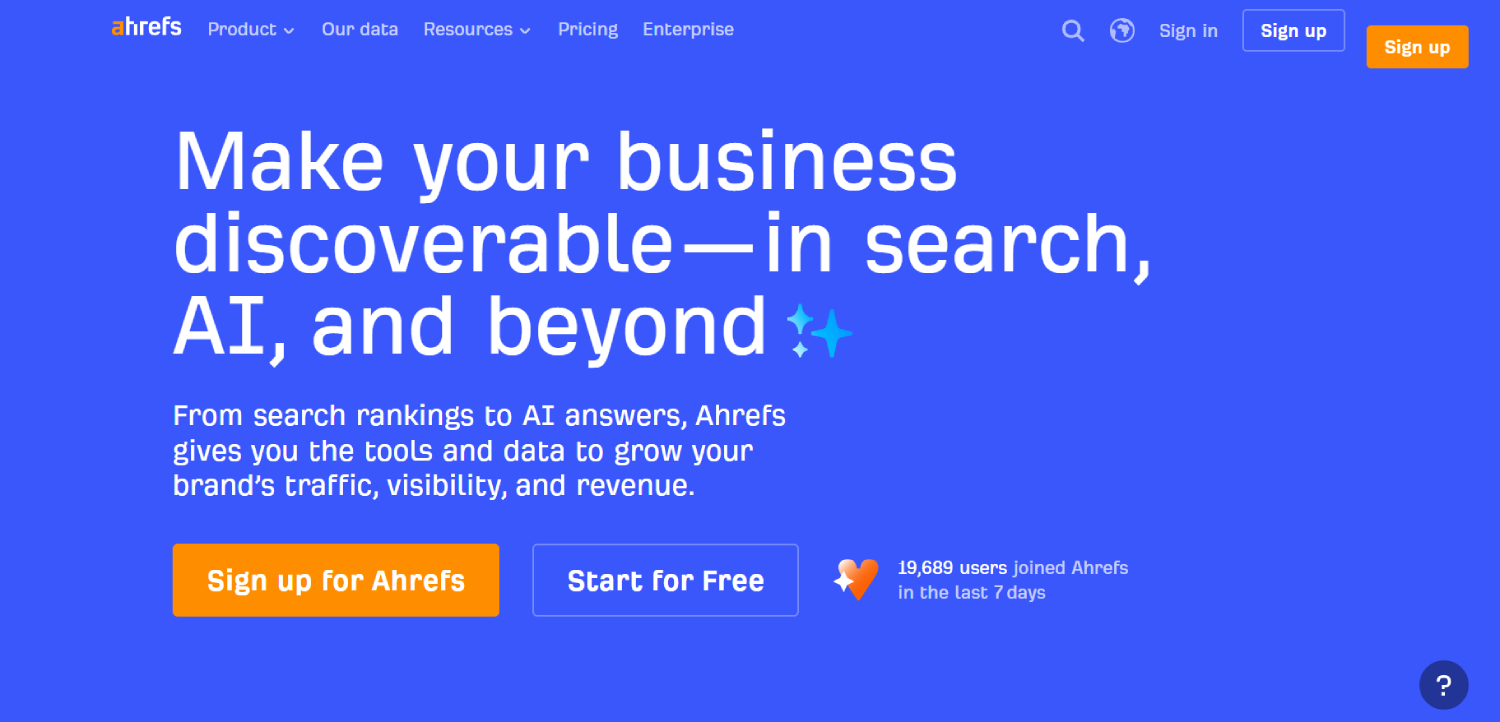
Ahrefs has added AI mention tracking functionality that sits inside its existing platform, covering brand appearances in ChatGPT, Perplexity, and Google AI Overviews. The enterprise plan includes SSO, multi-workspace support, and the access controls a large team needs. The broader Ahrefs platform already handles backlink analysis, content gap analysis, and organic rank tracking, so adding AI visibility data creates a genuinely integrated view of how a brand performs across both traditional and AI-driven search.
The trade-off mirrors the Semrush situation: the AI visibility module is an addition to an SEO platform, not the core product. Competitive AI SOV reporting is present but less granular than Profound’s. Ahrefs makes the most sense for enterprise brands that view AI visibility as part of a larger search performance story, and want to run a single platform for both. For teams where AI visibility is the primary measurement problem and SEO is handled separately, a dedicated platform will serve them better. Pricing at the enterprise tier is quote-based.
7. Mention: Media Monitoring with an Emerging AI Signal Layer
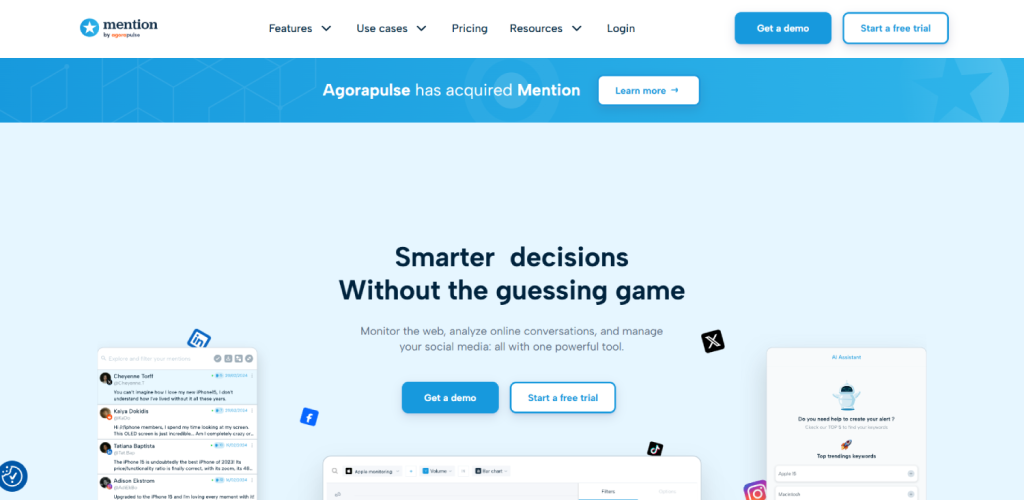
Mention is primarily a media and social monitoring platform that has begun incorporating LLM mention signals into its alerting infrastructure. It does not yet offer the depth of competitive AI SOV reporting that the tools above provide, and engine coverage is more limited. The platform does support multi-brand monitoring at the enterprise tier and has a mature notification and workflow layer that teams already using it for PR and comms monitoring will find familiar.
Mention belongs on this list with a clear caveat: it passes only two of the four checklist gates solidly (multi-brand and alert workflows). Teams buying Mention specifically for enterprise LLM visibility will find the coverage insufficient. Teams that already use Mention for broader brand monitoring and want to add AI signal detection as a secondary layer, without procuring a separate platform, have a reasonable case for it. SSO availability at enterprise scale requires direct negotiation with the sales team.
How Should an Enterprise Team Actually Evaluate These Platforms?
The demo process for enterprise AI visibility tools has a predictable failure mode: vendors show you a polished single-brand dashboard and never demonstrate multi-brand consolidated reporting, because that feature often breaks down in live conditions. Ask for a demo that shows consolidated AI share of voice across at least three brands simultaneously, with a named competitor set, across two or more LLM engines. If the vendor cannot run that demo live, that is diagnostic information.
During the security review, request the SOC 2 Type II report and confirm SAML 2.0 SSO is available without a custom implementation timeline. Some vendors in this space are genuinely building enterprise features in real time, which means SSO might be three months away even if it is listed as available. Get the availability confirmed in writing as a contract condition. Understanding how AI citation actually works in LLM engines is worth the investment before you finalize any monitoring setup. Our guide on getting your brand cited by ChatGPT, Claude, and Perplexity covers the mechanics that AI visibility platforms are ultimately measuring.
Pilot scope matters. Run a 30-day pilot with a minimum of 50 queries per brand, at least two brands, and two named competitors. The pilot should produce weekly SOV trend data by engine. If a vendor’s evaluation tier does not support that scope, you cannot assess the enterprise product, and the pilot is not worth starting.
What Does Enterprise AI Visibility Platform Pricing Actually Look Like?
Every platform in this list either does not publish enterprise pricing or gates the enterprise tier behind a quote. That is standard practice for platforms selling into large organizations, where contract value depends on brand count, seat count, query volume, and API access requirements. What is worth knowing: the range is wide.
A single-brand professional tier on most of these platforms runs from a few hundred to a few thousand dollars per month. A genuine enterprise deployment with multiple brands, unlimited seats, SSO, dedicated support, and high query volume is a different product category with a different price entirely. Budget a procurement cycle of four to eight weeks and expect to negotiate data processing addenda separately from the core contract if you are in a regulated industry. The comparison of AEO and GEO tools on AboutMartech covers adjacent tooling that often appears in the same enterprise RFP as AI visibility platforms.
Frequently Asked Questions
What is an enterprise AI visibility platform?
An enterprise AI visibility platform tracks how often and how accurately a brand appears in responses from large language models like ChatGPT, Perplexity, Claude, and Google AI Overviews. Enterprise-grade versions add multi-brand workspace management, SSO and role-based access control, competitive share-of-voice measurement across AI engines, and the audit logging and security documentation that enterprise IT procurement requires. They are distinct from single-brand AI trackers primarily in their access control architecture and competitive reporting depth.
How does competitive AI share of voice work in these platforms?
Competitive AI share of voice measures what percentage of AI-generated responses that mention your product category include your brand versus named competitors. The platform runs a defined set of queries across multiple LLM engines on a scheduled basis, parses the responses for brand mentions, and calculates each brand’s mention rate as a share of the total. The result is a SOV percentage per brand, per engine, per time period. The query set definition is critical: a poorly constructed query set produces misleading SOV data regardless of the platform.
Can a single AI visibility platform cover ChatGPT, Claude, Perplexity, and Google AI Overviews simultaneously?
Several platforms on this list do, including Profound, which covers ChatGPT, Perplexity, Claude, and Gemini in a single dashboard. Brandwatch and Semrush cover ChatGPT, Perplexity, and Google AI Overviews but have varying depth on Claude. No platform covers every AI engine with equal depth, so engine prioritization based on where your target audience searches matters when choosing a tool. Google AI Overviews coverage is particularly important for brands whose audience is primarily consumer-facing and searches via Google.
Do these platforms require IT procurement involvement, or can marketing self-serve?
At the enterprise tier, IT procurement involvement is standard, not optional. SSO integration requires IT. Data processing agreements and SOC 2 documentation require legal and security review. Role-based access configuration typically requires an admin with IT credentials. Most of these platforms have a self-serve professional tier that marketing can procure independently, but the enterprise tier with SSO, audit logs, and multi-brand workspaces will require a formal procurement process, often with a three-to-eight-week timeline.
Is AI visibility the same as AI search optimization, and do I need both?
AI visibility measurement and AI search optimization, sometimes called GEO or AEO, are related but separate functions. AI visibility platforms measure whether and how your brand is mentioned in AI-generated responses. GEO and AEO tools help you optimize your content so AI engines are more likely to cite your brand. Most enterprise teams need both: measurement to establish a baseline and track progress, and optimization tooling to influence the underlying content signals. Our GEO vs. SEO explainer covers how these disciplines intersect and where they diverge.
What query volume should an enterprise AI visibility deployment support?
A meaningful enterprise deployment typically requires running hundreds to thousands of queries per week across a brand’s topic set, especially for competitive SOV tracking across multiple engines. A team tracking three brands, each with 50 core queries, across four LLM engines at daily frequency generates a substantial query volume. Confirm query volume limits and overage pricing explicitly before signing any enterprise contract. Some vendors include unlimited queries at the enterprise tier; others meter usage and charge overages that can materially increase the total cost.
The Narrower Field Is the Point
The AI visibility market has grown fast, and most of the growth happened at the small-business and individual-brand tier. That is where the self-serve tools and the $99-per-month plans live. The enterprise tier is genuinely sparse, and that scarcity is informative: building multi-brand workspace architecture, SSO, and high-frequency cross-engine SOV tracking is hard to do well. The tools that have done it either started with enterprise as a design target, like Profound and Otterly, or they inherited enterprise infrastructure from an adjacent product, like Brandwatch, Semrush, and Ahrefs.
The practical implication for a VP of Marketing or marketing operations leader: the evaluation list is short by design, and the shortlist you generate after applying the four-gate Enterprise AI Visibility Checklist will likely be three or four platforms, not seven. That is a manageable RFP. Run a structured pilot with the query volume and competitor set that reflects your actual monitoring needs, and the right platform for your specific brand architecture will become clear within the first two weeks of real data.
AI citation in LLM engines is becoming a meaningful brand performance signal, sitting alongside organic rankings and paid impression share in the media mix. The brands that measure it rigorously now, with the right enterprise tooling, will have a meaningful head start on the brands that treat it as a curiosity. That lead compounds.