- Twilio’s post-acquisition pricing restructure pushed Segment’s MTU-based costs sharply higher for teams with large, active user bases, making the switch worth serious analysis.
- Warehouse-native CDPs like Hightouch and RudderStack treat your data warehouse as the source of truth rather than a downstream destination, which eliminates a full category of data duplication and vendor lock-in.
- RudderStack’s open-source core and Jitsu’s self-hostable architecture are the two clearest cost-floor options for engineering-led teams who want Segment-compatible event pipelines without the per-MTU meter running.
- The right alternative depends on whether your bottleneck is data collection, identity resolution, or activation. These are three different problems, and no single tool solves all three equally well.
- Switching is painful but not as painful as most teams assume. Segment’s tracking API is widely replicated, and several alternatives support near-drop-in SDK replacement.
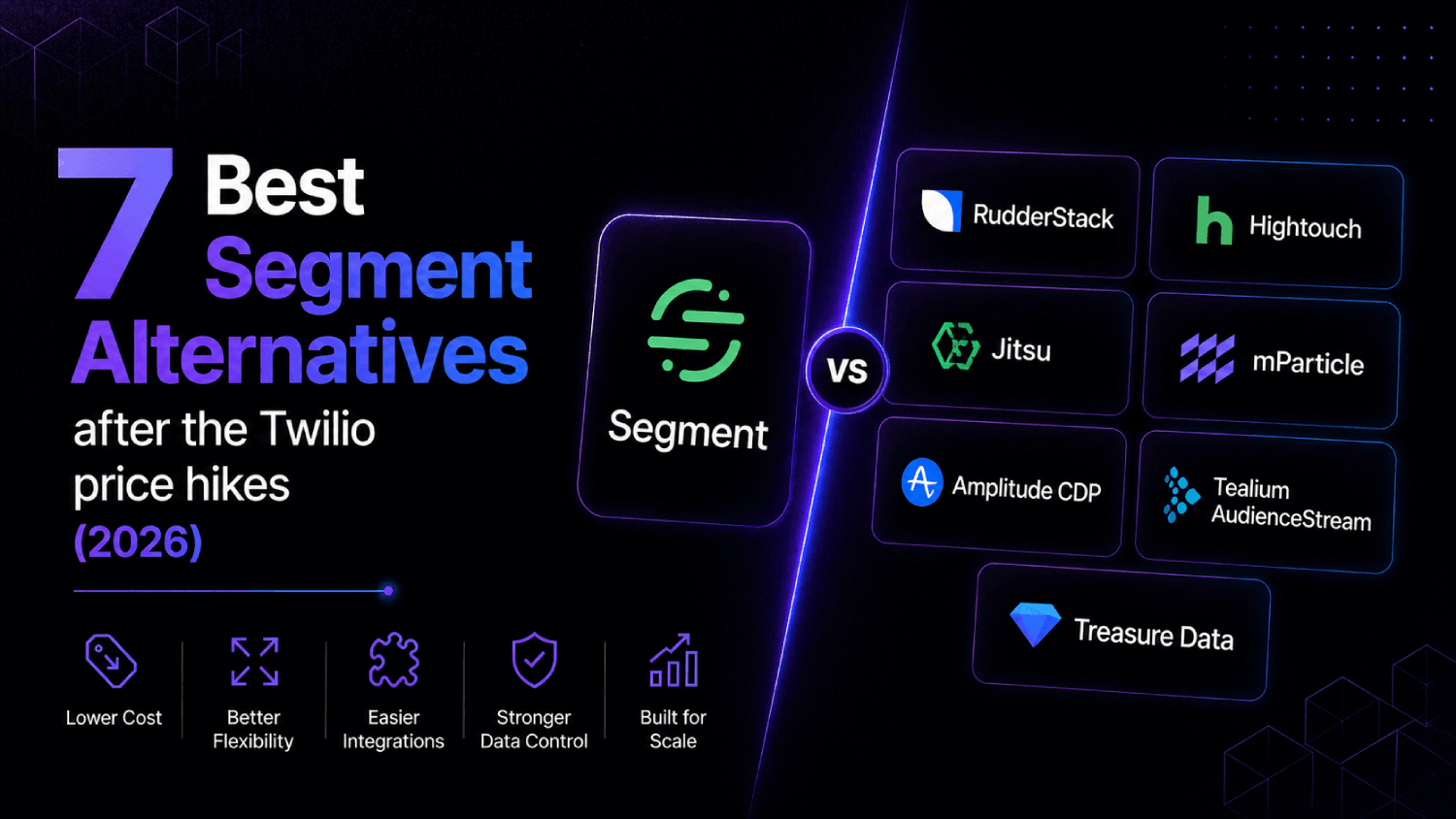
The strongest alternatives to Twilio Segment are RudderStack, Hightouch, Jitsu, mParticle, Amplitude CDP, Tealium AudienceStream, and Treasure Data. For most B2B teams feeling the MTU pricing pressure, RudderStack is the closest functional replacement with significantly lower cost on comparable volume. Hightouch is the right call if your data already lives in Snowflake, BigQuery, or Databricks and your primary need is audience activation rather than event collection.
Why Are Marketing Teams Looking for Segment Alternatives Right Now?
Segment has been the default event pipeline for a generation of SaaS companies. Its developer-friendly tracking API, broad destination library, and clean UI for non-technical marketers made it the path of least resistance from roughly 2015 onward. Then Twilio acquired it in 2020 for $3.2 billion, and the pricing story changed.
Twilio’s restructuring pushed teams onto plans that charge by Monthly Tracked Users (MTUs), a model that gets expensive quickly for B2B companies with large prospect databases or consumer apps with frequent but low-value sessions. A company tracking 250,000 MTUs can hit costs that are multiples of what a comparable data pipeline would cost in a warehouse-native architecture. The practical effect is that teams are now running the math they should have run three years ago.
There is a second driver beyond cost. The data warehouse has become the operational center of gravity for modern data stacks. Teams running Snowflake or BigQuery already have their customer data there. Sending it to Segment first, then back out to destinations, adds latency, cost, and a redundant copy of data that creates compliance headaches. Warehouse-native CDPs flip that architecture. They read from the warehouse and write to tools, rather than collecting events and writing to a warehouse as an afterthought.
The AboutMartech Pipeline-Fit Test: How to Evaluate a Segment Alternative
Before comparing specific tools, it helps to have a consistent evaluation framework. The AboutMartech Pipeline-Fit Test runs four checks that separate a genuine replacement from a tool that solves only part of the problem.
Check 1: Collection parity. Does the alternative support server-side and client-side event collection with an API that is compatible with your existing Segment calls? SDK compatibility determines whether migration is a two-week project or a two-quarter one.
Check 2: Identity resolution depth. Can the tool stitch anonymous visitor events to known users across devices and sessions? Deterministic matching (email, phone) is table stakes. Ask whether probabilistic matching or device graph integration is on the roadmap if you have consumer-facing traffic.
Check 3: Destination coverage. Count the destinations you actually use, not the ones in the vendor’s marketing. A CDP with 300 integrations means nothing if three of your five critical tools require custom connectors.
Check 4: Warehouse relationship. Does the tool write to your warehouse, read from it, or both? A tool that only writes to the warehouse is a collection layer. A tool that reads from it is an activation layer. You may need both, and some vendors do both better than others.
What Are the 7 Best Alternatives to Segment?
| Tool | Best For | Pricing Model | Warehouse-Native | Self-Hostable |
|---|---|---|---|---|
| RudderStack | Segment drop-in replacement, engineering-led teams | Free open-source; cloud plans available | Partial (writes to warehouse) | Yes |
| Hightouch | Warehouse-native activation, existing data stack | Free tier; growth/enterprise quote-based | Yes (reads from warehouse) | No |
| Jitsu | Cost-sensitive teams, open-source event pipelines | Free open-source; cloud plans available | Partial (writes to warehouse) | Yes |
| mParticle | Mobile-first, high-volume consumer apps | Quote-based | Partial | No |
| Amplitude CDP | Product analytics teams expanding to CDP use cases | Bundled with Amplitude; quote-based at scale | No | No |
| Tealium AudienceStream | Enterprise, complex consent and tag management | Quote-based | No | No |
| Treasure Data | Enterprise CDP with ML-driven segmentation | Quote-based | No | No |
1. RudderStack
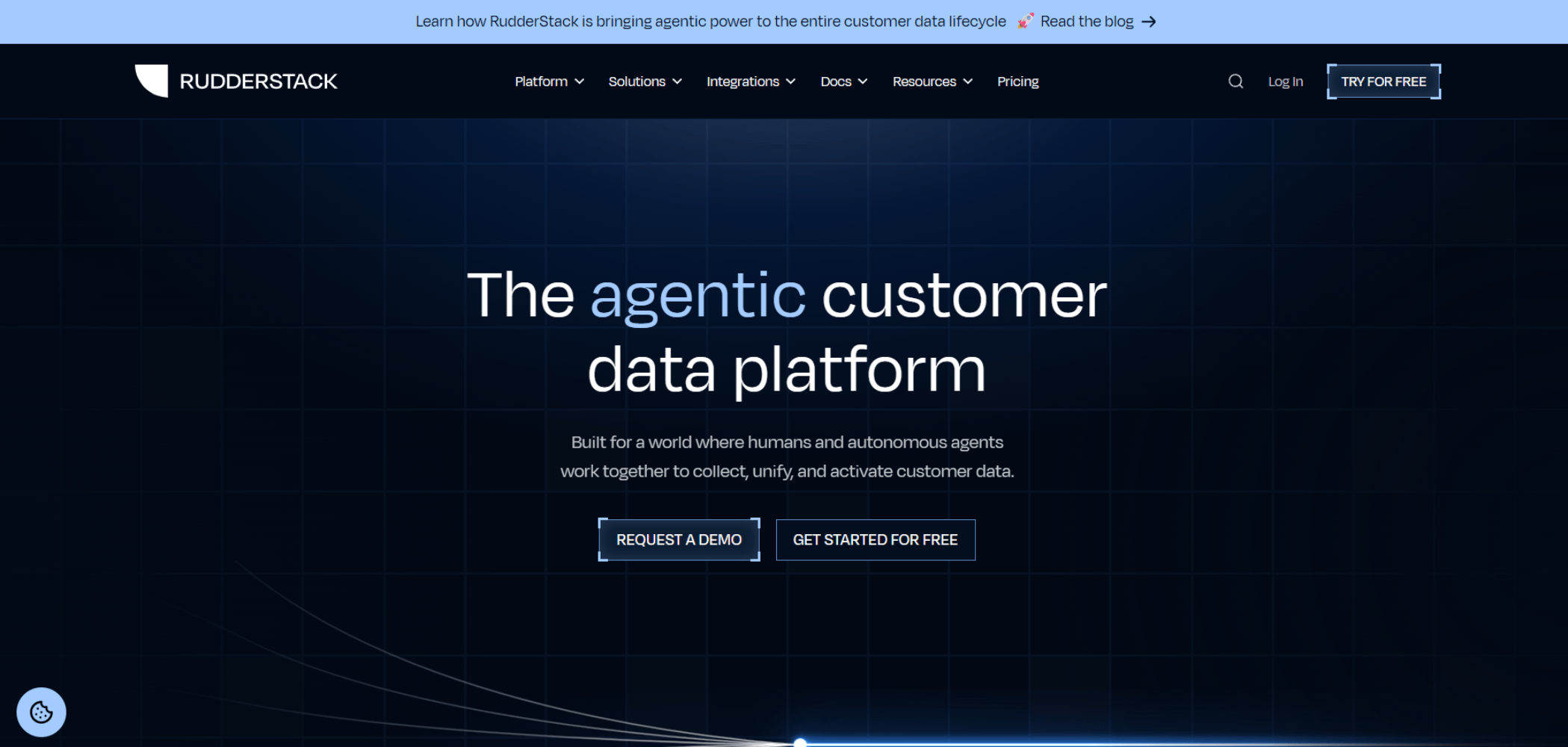
RudderStack is the most direct functional replacement for Segment on this list. Its event tracking API mirrors Segment’s spec closely enough that many teams have migrated by swapping the SDK endpoint and updating a handful of method names. That alone separates it from alternatives that require rethinking your data model.
The core product is open-source, which means engineering teams can self-host the pipeline on their own infrastructure. This moves the cost structure from a per-MTU SaaS bill to compute costs, which, depending on your volume and cloud provider, can be meaningfully lower. RudderStack’s cloud-managed offering adds a control plane and managed connectors for teams that do not want to run infrastructure.
Where RudderStack falls short is on the activation side. It collects and routes events well, but it is not a warehouse-native activation platform. Teams that need to sync complex warehouse-computed audiences to ad platforms or CRMs will find RudderStack’s reverse ETL capabilities less mature than Hightouch’s. For a deeper look at that category, the best reverse ETL tools for warehouse data activation covers the competitive set in detail.
Best for: engineering-led teams that want a Segment-compatible collection layer, control over their infrastructure, and a manageable migration path.
2. Hightouch
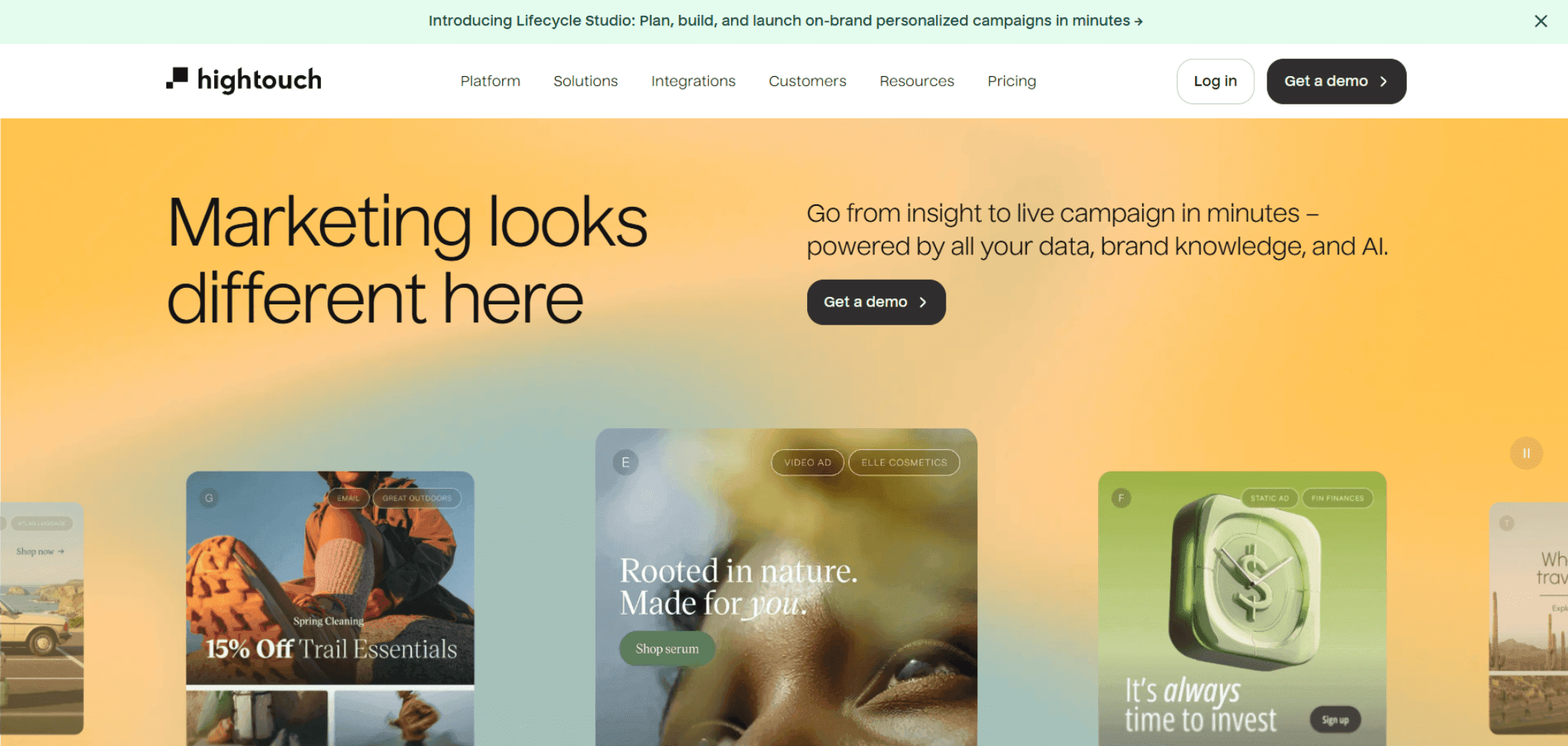
Hightouch starts from a different premise than Segment. Rather than collecting events and forwarding them to tools, Hightouch connects directly to your data warehouse, reads models you define with SQL or dbt, and syncs those audiences to more than 200 downstream destinations. If your data is already in Snowflake, BigQuery, Databricks, or Redshift, Hightouch treats the warehouse as the source of truth rather than a place to dump events after the fact.
The practical difference matters for B2B teams. Say a demand-gen team wants to push a segment of accounts that hit three engagement milestones in the last 30 days to LinkedIn Matched Audiences and to Salesforce as a campaign member. In a Segment-first architecture, that logic lives in the CDP, with all the data transformation happening upstream of the warehouse. In a Hightouch-first architecture, a data analyst writes a SQL model in dbt, Hightouch syncs it on a schedule, and the marketing team manages the sync configuration in a clean UI without writing a line of code.
Hightouch’s free tier covers a meaningful set of use cases and is a reasonable starting point for teams evaluating the tool. Enterprise pricing is quote-based. The best warehouse-native CDPs for the modern data stack covers Hightouch alongside its direct competitors in that category.
Best for: teams with an established warehouse, a dbt practice, and a primary need for audience activation rather than raw event collection.
3. Jitsu
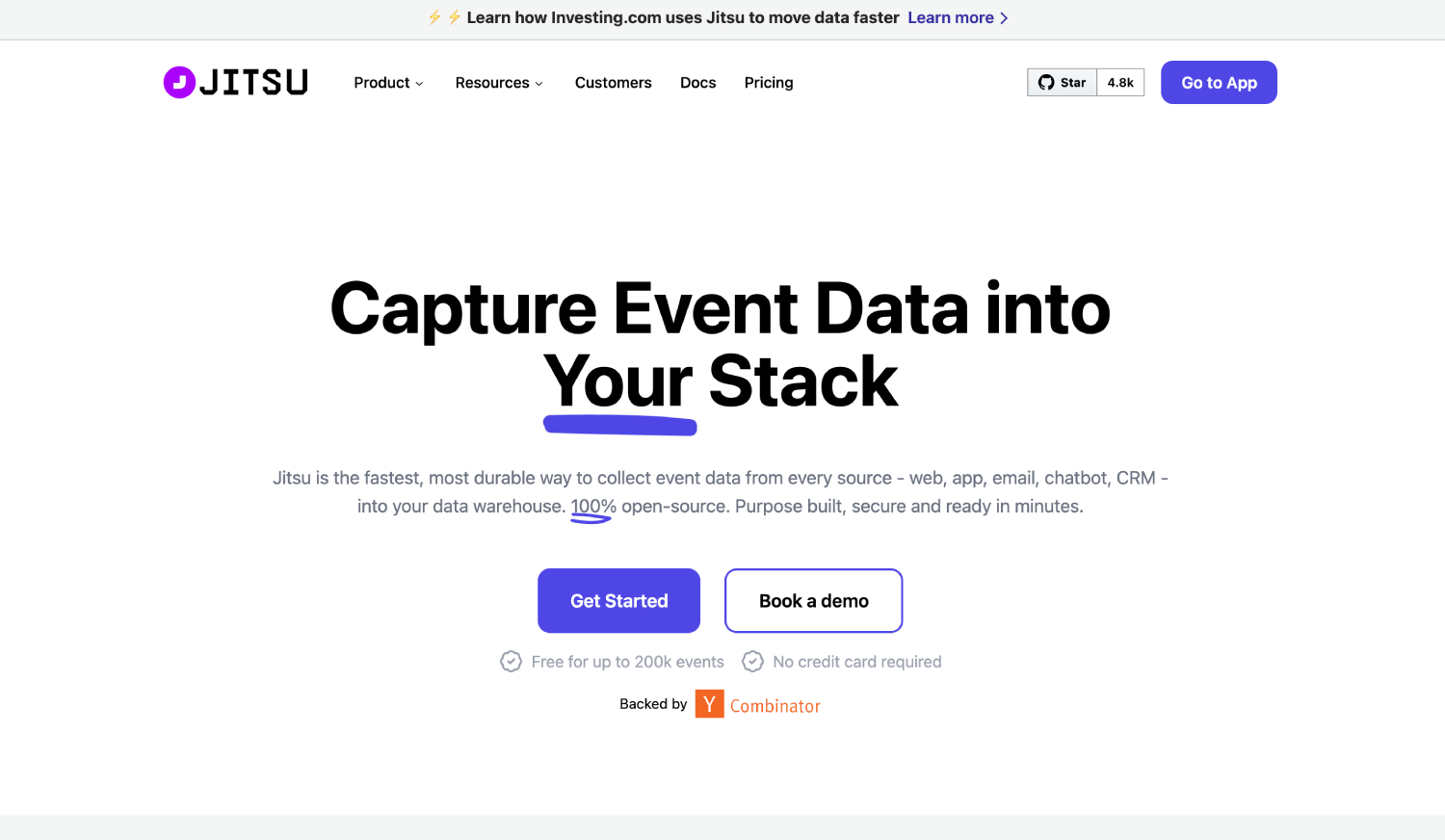
Jitsu is the option for teams that want Segment’s event collection layer with as little cost overhead as possible. The project is open-source, self-hostable, and designed to ingest events and route them to a data warehouse or a set of destinations. The tracking API is Segment-compatible.
The trade-off is maturity. Jitsu has a smaller connector library than Segment or RudderStack, and its managed cloud offering, Jitsu Cloud, is less polished than either. Teams that self-host will need engineering resources to maintain the pipeline, handle schema evolution, and build monitoring. For startups where those resources are available and the alternative is a Segment bill that is growing faster than revenue, Jitsu is worth a serious look.
Best for: cost-sensitive teams with engineering capacity, early-stage companies that want open-source optionality, and developers who want to inspect and modify the pipeline.
4. mParticle
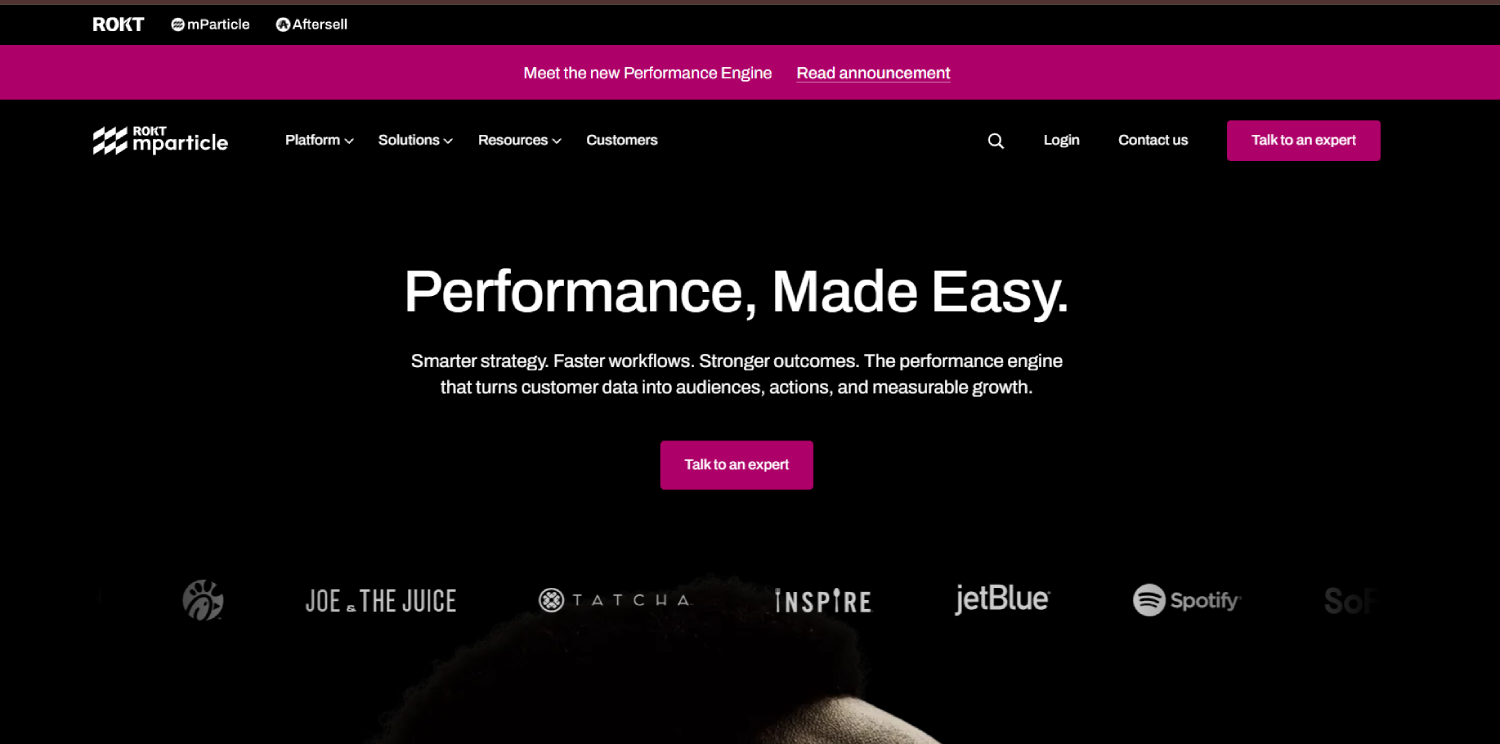
mParticle is Segment’s most direct enterprise competitor in the traditional CDP collection space. It is particularly strong for mobile-first and consumer applications, where its SDK quality, data quality controls, and cross-device identity graph have been tested at significant scale. mParticle’s data planning and schema enforcement features are more rigorous than Segment’s out of the box, which matters for teams where downstream data quality issues regularly create friction between engineering and marketing.
Pricing is quote-based and not publicly disclosed. Teams evaluating mParticle should expect contract negotiations that take longer than a self-serve SaaS signup. It is not the right tool for a company that wants to be live in a week, but it is a serious candidate for a company that has outgrown Segment’s data governance capabilities.
Best for: enterprise B2C or mobile-first teams, companies with strict data quality requirements, and organizations that need a carrier-grade identity resolution layer.
5. Amplitude CDP
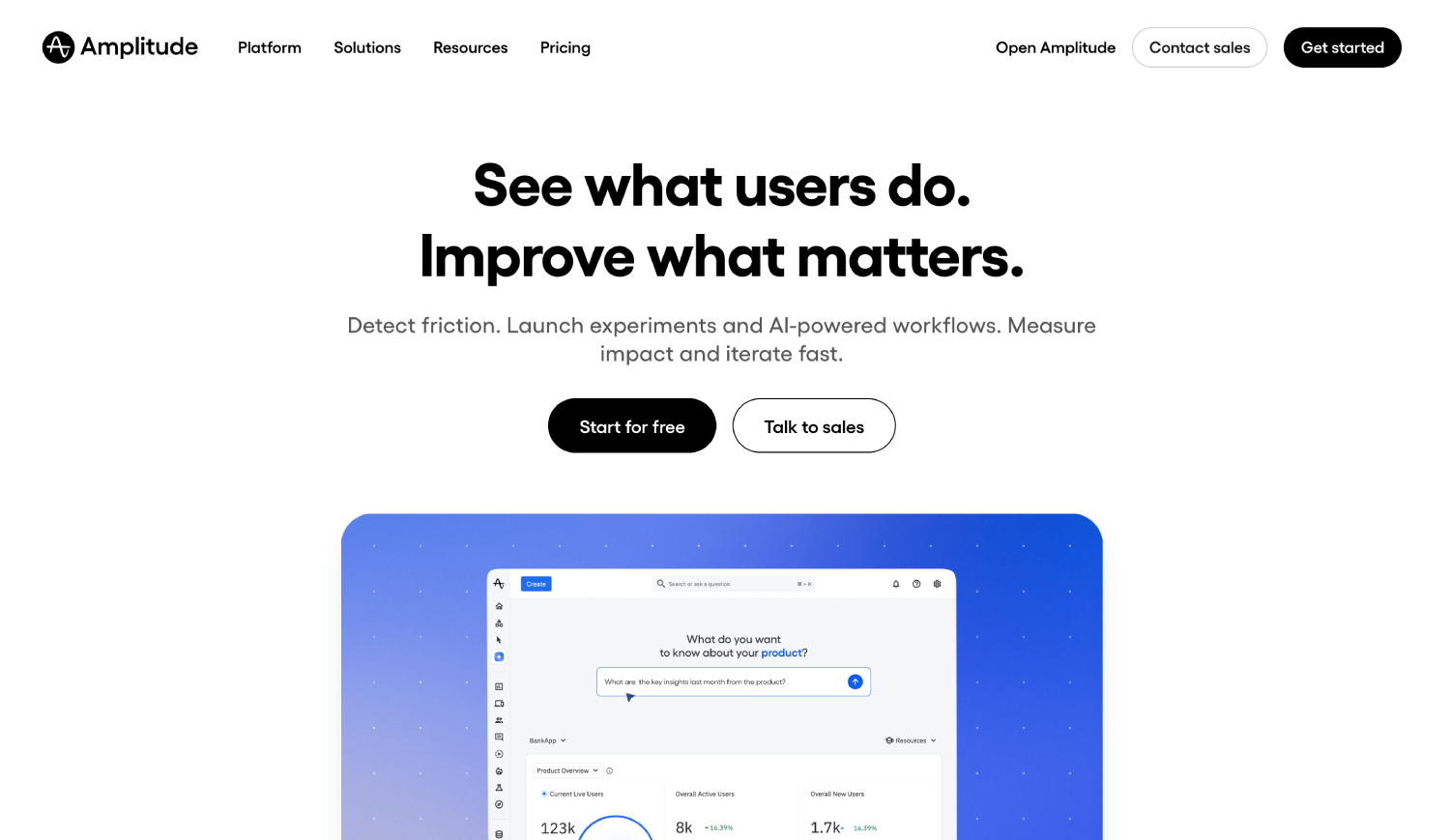
Amplitude’s CDP offering is an extension of its product analytics platform rather than a standalone CDP built from the ground up. For teams already using Amplitude for behavioral analytics, the CDP layer adds event streaming and destination syncing without requiring a second vendor relationship or a second instrumentation pass. The behavioral data Amplitude already captures feeds directly into audience definitions, which is a genuine advantage over tools that treat analytics and CDP as separate data silos.
For teams not already in the Amplitude platform, adopting Amplitude CDP means adopting the full Amplitude suite. At scale, pricing is quote-based. Teams that primarily need event collection and routing to non-Amplitude destinations may find the toolset narrower than a dedicated CDP. Amplitude CDP is strongest when the primary use case is product-led growth analytics combined with lifecycle activation, rather than broad-based marketing data collection.
Best for: product-led growth companies already on Amplitude, SaaS teams that want behavioral segmentation feeding directly into email and push activation.
6. Tealium AudienceStream
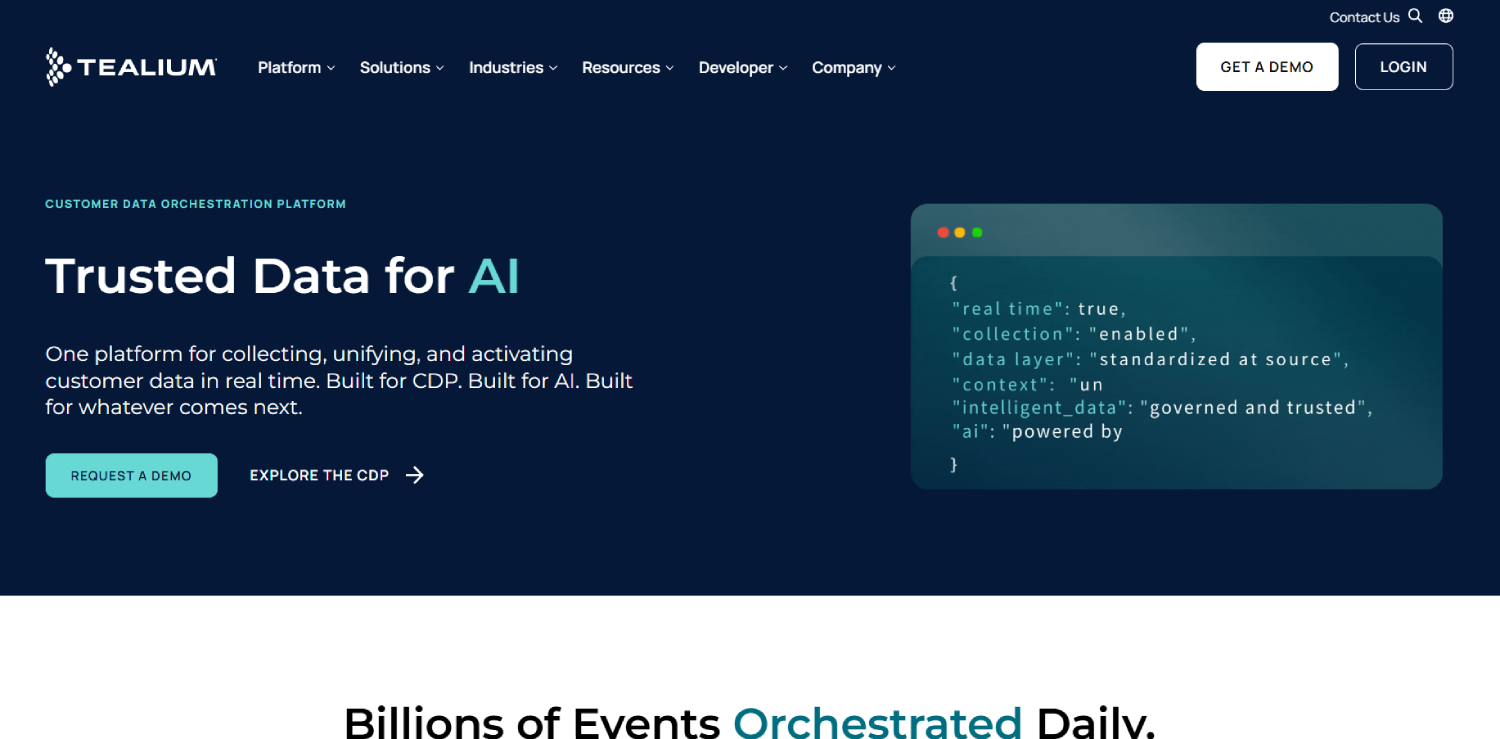
Tealium AudienceStream is the established enterprise option for teams where tag management and consent are as important as data routing. Tealium’s tag management history, combined with AudienceStream’s real-time profile building, makes it a strong fit for highly regulated industries or organizations where legal and privacy teams are co-owners of the CDP selection process. The product handles consent signal propagation across tag payloads in a way that most pure-play CDPs require custom development to replicate.
The complexity that comes with that depth is real. Tealium implementations typically require a professional services engagement, and the time-to-first-value is longer than lighter alternatives. Pricing is quote-based. For an enterprise that has already struggled with fragmented tag management and needs a solution that handles data collection, identity, and consent in a single platform, Tealium is worth the evaluation time.
Best for: enterprise marketing organizations, regulated industries, teams where consent management is a first-class requirement.
7. Treasure Data
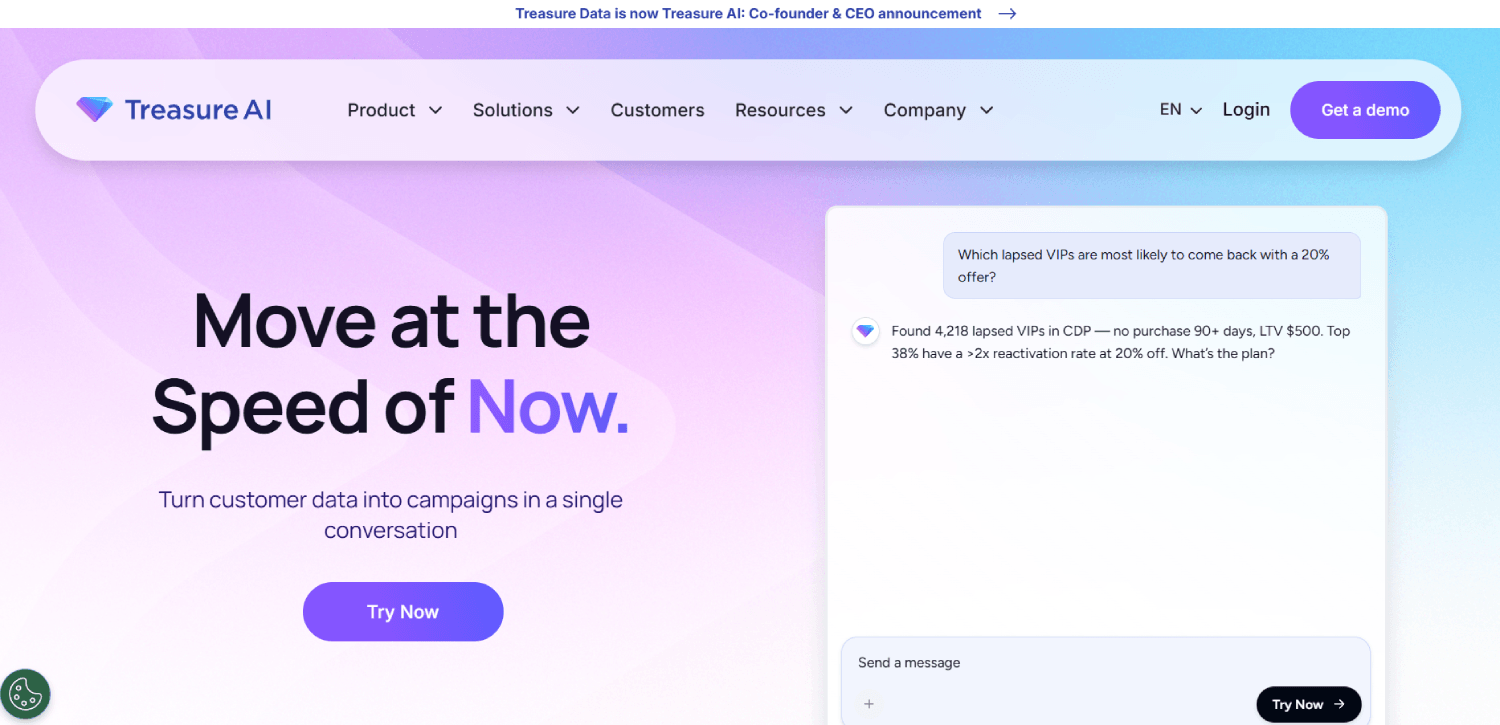
Treasure Data is an enterprise CDP with a stronger emphasis on ML-driven segmentation and predictive modeling than most alternatives on this list. It originated as a data management platform and retains deep roots in managing very large data volumes. Teams running complex propensity models or churn predictions that need to feed directly into activation workflows will find Treasure Data’s native ML environment more capable than bolting a separate data science tool onto a lighter CDP.
Pricing is quote-based and enterprise-oriented. Treasure Data is not a tool that a 50-person SaaS company evaluates for a quick Segment replacement. It is a platform for organizations with sophisticated data science practices who need the CDP and the modeling environment to live in the same product.
Best for: large enterprise organizations with dedicated data science teams, high-volume use cases where predictive segmentation is a core marketing motion.
How Much Does Segment Actually Cost, and What Does the Alternative Math Look Like?
Segment’s public pricing page lists a free tier for up to 1,000 MTUs and a Team plan at $120 per month for up to 10,000 MTUs. Both figures are publicly posted on Segment’s pricing page as of this writing. Business plan pricing is quote-based and requires a sales conversation; no public rate card exists for that tier. The MTU model means that costs scale with the size of your tracked user base, not with usage or data volume, so a company tracking 500,000 MTUs will pay substantially more than one tracking 50,000, even if their event volume per user is similar.
To illustrate the architecture decision rather than manufacture a cost comparison, consider a B2B SaaS company with 200,000 tracked users, a Snowflake data warehouse, and five core destinations: Salesforce, HubSpot, Intercom, Google Ads, and a custom internal tool. On Segment’s Business plan, pricing for that profile requires a sales conversation and varies by negotiation. On RudderStack’s self-hosted open-source tier, the cost shifts from a per-MTU SaaS line item to compute, several teams have reported bringing comparable pipelines in well under Segment’s equivalent commercial contract, though your mileage will depend on cloud provider and event volume. On Hightouch, if the data already lives in Snowflake, the activation cost is separate from the collection cost entirely, and teams that already capture events to the warehouse via another mechanism can sometimes eliminate the CDP collection layer altogether.
No single public comparison is reliable because Segment’s enterprise pricing varies by negotiation. The better question is: what are you actually paying for? If the answer is event collection and routing, RudderStack or Jitsu likely cost less. If the answer is audience activation from warehouse data, Hightouch is the more efficient architecture. If you are paying for both, you may be paying for a monolith when two specialized tools would cost less and perform better.
For a broader view of how CDPs are priced and structured, the best B2B customer data platforms comparison covers pricing models across the broader CDP category.
Which Segment Competitors Are Actually Warehouse-Native?
The term gets used loosely. A truly warehouse-native CDP reads data from your warehouse as its primary data source, rather than collecting events, storing them in its own proprietary store, and writing a copy to the warehouse as a secondary destination. By that definition, Hightouch is warehouse-native. RudderStack, Jitsu, and Segment itself write to the warehouse but do not read from it as their primary data model.
This distinction matters for teams that have already invested in building a clean data model in dbt or Spark. If your ideal customer profile (ICP) segment is defined by a combination of CRM data, product usage events, and firmographic enrichment that your data team has already modeled in the warehouse, a warehouse-native activation tool like Hightouch can consume that model directly. A collection-first CDP would require you to replicate that logic in its own segmentation UI, keeping two definitions in sync, which is where data drift and operational debt accumulate.
The warehouse-native architecture also has implications for identity resolution. Teams that perform deterministic stitching in the warehouse, matching anonymous visitor IDs to known users when they convert, can pass those resolved identities directly to Hightouch without a separate identity resolution step inside the CDP. Teams on Segment or mParticle are typically paying for identity resolution as a feature of the CDP layer, even when the warehouse already has that data. The best warehouse-native CDPs for the modern data stack covers this architectural divide in more detail.
How Painful Is It to Actually Switch Away From Segment?
Less painful than most teams assume, with one significant caveat. The event collection SDK swap is manageable. Segment’s tracking API specification, which defines how identify, track, page, and group calls are structured, has been replicated by RudderStack, Jitsu, and several other alternatives. In practice, many teams have completed the SDK swap in a sprint or two, with the main work being updating the write key configuration rather than rewriting instrumentation.
The harder part is destination parity. Segment’s destination library has been built over a decade, and some of the more obscure connectors, particularly for advertising platforms or legacy marketing tools, either do not exist in alternatives or exist but behave differently. Before starting a migration, the correct process is to audit every active destination in Segment, verify it exists in the target tool, and test the data mapping. Destinations with custom transformations or functions in Segment require particular attention, as the logic embedded there does not migrate automatically.
Historical data is the other friction point. Segment retains event history in its Personas and Analytics tools, and that history does not move when you leave. If your marketing team relies on Segment-stored event history for behavioral segmentation, the migration plan needs to account for where that history lives after the switch, typically in the warehouse, where it should have been living anyway.
Frequently Asked Questions
What is the cheapest alternative to Segment for a small B2B team?
Jitsu is the lowest-cost option if your team can self-host. The open-source version is free, and infrastructure costs on a modest event volume can be minimal. RudderStack’s open-source tier is a close second, with a slightly larger connector library. For teams that do not have engineering capacity for self-hosting, RudderStack’s cloud tier is typically less expensive than Segment’s comparable plan, though exact pricing depends on volume and negotiated rates.
Can I switch from Segment to RudderStack without re-instrumenting my app?
In most cases, yes. RudderStack’s JavaScript, iOS, and Android SDKs implement the same tracking API spec as Segment, meaning identify, track, page, and group calls work with the same arguments. The primary change is updating the write key and the SDK source URL. Custom Segment Functions and Destination Functions do not migrate automatically and require reimplementation. Test every destination’s data output carefully before decommissioning Segment.
Is Hightouch a direct replacement for Segment?
Not exactly. Hightouch handles audience activation from a data warehouse, not event collection from applications. If you are looking to replace Segment’s event ingestion pipeline, Hightouch alone does not solve that. If your primary use case is syncing warehouse-defined audiences to CRMs, ad platforms, and engagement tools, Hightouch replaces and often outperforms Segment’s Audiences product. Many teams use RudderStack or Jitsu for collection alongside Hightouch for activation.
What does warehouse-native mean in practice for a marketing team?
It means your audience definitions, customer segments, and behavioral models live in SQL or dbt inside your data warehouse, rather than in a CDP’s proprietary interface. A warehouse-native activation tool like Hightouch reads those models and syncs them to marketing tools. The marketing team gains audiences that are built on the same data the finance and product teams use, rather than a parallel definition inside the CDP that can drift from the authoritative source.
Does mParticle support B2B use cases or is it primarily B2C?
mParticle is predominantly deployed in high-volume B2C and mobile-first contexts, where its SDK quality and cross-device identity graph are strongest. B2B teams can use it, but the product is optimized for consumer-scale event volumes and mobile instrumentation. B2B teams with primarily web-based products and CRM-centric data models typically get more value from RudderStack, Hightouch, or a dedicated B2B CDP.
How do these Segment alternatives handle identity resolution?
It varies significantly. mParticle has the most mature native identity graph for cross-device consumer identity. RudderStack supports basic user identification through its identify call and offers Profiles as an add-on for more complex resolution. Hightouch relies on identity resolution already performed in the warehouse. Tealium AudienceStream has real-time profile building across touchpoints. For teams where deterministic-plus-probabilistic identity stitching is a core requirement, mParticle or Tealium are the most capable options without adding a dedicated identity resolution layer. For more on how identity resolution connects to broader customer success workflows, the best customer success platforms for B2B SaaS covers how downstream tooling consumes those resolved identities.
Should I consider Segment’s competitors for attribution use cases?
CDPs and attribution tools solve different problems, but they interact. A CDP routes event data to attribution platforms; the attribution platform does the modeling. If you are evaluating both simultaneously, replacing Segment with a warehouse-native tool can simplify attribution by consolidating the event store in one place. The best marketing attribution tools for proving revenue impact covers how attribution vendors consume event data from CDPs and warehouses.
Which Segment Alternative Should You Actually Pick?
The framing of “Segment alternative” often conflates two separate buying decisions. The first is where events are collected and routed. The second is where audiences are defined and activated. Segment built one product that does both, which is convenient but means you pay for both even when you only need one.
For teams with a modern data stack already built around Snowflake, BigQuery, or Databricks, the most defensible architecture is a lightweight collection layer (RudderStack or Jitsu) feeding raw events to the warehouse, and a warehouse-native activation tool (Hightouch) handling audience sync to downstream tools. That splits the CDP monolith into two focused tools, each of which typically costs less at comparable volume than Segment’s equivalent tier. For teams evaluating where this architecture fits within the broader CDP category, the best B2B customer data platforms comparison provides useful context.
For teams that want a single-vendor replacement and are willing to pay for it, mParticle is the strongest like-for-like enterprise alternative, with better data quality controls and a more mature identity graph than Segment offers natively. Tealium is the right call if consent and tag management complexity are the primary drivers. And if you are already running Amplitude for product analytics, evaluating Amplitude CDP before signing a new CDP contract is worth the time, because the instrumentation overlap alone may justify the switch.
The broader shift here is not just about price. Segment built its market position in an era when the data warehouse was a reporting destination, not an operational system. That era is over for most companies running a serious data stack. The teams that will feel the least switching pain are the ones that recognize the warehouse is now the center, and pick tools that treat it that way.