Disclosure: This article contains sponsored links, marked with rel=”sponsored” where applicable.
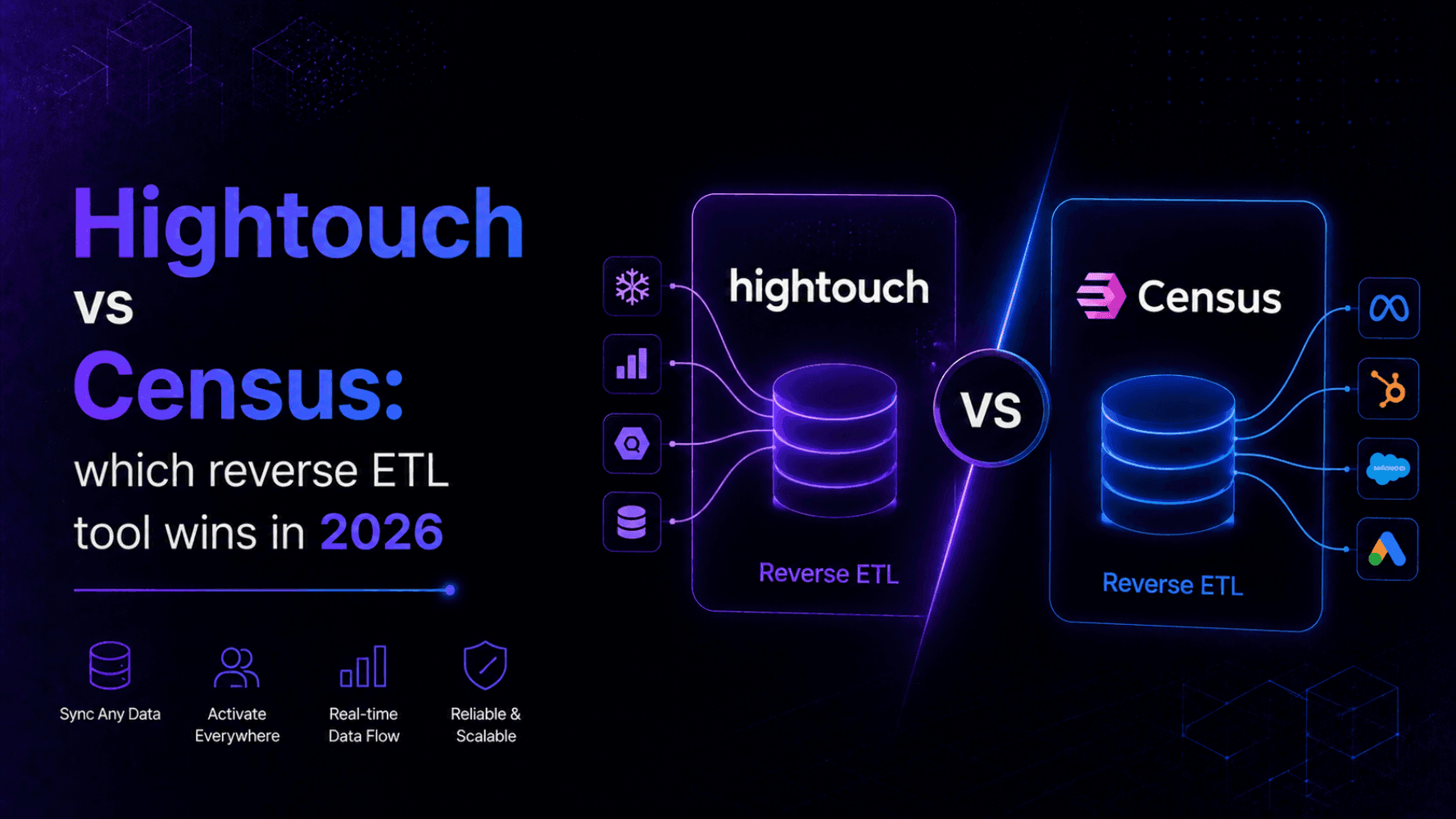
- Hightouch and Census both sync data from your warehouse to downstream tools, but they diverge sharply on pricing model, native audience tooling, and the depth of their connector catalogs.
- Hightouch leads on audience management and AI-driven activation features; Census leads on data transformation flexibility within the sync layer itself.
- Pricing structures differ in ways that matter at scale: Hightouch charges by synced rows and destination, while Census has historically offered a model that rewards teams with many destinations.
- Teams already invested in dbt and a modern data stack often find Census integrates more naturally; teams running paid media and lifecycle campaigns lean toward Hightouch’s audience tooling.
- Neither tool is universally better. The right pick depends on whether your primary use case is operational sync or audience activation.
Hightouch is the stronger choice for marketing teams that need visual audience building and multi-channel activation from the warehouse. Census is better suited for data and engineering teams that want granular control over sync logic and transformation, particularly in B2B operational workflows. Both tools handle core reverse ETL competently, so the decision comes down to where your primary users sit and what they need to do without writing SQL.
Why Most Comparisons of Hightouch vs Census Get It Wrong
Most writeups treat these two as feature-equivalent tools with minor cosmetic differences. They are not. The gap that actually matters is not connector count or sync frequency. It is where each product places its investment: Hightouch has built upward into the marketing layer, adding audience segmentation, campaign orchestration, and AI decisioning. Census has built deeper into the data layer, with features like Warehouse Writeback and Entity Resolution that matter more to a data engineer than a campaign manager.
That divergence changes who should be evaluating each tool. If your reverse ETL buyer is a marketing operations lead or a growth engineer standing up personalization infrastructure, the comparison looks different than if your buyer is a data platform team trying to replace a homegrown sync pipeline. Both buyer types end up on the Hightouch vs Census comparison page, but they have almost nothing in common in terms of what they should prioritize.
This article applies what we call the AboutMartech Activation-Layer Test to both tools: four checks that separate reverse ETL at the sync layer from reverse ETL at the activation layer. The four checks are (1) who can build audiences without SQL, (2) how transformations happen before the sync, (3) what the pricing model rewards, and (4) how well the tool fits a marketing-owned stack versus a data-team-owned stack. Run all four against your situation and the answer becomes obvious.
What Is Reverse ETL, and Why Does the Architecture Choice Matter Here?
Reverse ETL moves data from a warehouse, typically Snowflake, BigQuery, or Databricks, into operational tools like Salesforce, HubSpot, Braze, or Facebook Ads. It is the opposite direction from a traditional ETL pipeline, which loads raw data into the warehouse. For a broader look at how these tools fit into the activation stack, the best reverse ETL tools for warehouse data activation covers nine platforms with detailed criteria.
The architecture choice between Hightouch and Census is not cosmetic because reverse ETL sits at the boundary between your data team and your marketing team. Whichever tool you pick will determine who owns syncs, who debugs failures, and who can build new audiences without filing a data request. That organizational question is often more consequential than the technical one.
How Do Hightouch and Census Compare on Core Features?
| Feature | Hightouch | Census |
|---|---|---|
| Visual audience builder (no SQL) | Yes, full visual UI with traits and segments | Limited; primarily SQL-based segmentation |
| Native campaign orchestration | Yes (Hightouch Journeys) | No |
| AI-powered decisioning / predictions | Yes (AI Decisioning, available on higher tiers) | No native feature |
| Warehouse Writeback | Yes | Yes (Census Warehouse Writeback, a named feature) |
| Entity Resolution | Limited | Yes (Census Entity Resolution) |
| dbt integration | Yes | Yes, with tighter native dbt Cloud support |
| Git-based version control | Yes | Yes |
| Live debugger / observability | Yes | Yes (Census Observability) |
| Self-serve free tier | Yes (limited destinations) | Yes (limited rows) |
| HIPAA / SOC 2 compliance | Yes | Yes |
How Does Hightouch’s Audience Tooling Actually Work?
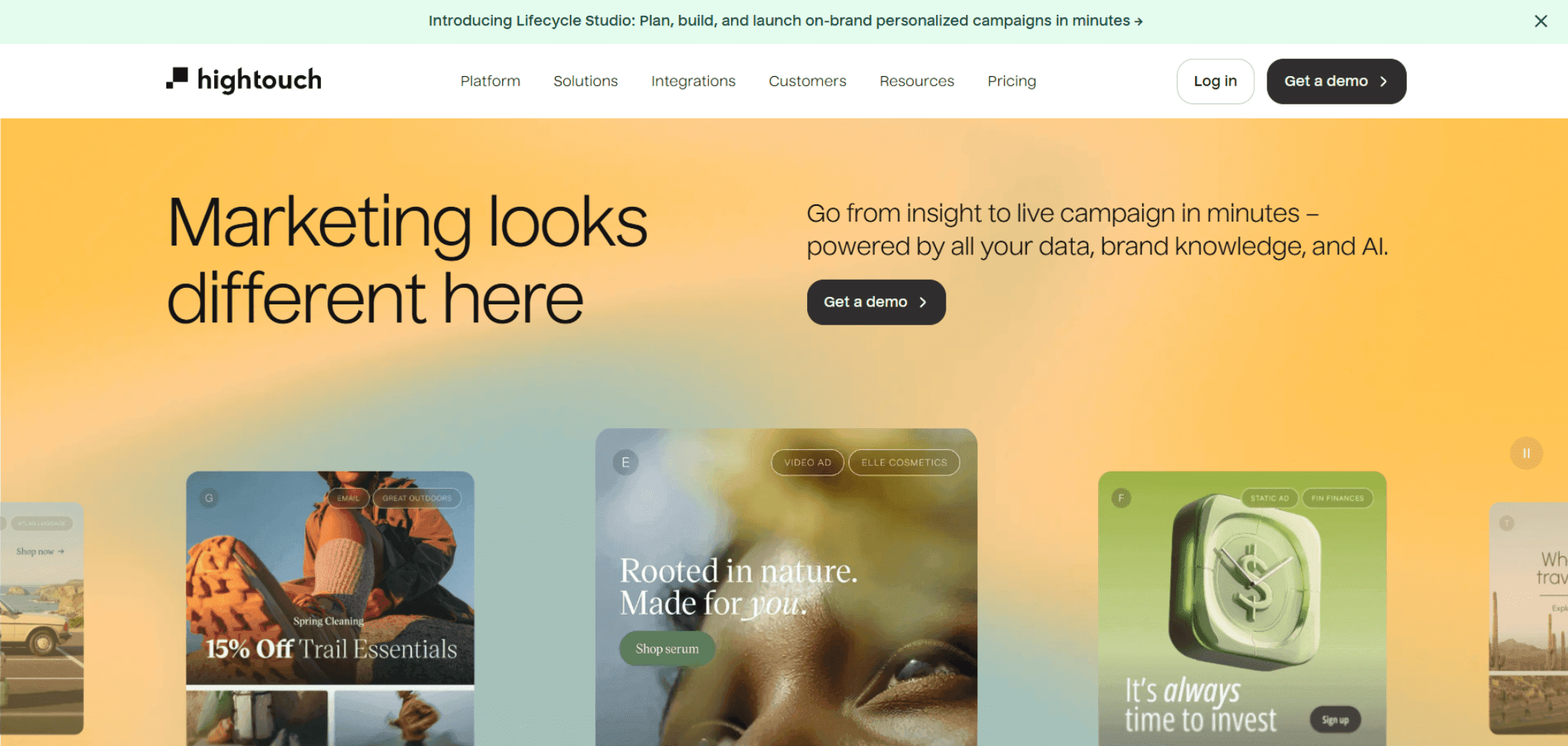
Hightouch has invested heavily in what it calls its Audience Hub: a visual, point-and-click interface for building and syncing audience segments without writing SQL. A marketer can define a segment using behavioral traits, firmographic filters, and event history pulled directly from the warehouse, then sync that segment to Facebook Custom Audiences, Google Ads, or Braze without touching the data team. That workflow, which would previously require a data analyst to write a model and a data engineer to manage a sync, collapses into a single interface.
Hightouch Journeys takes this further by adding multi-step orchestration: a user enters a sequence when a warehouse condition is met, moves through branches based on subsequent warehouse events, and exits when another condition resolves. This is meaningful because the orchestration logic is warehouse-native, meaning it reflects your actual customer data rather than what a marketing automation platform has captured. Teams using this alongside a CDP should read the comparison of warehouse-native CDPs to understand where the boundary sits.
The AI Decisioning feature, available on Hightouch’s higher-tier plans, lets teams define goals and guardrails and then let the system select which action to take for each individual at sync time. It is closer to a lightweight next-best-action engine than a traditional segment builder. Whether that feature justifies the price tier depends on whether you have the warehouse data quality to support it.
What Does Census Do Better Than Hightouch?
Census (now Fivetran) built its reputation on operational reliability and data-team ergonomics. Its sync engine handles complex object relationships well, which matters when you are syncing hierarchical B2B data, for instance account-to-contact relationships into Salesforce, where a mismatched primary key causes cascading failures. Census’s approach to this, named Entities in their product, lets you define objects and their relationships declaratively rather than managing them sync by sync.
Census Entity Resolution is a genuinely differentiated feature. It identifies and merges duplicate records across sources before syncing downstream, which means the data landing in your CRM is cleaner than what went into the sync. Hightouch does not have a comparable native feature at the same depth, based on each vendor’s publicly documented product capabilities at the time this article was written , confirm current feature parity directly with both vendors before finalizing your evaluation. For B2B teams with messy lead and account data, that matters more than a visual audience builder.
The dbt integration in Census is also notably tight. Census can read dbt metadata, including column descriptions and model documentation, and surface that context inside the sync configuration. Engineers working in dbt Cloud find that this reduces the translation cost between the transformation layer and the sync layer. Hightouch has dbt support too, but Census’s implementation is closer to a first-class integration than an add-on.
How Does Pricing Compare Between Hightouch and Census?
Both vendors use quote-based pricing for production workloads. Neither publishes a complete pricing page with per-row or per-destination rates at the enterprise tier, so any specific dollar figure you see in a comparison should be treated skeptically.
What is publicly visible: Hightouch’s pricing page shows a free tier that includes two destinations and basic sync functionality. Paid plans gate features like Audience Hub, Journeys, and AI Decisioning behind higher tiers, and pricing scales with sync volume and destination count. Census’s pricing page similarly shows a free tier with limited monthly synced records, and paid plans that scale with usage. Both vendors require a sales conversation for anything at production scale.
The structural difference worth understanding: Hightouch’s premium features are primarily marketing-layer features. If you buy Hightouch for basic reverse ETL and never use Audience Hub or Journeys, you are paying for capability you do not use. Census charges for the sync engine itself, so teams that need reliable operational sync without the marketing layer typically find the value proposition cleaner at mid-tier pricing.
Which Connectors and Destinations Do Each Support?
Hightouch publicly claims support for over 200 destinations. Census claims over 200 as well. At this connector count, the raw number is less informative than which specific destinations each handles well, and how maintained the long-tail connectors are.
Both tools cover the obvious tier-one destinations: Salesforce, HubSpot, Marketo, Braze, Iterable, Klaviyo, Google Ads, Facebook Ads, Snowflake, BigQuery, Databricks, and Redshift. The differences surface in niche destinations. For paid media specifically, Hightouch’s integrations with LinkedIn Ads, TikTok Ads, and Pinterest tend to be more current and feature-complete, which matters for teams running audience suppression or lookalike syncs across channels.
For customer success and product tools, Census often has deeper integrations with platforms like Gainsight and Intercom. Teams building a product-led growth motion where warehouse data needs to flow into CS tooling should verify Census’s connector depth against their specific stack before assuming parity. The best customer success platforms for B2B SaaS covers which platforms have the strongest data ingestion options, which is relevant context for evaluating connector quality.
The AboutMartech Activation-Layer Test: Applied to Both Tools
Running both tools through the four-part Activation-Layer Test produces a clear split:
- Who can build audiences without SQL? Hightouch wins. Its visual audience builder is production-grade; Census’s is supplementary.
- How do transformations happen before the sync? Census wins for teams already in dbt. Hightouch is competitive but Census’s dbt metadata integration reduces configuration overhead.
- What does the pricing model reward? Hightouch rewards teams that use marketing-layer features. Census rewards teams that need clean, reliable operational sync at volume.
- Marketing-owned stack or data-team-owned stack? Hightouch is designed to be handed to a marketer after initial setup. Census is designed to be owned by a data or analytics engineer.
A team where the data team builds models and hands them to marketing will find Hightouch a better interface for the handoff. A team where the data team owns the entire pipeline end-to-end will find Census’s tooling more familiar and its observability features more useful.
A Worked Scenario: Which Tool Fits a Mid-Market B2B SaaS Team?
Consider a B2B SaaS company with 300 employees, a 40-person sales team, Salesforce as CRM, Braze for lifecycle, and a Snowflake warehouse managed by a two-person data team. Marketing runs campaigns independently but files data requests for any new segment. The goal is to let marketing build and sync segments without data team involvement.
In this scenario, Hightouch is the right tool. The Audience Hub lets a demand gen manager build a segment of accounts that hit a product usage threshold, exclude existing opportunities, and sync that list to Salesforce as a campaign member and to LinkedIn Ads as a custom audience, all without SQL. The data team sets up the underlying models once and grants access. That is the intended workflow and Hightouch is built for it.
Now change the scenario: the same company, but the use case is syncing product usage data into Salesforce at the account and contact level to power health scores in Gainsight, with a requirement that duplicate contacts be resolved before syncing. Census’s Entity Resolution and its Gainsight connector depth make it the stronger choice. Marketing self-service is not the goal; data quality and operational reliability are.
How Do Hightouch and Census Handle Data Privacy and Governance?
Both tools are SOC 2 Type II certified and support HIPAA compliance for customers with appropriate agreements in place. Both operate as a query layer on top of your warehouse, meaning they read data via SQL and do not store a copy of your customer data in their own infrastructure by default. This architecture matters for privacy teams because the data never leaves your cloud environment in transit to the vendor’s servers.
Hightouch offers role-based access controls at the sync and audience level, which is important when marketing teams have self-serve access. Census offers similar RBAC but also includes audit logging with more granular detail, which data governance teams tend to prefer. For companies in regulated industries, Census’s audit trail depth is worth evaluating directly against your compliance requirements. This consideration also connects to how teams handle identity across the stack, which the comparison of best B2B CDPs addresses in the context of identity resolution architecture.
Frequently Asked Questions
Is Hightouch or Census better for running paid media audience syncs?
Hightouch is better for paid media audience syncs. Its Audience Hub is built specifically for this workflow: marketers define segments visually, and Hightouch syncs them to Google Ads, Facebook Ads, LinkedIn Ads, TikTok Ads, and others on a schedule or in real time. Census can handle these destinations, but the tooling is more SQL-forward and requires more data team involvement to set up and maintain audience lists at scale.
Can a non-technical marketer use Census without data team support?
In practice, no. Census is designed for data and analytics engineers who are comfortable with SQL and dbt. The sync configuration interface assumes familiarity with warehouse concepts like model references and primary keys. Some teams use Census with a light wrapper of internal documentation, but it is not a self-serve tool for a marketer the way Hightouch’s Audience Hub is. If marketer self-service is a requirement, Census is the wrong starting point.
Which tool has better support for Salesforce syncing specifically?
Both tools have mature Salesforce connectors that handle standard and custom objects, upsert logic, and relationship mapping. Census edges ahead for complex B2B Salesforce implementations because of its Entities feature, which handles account-contact hierarchies more declaratively. Hightouch’s Salesforce connector is solid for standard use cases. Teams with highly customized Salesforce orgs should test both connectors against their specific object model before committing.
How does Hightouch’s AI Decisioning feature actually work?
Hightouch AI Decisioning lets you define a business goal, such as maximizing trial-to-paid conversion, and a set of possible actions to take, such as sending an in-app message, triggering a sales alert, or adding to an ad audience. The system evaluates each individual at sync time and selects the action predicted to best achieve the goal, based on warehouse data. It requires clean, structured behavioral data in your warehouse to function well. Think of it as a lightweight next-best-action engine, not a full-scale ML platform.
Do Hightouch and Census both support real-time syncing?
Both support event-triggered and near-real-time syncing, though the implementation differs. Hightouch offers event-triggered syncs that fire when a warehouse condition changes, with latency depending on warehouse query time. Census offers similar functionality. Neither tool offers sub-second streaming in the way a dedicated CDP event pipeline does. For true real-time use cases, the reverse ETL model has inherent latency tied to warehouse query execution.
What is Census Warehouse Writeback and does Hightouch have it?
Census Warehouse Writeback syncs data back from downstream tools into your warehouse, so that CRM updates, email engagement events, and ad platform data land in Snowflake or BigQuery alongside your product data. Hightouch also supports bidirectional syncing. The feature matters because it closes the loop between activation and analysis: you send audiences to an ad platform and get performance data back into the warehouse where your attribution models live. Teams interested in how this connects to attribution should look at how marketing attribution tools consume warehouse data.
Which tool is easier to implement and how long does onboarding take?
Both tools connect to a warehouse in minutes via a service account or OAuth. The difference is in time to first useful sync. Hightouch’s setup for a basic audience sync to a paid media destination can be done in under an hour by a marketer with warehouse access. Census’s setup for a comparable workflow typically requires a data engineer to define models and configure the sync, which adds days or weeks depending on team capacity. For teams with a dedicated data engineer, Census onboarding is manageable. For teams without one, Hightouch reduces the dependency significantly.
Verdict: Which Reverse ETL Tool Should You Choose?
Hightouch wins for marketing-led teams that need to activate warehouse data across paid media, lifecycle, and personalization channels without routing every request through a data engineer. The Audience Hub, Journeys, and AI Decisioning features are genuine differentiators that Census does not match. If your primary buyer is a marketing ops leader or a growth engineer who wants to hand self-serve segmentation to campaign managers, Hightouch is the right tool.
Census wins for data-led teams that need operational reliability, complex object syncing, entity resolution, and tight dbt integration. Its tooling is built for engineers, and its governance and observability features reflect that. If your primary use case is syncing product data into a CRM or a customer success platform with high data quality requirements, Census handles that workflow more cleanly. Teams evaluating whether they need a full CDP alongside either of these tools can use the framework in the best B2B CDPs comparison to draw the line between CDP and reverse ETL responsibility.
The mistake most teams make is buying Hightouch expecting Census-level data engineering depth, or buying Census expecting Hightouch-level marketing self-service. They are not the same product aiming at the same user. Pick the one that matches who will own it and what they will do with it every week. That is a cleaner decision framework than any feature matrix.