- RudderStack and Hightouch solve different problems: RudderStack collects and routes event streams from your product; Hightouch takes data already sitting in your warehouse and pushes it into downstream tools.
- If your team does not have a working data warehouse yet, RudderStack is the more logical starting point. If you already have clean, modeled data in Snowflake, BigQuery, or Databricks, Hightouch is built for that exact situation.
- They overlap in one area: both offer a reverse ETL capability. But Hightouch’s reverse ETL is its entire product, while RudderStack’s is a secondary feature bolted onto an event pipeline.
- Pricing structures diverge sharply. RudderStack charges on event volume; Hightouch charges on row syncs and destinations. The cheaper option depends entirely on your data profile.
- Teams sometimes run both: RudderStack to collect and warehouse events, Hightouch to activate the resulting warehouse data downstream.
RudderStack is a customer data pipeline that collects events, enriches them, and routes them to destinations including your data warehouse. Hightouch is a reverse ETL and data activation platform that reads from an existing warehouse and syncs the results to CRMs, ad platforms, and marketing tools. They are not interchangeable. The right choice depends on where your data problem lives: upstream collection or downstream activation.
Why Most Teams Get This Comparison Wrong
Both platforms call themselves part of the “modern data stack,” and both market to data and marketing teams simultaneously. That overlap causes real confusion at evaluation time. Teams search for “warehouse-native pipeline comparison” and end up reading vendor positioning that describes both products as full-stack solutions.
The distinction that actually matters is directional. RudderStack moves data into your warehouse. Hightouch moves data out of it. Picking the wrong one does not mean you chose a bad product; it means you bought a solution to a problem you do not have.
There is a second misconception worth naming: both platforms offer some version of the other’s core capability. RudderStack has a reverse ETL feature. Hightouch has an event stream product. Neither secondary feature is as mature as the other’s primary product, and that depth gap matters when you are building production-grade pipelines.
What Does RudderStack Actually Do?
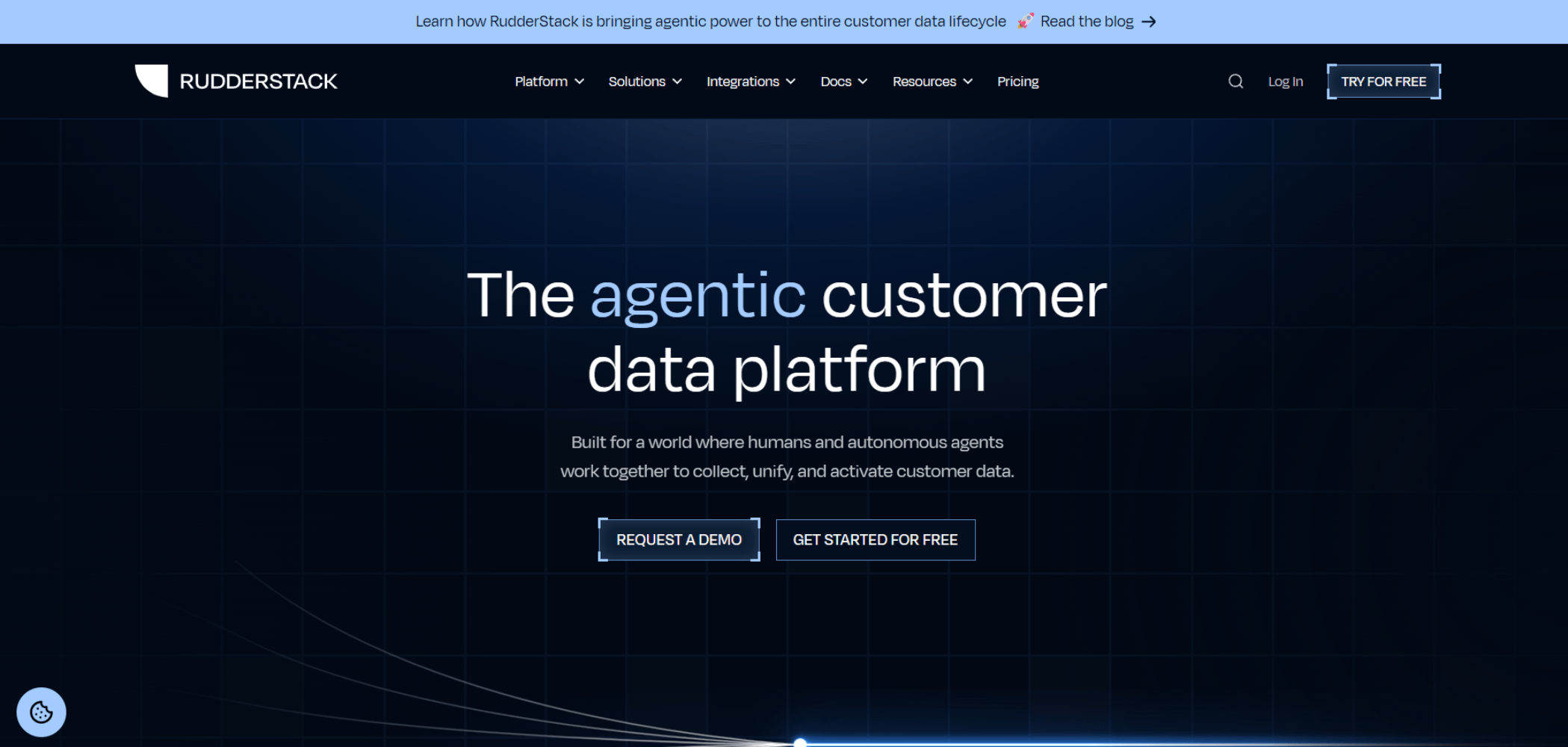
RudderStack is a customer data pipeline built around server-side event collection. You instrument your app or website with RudderStack’s SDK, and it captures behavioral events, user traits, and page calls in real time. Those events route to any combination of destinations: Segment-compatible analytics tools, warehouses like Snowflake and BigQuery, and downstream activation platforms.
The warehouse is treated as a first-class destination, not an afterthought. RudderStack syncs raw event data into your warehouse in a structured schema, which means you get a queryable record of every event alongside whatever else lives there. That is the foundation for anything Hightouch does later.
RudderStack also offers Reverse ETL, Profiles (an identity resolution layer), and a Data Plane you can self-host. The self-hosting option is one of the more meaningful differentiators in the category: teams with strict data residency requirements or compliance constraints can run the entire data plane in their own cloud. RudderStack’s public pricing page shows a free tier for up to 1,000 monthly tracked users and paid plans starting at $750 per month, though enterprise pricing is quote-based.
Where RudderStack Is Strong
- Server-side event collection with SDKs for web, mobile, server, and cloud sources
- Transformations in JavaScript at the event level before routing
- Data warehouse sync with structured schemas (Snowflake, BigQuery, Redshift, Databricks)
- Self-hosting option via open-source version for data residency requirements
- Identity resolution via Profiles, linking anonymous and known user events
- Consent management and data governance controls
Where RudderStack Falls Short
The reverse ETL feature exists but it is not the reason teams buy RudderStack. If your primary need is syncing warehouse audiences to Salesforce or pushing customer segments to Meta for ad targeting, RudderStack’s reverse ETL will feel underpowered compared to a dedicated tool. The transformation options, scheduling granularity, and audience modeling capabilities do not match what Hightouch ships as its core product.
What Does Hightouch Actually Do?
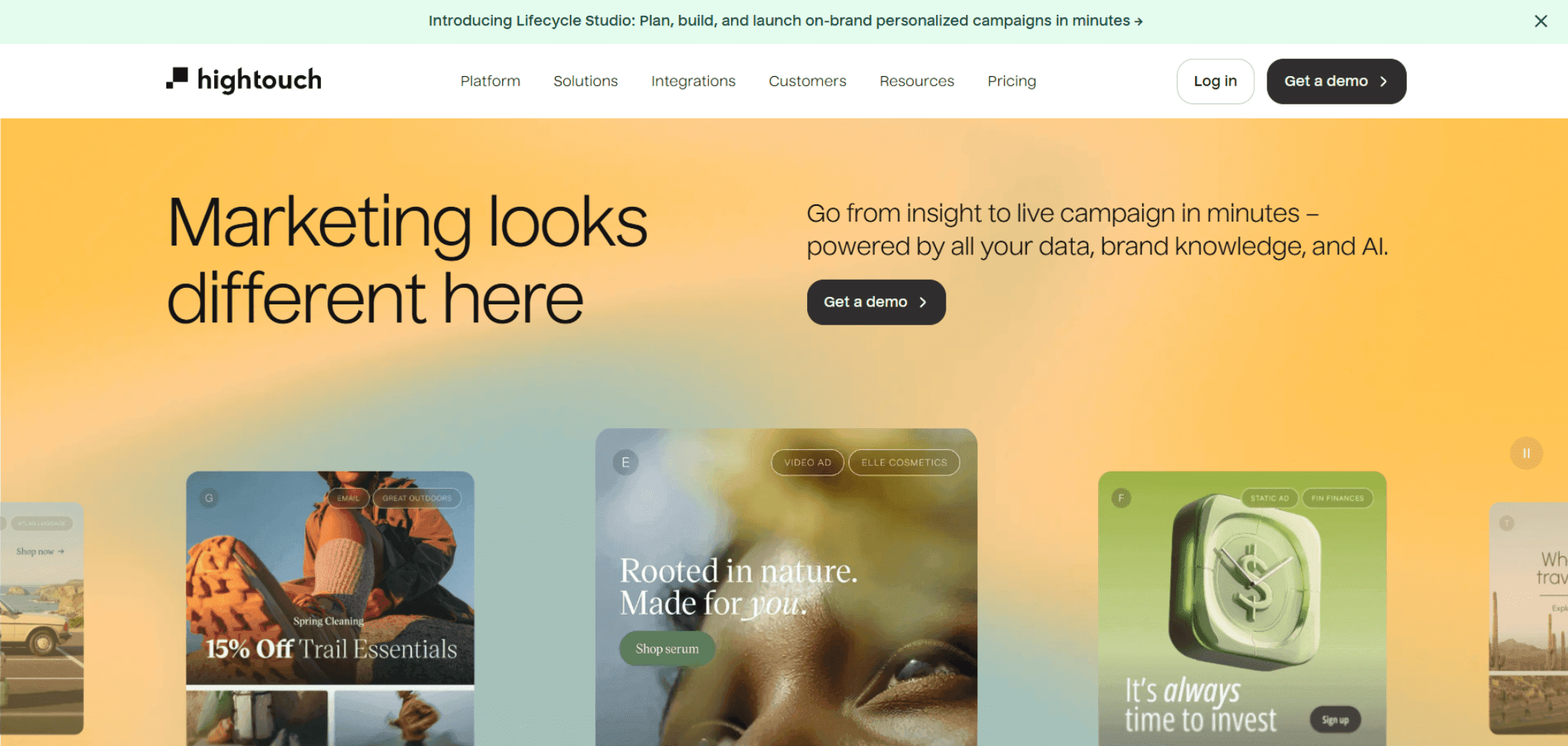
Hightouch starts where RudderStack leaves off. You write SQL in your warehouse (or use Hightouch’s no-code audience builder), define a model, and Hightouch syncs the result to over 200 destinations: CRMs, email platforms, ad networks, customer success tools, and more. The data never leaves your warehouse control; Hightouch just reads it and pushes the output.
This architecture is important for teams that have invested in data modeling. If your analytics engineer has built clean dbt models representing customer lifetime value, product engagement scores, or predicted churn probability, Hightouch can take those models directly and activate them in Salesforce or HubSpot without any re-implementation. That is the core value proposition, and it is a genuinely different workflow from ETL or event collection.
Hightouch has expanded into AI Decisioning, which adds a machine-learning layer for things like send-time optimization and propensity scoring without requiring a separate ML pipeline. The public pricing page shows a free tier with limited syncs and paid plans that scale with the number of rows synced and destinations connected; enterprise pricing is quote-based.
Where Hightouch Is Strong
- Reverse ETL with 200+ destination connectors maintained as production-grade integrations
- Audience builder that lets non-SQL marketers build warehouse-backed segments without writing queries
- AI Decisioning for predictive attributes and personalization signals pulled directly from warehouse models
- Match Booster for identity resolution across ad platforms (using deterministic and probabilistic matching)
- Event streaming product (Hightouch Events) for teams that want to add collection downstream
- Deep Salesforce and HubSpot sync fidelity, including field-level mapping and deduplication logic
Where Hightouch Falls Short
Hightouch requires a warehouse to exist before it can do anything useful. Teams without a working data warehouse, a data engineer to model it, or the budget to stand up Snowflake or BigQuery are not ready for Hightouch. The no-code audience builder reduces SQL dependency for marketers, but someone still has to define the underlying data model. That is not a criticism of the product; it is just the prerequisite the architecture requires.
RudderStack vs Hightouch: Head-to-Head Feature Comparison
| Capability | RudderStack | Hightouch |
|---|---|---|
| Primary function | Event collection and pipeline routing | Reverse ETL and data activation |
| Data direction | Sources → Warehouse / Destinations | Warehouse → Destinations |
| Warehouse requirement | Optional (but recommended destination) | Required as source |
| Reverse ETL | Available, secondary feature | Core product, 200+ connectors |
| Event streaming | Core product | Available (Hightouch Events), secondary |
| No-code audience builder | Limited | Yes, marketer-facing UI |
| Identity resolution | Yes (Profiles) | Yes (Match Booster) |
| AI/ML layer | Transformations, some enrichment | AI Decisioning, predictive attributes |
| Self-hosting | Yes (open-source data plane) | No |
| Free tier | Yes (up to 1,000 MTUs) | Yes (limited syncs) |
| Pricing model | Monthly tracked users / event volume | Rows synced / destinations |
| Primary buyer | Data/engineering teams, early-stage companies | Data teams + marketing ops at warehouse-mature companies |
How Does Pricing Actually Compare?
Comparing these two on price requires knowing your data profile, not just your budget. RudderStack bills primarily on monthly tracked users (MTUs) and event volume. Hightouch bills on rows synced per destination and the number of destinations you activate. A company with 50,000 users generating few warehouse rows might pay less on Hightouch than on RudderStack at scale. A company with small user counts but massive warehouse tables could see the inverse.
RudderStack’s public pricing page shows plans starting at $750 per month for growth tiers, with free access up to 1,000 MTUs. Hightouch’s pricing page shows a free tier with restricted sync frequency, and paid tiers that add more frequent syncs, more destinations, and features like AI Decisioning. Both vendors require a sales conversation for anything at enterprise scale.
One cost that often gets missed in evaluations: the engineering time required to maintain each integration. Hightouch handles connector maintenance on its end; you do not patch your Salesforce connector when Salesforce changes its API. RudderStack offers similar managed connectors for its destination SDK ecosystem. Either way, the real cost of a self-built alternative (custom scripts, Airflow DAGs, brittle API glue) typically dwarfs either vendor’s subscription cost within twelve months. For context on the broader category, our roundup of the best reverse ETL tools covers how to frame this build-vs-buy calculation.
The AboutMartech Stack-Fit Test: Four Checks Before You Buy
Before running a full proof-of-concept with either platform, apply these four checks in order. If a check fails, you likely need a different tool or a different phase of your data stack build-out.
- Warehouse maturity check: Do you have a data warehouse with at least one clean, modeled table representing a business entity (customer, account, lead)? If no, start with RudderStack or another event collection layer before evaluating Hightouch.
- Direction check: Is your primary problem getting data into the warehouse (collection, quality, schema), or getting modeled data out of the warehouse into tools your team already uses? Collection problems point to RudderStack. Activation problems point to Hightouch.
- Buyer check: Who controls the budget and owns the outcome? If it is an engineering or data team building infrastructure, RudderStack fits the workflow. If it is marketing ops or a growth team trying to activate a segment in Braze or push an audience to LinkedIn without filing a data request, Hightouch is the right tool for that buyer.
- Overlap check: Do you already have either platform in place? Teams that already use RudderStack often find Hightouch fills the activation gap their pipeline cannot. Teams already on Hightouch sometimes add RudderStack when they realize their event tracking has gaps. Running both is a recognized pattern, not an edge case.
How Does Hightouch Compare to GrowthLoop?
GrowthLoop is a composable CDP that also activates warehouse data, but it is positioned more heavily toward enterprise marketing teams and media companies that need campaign orchestration layered on top of warehouse segments. Hightouch is more tool-agnostic: it syncs data to wherever your existing tools live rather than replacing the orchestration layer itself. GrowthLoop also tends to require a larger implementation engagement. For teams already using Google BigQuery specifically, GrowthLoop has native integrations that reduce setup time, but Hightouch supports BigQuery with equal depth. For most mid-market teams, Hightouch is a more accessible starting point. For teams that want to replace a legacy marketing cloud rather than augment an existing one, GrowthLoop is worth a look.
A Worked Scenario: When Running Both Makes Sense
Consider a B2B SaaS company with 15,000 product users, a three-person data team, and a marketing ops manager who runs lifecycle campaigns in Braze and audience suppression in LinkedIn Campaign Manager. The data team has already built dbt models for product engagement scores and trial conversion likelihood in Snowflake.
RudderStack handles event collection: every product event (feature used, session started, limit reached) flows through RudderStack’s server-side SDK into Snowflake. The data team runs dbt transformations on those raw events to produce the engagement score models.
Hightouch then reads those dbt models directly. The marketing ops manager builds a “high-intent trial users” audience in Hightouch’s no-code builder without writing SQL, and syncs it to Braze for a targeted sequence and to LinkedIn for suppression. When a user converts, the conversion event flows back through RudderStack, the dbt model refreshes, and Hightouch’s next sync removes that user from the trial audience automatically.
That closed loop is the mature version of this stack. Neither product alone produces it. This is why the “any warehouse-native pipeline will do” assumption breaks down in practice; the tools serve different parts of the same workflow.
For teams working to stand up this kind of architecture, the broader context on building a first-party data stack covers how the collection and activation layers fit together after cookie deprecation.
Who Should Pick RudderStack?
RudderStack is the better starting point for teams that are earlier in their data infrastructure build-out. If you are still tracking events with client-side scripts, missing server-side coverage for payment or backend events, or sending data to five tools through separate integrations, RudderStack solves a real problem. The self-hosting option makes it the only serious choice for teams with strict data residency requirements that rule out SaaS data planes.
Teams comparing RudderStack to Segment will find meaningful overlap. RudderStack’s open-source heritage and lower entry price have made it a common alternative, particularly after Twilio’s pricing adjustments to Segment. Our roundup of Segment alternatives covers that comparison in more depth. RudderStack also integrates cleanly with product analytics tools, making it a natural fit for product-led growth companies that want behavioral data in both their warehouse and their analytics platform simultaneously.
Who Should Pick Hightouch?
Hightouch is built for teams that already have the warehouse and the models, and whose bottleneck is activation latency. If your data team gets requests like “can you pull a list of users who used feature X but haven’t purchased” and manually exports CSVs to upload into Salesforce, Hightouch eliminates that workflow entirely. The marketing team writes the audience definition once, and the sync runs on schedule or on trigger.
The AI Decisioning feature is worth specific attention for teams doing personalization at scale. Rather than building a separate ML pipeline to score customers, teams can define predictive models in Hightouch’s UI that run against warehouse data and output attributes directly to downstream tools. That is a meaningful capability compression for teams without dedicated ML engineers. For teams evaluating the broader CDP and data activation category, our comparison of the best warehouse-native CDPs covers where Hightouch sits relative to full CDP platforms.
Hightouch also has a detailed head-to-head with Census, its closest direct competitor in pure reverse ETL, which we have covered separately in the Hightouch vs Census comparison.
Frequently Asked Questions
Can RudderStack replace Hightouch entirely?
RudderStack includes a reverse ETL feature, but it is not a full replacement for Hightouch in teams where data activation is a primary workflow. RudderStack’s reverse ETL supports fewer connectors, has less granular sync scheduling, and does not include a no-code audience builder aimed at marketing users. For teams that need basic warehouse-to-destination syncing and are already on RudderStack, the built-in reverse ETL may be sufficient. For teams where that activation workflow is high-frequency and owned by non-technical marketers, Hightouch is the stronger tool.
Can Hightouch replace RudderStack entirely?
Hightouch Events is a real product that can collect behavioral events, but it is not the primary reason teams buy Hightouch. If you need solid server-side event collection, SDK support for mobile and web, real-time transformation logic, and a structured schema landing in your warehouse, RudderStack is purpose-built for that. Hightouch is designed for teams that already have clean warehouse data and want to activate it. Treating Hightouch as an event pipeline is working against its architecture.
How does RudderStack compare to Segment?
RudderStack and Segment share a core architecture: both collect behavioral events via SDKs, apply transformations, and route to destinations including warehouses. RudderStack’s main advantages are its open-source data plane (which Segment does not offer), lower entry pricing, and the ability to self-host for data residency. Segment’s advantages include a larger integration ecosystem, a longer track record in enterprise environments, and Twilio’s broader platform integrations. Teams that have hit Segment’s pricing ceiling frequently migrate to RudderStack with relatively low re-instrumentation effort.
What data warehouse does Hightouch require?
Hightouch works with all major cloud warehouses: Snowflake, Google BigQuery, Amazon Redshift, Databricks, and others. It also supports lakehouse formats and some database sources. The requirement is not a specific warehouse; it is any structured data source that Hightouch can query. The quality of what Hightouch activates depends entirely on the quality and modeling of what lives in that source. A warehouse with raw, unmodeled event tables produces less useful activations than one with clean, business-logic-driven dbt models.
Is Hightouch considered a CDP?
Hightouch describes itself as a composable CDP and data activation platform. It handles audience definition, identity resolution (via Match Booster), and multi-destination sync, which are the core functions of a CDP. The difference from a traditional packaged CDP like Segment Engage or Bloomreach is that Hightouch does not store the data itself; it reads from your existing warehouse. Teams evaluating the CDP category more broadly should consider whether they want a packaged CDP that owns data storage or a composable layer that works on top of infrastructure they already own.
How does RudderStack handle identity resolution?
RudderStack’s identity resolution product is called Profiles. It stitches anonymous event histories to known user profiles by matching across identifiers like anonymous ID, user ID, email, and device ID. The resulting unified profile is materialized in your data warehouse, making it queryable and usable for downstream activation. This is a different approach than probabilistic identity resolution used in ad tech; RudderStack’s Profiles is deterministic, matching on concrete shared identifiers rather than statistical inference.
What is the difference between ETL, reverse ETL, and what these tools do?
ETL (extract, transform, load) moves data from operational sources into a warehouse for storage and analysis. Reverse ETL moves data from the warehouse back into operational tools for action. RudderStack is primarily an event pipeline and data collection tool, which is related to but distinct from traditional ETL. Hightouch is a reverse ETL platform. Understanding that distinction is the foundation of this comparison. For a fuller breakdown of these architectural patterns, the explainer on ETL vs reverse ETL vs CDP covers the distinctions without jargon.
Verdict: Which Tool Fits Your Team?
If your data problem lives upstream of the warehouse, buy RudderStack. The self-hosting option, the event-level transformation capability, and the structured warehouse schema output make it the right infrastructure layer for teams still building their collection foundation. It is also the better fit for any team with data residency requirements, a preference for open-source infrastructure, or an architecture that needs server-side event coverage as the primary capability.
If your data problem lives downstream of the warehouse, buy Hightouch. The depth of its connector library, the no-code audience builder that removes the data team from every marketing request, and the AI Decisioning layer for predictive activation are built for a team that already has modeled data and needs to move it into Salesforce, Braze, Meta, or any of 200 other destinations reliably and on schedule. Hightouch wins on activation fidelity; RudderStack wins on collection infrastructure.
The teams that try to force one tool to do both jobs end up with a brittle workaround in one direction. The teams that run both, with RudderStack feeding the warehouse and Hightouch reading from it, end up with a closed-loop data stack that actually works in production. That pairing is not a sign of overspending; it reflects what each tool was genuinely designed to do.