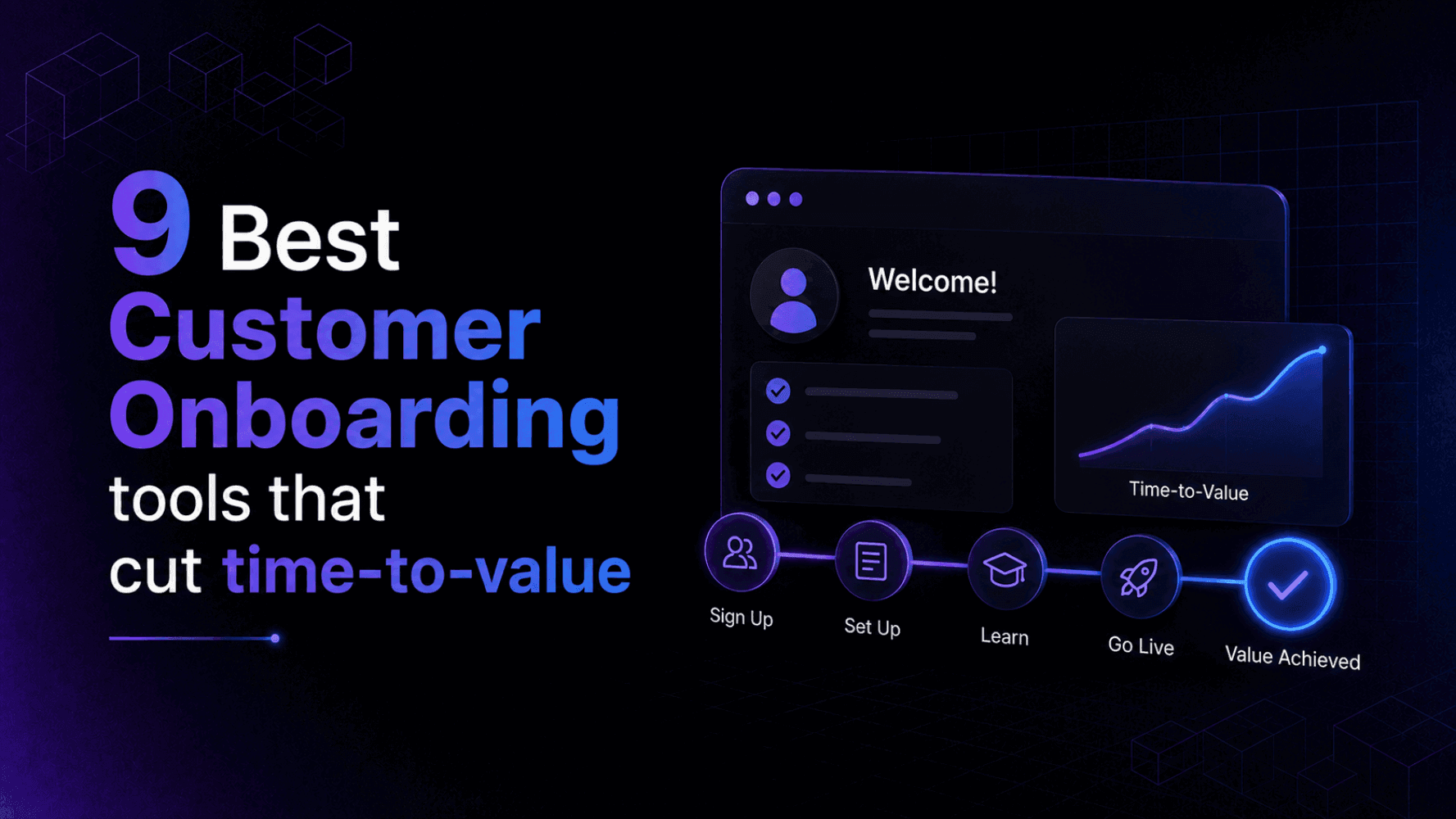
- Most SaaS churn happens before the customer ever reaches their first value moment, not after it. Onboarding software exists to close that gap.
- There are two distinct categories here: in-app product tours (Userpilot, Appcues, Pendo) and project-based client onboarding platforms (Rocketlane, GUIDEcx). Buying the wrong category is a common and expensive mistake.
- The tools that actually cut time-to-value share one trait: they surface blockers before the customer disengages, not after a missed QBR.
- Pricing across this category ranges from free tiers to five-figure annual contracts. Smaller teams should start with Appcues or Chameleon. Enterprise and mid-market implementations with external stakeholders need Rocketlane or GUIDEcx.
- The best onboarding stack is often two tools: one for internal project tracking and one for in-app guidance. They rarely overlap.
The best customer onboarding software depends on what you are onboarding. For SaaS products with self-serve flows, Userpilot, Appcues, and Pendo deliver in-app walkthroughs and behavioral analytics. For complex B2B implementations with multiple client stakeholders, Rocketlane and GUIDEcx run the project layer. Pricing starts at roughly $249 per month for entry-level plans and scales to custom enterprise quotes. All nine tools covered here accelerate time-to-value by replacing manual check-ins with automated milestones, shared workspaces, and behavioral triggers.
What Is Customer Onboarding Software, and Why Does It Matter?
Customer onboarding software is a category of tools that automates, tracks, and personalizes the process of getting a new customer from signed contract to active user. It replaces the combination of spreadsheets, shared docs, and ad-hoc emails that most teams rely on by default.
The gap that matters is time-to-value: the interval between when a customer pays and when they first experience the outcome they bought for. Every extra day in that gap is a compounding churn risk. Onboarding software compresses it by making blockers visible, automating repetitive handoffs, and keeping both internal teams and external clients accountable to a shared timeline.
There is a secondary reason that rarely gets discussed: onboarding software also protects the CS team’s time. Without tooling, a customer success manager at a mid-size SaaS company might spend 40% of their week on status emails and project coordination that a platform like Rocketlane or GUIDEcx handles automatically.
The Two-Layer Onboarding Stack: Why Most Teams Buy the Wrong Tool
Before evaluating specific products, it helps to understand the architecture. Onboarding software breaks into two distinct layers, and conflating them leads to wasted budget.
Layer 1: Project-based onboarding platforms. These tools manage the implementation process as a project. They give customers a shared portal, task lists, milestone trackers, and document repositories. The customer sees their onboarding progress. The vendor’s CS or implementation team manages delivery. Rocketlane and GUIDEcx live here.
Layer 2: In-app product adoption tools. These run inside your product and guide users through features via tooltips, checklists, modals, and tours. They trigger based on user behavior, not calendar dates. Userpilot, Appcues, Chameleon, and Pendo live here.
A SaaS company with a 90-day enterprise implementation and a self-serve SMB tier often needs both. The project layer manages the enterprise stakeholder relationship. The in-app layer handles activation for users who never talk to anyone on your team. If you are only buying one, the decision hinges on where your churn actually originates.
The AboutMartech TTV Scorecard: How We Evaluated These Tools
Every tool in this list was evaluated against four criteria that map directly to time-to-value reduction. We call this the AboutMartech TTV Scorecard.
- Milestone visibility. Can both the vendor team and the customer see exactly where onboarding stands, and does the tool surface blockers automatically rather than requiring manual status checks?
- Trigger fidelity. Does the platform act on real user behavior (or task completion) rather than fixed timelines? Calendar-based drip sequences are not onboarding software. They are email marketing wearing a costume.
- Stakeholder reach. Can the tool communicate with and engage all relevant parties, including client-side champions who do not have a product login?
- Integration depth. Does it connect to the CRM, data warehouse, or customer success platform already in the stack, or does it create a new data silo?
No tool on this list scores perfectly on all four. The trade-offs are real and specific to your implementation model. The sections below name them directly.
The 9 Best Customer Onboarding Tools, Compared
| Tool | Best For | Layer | Starting Price | Free Trial |
|---|---|---|---|---|
| Rocketlane | B2B SaaS implementation teams | Project | From $19/user/mo (Starter) | Yes, 14 days |
| GUIDEcx | Client-facing project delivery | Project | Quote-based | Yes, demo-led |
| Userpilot | Product-led SaaS growth teams | In-app | From $249/mo | Yes, 14 days |
| Appcues | Non-technical product teams | In-app | From $249/mo | Yes, 14 days |
| Chameleon | Developer-comfortable teams needing flexibility | In-app | From $279/mo (Starter) | Yes, free plan available |
| Totango | CS teams managing post-sale lifecycle | Project + CS | Free tier; paid from $2,988/yr | Yes, free tier |
| Gainsight PX | Enterprise product teams | In-app | Quote-based | Demo-led |
| Pendo | Analytics-first product teams | In-app + Analytics | Free tier; paid is quote-based | Yes, free tier |
| CustomerSuccess.ai | AI-driven CS automation for SMB | CS + Onboarding | Quote-based | Demo-led |
1. Rocketlane
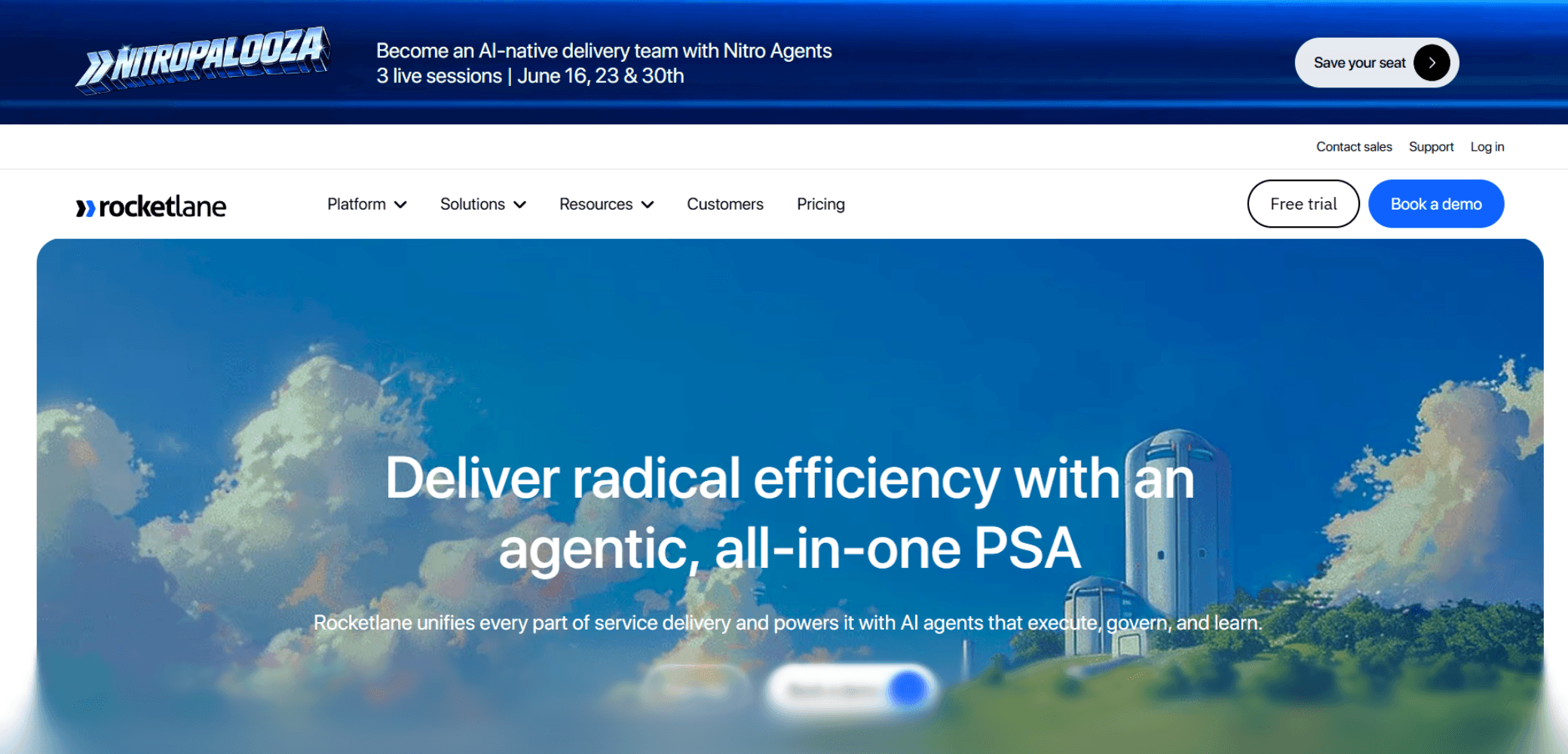
Rocketlane is the strongest purpose-built client onboarding platform available today for B2B SaaS teams running structured implementations. It combines a client-facing project portal with internal project management, giving both the vendor team and the customer a single shared workspace where tasks, documents, status updates, and timelines live.
Where Rocketlane separates itself from generic project management tools is the concept of a customer portal: a white-labeled, external-facing view that does not require the client to log into your internal PM system. Clients get task assignments, file uploads, and milestone visibility without a Jira license. That frictionless access is why enterprise CS teams favor it over Asana or Monday for onboarding work.
Rocketlane also includes time tracking, resource allocation, and CSAT triggers, features that matter when your implementation team is billing hours or managing multiple concurrent onboardings. According to Rocketlane’s public pricing page, plans start at $19 per user per month on the Starter tier, scaling through Essentials, Growth, and Enterprise with quote-based pricing at the top.
The gap: Rocketlane does not replace in-app guidance. Once the project closes and the customer is active, you still need a product adoption layer. For teams building out a full customer success stack, reviewing the best customer success platforms for B2B SaaS alongside Rocketlane makes sense.
2. GUIDEcx
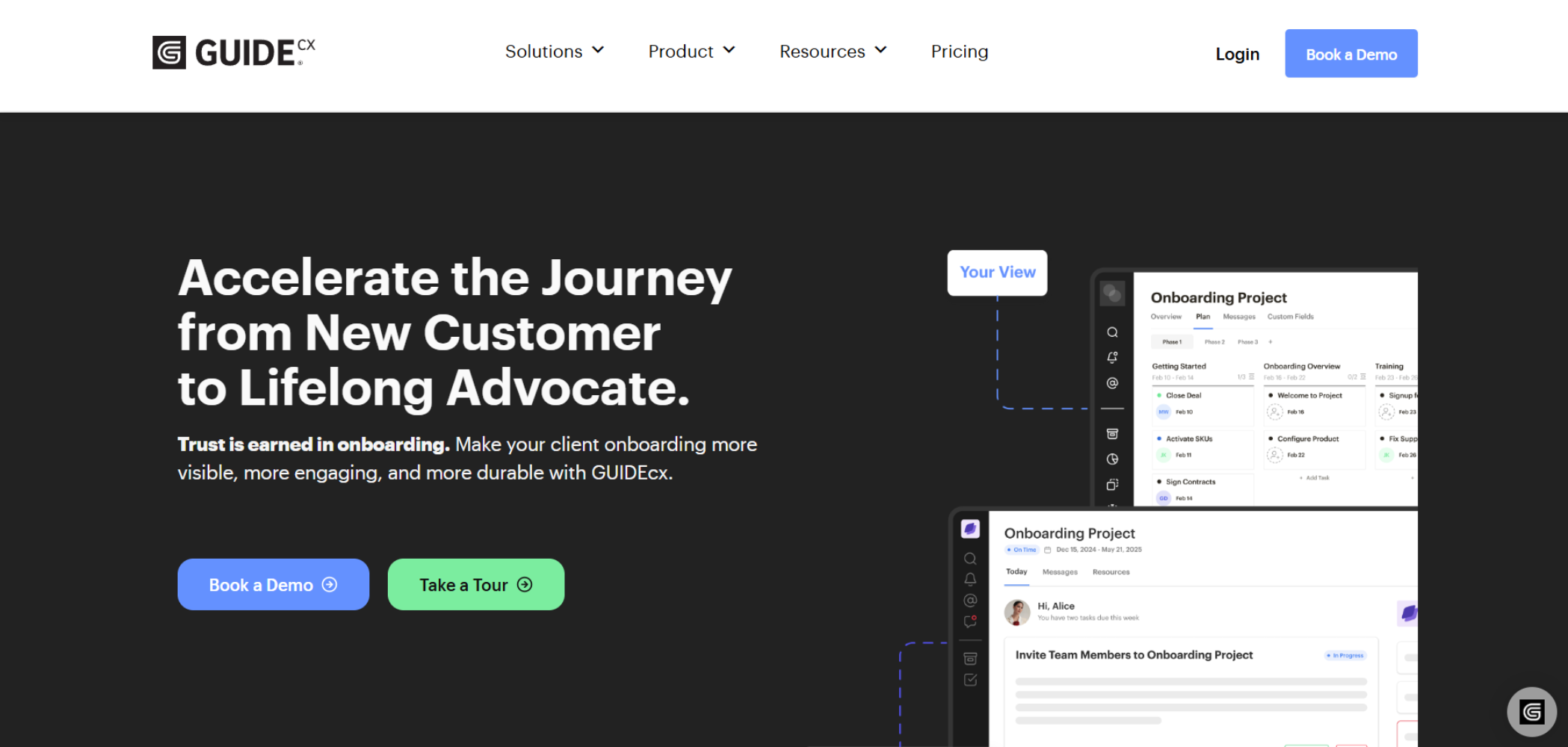
GUIDEcx positions itself specifically as a client onboarding and project delivery platform, with a notable emphasis on external stakeholder engagement. Where many project tools treat the client as a passive recipient of status updates, GUIDEcx treats them as an active participant with their own task queue.
The platform’s standout mechanic is its engagement tracking: GUIDEcx monitors whether clients are actually opening their portal, completing assigned tasks, and hitting milestones, then surfaces disengagement signals to the CS team before they become churn signals. This is the trigger fidelity criterion from the TTV Scorecard applied to project-based onboarding. A client who has not logged into their portal in five days is a leading indicator that the implementation is slipping. GUIDEcx surfaces that before week two becomes week six.
GUIDEcx pricing is quote-based. The vendor offers a demo-led evaluation rather than self-serve access, which means assessing it takes more calendar time than Rocketlane. Teams running high-volume, high-complexity implementations with many external stakeholders will find the engagement tracking worth the evaluation friction. Smaller teams with straightforward implementations may find Rocketlane easier to deploy quickly.
3. Userpilot
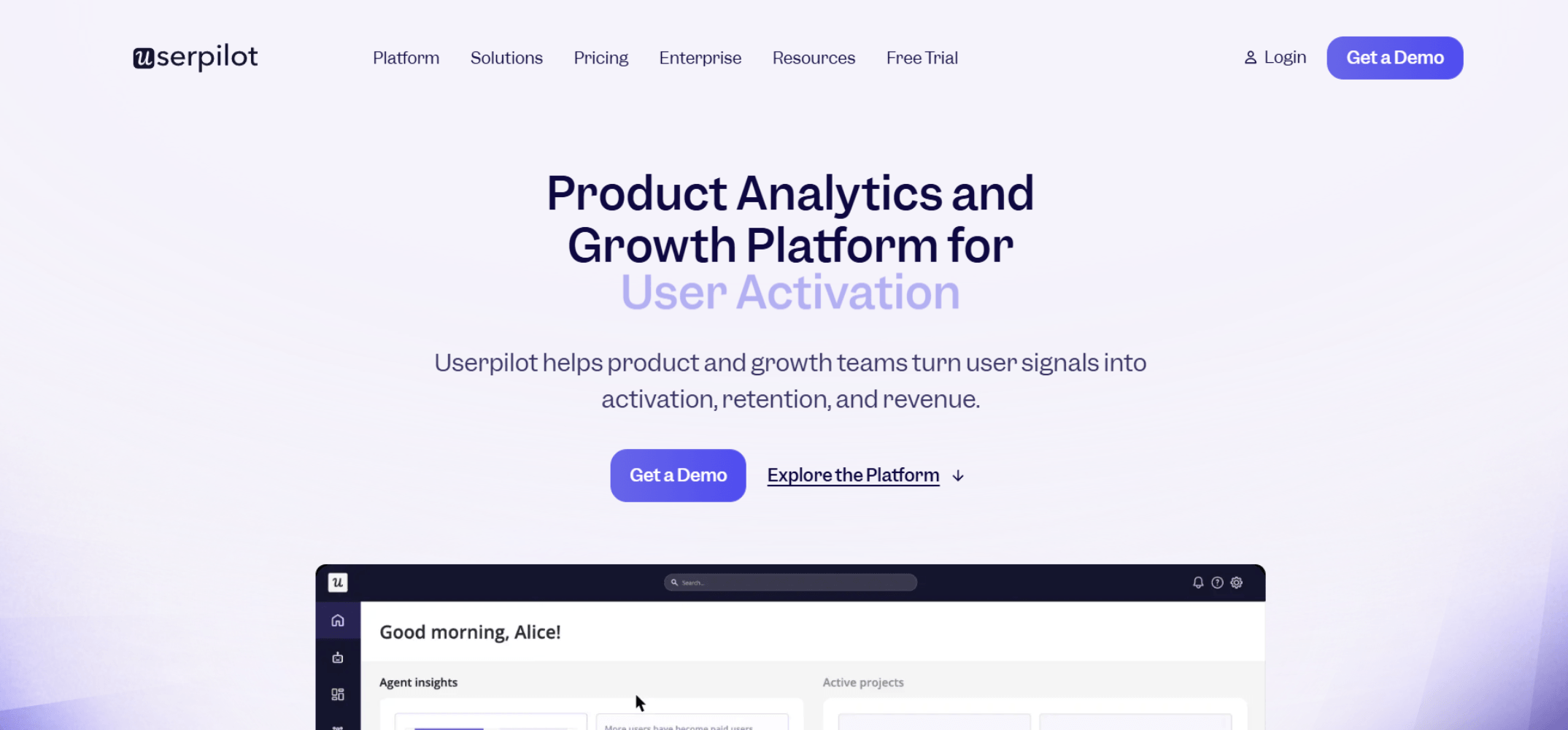
Userpilot is a product adoption platform that handles in-app onboarding flows, feature announcements, and NPS surveys without requiring engineering resources to build them. The core value is the visual builder: CS or product teams can create onboarding checklists, tooltips, and modals by pointing at UI elements, not writing code.
Userpilot’s segmentation engine is meaningfully better than most in-app tools at this price point. You can trigger different onboarding flows based on user role, company size, plan type, or behavioral signals like “has visited the dashboard three times but never created a project.” That specificity is what separates an onboarding experience that actually drives activation from one that annoys users with generic tooltips. Userpilot pricing starts at $249 per month according to their public pricing page, with a 14-day trial period.
4. Appcues
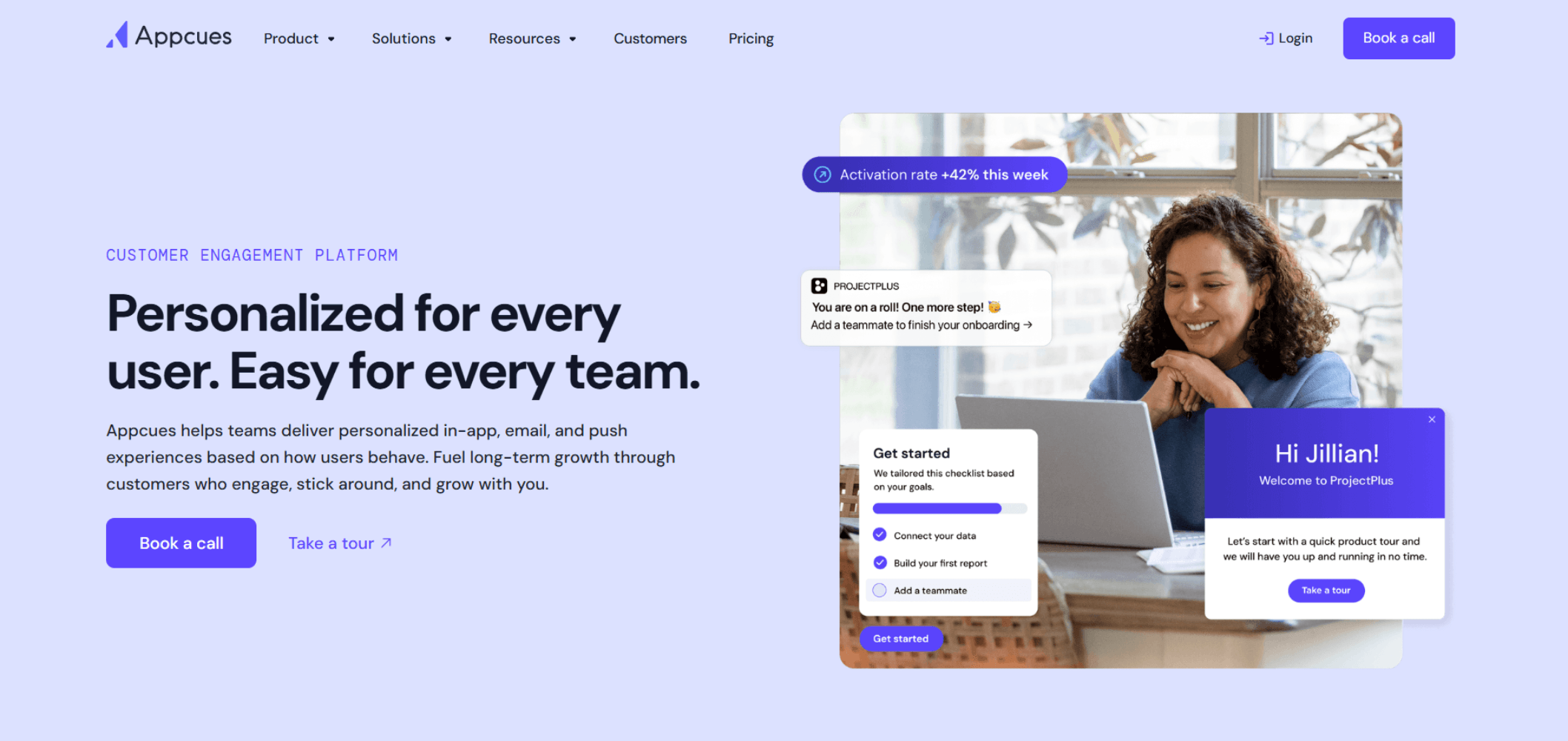
Appcues has been in the in-app onboarding space longer than most of its competitors and has the integration depth to show for it. It connects cleanly to Segment, Salesforce, HubSpot, Mixpanel, and most major analytics and CRM tools, which matters when you want onboarding completion data flowing back into your customer health score rather than sitting in a separate dashboard.
The no-code builder is genuinely accessible to non-technical users, and Appcues’s flow library gives teams a starting point rather than a blank canvas. Pricing starts at $249 per month, matching Userpilot at the entry level. The decision between the two comes down to stack fit: Appcues wins if Segment is already in your data layer, because the native integration is cleaner than most alternatives. For teams evaluating how their customer data infrastructure connects to onboarding tooling, the comparison of B2B customer data platforms is relevant context.
5. Chameleon
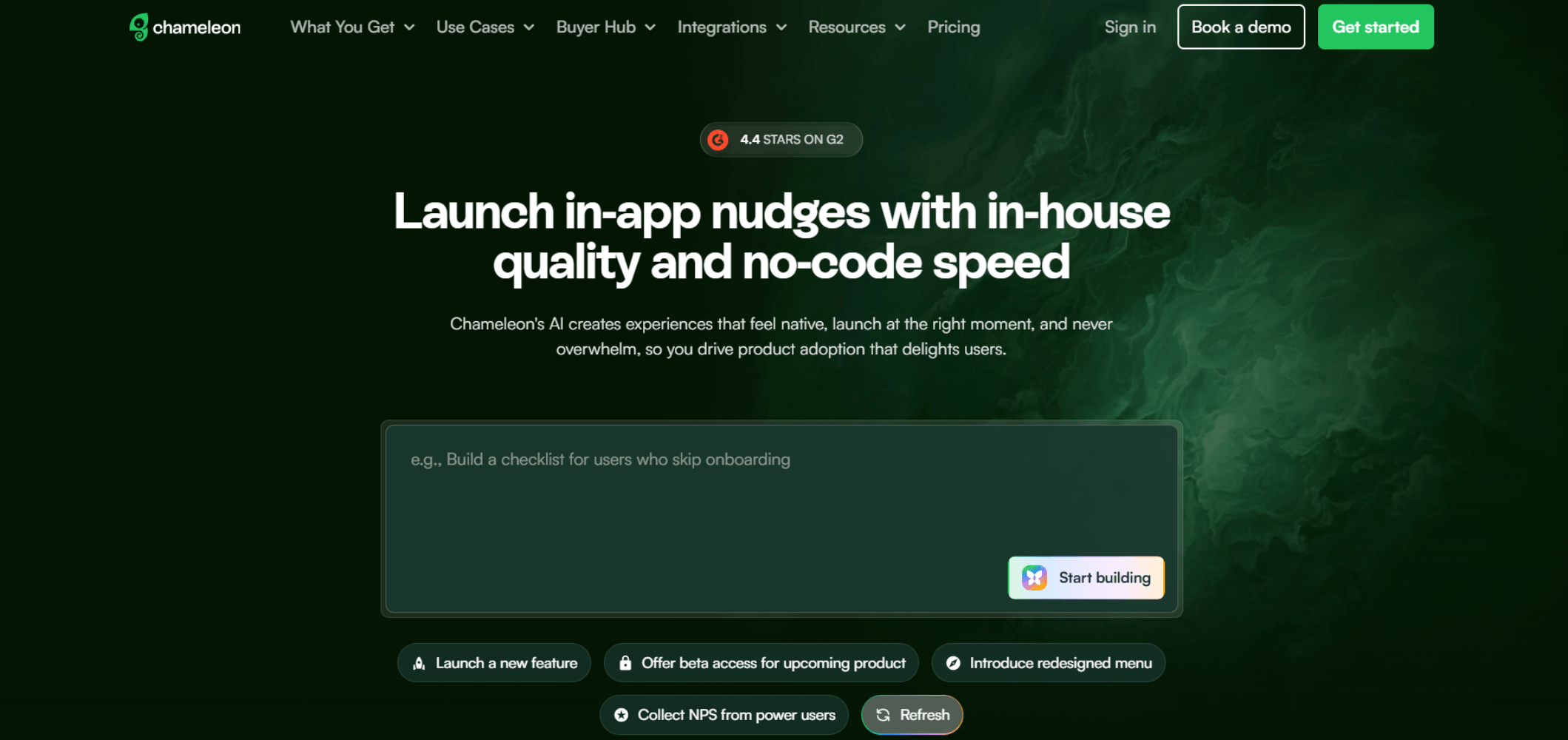
Chameleon takes a more developer-friendly approach than Appcues or Userpilot, offering more customization in exchange for a steeper setup curve. The free plan is genuinely functional, not a stripped-down teaser, covering basic tours and tooltips for teams that want to test in-app onboarding before committing budget.
Chameleon’s microsurveys are a differentiating feature: short, contextual questions triggered at specific moments in the onboarding flow. Rather than sending a post-onboarding NPS survey, you can ask “Was this step clear?” directly in the UI at the moment a user completes it. That signal quality is substantially better than end-of-process feedback. Paid plans start at $279 per month on the Starter tier according to Chameleon’s public pricing page.
6. Totango
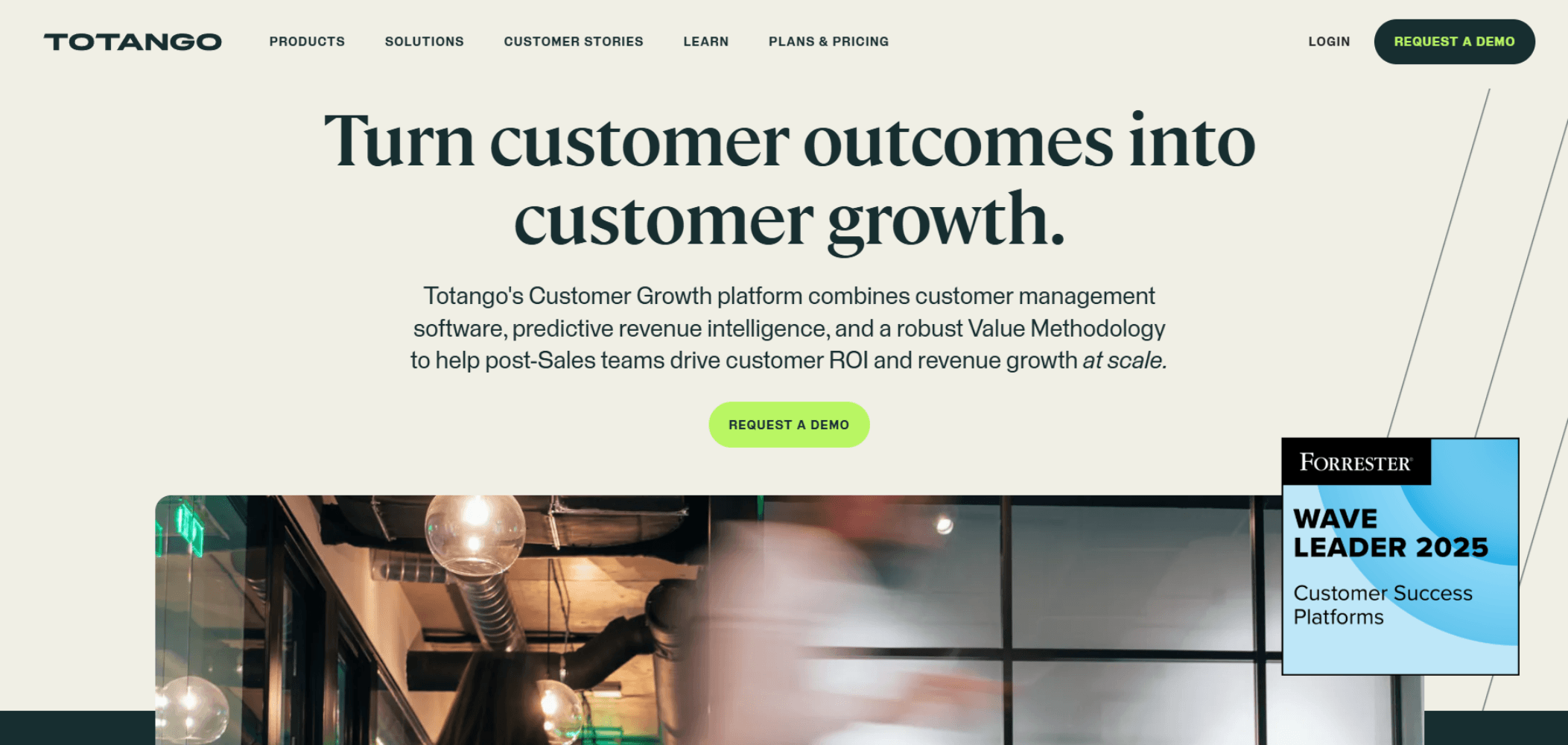
Totango straddles the line between onboarding platform and full customer success software. Its SuccessBLOC framework lets teams build modular playbooks for onboarding, adoption, renewal, and expansion, all in one platform. The free tier is real: Totango’s Starter plan is available at no cost, with paid tiers starting at $2,988 per year according to their public pricing.
The trade-off is complexity. Totango is not the fastest tool to deploy if you only need onboarding flows. It earns its place when a CS team wants a single platform managing the entire post-sale lifecycle, from initial kickoff through renewal. Teams that outgrow Totango’s onboarding features tend to move toward Gainsight, which has more enterprise depth but considerably more implementation overhead.
7. Gainsight PX
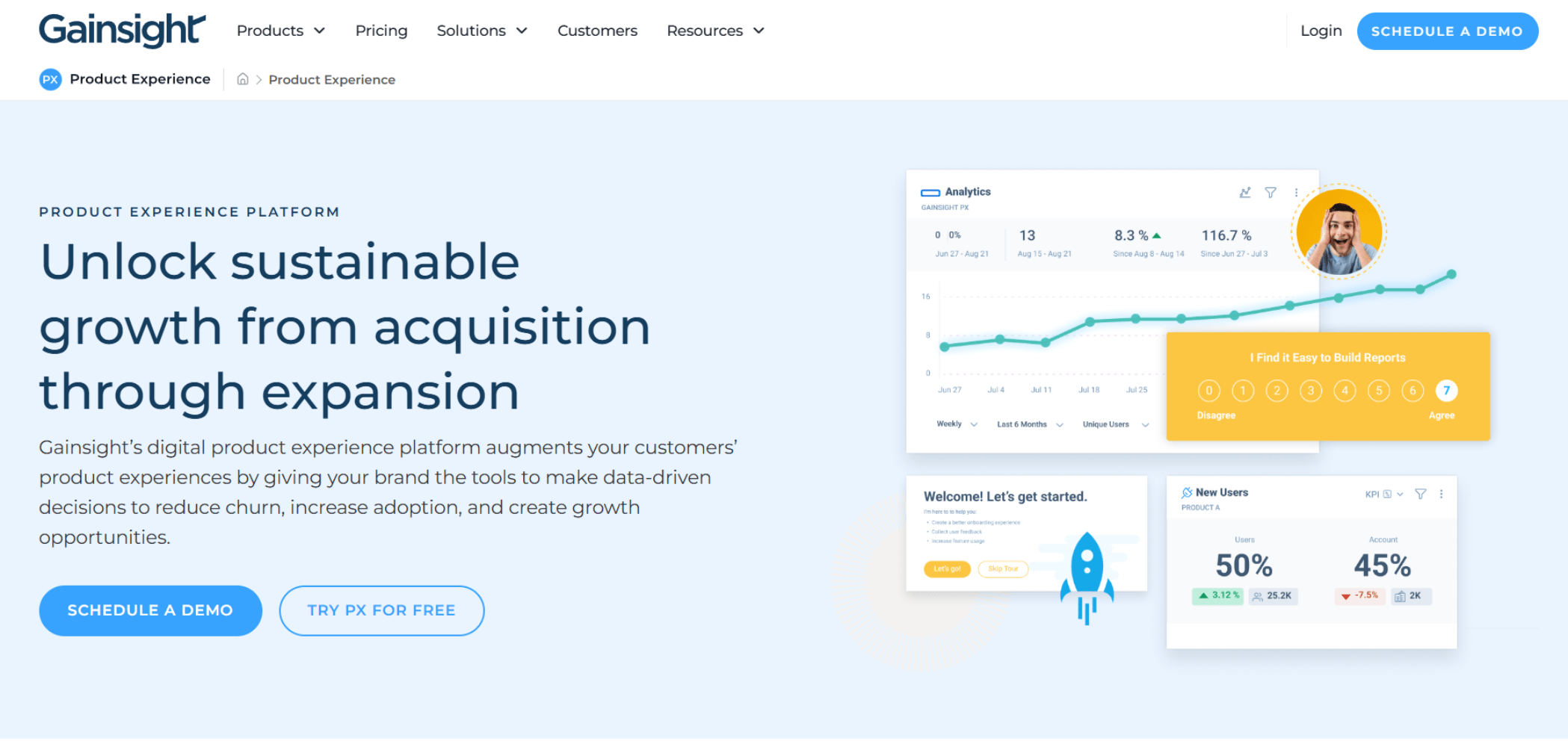
Gainsight PX is Gainsight’s product experience layer, distinct from the core CS platform. It delivers in-app guides, walkthroughs, and behavioral analytics at enterprise scale. Pricing is quote-based and typically positions this tool at companies with larger product teams and existing Gainsight relationships.
The analytics depth is Gainsight PX’s clearest differentiator: retention cohorts, funnel analysis, and feature adoption tracking sit alongside the in-app engagement tools rather than requiring a separate analytics platform. For teams already invested in Gainsight CS, adding PX is a natural extension. For teams without an existing Gainsight footprint, the procurement process is heavier than most alternatives justify.
8. Pendo
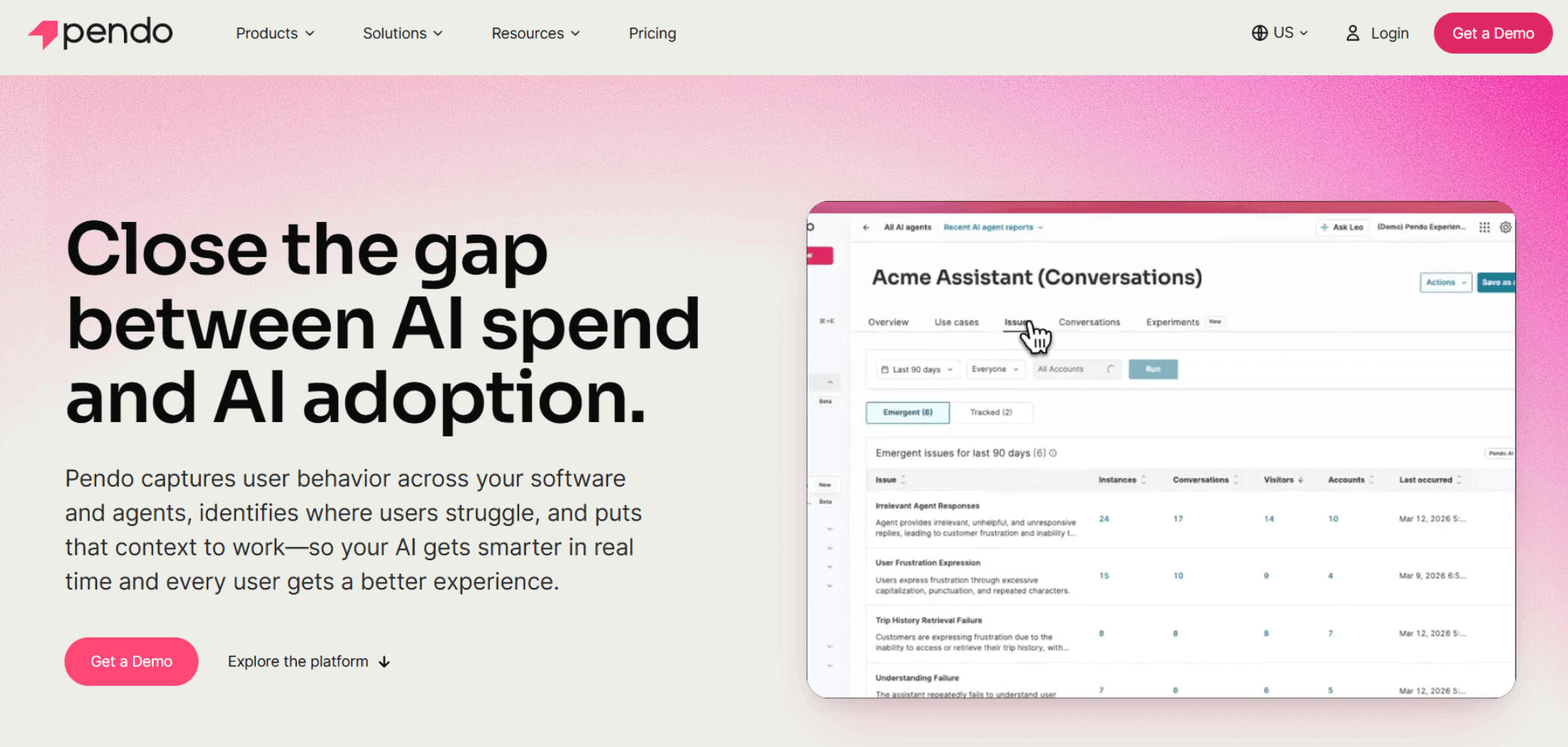
Pendo is the most analytics-forward tool in this list. Its free tier covers basic in-app messaging and product analytics for up to 1,000 monthly active users, making it a legitimate starting point for early-stage SaaS teams. Paid tiers are quote-based.
Pendo’s session replay and path analysis features go deeper than pure onboarding tools, which is both a strength and a scope issue. Teams that want to understand exactly where users drop off during onboarding, and why, will find Pendo’s behavioral data more useful than Appcues or Userpilot. Teams that just want to ship a checklist and some tooltips will find Pendo’s feature surface larger than necessary. The decision is whether you want an onboarding tool with analytics or an analytics tool with onboarding features.
9. CustomerSuccess.ai
CustomerSuccess.ai applies AI automation to customer success workflows including onboarding task management, health scoring, and playbook execution. It targets mid-market and SMB teams that need CS automation without the implementation overhead of Gainsight or Totango. Pricing is quote-based and demo-led.
The AI layer is most useful for surfacing onboarding health signals automatically: flagging accounts where task completion has stalled or engagement metrics suggest the customer is not progressing. For teams running a high-volume CS motion with a small team, that kind of automated triage is where the tool earns its cost. It is not a replacement for a project-based onboarding platform on complex implementations.
Which Customer Onboarding Software Fits Which Stack?
Consider a B2B SaaS company with a 30-day onboarding target, a three-person CS team, and an average contract value around $25,000 per year. The implementation involves technical configuration, training multiple stakeholders at the client, and a handoff to a dedicated account manager. Rocketlane or GUIDEcx handles that motion. The client-facing portal, task assignments, and milestone tracking make the implementation feel professional and keep both sides accountable.
Now consider a product-led growth company where 80% of new users never talk to a human. They create an account, hit a paywall, and either activate or churn in the first two weeks. That team needs Appcues, Userpilot, or Chameleon building in-app flows that guide users to their first value moment without a CS manager in the loop. The project layer is irrelevant here.
Teams running both motions, an enterprise sales segment and a self-serve SMB tier, often deploy Rocketlane for enterprise implementations and Userpilot or Appcues for product-led activation. The overlap in budget is real but so is the coverage gap if you only pick one. For teams thinking about how onboarding data flows back into their broader data infrastructure, understanding reverse ETL tools that activate warehouse data is worth the detour, especially when onboarding completion events need to feed downstream into CRM health scores or ad suppression lists.
What Does Customer Onboarding Software Actually Cost?
Entry-level in-app tools (Appcues, Userpilot, Chameleon) start at $249 to $279 per month on self-serve plans. At that price point you get core in-app flows, basic segmentation, and integrations with common analytics tools. Most enforce limits on monthly active users, and costs scale as your user base grows.
Project-based platforms are priced differently. Rocketlane’s Starter tier begins at $19 per user per month, but a realistic implementation team of five people on the Growth tier will spend considerably more. GUIDEcx is fully quote-based. Enterprise tools like Gainsight PX and Pendo’s paid tiers are also quote-based, which in practice means five-figure annual contracts at scale.
Totango’s free tier is the most accessible entry point in the market for teams that want lifecycle management features without immediate budget commitment. The jump to paid at $2,988 per year is low enough that it works for funded startups managing their first 50 to 100 customers.
How Does Onboarding Software Connect to the Broader Martech Stack?
Onboarding tools do not operate in isolation. The completion events, health scores, and engagement data they generate are only valuable if they flow into the systems where your team actually works: your CRM, your customer success platform, and your data warehouse.
Most tools in this list connect to Salesforce and HubSpot natively. Segment compatibility is common among the in-app layer (Appcues in particular). The more complex integration question is whether onboarding data flows back to a CDP or warehouse for cross-channel analysis. Teams building that kind of unified customer view should think about how onboarding signals fit into their B2B customer data platform strategy from the start, not after the fact.
The post-onboarding handoff is equally important. Once a customer completes initial onboarding, the signals shift from “are they activating” to “are they expanding or at risk.” That transition is where purpose-built customer success software for B2B SaaS takes over from onboarding-specific tooling. The cleanest stacks have a clear handoff point between the two.
Frequently Asked Questions About Customer Onboarding Software
What is customer onboarding software?
Customer onboarding software is a category of tools that automates and tracks the process of getting new customers from signed contract to active, value-realizing user. It includes project-based platforms like Rocketlane and GUIDEcx that manage implementation as a structured project, and in-app adoption tools like Userpilot and Appcues that guide users through a product via checklists, tooltips, and behavioral triggers. The goal of both types is to reduce the time between purchase and first value moment.
What is the difference between client onboarding tools and product adoption tools?
Client onboarding tools (Rocketlane, GUIDEcx) manage the implementation process as a project, with shared portals, task assignments, and milestone tracking visible to both the vendor team and the customer. Product adoption tools (Userpilot, Appcues, Pendo) operate inside your software product and guide users through features via in-app experiences. The first category is for complex B2B implementations. The second is for self-serve or product-led SaaS where users activate without human-led onboarding.
How much does customer onboarding software cost?
In-app onboarding tools like Appcues and Userpilot start at $249 per month on public pricing pages. Chameleon starts at $279 per month with a free plan available. Project-based platforms vary: Rocketlane starts at $19 per user per month, while GUIDEcx is fully quote-based. Totango offers a free tier with paid plans from $2,988 per year. Enterprise tools like Gainsight PX and Pendo’s paid tiers are quote-based and typically run five figures annually at scale.
Can customer onboarding software integrate with Salesforce or HubSpot?
Most tools in this category connect to Salesforce and HubSpot. Rocketlane, GUIDEcx, Appcues, Userpilot, Totango, and Gainsight PX all list CRM integrations on their documentation pages. The depth of those integrations varies: some sync completion events bidirectionally, others push one-way status updates. Teams that want onboarding completion data flowing back into CRM health scores should verify bidirectional sync is available before committing, particularly if the CRM is the system of record for renewal decisions.
What is the best customer onboarding software for small SaaS teams?
For small product-led teams, Appcues or Userpilot at $249 per month gives you in-app flows, segmentation, and analytics without an engineering dependency. Chameleon’s free plan is a legitimate starting point before committing budget. For small teams running human-led implementations with external clients, Rocketlane’s Starter tier at $19 per user per month is the most accessible project-based option. Totango’s free tier works if you want lifecycle management alongside basic onboarding.
Does onboarding software replace a customer success manager?
No. Onboarding software handles coordination, automation, and visibility that would otherwise consume CS manager time on repetitive tasks. It does not replace the strategic relationship work a good CS manager does: identifying expansion opportunities, managing executive relationships, and navigating account risk. The realistic outcome is that a CS manager with Rocketlane or GUIDEcx can manage more concurrent implementations at a higher quality level than the same person relying on spreadsheets and email.
How do you measure whether onboarding software is working?
The primary metric is time-to-value: the number of days between contract signing and the customer completing their first meaningful action inside the product or implementation. Secondary metrics include onboarding completion rate, task overdue rate (a leading indicator of churn risk), and CSAT scores at the end of implementation. Tools like Rocketlane, GUIDEcx, and Totango surface these natively. For in-app tools, Userpilot and Pendo track checklist completion rates and funnel drop-off at each step.
The Core Trade-off in This Category
Most evaluations of onboarding software collapse into a feature comparison, which is the wrong frame. The more productive question is where your churn actually originates. If customers churn because they never activate inside the product, in-app tooling solves that. If they churn because implementations drag, miss milestones, and lose executive sponsorship on the client side, a project platform solves that. The tools are not interchangeable and combining them is not redundancy.
The teams that get the most out of this category are the ones that define a crisp internal handoff between onboarding and ongoing success. Onboarding ends when the customer hits a defined activation milestone, not when a fixed number of days has elapsed. Setting that milestone in your onboarding tool and connecting it to your customer success platform creates a clean transition rather than a fuzzy gray zone where accounts drift without clear ownership.
For teams thinking about the data layer that sits underneath all of this, the same logic applies. Onboarding completion events, engagement scores, and health signals are only as useful as the infrastructure routing them into the right systems. That infrastructure question, whether it is a CDP, a warehouse activation layer, or a direct CRM sync, is worth answering before you buy a second onboarding tool.